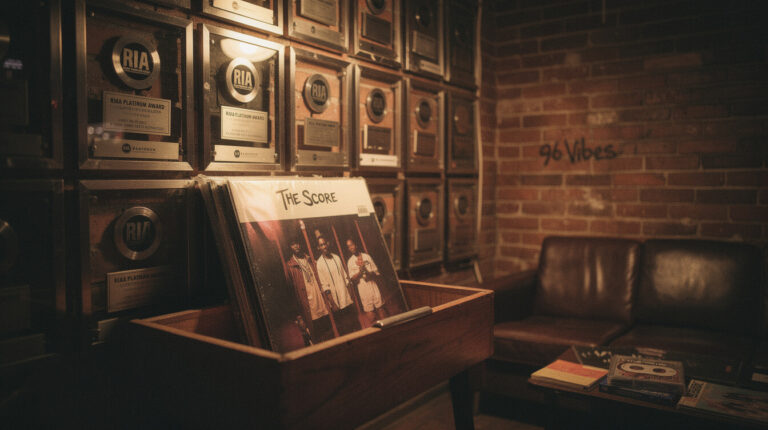
The Miseducation of Lauryn Hill Tracklist: How the Sequencing Tells the Whole Story
Twenty-eight years later, people still talk about The Miseducation of Lauryn Hill like it’s one long anthem — “Doo Wop,” “Ex-Factor,” done. But run the Miseducation of Lauryn Hill tracklist front to back, in order, the way Lauryn built it, and you’re not listening to a playlist. You’re sitting in a classroom. The skits aren’t filler between the hits — they’re chapter breaks in a syllabus about heartbreak, faith, and growing up in public. Skip them and you’re reading the CliffsNotes. Sit through them and you get the whole lesson.
That’s the angle nobody’s actually running with. Spotify gives you the songs. Wikipedia gives you the credits and the Grammy count. Genius gives you the crowd-sourced annotations. What none of it gives you is a read on why the record is sequenced the way it is — why the classroom chatter shows up exactly where it does, why the hardest confessions are buried mid-album instead of up front, why the “pop” single arrives right when you need a breather. This is that read.
Reading the Miseducation of Lauryn Hill Tracklist as a Syllabus, Not a Playlist
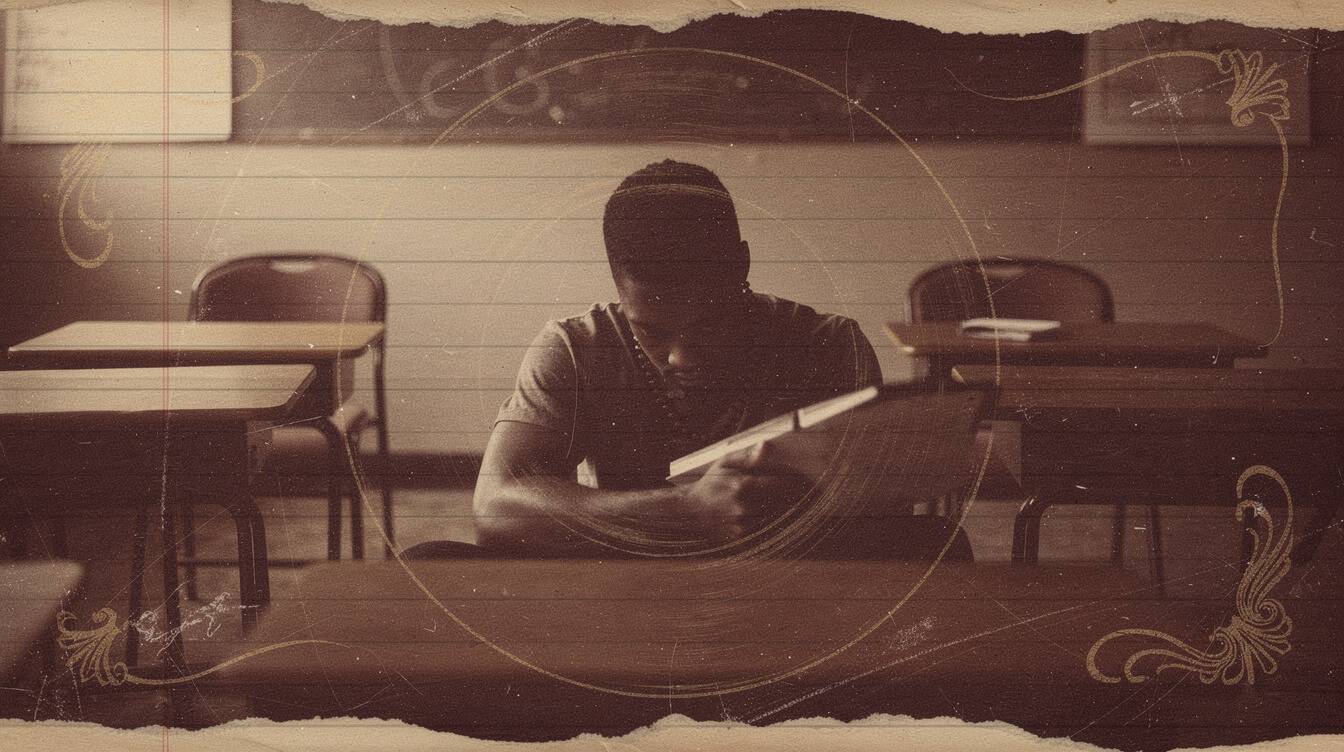
Ms. Hill didn’t call it an album on the sleeve — she called it a class. The “Intro,” the “Interlude,” and the classroom-recording snippets scattered across the Miseducation of Lauryn Hill tracklist are recordings of a real Brooklyn classroom, kids debating what love actually means, guided by educator Ras Baraka (yes, the same Ras Baraka who’d later become Newark’s mayor). Those clips aren’t padding you fast-forward through on a re-listen. They’re the framing device. Every time a kid’s voice cuts in, Lauryn is telling you: this next song is a lesson, and the lesson is going to hurt a little before it helps.
That structure — real talk from actual kids, bracketing songs about a grown woman’s heartbreak — is the reason the album still reads as a complete artistic statement instead of a singles collection with filler. Most classic soul and R&B albums of the era front-load the hits and bury the album cuts. Lauryn inverted that. The sequencing is the argument: that healing isn’t linear, that education (romantic, spiritual, musical) doesn’t happen in a straight line either. You have to sit through the syllabus in order for the thesis to land.
It’s worth saying plainly: this record dropped in August 1998, produced almost entirely by Lauryn herself at Tuff Gong Studios in Kingston with the in-house band Vibe Chemistry (New Ark), a fact the liner notes had to be amended over after a lawsuit from the credited musicians — a footnote that’s its own lesson in who gets credit for architecture versus who gets credit for the vision. Both things are true, and both are baked into how the record was actually built, track by track.
And the sequencing choice wasn’t accidental in a genre sense either. Lauryn was pulling from a gospel tradition where the sermon and the testimony sit inside the same service — you don’t get the music without the message wrapped around it. Listen for how often a classroom voice trails directly into the first bar of the next song, no dead air, like the kids’ commentary is literally cueing up the track. That’s mix-level intentionality, not a track-listing afterthought. Whoever sequenced the sample-clearance paperwork for those interludes had to treat them as compositions in their own right, not throwaway skits, which tells you how seriously the architecture of the album was taken before a single review ran.
Side One of the Tracklist: Lost Ones Through Ex-Factor Is a Trial, Not a Warm-Up

Here’s where most casual listens get the album wrong: they treat the first stretch as a warm-up before the “real” hits. It’s the opposite. “Lost Ones” — the opener after the classroom intro — is a scorched-earth diss record aimed squarely at Wyclef Jean, delivered over a stripped reggae-boom-bap bounce, and it sets the emotional register for the entire tracklist immediately. There is no easing in. You go from “class is in session” straight into a public reckoning.
“Ex-Factor” follows a few tracks later and does something “Lost Ones” doesn’t: it drops the armor. Where “Lost Ones” is Lauryn as prosecutor, “Ex-Factor” is Lauryn as witness against herself, the same relationship examined from the inside instead of the outside. That’s the sequencing doing narrative work — anger first, vulnerability second, because that’s the actual order most people process heartbreak in, whether they want to admit it or not. The Wu-Tang connection matters here too: the “Ex-Factor” hook flips a portion of the same Wu-Tang Clan a cappella that RZA would later interpolate, a small thread tying Lauryn’s most personal song on the record back to the golden-age lineage she came up in with the Fugees.
If you’re tracing the Fugees side of this story — how a trio out of South Orange, New Jersey became the best-selling group album of the era before Lauryn went solo — our Fugees “The Score” at 30 retrospective covers the booga-basement origins that made a record like Miseducation possible in the first place.
Why the order of “Lost Ones” and “Ex-Factor” matters more than the songs themselves
Swap those two tracks and the album reads completely differently. Lead with “Ex-Factor” and you’d hear a woman still stuck in the relationship, no distance yet, no perspective — the album would open sounding unresolved instead of sounding like someone mid-reckoning. Lauryn’s choice to put the public indictment first and the private confession second means the listener meets her anger before her hurt, which is a very specific emotional order: you process the betrayal as injustice before you’re allowed to feel it as loss. Most breakup records do it backwards, hurt first, anger as a coping mechanism after. This one insists you get angry before you’re allowed to grieve, and that’s a choice, not a coincidence of track numbering.
The Turn: To Zion and the Tracks Everyone Skips on the Way to the Hits

Track five, “To Zion,” is the hinge the whole record turns on, and it’s also the one most casual playlists cut entirely. It’s a six-minute song, featuring Carlos Santana on guitar, about Lauryn’s decision to have her first child with the industry actively telling her a baby would end her career. That’s not a deep cut by accident — it’s placed exactly where the album needs a turn from anger and self-examination toward something like hope. Everything before “To Zion” is about what was lost. Everything after is about what got built instead.
People skip it on streaming because six minutes is a lot to ask in 2026’s algorithmic attention span. But skip it and the record stops making sense. “Superstar,” which comes right after, only lands as pointed industry commentary because you’ve just heard Lauryn choose motherhood over the machine’s timeline. The sequencing is doing the argument for her — you don’t need her to spell out “I chose myself” because you just heard her do it in real time, six minutes earlier.
There’s a production detail worth sitting with too: “To Zion” is one of the only tracks on the record built around a full string arrangement instead of a boom-bap drum break, and Santana’s guitar solo runs almost a full minute before the first verse even starts. That’s an unusual amount of patience to ask of a pop audience in 1998, let alone a Black woman making her solo debut after a multi-platinum group run — the commercial pressure to keep things tight and radio-ready would have pushed most artists to trim it. She didn’t trim it. The song needed the space to breathe because the subject needed the space to breathe, and that stubbornness about pacing is the same stubbornness that governs the whole tracklist’s willingness to sit in a mood longer than a single feels comfortable doing.
Doo Wop (That Thing): The Pop Single That Snuck a Sermon Onto the Radio
By the time “Doo Wop (That Thing)” shows up on the tracklist, you’ve already sat through a diss record, a confession, and a six-minute song about childbirth. That placement is deliberate. It’s the record’s release valve — the horn-driven, doo-wop-sampling single that debuted at Number 1 on the Billboard Hot 100, the first song by a female artist to do that in the SoundScan era. But listen to what it’s actually saying underneath the hook: it’s a sermon about self-respect aimed at both men and women, delivered with a smile so wide most people never clocked it as a lecture.
That’s the trick of the whole album distilled into one single — smuggle the hardest truths inside the catchiest possible delivery. If you’re building out a gift for someone who lives for that golden-age lyricism-with-a-message era, our Rapsody “The Idea of Beautiful” T-Shirt is cut from the same cloth — Rapsody’s been called the clearest lyrical heir to Lauryn’s pen for over a decade, and the shirt wears that lineage without having to say it out loud.
The doo-wop sample itself — flipped from an obscure Wu-Tang-adjacent loop of vintage girl-group harmonies — is also doing sequencing work you might miss on a casual listen. It’s the first moment on the record that sounds unambiguously fun, a deliberate tonal reset after four tracks of grief, betrayal, and childbirth. Radio programmers in 1998 didn’t know they were being handed a sermon; they just heard a horn line they could spin between other summer singles. That’s the whole strategy of the album’s midpoint working exactly as designed — get the message inside the building before anyone checks it for a permit.
The Deep Cuts Nobody Streams: Forgive Them Father and I Used to Love Him

“Forgive Them Father” is the most explicitly biblical track on the record — built on betrayal, Judas imagery, and industry paranoia — and it’s also one of the least-streamed songs on the whole album despite sitting at track 10. That’s not a quality problem. It’s a placement problem: by track 10, the casual listener has already gotten “Doo Wop” and “Ex-Factor” and mentally checked out. But this is where the record gets its most direct about the cost of fame and betrayal by people close to her, themes she’d touch again decades later in her rare interviews.
Then there’s “I Used to Love Him,” the Mary J. Blige duet that closes out the album’s emotional arc before “Can’t Take My Eyes Off of You” plays the group out. It’s a conversation between two of the most important voices in ’90s R&B, structured as literal call-and-response about falling out of and back into self-respect. Pairing these two records — Judas paranoia and a duet about reclaiming yourself — this late in the sequencing is Lauryn closing the loop on the “lesson” the classroom clips promised at the start. You started the class angry. You’re ending it whole.
For the wider neo-soul lineage this album helped kick open the door for, our pieces on Erykah Badu’s Baduizm at 29 and Jill Scott’s 2026 neo-soul reset both trace directly back to the template Lauryn set here.
The closing stretch is doing more work than people give it credit for
By the time “I Used to Love Him” resolves into the hidden reprise of “Tell Him,” the album has quietly moved from confession to community — the final act isn’t a solo statement anymore, it’s a duet, a conversation, a passing of the mic to another woman who’s lived a version of the same story. That’s a deliberate closing move for a record that opened with a classroom of kids debating what love even means: it ends by showing you two grown women who’ve lived the answer, still figuring it out together in real time on wax. Very few albums from any era stick the landing on their own thesis statement this precisely.
How the Miseducation Tracklist Rewired Album Sequencing for Everyone After

Once you see the classroom-skit-as-chapter-break structure, you start seeing it everywhere. Kendrick Lamar’s use of spoken-word interludes and skits as narrative connective tissue across good kid, m.A.A.d city and To Pimp a Butterfly owes something to this record’s insistence that the spaces between songs carry weight. Frank Ocean’s interludes on Blonde, SZA’s voice memos on Ctrl, even the confessional-interview-clip trend across modern R&B rollouts — all of it descends from the same idea Lauryn proved commercially viable in 1998: that an album sequenced like a real emotional arc, skits and all, could still sell 19 million copies and sweep the Grammys.
Before Miseducation, the industry logic was hits up front, filler in the middle, maybe a ballad to close. Lauryn flipped that math and it worked at a scale nobody expected, which gave every artist who came after her cover to build albums as full statements instead of hit-delivery vehicles. That’s the sequencing’s real legacy — not just what it says about her, but what it proved was commercially possible.
It’s also worth noting what the Grammys did with that proof of concept: Miseducation won Album of the Year in 1999, the first hip-hop-adjacent solo album by a woman to do it, and it did so as a sequenced, skit-inclusive, 77-minute statement rather than a tight 40-minute hit run. That result told every A&R department in the building that audiences would sit through the slow parts if the slow parts were earning their place. You can draw a direct line from that Grammy stage to the patience modern streaming-era albums still occasionally get away with, even inside an industry that mostly optimizes for the opposite.
Where to Start With the Full Tracklist If You’ve Never Heard It Front to Back

Do I need to listen in order for it to make sense? Yes — more than almost any other album from this era. The classroom interludes are load-bearing. Streaming it on shuffle strips the record of its actual argument.
What if I only have 20 minutes? Cut it to “Lost Ones,” “To Zion,” “Doo Wop (That Thing),” and “Ex-Factor,” in that order. You’ll get the anger-to-hope-to-release-to-vulnerability arc in miniature, even without the full 77 minutes.
Why does the album still hit different in 2026? Because almost nothing else from 1998 sounds like it was recorded yesterday. The production choices — live instrumentation, no obvious sample flips to date it, vocal takes that feel like they were captured in one breath — hold up in a way a lot of its Billboard peers from that summer don’t.
What’s the one deep cut people should stop skipping? “Forgive Them Father.” It’s the most emotionally honest track on the record and the most streamed-past.
Final Thoughts
The Miseducation of Lauryn Hill tracklist isn’t a collection of songs that happen to sit next to each other — it’s a built argument, classroom clip by classroom clip, about what it actually takes to come out the other side of heartbreak whole. Run it in order at least once. Let the skits breathe. That’s the record Lauryn actually made, and it’s a better one than the six-song highlight reel most people have in their heads.

Same Pen, Same Lineage
Rapsody’s been called the clearest lyrical heir to Lauryn’s pen for a decade running. The Idea of Beautiful Tee wears that lineage — no explanation needed.
Stay In The Class
Deep dives on the records that shaped the culture, plus first look at new drops. No filler, just the syllabus.

🎧 Never Miss a Drop
Exclusive product releases, hip-hop deep dives, and member-only discounts. Straight to your inbox.
Free forever. No spam. Unsubscribe anytime.

Get the Culture, Delivered
Deep dives into hip-hop history, exclusive product drops, and discounts sent straight to your inbox. No spam, just culture.
Join 2,000+ hip-hop heads already in the loop. Unsubscribe anytime.