Freddie Gibbs Merch: From Piñata to Alfredo, How Gangsta Gibbs Built a Wardrobe Out of Album Eras
Most rapper merch stores are the same store forever — same logo, same three t-shirt colors, restocked every few months until the artist retires or gets dropped. Freddie Gibbs merch doesn’t work that way. Every time Gangsta Gibbs changes producers, he changes wardrobes. The Madlib years look nothing like the Alchemist years. The major-label glow-up looks nothing like Rabbit Mode. Nobody selling his merch has ever laid the eras out side by side — so we did.
This isn’t a product grid. It’s a timeline of a rapper who treats his closet the same way he treats his discography: era by era, collaborator by collaborator, no filler.
Freddie Gibbs Merch Isn’t a Product Grid — It’s an Album Timeline
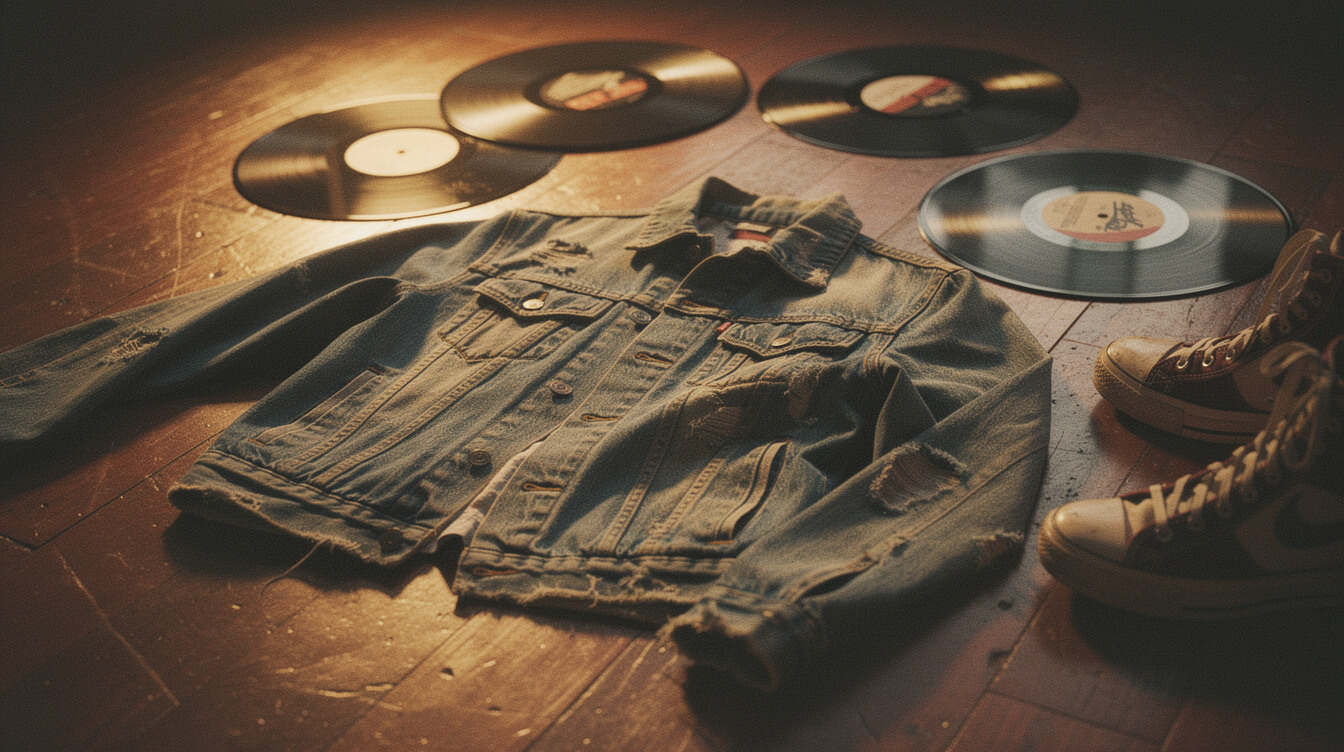
Go to the official Freddie Gibbs store right now and you’ll see exactly one thing: whatever he’s promoting this month. That’s normal for most artists. It’s the wrong way to understand Gibbs, though, because his entire catalog is a study in reinvention through collaboration. He doesn’t have a “sound” the way most rappers have a sound — he has a rotating cast of the best producers alive, and every pairing gets its own visual language, its own merch, its own era.
Piñata sounds nothing like Alfredo. Alfredo sounds nothing like $oul $old $eparately. And the merch tracks it exactly, because Gibbs and his collaborators have always treated the capsule drop as part of the album rollout, not an afterthought bolted on after the fact. That’s the throughline this guide follows — not “here’s what’s for sale,” but “here’s how the wardrobe tells the same story as the discography.”
Think about how sneaker culture works: a colorway means something because it’s tied to a specific release, a specific moment, a specific story. Gibbs runs his merch the same way, except the “colorway” is the producer relationship. That’s a much harder model to maintain than a static logo — it means every capsule has to earn its own identity instead of coasting on brand recognition — and it’s exactly why the eras are worth tracing individually instead of treating his merch history as one undifferentiated pile of tour tees.
Why this matters for collectors
If you only ever buy whatever’s currently in stock, you end up with a closet that reflects one era of his career and none of the others — the equivalent of only owning a rapper’s most recent album. Understanding the eras is the difference between “I like Freddie Gibbs” merch and merch that actually says something about which Freddie Gibbs you rock with.
Piñata and Bandana: The Madlib Years
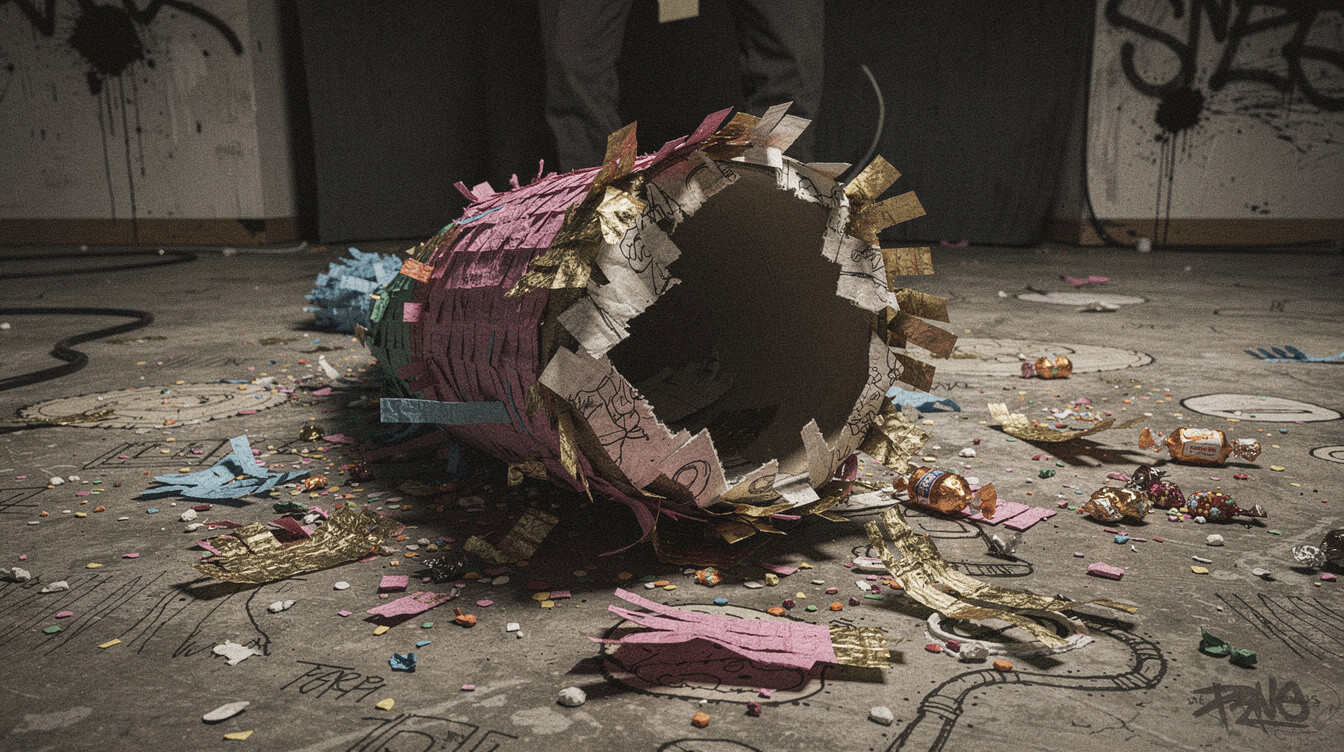
Piñata dropped in 2014 as a Madlib Invazion release, and it’s still the record purists point to first. Gary, Indiana street narration over dusty, chopped soul loops — the kind of pairing that only works because Madlib doesn’t compromise his beats for anybody, and Gibbs doesn’t compromise his pen for anybody either. The merch from that era leaned into exactly that: no gloss, no studio-sheen photography, just raw type treatments and the piñata imagery from the album art itself, cracked open, contents spilling.
Bandana followed five years later in 2019, still Madlib, still uncompromising, but sharper — the two of them had built enough chemistry by then that the record plays like a sequel instead of a rerun. The merch matured with it. Where Piñata merch felt like a mixtape flyer, Bandana merch started looking like something you’d actually want to wear outside a listening session — cleaner silhouettes, still built around the same DIY, collage-heavy visual identity that defines the whole Madlib Invazion catalog.
What ties both eras together isn’t just the producer credit — it’s the refusal to sand off the rough edges. Madlib Invazion has never been a label that chases mainstream merch conventions; the whole imprint runs on limited pressings, odd formats, and packaging that feels handmade even when it isn’t. Gibbs’ apparel from this stretch absorbed that ethos completely. No glossy lifestyle photography, no influencer campaign — just typography and imagery lifted straight from the album art, sold in small runs to the people who were already going to buy the vinyl anyway.
That scarcity is also why Piñata-era pieces specifically are the hardest to find today. There was never a reprint strategy, never a “back in stock” cycle. Once a run sold out, it was gone the way the mixtape era itself is gone — which is part of what makes this stretch of the catalog feel less like merchandise and more like an artifact.
If you want the full discography breakdown of how these two records fit into his catalog, we’ve already mapped it out in our complete Freddie Gibbs songs guide.
Alfredo and Alfredo II: The Alchemist Years, Vinyl as Merch
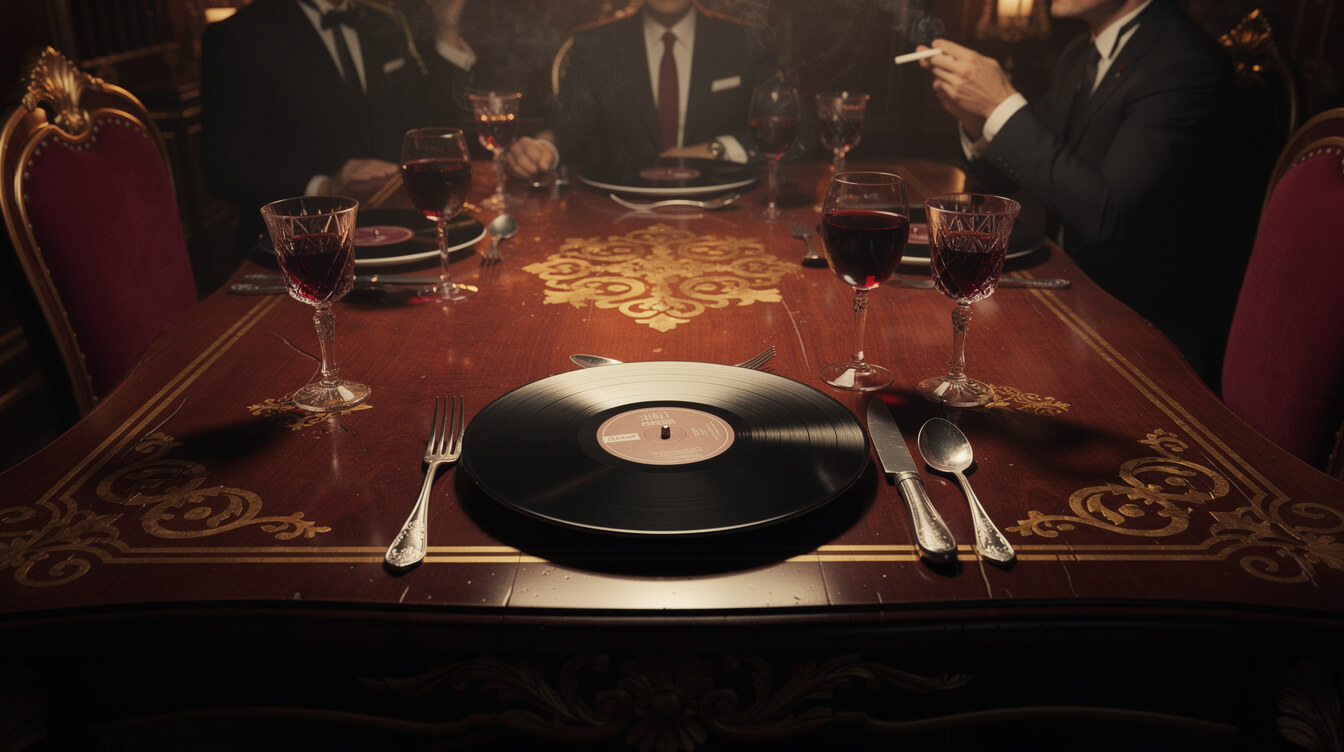
Alfredo dropped in 2020 and did something Piñata never quite did — it crossed over. The Alchemist’s mafia-movie soul loops gave Gibbs a different pocket to rap in, moneyed and cinematic instead of strictly street, and the record earned him his first Grammy nomination for Best Rap Album. That nomination is the moment the merch era actually gets interesting: to mark it, Gibbs linked with streetwear label 40s & Shorties on a capsule built around original illustration work from artist Frko Rico — a cartoon Gibbs draped in his ESGN chain, holding a beer-bottle trophy. Three t-shirts and a hoodie, sold straight through 40s & Shorties’ own store, not the official Gibbs merch site. That’s a detail almost nobody covering his merch history mentions, and it matters: the biggest merch moment of the Alfredo era wasn’t even his own storefront.
The album cover itself set the tone for everything that followed — Gibbs and the Alchemist styled as mob bosses at a dinner table, a tongue-in-cheek Last Supper composition that turned “rap album as crime saga” into a visual identity you could put on a shirt without saying a word. That’s the trick of the Alchemist era: the cover art did most of the branding work, and the merch just had to not get in the way of it.
Alfredo II picked the collaboration back up years later, and the vinyl pressings themselves became part of the merch conversation in a way most rap records never achieve — variant colorways treated less like collector novelties and more like apparel drops, something you display as much as spin. That’s the Alchemist-era signature: the record itself is the merch.
Why the Alfredo era hits different for collectors
A Grammy nomination changes the calculus on merch demand overnight. Suddenly a project that started as a loosie collaboration between two respected-but-not-mainstream artists is getting covered by outlets that don’t normally touch underground rap, and the capsule that would’ve quietly sold out to the existing fanbase instead becomes a genuine collector’s item. That’s exactly what happened with the 40s & Shorties run — modest print numbers meeting a demand spike neither party fully anticipated.
$oul $old $eparately: The Major-Label Glow-Up
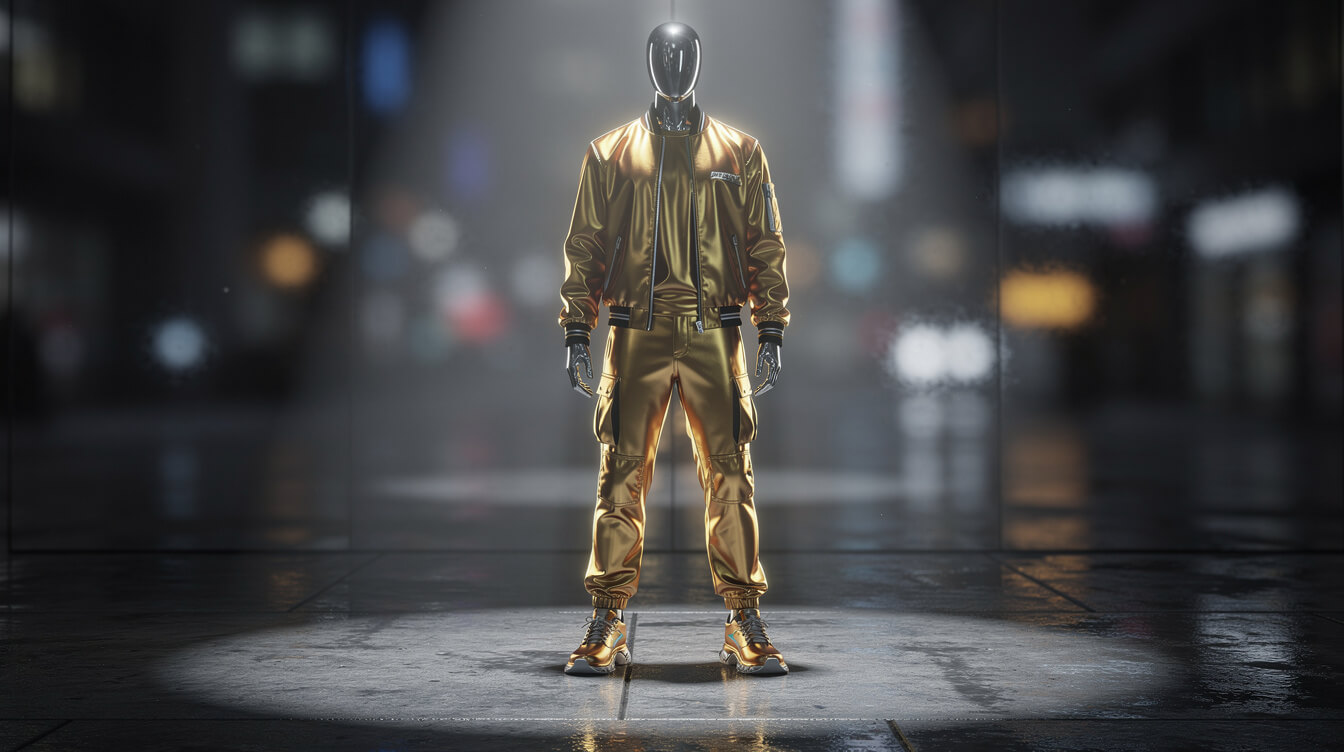
$oul $old $eparately was the Warner Records debut, and it’s the era where the merch stopped looking like an independent rap release and started looking like a proper campaign. Bigger features, more polish in the mixing, and a visual identity to match — cleaner typography, better fabric, the kind of production value that only shows up once a major label is footing the bill. It’s the least “underground” merch era in his catalog, and that’s the point. Gibbs used the major-label platform the same way he used every producer pairing before it: as a chance to reinvent the wardrobe rather than just repeat it.
The record itself leaned into features and sonic range in a way none of his prior albums did, pulling in voices from well outside the boom-bap and mob-rap lanes he’d built his name on. That range shows up in the merch too — for the first time in his catalog, the apparel wasn’t trying to signal “underground purist” as the whole identity. It signaled range, ambition, an artist comfortable enough in his own pen to stop worrying about staying in one lane.
It’s also the era where the gap between “official capsule” and “tour merch” started to blur, since arena-adjacent touring means bigger merch tables and wider product runs. We broke down exactly how that plays out on the road in our Freddie Gibbs tour guide.
Rabbit Mode: The Wardrobe Right Now
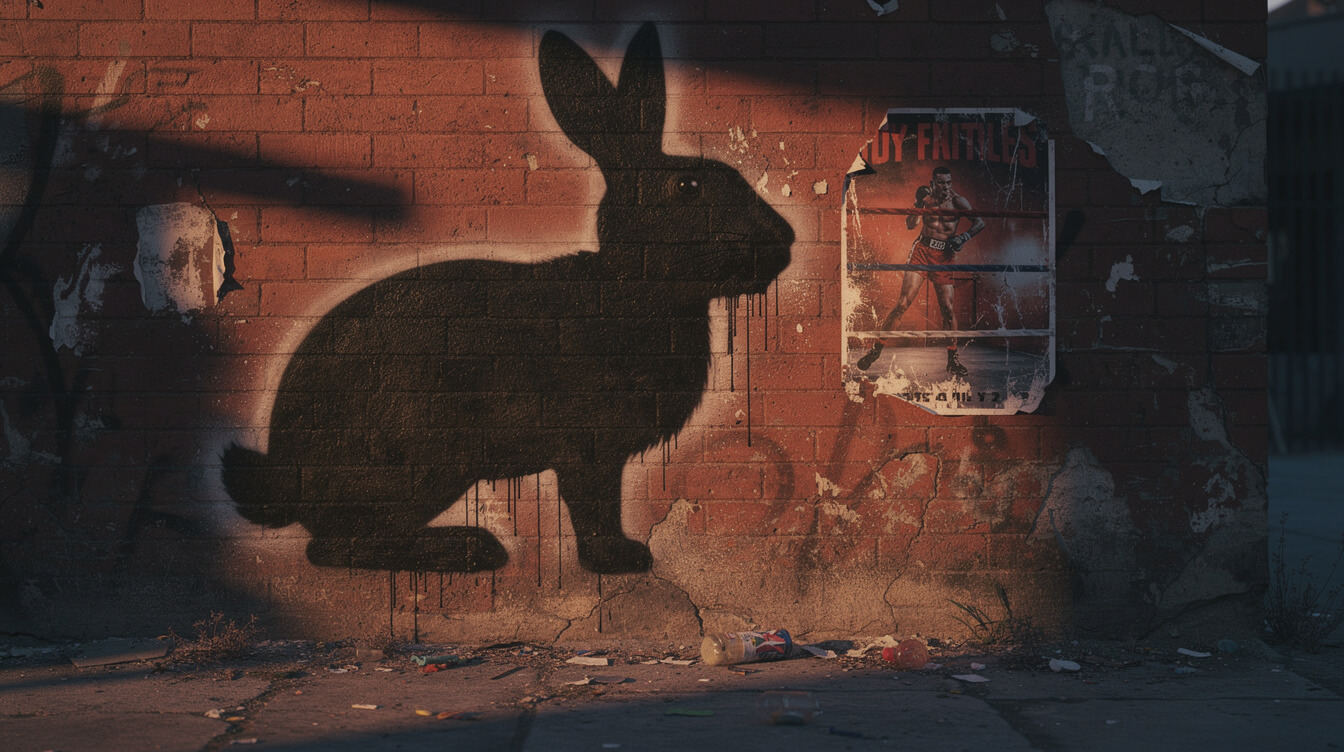
Rabbit Mode is where Gibbs is right now, and it’s also where the “current drop only” problem is most obvious. Both of the major storefronts selling his gear today — youonlydie1nce.com and alfredostokyo.com — sell exactly this era and nothing before it. That’s a real gap if you’re a fan who came in on Piñata or Alfredo and wants a piece that actually reflects the record you love, not just whatever’s on the homepage this week. Reddit’s r/freddiegibbs community has been asking the same question in its own tour merch threads: where do you even find the earlier drops once a capsule sells out and disappears?
The honest answer is: mostly, you don’t. Official capsule merch is time-boxed to the album cycle on purpose — that’s part of what makes each era feel distinct instead of diluted. Which is exactly why a retrospective like this one matters more than another current-drop product page.
The name itself is a tell about where Gibbs’ head is at these days — “Rabbit Mode” reads as evasive, quick, always moving, which tracks with an artist who’s spent over a decade dodging the industry’s attempts to box him into one lane. The current merch run leans into that energy: desert-tour palettes, road-worn textures, imagery that feels more like a live show flyer than a studio album cover. It’s the wardrobe of a rapper who’s currently living on the road for the “Last Rabbit Run” tour cycle rather than one who’s promoting a single studio statement.
The Griselda-Adjacent Lineage — Why the Underground Respects Him
Gibbs has never been a Griselda artist in the roster sense, but the respect runs both directions, and it’s not hard to hear why. Westside Gunn, Benny the Butcher, and Conway all operate on the same principle Gibbs built his whole career on: rap like the beat is sacred, don’t waste bars, let the producer’s chemistry do half the storytelling. We’ve gone deep on that Buffalo lineage in our Griselda Records guide, and if you’re drawn to Gibbs for the raw, uncompromising, one-producer-one-vision approach, that entire camp is the closest adjacent catalog to explore next.
The connective tissue is bigger than a few guest verses. Gibbs and Westside Gunn have traded features and co-signs across multiple projects, and the mutual respect shows up in interviews as much as on wax — both camps talk about rap the same way, as a craft you protect from watering down, not a genre you chase trends in. That’s why Gangsta Gibbs gets namechecked in Griselda circles even without a formal roster spot: the ethos lines up completely, even when the album credits don’t.
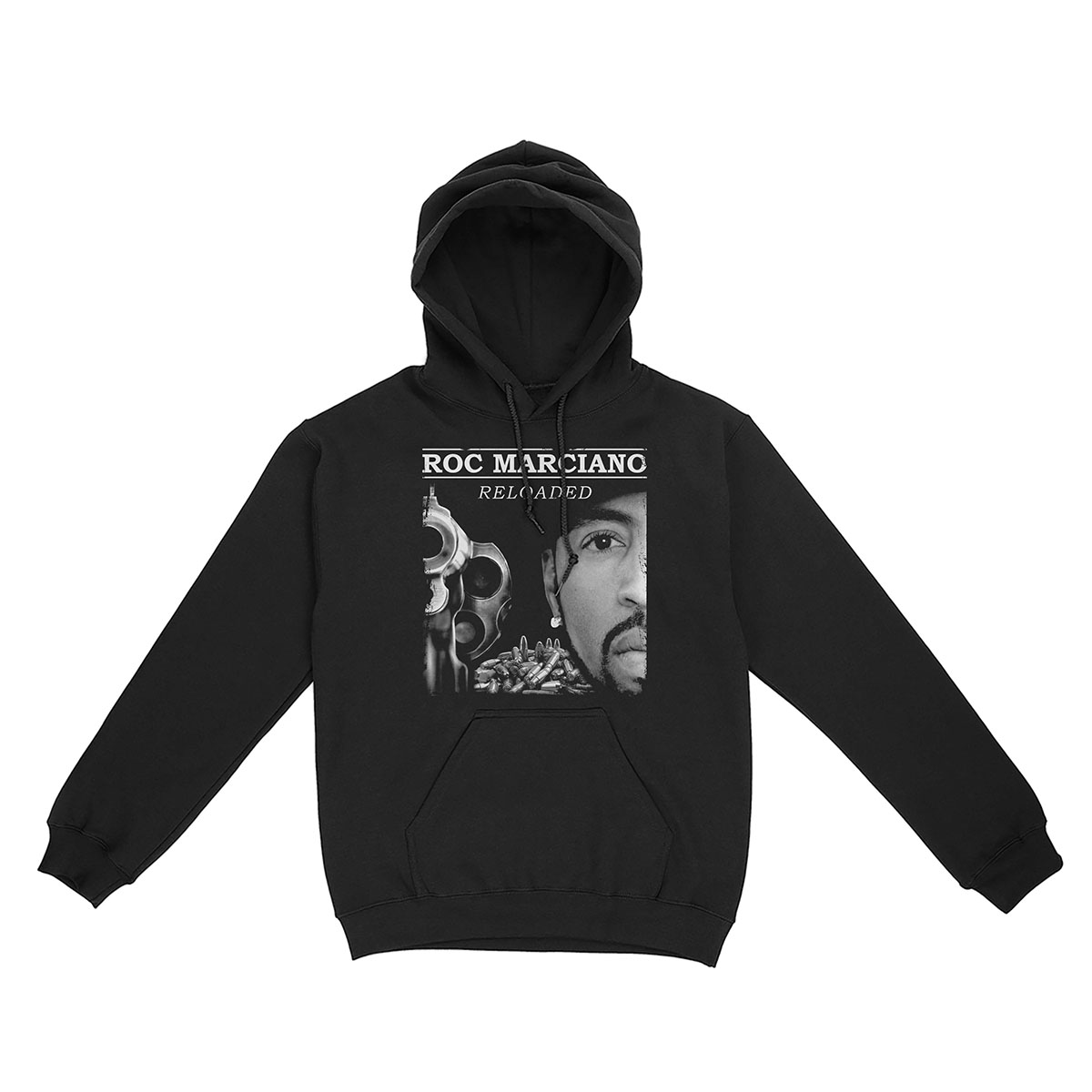
There’s no official Freddie Gibbs SKU in that specific Griselda-orbit lane yet, but if you’re building a rotation around that same underground-purist lineage, our Roc Marciano Reloaded T-Shirt sits in exactly that pocket — one-producer, no-compromise, boom bap built for the coffee-and-cocaine crowd instead of the radio.
Same Lane, No Compromise
Until there’s an official Gibbs piece in that Griselda-adjacent lane, the Roc Marciano Reloaded Hoodie carries the same one-producer, no-filler ethos — heavyweight fleece, understated graphic, built for the vinyl-and-incense crowd.
Freddie Gibbs Merch FAQ
Where can I buy official Freddie Gibbs merch?
Current-era pieces run through his own storefronts and era-specific collaborator sites — youonlydie1nce.com for the ongoing catalog, alfredostokyo.com for Alfredo II-tied product. Past capsules, like the 40s & Shorties Alfredo Grammy collection, sold through the collaborator’s own store instead of his, so official drops are genuinely scattered across multiple sites depending on the era.
Why does Freddie Gibbs merch change so much between albums?
Because each album is built around a single producer relationship — Madlib, the Alchemist, the Warner Records machine behind $oul $old $eparately — and Gibbs has consistently let the merch reflect whichever creative partnership defined that record, instead of running one static brand identity across his whole catalog.
Is there a way to get merch from older Freddie Gibbs eras like Piñata?
Rarely, and mostly through resale. Capsule drops are era-boxed on purpose, which is part of why fans on r/freddiegibbs keep asking where to find sold-out tour and album merch — once a cycle ends, the official product usually ends with it.
What’s the best Freddie Gibbs era to start collecting from?
Depends what pulls you in. If it’s the raw, one-take rap purism, start with the Piñata/Bandana Madlib years. If it’s the cinematic, moneyed sound, Alfredo. If you’re drawn to the broader underground lineage he sits adjacent to, the Griselda camp is the natural next stop.
Does Freddie Gibbs sell official tour merch?
Yes — tour-specific product has become a bigger part of his catalog since the major-label era expanded his touring footprint, with merch tables running alongside every stop on cycles like the current Rabbit Run run. It sells fast and rarely gets restocked once a leg wraps, so treat tour drops with the same urgency as an album capsule.
What made the Alfredo merch capsule with 40s & Shorties special?
It wasn’t sold through Gibbs’ own store at all — it ran exclusively through 40s & Shorties to mark his first Grammy nomination, built around original illustration work rather than reused album art. That combination of a third-party collaborator, a specific career milestone, and bespoke artwork is rare enough in rap merch that it’s worth knowing even if you never manage to track down a piece.
Final Thoughts: Merch as Discography
Every rapper’s merch tells you something about how they see their own career. Most treat it as a side hustle — one logo, one cut, restocked forever. Freddie Gibbs treats it the way he treats features and beat selection: with the same era-specific intention that makes Piñata sound nothing like $oul $old $eparately. That’s the real story nobody selling his gear has bothered to tell. Now it’s told.
Stay Ahead of the Drop
Deep dives on the catalog, the culture, and the pieces that actually mean something — straight to your inbox.

🎧 Never Miss a Drop
Exclusive product releases, hip-hop deep dives, and member-only discounts. Straight to your inbox.
Free forever. No spam. Unsubscribe anytime.
Get the Culture, Delivered
Deep dives into hip-hop history, exclusive product drops, and discounts sent straight to your inbox. No spam, just culture.
Join 2,000+ hip-hop heads already in the loop. Unsubscribe anytime.