Dead Prez Let’s Get Free: The Liner Notes, the Stickered Cover and Why It’s Still Bigger Than Hip-Hop
Some albums age into nostalgia. Dead Prez Let’s Get Free aged into a warning label. When stic.man and M-1 dropped their debut on Loud Records in early 2000, the rap charts were all furs, ice and million-dollar videos. Two MCs who had met in Tallahassee showed up with an album about public schools, police, food, the music business and revolution. The record was so direct that stores made the label put a sticker over the cover. Twenty-six years later, the cover’s on our tees, the beat opened every episode of Chappelle’s Show, and Nipsey Hussle once asked their permission to remake the whole thing.
This is the deep dive we wanted to read and couldn’t find. It covers the Tallahassee-to-Brooklyn origin story, the cover photo nobody can agree on, and the real production credits from the liner notes (a few of the “facts” floating around online are wrong). Then comes a walk through the album’s two halves, “Today” and “Tomorrow,” and why the whole thing still hits in 2026. We checked every date and credit against at least two sources. Where the record is genuinely disputed, we show you the dispute instead of picking a side.
From Tallahassee to Loud Records: How Dead Prez Built Let’s Get Free
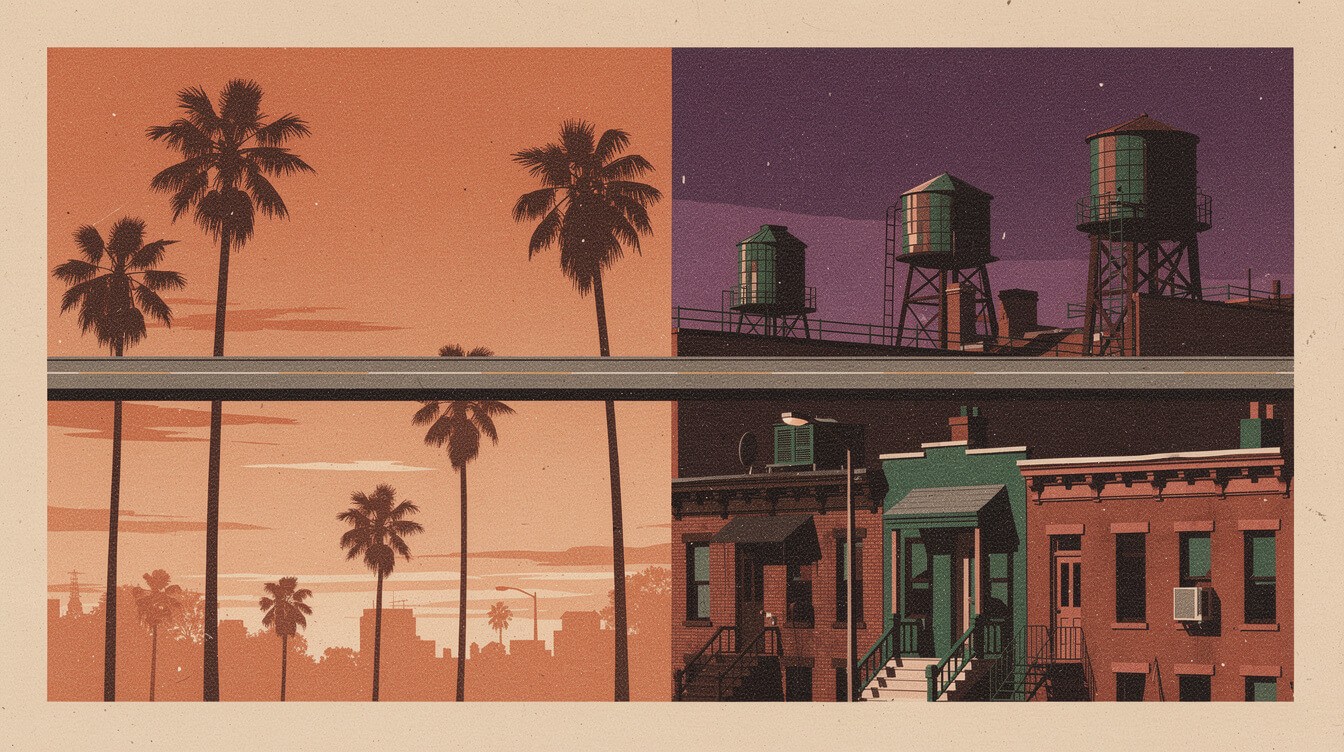
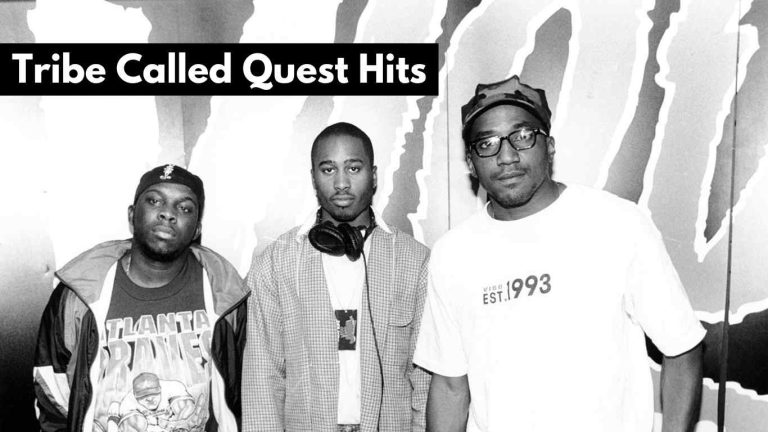
dead prez (they style it lowercase) is two people. stic.man, born Clayton Gavin and now known as Khnum Muata Ibomu, grew up in North Florida near Tallahassee. M-1, born Lavonne Alford and now known as Mutulu Olugbala, is from Brooklyn. Their paths crossed in Tallahassee in the mid-1990s around Florida A&M University, the historically Black university where M-1 had just landed. In a 2010 HipHopDX interview M-1 put it plainly: he had “just moved to Florida to start a new chapter,” his family was being torn apart by crack cocaine, and stic’s was too. The two started building what M-1 called “our analysis of the world” together.
The assembly that got shut down
stic.man’s politics didn’t start in college. In 1990, as a 10th grader at Wakulla High School, he was performing a song called “Black As I Can Get” at a Black History Month assembly when school officials cut him off mid-song. Students boycotted classes and parents picketed. The Tallahassee Democrat covered it at the time, and stic has told the story himself in interviews since, including a 2020 conversation with Black Thought for Okayplayer. Keep that detail in your back pocket. Ten years later, the third track on Let’s Get Free is a song called “‘They’ Schools.”
The Uhuru connection
Both men came up through organizing, not just open mics. M-1 spent time with the Uhuru Movement, the organizing arm of the African People’s Socialist Party led by Chairman Omali Yeshitela. That isn’t trivia. Yeshitela’s voice opens the album on “Wolves” and returns at the top of “Police State.” Pitchfork’s 2019 Sunday Review called them student organizers who “lived what they rapped,” and the album’s politics come straight out of that study-group world. This wasn’t conscious-rap aesthetics with incense and kufis. It was a program.
Brooklyn, Lord Jamar and the Loud deal
The duo formed in 1996 after relocating to Brooklyn. That same year, Lord Jamar of Brand Nubian (a group that knew a thing or two about Five Percent politics on a major label) caught them in New York and helped get them signed to Loud Records. That’s the label that was then home to Wu-Tang Clan, Mobb Deep and Big Pun. Their first big look came on Big Pun’s 1998 debut Capital Punishment, where they appear on the interlude “The Rain & the Sun.” The first single, “Police State,” hit in 1998. “Hip-Hop” followed in 1999. By the time the album landed, the streets had already been hearing dead prez for two years.
When did Let’s Get Free actually come out?
Here’s a detail almost nobody mentions: the release date itself is disputed. Wikipedia, AllMusic and The Source’s “Today in Hip-Hop” all say February 8, 2000. XXL’s “Today in Hip-Hop,” the US CD’s Discogs listing and an explicit-edition MusicBrainz entry say March 14, 2000. Billboard’s chart history shows the album entering the Billboard 200 on the chart dated April 1, 2000, which fits a mid-March street date better. The safest honest answer is “early 2000.” The two dates may simply be a clean edition and an explicit edition hitting shelves weeks apart.
The Cover They Put a Sticker On
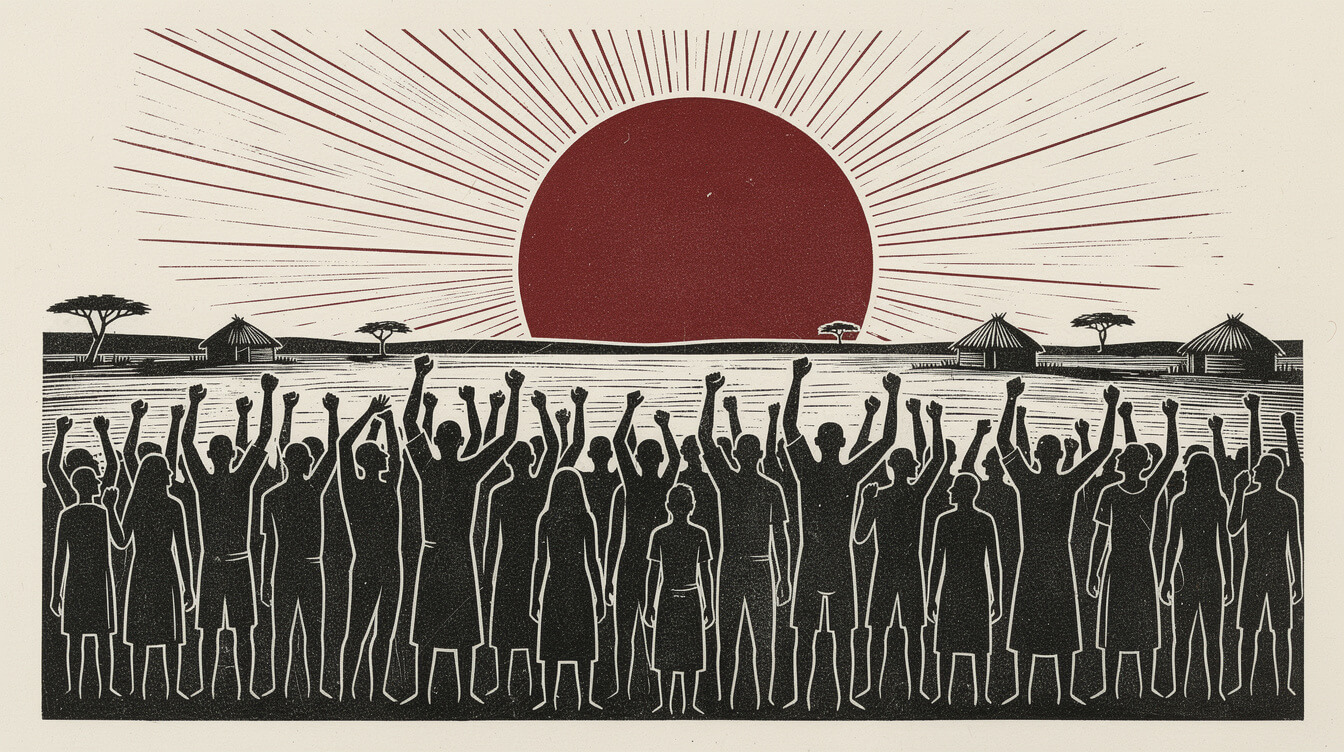
Before you heard a single bar, the cover told you what kind of record this was. The front of Let’s Get Free is an archival photograph of a crowd of young Black people, men and women, holding rifles in the air. The dead prez logo sits in the corner and “lets get free” is scrawled across the bottom in rough marker lettering. In 2000 it was about as far from a shiny-suit album cover as you could get.
Retailers made them cover the guns
Two independent reviews from 2000, in Denver’s Westword and the Seattle Weekly, both report that retailers forced the label to put a sticker over the guns. The Guardian later wrote that the cover was censored in many US outlets, describing it as aligning modern America with colonial-era Africa “in the form of an armed village preparing to strike.” The Providence Phoenix reported in March 2000 that the cover had already been “a source of conflict between the label and the group.” So the fight over the image started before the album even shipped.
Where is the photo from? Nobody agrees
This is the jewel. Ask the internet where the cover photo was taken and you’ll get four different answers:
- Westword (2000) said it showed the 1976 Soweto uprising in South Africa.
- The Guardian described it as colonial-era Africa, an armed village.
- Other writeups claim South African youth celebrating an anti-apartheid victory, which can’t be 1976.
- The Source (2014) called it Cuban.
The liner notes don’t settle it. They credit the cover concept to Stuart “Kamau” Lyle, art direction to Kerry DeBruce and dead prez themselves, illustration to Lorraine West, album photography to Anthony Cutajar, and the archival images to the Corbis photo agency. That’s it: no place, no year, no photographer. So the honest answer is that it’s an archival image of armed African youth whose exact origin has never been pinned down in print. That fits the album’s whole point. The specific battle mattered less than the idea that people who looked like you had once organized, stood together and fought back.
Why the cover still works on a shirt
Album covers that started arguments make the best tees, and this one started a lot of them. We put it on two versions: the original Dead Prez – Let’s Get Free T-Shirt in the warm sepia-and-red of the CD art, and a Let’s Get Free Black and White T-Shirt that strips it down to raw newsprint grayscale. No sticker over anything.

The Cover Retailers Tried to Sticker
The full Let’s Get Free cover, uncensored, on a premium tee. Wear the record that said it was bigger than hip-hop.
Who Produced Dead Prez Let’s Get Free? The Real Liner-Note Credits
Production credits on this album get mangled constantly. One anniversary piece says it was produced “exclusively by Lord Jamar and stic.” Another says Hedrush made “Hip-Hop.” A third says Kanye only did a remix. We went to the liner notes, transcribed on Discogs for the US LP and CD pressings, and counted track by track. Here’s how the 18 songs actually break down:
- dead prez alone (5): “Wolves,” “Hip-Hop,” “Mind Sex,” “Animal in Man,” “You’ll Find a Way.” A sixth, “Discipline,” is dead prez too, with the LP adding a co-credit for keyboardist Becca’s Smoke and Candy Store.
- Hedrush with dead prez (6): “I’m a African,” “‘They’ Schools,” “Police State,” “Behind Enemy Lines,” “We Want Freedom,” “Be Healthy.”
- Lord Jamar with dead prez (5): “Assassination,” “Psychology,” “Happiness,” “Propaganda,” “The Pistol.”
- Kanye West with dead prez (1): “It’s Bigger Than Hip-Hop.”
So the album is mainly dead prez’s own production, with Hedrush as the main outside partner and Lord Jamar on the darker, more classic East Coast cuts. dead prez are also credited, along with Sean Cane, Matt Life and Schott Free, as executive producers.
The bassline that started everything
“Hip-Hop” is the song everybody knows, and it’s credited to dead prez as producer, with Hedrush adding drum programming. Pitchfork describes the beat as “a warped, wobbly bassline written by stic.” The writer at Shatter the Standards says stic found it by fiddling with a sampling keyboard’s settings, drawing on the Miami-bass low end he grew up with in Florida. We’d call that last detail a good story with one source, so take it as color, not gospel. What’s provable is that there’s no credited sample on “Hip-Hop.” That rumbling, almost metal-sounding bass was built, not borrowed. Doug Wilson mixed it.
Kanye’s early placement
Yes, that Kanye. Years before The College Dropout, and before his soul-chop run on Jay-Z’s The Blueprint, Kanye West shares production and a writing credit with dead prez on “It’s Bigger Than Hip-Hop,” the album’s closing statement before the hidden tracks. Pitchfork and Albumism both point out the irony that one of rap’s most famous capitalists cut his teeth on an anti-commodification anthem. Pitchfork also mentions a Kanye remix of “Hip-Hop,” which is a separate record. On the album itself, his credit is “It’s Bigger Than Hip-Hop.”
The live players most people miss
This is where the liners pay off. Let’s Get Free isn’t just a drum machine and a sampler. Look at who’s on it:
- Melvin Gibbs, a veteran of New York’s downtown jazz and rock scene, plays bass on “Mind Sex,” “Discipline,” “Animal in Man” and “You’ll Find a Way.”
- Mark Batson, who later became a major-label producer, plays keys on “Wolves.”
- Mista Sinista of the X-Ecutioners handles the scratches on “I’m a African.”
- Bernard Grubman plays guitar on seven tracks, from “Mind Sex” and “We Want Freedom” to “It’s Bigger Than Hip-Hop” and “Propaganda.”
- Laura Seaton adds strings to the cinematic outro of “Animal in Man.”
That live-player layer is why the album’s softer half doesn’t sound like a typical 2000 rap record. It sits closer to the Brooklyn neo-soul and jazz world than to the Loud Records hardcore sound around it.
Where it was made
The US CD’s notes list sessions at three New York studios: The Cutting Room, Axis Recording Studios and Battery Recording Studios, where “It’s Bigger Than Hip-Hop” was recorded. Mixing happened mostly at Battery, with single tracks done at Sound On Sound and Mirror Image. Christos Tsantilis recorded and mixed the bulk of the album. It’s a Florida-rooted record made entirely in New York rooms, and you can hear both. Pitchfork heard the record “bridging the warm-weather energy of South Florida with the more conventional drums-and-orchestration of the East Coast.”
Today and Tomorrow: The Let’s Get Free Tracklist, Side by Side
Look at the US CD’s tracklist and you’ll notice something most reviews skip: the album is split into two halves. Tracks 1 through 8 sit under the heading “Today.” Tracks 9 onward sit under “Tomorrow.” Read with that in mind, the sequencing makes total sense. “Today” diagnoses the problem: schools, police, prison, violence, the music business. “Tomorrow” is the plan: freedom, health, discipline, happiness, finding a way. The album literally moves from analysis to program.
Today (tracks 1–8)
- “Wolves” is a short spoken piece by Chairman Omali Yeshitela, with keys by Mark Batson. It’s a parable about Arctic hunters who trick wolves into bleeding themselves to death on a blade. The metaphor is about how communities get turned against themselves, and it sets the tone for everything after it.
- “I’m a African” is a Pan-African identity anthem. M-1 opens by saying he wasn’t born in Ghana but Africa is his mother. The credits list excerpts from the Jungle Brothers’ “Straight Out the Jungle,” a nod to the Native Tongues Afrocentrism that came before them, plus Mista Sinista on the cuts.
- “‘They’ Schools” is the education track, with the quotation marks doing the work. Whose schools? Not ours. Remember the 10th-grade assembly.
- “Hip-Hop” is the single, the bassline and the Chappelle theme. Its point is often misread as hip-hop purism. It’s really about the labels exploiting artists the same way the street economy exploits the corner.
- “Police State” was the first single, from 1998. It opens with Yeshitela again and ties police, prisons and poverty together over one of Hedrush’s heaviest beats.
- “Behind Enemy Lines” uses recorded phone calls (credited to Ness, Toya and Divine). Shatter the Standards reads it as pointing to the case of Fred Hampton Jr., son of the Black Panther leader killed in a 1969 Chicago police raid.
- “Assassination” is one of Lord Jamar’s beats: two minutes on how poverty breeds violence, and one of the album’s bleakest moments.
- “Mind Sex” closes “Today” on a surprising note: a slow, grown love song about connecting mentally before physically, with Melvin Gibbs on bass. The poem is read by Abiodun Oyewole of the Last Poets. That’s a direct line from the 1970 spoken-word revolutionaries to the 2000 ones. (One popular anniversary piece puts Oyewole’s poem on “Happiness.” The liner notes put it on “Mind Sex.”) It was released as a single in August 2000.
Tomorrow (tracks 9–18)
- “We Want Freedom” borrows from “The Windmills of Your Mind,” credited in the notes to José Feliciano’s version. Wikipedia also notes dialogue from The Spook Who Sat by the Door, the 1973 film about a Black CIA trainee who turns his training into a revolution.
- “Be Healthy” is the vegan anthem, two decades early. Over a gentle guitar, they rap about eating right and cutting out junk. Then the credits say it: “jewels at end” by Prodigy of Mobb Deep, their Loud labelmate. Shatter the Standards hears him playfully riffing on the woozy “Infamous Prelude” from Mobb Deep’s The Infamous. Albumism points out the deeper layer: Prodigy lived with sickle-cell anemia his whole life and had to watch what he ate.
- “Discipline” is a short interlude with phone calls from Dedan and N.I.M.R.O.D. of Illegal Tendencies.
- “Psychology” is a Lord Jamar beat with a poem read by Umi and vocals by True Image. It’s about the mental side of oppression, which the album treats as just as real as the physical side.
- “Happiness” is the record’s sunniest moment, also Lord Jamar’s. Its credits list excerpts from Mary J. Blige’s “Be Happy.” That’s why Curtis Mayfield’s name appears in the writing credits: “Be Happy” itself is built on his work. That’s a three-generation chain of Black joy music.
- “Animal in Man” retells George Orwell’s Animal Farm as a class-struggle story in rhyme, then rides out on a long instrumental with strings, guitar and Gibbs’s bass.
- “You’ll Find a Way” adds horns and is the album’s encouragement song.
- “It’s Bigger Than Hip-Hop” features Tahir of Hedrush and People’s Army, with Kanye and dead prez on the boards. It was a single in 1999 and became the title of the 2006 documentary Dead Prez: It’s Bigger Than Hip Hop.
- “Propaganda” and “The Pistol” are the hidden tracks. On the CD, track 16 is followed by 27 four-second silent tracks, so “Propaganda” plays as track 44 and “The Pistol” as track 45. The back cover marks them only with asterisks. “Propaganda” is about media manipulation, and Wikipedia credits its closing voice to Black Panther co-founder Huey P. Newton. “The Pistol” features Maintain of Illegal Tendencies.
How it charted
Commercially, Let’s Get Free was a cult record, not a blockbuster. It peaked at No. 73 on the Billboard 200 and No. 22 on Billboard’s Top R&B/Hip-Hop Albums. “Hip-Hop” reached No. 49 on the Hot Rap Tracks chart and “It’s Bigger Than Hip-Hop” reached No. 43. You’ll sometimes see the album described as a Hot 100 hit, but that’s a mix-up: the Hot 100 is the singles chart. As far as we can find, there’s no RIAA certification. Its reach came later, and sideways.
Dead Prez Let’s Get Free’s Legacy: Chappelle, Nipsey and the Apples
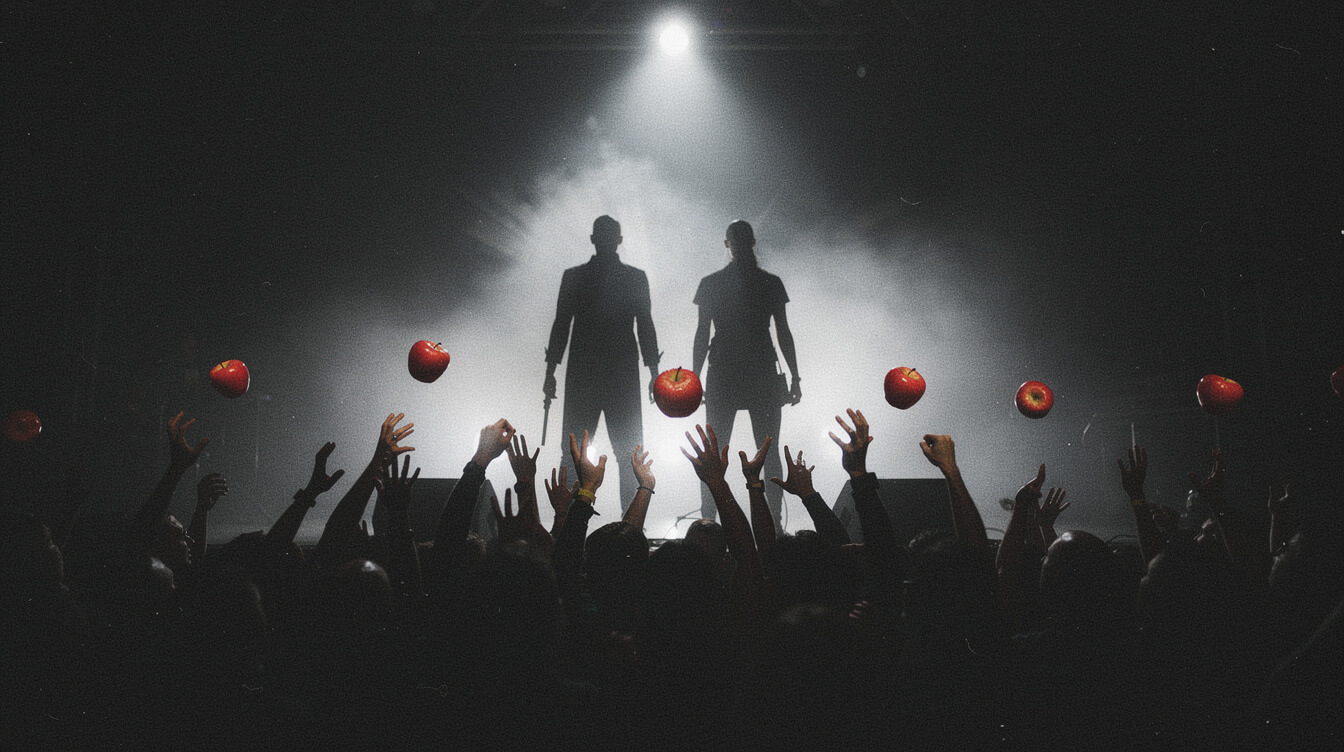
Chart positions undersell this album badly. Its influence spread through TV, through the health movement and through younger rappers who grew up treating it like a textbook.
The Chappelle’s Show effect
If you were watching TV in 2003, you heard “Hip-Hop” even if you’d never bought a dead prez record. The song’s instrumental was the opening music of Chappelle’s Show, as Pitchfork, Okayplayer and Wikipedia all note. Later, Netflix’s Hip-Hop Evolution used the song in its intro too. Albumism points out the irony: a documentary about hip-hop becoming a billion-dollar industry opens with a song warning about exactly that. Either way, the bassline became one of the most recognizable sounds of the 2000s without ever being a pop hit.
Health before it was a trend
Pitchfork remembered stic.man and M-1 “tossing apples into crowds and doing push-ups on stage.” Shatter the Standards also recalls them handing out fruit at shows, around the turn of the millennium, while everyone else’s videos were about premium vodka. “Be Healthy” wasn’t a gimmick. stic.man built a whole second career on it. He co-wrote Eat Plants Lift Iron (2015) with Afya Ibomu, released the fitness albums The Workout (2011) and Workout II (2020), and published The 5 Principles: A Revolutionary Path to Health, Inner Wealth, and Knowledge of Self with Hachette in 2022. Long before celebrity plant-based diets made headlines, two Loud Records rappers were handing out fruit to hip-hop crowds.
Nipsey wanted to remake it
Here’s the receipt that says the most about the album’s reach. On the Juan Ep Is Dead podcast, stic.man revealed that Nipsey Hussle told him he wanted to redo Let’s Get Free and asked for dead prez’s permission, about a year before Nipsey was killed in 2019. Uproxx, Okayplayer and The Source all reported it. Think about that lineage: an independent, ownership-obsessed Crenshaw rapper looking at a 2000 album about economic self-determination and seeing a blueprint. The remake never happened, but the line from “It’s Bigger Than Hip-Hop” to Nipsey’s whole philosophy is hard to miss.
The political-rap family tree
Critics placed Let’s Get Free in a lineage. The 2025 reissue copy repeats the old comparisons to Brand Nubian, X-Clan and The Coup, and calls it “the most politically conscious rap since Public Enemy.” You can trace both directions on our site. Look backward to every Public Enemy member and the Bomb Squad, or sideways to The Coup, whose Party Music had its own cover-art crisis. The closest contemporary was the Brooklyn conscious scene around Mos Def and Black Star. Pitchfork notes, though, that dead prez stood apart from it. Their peers were often positioned as an aesthetic. dead prez were selling a program.
The 25th anniversary
Legacy Recordings and Loud put out a 25th anniversary double LP on March 21, 2025. It followed earlier vinyl runs from Get On Down: a 2015 2LP that came with a fold-out cover poster, and a hand-numbered 2020 edition limited to 500 copies. The duo marked the milestone with a conversation event at BRIC in Brooklyn in March 2025, then took the album on the road across the US and Europe later that year. Pitchfork’s Rawiya Kameir quoted stic.man in 2019 saying he wished the album were obsolete, and that “unfortunately, it’s still relevant in the present.” If you’ve read a headline this year, you know what he meant.
What came after
dead prez followed with RBG: Revolutionary But Gangsta on Columbia in 2004. “RBG” became their shorthand for the whole philosophy. They kept the street-level edge alive with the Turn Off the Radio mixtape series and returned in 2012 with Information Age, their first album in eight years. None of it matched the debut’s impact. Few political rap albums of any era have.
Let’s Get Free FAQ
When was dead prez’s Let’s Get Free released?
Early 2000, on Loud Records. Sources split between February 8, 2000 (Wikipedia, AllMusic, The Source) and March 14, 2000 (XXL and the US CD listing). It entered the Billboard 200 on the chart dated April 1, 2000.
Who are the members of dead prez?
stic.man (Clayton Gavin, now Khnum Muata Ibomu), who grew up near Tallahassee, Florida, and M-1 (Lavonne Alford, now Mutulu Olugbala), from Brooklyn. They met in Tallahassee in the mid-1990s and formed the duo in 1996.
Did Kanye West produce on Let’s Get Free?
Yes, one song. The liner notes credit Kanye West and dead prez as producers of “It’s Bigger Than Hip-Hop,” and Kanye also has a writing credit on it. He did not produce “Hip-Hop” or “Mind Sex.” “Hip-Hop” is credited to dead prez, with additional drum programming by Hedrush.
Is “Hip-Hop” by dead prez the Chappelle’s Show theme?
Yes. The instrumental of “Hip-Hop” opened Chappelle’s Show. Netflix’s Hip-Hop Evolution later used the song in its intro as well.
Does “Hip-Hop” sample anything?
No sample is credited. The famous bassline was played and programmed by the group, and Pitchfork credits stic.man with writing it. The album’s credited borrowings are on other tracks: the Jungle Brothers on “I’m a African,” “The Windmills of Your Mind” on “We Want Freedom,” and Mary J. Blige’s “Be Happy” on “Happiness.”
Why was the Let’s Get Free cover censored?
The cover shows an archival photo of young Black people holding rifles. Retailers forced the label to sticker over the guns, according to contemporary reviews in Westword and the Seattle Weekly. Where and when the photo was taken has never been settled in print. The liner notes only credit the Corbis archive.
What are the hidden tracks on Let’s Get Free?
“Propaganda” and “The Pistol.” On the CD, they sit at tracks 44 and 45, after 27 four-second silent tracks. The back cover marks them only with asterisks.
Is Prodigy on Let’s Get Free?
Yes. Prodigy of Mobb Deep, dead prez’s labelmate at Loud, closes “Be Healthy” with what the credits call “jewels at end.” For more on him, read our tribute marking what would have been Prodigy’s 52nd birthday.
Final Thoughts: Still Bigger Than Hip-Hop
The easy way to remember Dead Prez Let’s Get Free is as “the Chappelle’s Show song album,” and that sells it short. Read the credits and the sequencing and you find something more deliberate. It’s a record split into “Today” and “Tomorrow.” It brings in a Last Poet, a Panther, a Uhuru chairman and Prodigy to make its case. It hides its two angriest songs behind 27 tracks of silence. And it wraps all of it in a cover so loaded that stores wouldn’t sell it bare.
Most political albums tell you what’s wrong. This one told you what’s wrong, then told you to eat better, read more, love smarter and organize. That second half is why it still gets passed down. If you’ve only ever heard “Hip-Hop,” start at “Wolves” and play it straight through to the hidden tracks. Then wear the cover they tried to hide: grab the Let’s Get Free tee and let somebody ask you what it means.
Stay creative — The Custom Creative Team
Get the Culture in Your Inbox
Album deep dives, liner-note receipts, anniversaries and first dibs on new drops. No spam, just hip-hop.

🎧 Never Miss a Drop
Exclusive product releases, hip-hop deep dives, and member-only discounts. Straight to your inbox.
Free forever. No spam. Unsubscribe anytime.
Get the Culture, Delivered
Deep dives into hip-hop history, exclusive product drops, and discounts sent straight to your inbox. No spam, just culture.
Join 2,000+ hip-hop heads already in the loop. Unsubscribe anytime.