Goodie Mob Soul Food Album: The 1995 Atlanta Debut That Named the Dirty South, Track by Track
The Goodie Mob Soul Food album landed on November 7, 1995, the same Tuesday GZA dropped Liquid Swords, and it did something no Atlanta rap record had done at that scale: it took the city seriously. Nineteen tracks, roughly an hour long, produced almost entirely by Organized Noize, released on LaFace, certified Gold the following summer. CeeLo, Khujo, T-Mo and Big Gipp made a record about poverty, faith, paranoia, police units, mothers and Sunday dinner, and in the middle of it they handed the whole region a name it still answers to.
This is the full breakdown: the real recording story (spoiler: the liner notes tell a different tale than the Dungeon legend), what every song is actually about, how “Dirty South” became a flag, the chart and certification receipts, and why a debut that peaked at No. 45 is now on Rolling Stone’s all-time list. If you need the backstory on the four men first, start with our Goodie Mob members guide, then come back for the album.
The Goodie Mob Soul Food Album at a Glance
Before the stories, the receipts. These are the facts that hold up across the liner notes, the RIAA database and Billboard’s own chart records.
The basics
- Released: November 7, 1995
- Label: LaFace Records, manufactured and distributed by Arista/BMG
- Length: 19 tracks, about 61 minutes, including seven short skits and interludes
- Producers: Organized Noize (Rico Wade, Ray Murray and Sleepy Brown) on every track, with Mixzo co-producing “Fighting”
- Executive producers: L.A. Reid and Organized Noize
- Guests: André 3000, Big Boi, Cool Breeze, Sleepy Brown, Joi, Witchdoctor, Roni and 4.0
Chart and certification receipts
The album debuted at No. 45 on the Billboard 200 on the chart dated November 25, 1995, its peak, and stayed on the chart for 29 weeks. It landed at No. 186 on Billboard’s 1996 year-end list, and Wikipedia’s chart table lists a No. 8 peak on the R&B/hip-hop albums chart. The RIAA certified it Gold on June 26, 1996. That’s the date in the live RIAA database, and it’s worth flagging because Wikipedia’s citation for the cert carries a wrong 2015 date. It has never been certified Platinum.
The three singles
- “Cell Therapy”: No. 39 on the Hot 100 and No. 1 on Billboard’s Hot Rap Singles chart. It remains the group’s only Top 40 hit.
- “Soul Food”: No. 64 on the Hot 100.
- “Dirty South”: No. 92 on the Hot 100. Some sources list that as a Billboard 200 position. It wasn’t; singles chart on the Hot 100.
Those numbers look modest next to what OutKast was doing on the same label. That gap between sales and reputation is a big part of this album’s story. It never needed to be a blockbuster to change what Southern rap was allowed to talk about.
Before Soul Food: An OutKast Feature and a LaFace Deal
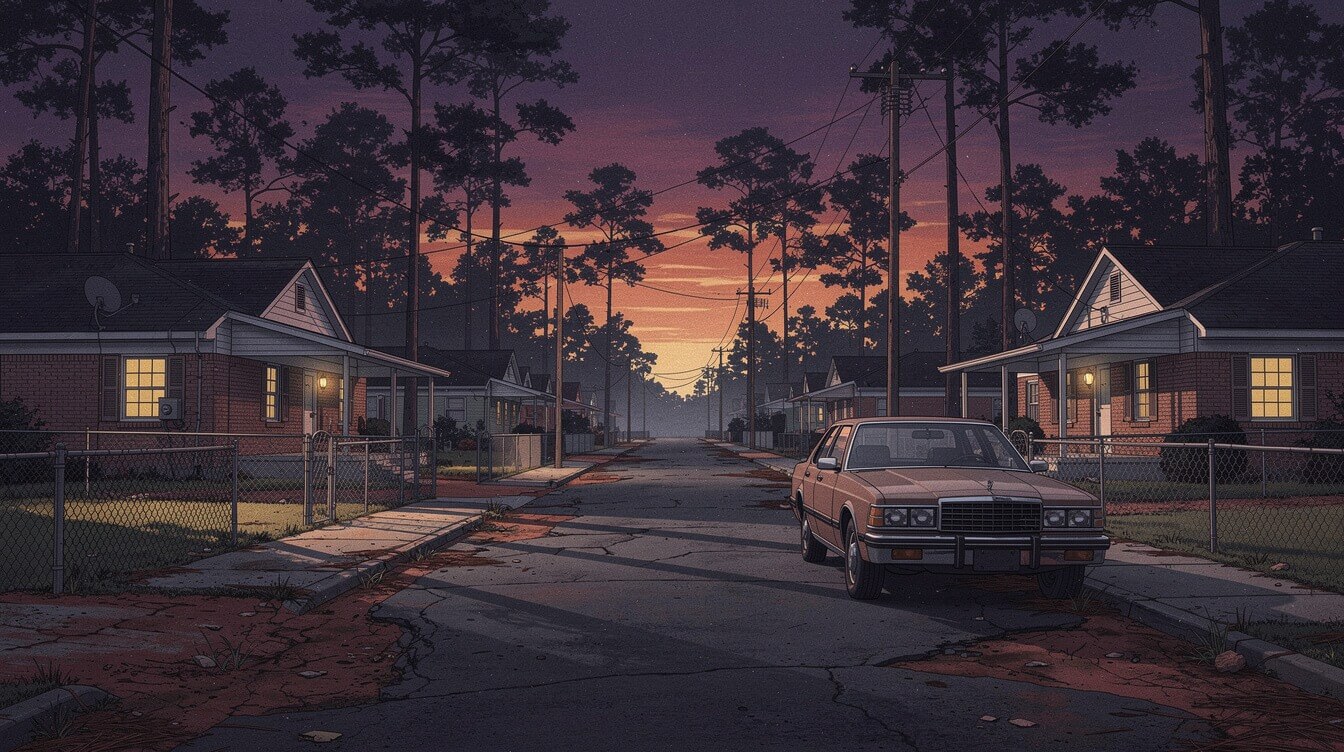
Before Soul Food, Goodie Mob’s name had already appeared on someone else’s record: “Git Up, Git Out” on OutKast’s 1994 debut Southernplayalisticadillacmuzik. The single is billed as featuring Goodie Mob, but check the writing credits on Discogs and only two of the four are listed: CeeLo (credited under the surname Burton, which he used at the time) and Big Gipp. Several retrospectives claim all four members are on that OutKast album. The credits say otherwise, and it’s a useful reminder that “featuring the group” on a 1994 sticker didn’t always mean the whole group.
The Dungeon Family pipeline
OutKast and Goodie Mob came out of the same orbit: the Dungeon Family, the collective built around Organized Noize and Rico Wade’s basement in East Point. OutKast went first and broke big, which gave LaFace a reason to keep listening to whoever else was hanging around that basement. As Pitchfork’s 2015 retrospective tells it, the four members only committed to working as one unit once LaFace chief L.A. Reid put a deal on the table. Whatever the exact sequence, by 1995 the label had a second Dungeon act, and it was a very different one.
What LaFace expected, and what it got
OutKast’s debut was a smooth, Cadillac-paced record about Atlanta living. A label could reasonably hope for more of that from its next Dungeon act. Goodie Mob instead turned in a record that opens with a hymn and keeps returning to death, surveillance, poverty and God. The four voices made that possible. CeeLo’s rasp could sing and preach, Khujo’s voice was gravel, T-Mo rapped with nervous energy, and Gipp’s baritone drawl was the lowest in the room. Nobody in rap at that moment sounded like these four together.
The Atlanta they were writing about
Members have said the city’s civil-rights history mattered to how they saw themselves. Big Gipp, quoted by Ambrosia for Heads in 2015, pointed out that Martin Luther King Jr. was from downtown Atlanta and said that meant something to them. CeeLo put it more bluntly to XXL in 2015, saying they were “fighting for the civil rights of Southern hip-hop.” That framing explains the album’s tone: this wasn’t a party record that occasionally got serious. It was a serious record that occasionally let you eat.
Where Soul Food Was Really Made: Curtom, Purple Dragon and the Dungeon Legend
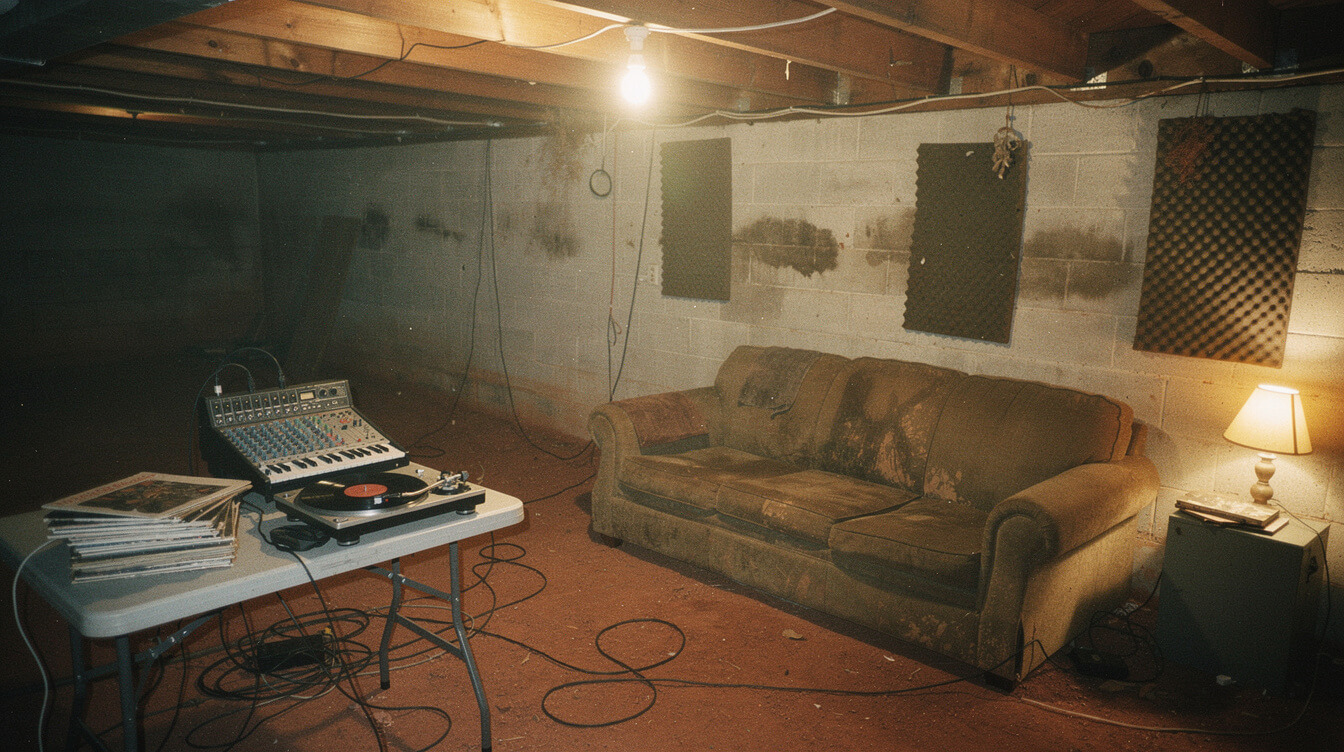
Ask most fans where Soul Food was recorded and you’ll hear one answer: the Dungeon, Rico Wade’s red-clay basement. It’s a great story, and the Dungeon was clearly where the crew lived, wrote and argued. But the album’s own booklet tells a more interesting one.
What the liner notes say
The Canadian CD booklet, transcribed on Discogs, lists five Atlanta recording studios: Purple Dragon, Bosstown, Curtom Recording Studio, Studio LaCoCo and Tree Sound. Mixing happened at LaCoCo, Bosstown, Soundtrack Studios and Sound On Sound in New York, and Herb Powers Jr. mastered it at the Hit Factory. The word “Dungeon” doesn’t appear anywhere in the credits.
The Curtis Mayfield connection
Curtom is the jewel in that list, because it was Curtis Mayfield’s studio. Rico Wade told Complex in 2012 that the crew rented Curtis’s house because it had a studio in it, and both Okayplayer and Classic Album Sundays describe much of the album being cut there. Wikipedia’s infobox simply says “Curtis Mayfield’s House.” Organized Noize’s sound always leaned on ’70s soul, so recording the album in a soul legend’s own room fits the music.
So is the Dungeon story wrong?
Not exactly. Organized Noize’s Mr. DJ and members interviewed by Variety in 2020 still describe the Dungeon as the creative center. The fairest reading is that the Dungeon was where the ideas were born and the studios on the booklet were where the album was tracked and finished. If you see a confident claim that every note was cut in that basement, the liner notes disagree.
The players behind the “organic” sound
Critics have long called Soul Food unusually musical for a 1995 rap album, and the credits back that up. Live musicians on the record include:
- Preston Crump on bass
- Martin Terry on guitar
- Dean Gant on keys
- Marlene Rice on strings, viola and violin on “Guess Who” and “I Didn’t Ask to Come”
- Colin Wolfe on guitar for “Dirty South” and bass for “The Coming”
- Tomi Martin on guitar for “Thought Process”
- Carlos Glover on keys for the “Blood” interlude
Notice what’s missing: neither the US nor the Canadian booklet credits a single sample. Rico Wade has said the team avoided samples, though one interview has Mr. DJ remembering a sample running on “Goodie Bag”, so treat “zero samples” as the crew’s philosophy rather than a hard rule.
T-Mo’s all-nighter
One recording story checks out in two separate interviews. T-Mo struggled with his verse on “Guess Who”, the song about their mothers, and stayed overnight at Purple Dragon to get it right. CeeLo confirmed the story to Variety in 2020, and T-Mo talked about how hard that song was in a Thrasher interview the same year. T-Mo also told Variety the group recorded around 20 songs for the project, so what you hear is an edit, not everything they had.
The Goodie Mob Soul Food Album, Track by Track
Here’s what every song on the Goodie Mob Soul Food album is about, who carries it and the credit details worth knowing. Skits are grouped with the songs around them, because that’s how the album plays.
1. “Free” (1:23)
The album doesn’t open with a beat. It opens with CeeLo singing a short spiritual, almost a church solo, about being worn down and wanting release. It tells you right away this record has a different relationship to gospel than anything else in rap that year. The writing credit lists him as Thomas Burton, while later reissues use Callaway. They’re the same person.
2. “Thought Process” (5:09), with André 3000
T-Mo opens a slow, anxious song about overthinking: money, survival and whether any of it is worth it. André 3000 joins from OutKast, with Joi adding vocals per the Discogs credits. Critics often credit Khujo’s verse here with one of the earliest uses of “the trap” on a major-label record. It’s a contested claim, though. A 2020 Khujo interview gives André the credit for saying it first, so call it an early landmark rather than the definitive first.
3. “Red Dog” (skit) and 4. “Dirty South”, with Big Boi and Cool Breeze
“Red Dog” is a 23-second sketch referencing the Atlanta police unit of that name, and it sets up the next song. “Dirty South” is a portrait of Atlanta street life: the dealing, the policing and the real local places. Here’s the detail most people miss: Big Gipp is the only Goodie Mob member who raps on it. The other verses belong to Dungeon Family elder Cool Breeze and OutKast’s Big Boi. Writing credits go to Gipp, Patton (Big Boi) and Bell (Cool Breeze). We’ll come back to why this one matters so much.
5. “Cell Therapy” (4:38)
The lead single and the group’s biggest hit is a paranoid masterpiece. The members describe a gated apartment complex that is sold as safety but feels like a cage. They pile on curfews, surveillance, black helicopters and “New World Order” fears,. Brandon “Shug” Bennett is credited with additional vocals. According to Sleepy Brown, the song grew out of a copy of Milton William Cooper’s conspiracy book Behold a Pale Horse that was being passed around Dallas Austin’s studio. According to a 2015 Watch Loud interview, the label picked it as the lead single over the safer “Thought Process.”
6. “Sesame Street” (4:36)
The title is a children’s TV show; the song is about growing up poor and Black and why the streets pull kids in. It’s built like a lesson, which is fitting, because the album keeps acting like a sermon delivered by four different preachers.
7. “Guess Who” (4:48)
This is the emotional center of the album. All four members pay tribute to their mothers over Marlene Rice’s strings, describing the women who held their households together. The album itself is dedicated to CeeLo’s late mother, Sheila. T-Mo pointed out to Thrasher that 2Pac’s “Dear Mama” came out the same year, two very different records reaching for the same thing.
8. “Serenity Prayer” (skit) and 9. “Fighting”, with Joi
A nine-second prayer leads into the album’s battle cry. “Fighting” is about Black strength and staying unbroken, and it’s the one track Organized Noize didn’t produce alone: Mixzo co-produced it. Khujo told Variety it held one of his hardest verses to write. CeeLo closes it with an a cappella passage that spells out the acronym behind the group’s name, a line about good people dying young over things not worth dying for.
10. “Blood” (skit) and 11. “Live at the O.M.N.I.”
“Blood” is a short interlude with Carlos Glover on keys. “Live at the O.M.N.I.” turns to the prison system and white supremacy, as direct as the album gets about the forces it believes are boxing people in. Watch out for the title: you’ll see it misprinted as “Live From the OMNI” in at least one major retrospective.
12. “Goodie Bag” and 13. “Soul Food”, with Sleepy Brown and 4.0
“Goodie Bag” is the album’s weed song and its loosest moment. Mr. DJ, Rico Wade’s cousin, told Complex he added uncredited drums to it. Then comes the title track. Over Sleepy Brown’s hook, the members run through their favorite soul-food spots and family meals and take a shot at fast food. It sounds light, but Rico Wade told Complex the title was about family more than food, which is how the whole album should be heard. Our Goodie Mob Soul Food T-Shirt puts that famous cover, four men bowing their heads at a diner table, front and center.
14. “Funeral” (skit) through 19. “The Day After”
The back half is where casual listeners drop off and where the album earns its reputation. After a skit staged as a funeral, “I Didn’t Ask to Come” deals with mortality and fate, again carried by Marlene Rice’s strings. Two short skits, “Rico” and “Cee-Lo”, frame the album’s last two songs. “The Coming”, with Witchdoctor, is a gritty street story with Colin Wolfe on bass. “The Day After”, featuring Roni, closes the record on a heavy, reflective note rather than a victory lap. Very few debuts in 1995 had the nerve to end this quietly.
“Dirty South”: How a Cool Breeze Phrase Became a Region’s Flag
Of all the things the Goodie Mob Soul Food album gave hip-hop, the phrase “Dirty South” has traveled furthest. It became a radio format, a marketing category, a fashion term and eventually a shorthand for a whole era of Southern dominance. But the man who coined it is rarely the one who gets named.
Cool Breeze’s phrase
Rico Wade was clear about this in his 2012 Complex interview: “Dirty South” was Cool Breeze’s idea. Big Gipp heard Breeze’s song and brought it to Rico, and it got reworked for Soul Food. Wade also admitted, with some regret, that nobody thought to trademark it and that Breeze never made money from the phrase. Albumism and Wikipedia both credit Breeze with coining the term too. Cool Breeze told his own version of the story to Red Bull Music Academy in 2019.
The timing with André’s Source Awards speech
NPR’s 2020 history of Southern rap places the song in context. In August 1995, OutKast won Best New Artist at the Source Awards in New York and André 3000, facing a hostile crowd, declared that the South got something to say. About three months later, Soul Food arrived with a song that put a name on what he meant. Read together, the two moments look like a coordinated answer from the same basement, even if nobody planned it that way.
The sound underneath it
Musically, “Dirty South” is laid back rather than aggressive, which is part of why it stuck. Wikipedia and Albumism both trace it to Hubert Laws’ “Passacaglia in C Minor.” That’s worth knowing because the liner notes credit no samples at all, so treat the Laws connection as well reported rather than liner-confirmed. Colin Wolfe’s guitar on the track is credited.
Why it still matters
Before 1995, the South was often treated by the coastal rap press as a novelty market of bass music and party records. Our histories of Rap-A-Lot Records and 8Ball and MJG show how much serious music was already being made down there. What “Dirty South” did was give that music a shared identity, an umbrella phrase that let Houston, Memphis, New Orleans and Atlanta be talked about as one movement. That’s a lot of weight for a track with only one Goodie Mob verse on it.
Reception, Gold and the Long Afterlife of Soul Food

The critical response was strong from the start and has only grown.
The 1995 reviews
The Source gave the album 4 mics in its December 1995 issue (No. 75), in a review by Allen S. Gordon. For a debut from a group most of the coastal press had barely heard of, that was a statement.
How the reputation grew
Later critics went further. AllMusic’s Steve Huey gave it five stars and called it “arguably the city’s first true classic.” RapReviews gave it a perfect 10. In 2022, Rolling Stone placed it at No. 169 on its list of the 200 Greatest Hip-Hop Albums of All Time. That’s a long way from a No. 45 chart peak, and it says a lot about how the record was undervalued in its moment.
“Cell Therapy” outlives its era
The lead single kept finding new audiences. It plays in Barry Jenkins’ Moonlight, the 2016 Best Picture winner. Big Gipp told Variety in 2020 that people finally understood the song once the pandemic lockdowns made its talk of curfews and control feel less like paranoia.
Outtakes, reissues and the 30th anniversary
The sessions produced more than the album could hold. Rico Wade told Complex that “Hold On”, later released by Big Boi in 2005, was originally a Soul Food-era cut. For the 25th anniversary, the Soul Food (25th Anniversary Expanded Edition) arrived digitally on November 6, 2020, with eight bonus tracks including an extended version of “Free” and a remix of the title track featuring 8Ball & MJG. Rico Wade, the Dungeon’s architect, died on April 13, 2024. In May 2025, the album’s 30th-anniversary year, CeeLo announced Goodie Mob’s farewell. That farewell never fully happened, and the members guide covers the twists since.
Its place in the Dungeon Family catalog
OutKast’s run gets the headlines, and our Aquemini tracklist breakdown shows why. But Soul Food is the album that set the collective’s spiritual and political tone. If you want the whole family at full strength, the Dungeon Family’s Even in Darkness is the logical next listen, and the OutKast Aquemini T-Shirt is the companion piece for heads who rep both groups.
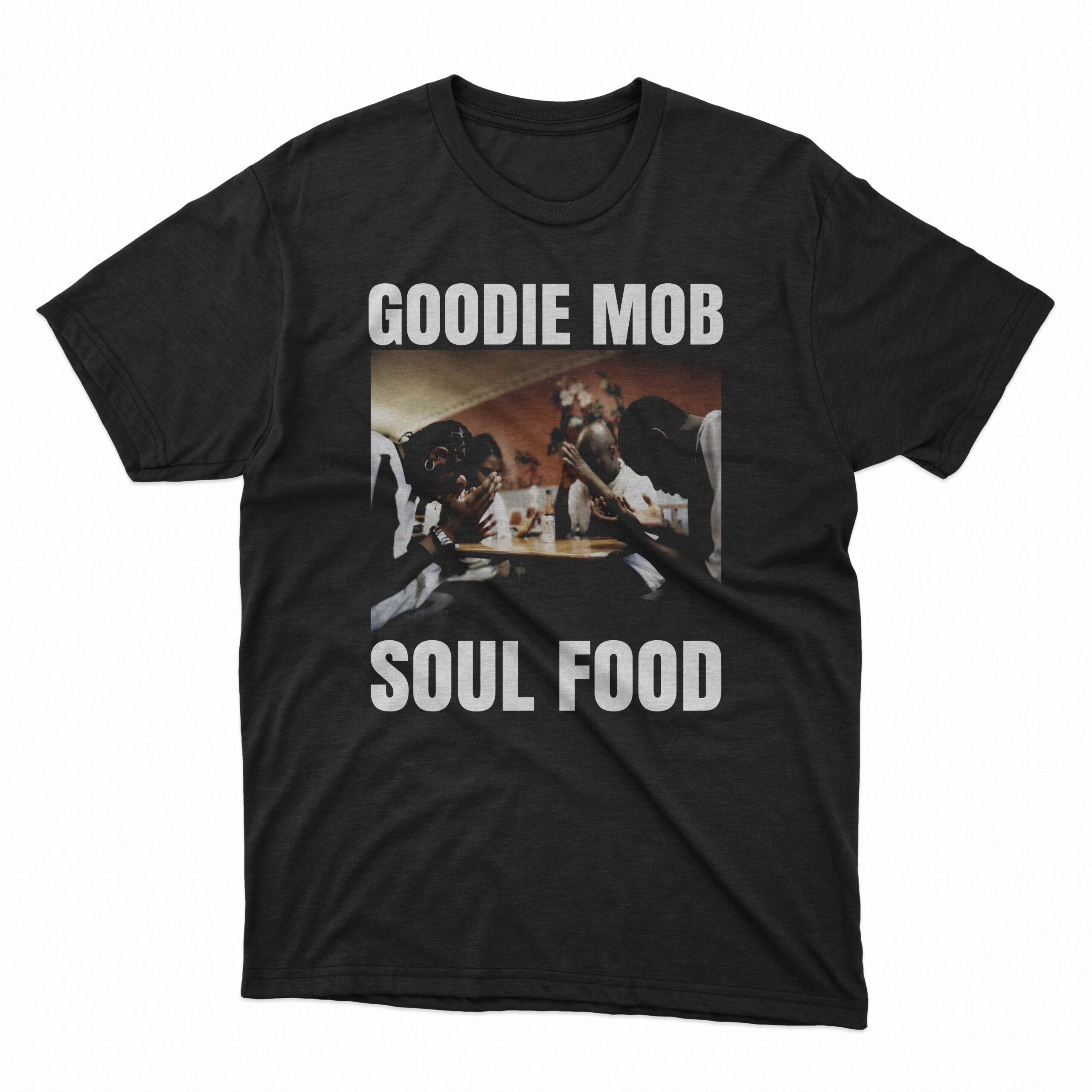
Grace Before the Meal
Four heads bowed at a diner table, the cover that introduced the Dirty South. Our Goodie Mob Soul Food tee carries the 1995 image for heads who know the back half of the album by heart.
Goodie Mob Soul Food Album FAQ
When did the Goodie Mob Soul Food album come out?
November 7, 1995, on LaFace Records. GZA’s Liquid Swords came out the same day.
Who produced Soul Food?
Organized Noize, the team of Rico Wade, Ray Murray and Sleepy Brown, produced the whole album. Mixzo co-produced “Fighting.” L.A. Reid and Organized Noize were the executive producers.
Did Soul Food go gold?
Yes. The RIAA certified it Gold on June 26, 1996. It has not been certified Platinum.
Is OutKast on Soul Food?
Not as a group, but both members appear separately. André 3000 is on “Thought Process” and Big Boi is on “Dirty South” (he’s also credited on the “Red Dog” skit).
Who coined the term “Dirty South”?
Dungeon Family member Cool Breeze. Rico Wade credited him in a 2012 Complex interview, and Albumism and Wikipedia agree. Big Gipp brought Breeze’s song to Organized Noize, and it became the album’s third single.
What is “Cell Therapy” about?
Surveillance and control. It imagines a gated “safe” community that works more like a prison and mixes in curfews, helicopters and New World Order conspiracy fears. Sleepy Brown has said the book Behold a Pale Horse shaped it. It reached No. 39 on the Hot 100 and No. 1 on Hot Rap Singles.
Where was Soul Food recorded?
The liner notes credit five Atlanta studios, including Curtis Mayfield’s Curtom Recording Studio, with mixing in Atlanta and New York. The Dungeon, Rico Wade’s basement, was the crew’s creative home, but it isn’t listed in the credits.
Is Soul Food Goodie Mob’s best album?
That’s a matter of taste, but the critical consensus leans yes. It’s the one with the 4-mic Source review, AllMusic’s five stars and a place on Rolling Stone’s 2022 all-time list. Still Standing (1998) was the bigger commercial moment.
Final Thoughts: Why the Goodie Mob Soul Food Album Still Feeds People
The Goodie Mob Soul Food album never topped a chart and never went Platinum. What it did was harder. It proved a Southern rap group could make a record about faith, fear, mothers, police and poverty without asking New York’s permission, and it gave the region a name to rally behind. The liner notes even complicate the origin myth: a record credited to studios across Atlanta, including Curtis Mayfield’s, carrying the soul of the basement it came from.
Thirty-one years on, it still plays like a family dinner with something heavy to discuss: four voices, one table, everybody saying grace before the hard conversation starts. Put it on front to back, skits included, and give the back half the attention it was built for.
Stay creative. The Custom Creative Team
Get the Liner-Note Receipts First
One email a week: album deep dives, producer credits and new drops from the Custom Creative team. No spam, just culture.

🎧 Never Miss a Drop
Exclusive product releases, hip-hop deep dives, and member-only discounts. Straight to your inbox.
Free forever. No spam. Unsubscribe anytime.
Get the Culture, Delivered
Deep dives into hip-hop history, exclusive product drops, and discounts sent straight to your inbox. No spam, just culture.
Join 2,000+ hip-hop heads already in the loop. Unsubscribe anytime.