1520 Sedgwick Avenue: Inside the Bronx Building Where Hip-Hop Was Born
There’s no plaque worth flying in for, no velvet rope, no gift shop. Just a beige 18-story apartment building on a hill in the Morris Heights section of the Bronx, doing exactly what it was built to do in 1967: house working families who paid their rent on time. But walk down to the recreation room in the basement, and you’re standing in the epicenter of a global industry worth tens of billions of dollars a year. 1520 Sedgwick Avenue is the address hip-hop history keeps circling back to — the block, the building, the basement where a Jamaican immigrant kid named Clive Campbell plugged two turntables into a stolen amp and changed what music could sound like, forever. This is the real story of that address: what actually happened there on August 11, 1973, and why the culture still calls it home.
Why the Bronx Was Burning Around 1520 Sedgwick Avenue in 1973
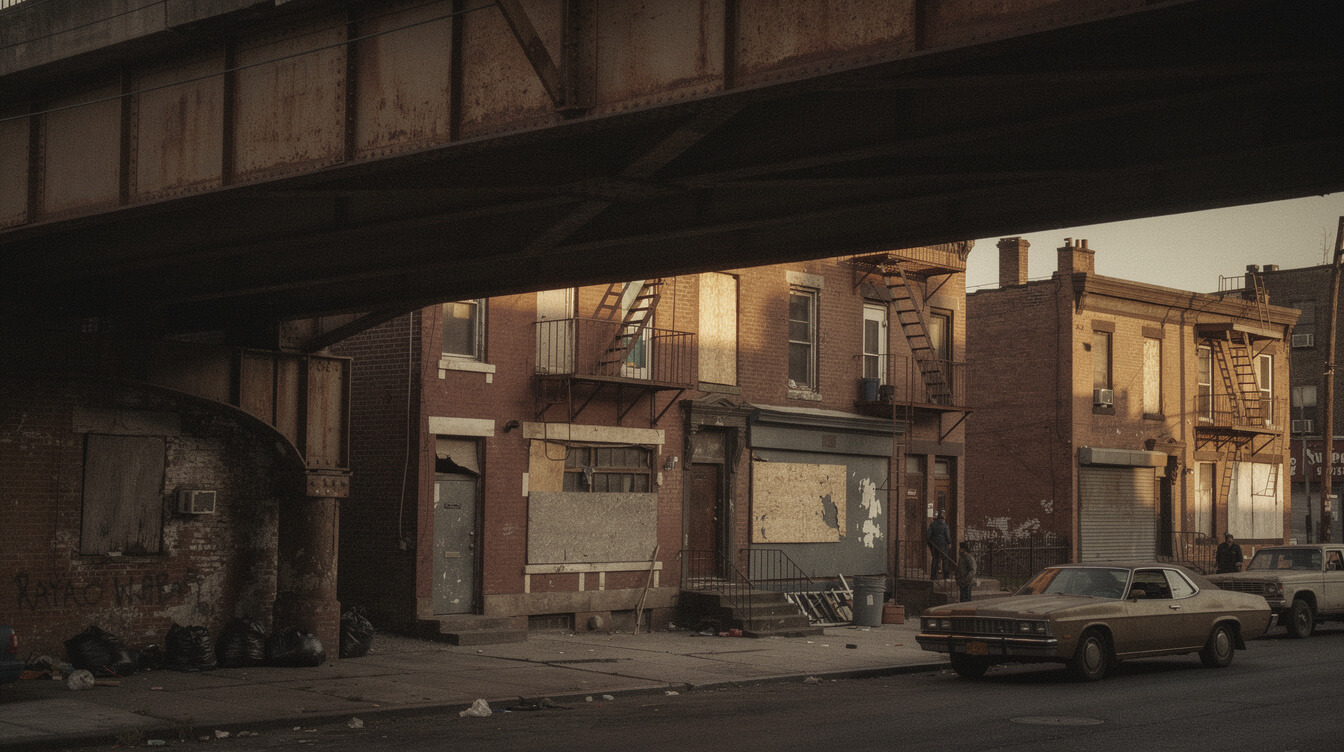
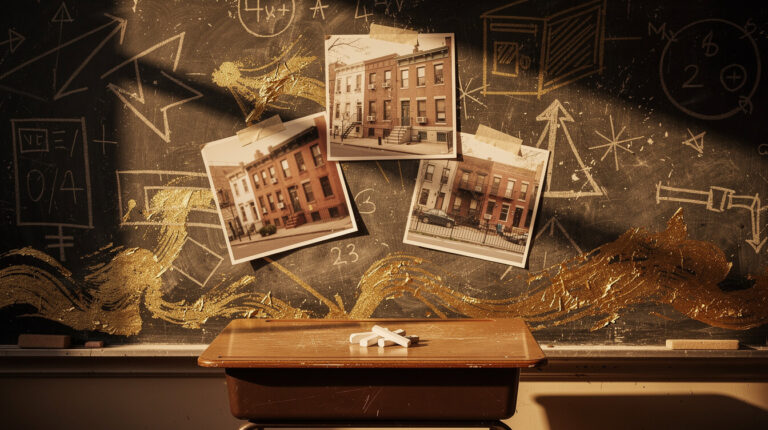
To understand why a basement party in the Bronx became the ignition point for a new art form, you have to understand what the Bronx looked like in the early 1970s. Robert Moses’s Cross Bronx Expressway had already carved straight through the borough, displacing tens of thousands of families and gutting entire neighborhoods to make way for six lanes of traffic that didn’t even stop there. Landlords, watching property values collapse in the expressway’s wake, found it more profitable to torch buildings for insurance money than to keep paying for heat and maintenance. Whole blocks went dark. Whole blocks went silent — except they didn’t stay silent for long.
What rose out of that abandonment wasn’t just crime and decline, even though that’s the only version of the story most outsiders ever got. It was also a generation of Black and Puerto Rican kids building their own culture out of what was left standing: community centers, rec rooms, playgrounds, and block parties powered by stolen streetlight electricity. Gang truces — the Ghetto Brothers’ 1971 peace treaty chief among them — cleared space for something else to take root where turf wars used to run. 1520 Sedgwick Avenue sat right in the middle of all of it, a Mitchell-Lama building for working-class families that happened to have a recreation room with a floor built for exactly one thing: a party.
This context matters because 1520 Sedgwick Avenue isn’t a hip-hop origin story in isolation — it’s a Bronx survival story that happens to have a drumbeat. Every era of the culture since has carried that same DNA: make something undeniable out of whatever’s left in the room.
And the survival instinct wasn’t limited to the sound. While Herc and his crew were building a new relationship to the turntable, kids a few blocks over were doing the same thing to the sides of subway cars and handball courts — claiming abandoned surfaces the same way Herc claimed an abandoned break beat. DJing and graffiti grew up as siblings in that landscape, both answering the same question: what do you build when the city has stopped investing in you? By the time hip-hop had a name, it already had four pillars standing — DJing, MCing, breaking, and writing — and every one of them traces back to this exact stretch of the Bronx refusing to disappear quietly.
August 11, 1973: Cindy Campbell’s Back-to-School Jam
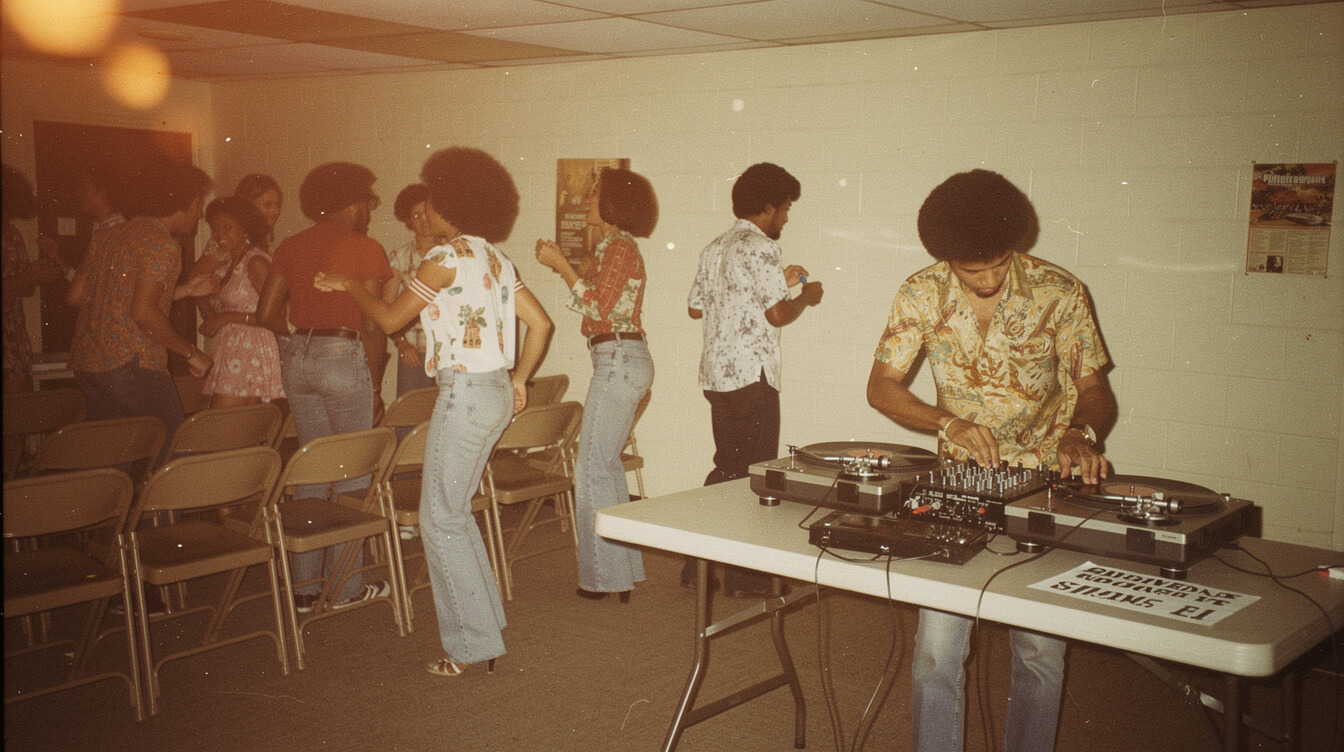
Here’s the part most retellings flatten: the party at 1520 Sedgwick Avenue wasn’t a grand cultural statement. It was a fundraiser thrown by an 18-year-old girl who needed new school clothes. Cindy Campbell rented the building’s recreation room for $25, charged 25 cents admission for women and 50 cents for men, and hand-wrote the invitations on index cards so all her older brother had to do was show up and play records. Their parents covered the rest — snacks from mom, sodas and beer picked up from a local beverage warehouse by dad. Doors opened at 9 p.m. Nobody was going home before 4 a.m.
That older brother was Clive Campbell, a towering, soft-spoken kid from Kingston, Jamaica who’d been in the Bronx since he was twelve and already went by a nickname from the schoolyard: Hercules, shortened to Kool Herc. He’d grown up around Jamaican sound system culture — massive speaker stacks, DJs talking over records, crowds moving as one — and he’d spent months quietly working out a way to bring that same physical, bass-heavy experience to a Bronx rec room with none of the budget and all of the ambition.
Herc set up on a folding table. Two turntables, a mixer, and a couple of hundred people packed into a space built for maybe half that many. His friend Coke La Rock grabbed the mic between records to shout out names in the crowd and keep the energy climbing — a role nobody had a name for yet, because the role didn’t exist before that night. It does now. We call it the MC.
The Break Beat Technique That Started Everything
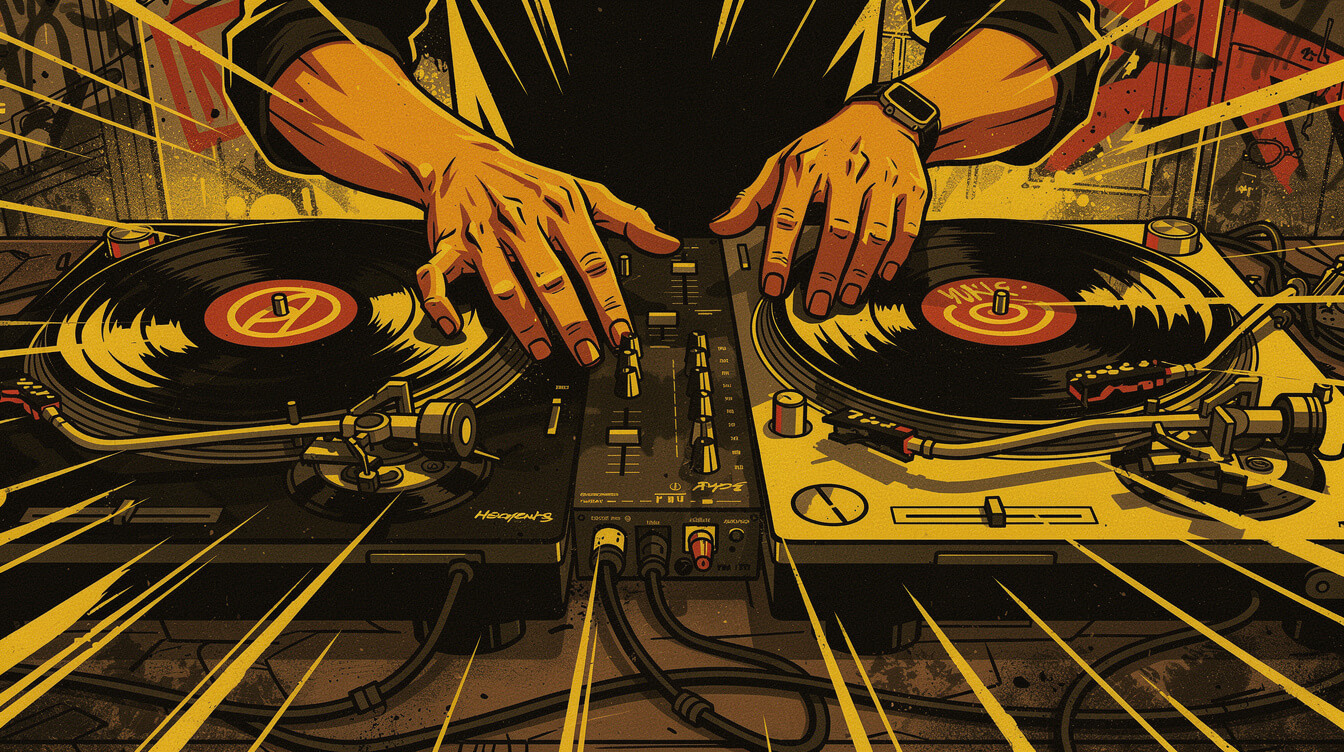
The technical breakthrough Herc unveiled that night is the part every DJ, producer, and beatmaker since owes a direct debt to. He’d noticed something on the dancefloor at earlier, smaller parties: when a record hit its instrumental break — the stripped-down, drum-and-bass “get-down” section where the vocals and horns drop out — the room went off. Dancers waited for it. The problem was the break usually lasted four, maybe eight bars before the song moved on.
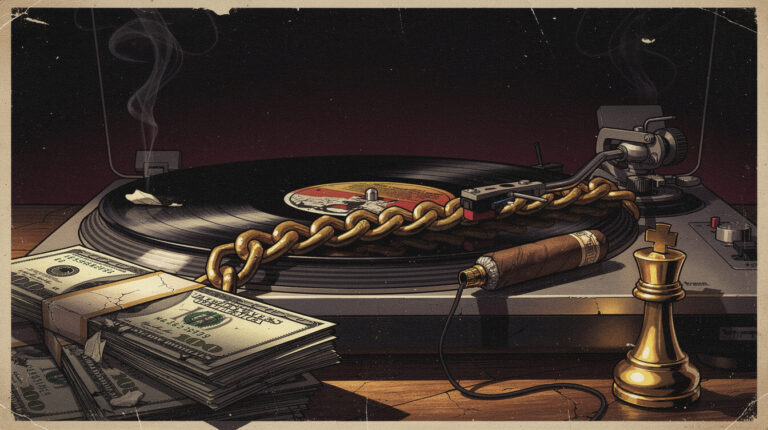
So Herc bought two copies of the same record and put one on each turntable. He’d play the break on deck one, and just as it ended, cue up the identical break on deck two and drop it in, cutting back and forth between the two copies to loop that same few seconds of drums indefinitely. He called it the Merry-Go-Round. It’s the direct ancestor of sampling, looping, and the entire concept of a “beat” as something separate from a song. The records he leaned on hardest — James Brown’s “Give It Up or Turnit a Loose,” the Incredible Bongo Band’s “Apache,” Baby Huey’s “Listen to Me” — became the founding texts of break-beat culture, the same records digging crates would chase for the next five decades.
The dancers who lived for those extended breaks needed a name too, and they got one that night and in the parties that followed: b-boys and b-girls, “break boys” and “break girls,” dancing to the break. Breaking, scratching, freestyling over a loop — the entire toolkit traces back to a guy solving a very specific problem with two copies of the same record on a folding table in a basement.
Fast-forward a decade and that same instinct — dig for the drum break nobody else noticed, isolate it, loop it, build a whole record around it — became the entire foundation of golden-age sample-based production. Marley Marl, the Bomb Squad, Prince Paul, and every crate-digging producer who followed were running Herc’s Merry-Go-Round through an MPC instead of two turntables, but the logic never changed: the break is the song. That’s the thread connecting a Bronx rec room in 1973 to Wu-Tang’s RZA chopping soul 45s twenty years later — same technique, different tools.
Who Was in the Room That Night
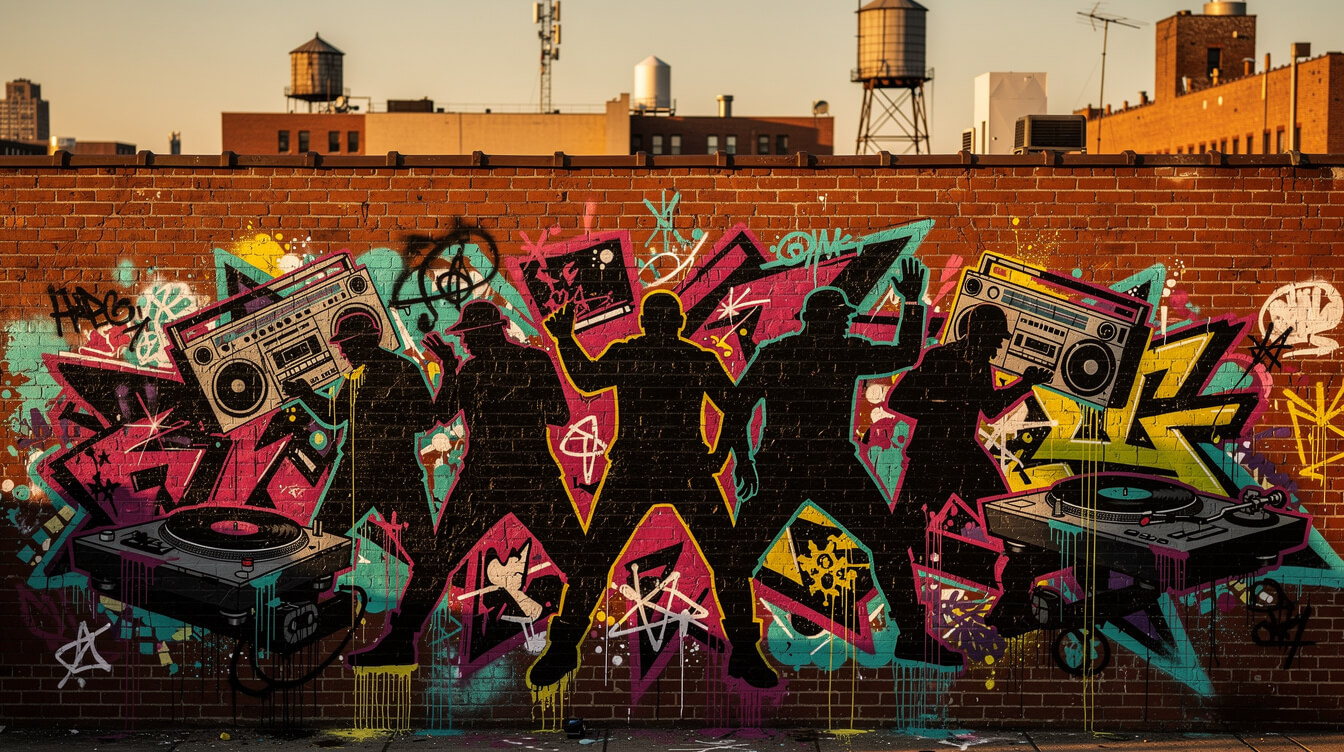
Ask around and you’ll hear a lot of names claimed for that August night — a sign of exactly how big the moment became in hindsight, since half the Bronx eventually swore they were there. What’s documented is that the party and the parties that followed at 1520 Sedgwick planted the DJ scene that produced Grandmaster Flash, Afrika Bambaataa, Kool DJ Red Alert, and the Cold Crush Brothers’ Grandmaster Caz — the first generation to take Herc’s technique and push it further, adding scratching, cutting, and eventually full crews built around a DJ and an MC trading the spotlight.
From that rec room, the sound moved out into the streets — into parks, community centers, and eventually block parties powered by tapped streetlights all over the Bronx. And once the DJ sets moved outdoors, the boombox became the delivery system that carried the culture out of any one building and into every borough at once. If the sound system at 1520 Sedgwick was the altar, the boombox on somebody’s shoulder was the pulpit that took the sermon on the road. That’s the exact era our LL Cool J “I Can’t Live Without My Radio” Hoodie is built to honor — the boombox-on-the-shoulder, radio-as-religion years that turned a Bronx basement scene into a movement nobody could contain to one block anymore.
Read the fuller day-by-day breakdown of hip-hop’s anniversary at 1520 Sedgwick for how the annual celebration of that night has grown alongside the culture itself.
1520 Sedgwick Avenue: From Rec Room to Registered Landmark
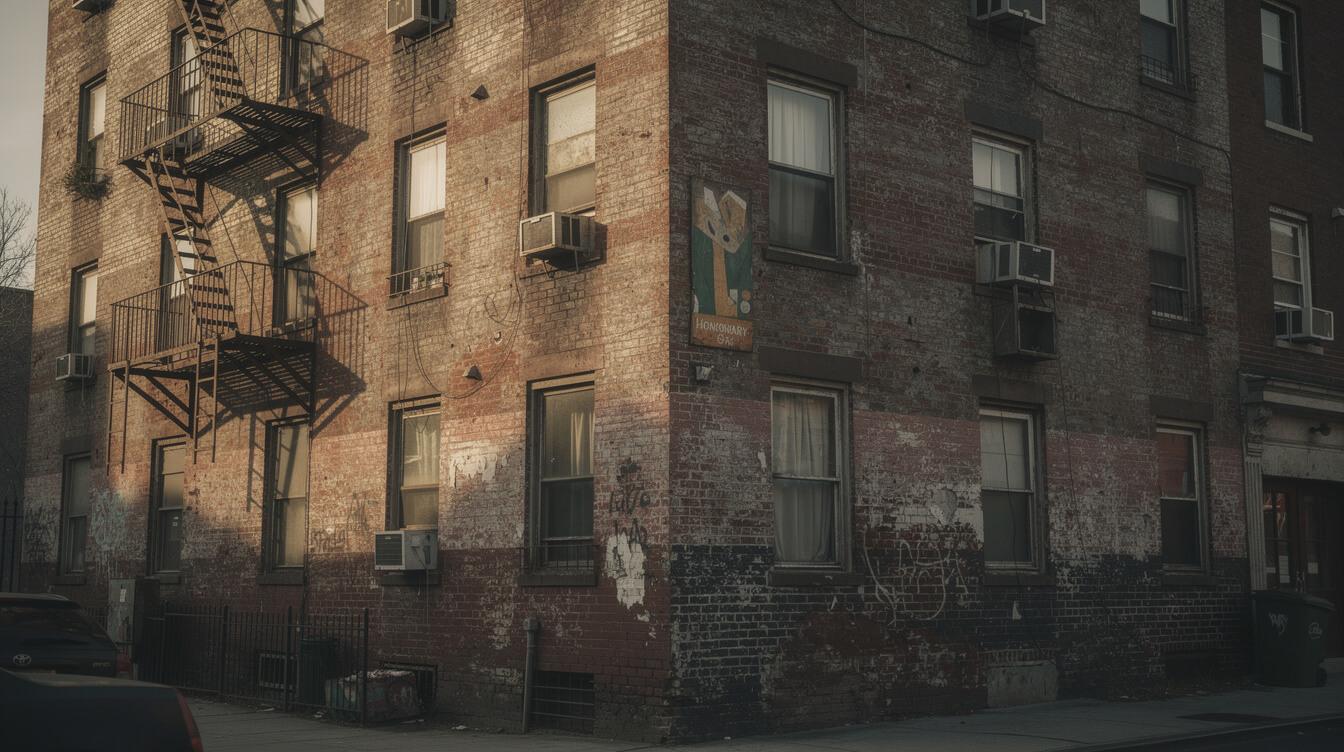
For most of its life after 1973, 1520 Sedgwick Avenue got none of the reverence it earns today. It stayed what it always was: a working-class Mitchell-Lama building fighting the same battles as every other affordable housing block in New York. In the early 2000s, owners moved to convert it to market-rate housing, threatening the very residents whose parents had thrown that first party. Then-Senator Chuck Schumer led a rally in 2007 to keep the building affordable, and that same year — July 5, 2007 — the New York State Office of Parks, Recreation and Historic Preservation formally recognized 1520 Sedgwick Avenue as the birthplace of hip-hop. The building got the title. The tenants still had to fight for the building itself.
The fight got worse before it got better. A 2008 sale to a real estate group aimed squarely at market-rate conversion collapsed into neglect when the housing market crashed. By 2010, the city’s Housing Development Corporation stepped in with a $5.6 million loan to help a new ownership group buy the mortgage and stabilize the property. In 2011, at a foreclosure auction where advocates and residents showed up expecting the worst, no bidders came forward — the building stayed in the hands of owners committed to keeping it livable. In 2016, the city put up a sign outside making it official for anyone walking by: this stretch of the Bronx carries hip-hop’s name now.
DJ Kool Herc himself, fighting for the building years later, put it as plainly as it’s ever been put: “1520 Sedgwick is the Bethlehem of hip-hop culture.” Not because nothing else mattered before or after — hip-hop grew up across dozens of blocks and boroughs — but because this is the address where the pieces first came together in a room full of witnesses.
What makes the building’s survival story worth telling alongside the music history is how closely the two mirror each other. The same forces that almost erased 1520 Sedgwick as housing — disinvestment, absentee ownership, a market that saw more value in the land than the people on it — are the forces the culture itself was built to talk back to. Every time the building nearly got sold out from under its tenants and got saved instead, it was echoing the exact thing that happened in its rec room decades earlier: something the city had written off turned out to be worth more than anybody accounted for.
Own a piece of that lineage instead of just reading about it. Our Heart. Culture. Class. Holy Trinity Tee is built as a tribute to the roots this building represents — the code of the culture, stitched in cotton, for anyone who knows where the block party started.
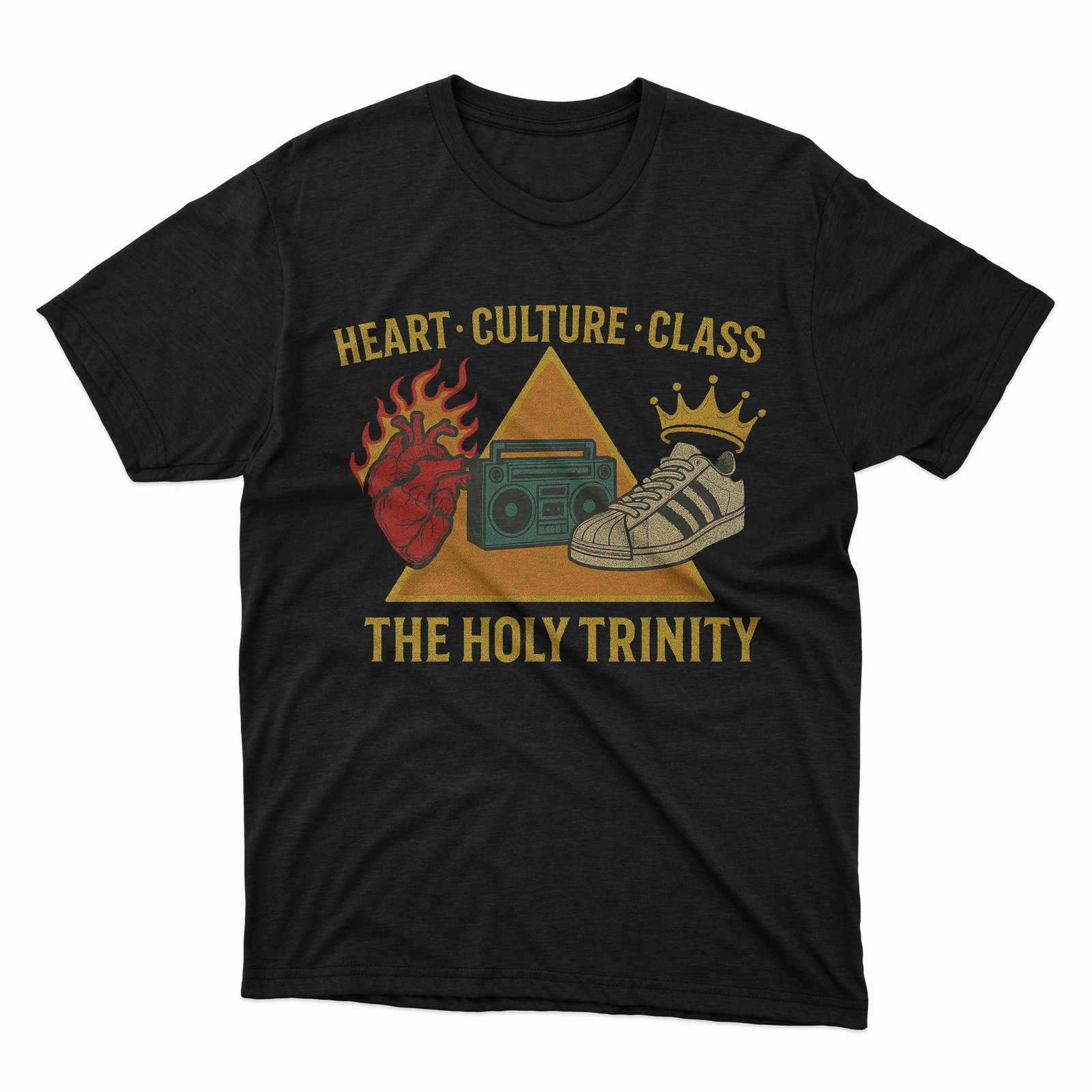
Heart. Culture. Class. The Holy Trinity Tee
A vintage streetwear tribute to 50 years of hip-hop legacy — the code of the culture, stitched in cotton, for anyone who knows the block is where it all started.
Frequently Asked Questions About 1520 Sedgwick Avenue
Where is 1520 Sedgwick Avenue?
It’s in the Morris Heights neighborhood of the Bronx, New York City, sitting right along the Cross Bronx Expressway — the same highway project that reshaped the neighborhood around it in the early 1970s.
Can you visit 1520 Sedgwick Avenue?
It’s a private, occupied residential building — real families live there, so there’s no public tour or visitor entrance. The block itself, including the “Hip-Hop Blvd” street signage added in 2016, is publicly visible from the sidewalk.
Why is 1520 Sedgwick Avenue called the birthplace of hip-hop?
Because DJ Kool Herc debuted his break-beat “Merry-Go-Round” DJ technique in the building’s recreation room on August 11, 1973, at a back-to-school party thrown by his sister Cindy Campbell — a moment historians and the culture itself point to as the spark that lit everything that followed. The New York State Office of Parks, Recreation and Historic Preservation made the “birthplace of hip-hop” designation official on July 5, 2007.
Who threw the actual first party?
Cindy Campbell organized and funded it as a back-to-school clothes fundraiser. Her brother, Clive “Kool Herc” Campbell, DJed. Coke La Rock hyped the crowd on the mic. All three deserve credit for what happened that night — not just the DJ whose name ended up on the history books.
Was DJ Kool Herc the only person who mattered that night?
No single person invents a culture alone. Herc brought the sound system approach and the break-beat technique, but Cindy Campbell built the event that made it possible, and hip-hop itself developed in parallel across multiple Bronx blocks and crews throughout the early 1970s. 1520 Sedgwick is the address history settled on, not the only place the culture was being born.
Final Thoughts
Strip away the plaques and the anniversaries, and 1520 Sedgwick Avenue is still just an apartment building where people pay rent and raise families — which is exactly the point. Hip-hop wasn’t built in a studio or a boardroom. It was built in a rec room nobody outside the block even knew existed, by a teenager throwing a fundraiser and her brother solving a problem with two turntables and a stack of records he believed in. Every genre-defining classic, every merch drop, every neon sign on a bar wall tracing back to that lineage owes something to that basement. Next time you throw on a track that samples a break older than your parents, you’re hearing 1520 Sedgwick Avenue talk back.
For more on the deeper roots of the culture, read 50 Years of Hip-Hop: The Bronx and Beyond, and trace how the sound of that rec room turned into a global look with hip-hop fashion’s full artist-to-designer lineage and the Bronx-to-boutique history of the rapper sweatshirt.
Stay Plugged Into the Culture
Get the deep cuts on hip-hop history, new drops, and stories the SERP won’t tell you — straight to your inbox.

🎧 Never Miss a Drop
Exclusive product releases, hip-hop deep dives, and member-only discounts. Straight to your inbox.
Free forever. No spam. Unsubscribe anytime.
Get the Culture, Delivered
Deep dives into hip-hop history, exclusive product drops, and discounts sent straight to your inbox. No spam, just culture.
Join 2,000+ hip-hop heads already in the loop. Unsubscribe anytime.