Slick Rick’s Net Worth Doesn’t Match His Legacy- Here’s Why
Slick Rick’s Net Worth: The Number vs. The Legacy
Search “rapper Slick Rick net worth” and the trackers all land in the same neighborhood: roughly $1 million, give or take. For an artist whose debut album went platinum, whose “La Di Da Di” is one of the most sampled recordings in music history, and whose entire storytelling style got absorbed wholesale into the DNA of Nas, Jay-Z, and Snoop Dogg’s careers, that number should feel wrong. It does. And the reason isn’t mystery accounting — it’s eighteen years of Slick Rick’s earning prime spent in courtrooms, prisons, and immigration holding, fighting to stay in the country that made him famous.
Slick Rick, born Ricky Martin Lloyd Walters in Mitcham, London in 1965, is one of hip-hop’s founding architects of narrative rap. He’s also a case study in how the culture’s biggest influence-to-income gap gets created — not by bad deals, but by the state. This is the real story behind the number: what he built, what he lost, and why the gap between his financial net worth and his cultural net worth is the most interesting thing about him.
From Mitcham to the Mic: How a British Immigrant Became Rap’s Greatest Storyteller
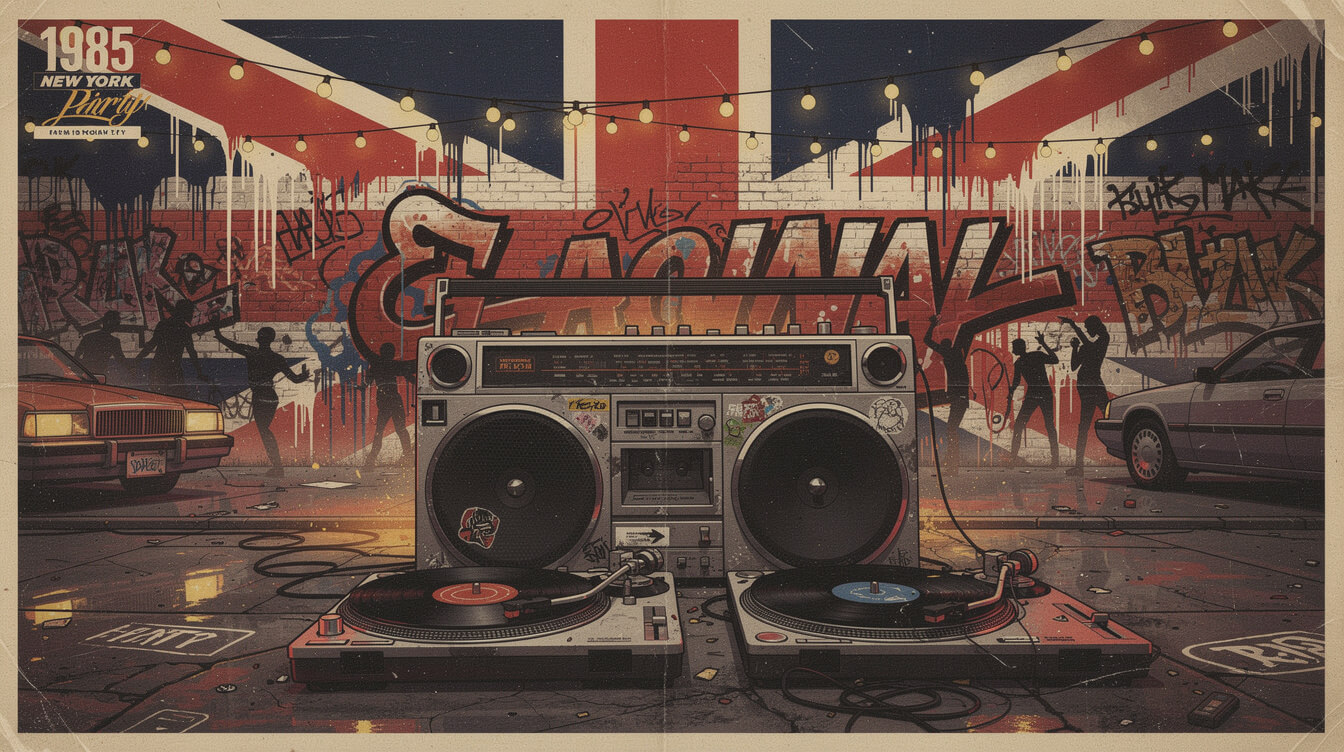
Walters moved from London to the Bronx as a child and came up inside the same early-’80s New York scene that birthed hip-hop itself. He linked with Doug E. Fresh & the Get Fresh Crew as MC Ricky D, and in 1985 the pair recorded a loose, freestyled B-side called “La Di Da Di” — just Doug E. Fresh’s beatboxing and Rick’s vocal cadence, no drum machine, no sample. It shouldn’t have worked as a foundational text. It became one anyway. The Wall Street Journal later called it one of the most sampled songs in music history, and its opening line (“Me, the freshest MC that you’ve ever heard”) has been interpolated by everyone from Snoop Dogg (“Lodi Dodi” on Doggystyle) to Miley Cyrus.
What made Rick different from his peers wasn’t just the accent — half-Mitcham, half-Bronx, unmistakable on record — it was the storytelling structure underneath it. Where most of his 1985-era contemporaries were still rapping in boast-and-battle mode, Rick was building third-person narratives with dialogue, plot twists, and moral punchlines. “Children’s Story,” from his 1988 debut, is a full short story in under four minutes: a stickup kid, a police chase, a rooftop, a tragic ending, and a direct-address warning to the listener. It’s structurally closer to a folk tale than a rap verse, and it set the template every narrative rapper since has worked from.
In 1986, Walters became the third artist ever signed to Def Jam Recordings, joining a roster that was still defining what the label — and the genre — would become. He’d already built a name on the New York scene as “Rick the Ruler” and “MC Ricky D,” and the Def Jam signing put real machinery behind a rapper whose whole appeal ran counter to the era’s dominant battle-rap mode. Instead of flexing over who was toughest on the mic, he was narrating — building characters, giving them voices, letting a joke land three bars before the twist.
That contrast mattered commercially. Def Jam in 1986 was still a scrappy startup label riding the momentum of LL Cool J and Run-DMC, and signing an artist whose signature move was a British-accented bedtime-story cadence was, on paper, a risk. It paid off almost immediately.
The Great Adventures of Slick Rick and Behind Bars: Building a Platinum Catalog From a Cell
The Great Adventures of Slick Rick dropped November 1, 1988, and it wasn’t a slow-burn cult record — it topped Billboard’s R&B/Hip-Hop Albums chart, cracked the Billboard 200, and went on to earn a RIAA Platinum certification for a million units sold. “Children’s Story,” “Hey Young World,” and “Mona Lisa” turned the album into a blueprint that rappers still cite as a top-five hip-hop debut nearly four decades later.
Then the story took the turn that would define the rest of his career and, more directly, his finances. In 1990, a dispute with a cousin who’d been working as his bodyguard escalated into a shooting. Walters pleaded guilty to attempted murder and related charges, calling it self-defense against a man who’d already threatened to kill him and his mother. He was sentenced to five years — two for the attempted-murder conviction, and three more tied to a separate dispute with federal immigration authorities over his residency status that surfaced during the same legal process.
Most artists who catch a multi-year sentence at the height of their commercial run watch their career stall out. Rick didn’t. He recorded and released The Ruler’s Back (1991) and Behind Bars (1994) — both, as the second title makes explicit, made from inside the system. It’s a genuinely rare feat: building out a catalog, and the licensing income that catalog would generate for decades, while incarcerated. He was released in 1997 and came back with The Art of Storytelling in 1999 — his fourth studio album and, by most critical accounts, a genuine return to form after nearly a decade away from a full commercial release cycle. He hasn’t stopped since: in 2025, at 60 years old, he dropped a new album, Victory, on Nas’s Mass Appeal Records, telling NME the record was about bridging “different generations, different energies, same respect.”
The platinum plaque on his debut is real. What’s less visible is how much of the income that plaque should have generated over the following two decades — touring, festival bookings, brand deals — never materialized, because Rick spent most of that stretch unable to leave the country he’d need to tour in.
What “Behind Bars” Actually Meant
It’s worth sitting with the title of that 1994 album for a second, because it wasn’t a metaphor or a tough-guy brand exercise — it was a literal status update from a working artist to his audience. Most rap careers that get put on ice for half a decade never come back at the same commercial altitude; fans move on, sounds shift, labels stop returning calls. Rick’s comeback with The Art of Storytelling five years later worked specifically because the storytelling technique he’d built his name on didn’t age the way a rapper’s slang or beat selection does — a well-constructed narrative holds up whether it’s 1988 or 1999. That’s part of why his catalog kept generating sync licenses, samples, and reissue interest decades after the fact, even while his personal earning power stayed capped by his legal status.
The Lost Years: 18 Years Fighting Deportation While His Influence Multiplied
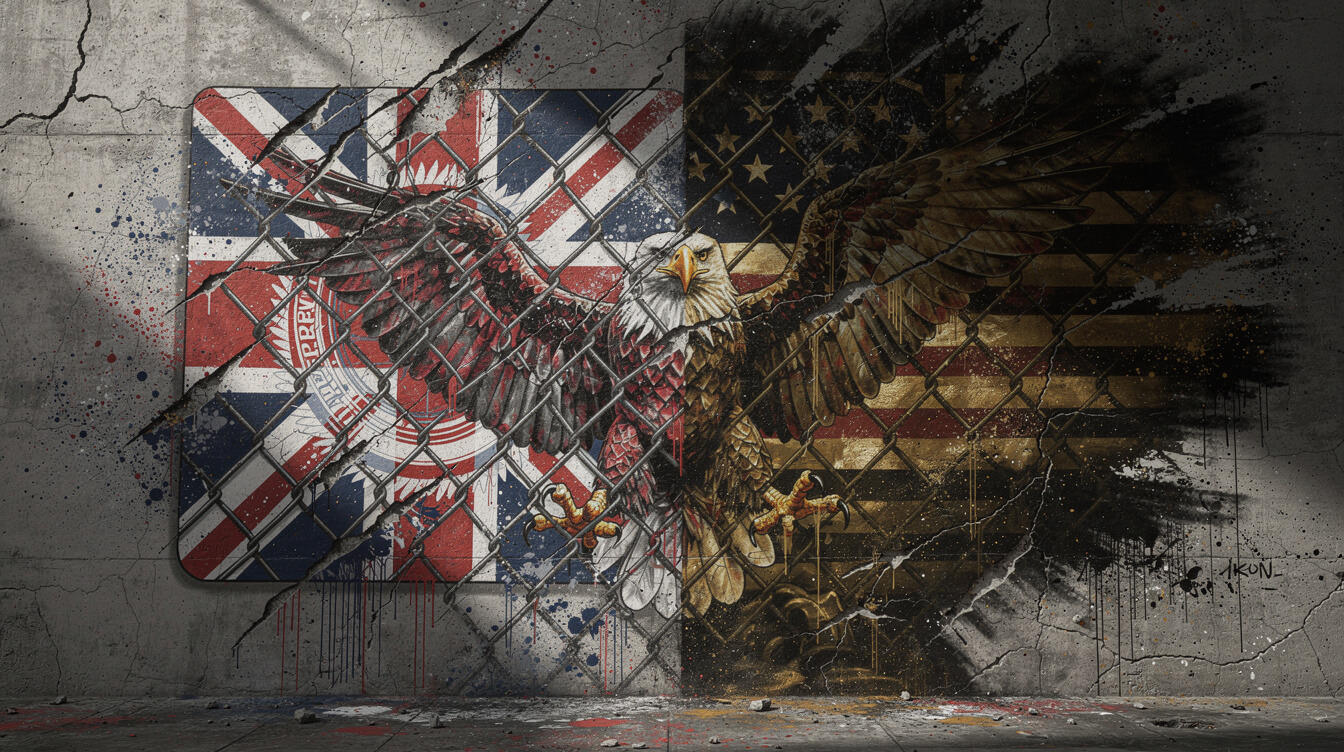
This is the part of the story the net-worth trackers skip entirely, and it’s the actual answer to “why is Slick Rick’s net worth so low relative to his influence.” Because Walters was never a naturalized U.S. citizen at the time of his 1990 conviction, the felony triggered a decades-long immigration nightmare layered on top of his criminal case.
In June 2002, Walters was arrested by the Immigration and Naturalization Service as he re-entered the U.S. through Florida after performing on a Caribbean cruise ship — and was told he was being deported under a law targeting foreign nationals with felony convictions. He was refused bail for seventeen months before his release in November 2003. It didn’t end there: in October 2006, the Department of Homeland Security opened a new attempt to deport him, moving his case to a more conservative appeals circuit based in Atlanta. For a working musician, this is close to a career death sentence — you cannot maintain a touring income, headline festivals, or take international bookings when you might not be allowed back into the country that issues your paychecks.
Relief finally came on May 23, 2008, when New York Governor David Paterson granted Walters a full and unconditional pardon on the attempted-murder charges that had triggered the entire immigration saga — citing his consistent volunteer work mentoring at-risk kids about violence in the years since. Even then, full legal certainty took another eight years: Walters wasn’t naturalized as a U.S. citizen until April 15, 2016, calling it a moment he was “so proud of… so honored to finally become an American citizen.”
Add it up: from the 1990 arrest to the 2008 pardon is eighteen years. From the arrest to full citizenship in 2016 is twenty-six. That’s not a gap year or two in an otherwise normal touring career — that’s the entire prime commercial window most platinum-era artists use to convert catalog success into generational wealth, spent instead in legal limbo. Compare that to a peer act signed around the same era who never had an immigration complication: steady U.S. and international touring for three decades compounds into festival headline fees, licensing leverage, and brand partnerships that a domestic-only, on-again-off-again legal status simply cannot generate. That gap — not bad business decisions, not a missed deal — is the single biggest reason the net-worth number looks so small next to the catalog’s actual footprint.
If you want a hoodie that actually understands what that debut album survived to become a classic, the Slick Rick — The Great Adventures Hoodie is built around that exact album era, not just the eye patch and chains iconography everyone else licenses.
Every Rapper Who Owes Slick Rick a Storytelling Debt
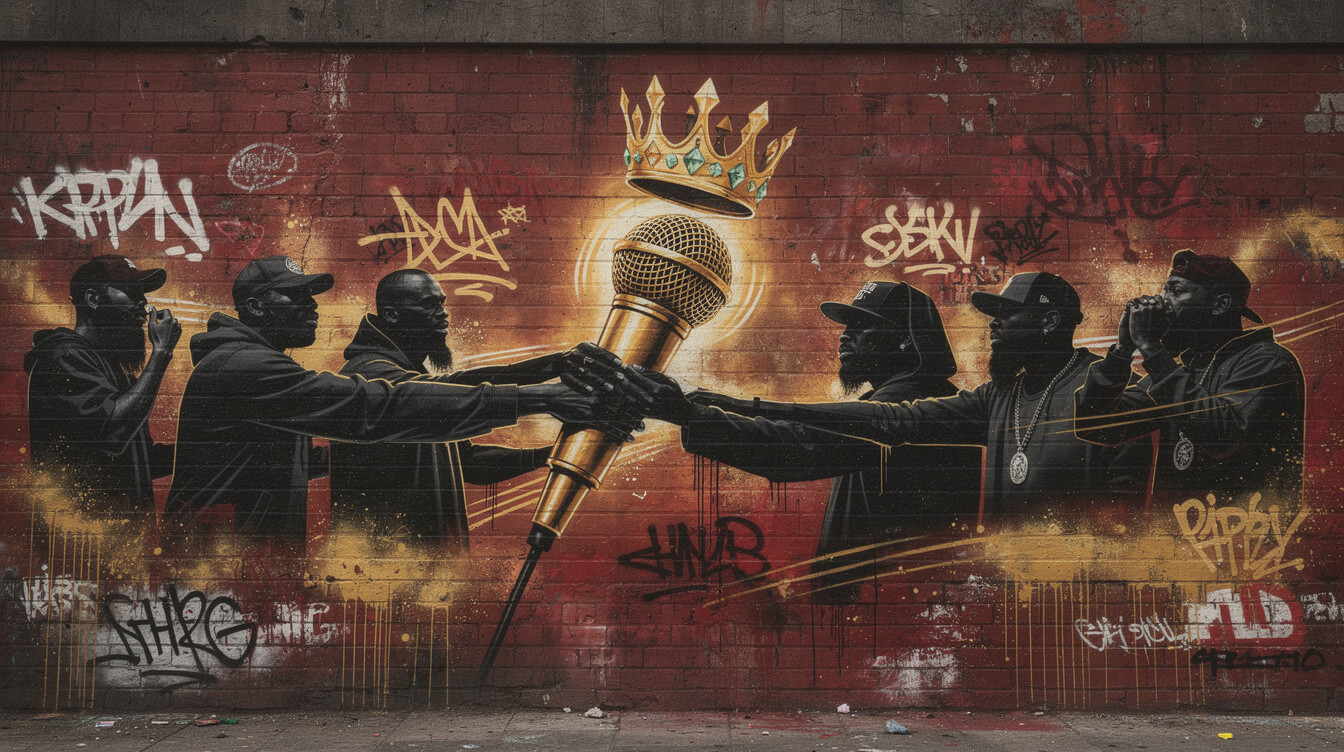
You can trace a direct line from “Children’s Story” to almost every narrative-driven rap classic that followed. This isn’t vague “influential to the genre” language — it’s specific, acknowledged, and heavily interpolated.
Nas
Nas has cited Slick Rick repeatedly as a formative influence on his own third-person storytelling (“Rock Island” and stretches of Illmatic owe a clear structural debt to Rick’s narrative pacing), and has listed The Great Adventures of Slick Rick among his favorite albums of all time.
Jay-Z and Outkast
Jay-Z’s early narrative cuts lean on the same third-person, dialogue-driven device Rick pioneered — a character speaks, the story turns, the moral lands in the final bars. Outkast’s Southern-storytelling tradition, especially early Big Boi and Andre 3000 verses, pulls from the same well: vivid scene-setting over a beat that gets out of the story’s way.
Snoop Dogg
The clearest, most literal debt: Snoop’s 1993 “Lodi Dodi” is a direct interpolation of “La Di Da Di,” rebuilt almost word-for-word for a new generation on Doggystyle — one of the best-selling rap albums of the ’90s.
This is the actual “cultural net worth” argument. Every artist above sold albums, built brands, and generated wealth using a structural device Slick Rick invented and never got equity in. His financial net worth reflects what he personally collected. It says nothing about the value he created for an entire genre.
The Recognition Finally Came — Just Not the Payout
The industry’s honors track a slow, steady arc of the culture catching up to what Rick built, even as the money never fully did. VH1 inducted him into its Hip Hop Honors in 2008, the same year Governor Paterson pardoned him. The Bronx Walk of Fame added his name in 2018. In 2023, the Recording Academy gave him a Grammy Lifetime Achievement Award. And in 2026, the UK’s MOBO Awards — Music of Black Origin, the ceremony built to celebrate exactly the Black British music tradition he came out of before ever landing in the Bronx — handed him their own Lifetime Achievement Award. Those are the industry’s way of saying his contribution is permanent. None of them come with a royalty check.
FAQ: Slick Rick’s Net Worth, Career, and Legacy
What is Slick Rick’s net worth in 2026?
Most celebrity net-worth trackers, including Celebrity Net Worth and Tuko, place Slick Rick’s net worth at approximately $1 million as of early 2026. These figures are self-reported-adjacent estimates typical of the celebrity net-worth genre — imprecise, but consistently in that range across independent trackers.
Why is Slick Rick’s net worth so low for a platinum artist?
Primarily his eighteen-year immigration and legal saga (1990–2008, with full citizenship not granted until 2016), which made international touring and steady bookings functionally impossible during what should have been his prime earning years.
Did Slick Rick go to prison?
Yes. He served time after pleading guilty to attempted murder and related charges stemming from a 1990 shooting involving a former bodyguard, which he described as self-defense. He was released in 1997.
Is Slick Rick a U.S. citizen?
Yes, as of April 15, 2016, after a legal battle that included two separate deportation attempts (2002 and 2006) and a full pardon from New York Governor David Paterson in 2008.
What is Slick Rick’s most famous song?
“Children’s Story,” from his 1988 debut The Great Adventures of Slick Rick, alongside “La Di Da Di” (recorded with Doug E. Fresh in 1985) — widely cited as one of the most sampled recordings in hip-hop history.
Has Slick Rick won a Grammy?
He received a Grammy Lifetime Achievement Award in 2023, recognizing his catalog rather than a competitive win for a single record. In 2026, he also received the MOBO Lifetime Achievement Award in the UK.
Is Slick Rick still making music?
Yes. He released a new studio album, Victory, on Nas’s Mass Appeal Records in 2025 — over three decades after his 1988 debut.
Final Thoughts: Why the Eye Patch and Chains Still Sell
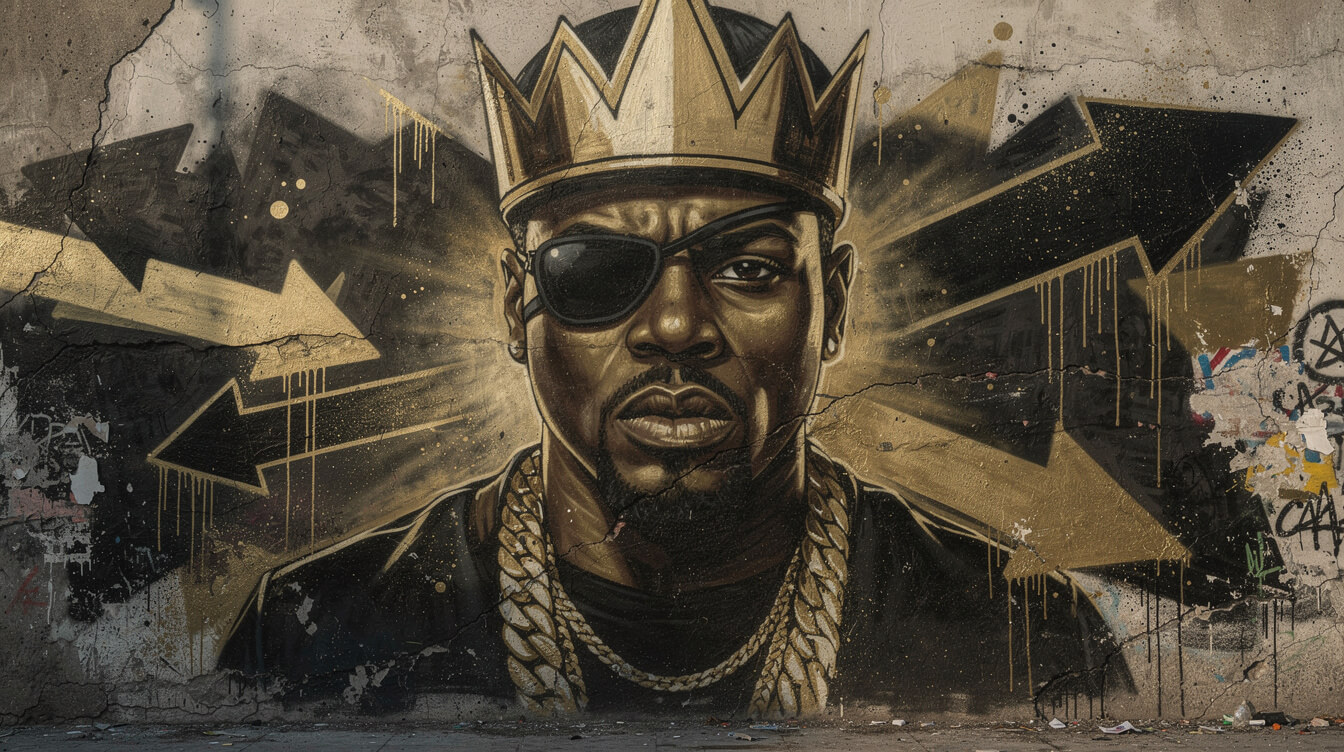
Slick Rick’s net worth is a real number, and it’s a modest one. But it was never going to tell the whole story of an artist whose narrative style got absorbed into the genre’s foundation before he was even thirty — by Nas, by Jay-Z, by Outkast, by Snoop, and by nearly every storytelling rapper who’s come up since. The eye patch, the ropes of gold chains, the crown — that iconography still moves merch today for the same reason his flow still gets sampled: it represents a version of hip-hop royalty that was earned through the work, not the payout.
What’s remarkable is that he’s still adding to the story instead of just cashing in on the old one. A 60-year-old artist dropping a new album on Nas’s own label, six decades after “The Show,” isn’t a nostalgia victory lap — it’s the same storyteller who built a platinum catalog from a prison cell, still working. The net worth number will keep drawing the “why so low” headlines. The catalog, the plaques, and the two generations of rappers who learned narrative structure from him aren’t going anywhere.
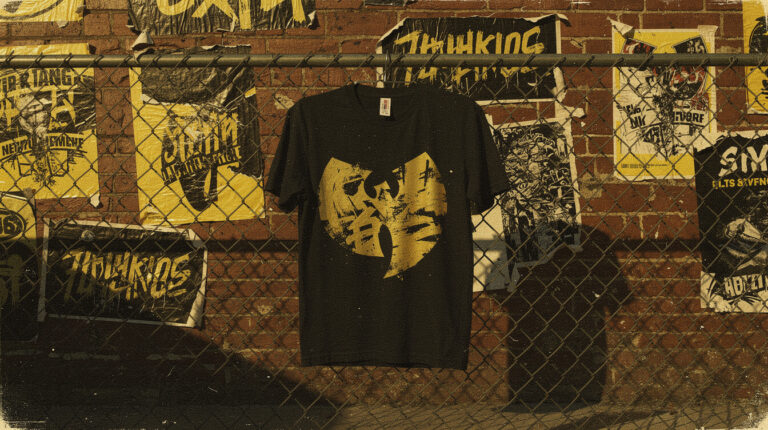
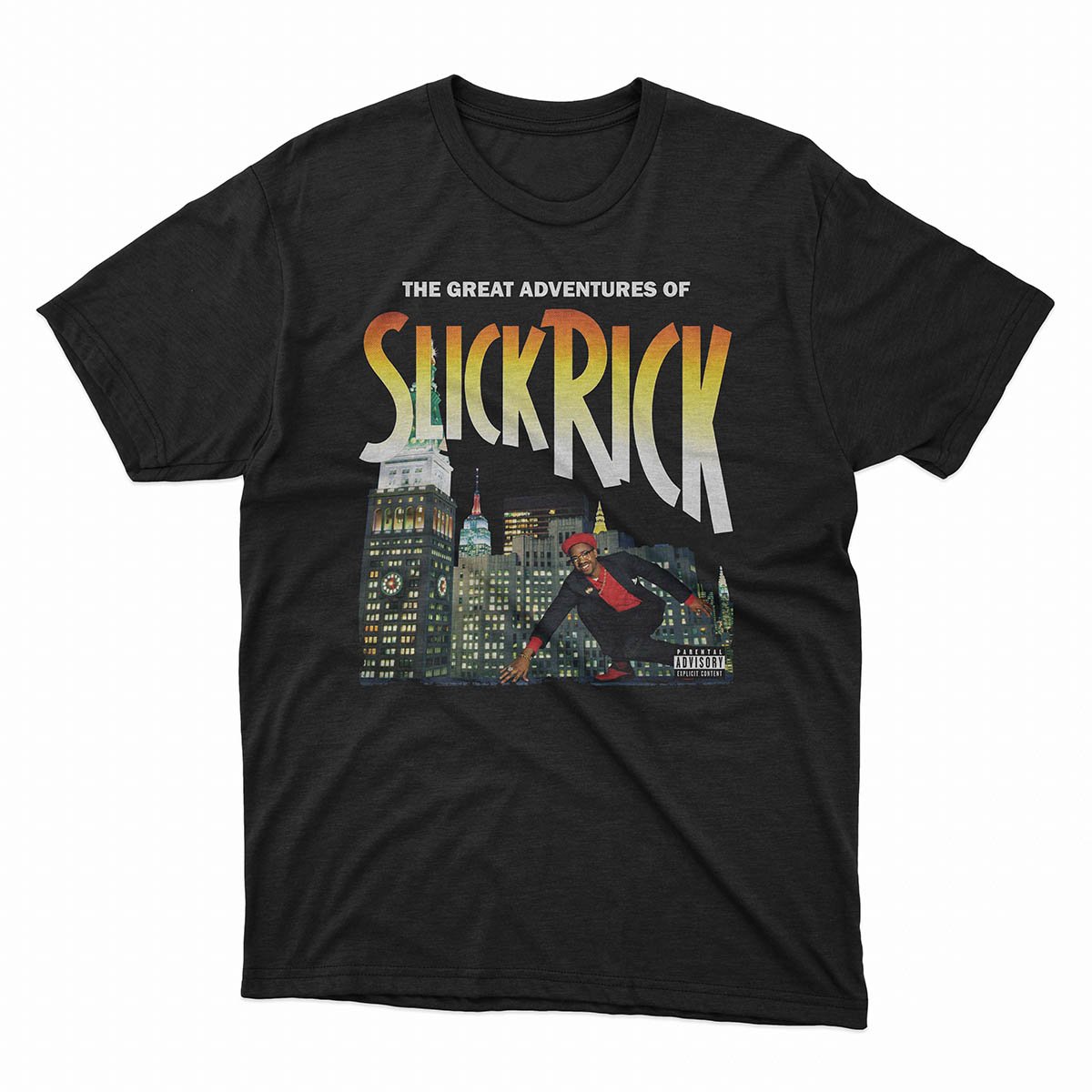
That’s exactly what we tried to capture with our Great Adventures apparel — not a caricature of the eye patch and chains, but a direct nod to the album that started it. Check out the The Great Adventures of Slick Rick T-Shirt below.
Rep the Album That Started It
The Great Adventures of Slick Rick went platinum and rewired hip-hop storytelling forever. This tee is built around that exact 1988 era — not a generic eye-patch caricature.
If you’re deep enough into the catalog to want the full story of “The Show” and “La Di Da Di” in one place, we broke down every essential Slick Rick song track by track. And if you want to see how another golden-era legend’s financial story compares, our LL Cool J net worth breakdown covers the artist who took the opposite path — turning early rap success directly into a media empire.
Stay creative — The Custom Creative Team.
Get the Culture in Your Inbox
Deep-cut hip-hop history, artist retrospectives, product drops, and the receipts that never make the SERP. Delivered weekly. No corporate fluff — just the culture.

🎧 Never Miss a Drop
Exclusive product releases, hip-hop deep dives, and member-only discounts. Straight to your inbox.
Free forever. No spam. Unsubscribe anytime.
Get the Culture, Delivered
Deep dives into hip-hop history, exclusive product drops, and discounts sent straight to your inbox. No spam, just culture.
Join 2,000+ hip-hop heads already in the loop. Unsubscribe anytime.