Wild Style Movie: The 1983 Film That Put All Four Elements of Hip-Hop on Screen First
Before Beat Street, before Krush Groove, before anyone outside the Bronx had a word for it, there was the Wild Style movie. Charlie Ahearn’s 82-minute, $500,000 independent film was shot on the streets of the South Bronx, the Lower East Side and inside MTA train yards in the fall of 1981. It cast the people who were actually building the culture (Lee Quiñones, Fab 5 Freddy, Lady Pink, Busy Bee, the Cold Crush Brothers, Grandmaster Flash, the Rock Steady Crew) and let them play loose versions of themselves. Forty-plus years later it is still the closest thing hip-hop has to home movies from its first decade.
Most write-ups give you the cast list and a plot summary. We want to tell you why it matters: the Wild Style movie was the first film to put graffiti, breaking, DJing and MCing on screen as one culture. That idea is now so normal we forget somebody had to frame it first. Below is the real story: the timeline, the graffiti king at the center of it, the soundtrack built from scratch, the reshoots, the box office, and the samples that carried it into Illmatic and MM..Food.
Shot in 1981, Seen in 1983: Why the Wild Style Movie’s Timeline Matters
The dates are the first thing people get wrong, and they matter more than you’d think. Here’s the verified sequence.
- June 1980: Fab 5 Freddy comes to a screening of Ahearn’s homemade kung fu film and proposes they make a movie together.
- Fall 1981: Principal photography in the South Bronx, the Lower East Side and the subway yards.
- 1982: The film is completed. It premieres in November 1982 at the Festival du nouveau cinéma in Montreal.
- March 18, 1983: US premiere at the New Directors/New Films festival at the 57th Street Playhouse in New York.
- Fall 1983: It plays theaters in Tokyo roughly a month before it opens on Broadway.
- November 23, 1983: Theatrical opening at the Embassy 46th Street Theatre in Times Square. By January 1984 it’s rolling out to other major cities.
The Two-Year Gap That Changed Everything
Between the shoot and the release, hip-hop moved fast. Ahearn said so himself in a 2001 interview with DJ History’s Bill Brewster: “We shot it in 1981, we finished it in 1982 and it wasn’t shown until the end of ’83 going into ’84. By 1984, old school was almost dead. Run-DMC were coming in.” In his words, the movie “was really trying to represent the ’70s… those fat beats, the subway graffiti.”
That gap is why the film feels like a time capsule rather than a trend piece. By the time it reached theaters, the Sugar Hill/Enjoy era had already turned MCs into recording stars and pushed the park-jam DJ to the background. Ahearn caught the moment just before that shift, when the DJ was still the center of the party.
The Myth That It Flopped
You’ll often read that the Wild Style movie bombed. The record says something more complicated. Ahearn told Brewster it “did play on Times Square for like a month and broke all box office records.” Martha Cooper’s Hip Hop Files backs that up, reporting that it sold out every screening for the three weeks of its Times Square run. The catch was the money: Ahearn said he “didn’t break even until 1998.” So it wasn’t a flop. It was a packed-house underground hit with an indie budget and indie distribution (First Run Features), up against Hollywood’s cash-in competition. Ahearn named Beat Street as the direct rival in the marketplace, and Krush Groove followed in 1985.
What the Critics Said
Not everyone got it in 1983. Vincent Canby of The New York Times wrote that the film “never discovers a cinematic rhythm” that matched its subjects’ energy, though he singled out Quiñones and Fab 5 Freddy as appealing. History sided with the movie. The BBC later called it “indisputably the most important hip hop movie, ever,” The Guardian said “nothing else comes close” to capturing early hip-hop and spraycan art, and it holds a 90% Rotten Tomatoes score. In 2012 Billboard ranked it No. 1 on its list of the best hip-hop movies ever.
Lee Quiñones as Zoro: The Real Graffiti King Playing a Fictional One
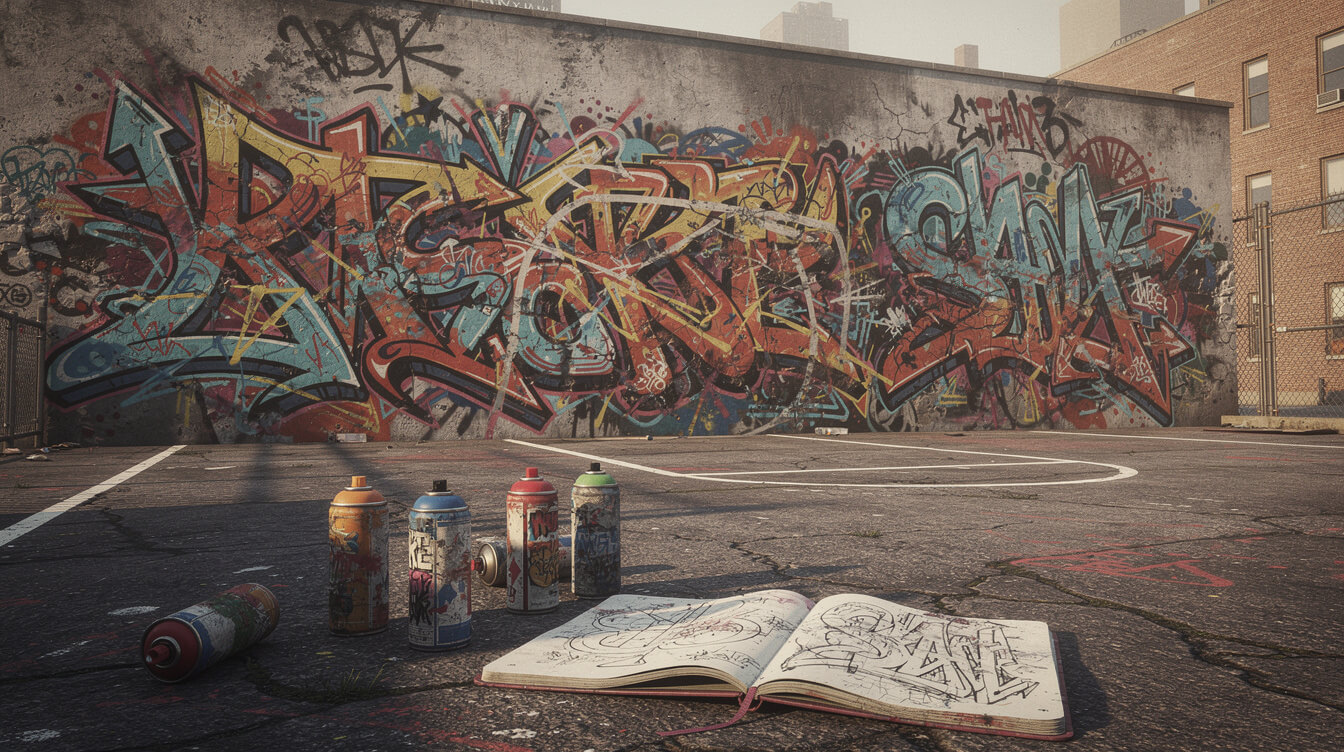
The plot is thin on purpose. Raymond, a Bronx teenager, paints at night under the name “Zoro.” He’s celebrated but anonymous, and he looks down on the Union Crew, writers who’ve taken paid commissions for playground and storefront murals. A downtown journalist named Virginia (Patti Astor) brings the uptown scene to the gallery crowd, and the story builds to a giant rap and breaking concert at a Lower East Side band shell that Raymond paints. The interesting part is who plays Raymond.
Who Lee Quiñones Was Before the Camera
George “Lee” Quiñones, born in Ponce, Puerto Rico in 1960 and raised on the Lower East Side, started painting subway cars in 1974. By 1976 he was running huge whole-car pieces across the system, roughly 125 cars in total. With DOC, MONO and SLAVE of the Fabulous Five he contributed to one of the first whole-trains ever to run in service, ten cars painted in November 1976. His pieces carried poetic and political messages, the most famous being “Graffiti is art and if art is a crime, please God, forgive me.” In spring 1978 he painted “Howard the Duck,” the first whole handball-court mural, outside Corlears Junior High School 56.
Ahearn had been chasing him for years. “He was like this underground Picasso character,” Ahearn recalled. “All the kids that were like 12 and 14 years old, they were all completely in awe of this guy as an artist. And the galleries had no idea he even existed.”
The $50 Mural That Started the Film
The origin story is pure hip-hop hustle. In the summer of 1980, Fab 5 Freddy showed up at a screening of Ahearn’s kung fu film The Deadly Art of Survival and told him, “I’ve been looking for you, but I thought you were black.” Freddy said he was good friends with Lee and could bring him the next day. Ahearn offered $50 if Lee would come and paint a big mural. Lee came, the mural went up, and the three of them agreed to make a movie. That was June 1980.
Lee’s casting is what makes the film’s central tension land. Zoro’s dilemma, whether to stay an outlaw or get paid by the people who used to call you a vandal, was Lee’s real dilemma. He and Freddy had already had their first gallery show in December 1979 at Claudio Bruni’s Galleria La Medusa in Rome. Later his work landed in the permanent collection of the Whitney, and in 2008 Eric Clapton bought every painting in one of his exhibitions. When Zoro hesitates on screen, you’re watching a man who actually lived that crossroads.
The Wild Style Movie Put All Four Elements on Screen First
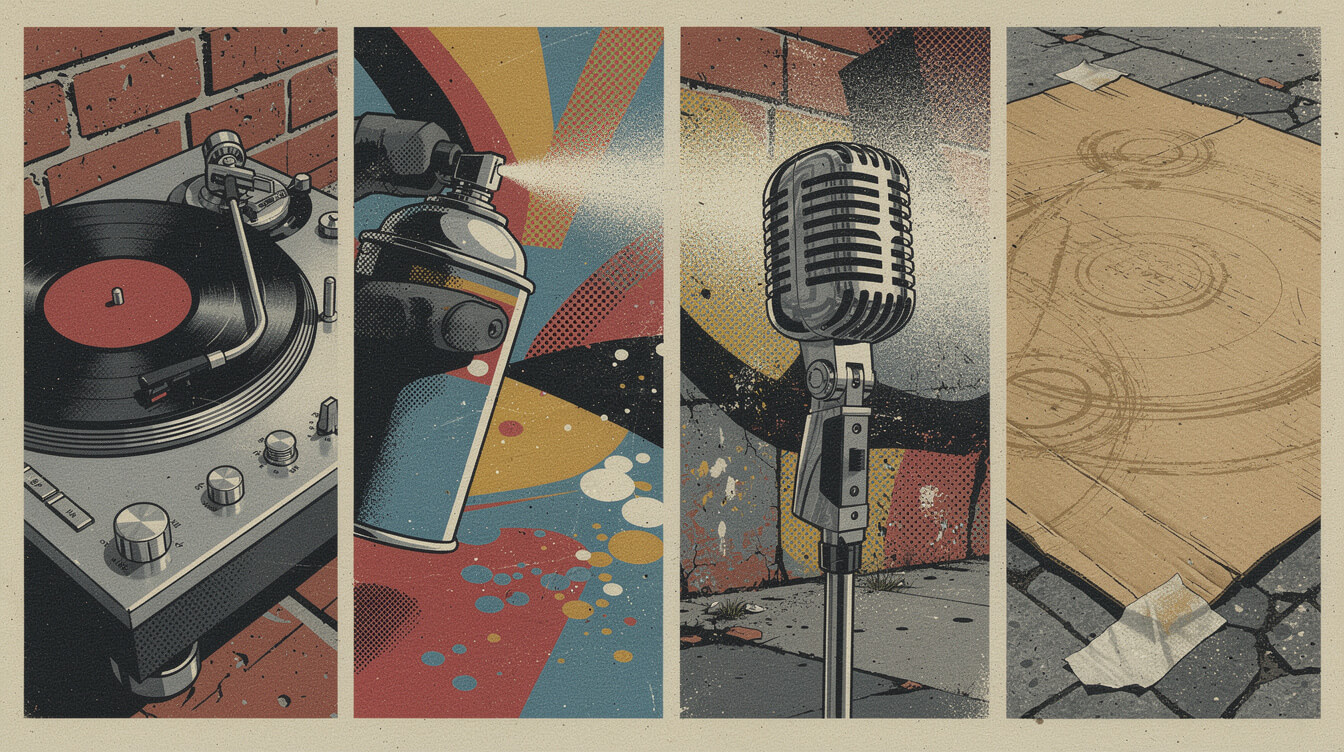
This is the real reason the Wild Style movie belongs in the canon, and almost nobody frames it this way. Ask any head about the four elements of hip-hop (DJing, MCing, breaking and graffiti writing) and they’ll recite them like scripture. But in 1981 that unity wasn’t written down anywhere. Freddy’s stated goal was to push back on the negative image of New York’s inner-city youth by linking breaking, rapping, DJing and graffiti under one umbrella, “branches from the same tree.”
Ahearn’s Honest Take on the Four Elements
Here’s the jewel. When Brewster asked Ahearn in 2001 whether graffiti, rapping and breaking were really as connected as everyone says, the director didn’t play mythmaker:
“To this day, I don’t think there’s a clear answer. Now they’re interrelated because people have been saying so for 20 years. But that’s okay. That’s how culture happens. You can decide on culture… Certainly at that time there was nothing you could look at in a magazine and say, ‘There is a culture, it’s called hip-hop.'”
Think about that. The man who made the first four-elements movie admits the film helped create the unified idea as much as it recorded it. Back then, people didn’t even say “hip-hop.” In Ahearn’s words, “people called it an MC party.” Graffiti writers, b-boys and DJs overlapped in the Bronx, but no one had packaged them together. The Wild Style movie did, and every “four elements” explainer since has been working from its blueprint. If you want the ground-zero backstory, start with our piece on 1520 Sedgwick Avenue, then come back here for what happened next.
How Each Element Shows Up on Screen
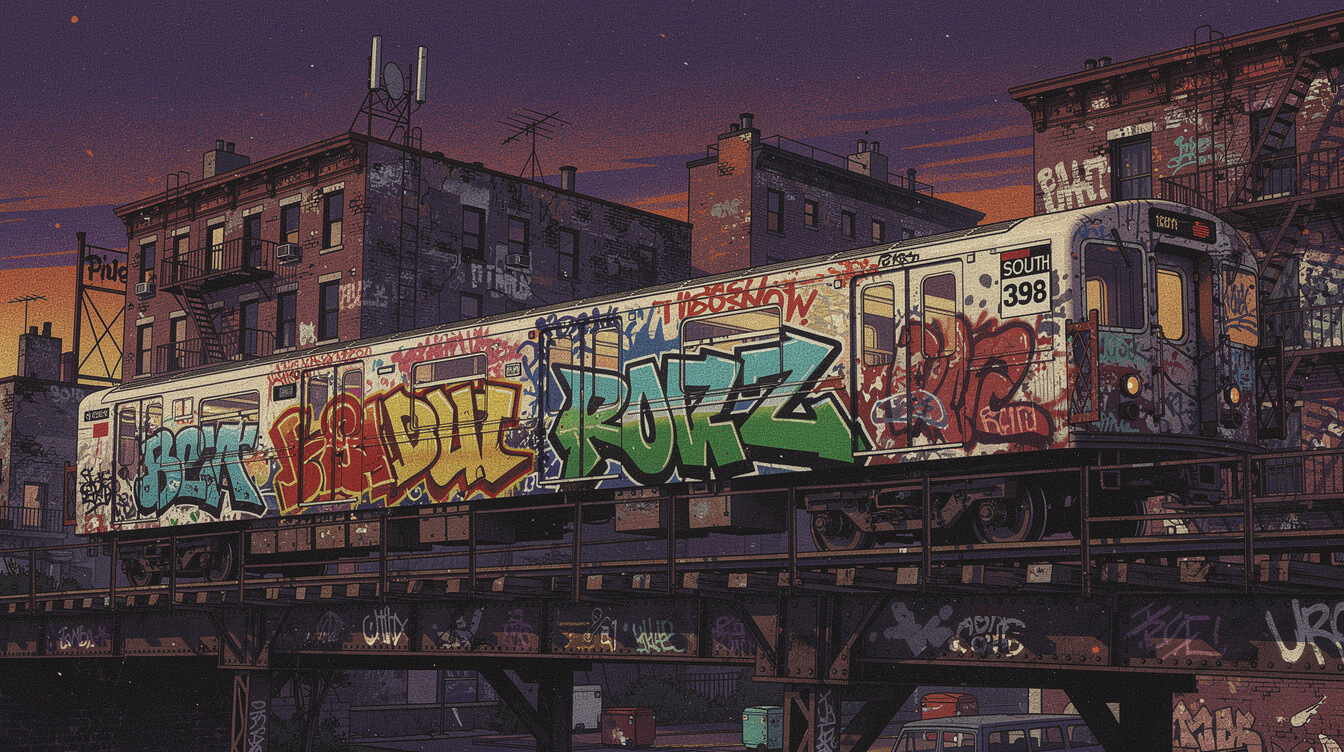
- Graffiti: Zoro’s pieces, whole cars by DONDI, DAZE and CRASH, and Zephyr’s animated title sequence.
- MCing: Busy Bee rocking the Dixie club, the Cold Crush Brothers and the Fantastic Freaks battling on a basketball court, and Double Trouble freestyling on a stoop.
- DJing: Grand Wizard Theodore’s scratch mixes, Grandmaster Flash on the decks, and a closing explosion of cuts at the amphitheater.
- Breaking: The Rock Steady Crew, plus white-gloved poppers and lockers in the club scenes.
A Pop Movie, Not a Documentary
Ahearn insisted it wasn’t meant to be a documentary. “I was interested in making a pop movie,” he said. “I knew that I should be documenting this thing, but I hated the idea of making a documentary.” His model was the kung fu films playing 42nd Street grindhouses, Bruce Lee above all. His favorites included The 36th Chamber of Shaolin, Mad Monkey Kung Fu and Five Deadly Venoms. That’s the same Shaw Brothers canon RZA would mine a decade later for Enter the Wu-Tang (36 Chambers). Hip-hop’s love of kung fu cinema runs deep, and it shows up right at the start. (We dug into that visual lineage in our breakdown of the Wu-Tang Clan symbol.)
The Cast and the Soundtrack: An Old-School Who’s-Who, Cut From Scratch
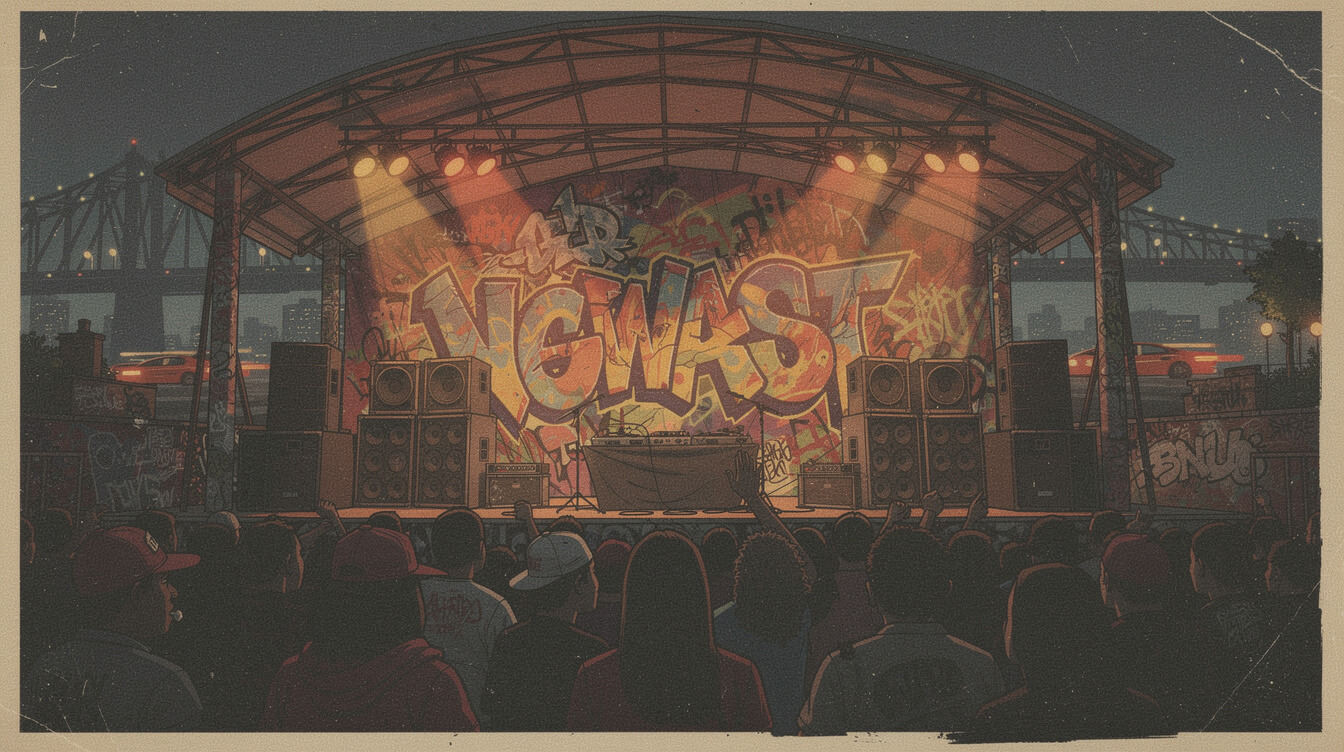
The credits read like a Hall of Fame ballot. Many viewers only clock half of them.
The Cast, Name by Name
- Lee Quiñones as Raymond “Zoro”
- Fred Brathwaite (Fab 5 Freddy) as Phade, the hustling promoter
- Sandra “Lady Pink” Fabara as Rose, Zoro’s love interest
- Patti Astor as Virginia, the downtown journalist
- Andrew “Zephyr” Witten as Zroc
- Glenn O’Brien as an art dealer
- Busy Bee, the Chief Rocker, all over the club and amphitheater scenes
- The Cold Crush Brothers (including Grandmaster Caz) and the Fantastic Freaks
- Double Trouble: Rodney Cee and KK Rockwell of the Funky 4 + 1
- Rammellzee with Shockdell, Queen Lisa Lee of the Zulu Nation, Grandmaster Flash, Grand Wizard Theodore and the Rock Steady Crew
How Busy Bee Got Ahearn In
Ahearn didn’t get into the scene through managers. He walked into it at 1 a.m. In July 1980 Freddy took him to a jam at The Valley, a park in the North Bronx. A guy near the DJ eyed Ahearn suspiciously (he later admitted he thought Ahearn was a cop, and he was holding a joint). Ahearn said he was a movie producer making a film about the rap scene. The guy took his hand, walked him onto the stage, put an arm around him and announced: “This here’s Charlie Ahearn. He’s my movie producer and we’re making a movie about the rap scene.” That was Busy Bee. “He didn’t lose a second,” Ahearn said. “That’s how people were. They were hungry.”
After that he was at two or three clubs a weekend. His favorite was the Ecstasy Garage off Jerome Avenue around 180th Street, where Grand Wizard Theodore and DJ AJ held it down for a two-dollar cover. Ahearn would project the previous week’s slides on sheets behind the DJ booth. It became his way in, and a way for the kids in the room to see themselves larger than life.
The Soundtrack: Original Beats, No Samples to Clear
The Wild Style Original Soundtrack came out on Animal Records in 1983. Fab 5 Freddy served as musical director, and he and Chris Stein of Blondie produced the beats. Stein’s band had already put Freddy’s name on the radio when Debbie Harry rapped “Fab 5 Freddy told me everybody’s fly” on “Rapture.” According to Ahearn’s account, the music was built from scratch so there would be nothing to clear. Grand Wizard Theodore mixed it and Grandmaster Caz wrote the lyrics, which is why Caz’s voice opens the record on “Wild Style Theme Rap 1.”
The tracklist doubles as a field recording of the era: “M.C. Battle” (Rodney Cee vs. Busy Bee), “Basketball Throwdown” (Cold Crush vs. the Fantastic Freaks), “Stoop Rap” by Double Trouble, and Theodore’s “Military Cut” and “Gangbusters” scratch mixes. Liner nerds will like this one: “Military Cut” pulls from a 1960 Audio Fidelity sound-effects LP of pistol-range and close-order-drill recordings. AllMusic calls the album “one of the key records of early-’80s hip-hop,” and Rolling Stone goes further: “arguably the first great hip-hop album.” Theodore’s “Subway Theme” later showed up in the 2015 Netflix film Beasts of No Nation.
The Reshoot Nobody Talks About
The club scenes you see aren’t the first takes. The crew originally recorded live through Tony Tone’s Cold Crush sound system, and “it all overmodulated and sounded like crap,” Ahearn said. So he brought in a professional system and reshot every music scene. “We did the whole amphitheater scene twice. The Furious Five were on stage in the first amphitheater scene.” He called it a gift because it let them do it better. A second deep cut: the DJ tearing up Chic in the finale is Grand Mixer DST (also known as DXT), soon to be famous for his scratching on Herbie Hancock’s “Rockit.” “He didn’t want us to shoot his face,” Ahearn said. “Most people don’t know that that’s DST, who creates this incredible explosion at the end of the movie.”
From Illmatic to MM..Food: The Wild Style Movie’s Afterlife in the Samples
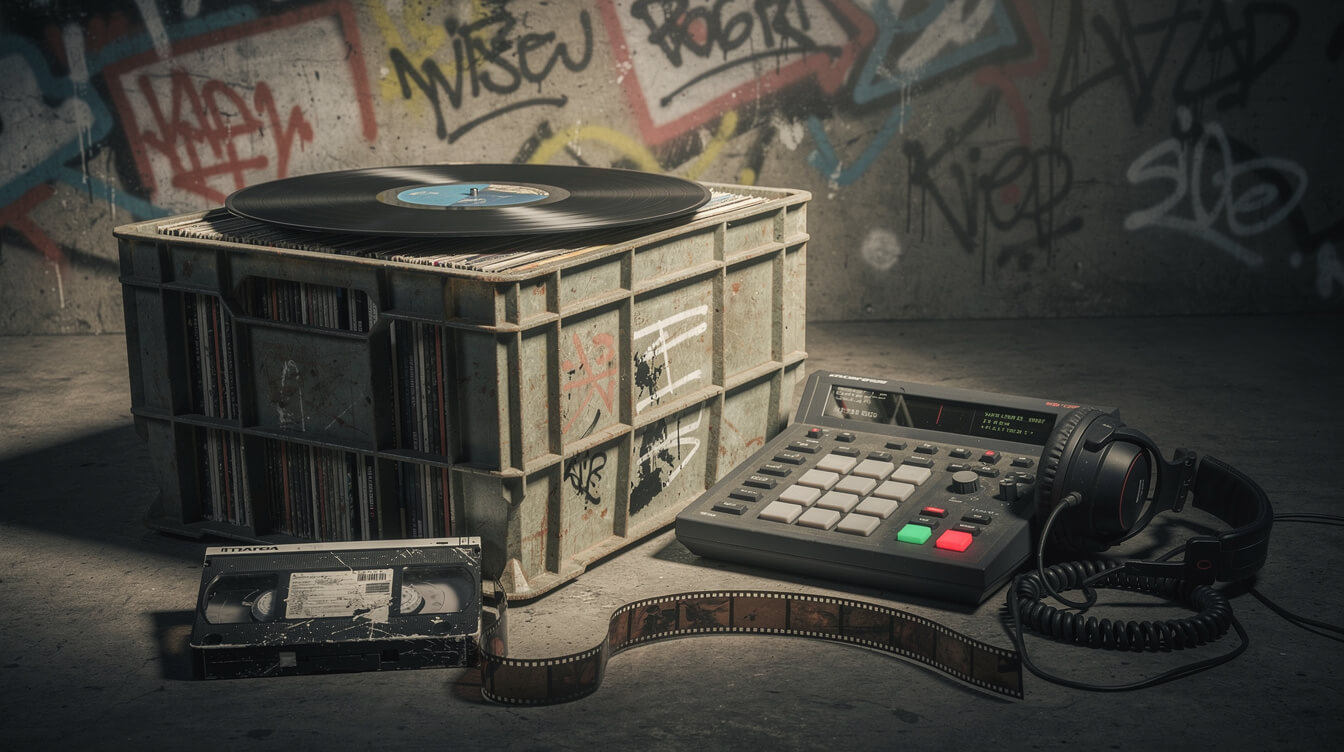
If you want proof that the Wild Style movie became scripture, listen to the records that sampled it. Producers and MCs who grew up on worn VHS dubs kept going back to it for the same reason you’d quote an elder: to show where they came from.
Nas Opens Illmatic With It
The most famous example opens the most celebrated debut in rap. “The Genesis,” the intro to Nas’s Illmatic (1994), is a sound collage: a train rumbling (New York), a barely audible snippet of Nas’s verse from Main Source’s “Live at the Barbeque” (his first appearance), and dialogue lifted from Wild Style. In the skit, a friend dismisses the Wild Style music and Nas checks him about respecting the roots. Critics have read the three layers as New York for Nas the person, “Live at the Barbeque” for Nas the rapper, and Wild Style for hip-hop itself. Nas doubled down by shooting the video for “It Ain’t Hard to Tell” on the same stage as the film’s final scene. We break down every sample on the album in our Nas Illmatic tracklist deep dive.
DOOM Opens MM..Food With It
A decade later, MF DOOM did the same thing on his 2004 cult classic. “Beef Rapp,” the first track on MM..Food, opens with nearly two minutes of film and TV samples. The Wild Style pieces are a scene of two broke guys griping after blowing their money, spliced alongside clips from Bowery at Midnight, Logan’s Run and The Electric Company. Only DOOM would put early Bronx street dialogue next to vintage horror B-movie clips and make it feel like one universe. If that’s your record, our MF DOOM Mm.. Food T-Shirt puts the album where it belongs, and our MF DOOM merch guide sorts the real grails from the bootlegs.
The Honors That Followed
The institutions caught up eventually:
- 1997: Rhino Home Video releases it on VHS, putting it on video-store shelves for a new generation.
- 2007: VH1 Hip Hop Honors pays tribute to the film, and a 25th-anniversary DVD arrives with new Ahearn shorts starring Grandmaster Caz, Busy Bee and the Fantastic Freaks.
- 2012: A 30th-anniversary Blu-ray. Ahearn donates his production notes, artwork, photos and recordings to Cornell University’s Hip Hop Collection. The film screens in 1980s art retrospectives at the MCA Chicago and the ICA Boston.
- 2021: The Museum of Fine Arts, Boston screens it for the closing weekend of “Writing the Future: Basquiat and the Hip-Hop Generation,” a show that also featured Lee Quiñones’s work.
- June 2023: The Washington, D.C.-based National Hip Hop Museum honors the film at a ceremony in Brooklyn.
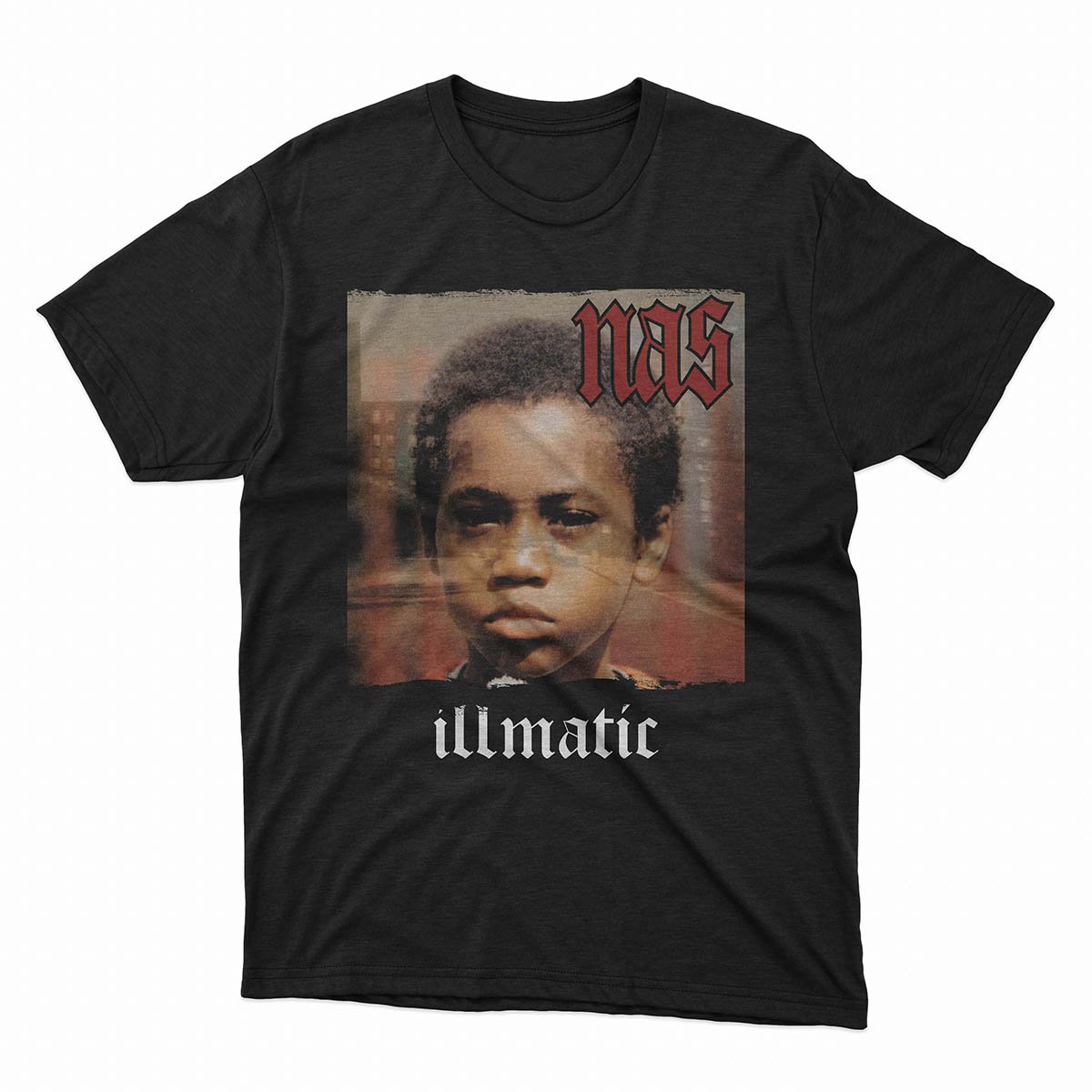
From The Genesis to Your Chest
Nas opened Illmatic with Wild Style dialogue and shot “It Ain’t Hard to Tell” on the film’s final stage. We made a Nas Illmatic T-Shirt for heads who know where the lineage starts.
The Street-Art Legacy: From Zoro’s Pieces to Your Wall
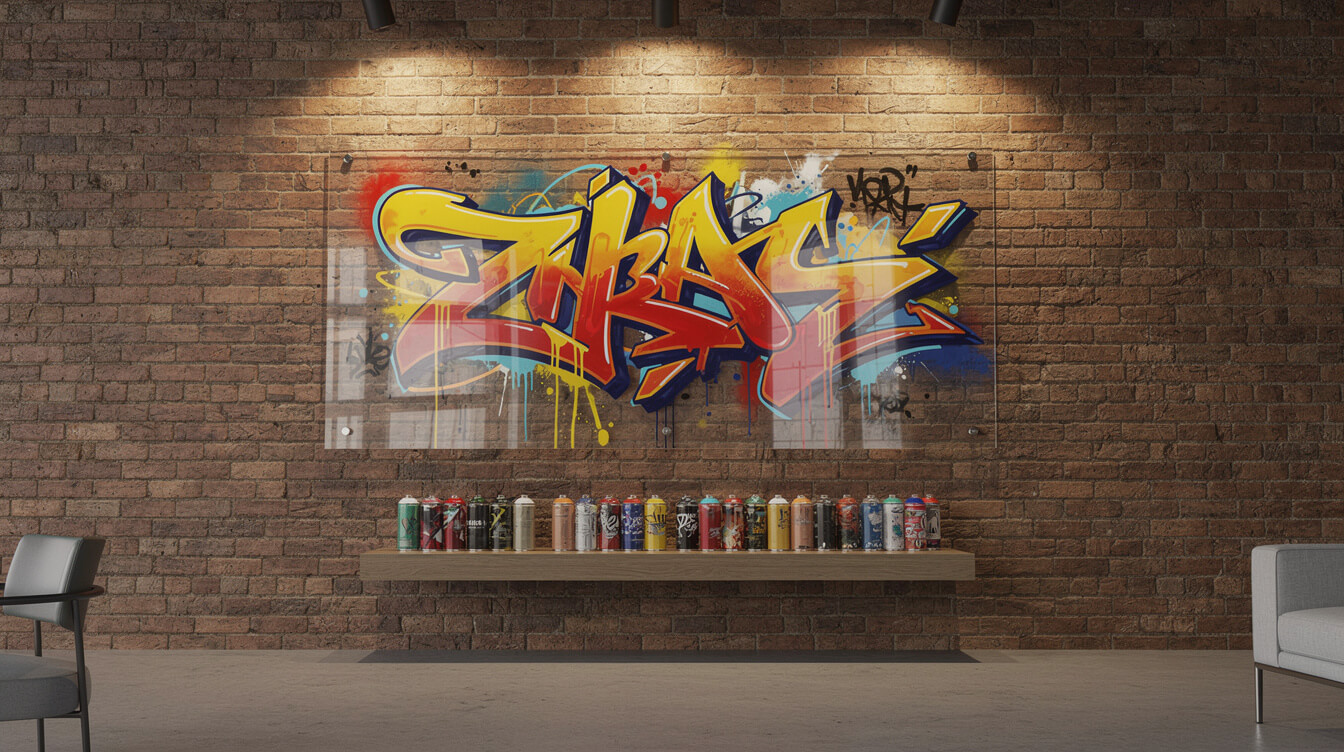
The film takes its name from a graffiti style. Subway Art, Martha Cooper and Henry Chalfant’s bible of the era, describes wildstyle as an “energetic interlocking construction of letters with arrows” and other marks that signal movement and direction. It’s letter writing at its most intricate. Naming a movie after it was a statement: this film is for the culture first.
The Logo Started on a Subway Car
Even the title graphics come with history. An early version of the Wild Style logo first appeared in 1981, when Ahearn paid the legendary writer DONDI to paint a “window-down” subway car piece for the film. That piece inspired the animated title sequence, designed by Zephyr and animated by Joey Ahlbum in 1982. Film Forum’s programmers have compared it to Saul Bass. The big Wild Style mural was painted by Zephyr, Revolt and Sharp in 1983. Those letterforms became a graphic template that a lot of hip-hop design still draws from. We traced that thread from subway cars to tracklist tees in our complete visual history of hip-hop artwork.
From Outlaw Art to Gallery Wall
The Wild Style movie predicted the art world’s embrace of graffiti, and the irony isn’t subtle. Zoro’s whole conflict is about whether to take the commission. In real life the commissions came. Lee went into museum collections, and Fab 5 Freddy became the first host of Yo! MTV Raps in 1988, bringing the uptown look to the whole country (we marked that milestone in our Fab 5 Freddy birthday post). Ahearn, for his part, remembered how fast the downtown fascination faded: “By the end of 1985 it was over. Graffiti was considered an embarrassment.” The art and the culture outlasted that verdict by four decades and counting.
Today the wildstyle aesthetic lives on walls far from the train yards: in barbershops, studios, living rooms and record stores. If you want that energy at home, our SpectraGlass HD Print Panel turns any graffiti shot or piece of street art into frameless glass wall art. Bring a little Zoro to your wall.
Wild Style Movie FAQ
Is Wild Style a 1982 or 1983 movie?
Both dates are defensible. It was shot in 1981, finished in 1982, and premiered in November 1982 at the Festival du nouveau cinéma in Montreal, which is why Wikipedia and many archives list it as a 1982 film. Its New York premiere was March 18, 1983, and its theatrical run opened in Times Square on November 23, 1983, which is why most fans and repertory theaters call it 1983.
Is the Wild Style movie a documentary?
No. It’s a loosely scripted narrative, a hybrid of musical and documentary, with real hip-hop pioneers playing versions of themselves. Ahearn said he deliberately wanted “a pop movie” in the spirit of the kung fu films playing on 42nd Street, not a documentary.
Who directed Wild Style?
Charlie Ahearn wrote, produced and directed it. Fab 5 Freddy started as a creative partner, stepped back from co-writing and co-directing, and served as musical director on the soundtrack with Blondie’s Chris Stein.
Who plays Zoro in Wild Style?
Lee Quiñones, one of the most celebrated subway graffiti writers in New York history, plays Raymond, who paints under the name “Zoro.” He’d been painting whole cars since the mid-1970s, so the role was close to autobiography.
Why is Wild Style considered the first hip-hop movie?
It’s widely regarded as the first hip-hop motion picture because it was the first film to show graffiti, breaking, DJing and MCing together as one connected culture, shot in the Bronx with the people who created it. Its New York premiere came more than a year before Beat Street hit theaters in 1984.
What albums sample Wild Style?
The best-known examples are Nas’s Illmatic, whose intro “The Genesis” uses dialogue from the film, and MF DOOM’s MM..Food, whose opener “Beef Rapp” includes Wild Style clips. Grand Wizard Theodore’s “Subway Theme” from the soundtrack also appears in the 2015 film Beasts of No Nation.
Where can I watch Wild Style?
It has been reissued several times: on VHS by Rhino in 1997, on a 25th-anniversary DVD in 2007, and on a 30th-anniversary Blu-ray in 2012. It also comes back regularly at repertory screenings and on streaming rental platforms, so check current listings.
The Last Word
The Wild Style movie is rough around the edges. The plot is thin, the acting is loose, and the New York Times wasn’t impressed in 1983. None of that matters. A downtown filmmaker who got brought onstage by Busy Bee and a Brooklyn graffiti head who’d been name-checked on a Blondie record made something nobody else had: a record of a culture before it had a name. Lee painted, the Cold Crush rhymed, Theodore cut, Rock Steady spun on cardboard, and for 82 minutes it all sat in one frame. Everything that came after, from Illmatic‘s opening seconds to the four elements you learned as gospel, runs back through that frame. Run it back tonight.
Stay creative — The Custom Creative Team
Culture Delivered Weekly
Hip-hop film history, liner-note deep dives, and new drops from the Custom Creative crew, straight to your inbox.

🎧 Never Miss a Drop
Exclusive product releases, hip-hop deep dives, and member-only discounts. Straight to your inbox.
Free forever. No spam. Unsubscribe anytime.
Get the Culture, Delivered
Deep dives into hip-hop history, exclusive product drops, and discounts sent straight to your inbox. No spam, just culture.
Join 2,000+ hip-hop heads already in the loop. Unsubscribe anytime.