
Fugees Ready or Not: The Uncleared Enya Sample That Rewrote Music Publishing
Fugees Ready or Not is the record where hip-hop history splits into a before and an after. Before September 1996, uncleared samples were a genre-wide gamble producers took every day. After Wyclef Jean, Pras, and Lauryn Hill built the third single from The Score around an unauthorized loop of Enya’s ethereal 1987 track “Boadicea,” a settlement fired off in Dublin quietly rewrote the sample-clearance protocol every rap A&R still works from today. This is a song with a lawsuit in its DNA, a Delfonics ancestor from 1968, a $1.3 million music video, and — hidden in Lauryn’s second verse — the entire sonic prototype for The Miseducation of Lauryn Hill.
Most write-ups of this song run through the Wikipedia checklist: released as a single, hit #1 in the UK, sold well, cool video. That misses the whole story. What makes “Ready or Not” one of the most consequential tracks of the golden-age era isn’t the chart position. It’s what happens when you trace its genealogy — backward to Philadelphia soul, sideways to Celtic new-age, and forward into every solo career that came out of the Refugee Camp collective. Below is the full track-by-track breakdown: the sample, the studio, the verse, the video, and the 30-year afterlife.
The Enya Sample That Nearly Sank Fugees Ready or Not
“Boadicea” is the third track on Enya’s 1987 self-titled album (originally released as The Celts as a BBC television soundtrack, then re-issued and expanded in 1992). It runs three minutes and thirty-two seconds. There is no drum kit, no bass, no lyric — just a single stacked vocal loop, Enya multi-tracking her own soprano into a choral wash of Gaelic syllables. It is exactly the kind of source material a boom-bap producer combing dollar bins in 1995 would either walk past or fall in love with. Wyclef Jean fell in love.
According to Wyclef’s own tellings — and the Rolling Stone reporting that followed — the loop was placed on the Fugees track without clearance. This was not unusual in 1996. Sample clearance was still an emerging industry, and the golden-age producers who came up in the shadow of De La Soul’s disastrous 1991 lawsuit over the Turtles interpolation on “Transmitting Live from Mars” were often the ones most careless about it. Wyclef flipped the “Boadicea” vocal, pitched it, chopped the syllables, and looped it under Lauryn Hill’s opening verse. When Enya heard the finished record after release, she considered legal action. In interviews she was blunt about the shock — she had never been approached about permissions.
What made the resolution unusual is that Enya reportedly settled on the condition of a co-writing credit (her name — Enya Brennan — appears in the official songwriter list on the physical release and every streaming service metadata to this day) rather than pursuing damages. But the aftermath rewrote her personal policy permanently. Since the Fugees settlement, Enya has been notorious across the music industry for turning down sample requests. Nicki Minaj was denied a “Boadicea” sample she had teed up as a Beam Me Up Scotty era interlude. Mario Winans was denied. Multiple UK producers on the drum-and-bass side have publicly discussed running into the same brick wall. The uncleared moment on “Ready or Not” cost the entire post-1996 industry access to one of the era’s most distinctive vocal textures.
The Delfonics Root: Where the “Ready or Not” Hook Actually Comes From
Here is the receipt every Wikipedia entry buries: the chorus melody on fugees ready or not — the “ready or not, here I come, you can’t hide” line Lauryn Hill sings — is not original. It is an interpolation of “Ready or Not Here I Come (Can’t Hide from Love),” the 1968 Delfonics single written by William Hart and produced by Thom Bell for Philly Groove Records. The record was one of the pillars of the Philadelphia soul sound Bell would later scale up into Philadelphia International with Kenny Gamble and Leon Huff.
The Delfonics — Hart brothers William and Wilbert plus Randy Cain — were pioneers of the falsetto vocal group tradition that Motown’s smoother acts had been building for years, but they gave it a distinctly Philadelphia rhythmic texture: heavier strings, more open drum patterns, tighter harmonies. “Ready or Not Here I Come” was one of their first crossover hits, reaching #14 on the Billboard Hot 100. William Hart’s writing on that song — economical, direct, playful — is the DNA the Fugees are borrowing. On the 1996 record, the credit is properly split. Hart and Bell are listed as songwriters alongside the three Fugees and Enya Brennan.
Trace this further and you find the deeper receipt: Lauryn Hill and the Delfonics had a working relationship beyond one interpolation. In 1997, one year after “Ready or Not,” Lauryn appeared on Missy Elliott’s “Sock It 2 Me” remix and referenced the Delfonics again. Two years later, Wyclef would sample another Delfonics track on his own “911” from The Ecleftic. This wasn’t a one-off borrow — this was the Fugees writing themselves into Philadelphia soul’s inheritance line, positioning their New Jersey trio as the next generation carrying that lineage forward. If you want to hear how deep this soul-lineage current runs in mid-90s rap, our breakdown of Pete Rock and CL Smooth’s Mecca and the Soul Brother is the companion piece.
Inside the Booga Basement: How Wyclef Built The Score
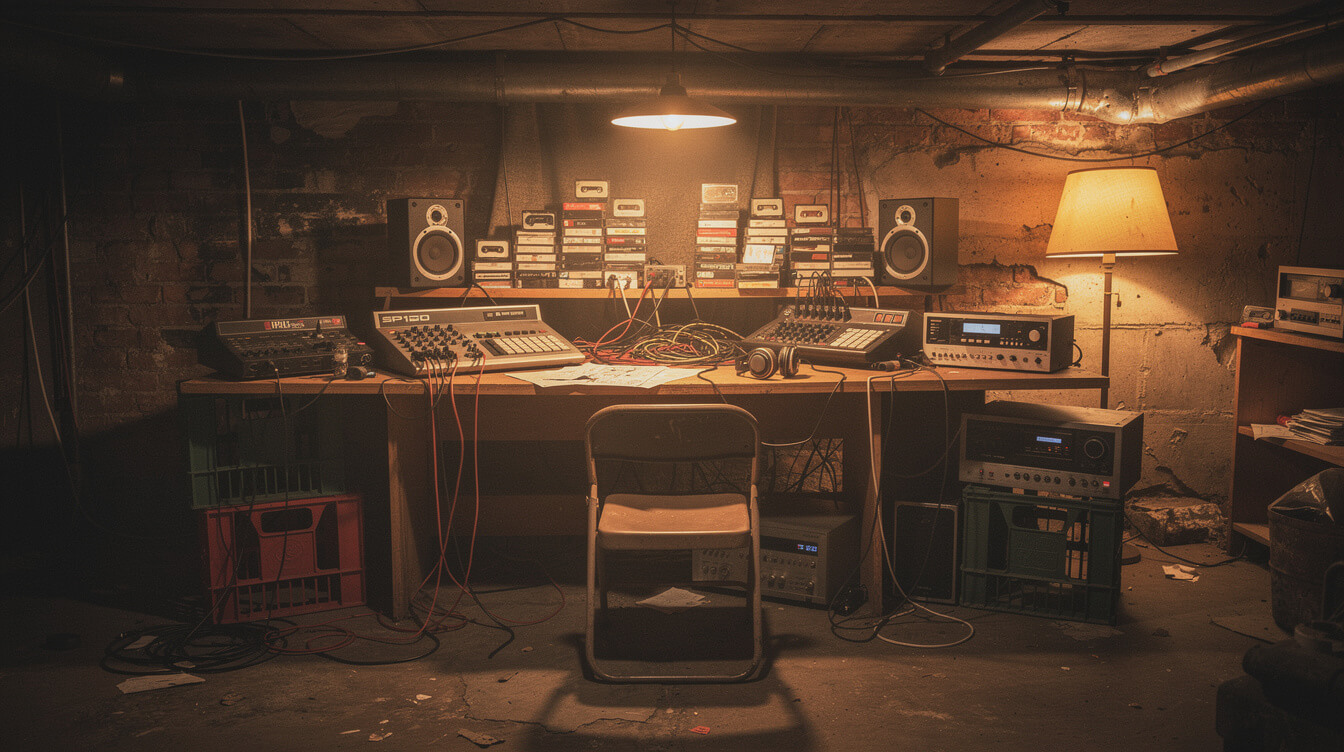
The Score was not made in a fortress studio. It was recorded in the basement of a house in East Orange, New Jersey — the Booga Basement, a home studio owned by Wyclef Jean’s uncle. This was 1995 into early 1996. The equipment was modest by major-label standards: an Akai MPC drum machine, an SP1200 sampler, standard 24-track tape gear, a rack of outboard effects. Jerry Duplessis, Wyclef’s cousin, co-produced. The Refugee Camp All-Stars — an extended family of session players and rappers around the Fugees — cycled through the sessions.
Ruffhouse Records and Columbia let the trio work autonomously largely because the first album, Blunted on Reality (1994), had underperformed. There was low label pressure and low expectations. Wyclef, Lauryn, and Pras used the freedom to build a record that broke every rule of what a hip-hop album was supposed to sound like in 1995. Live instrumentation was tracked alongside samples. Lauryn sang full lead vocals over hip-hop beats — something almost no rap act had committed to on a full-length. Reggae, soul, and pop crossovers sat next to boom-bap tracks without embarrassment.
“Ready or Not” was arranged as one of the tracks that most demonstrates this approach. The Enya loop provides the atmospheric wash. The Delfonics interpolation provides the chorus melody. A live drum track (rather than a straight sample) provides the pulse. Lauryn’s opening verse sits pocketed against the Enya loop with a rhyme scheme built for a rap flow but sung with the tonal color of a soul record. When The Score hit — six times platinum in the US, eight times platinum for the album in the UK where “Ready or Not” was released as its own commercial single — the industry realized the Booga Basement had produced the record that would define what rap could sound like for the next decade. It also produced the record we broke down in our full Lauryn Hill complete discography, since The Score is the launchpad for everything she made afterward.
Lauryn Hill’s Verse on Fugees Ready or Not: The Bridge to Miseducation
Play “Ready or Not” and stop the tape at 1:35. That is where Lauryn Hill takes her second verse. Everyone remembers the “so while you’re imitatin’ Al Capone, I’ll be Nina Simone” bar, or the “mango juice under Polaris” line. What almost nobody has written about — but every close listener hears — is that this verse is the sonic prototype for the entire Miseducation of Lauryn Hill album that arrived two years later.
Listen structurally. The verse phrase length is closer to a soul melody than a rap flow. The internal rhymes cluster around long vowel sounds — “phone,” “clone,” “throne,” “Al Capone,” “Nina Simone” — that read on paper like rap couplets but perform like a sung melodic hook. She uses breath control the way a singer does, not the way most rappers do. She weaves her voice up into head-voice register on the final syllables of key bars — a habit almost no MC in 1996 had normalized. Two years later she would write “Ex-Factor” and “To Zion” using the same principle: a sung melody that operates like a rap phrase, or a rap phrase that resolves like a sung hook. The technique that made Miseducation the most-awarded R&B album of the decade is right here on track three of The Score.
Pras confirmed one piece of the emotional context in a 2014 Vibe interview: Lauryn was in tears after recording the chorus for this song. Some of that pressure came from the friction inside the Fugees — the working relationship between Lauryn and Wyclef was already fraying by early 1996 and would fully collapse before The Score tour ended. Some of it was the personal cost of the vocal itself. She was building a template of sung-and-rapped hybrid vocals that no one had asked for and that carried enormous risk of misfiring. Two years later, when she sat down with Robert Glasper’s rhythm section and Vada Nobles at Perry Farrell’s Chung King studios and started tracking Miseducation, she was extending the exact same technique. “Ready or Not” is the demo tape for everything Lauryn built afterward.
Marcus Nispel’s $1.3 Million Music Video: The Fugees Go Full Blockbuster

The music video for “Ready or Not” was directed by Marcus Nispel, a German-born commercial director who had cut his teeth on Chanel and Cadillac spots before crossing into music videos in the early 90s. He would later direct the 2003 Texas Chainsaw Massacre reboot and the 2011 Conan the Barbarian. His commercial-director instincts show all over the “Ready or Not” video: dramatic wide shots, cinematic color grading, a submarine, a helicopter, a jungle chase, Wyclef in fatigues, Lauryn in a MedEvac harness. Several outlets have reported the budget at approximately $1.3 million — placing it, at the time, as one of the most expensive music videos ever produced and, credibly, the first rap music video to cross the seven-figure production line.
The visual language matters because it is the moment Fugees explicitly locked in the refugee-camp iconography as their band identity. The group name itself came from the Haitian-American refugee experience that shaped Wyclef and Pras. In the “Ready or Not” video, that identity gets translated into blockbuster action-movie imagery: military transport, jungle escape, submarine flight. It is a Bond parody and a Refugee Camp manifesto at the same time. When you watch it now, the visual DNA of Wyclef’s later Yéle Haiti activism, his 2010 presidential candidacy in Haiti, and even the political tone of Lauryn’s MTV Unplugged 2.0 — you can see all of it embryonic in the 1996 video. Even the album-art design principles at play in the video have their own tradition; we covered the full arc in our hip-hop album cover history.
The Refugee Camp Era in Context: What Else Dropped in 1996
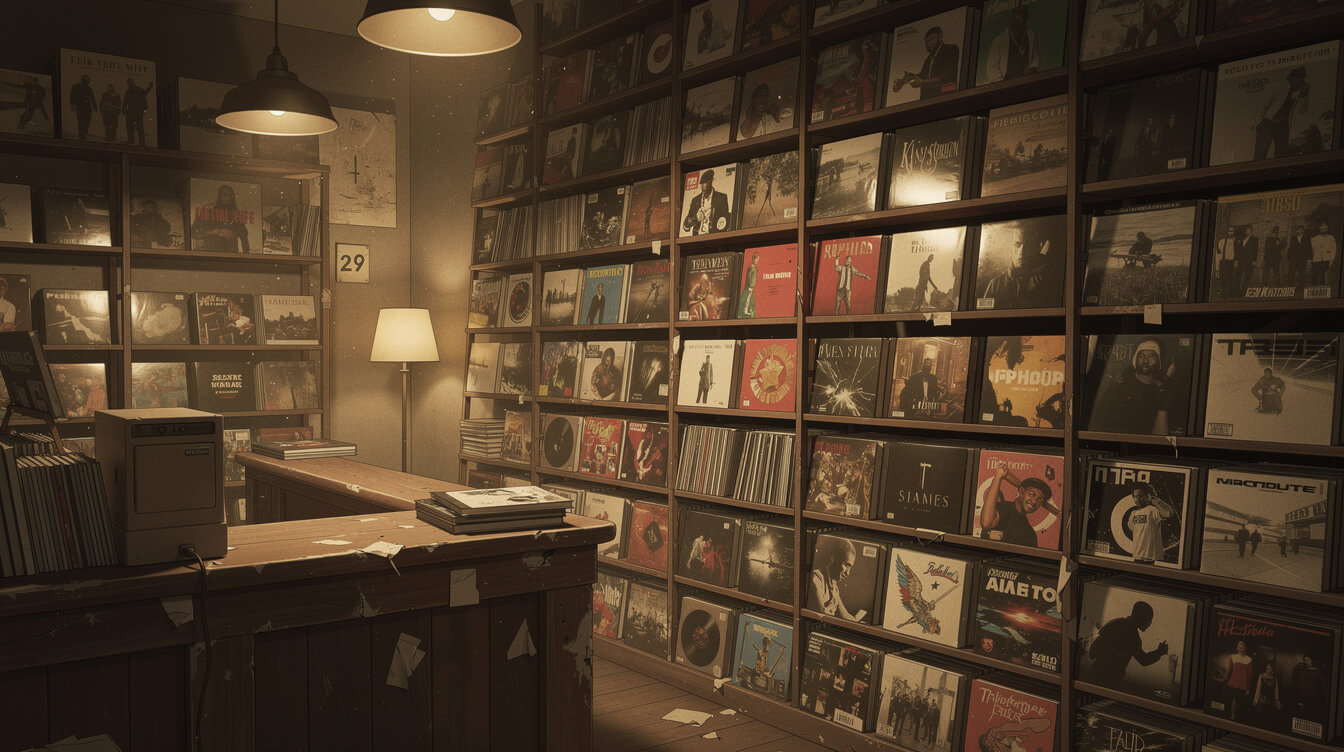
Context matters. When “Ready or Not” hit UK #1 in September 1996, it was landing into what is arguably the most competitive year in hip-hop history. Tupac’s All Eyez on Me had dropped in February — same day as The Score itself. Jay-Z released his debut Reasonable Doubt in June. Nas released It Was Written in July, deepening the golden-age East Coast canon. Ghostface Killah shipped Ironman in October. Redman put out Muddy Waters. Outkast released ATLiens. Roots’ Illadelph Halflife arrived. The following June, the East Coast comeback continued with Wu-Tang’s Forever, taking the boom-bap flag from where The Score had planted it.
Inside that context, “Ready or Not” performed a specific job. It was the crossover moment that told European audiences and non-rap listeners that hip-hop was not a monolith. You could play the record next to a Tori Amos album and it wouldn’t feel out of place. That crossover reach is what let the Fugees sell more than 22 million albums globally off The Score alone — a number no other rap group of the era approached. But it also permanently marked the trio as a crossover act rather than a pure rap collective, which was one of the underlying tensions that eventually broke the group up in 1997.
Cover Versions and the 30-Year Half-Life
“Ready or Not” has an afterlife most 1996 rap singles do not. The Course, an English girl group produced by Ollie Jacobs, recorded a UK cover version in 1997 that hit #5 on the UK Singles Chart. The Fugees track itself has been sampled and interpolated by artists ranging from Deltron 3030 to Missy Elliott. It has appeared on major TV sync licenses including Sons of Anarchy and The Umbrella Academy, both of which pushed the song back onto Spotify’s viral charts a full 20 years after the original release. On streaming platforms today it has crossed 400 million plays — a number that keeps rising because the track’s central architecture (Celtic-new-age atmospheric loop + Philly-soul chorus interpolation + rap trio harmonizing over live drums) still sounds unlike anything else being made in 2026.
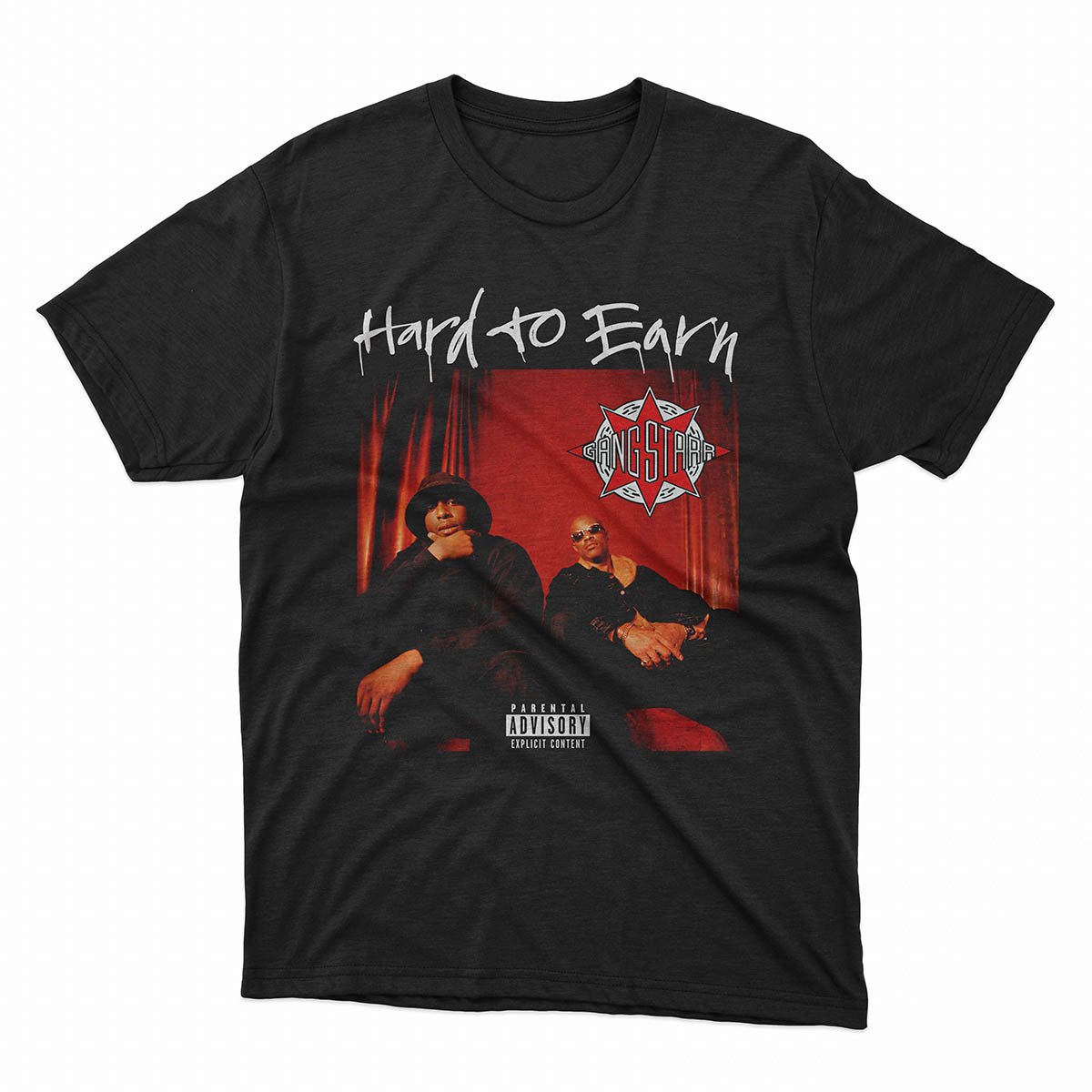
Golden Age on Your Chest
The Score dropped the same year Gang Starr closed the boom-bap door with Hard to Earn. Wear the era on a premium Bella Canvas tee.
Shop NowWear the Era: A Fugees Ready or Not Track-by-Track Wrap-Up
Thirty years after release, “Ready or Not” holds up because it is the rare rap single that layers three distinct musical traditions on top of each other without any of them losing dignity. Celtic new-age (Enya) meets Philadelphia soul (Delfonics) meets New Jersey boom-bap (the Booga Basement) meets Haitian-American diaspora identity (the Refugee Camp visual language) meets the sung-rapped hybrid vocal that would define R&B for the next 15 years (Lauryn Hill’s second verse). Every one of those threads is worth its own long-form piece. Every one of them is happening in three minutes and forty-seven seconds of a record most casual listeners think they already know.
If you came here looking for the surface story — released in 1996, Fugees, UK #1, cool Enya sample — you now have the fuller receipts. The Enya lawsuit rewrote how sample clearance protocol works. The Delfonics interpolation buys the record its place in Philadelphia soul’s inheritance line. The Booga Basement made it. Lauryn Hill’s second verse is the demo tape for Miseducation. Marcus Nispel spent $1.3 million to lock in the refugee-camp visual identity. And the golden-age East Coast records that shipped the same year — Ironman, It Was Written, Reasonable Doubt — form the surrounding lineage that gave “Ready or Not” a canon to sit inside. This is one of the most consequential songs in the history of American popular music. Now you know the receipts on why.
Stay in the Cypher
Golden-age deep dives, drop alerts, and hip-hop culture writing delivered straight from the Custom Creative crew. No corporate filler, ever.

🎧 Never Miss a Drop
Exclusive product releases, hip-hop deep dives, and member-only discounts. Straight to your inbox.
Free forever. No spam. Unsubscribe anytime.
Get the Culture, Delivered
Deep dives into hip-hop history, exclusive product drops, and discounts sent straight to your inbox. No spam, just culture.
Join 2,000+ hip-hop heads already in the loop. Unsubscribe anytime.