Gang Starr Guru: The Complete Story of Hip-Hop’s Coldest Voice — Bio, Discography & Legacy
Ask a hundred hip-hop heads to name the coldest MC of the 1990s and half of them will say something loud — Big Pun’s speed, DMX’s roar, Nas’s density. The other half will name Gang Starr Guru. He was hip-hop’s quietest heavyweight, the Boston-born, Brooklyn-based voice who paired with DJ Premier to build one of the most influential MC-and-producer duos the genre ever produced. Between 1989 and 2003, Guru and Premier put out six studio albums, invented what the world now calls jazz rap, and set the standard for what “grown-man hip-hop” actually sounds like.
This is the full story of Gang Starr Guru — Keith Edward Elam, the judge’s son from Roxbury who quit corporate America to move to Brooklyn, the MC whose flat delivery could turn a Premier drum break into scripture, and the artist whose final years became one of hip-hop’s saddest cautionary tales. We’ll walk through his origin, the meeting with DJ Premier that made Gang Starr real, every studio album in the classic run, the four Jazzmatazz records that pulled Branford Marsalis and Donald Byrd into a rap booth, and the Solar-era controversy that still shadows his legacy.
Who Was Gang Starr Guru?

Guru — born Keith Edward Elam on July 17, 1961, in the Roxbury neighborhood of Boston — was one half of the hip-hop duo Gang Starr and one of the most quietly authoritative voices in the entire genre. He died from multiple myeloma on April 19, 2010, at the age of 48. In just under two decades of active recording (1987–2010), he cut six Gang Starr studio LPs, four solo Jazzmatazz albums, guest verses across an unusually long list of jazz records, and a handful of collaborative projects with his final producer partner, Solar.
Every serious ranking of hip-hop lyricists has him in the conversation. The Source put him at No. 30 on its all-time Top 50 Lyricists list, calling him someone who “dropped some of the most thoughtful rhymes on wax.” About.com ranked him No. 49 on its Top 50 MCs of Our Time in 2012. The stage name itself was an acronym he chose deliberately — G.U.R.U. stood for “Gifted Unlimited Rhymes Universal” — and he carried its intentionality into every verse he wrote.
He recorded under a few other names too — Jazzmattaz, Keithy E.M.C., and Bald Head Slick — but every serious listener knows him by one word. Guru was the flat, laconic, endlessly quotable voice that made Gang Starr one of the definitive groups of the golden age.
The Roxbury Judge’s Son Who Became a Boston Voice
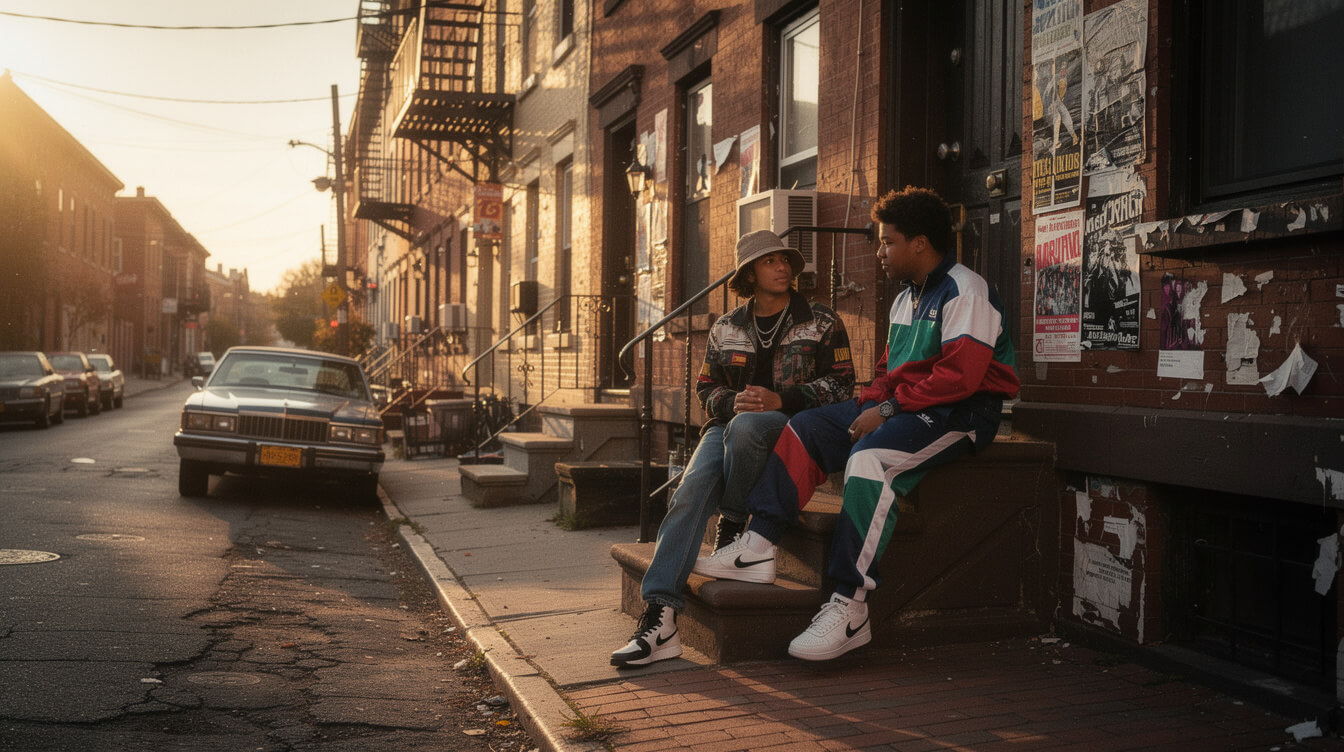
Gang Starr Guru grew up inside one of the more improbable backstories in hip-hop. His father, Harry Justin Elam Sr., was the first African American judge appointed to the Boston Municipal Court, later becoming its Chief Justice and eventually an Associate Justice of the Massachusetts Superior Court. His mother, Barbara Elam, was the co-director of libraries in the Boston Public Schools system — an activist librarian who worked to pull racist material off classroom shelves. His older brother Harry Elam Jr. became a drama professor at Stanford.
Keith was the youngest of three siblings and, by his own admission, the rebel. His parents shipped him out of Roxbury for education — middle school at the Advent School on Beacon Hill, then Noble and Greenough School in Dedham for early high school, then Cohasset High School twenty miles south of Boston, an overwhelmingly white town where a Black kid from Roxbury stood out on principle. In a 1994 interview with The Source, he said he resented his father for not teaching him “how to survive on the street” — that he’d had to figure out that whole world alone every time he went home.
He earned a business administration degree from Morehouse College in Atlanta in the early ’80s and took graduate classes at the Fashion Institute of Technology in Manhattan. Publicly, that was the arc his family wanted: prep school, HBCU, corporate track. Privately, Keith had already started rapping. While still at Morehouse he built out an early crew with his Roxbury friend Big Shug (Sugar Bear), winning talent shows at Atlanta clubs like the Phoenix under the name MC Keithy E. Shug wrote the first Gang Starr lyrics. The judge’s son had chosen his side.
How Guru Met DJ Premier and Gang Starr Actually Started
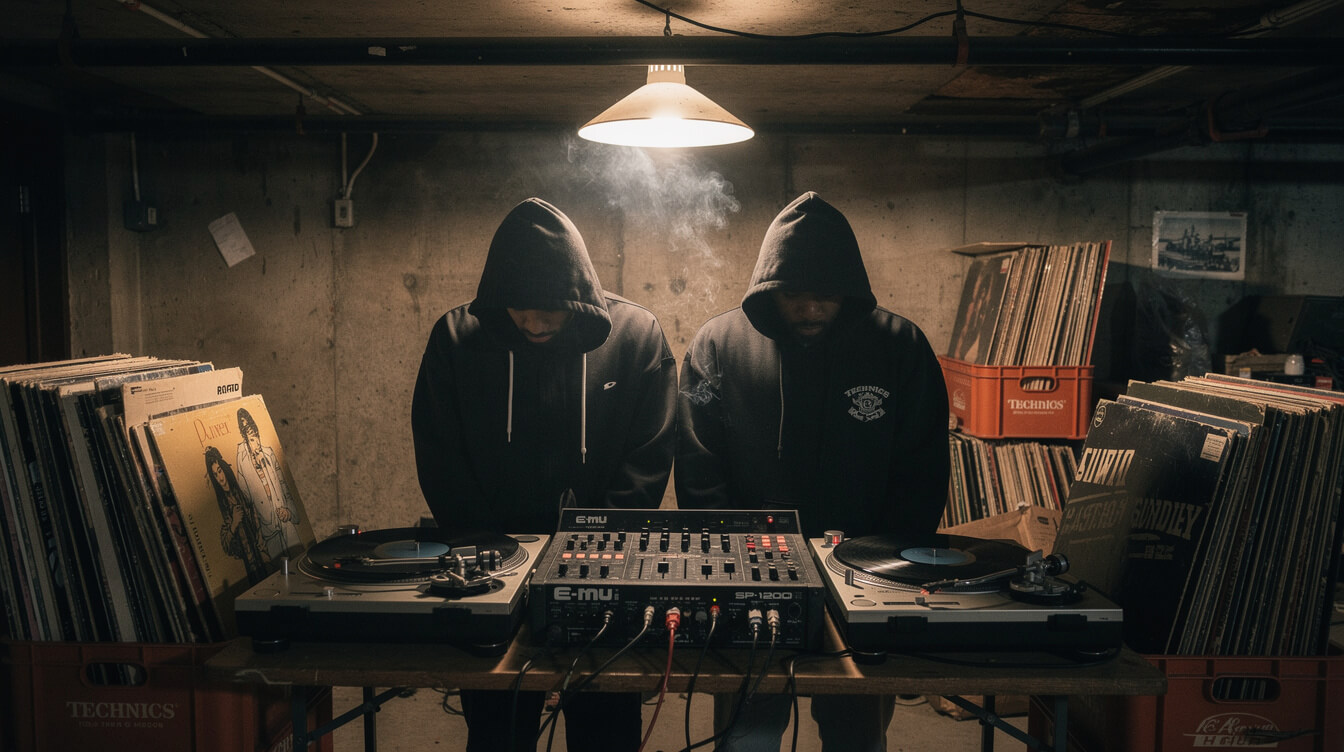
The group most people call Gang Starr wasn’t the first Gang Starr. The original 1985–1988 lineup was three friends from Boston — Guru as rapper-singer, Big Shug as the main MC, and Shug’s younger brother DJ Suave D on the ones and twos — with producers like Donald D, J.V. Johnson, and The 45 King lending beats. After Shug was imprisoned, Suave D bailed. Guru pulled in MC Damo D-Ski and DJ 1, 2 B-Down (Mike Dee) and put out three 12-inch singles on Wild Pitch Records in 1987 and 1988. Nobody paid attention.
In 1989 the group split for a second time. Guru was the only member willing to keep the name alive. That’s when a demo tape landed at Wild Pitch from a young Houston-born producer then calling himself Waxmaster C — one Christopher Edward Martin. Guru heard the beats, loved them, and invited him to relocate to Brooklyn and become the new DJ. Waxmaster C rebranded as DJ Premier. Their first single together, “Words I Manifest,” dropped in 1989. It flipped Charlie Parker’s “A Night in Tunisia” over hard drums — a template that would define the group’s entire career.
The debut album No More Mr. Nice Guy came out later that year on Wild Pitch. Chrysalis Records A&R director Duff Marlowe — himself a former Los Angeles Times rap critic — signed them the following year, offering unlimited artistic license and major-label distribution. That was the deal that unlocked everything. From 1991 through 1998, Guru and Premier operated with a kind of creative freedom almost no other hip-hop group of the era had. If you’re new to the genre and want a broader map of the sound they helped define, our deep-dive on Gang Starr as pioneers of hip-hop culture covers the cultural context around this run.
The Gang Starr Discography: Six Albums That Shaped East Coast Hip-Hop
Six studio albums, sixteen years, one voice, one producer. Here’s every Gang Starr LP with the context that matters.
No More Mr. Nice Guy (1989, Wild Pitch)
The debut. Premier’s samples are already jazz-forward — “Jazz Music,” “DJ Premier in Deep Concentration,” and the Charlie Parker-sampling “Words I Manifest” all point to what’s coming. Guru’s flow is younger and rougher than what fans would come to expect, but the philosophical bent is already there. Spike Lee used their track “Jazz Thing” on the Mo’ Better Blues soundtrack the following year, which put both members on the radar of every jazz label executive in New York.
Step in the Arena (1991, Chrysalis)
The first major-label statement, and the album where Premier’s sample-chop style crystallized. “Just to Get a Rep” — a stark first-person street narrative anchored by a hypnotic Jean-Jacques Perrey loop — became a hip-hop classic and one of the most sampled Gang Starr records. “Who’s Gonna Take the Weight?” laid down Guru’s grown-man ethical stance. This is where hip-hop heads first realized what they had.
Daily Operation (1992, Chrysalis)
Widely regarded as the album where Premier stopped being a great producer and became a legendary one. “Take It Personal,” “Ex Girl to Next Girl,” and “Soliloquy of Chaos” all sit in the canon. The record leans harder into the jazz-sample-plus-hard-drums signature that DJ Premier would spend the rest of the decade selling to Nas, Jay-Z, Biggie, and everyone else who wanted their album to sound serious.
Hard to Earn (1994, Chrysalis)
Grittier and more confrontational than Daily Operation. “Mass Appeal” — Premier’s chopped-up flip of a Vic Juris guitar loop — became Gang Starr’s calling card and remains the song most casual listeners know. Our Mass Appeal track breakdown unpacks the Vic Juris sample source and the anti-commercial thesis of the song. “Code of the Streets,” “DWYCK” (with Nice & Smooth), and “Suckas Need Bodyguards” all belong on any Gang Starr playlist. Guru sounds tired on this one — in a good way. It’s the sound of an MC done trying to convince you.
Moment of Truth (1998, Noo Trybe/Virgin)
The commercial and artistic peak. Four years after Hard to Earn, Guru returned from a legal case — the “JFK to LAX” narrative about a gun-possession arrest — and Premier came back with the most confident production work of his career. The album went gold, certified by the RIAA. “You Know My Steez,” “Above the Clouds” (featuring Inspectah Deck), “Royalty” (featuring K-Ci & JoJo), and the title track are all first-ballot Gang Starr records. If you had to hand someone one Gang Starr album to explain the group, it’s this one.
The Ownerz (2003, Virgin)
The last true Gang Starr album released in Guru’s lifetime. The group had by then influenced an entire generation — you can hear the Premier-Guru template in Talib Kweli, Common’s early work, and the Rawkus Records catalog. The Ownerz is less consistent than Moment of Truth, but “Skills,” “Rite Where U Stand” (featuring Jadakiss), and “Nice Girl, Wrong Place” (featuring Boy Big) are all late-period Gang Starr worth revisiting. After the album’s supporting tour, the partnership quietly dissolved.
The 1999 compilation Full Clip: A Decade of Gang Starr also went gold, and DJ Premier eventually released a posthumous album, One of the Best Yet, in 2019 — building new tracks around unreleased Guru vocals with a guest verse from J. Cole on the lead single “Family and Loyalty.” For a fuller sense of Premier’s production reach beyond Gang Starr, our DJ Premier x Nas nineteen-year collaboration history traces how the same sample-chop instincts built Illmatic and everything after.
Guru’s Voice: Why the Calmest MC Also Hit the Hardest
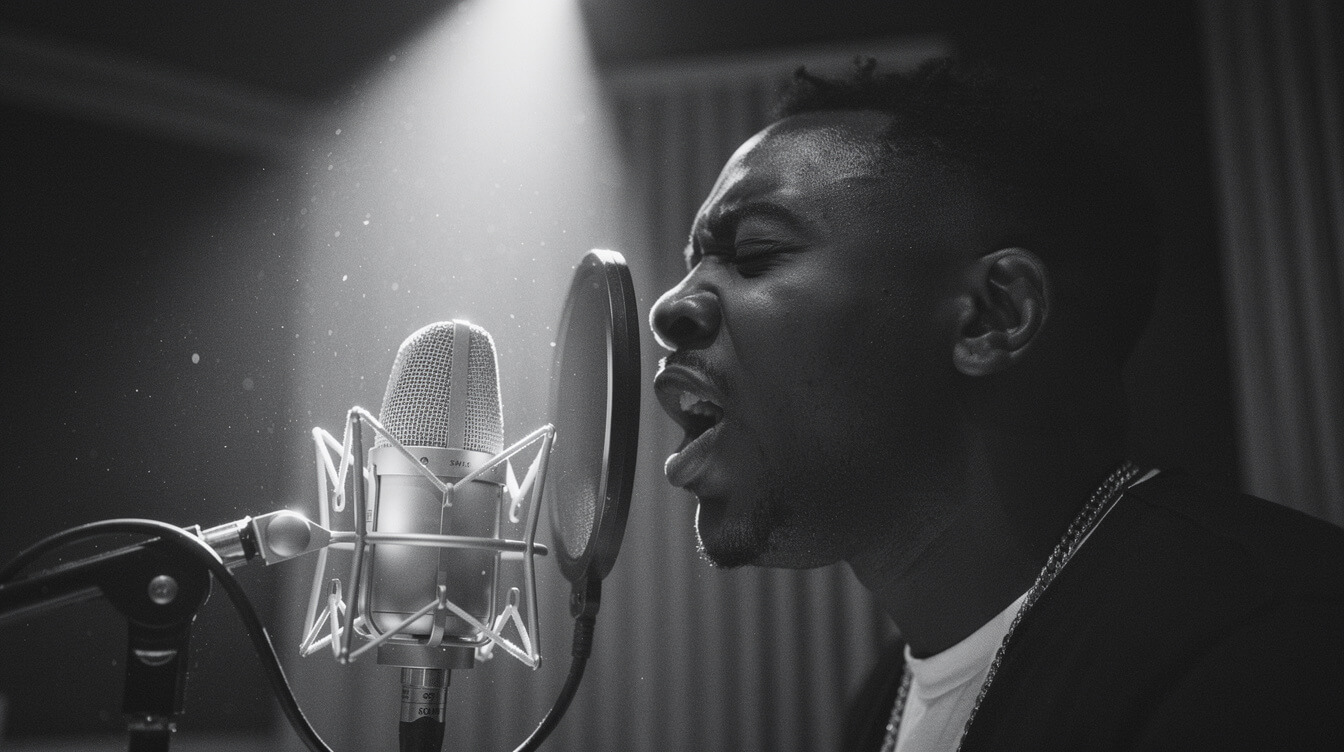
Guru had one of the most unusual instruments in hip-hop history: a low, flat, almost affectless voice that never sped up, never shouted, and never got out of pocket. In an era defined by Rakim’s polysyllabic sprawl, Chuck D’s political thunder, and Big Daddy Kane’s showman flair, Gang Starr Guru went the other direction. He rapped like a man who had already decided the point of the verse before he opened his mouth.
GQ‘s memorial piece the day after his death called it “eye-contact rap, economical and riveting, proof of the age-old dictum that cool don’t advertise.” That’s the exact right description. Guru was doing the thing rappers a decade younger than him would try to imitate — the grown-man calm of late-period Jay-Z, the pocket-flow patience of Roc Marciano, the anti-flex delivery of Ka — a full generation before it became a recognizable style. He got there first, in an era when nobody was rewarding it.
The signature Guru phrasing was almost proverbial. “Cause manifest is the way that I flex” (from “Words I Manifest”). “You know my steez” (from the 1998 track that gave a whole aesthetic its name). “It’s mostly the voice that got me buckin’ this game” (from Moment of Truth‘s “Above the Clouds”). His couplets ran short. His imagery stayed concrete. He rarely bragged about material things. When he did draw a line, it was a moral one, delivered so quietly you had to lean in to hear it.
Fans still translate that reverence into the streetwear they wear. Our Guru “Catch an L” Tribute Tee pulls one of his most quoted lines onto a black-and-white piece designed for people who actually know why the words matter — not a generic rap-legend tee, but a receipt for anyone who’s rewound “Ex Girl to Next Girl” a thousand times.
Jazzmatazz: Guru’s Solo Statement That Wed Rap to Real Jazz
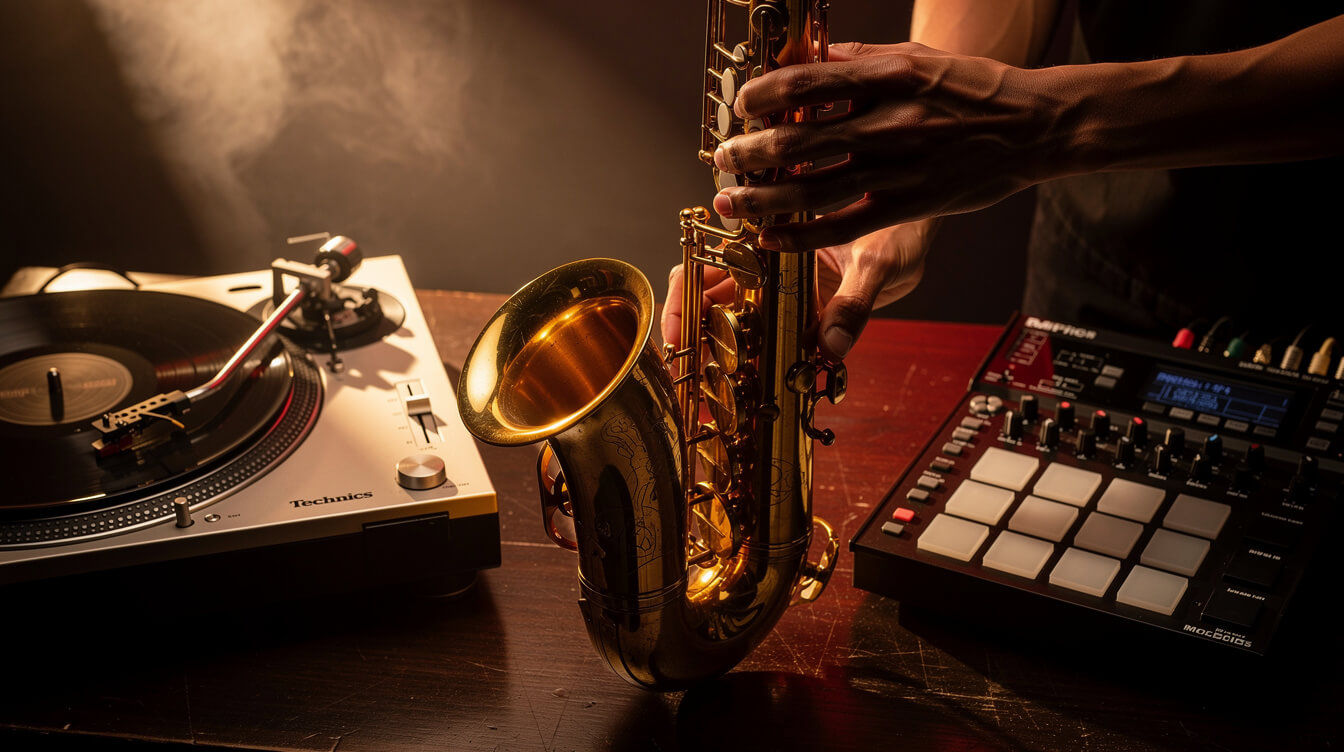
In 1993, while Gang Starr was between Daily Operation and Hard to Earn, Guru released the record that would arguably become his most historically important solo statement: Jazzmatazz, Vol. 1. The concept was radical for the time — rather than sampling jazz records (as Premier and A Tribe Called Quest were already doing brilliantly), Guru would bring actual jazz musicians into the studio, play the changes live, and rap over them.
The guest list read like a Blue Note reunion. Donald Byrd — the hard-bop trumpet legend whose “(Fallin’ Like) Dominoes” and “Think Twice” had already been sampled to death by hip-hop producers — sat in personally. Branford Marsalis played saxophone. Roy Ayers brought vibraphone. Lonnie Liston Smith played keys. Ronny Jordan played guitar. French rapper MC Solaar guested on “Le Bien, Le Mal.” The record was released on Chrysalis in the U.S. and Cooltempo in Europe, and it did what almost no crossover project ever manages: it earned respect from both the hip-hop and jazz camps.
Guru would go on to release three more Jazzmatazz volumes — Vol. 2: The New Reality (1995), Vol. 3: Streetsoul (2000), and Vol. 4: The Hip-Hop Jazz Messenger — Back to the Future (2007). None quite matched the shock of the first, but the series became the definitive blueprint for how a rapper could work with a live jazz ensemble without embarrassing anyone. Every artist who has tried a “hip-hop meets a live band” record since — from The Roots’ catalog to Anderson .Paak’s Malibu to Kendrick Lamar’s To Pimp a Butterfly — owes some structural debt to what Guru pulled off in 1993.
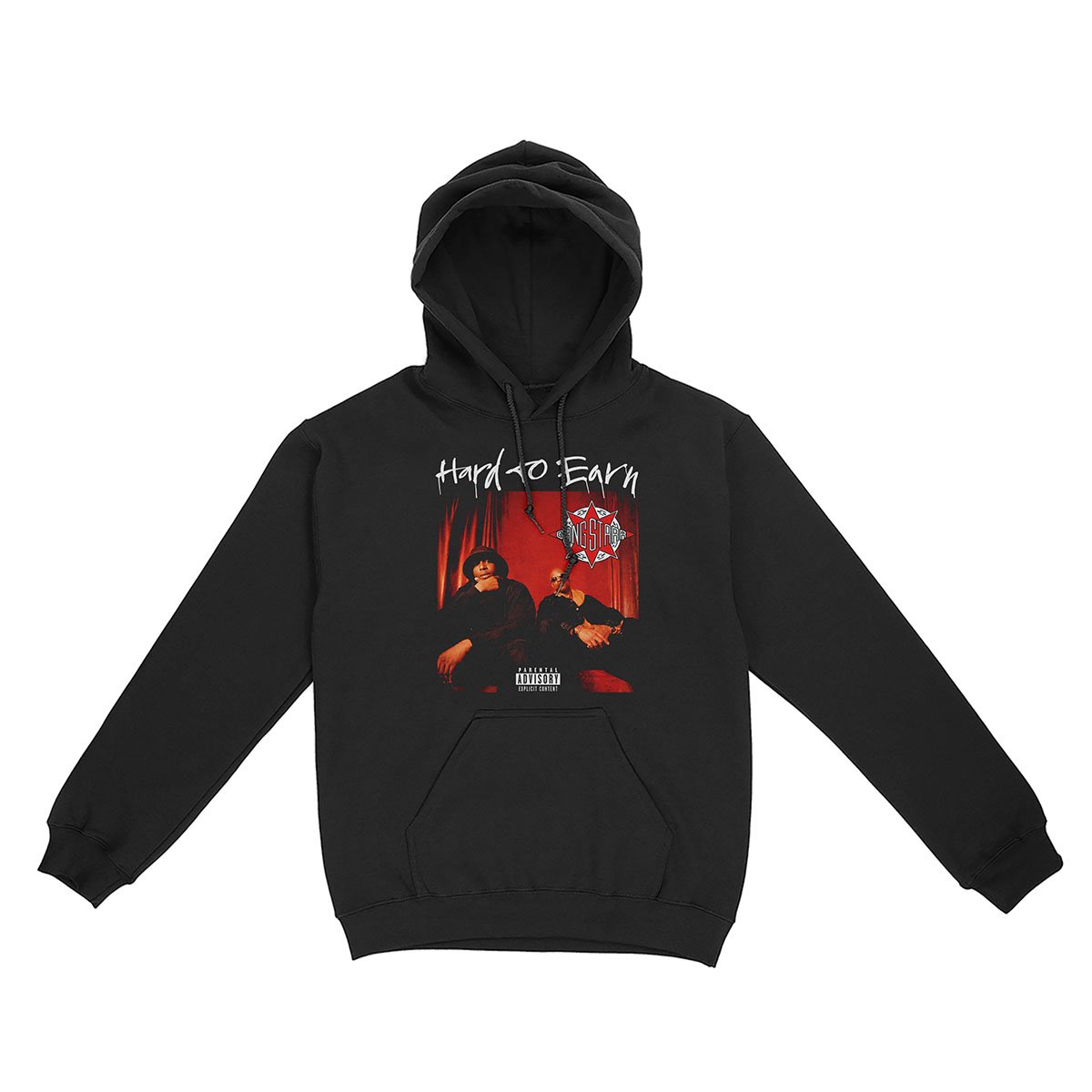
Wear the Album That Made Grown-Man Rap
The 1994 Gang Starr LP with “Mass Appeal,” “Code of the Streets,” and “DWYCK” — pressed on a heavyweight black hoodie for people who know exactly why Premier chopped up Vic Juris.
Solar, the Deathbed Letter, and How Guru’s Legacy Actually Stands
The story of Guru’s final years is the darkest chapter in the Gang Starr saga, and it deserves a careful reading. After The Ownerz tour wrapped in the mid-2000s, Guru drifted away from DJ Premier and started working almost exclusively with a producer named John “Solar” Mosher, with whom he’d founded a label called 7 Grand Records. From the beginning, people inside the hip-hop community raised questions about the relationship. Multiple longtime Guru associates later described Solar as isolating him from family, old friends, and Gang Starr Foundation collaborators.
In February 2010, Guru suffered a heart attack and fell into a coma. Solar later told the press that Guru had been diagnosed with multiple myeloma back in 2000 and had chosen to keep it private. Guru died on April 19, 2010, at the age of 48. Within hours, Solar published what he claimed was a deathbed letter from Guru dictating that Premier — his musical partner of two decades — should have “nothing to do with my name, likeness, events, tributes, etc.”
The letter’s authenticity was immediately questioned by Guru’s family, longtime friends, and hip-hop peers. Chris Faraone’s exhaustive 2014 feature for Medium’s Subterranean Thump, based on more than a dozen interviews with people in Guru’s inner circle, documented allegations that the Solar relationship had been “at best emotionally oppressive, and at worst physically abusive.” Guru’s sister Patricia Elam later worked directly with DJ Premier on a biopic project. Nobody who knew Guru before 2003 accepts the deathbed letter at face value.
None of that darkness has diminished the music. If anything, the Solar chapter clarified how singular Premier and Guru were together. Premier has spent the last fifteen years honoring the catalog — releasing the posthumous 2019 album One of the Best Yet built around unreleased Guru vocals, curating the Gang Starr Foundation legacy, and using his Sirius XM show Live from HeadQCourterz to keep the tradition audible. The Netflix series Luke Cage named every episode of its first season after a Gang Starr song. Producers like Statik Selektah, DJ Muggs, and Apollo Brown build on the Premier-Guru template every year.
And every July 17, the culture remembers. Our own Today in Hip-Hop tribute for what would have been Guru’s 65th birthday walks through the anniversaries, the tracks worth revisiting, and the reasons his voice keeps mattering.
Frequently Asked Questions About Gang Starr Guru
What does the name Guru stand for?
G.U.R.U. is an acronym Keith Elam chose for his stage name: Gifted Unlimited Rhymes Universal. He also recorded under Jazzmattaz, Keithy E.M.C., and Bald Head Slick, but Guru is the name every serious hip-hop fan knows him by.
Who was in Gang Starr?
The classic and by far most influential Gang Starr lineup was Guru (MC) and DJ Premier (producer). They partnered in 1989 after Premier submitted a demo tape to Wild Pitch Records. Earlier 1985–1988 lineups included Big Shug, DJ Suave D, MC Damo D-Ski, and DJ 1, 2 B-Down, but those recordings never broke through.
How did Guru die?
Guru died on April 19, 2010, from multiple myeloma, a type of blood cancer. He was 48 years old. He’d reportedly been diagnosed in 2000 but kept the illness private. He suffered a heart attack in February 2010 and never regained consciousness.
What was Guru’s beef with DJ Premier?
The purported feud was almost entirely one-sided. During Guru’s final years working with producer Solar, he became estranged from Premier. A “deathbed letter” published by Solar after Guru died disowned Premier — but the letter’s authenticity was immediately disputed by Guru’s family and hip-hop peers, most of whom believe Solar authored or heavily influenced it. DJ Premier has continued to honor Guru’s legacy, including the 2019 posthumous Gang Starr album One of the Best Yet.
What is Gang Starr’s best album?
The consensus answer is Moment of Truth (1998) — Gang Starr’s only RIAA-certified gold studio album and the record most fans point to as the group’s creative peak. Daily Operation (1992) and Hard to Earn (1994) are the other two most frequently cited. If you’re starting from zero, put Moment of Truth on and let it play through.
What is Jazzmatazz?
Jazzmatazz is a four-volume series of Guru solo albums (1993, 1995, 2000, 2007) built around live collaborations with actual jazz musicians — Donald Byrd, Branford Marsalis, Roy Ayers, Lonnie Liston Smith, and many more. It’s widely credited as a foundational template for later “rap-meets-live-band” projects from The Roots to Kendrick Lamar.
Final Thoughts: Why Gang Starr Guru Still Matters
Gang Starr Guru is proof that hip-hop has never actually required volume to be authoritative. He never rapped past his own comfort. He never chased trends. He built a catalog with one producer over sixteen years, invented a sub-genre, and left behind a body of work that gets more respected with every passing year. Younger MCs who study the form — Roc Marciano, Ka, Boldy James, Mach-Hommy, Griselda’s entire roster — all owe something to the Boston-born, Brooklyn-based voice who figured out that eye-contact rap was more powerful than yelling.
His story is also a warning. Great artists in isolation are vulnerable, and Guru’s final chapter should be read by anyone who cares about protecting the older generation of hip-hop legends. But the music remains — six Gang Starr albums, four Jazzmatazz records, an unbroken run from 1989 to 2003 that almost no other rap catalog can match for consistency. Put on Moment of Truth. Play “You Know My Steez” one more time. That voice, once you know it, never leaves.
Stay creative — The Custom Creative Team
Real Hip-Hop, Straight to Your Inbox
Album deep-dives, artist retrospectives, and first looks at new Custom Creative apparel drops. No corporate filler — just the culture, delivered by heads for heads.

🎧 Never Miss a Drop
Exclusive product releases, hip-hop deep dives, and member-only discounts. Straight to your inbox.
Free forever. No spam. Unsubscribe anytime.
Get the Culture, Delivered
Deep dives into hip-hop history, exclusive product drops, and discounts sent straight to your inbox. No spam, just culture.
Join 2,000+ hip-hop heads already in the loop. Unsubscribe anytime.