Wu-Tang: An American Saga Explained — A Hip-Hop Head’s Guide to Hulu’s Wu-Tang Origin Story
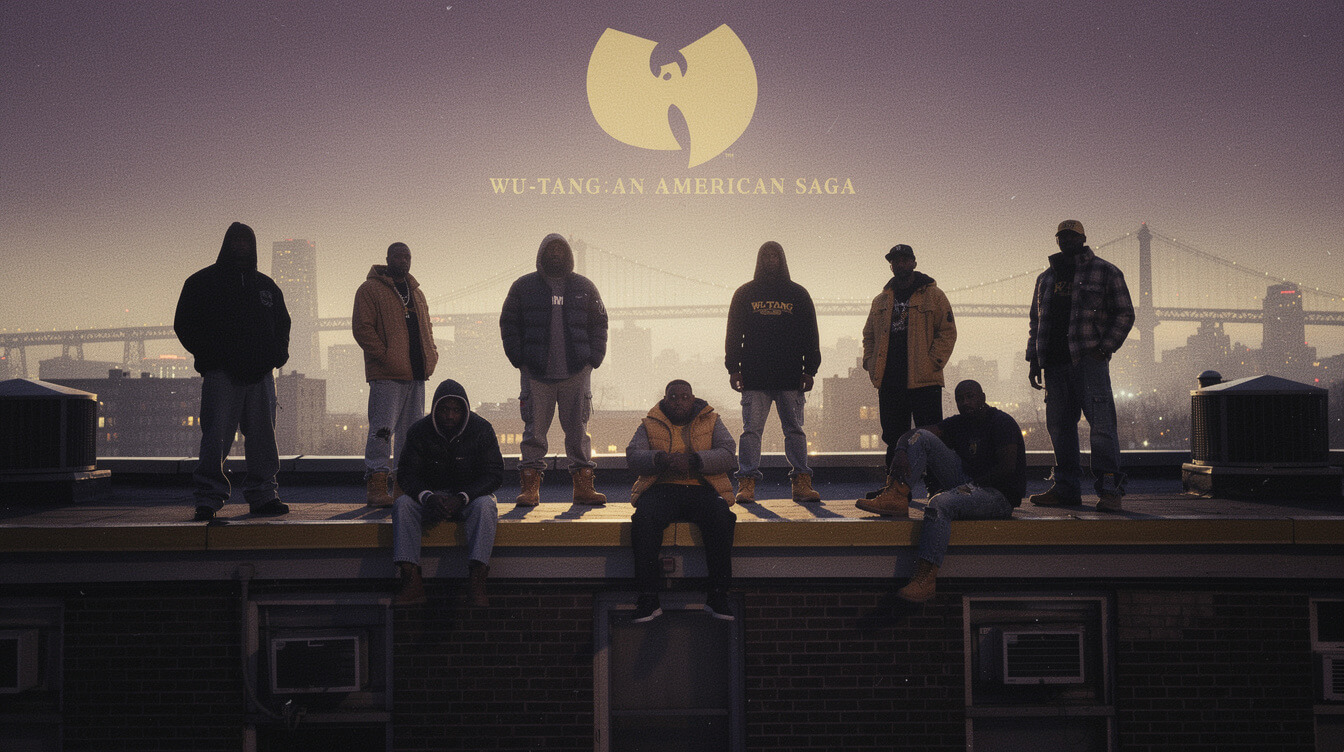
Type “wu-tang clan show” into Google in 2026 and the SERP doesn’t come back with a tour date. It comes back with Hulu. Wu-Tang: An American Saga ran three seasons — 2019, 2021, and 2023 — and it’s the only Wu biopic anyone will ever need to know exists. Not because there won’t be others. Because RZA co-created it. He wrote it with Alex Tse, the same writer who put Menace II Society on the page. That’s a level of credibility no unauthorized biopic on the shelf can touch.
This is the head’s guide. What the show gets right about the Stapleton basement years. Which five episodes actually deliver if you don’t have the runway to binge all 30. Which albums to spin alongside each season. And how the show maps onto the actual chronology of every classic that dropped between 1993 and 1997. If you’re already deep in the catalog, you’ll find the gaps this guide fills. If you’re only Wu-curious, you’ll leave with a viewing order that turns 30 episodes into a Wu-Tang mythology deep-dive.
Why This Show Matters: RZA Co-Created His Own Biopic
Most hip-hop biopics get made about the artist. This one got made by the artist. RZA is credited as co-creator, executive producer, and — depending on the episode — director, composer, or on-screen consultant. He built it with Alex Tse, whose 1993-set Menace II Society credit is exactly the pedigree you want for a story that opens in the crack-era Stapleton projects. That combination is the entire reason the show exists on a different plane than the average dramatization.
Consider the alternative history for a second. Most rap biopics are green-lit around a story someone in a suit thinks they can sell — Notorious greenlit by Voletta Wallace’s estate, All Eyez on Me greenlit by Morgan Creek, Straight Outta Compton co-produced by Ice Cube and Dr. Dre so at least half the source material was in the room. An American Saga is the rare case where the primary architect of the sound — the guy who chopped the Enter the Thirty-Six loops in that basement — sat in the writer’s room for every episode. When Bobby Diggs pulls a chopped soul sample out of a stack of records in season one, that’s not a props department call. That’s RZA telling you what actually happened.
The show also refuses to compress the timeline into a two-hour movie. Three seasons, 30 episodes, roughly a decade of story across 1988 to 1997. That runway lets the show breathe through the parts most biopics skip — the pre-fame friction between Bobby, Gary Grice (GZA), and Russell Jones (Ol’ Dirty Bastard); the false starts under names like All In Together Now and Prince Rakeem; the fact that Wu-Tang Clan the group didn’t crystalize until Bobby’s own solo run under Tommy Boy collapsed. That’s the origin story Enter the Wu-Tang was built on top of, and no other document — book, doc, or podcast — has ever staged it with this much room.
The Season 1 to 3 Arc: Bobby Diggs to Wu-Tang Formation to Fame
Season one (10 episodes, 2019) is the origin engine. It opens in 1992 Staten Island with Bobby Diggs — played by Ashton Sanders of Moonlight — juggling the pull of the crack economy, family responsibility, and the beats he can’t stop making in the basement of 63 Targee Street. The season assembles the future Clan one head at a time: cousin Gary (GZA), cousin Russell (ODB), Meth up from Long Island through Park Hill, Ghost and Rae from the block, Deck and U-God from the neighborhood chess table, Masta Killa arriving late via Killarmy alumni. By the finale, “Protect Ya Neck” exists.
Season two (10 episodes, 2021) covers 1993 to 1994 — the Enter the Wu-Tang (36 Chambers) release and the negotiation that changed the label game forever. This is the season that stages the Loud/RCA deal where RZA insisted every Clan member could sign solo to any other label. Steve Rifkind said yes. Every major-label rap contract signed after 1994 lives in the shadow of that clause. Season two also dramatizes the immediate solo-career explosion — Meth’s Tical for Def Jam, the buildup to Rae’s Only Built 4 Cuban Linx…, ODB’s Return to the 36 Chambers: The Dirty Version for Elektra.
Season three (10 episodes, 2023) closes the trilogy across 1995 to 1997 — the solo-run apex (Cuban Linx, Liquid Swords, Ironman), the moment “Cash Rules Everything Around Me” mutated from a hook into a national vocabulary, and the recording of Wu-Tang Forever. It also lets the fame cost land. By the finale, the Clan is playing arenas but the basement is a memory, and Bobby is negotiating with the ghost of the person Bobby Diggs used to be before he was RZA. If you want the spoiler-safe read: season one is birth, season two is coronation, season three is reckoning.
What The Show Gets Right About Early-’90s Staten Island Hip-Hop
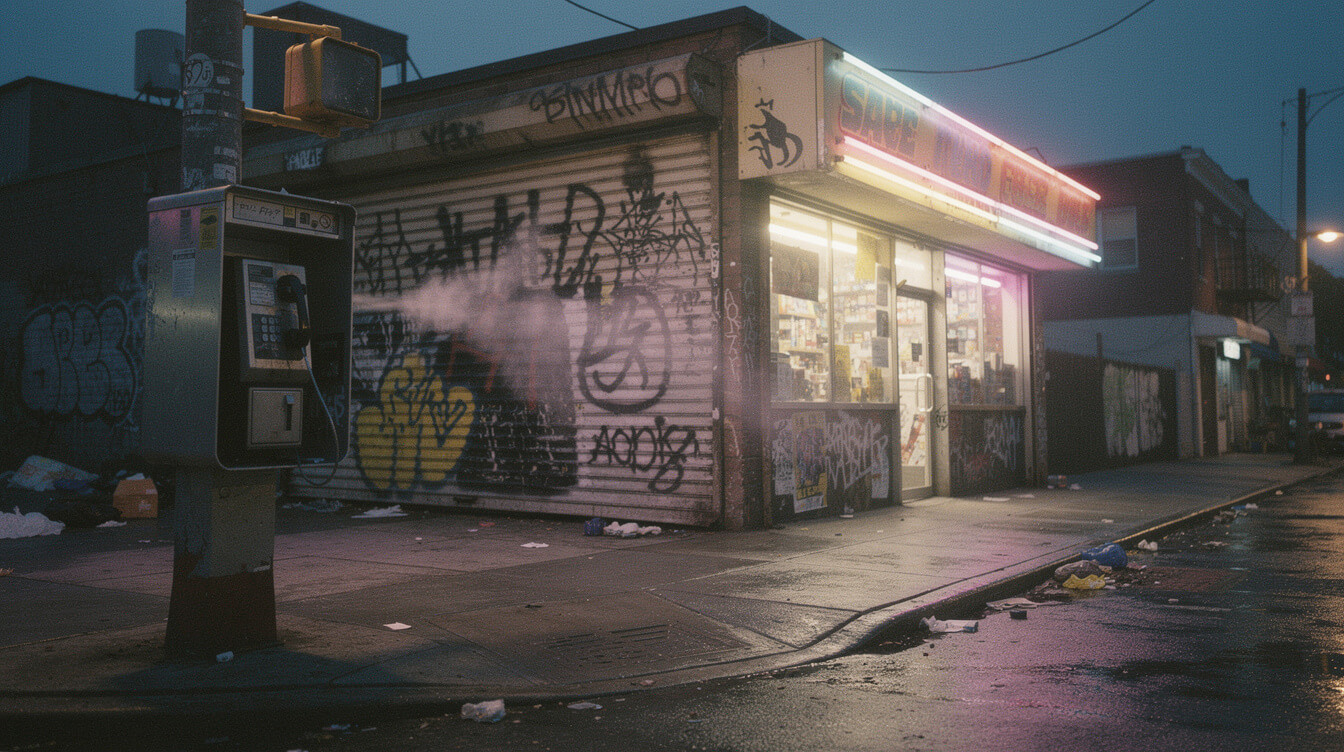
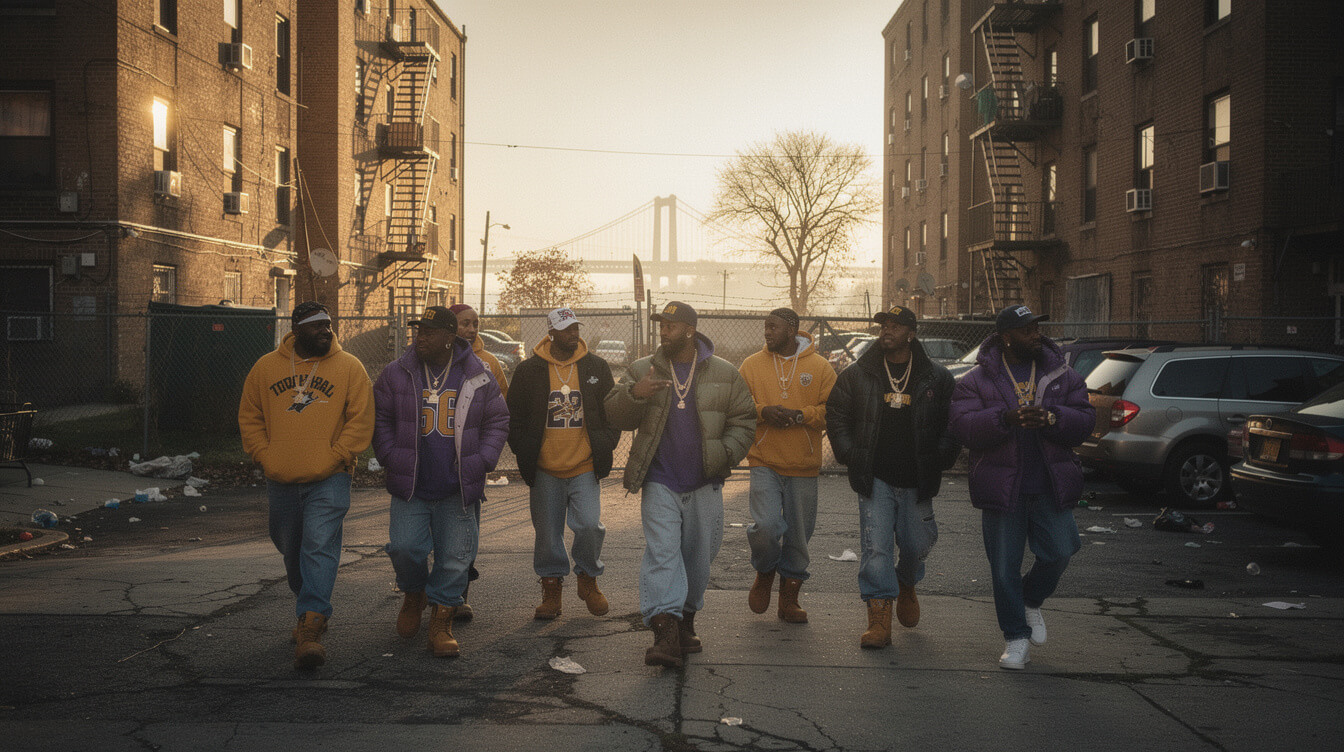
The show’s most valuable choice is placing Staten Island — the borough Manhattan forgets exists — at the geographic center. That’s a research decision. Wu-Tang Clan is one of the very few New York rap acts not from Queensbridge, the Bronx, or Brooklyn. Park Hill Houses. Stapleton Houses. The 44 line running down Van Duzer Street. The show shoots for that specificity — the concrete walkways of the projects, the S48 bus stops, the Chinese takeout counters with plexiglass — because RZA and Tse know that Wu-Tang’s whole aesthetic (the Shaolin/Wu-Tang nickname system, the martial-arts mythology, the mafioso pivot Rae would eventually take) grew directly out of that isolation.
It gets the era’s economic gravity right. The crack epidemic in New York didn’t peak in the 1980s the way most primers say — DEA arrest data has it cresting in 1988-1990, exactly the years the show’s first season is set in. Bobby’s brothers running the block isn’t set dressing. It’s the primary alternative career path. When Divine (RZA’s older brother, played by Julian Elijah Martinez) pushes back on the music dream, that’s a real conversation that happened in every household in every project in New York from 1986 to 1995.
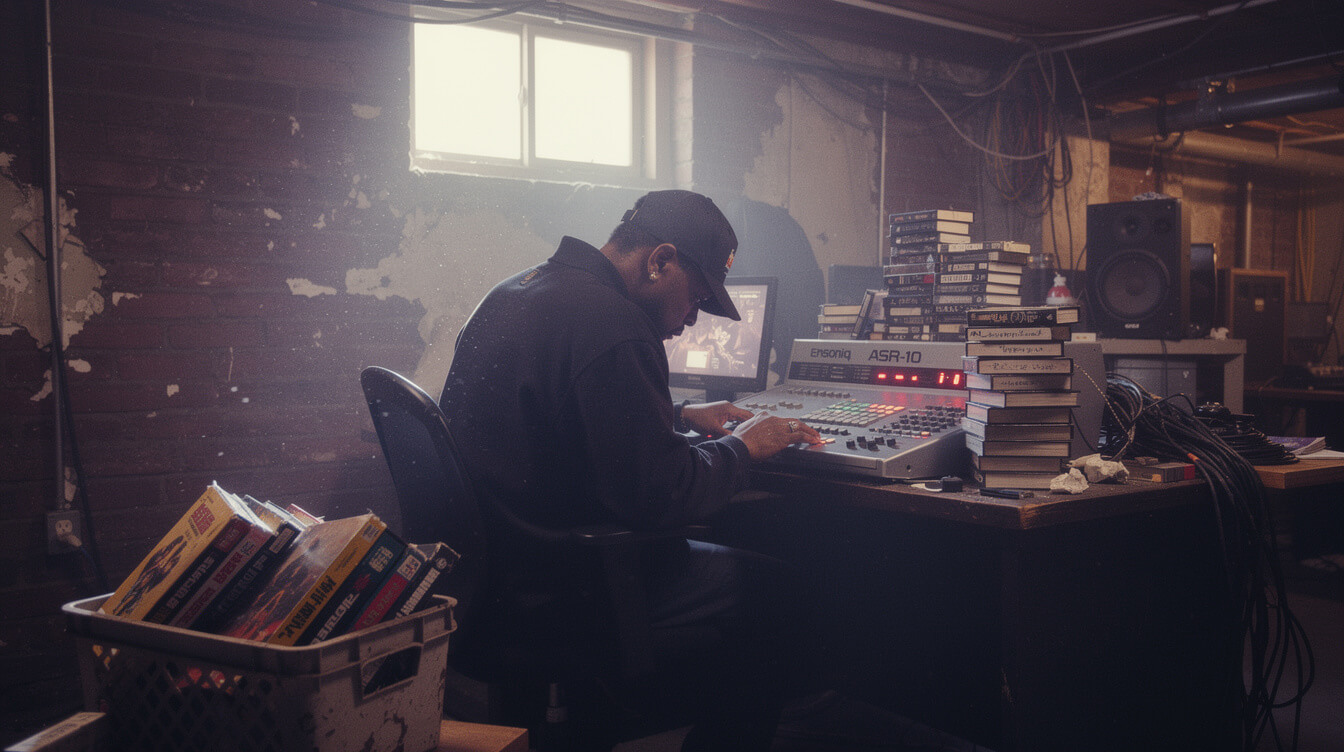
It gets the sonic origin right, too. RZA’s early production wasn’t built on the SP-1200 the way Marley Marl or Havoc’s was — RZA was on the Ensoniq ASR-10, and the show puts one in his hands from the first episode. That’s the sampler that let him chop dusty Al Green loops and slow soul records into the granular, dust-caked textures that became the Clan’s signature. It’s a hardware choice that shaped the entire sound of East Coast hip-hop for the next five years, and the show is one of the only visual documents that gets the machine right.
5 Episodes Every Wu Head Needs to See (Paired With the Albums They Dramatize)

If you’re not going to binge all 30 episodes, these are the five where the dramatization does something the Wikipedia entry can’t. Watch them with the paired album cued up. In every case the album drops in the story roughly where it dropped in real time.
Episode 1×01 — “Labels” (paired listen: Enter the Wu-Tang (36 Chambers))
The pilot. Bobby fresh off his Prince Rakeem stint at Tommy Boy, back in Stapleton, cutting demo tapes with GZA and ODB under the All In Together Now banner. Cue this one up against your Enter The Wu-Tang 36 Chambers T-Shirt and the connection lands — every soul sample in the episode is the raw material RZA would chop into “Bring Da Ruckus” and “C.R.E.A.M.” two years later. It’s the origin of the origin.
Episode 1×10 — “Impossible” (paired listen: Enter the Wu-Tang (36 Chambers))
The season one finale. The Clan is fully assembled, the “Protect Ya Neck” single is cut, and Steve Rifkind is on the phone. This is the episode that stages the label negotiation the whole show has been building toward. Everything after this — every Meth verse, every Ghost verse, every dollar the Clan ever made — is downstream of what happens in this hour.
Episode 2×03 — “Impermanence” (paired listen: Method Man’s Tical)
Meth breaks out. The episode reconstructs the sessions that produced Tical, released November 15, 1994 — the first Clan solo album out the gate under the Loud/RCA umbrella agreement. Watch it with the record on, and the Wu machine’s whole business model clicks into focus: nine soloists, nine labels, one shared sonic DNA.
Episode 3×04 — “Fantasy” (paired listen: Raekwon’s Only Built 4 Cuban Linx…)
The Cuban Linx episode. Rae and Ghost start writing in code — the Nino Brown-and-Rich Porter, mafioso-alter-ego voice that flipped every East Coast rap album from 1995 onward. Nas’s It Was Written, Jay-Z’s Reasonable Doubt, AZ’s Doe or Die — the whole 1996 mafioso wave is standing on Cuban Linx‘s shoulders, and this episode stages the moment the code was invented.
Episode 3×10 — series finale (paired listen: Wu-Tang Forever)
The finale. Wu-Tang Forever is being recorded across two coasts, three studios, and a bank of ASR-10s and MPC-3000s. The double album that would debut at #1 on the Billboard 200 in June 1997 — the record we just walked through at 29 — is coming together on screen, and the show finally lets the cost of it register on Bobby’s face. This is the payoff.
Real Wu vs Show Wu: Casting Decisions and How They Land
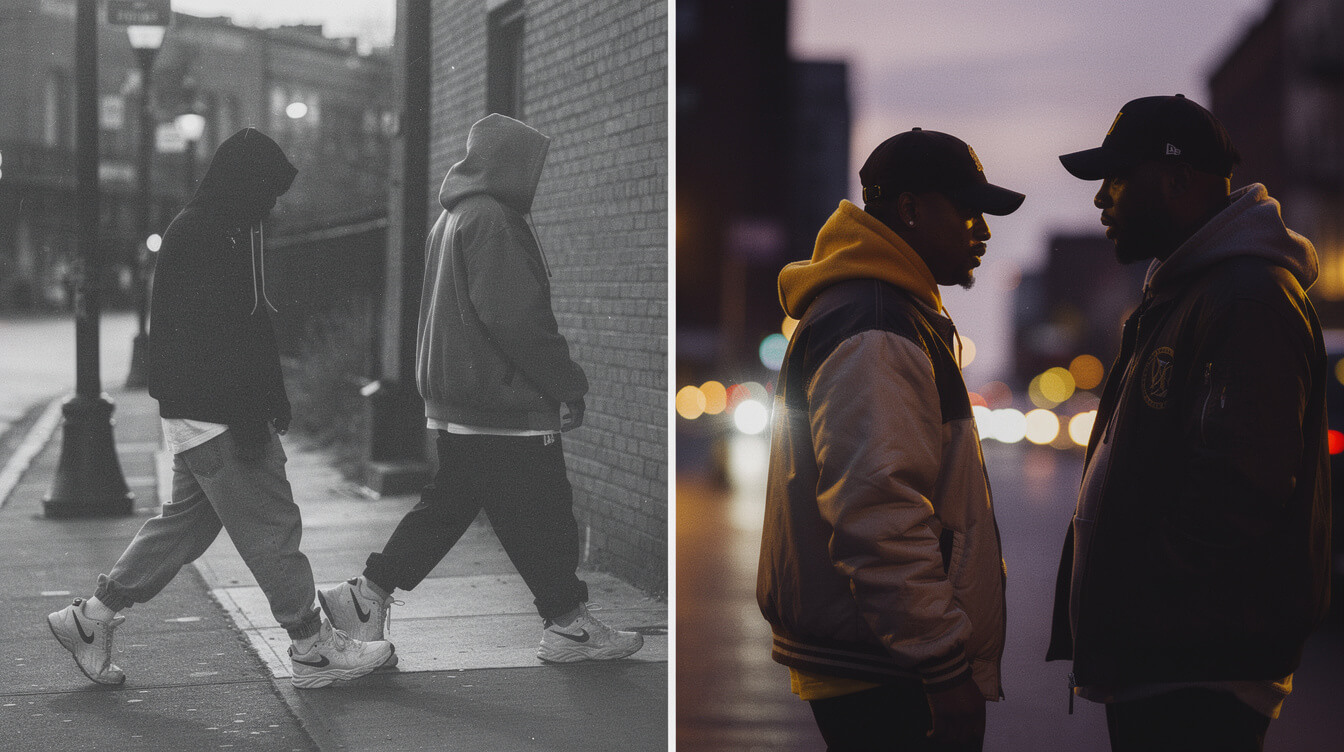
Casting a biopic about nine of the most distinctive voices in hip-hop is a losing proposition on paper. Anyone impersonating Ghost is going to sound like a bad Ghost impression. The show’s move was to hire actors first, rappers second, and lean on physical and gestural resemblance over vocal mimicry. It’s the same principle Straight Outta Compton used with O’Shea Jackson Jr. as Ice Cube (bloodline cheat code) or Corey Hawkins as Dre (actor first). Here’s how it lands for the Wu.
Ashton Sanders as Bobby Diggs / RZA. The lead. Sanders played Chiron in Moonlight and carries an interior heaviness that fits the pre-fame Bobby — the guy processing everything and saying almost nothing. He doesn’t try to “do” RZA’s speaking voice. He plays the quiet before the voice.
Shameik Moore as Raekwon. Best of the ensemble cast. Moore (Dope, the animated Miles Morales) has the Rae swagger dialed in — the head-tilt, the drawl, the mafioso posture. When he leans into the mic in the Cuban Linx episode wearing a version of the same aesthetic as the Raekwon Only Built For Cuban Linx tee, the show earns its 1995.
Siddiq Saunderson as Ghostface Killah. The hardest role and the show doesn’t fully close the gap — Ghost’s cadence is a specific frequency of urgent hoarseness that no actor is going to capture. Saunderson wisely plays the character’s charisma instead: the loyalty, the humor, the borough-code sense of honor. It works because Ghost’s presence is what carries in the ensemble scenes.
T.J. Atoms as Ol’ Dirty Bastard. Bittersweet across all three seasons. Atoms plays the chaos without turning it into caricature, and by season three the show is quietly setting up the trajectory that would end in 2004. Watch for the way the show holds Russell Jones the person separate from Ol’ Dirty Bastard the persona — that’s the show’s ethical decision, and it’s the right one.
Erika Alexander as Linda Diggs (RZA and Divine’s mother). Not a Clan member, but the beating heart of the ensemble. Alexander (Living Single) is the fixed point every son revolves around, and her scenes with Sanders are where the show’s family-drama register works best.
The Companion Listen: 36 Chambers Through Wu-Tang Forever
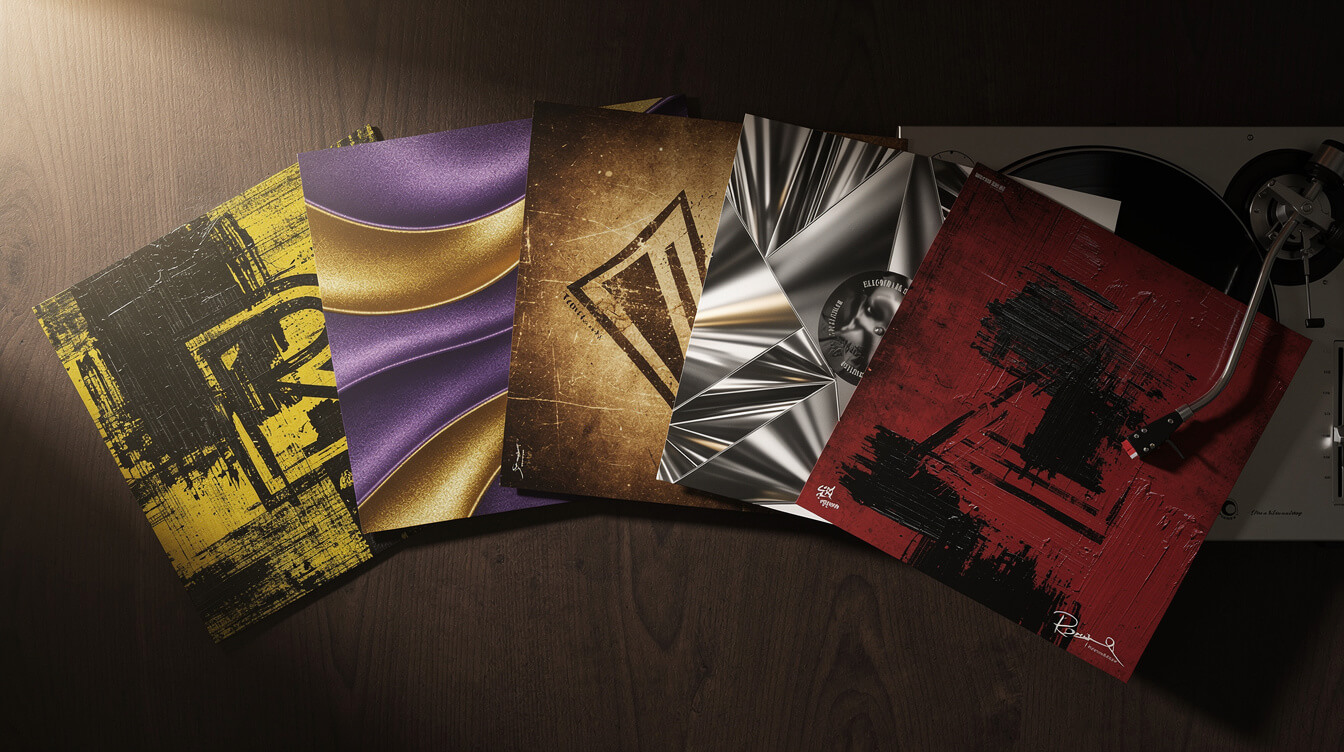
The companion-listen playlist is a rewatch multiplier. Every episode of An American Saga lands harder when the album it dramatizes is spinning next to it. Here’s the pairing calendar — season, timeframe, records to cue up. Head to the 36 Chambers deep-dive for the archaeology on that first pressing, then walk it forward.
- Season 1 (1988–1993): Prince Rakeem’s Ooh I Love You Rakeem EP (1991) for the pre-Clan Bobby Diggs solo material — the false start Tommy Boy dropped him for. Then Enter the Wu-Tang (36 Chambers) on repeat for the finale. That’s the arc — from a rejected Prince Rakeem 12-inch to the album Rifkind bought in November 1993.
- Season 2 (1993–1994): Method Man’s Tical (November 1994) is the anchor. Layer in ODB’s Return to the 36 Chambers: The Dirty Version (March 1995) for the season-close energy — the two albums that proved the Loud/RCA umbrella deal was going to work.
- Season 3 (1995–1997): Front-load Raekwon’s Only Built 4 Cuban Linx… (August 1995), then GZA’s Liquid Swords (November 1995), then Ghost’s Ironman (October 1996) — the RZA-era Ghostface record that closed the solo run before the Clan re-convened. Finale plays against Wu-Tang Forever (June 1997).
Deep-cut extras for the completists: Cappadonna’s guest verses across Cuban Linx and Ironman before his own Pillage in 1998; the Killarmy affiliate work bleeding into the show’s third act; the Sunz of Man/Wu-Syndicate satellite catalog that gives context to how vast the RZA production universe already was by 1997.

Anchor Your Wu-Tang Rewatch
Yellow-and-purple neon LED tribute to the album that closes the show. Limited to 500 pieces worldwide. Turn the wall behind the TV into the shrine An American Saga deserves.
Building the Wu-Tang Living-Room Shrine

A show this dense deserves a rewatch environment. The wall behind the TV is the canvas. Vinyl on the shelves — 36 Chambers, Tical, Cuban Linx, Liquid Swords, Ironman, Wu-Tang Forever. Framed tees on the hooks — the ODB Return to the 36 Chambers for the wild-card entry, the Method Man Tical tribute for the season-two anchor, the Ghost Supreme Clientele for the post-show Wu era. A martial-arts staple (Shaolin and Wu Tang, 1983) on the shelf next to the DVDs — the film that named the group. A slim Wu-Tang Forever AeroCase wallet on the coffee table for the guests who ask. That’s the head’s setup. The show comes on and the room becomes a chamber.
Frequently Asked Questions About Wu-Tang: An American Saga
Where can I watch Wu-Tang: An American Saga?
All three seasons stream on Hulu in the U.S. and on Disney+ (under the Star hub) internationally. The full 30-episode run is available — season one dropped September 2019, season two September 2021, season three February 2023. Episodes run roughly 50 minutes each; the full binge is about 25 hours.
Is Wu-Tang: An American Saga accurate?
Substantially, yes — especially on the sonic and geographic details (the ASR-10, the Stapleton and Park Hill blocks, the label deal structure). RZA and Alex Tse compress and re-order some family moments for dramatic pacing, and a few side-character composites stand in for real Clan associates, but the spine of the story — the 1988-to-1997 arc from Prince Rakeem’s Tommy Boy rejection to Wu-Tang Forever — tracks the historical record.
Did RZA make Wu-Tang: An American Saga?
He co-created it with Alex Tse (writer of Menace II Society) and served as executive producer across all three seasons. He also composed original score material and directed at least one episode. The show is the closest thing to a first-person Wu-Tang autobiography anyone will ever film.
How many seasons of Wu-Tang: An American Saga are there?
Three seasons, 30 episodes total. Season one (2019) has 10 episodes and covers 1988–1993. Season two (2021) has 10 episodes and covers 1993–1994. Season three (2023) has 10 episodes and covers 1995–1997. The series ends with the recording of Wu-Tang Forever.
Who plays RZA in Wu-Tang: An American Saga?
Ashton Sanders — best known as older Chiron in Barry Jenkins’s Moonlight. He plays Bobby Diggs across the whole three-season arc, from Stapleton teenager to co-architect of the biggest rap collective ever signed.
Is Wu-Tang: An American Saga worth watching if I’m not already a Wu-Tang fan?
Yes, but sequence it right. If you have zero Wu background, watch season one with Enter the Wu-Tang (36 Chambers) in your ear the whole time. By episode 10 you’ll understand why the album broke the way it broke, and season two and three will feel like a payoff. If you’re a head already, use the five-episode guide above and pair each with its album — you’ll get more out of a curated rewatch than a full binge.
Final Thoughts
Wu-Tang: An American Saga is the rare hip-hop biopic that treats its subject like literature. Three seasons of runway. A co-creator who was in the basement. A writer who already knew how to shoot the crack-era corner. It’s not perfect — the ensemble scale means some Clan members get thinner treatment than the leads deserve — but the framework is sound, the sonic detail is precise, and the ending lands. Cue up Enter the Wu-Tang (36 Chambers), bring your Wu-Tang Forever vinyl over from the shelf, hit play on episode one, and let the myth build itself back up.
Stay creative — The Custom Creative Team
Get Hip-Hop Culture in Your Inbox
Weekly deep-dives on the albums, artists, and moments that built the culture — plus first look at Custom Creative drops.

🎧 Never Miss a Drop
Exclusive product releases, hip-hop deep dives, and member-only discounts. Straight to your inbox.
Free forever. No spam. Unsubscribe anytime.
Get the Culture, Delivered
Deep dives into hip-hop history, exclusive product drops, and discounts sent straight to your inbox. No spam, just culture.
Join 2,000+ hip-hop heads already in the loop. Unsubscribe anytime.