Missy Elliott’s Supa Dupa Fly at Nearly 30: How the Blow-Up Suit Album Made Weird the New Cool
Twenty-nine years ago this year, Missy Elliott stepped out in front of a fisheye lens wearing an inflated black patent-leather suit that made her look like a human balloon, and hip-hop has never fully recovered. Supa Dupa Fly, released July 15, 1997, is the album where Missy Elliott’s Supa Dupa Fly era of maximalist, sci-fi, gender-rule-breaking hip-hop began — and thirty years later, the culture is still running on the blueprint she and Timbaland drew up in two weeks in Virginia Beach.
This isn’t a nostalgia lap. It’s a breakdown of exactly how a debut album, one music video, and one costume decision rewired what “cool” was allowed to sound and look like in hip-hop — and why none of it gets talked about with the specificity it deserves.
Supa Dupa Fly at Nearly 30: The Album That Made Weird the New Cool
Supa Dupa Fly dropped on The Goldmind Inc., East West, and Elektra Entertainment Group on July 15, 1997 — Missy’s debut as a solo artist after her group Fayze (later Sista) got shelved by DeVante Swing’s Swing Mob label and never saw a release. She and Timbaland regrouped in Portsmouth, Virginia, wrote for Aaliyah’s One in a Million, and then Elektra chairman Sylvia Rhone pushed Missy toward a solo deal and gave her a label of her own, The Goldmind Inc.
The album debuted at number three on the Billboard 200 with 129,000 copies in its first week — the highest debut for a female rapper at the time — and topped the Top R&B/Hip-Hop Albums chart. It went platinum by September 19, 1997, barely two months after release, and has sold 1.2 million copies in the U.S. since. AllMusic’s Steve Huey later called it “arguably the most influential album ever released by a female hip-hop artist,” and in 2020 Rolling Stone ranked it 93rd on its 500 Greatest Albums of All Time list — 53rd on their 100 Best Debut Albums list two years later.
None of that happened because the album played it safe. It happened because Missy and Timbaland recorded something that sounded like nothing else on urban radio in 1997, in less time than it takes most artists to finish mixing a single.
Two Weeks in Virginia Beach: How Timbaland and Missy Built a Sound With No Precedent
Recording happened at Master Sound Studios in Virginia Beach, and by most accounts the whole album came together in a stretch of about a week to two weeks. Timbaland produced every track solo — no outside beatmakers, no committee. That kind of speed usually produces something thin. Instead it produced a record AllMusic called a “boundary-shattering postmodern masterpiece,” one whose “futuristic, nearly experimental style became the de facto sound of urban radio at the close of the millennium.”
The key to why it worked is in how Timbaland treated samples. Rather than loop a break straight, his production on Supa Dupa Fly bent samples to fit odd, syncopated tempos that didn’t sit where a hip-hop beat was supposed to sit in 1997 — stutter-step drum patterns, negative space where a normal producer would fill in, vocal ad-libs (moans, gasps, chopped syllables) used as percussion instruments in their own right. It’s the sound that, a decade later, every “futuristic” R&B and hip-hop producer was still chasing.
Missy’s vocal approach matched the production’s risk level. She moved between rapping and singing inside the same verse — described by The New Yorker as “pioneering” — which in 1997 was not a normalized move for a rapper positioning herself as a serious MC. Spin put the album at number nine on its Top 20 Albums of the Year list, four of five New York Times critics named it a top-ten album of 1997, and it landed Missy two Grammy nominations: Best Rap Album, and Best Rap Solo Performance for the album’s breakout single.
Critic Garry Mulholland pinned down the sound as “bump ‘n’ grind electronica, strongly influenced by the digital rhythms of dancehall reggae, but rounder, fuller, fatter” — production that leaned away from straight sampling toward something closer to digital groove-building. AllMusic described the result as “lean, digital grooves packed with unpredictable arrangements and stuttering rhythms that often resemble slowed-down drum’n’bass breakbeats,” and The New Yorker pointed specifically to Timbaland’s use of “extra-musical noises” — ad-libs, mouth sounds, non-instrument textures — treated as “instruments in and of themselves.” That’s the technical reason the album still sounds futuristic: it wasn’t hip-hop referencing drum’n’bass or dancehall from a distance, it was absorbing their rhythmic logic directly into a rap record.
Busta Opens the Album, Timbaland Steps Off the Boards and Onto the Mic
The sequencing tells you exactly how confident this camp was walking in. Track one is “Busta’s Intro” — Busta Rhymes, the single hottest guest verse in hip-hop at that moment, opening someone else’s debut album before Missy says a word. That’s a co-sign placed at the very front of the record, not buried as a bonus cut. Timbaland doesn’t stay behind the boards either — he steps up as a featured vocalist himself on “They Don’t Wanna F*** wit Me” and “Pass da Blunt,” which is part of why the album feels less like “rapper plus hired producer” and more like two artists building a shared world track by track.
“The Rain (Supa Dupa Fly)”: The Ann Peebles Sample and the Chorus That Still Loops
That breakout single is where the album’s title comes from, and it’s a masterclass in what “flip the sample right” actually means. “The Rain (Supa Dupa Fly)” is built around Ann Peebles’ 1973 Memphis soul classic “I Can’t Stand the Rain” — written by Peebles with her husband Don Bryant and Bernard “Bernie” Miller, the same Don Bryant who’s credited as a co-writer on Missy’s track alongside Bernie Miller, Missy, and Timbaland. That’s not a blind loop-and-rap job; that’s a direct writing credit chain back to a 1973 Hi Records soul record, which is exactly the kind of “adjacent culture” receipt that gets lost when people talk about this song only as a video moment.
Released to radio May 20, 1997, “The Rain” peaked at number six on Billboard‘s Hot R&B Airplay chart and number 51 on Hot 100 Airplay, and cracked the top 20 in the UK and New Zealand. Elliott has said the writing process was loose to the point of stream-of-consciousness: “Of course, those were my smoke days, you can tell by the first line. I just went in and I just said whatever I felt… there was no expectation.” That’s a debut single with zero self-consciousness, built on top of a 24-year-old soul record — and it became the most important three minutes of her career.
It Wasn’t Just “The Rain”: The Album’s Deeper Sample Chain
“The Rain” gets all the attention, but the album’s writing credits show Timbaland and Missy were raiding two completely different Black music lineages at once. “Sock It 2 Me” carries a songwriting credit for Thom Bell and William Hart — Bell is the architect behind Philadelphia International’s lush orchestral soul sound, Hart is the falsetto lead voice of The Delfonics — meaning a Philly soul composition is running underneath one of the album’s biggest singles. Then “Pass da Blunt” goes a completely different direction: its credits pull in Jackie Mittoo (the Studio One session leader who helped invent the Skatalites sound), Leroy Sibbles (The Heptones’ bassist and lead voice), and members of the Mighty Diamonds — a straight line back to 1970s Kingston reggae and dub. Two tracks, two different countries’ worth of Black music history, flipped into the same 1997 hip-hop album. That’s the sample chain nobody talks about when they only remember the trash-bag suit.
The Patent Leather Blow-Up Suit: Hype Williams, Ron Norsworthy, and the Birth of Hip-Hop Maximalism
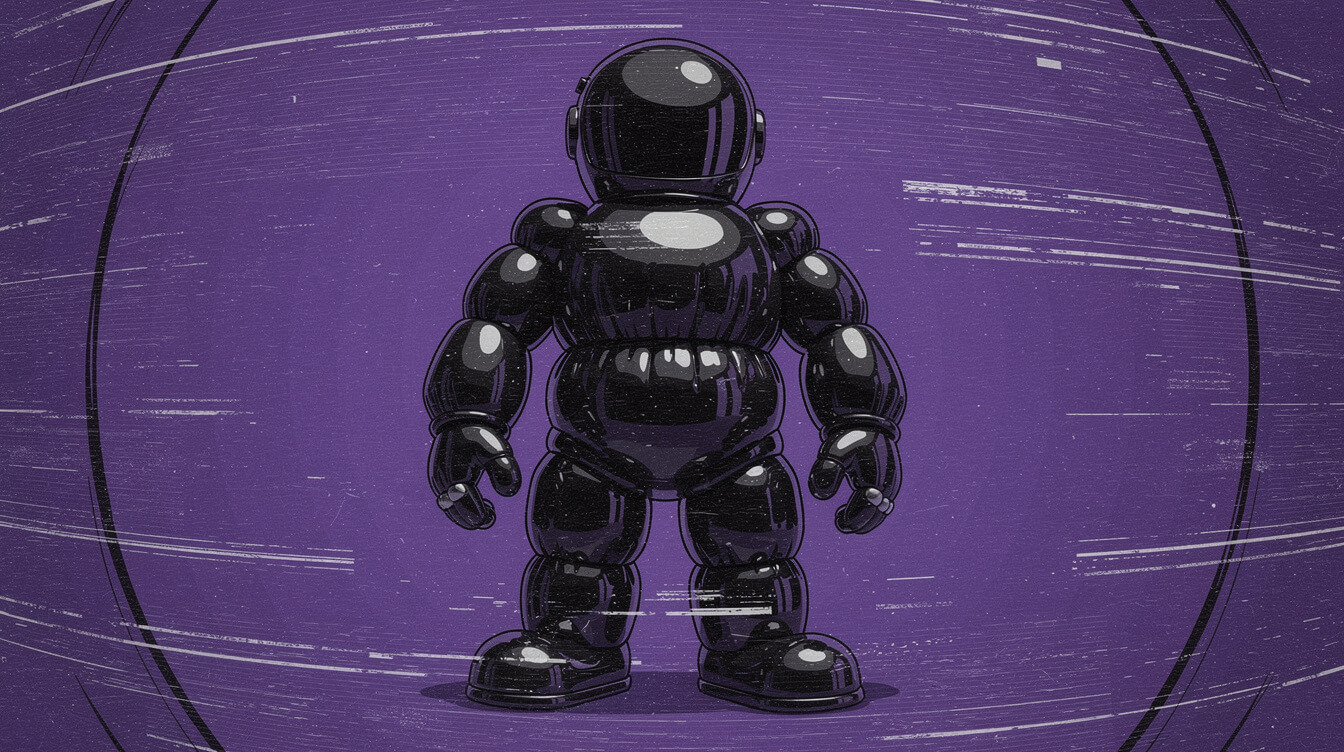
Here’s the part everybody remembers and almost nobody credits correctly. The “Rain” video — Missy’s first music video, period — was directed by Hype Williams, shot through his signature fisheye lens, and the costume that made it iconic was designed by Ron Norsworthy: a patent leather suit inflated to resemble a giant trash bag. It’s costume design, not accident. Norsworthy built a shape nobody in rap had put on camera before, Hype Williams distorted it through glass that made every proportion feel alien, and the two choices together did more to define Missy’s public image than any lyric on the album.
Cultural critic Kiana Fitzgerald put the reaction plainly on NPR: “When ‘The Rain’ video came out and she was in the inflatable patent leather suit, it was like, what is going on here?” That confusion was the point. In a 1997 video landscape where women in rap videos were, in her words, “scantily clad (if they were clad at all),” Missy inflated her silhouette into something with zero sex appeal calculus attached — pure visual shock, pure control of the frame.
The video lost Best Rap Video at the 1997 MTV VMAs to The Notorious B.I.G.’s “Hypnotize” — a stacked category in hip-hop’s biggest commercial year — but the long game belongs to Missy. In 2023, Rolling Stone ranked “The Rain” the number one video on their list of the 150 Best Rap Music Videos of All Time, ahead of every big-budget video that beat it to actual VMA hardware in real time. Cameos from Timbaland, SWV’s Tamara Johnson-George, Yo-Yo, Lil’ Kim, Total, 702, Lil’ Cease, and Sean Combs round out a video that reads now like a cast list of who mattered in 1997 hip-hop and R&B — all of them orbiting a woman in a garbage bag.
Missy as Auteur: Writer, Producer, and Architect of Her Own Image

What separates Supa Dupa Fly from “great debut album by a rapper who got a good look” is that Missy wasn’t a vocalist executing someone else’s vision. She co-wrote the material, co-produced alongside Timbaland, and by every account drove the concept behind her visual presentation — the costume, the persona, the refusal to fit either the “video vixen” or “one of the guys” box that female rappers were funneled into in the mid-’90s. She promoted the album on the 1998 Lilith Fair tour, becoming the first female rapper to play the festival, and joined Jay-Z’s Rock the Mic tour the same era — moving between a singer-songwriter circuit and hip-hop’s biggest hardcore package tour without changing who she was for either crowd.
If you’re chasing that same instinct — build a visual world nobody else owns and put your name on it — that’s the whole idea behind a SpectraGlass™ HD Print Panel. Print your own maximalist visual statement — a piece of art, a photo, a concept nobody else has — onto frameless tempered glass instead of settling for whatever’s already framed on the wall.
That auteur instinct is also why the album still gets cited as a turning point for how women in rap were allowed to present themselves. It’s credited with creating “a niche separate from the archetypes of hypersexualized vixens or rugged hip hop purists,” and the argument that Supa Dupa Fly “caused a shift in how women in rap were perceived” isn’t retrospective spin — it’s borne out by literally every female-fronted, genre-blurring, visually ambitious rap project that came after it.
Hip-Hop’s First Female-Led Visual Movement
Call it what it is: Supa Dupa Fly is the first time a female rapper’s visual concept became as influential and as widely referenced as her music. Before this, iconic hip-hop imagery — the chain, the throne, the car, the crew shot — was almost entirely built around male archetypes. Missy and Hype Williams built an image built on distortion, scale, and refusal, and every artist since who’s used costume, camera, or concept as a weapon instead of an accessory (and there are a lot of them) is working downstream of the garbage-bag suit.
The song and video kept resurfacing decades later — a 2016 Coca-Cola commercial featuring golfer Jordan Spieth ran “The Rain” as its soundtrack, and Missy performed a medley including the track at the 2019 MTV VMAs, more than two decades after it first aired. That’s not a nostalgia act reheating old material; that’s a foundational text still being cited by the same institutions (MTV, major advertisers) that couldn’t fully process it the first time around.
The Album Keeps Getting Re-Ranked, Not Just Remembered
Supa Dupa Fly spent 37 weeks on the Billboard 200 — that’s not a hit-single album with a fast fade, that’s a genuine catalog seller across nearly nine months. And the critical re-ranking hasn’t stopped: the 2004 edition of The Rolling Stone Album Guide gave it five out of five stars on a retrospective pass, and as recently as 2024, Apple Music placed it at number 75 on their 100 Best Albums list — a ranking assembled decades after release, competing against the entire history of recorded music, not just hip-hop. An album doesn’t keep climbing “best of all time” lists on nostalgia alone. It climbs because the tape still holds up against records made yesterday.
Frequently Asked Questions About Missy Elliott’s Supa Dupa Fly
When did Missy Elliott’s Supa Dupa Fly come out?
Supa Dupa Fly was released July 15, 1997, on The Goldmind Inc., East West, and Elektra Entertainment Group. It’s Missy Elliott’s debut solo studio album, following the collapse of her pre-fame group Sista’s unreleased Swing Mob project.
Who produced Supa Dupa Fly?
Timbaland produced the entire album solo, recorded at Master Sound Studios in Virginia Beach in roughly a week to two weeks. Missy co-wrote and co-produced across the record, which is part of why the record sounds so unified — there was no outside committee shaping the sound.
Who directed the “Rain (Supa Dupa Fly)” music video?
Hype Williams directed it — his fisheye-lens visual signature is all over the shots — and the inflated patent leather suit Missy wears was designed by Ron Norsworthy. It was Missy’s first-ever music video.
What song does “The Rain (Supa Dupa Fly)” sample?
It samples Ann Peebles’ 1973 soul single “I Can’t Stand the Rain,” with Peebles’ co-writers Don Bryant and Bernard “Bernie” Miller carrying writing credit on Missy’s track alongside Missy and Timbaland.
Did Supa Dupa Fly go platinum?
Yes — the RIAA certified it platinum on September 19, 1997, just over two months after release. It’s sold 1.2 million copies in the U.S. as of 2008 tracking, and debuted at number three on the Billboard 200, the highest first-week debut for a female rapper at the time.
Who are the guest features on Supa Dupa Fly?
Busta Rhymes opens the record on “Busta’s Intro,” and the tracklist also features Lil’ Kim, Da Brat, 702, Magoo, Ginuwine, and Aaliyah, with Timbaland himself stepping up as a guest vocalist on two cuts. It’s a guest list that reads like a snapshot of exactly who mattered across hip-hop and R&B in 1997.
Final Thoughts
Thirty years on, the specific facts of Supa Dupa Fly get flattened into “the album with the trash bag video” — which undersells a debut that broke chart records, launched a costume designer’s most famous piece of work, ran a 24-year-old soul sample through a direct writing-credit chain, and gave a Black woman in hip-hop total authorship over how she was seen for the first time at this scale. That’s the record worth remembering at nearly 30, not just the balloon suit.

Build a Visual Statement Nobody Else Owns
Missy and Hype Williams built an image nobody could copy. Print your own maximalist visual on a frameless SpectraGlass™ HD panel — museum-quality glass, full color, made from whatever image you bring.
If you’re deep in the Timbaland/Missy/Aaliyah triangle, don’t stop here — read our breakdown of Aaliyah’s “Are You That Somebody” from the same production era, or check the full Missy Elliott timeline we ran for her birthday.
Stay Creative — Join the Crew
Deep-dive hip-hop history, product drops, and culture that actually knows the culture — straight to your inbox, no fluff.

🎧 Never Miss a Drop
Exclusive product releases, hip-hop deep dives, and member-only discounts. Straight to your inbox.
Free forever. No spam. Unsubscribe anytime.
Get the Culture, Delivered
Deep dives into hip-hop history, exclusive product drops, and discounts sent straight to your inbox. No spam, just culture.
Join 2,000+ hip-hop heads already in the loop. Unsubscribe anytime.