LL Cool J T-Shirt Guide: The Boombox Era’s Most Iconic Looks (And Where to Cop the Real Ones)
The LL Cool J t-shirt is one of the most misread pieces of hip-hop fashion in the catalog. Google it and you’ll get a Cross Colours collab, a Fashion Nova graphic tee, a TeePublic tile grid, and Old Navy’s polyester-blend mass-market version. Not a single top-ranking page will tell you what era you’re looking at, which cover became a design blueprint, or why James Todd Smith’s fit history matters more than almost any other solo rapper’s. That’s the gap we’re filling here.
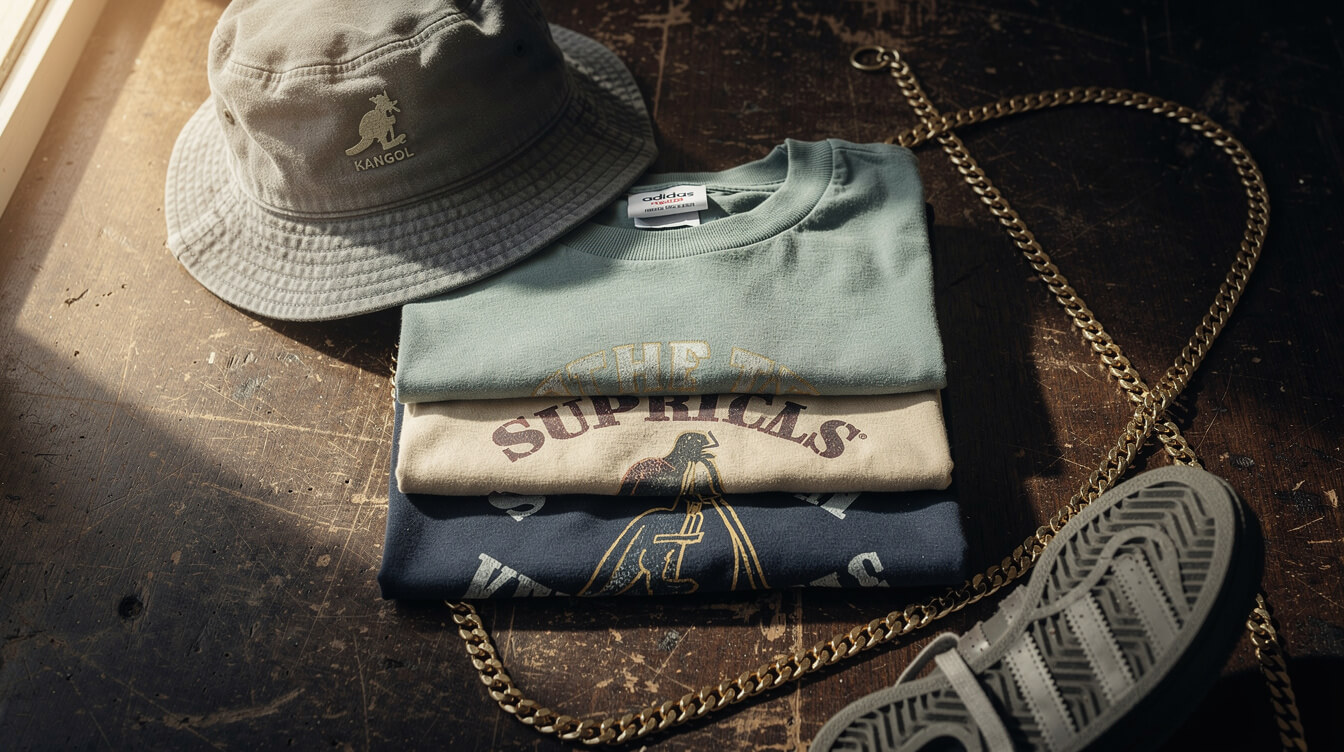
LL was Def Jam’s first artist. Not the first big one — the first. His 1985 debut Radio is Def Jam LP-001. Which means the Kangol bucket hat, the four-finger gold ring, the boombox on the shoulder, the Adidas Superstars with fat laces — all of that was hip-hop’s first commercially packaged fit. Every rapper who came after inherited some piece of it. This guide breaks down the LL Cool J tee catalog era by era, so you can cop by album chapter instead of by algorithm — and know which mass-market version is a costume and which reissue actually earns the reference.
Why LL Cool J Is Foundational Streetwear (Not Costume)
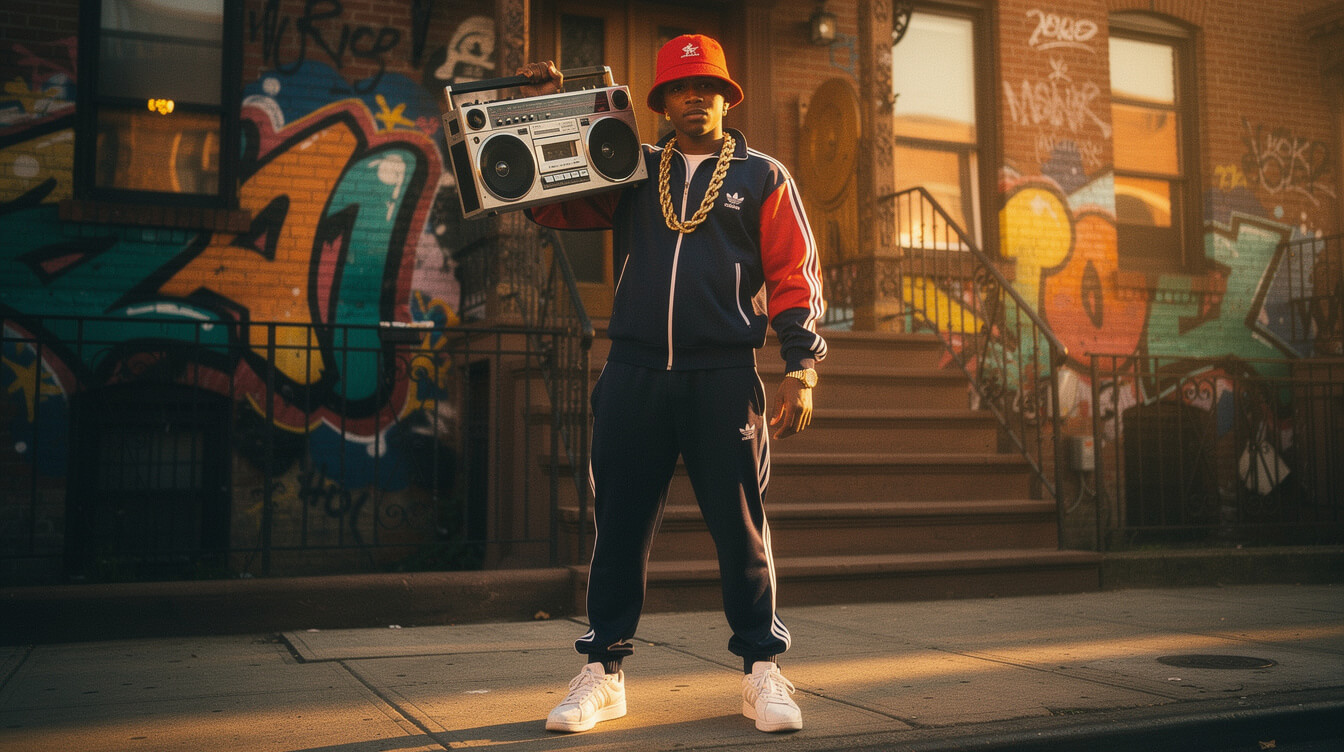
Most rappers earn a signature fit. LL invented the signature-fit playbook. When he stepped in front of a camera in 1985 with the Kangol tilted, the rope chain thick enough to double as a weight belt, and the boombox riding his shoulder like a passport, he wasn’t styling a look — he was writing the visual grammar the next 40 years of hip-hop would work inside.
Def Jam had no template when Rick Rubin and Russell Simmons signed him. There was no “rap look” yet. Run-DMC were building the leather-plus-Adidas uniform in parallel; the Cold Crush Brothers had Bronx park-jam fits; but the idea of a solo MC as a style figurehead — the way Elvis or Prince operated — didn’t exist. LL made it exist. If you want the studio-lot origin story of that whole moment, our breakdown of Krush Groove covers the room where Def Jam’s visual identity was set.
That’s why an LL tee — a real one, cut and printed with intent — reads as heritage streetwear, not costume. You’re not dressing up. You’re citing the source. The distinction matters because the mass-market versions Old Navy and Fashion Nova pump out treat LL like a nostalgia meme. He isn’t. He’s a foundational document, and the tee should read like one.
The Radio (1985) Era: Boombox, Kangol, and B-Boy Roots
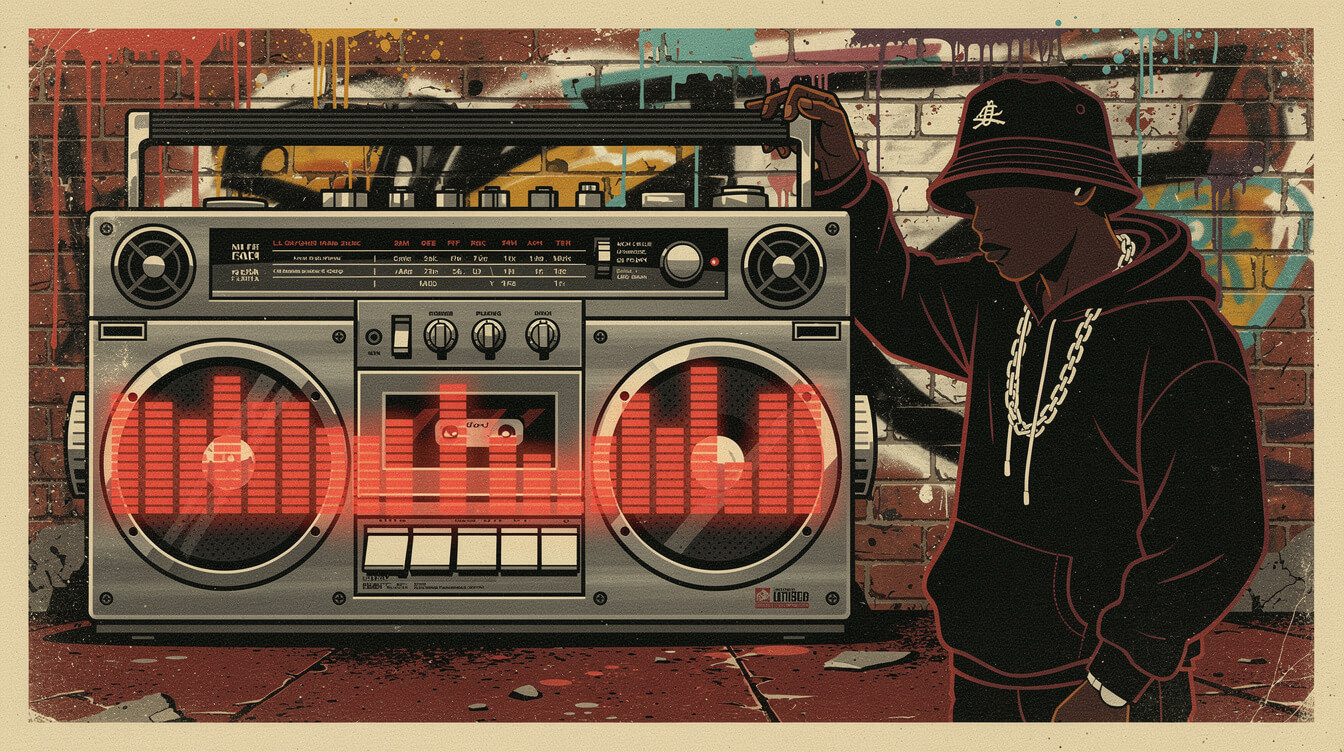
Radio dropped November 18, 1985. Rick Rubin produced almost the whole thing at NYU. The single that broke everything open was “I Can’t Live Without My Radio” — a two-and-a-half-minute manifesto for the ghettoblaster as personality, weapon, and portable neighborhood. That song is the reason a boombox on the shoulder is universally read as hip-hop shorthand today. It wasn’t shorthand before LL made it one.
What the Radio-era fit looked like: Kangol 504 bucket hat (usually red, sometimes black or navy), thick 14K rope chain or figaro, four-finger nameplate ring, oversized red-and-black Adidas tracksuit or a plain Champion sweatshirt, fat-laced Adidas Superstars or Puma Clydes. Simple. Loud. Absolutely correct.
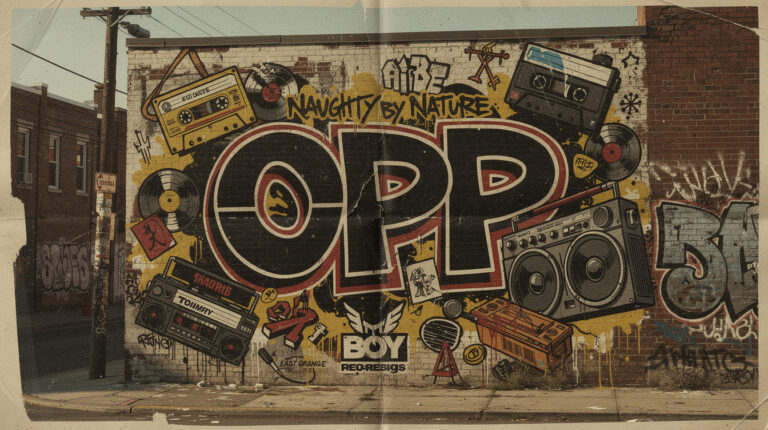
The tee move for this era is a boombox graphic — but not just any boombox. It should read as a Sharp GF-777 or JVC RC-M90 silhouette, the specific twin-deck monsters LL and the crew actually carried. Anything smaller reads as a Fisher-Price toy. The color palette is the original Def Jam wax-crayon red on cream, or spray-can silver on black. If a tee gives you neon, gradients, or airbrush — that’s a Fashion Nova costume, not a Radio tribute.
Bigger and Deffer / Walking With a Panther: Gold Rope + FUBU Foundations
Bigger and Deffer (May 1987) went double platinum and produced “I Need Love” — hip-hop’s first slow-jam ballad to break through R&B radio without apology. Walking With a Panther (1989) doubled down on the ballad play with “I’m That Type of Guy” and “Big Ole Butt,” and the culture spent about six months mad about how soft it read before rewinding and realizing it was actually a blueprint for every rapper-does-R&B album from Method Man/Redman to Drake’s Take Care.
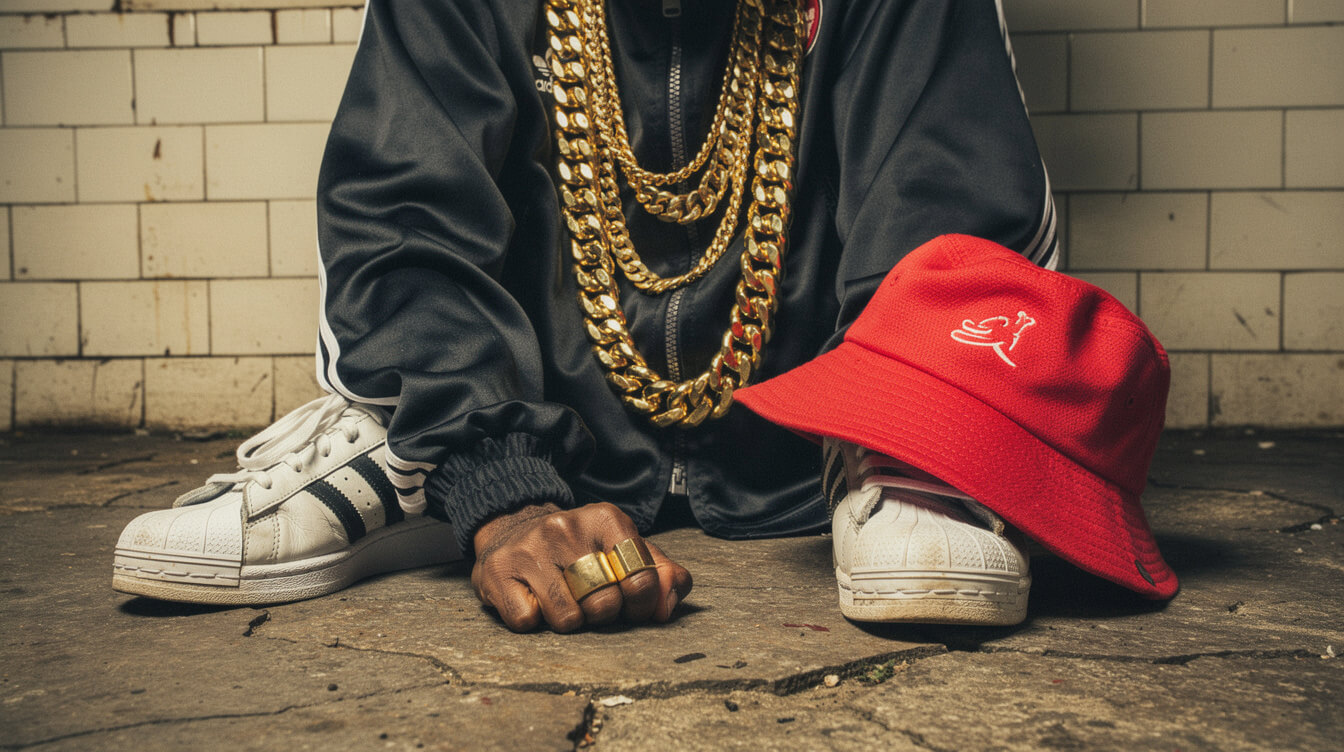
The fit for this two-album run is where LL peaked as a visual reference point. The Kangol stayed, but the rope chains multiplied — three, four, five stacked, each thicker than the last. The four-finger ring became a two-hand statement. Cazal 607 sunglasses. Two-tone silk shirts under leather bombers. Adidas gave way to Reeboks. Champion crewnecks were traded for full-cut hoodies. This is the exact silhouette Daymond John was studying when he started sewing FUBU logos in his mother’s Queens basement in 1992 — the aesthetic became the label, and years later LL famously smuggled a FUBU hat into a Gap commercial (whispering “For Us, By Us, on the low”), which turned into the guerrilla-marketing masterstroke that got FUBU distribution.
A BAD-era tee should reference the album cover’s gold-on-black type treatment or the four-corner gold-frame lockup — thick, ornate, almost baroque. A Radio-era tee like our own I Can’t Live Without My Radio print works alongside a BAD-era piece as a two-album chronological set. Anyone repping the Kangol-and-gold-rope look and not covering both eras is telling half the story. For the fuller streetwear-industry timeline this fits inside, our piece on hip-hop fashion and the artist-designer lineage is the sequel.
Mama Said Knock You Out (1990): The Cover That Became a T-Shirt Blueprint
Album released August 27, 1990. Title track released as a single September 22, 1990. Marley Marl produced it — one of the great redemption partnerships in the culture, because critics had written LL off after Walking With a Panther. He came back on a track built around a Sly and the Family Stone drum break and a James Brown horn stab, growling “don’t call it a comeback” over a Marley Marl beat that hits like a heavy bag. It won the Grammy for Best Rap Solo Performance in 1992 — one of the first rap Grammys ever awarded. And 34 years later Billboard still ranks it in the top tier of the greatest rap songs ever recorded.
But the reason we’re talking about it in a t-shirt guide: the album cover, shot by Michael Halsband, is arguably the most-copied image in hip-hop merch history. LL — shirtless, gold cross, headphones, mid-bark — reset the visual template for what a rap-album cover could be. Every “shirtless rapper looks angry into camera” cover since traces back to this frame. Nas Illmatic subverted it. 50 Cent Get Rich or Die Tryin’ escalated it. DMX It’s Dark and Hell Is Hot weaponized it.
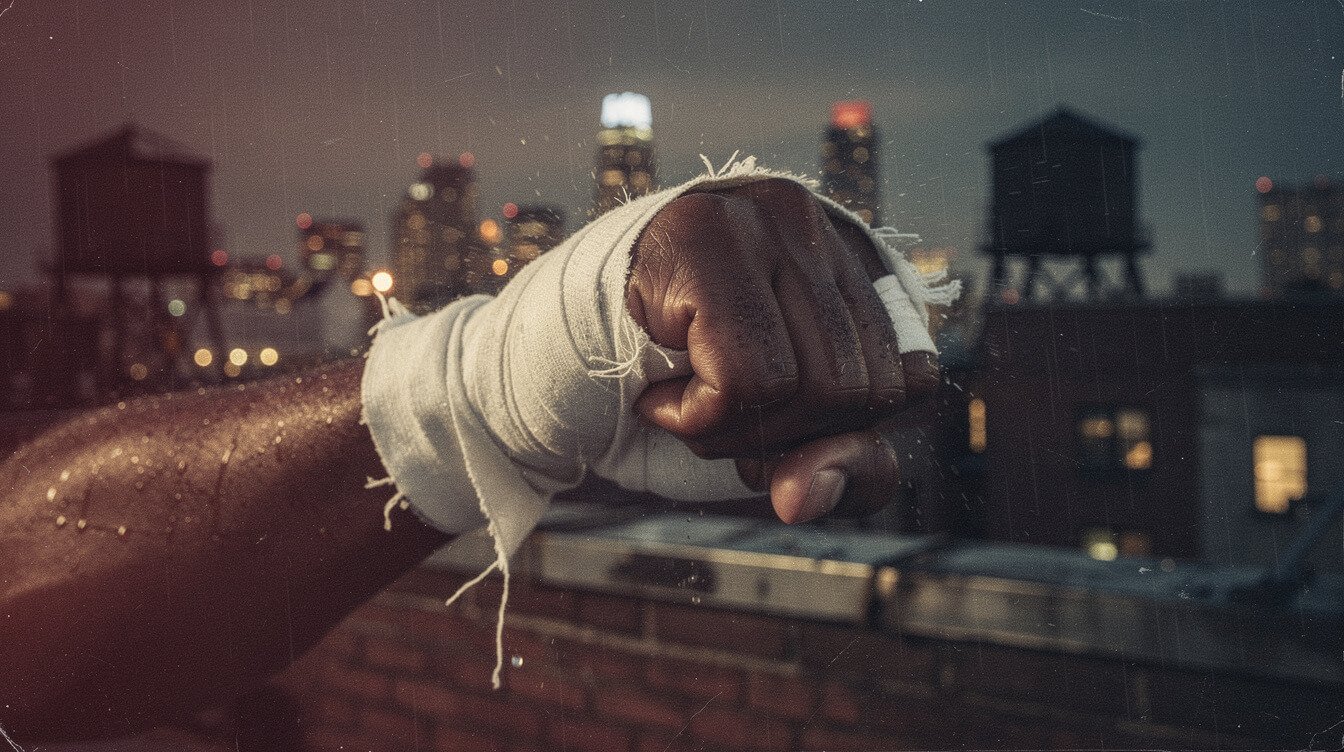
For a t-shirt: the MSKYO reference isn’t the album cover itself (though good high-thread-count reprints exist and are worth owning). The stronger design move is the taped-fist / boxing-glove abstract — since “Mama Said Knock You Out” borrowed its whole language from boxing training footage. A minimalist taped-fist print in oxblood or bone on heavyweight black cotton reads as an educated LL reference to anyone who knows the culture, and as a clean fashion statement to anyone who doesn’t. That’s the tee equation — legible on two levels.
Todd Smith / 14 Shots to the Dome: The Def Jam Peak Aesthetic

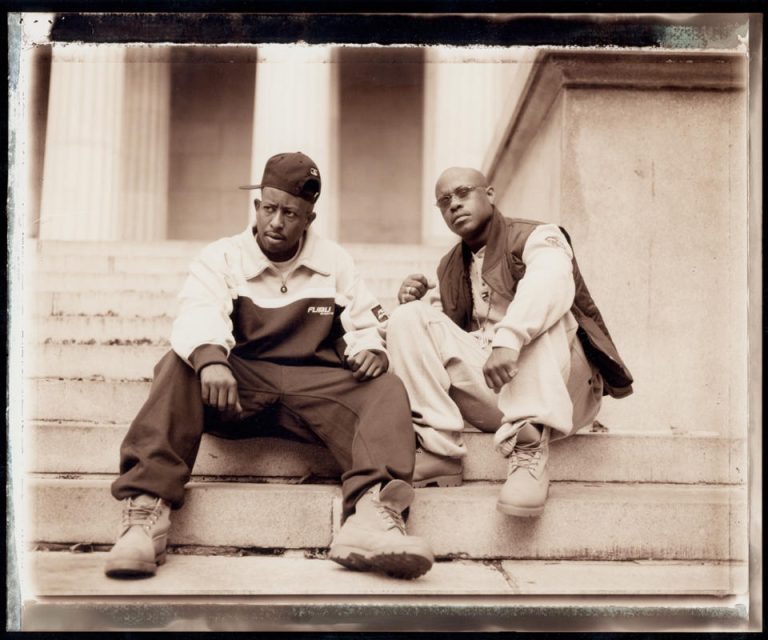
14 Shots to the Dome (March 1993) is the pivot record. Marley Marl was gone. Q-Tip, Bobcat, and Trackmasters were in. The fit followed the beat map — softer, silkier, more R&B-adjacent. This is the era of the LL Cool J Champion hoodie (worn in the “Back Seat” video), the oversized Karl Kani jean, the Timberland six-inch wheat, and the beginning of the platinum-over-gold chain migration that hip-hop would ride into 1997.
The tee move for this era isn’t a graphic — it’s the blank. A heavyweight blank Champion crew or a pigment-dyed thermal, worn under something. LL’s peak-Def Jam styling was about layering: crew under Champion pullover, pullover under leather bomber, chain over the pullover, watch over the sleeve of the pullover but under the bomber. It’s the layering discipline that Kanye and Virgil both pointed to in interviews as the reason 90s hip-hop styling still reads as modern.
If you want to actually reference this era on a printed tee, look for a Def Jam label logo tee (the classic red-brick house-of-cards logo) or the 14 Shots-era text tag typography — thin serif, spaced-out, almost editorial. That was Q-Tip’s design fingerprint bleeding into LL’s visual identity, and it’s dated in a way that reads as intentional now, not accidental. Def Jam label peers from that same window — Public Enemy’s Bomb Squad-era Def Jam catalog and Run-DMC’s Raising Hell run — round out the full label picture if you’re building a heritage rotation.
Mr. Smith (1995): The R&B-Rap Crossover Aesthetic
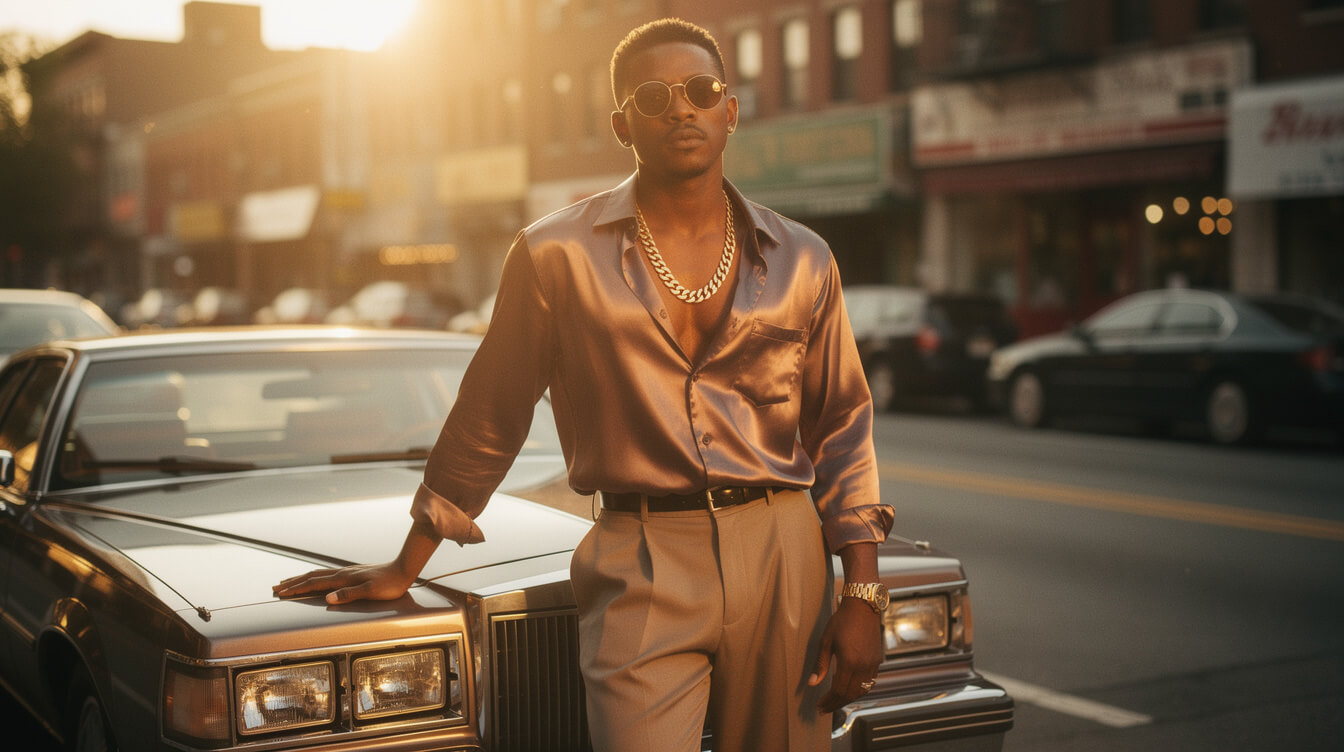
Mr. Smith dropped November 21, 1995. “Doin’ It” with LeShaun, “Loungin'” with Total, “Hey Lover” with Boyz II Men. Trackmasters produced the whole thing. It went double platinum. And it locked in the aesthetic that would define the entire late-90s rap-going-mainstream moment: silk button-up half-tucked, Cuban link chain instead of rope, gold Rolex Presidential, Timberland or Nike Air Max 95, Coogi sweater for winter fits.
This is the era that gets misread most often. Contemporary streetwear culture treats late-90s LL as “soft” or as the moment he went commercial. That’s a rewrite. What actually happened is LL — a decade into a Def Jam contract — figured out how to make a rap album Black women loved without alienating the b-boys. It was a technical achievement, not a compromise, and the fit codified it: mixed-material dressiness that read as street to street and as grown to grown. Every rapper who’s ever worn a silk shirt on a red carpet is walking in Mr. Smith‘s wake.
The tee reference for this era is the album’s font-forward cover — the italicized script “Mr. Smith” lockup in metallic gold on ivory. It works as a heat-transfer chest print on a bone or off-white heavyweight cotton, or as an all-over back print. If you’re building a full LL tee wardrobe, this is your dress-up piece — the one you wear with black slacks and Chelsea boots, not with cargo shorts. Same wardrobe logic our 90s hip-hop fashion breakdown hits from the women’s side.
What Makes an LL Cool J Tee Authentic — Design Cues to Look For
Here’s the checklist that separates a real LL Cool J t-shirt from a mass-market tourist piece. Save this. Test any tee against it before you cop.
- The era is legible. A real LL tee is dated on purpose — 1985, 1987, 1990, 1993, 1995. If the design floats in a generic “rap legend” nostalgia soup with no album, song, or year callout, it’s a costume.
- The reference is specific, not generic. A boombox silhouette isn’t LL. A Sharp GF-777 boombox with a red LED bar in front of a Def Jam-red backdrop is LL. Specificity is the whole game.
- Type treatment matches the era. Radio-era: chunky wax-crayon block letters. BAD-era: baroque gold-on-black. MSKYO-era: minimalist heavy sans on solid ground. Mr. Smith-era: italic metallic script. If the typography doesn’t cite an era, the design is guessing.
- Fabric weight matters. Anything under 5oz cotton is a tour-merch cash-grab. Real LL heritage tees run 6.5oz-plus — Bella Canvas 3001, Gildan Ultra Cotton, Comfort Colors 1717. The garment should feel like it could take a rope chain over the top of it and not collapse.
- Color palette matches the album, not the meme. Def Jam red, black, cream. Kangol red. Album-cover metallic gold. If a tee is teal, hot pink, or highlighter yellow, someone is remixing LL through 2020s POD aesthetics and lost the plot.
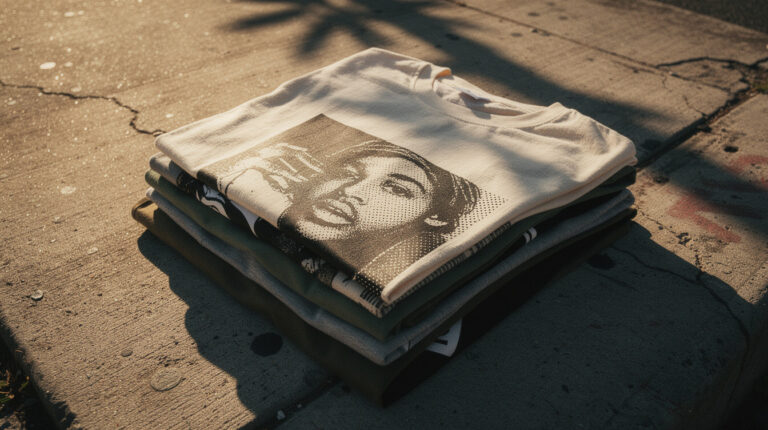
- The graphic doesn’t just print the face. A photo of LL’s face big on the chest is the lowest-effort merch move on Earth. A real designed tee treats LL as a visual language — Kangol silhouette, boombox icon, boxing-glove abstract, Def Jam brick logo. Face-forward is fine occasionally, but every era beyond it is stronger.
- The cut is boxy, not bodycon. LL wore his tees oversized because the whole rope-chain-over-shirt move requires drape. A slim modern crew that hugs the chest kills the reference. Look for boxy or vintage cuts.
Run any candidate tee through that seven-point filter. If it passes six or seven, you have a real one. Four or five, it’s borderline. Three or fewer, it’s a costume.
Where to Cop Real LL Cool J Merch — Era-Sorted Shortlist
The market for authentic LL Cool J tees splits into four tiers. Know what you’re buying.
Tier 1 — official artist store. store.llcoolj.com and Rock The Bells merch. Direct-from-artist, current-run print quality, prices reflect the license. Best for anyone who wants LL to actually see the money.
Tier 2 — heritage collaborations. Cross Colours’ LL x Cross Colours Profile Tee is the canonical modern collab — that partnership makes sense because Cross Colours is the surviving early-90s Black-owned streetwear brand, and the LL crossover reads as legacy-meets-legacy. If a heritage collab drops from FUBU, Karl Kani, or Karl Kani-adjacent labels, that’s Tier 2 as well.
Tier 3 — independent design shops. This is where the era-specific pieces actually live — small hip-hop-culture stores that treat LL as a design object rather than a face-print. Custom Creative sits here. Our LL Cool J “I Can’t Live Without My Radio” tee is the Radio-era boombox reference on heavyweight Bella Canvas cotton with the correct Def Jam-red palette. It reads clean under a rope chain and works as either a standalone fit or as one piece in a chronological three-album rotation.
Tier 4 — mass-market. Old Navy, Fashion Nova, generic POD sites. Skip unless you want a tour-souvenir feel. Nothing here will pass the seven-point authenticity test.
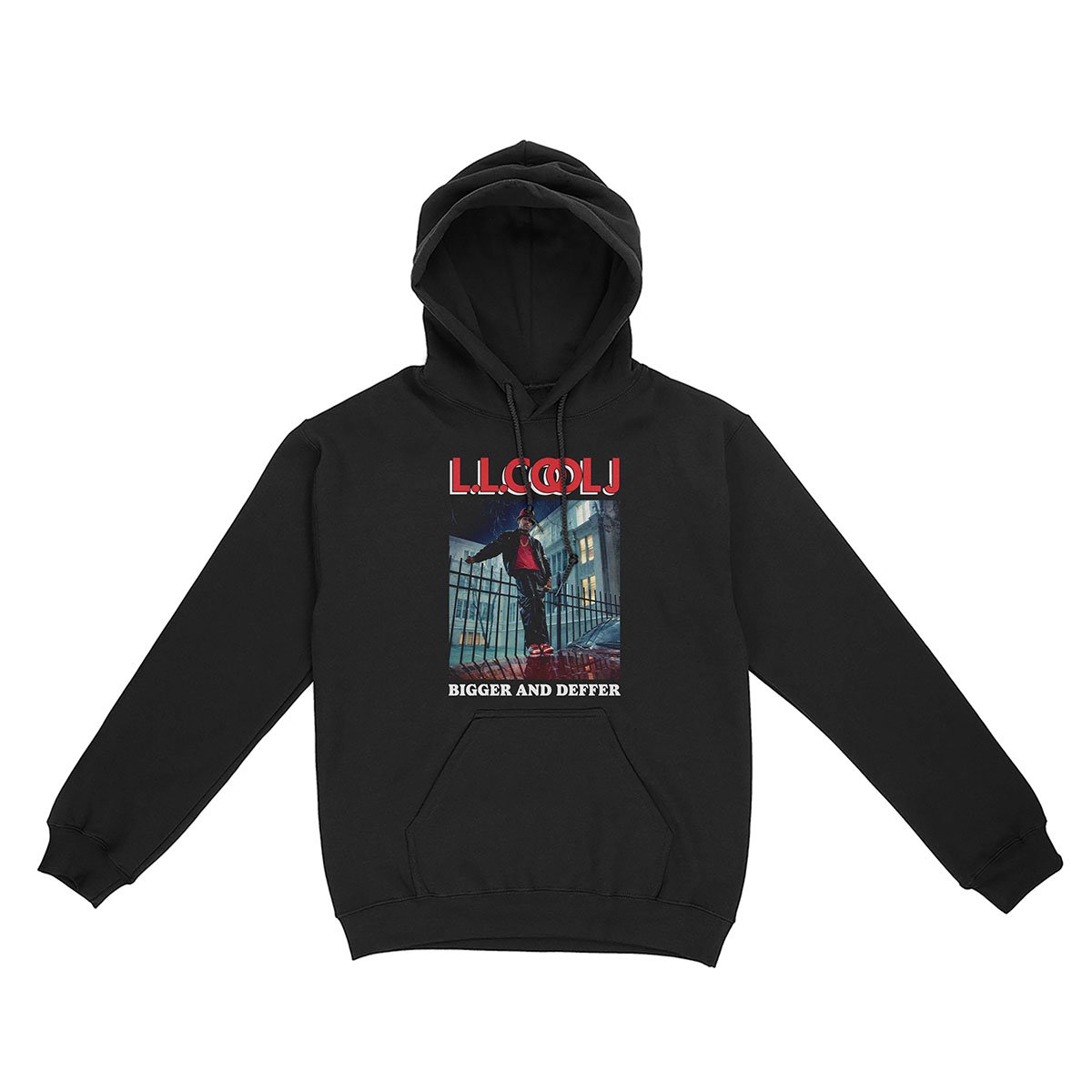
Rep the BAD Era on Your Back
Our LL Cool J Bigger and Deffer Hoodie brings the 1987 gold-rope aesthetic to heavyweight fleece — Kangol-era typography, cover-inspired print, cut boxy for chain drape. Cop by era, not by algorithm.
Final Word: Cop by Era, Not by Algorithm
The LL Cool J t-shirt market is oversaturated because his catalog is that deep — five defining albums across a single decade, each with its own visual identity, and each still cite-worthy 40 years on. The mass-market pipeline flattens all of that into “vintage rap tee, no context.” The right move is to treat LL like Def Jam’s Rick Rubin treated him — as an artist with distinct chapters, each earning its own reference.
Radio-era boombox tee. BAD-era gold-rope reference piece. MSKYO-era boxing abstract. 14 Shots-era blank Champion. Mr. Smith-era script cover. Five tees, one wardrobe, forty years of Def Jam history stacked on your back. That’s how you actually rep James Todd Smith — not by wearing his face, but by citing his chapters. Stay creative.
Hip-Hop Heritage, Weekly
Era-by-era guides, artist deep-dives, and first look at every new drop in the Custom Creative catalog. Sign up — we send once a week, never spam.

🎧 Never Miss a Drop
Exclusive product releases, hip-hop deep dives, and member-only discounts. Straight to your inbox.
Free forever. No spam. Unsubscribe anytime.
Get the Culture, Delivered
Deep dives into hip-hop history, exclusive product drops, and discounts sent straight to your inbox. No spam, just culture.
Join 2,000+ hip-hop heads already in the loop. Unsubscribe anytime.