J Dilla Production Discography: Every Era, From Runnin’ to Dillagence II
Most producers have a discography. J Dilla has a scavenger hunt. The J Dilla production discography runs from a 1993 Detroit vinyl single to an album Busta Rhymes released in August 2026, twenty years after James Dewitt Yancey died. Along the way, a lot of his best work came out under someone else’s name. There are Ummah credits, Soulquarians credits, “Jay Dee” credits and “J Dilla” credits, plus beat tapes that circulated for years before anyone pressed them. You can’t really trace his catalog unless you know how it got hidden in the first place.
This guide works through it era by era: the basement years, the Ummah years when his name sat in the songwriting credits but not the producer line, the Soulquarians run that rebuilt neo-soul, the Detroit-to-LA chapter, and the posthumous catalog that’s still growing. We name the albums, the tracks, the samples and the receipts. At the end there’s a listening path, so you know where to drop the needle first.
The Basement Years: Where the J Dilla Production Discography Begins (1993–1995)
James Yancey was born February 7, 1974, and grew up on Detroit’s east side, in a house at McDougall and Nevada. Music ran in the family. His mother, Maureen “Ma Dukes” Yancey, was a former opera singer, and his father, Beverly Dewitt Yancey, was a jazz bassist. Ma Dukes has said her son could match pitch before he could talk. That ear explains a lot of what came later.
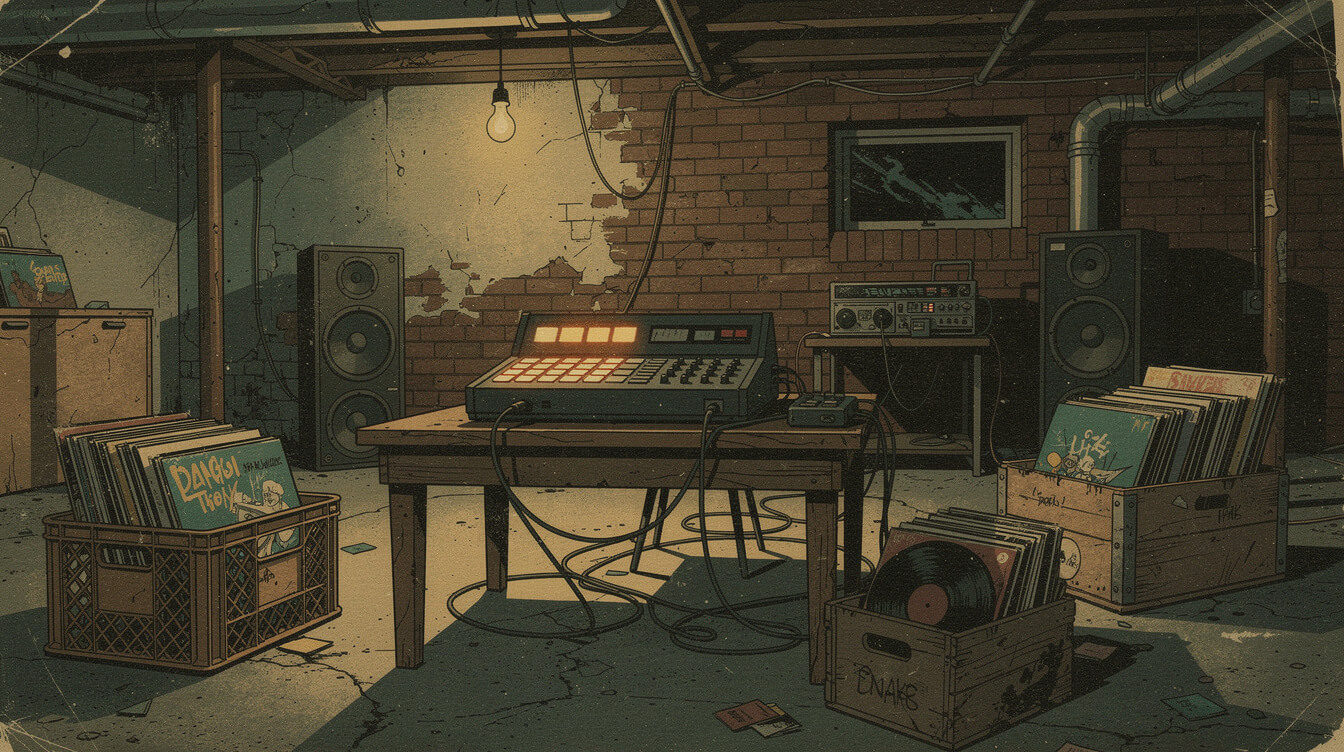
At Pershing High he battled with classmates T3 and Baatin, and the three later formed Slum Village. In his teens he taught himself to make beats in the basement with a tape deck and his growing record collection. That’s the origin story, and it matters because Dilla’s sound was never a studio sound. It was a bedroom sound that got loud.
The Amp Fiddler Connection
The big turn came in 1992, when Detroit keyboardist Amp Fiddler let the teenager use his Akai MPC. Yancey mastered it fast. Then Fiddler, playing keys with Funkadelic on the 1994 Lollapalooza tour, met Q-Tip of A Tribe Called Quest, who was on the same bill. Fiddler introduced the two, and Yancey handed Q-Tip a Slum Village demo tape. Every other credit on this list traces back to that handoff.
The First Pressings: T.H.I.Q.U.E., 1st Down and 5 Elementz
The earliest credits on the official discography are pure crate-digger territory. In 1993 there’s “Sweet One,” a T.H.I.Q.U.E. single in R&B, jazzy sax and rap versions. In 1994 come cuts for Da Enna C. In 1995 Yancey and MC Phat Kat formed 1st Down, who signed with Payday Records and are often cited as the first Detroit hip-hop act to land a major-label deal. The deal ended after one single, “A Day Wit the Homiez” backed with “Front Street.” Around the same time he recorded the Yester Years EP with 5 Elementz, a group that included Proof, later of D12. If you want to hear the raw blueprint, those 5 Elementz cuts (“Searchin’,” “Feed Back,” “Janet Jacme”) are where to listen.
Labcabincalifornia: The National Debut
Q-Tip carried cassettes of Jay Dee loops to the Pharcyde, and the LA group built half of their 1995 album Labcabincalifornia on them. Jay Dee is credited on “Bullshit,” “Runnin’,” “Splattitorium,” “Somethin’ That Means Somethin’,” “Drop” and “Y?” (the last co-produced with Bootie Brown). “Runnin'” flips the descending nylon-string guitar from Stan Getz and Luiz Bonfá’s “Saudade Vem Correndo” and reached No. 55 on the Billboard Hot 100. “Drop” got a Spike Jonze video in which the group performed the song backwards, then the footage was played in reverse. Dan Charnas, author of Dilla Time, calls “Runnin'” “the auspicious debut of Jay Dee as a creative force in hip-hop.” Most people first heard him there without knowing his name.
The Ummah Years: Hidden Credits and Tribe’s Final Run (1996–1999)
This is the era where his discography gets slippery. In 1996 Jay Dee joined Q-Tip and Ali Shaheed Muhammad in The Ummah, A Tribe Called Quest’s in-house production crew, which Raphael Saadiq of Tony! Toni! Toné! joined later. Many records from these years list “The Ummah” as producer instead of Jay Dee. He kept songwriting credit on his non-remix productions, though. So if you’re auditing a 1996–1998 Tribe or Busta record, the songwriting credits tell you more than the producer line does.
Beats, Rhymes and Life and The Love Movement
On Tribe’s 1996 album Beats, Rhymes and Life, the Wikipedia discography credits Jay Dee (with The Ummah) on “Get a Hold,” “1nce Again,” “Keeping It Moving,” “Word Play” and “Stressed Out” featuring Faith Evans. “1nce Again” was nominated for Best Rap Performance by a Duo or Group at the 39th Grammy Awards. We marked the album’s anniversary in our Today in Hip-Hop entry on Beats, Rhymes and Life at 30.
Two years later, The Love Movement (1998) leaned on him even harder: “Start It Up,” “Find a Way,” “Da Booty,” “Steppin’ It Up” with Busta Rhymes and Redman, “4 Moms,” “His Name Is Mutty Ranks,” “Busta’s Lament” and “Against the World.” “Find a Way” reached No. 71 on the Hot 100. It’s often treated as Tribe’s weak final chapter, but it’s really the clearest snapshot of Jay Dee steering a legendary group’s sound from the inside.
Stakes Is High and the De La Soul Connection
Also in 1996, Jay Dee co-produced the title track of De La Soul’s Stakes Is High with the group. It’s one of the most-cited beats in his catalog, and the Stakes Is High remix with Mos Def and Truth Enola sits on the “Itzsoweezee (Hot)” single. De La came back to him in 2000 for “Thru Ya City” and in 2004 for three key Grind Date cuts, which we cover below. Our De La Soul songs deep-cut guide covers the rest of that catalog.
Busta, Janet and the Remix Economy
The Ummah also ran a steady remix business. Jay Dee is behind Busta Rhymes’ “Still Shining” and “Keep It Movin'” on The Coming (1996), plus two “Woo Hah!! Got You All in Check” remixes, the Jay-Dee Bounce Remix and the Jay-Dee Other Shit Remix. Then there’s the one that crossed into pop: Janet Jackson’s “Got ‘Til It’s Gone (Ummah Jay Dee’s Revenge Mix)” in 1997. Charnas goes further and argues that the loose feel and slippery bass lines Jay Dee perfected on his 1997 remixes were imitated by Jimmy Jam and Terry Lewis on Janet’s original “Got ‘Til It’s Gone” that same year. That’s his reading and not a documented credit, but it shows how far the sound was travelling. He also remixed Somethin’ for the People’s “All I Do” and the Brand New Heavies’ “Sometimes” with Q-Tip.
Fan-Tas-Tic, Amplified and the Roots
Slum Village’s Fan-Tas-Tic (Vol. 1) (1997), produced entirely by Jay Dee, was cut at RJ Rice Studios and became an underground Detroit favorite. Journalists compared the group to Tribe, which he didn’t love. “I ain’t never carried no goddamn backpack,” he said later. Their aim, he explained, was to “do exactly what’s not on the radio.” In 1999 he co-produced most of Q-Tip’s solo debut Amplified, including “Breathe and Stop,” which is credited to him alone. “Vivrant Thing” is credited to Q-Tip. That same year he gave The Roots “Dynamite!” and the bonus cut “New Year’s @ Jay Dee” for Things Fall Apart, an album we broke down in our Things Fall Apart deep dive. And here’s some trivia: Slum Village’s “Get Dis Money,” a Jay Dee production, first appeared on the soundtrack to Mike Judge’s 1999 cult film Office Space.
The Soulquarians Run: Like Water for Chocolate to Electric Circus (2000–2002)
In 2000 his credits caught up with his influence. Jay Dee was a founding member of the Soulquarians, the collective with Questlove, D’Angelo and James Poyser, and over about 24 months he worked on the records that defined the late-’90s and early-2000s neo-soul and conscious-rap crossover. Questlove later called him “the world’s greatest drummer” and said he “invented the sound we call neo-soul.”
Common’s Like Water for Chocolate
He’s credited on 11 tracks of Common’s Like Water for Chocolate: “Time Travelin’ (A Tribute to Fela),” “Heat,” “Dooinit,” “The Light,” “Funky for You,” “The Questions” with Mos Def, “Time Travelin’ (Reprise),” “A Film Called (Pimp),” “Nag Champa,” “Thelonius” with Slum Village and “Payback Is a Grandmother.” Several of those were co-produced with Poyser, D’Angelo or Questlove. “The Light” is his biggest hit as a producer. It’s built on Bobby Caldwell’s 1980 “Open Your Eyes,” with drums from the Detroit Emeralds’ “You’re Getting a Little Too Smart.” It reached No. 44 on the Hot 100, Common’s first-ever Hot 100 entry after eight years and three albums. A remix with Erykah Badu turned up on the Bamboozled soundtrack.
Fantastic, Vol. 2 and Mama’s Gun
Slum Village’s major-label debut, Fantastic, Vol. 2, came out the same year. He produced every track, with D’Angelo co-producing “Tell Me” and Pete Rock co-producing “Once Upon a Time.” The singles (“Raise It Up,” “Players,” “Climax”) made Slum Village’s sound, which was mostly his sound, a national product. On Erykah Badu’s Mama’s Gun he co-produced “Didn’t Cha Know,” “My Life” and “Kiss Me on My Neck.” “Didn’t Cha Know” samples Tarika Blue’s 1977 “Dreamflower” and earned a Grammy nomination for Best R&B Song.
Welcome 2 Detroit and the Name Change
In 2001 he went solo. First came the single “Fuck the Police” on Up Above Records, then Welcome 2 Detroit, the album that launched UK label BBE’s “Beat Generation” series. That’s also when “Jay Dee” became “J Dilla,” which kept him from being confused with Jermaine Dupri, who also went by J.D. That’s why credits before 2001 usually read Jay Dee and later ones read J Dilla. Same man, same MPC. Then he left Slum Village for a solo deal at MCA.
Electric Circus and the Session-Player Turn
Common’s 2002 album Electric Circus is the most experimental record on the list. Dilla co-produced “Soul Power,” “Aquarius,” “Electric Wire Hustler Flower,” “New Wave,” “Star *69,” “Between Me, You and Liberation,” “I Am Music” and “Jimi Was a Rock Star,” mostly alongside Questlove, Poyser and bassist Pino Palladino. That same year he showed up on Talib Kweli’s Quality (“Where Do We Go,” “Stand to the Side”) and on three Busta cuts from It Ain’t Safe No More. Bilal, who worked with him around that time, summed up his touch: “He had this thing where no matter what he picked up he could bend his will into it.”
Detroit to LA: Jaylib, Ruff Draft and The Grind Date (2002–2005)
The MCA years produced a lot of frustration and very few releases. He recorded a solo album with beats from Madlib, Pete Rock, Hi-Tek, Kanye West, Nottz, Waajeed and others, and it got shelved after changes at the label. He also produced Frank-N-Dank’s 48 Hours. When MCA asked for something more commercial, the artists re-recorded most of it with few or no samples. Neither version came out officially, though the original leaked on bootlegs. In a 2003 interview with Groove Attack he said: “Right now, I’m on MCA but it feels like I’m an unsigned artist still.”
Ruff Draft and the Indie Pivot
His answer was to go independent. In 2003, Ruff Draft came out on vinyl only through German label Groove Attack, rawer and grimier than anything he’d made in the ’90s. The Vol. 2: Vintage collection followed. “Skip the major labels and just put it out yourself,” he told Groove Attack. From then on, most of his work came out through independent labels.
Jaylib’s Champion Sound
Madlib and Dilla started trading beats and rhymes in 2002 as Jaylib and released Champion Sound on Stones Throw in 2003. Each rapped over the other’s beats. Dilla’s production includes “Nowadayz,” “The Red,” “Raw Shit” with Talib Kweli, “The Heist,” “React” and “Strip Club” with Quasimoto, “The Exclusive” with Percee P, “Starz,” “Raw Addict” and “Pillz,” and he co-produced “L.A. to Detroit” with Madlib. “The Red” later turned up as the instrumental in a UK O2 TV ad. In 2004 Dilla moved from Detroit to Los Angeles and toured with Jaylib that spring. If you’re a Madvillain head, this is the sister record. Our MF DOOM merch guide picks up the Stones Throw thread from there.
The Grind Date, Fishscale’s Prequel and Common’s Be
In 2004 De La Soul’s The Grind Date carried three Dilla beats: “Verbal Clap,” “Much More” with Yummy Bingham and “Shoomp” with Sean Paul. They’re some of the hardest-hitting beats from his LA years. We made a De La Soul The Grind Date T-Shirt for heads who still run “Verbal Clap” back. In 2005 came “Love Is…” and “It’s Your World” (with Poyser and Karriem Riggins) on Common’s Be, plus work for Dwele, Steve Spacek and Slum Village’s Prequel to a Classic.
The Illness Years
From 2003 on, illness and medication caused dramatic weight loss. URB and XXL reported his hospitalizations in 2004 and 2005, and he played them down. It became public in November 2005, when he toured Europe performing from a wheelchair. He had thrombotic thrombocytopenic purpura (TTP), a rare blood disease, and lupus. He kept making beats through all of it, much of the time from a hospital bed.
Donuts, The Shining and the Posthumous J Dilla Production Discography (2006–2026)
Donuts came out on Stones Throw on February 7, 2006, his 32nd birthday. Three days later, on February 10, he died at home in Los Angeles. We covered every chop on that record in our Donuts track-by-track sample breakdown. Charnas describes his final production phase as “an inspiration and launch point” for what’s now called lo-fi hip-hop. If you’ve ever studied to a lo-fi beats stream, you’ve heard a second-generation copy of this era.
The 2006–2009 Wave
Beats he’d placed before he died kept coming out for years. 2006 brought Ghostface Killah’s Fishscale (“Beauty Jackson,” “Whip You with a Strap”), Busta’s “You Can’t Hold the Torch” on The Big Bang, and The Roots’ “Dillatastic Vol Won(derful)” and “Can’t Stop This” on Game Theory. That year also saw The Shining, about 75% finished when he died and completed by Karriem Riggins for BBE in August 2006. In 2007 came Common’s “So Far to Go” on Finding Forever and Busta’s Dillagence mixtape. In 2008 there was Sniperlite, the Dilla Ghost Doom EP with Ghostface and MF DOOM, plus Q-Tip’s “Move” on The Renaissance. In 2009 came DOOM’s “Gazzillion Ear” and “Lightworks” on Born Like This, and three cuts on Raekwon’s Only Built 4 Cuban Linx… Pt. II, including the Wu posse cut “House of Flying Daggers.” For more on Ghostface’s side of it, see our best Ghostface Killah songs guide.
Mos Def’s “History” and the Black Star Thread
One of the best posthumous placements closes Mos Def’s 2009 album The Ecstatic: “History,” featuring Talib Kweli and produced by Dilla. It reunited the two Black Star MCs over a Dilla beat about nine years after “Little Brother,” their Dilla-produced cut on the 2000 Hurricane soundtrack. Our Mos Def Black Star breakdown tells the duo’s story. And if “History” is your favorite track on that album, we made a Mos Def The Ecstatic T-Shirt with you in mind.
The Archive Releases
Then the vaults opened. Jay Love Japan came out in Japan in 2006 and was heavily bootlegged everywhere else until its official 2016 release. His younger brother Illa J’s Yancey Boys (2008, Delicious Vinyl) is produced entirely from Dilla beats. Jay Stay Paid (2009, Nature Sounds), mixed and arranged by Pete Rock, has 28 previously unreleased tracks. The shelved MCA album finally came out as The Diary on Mass Appeal in April 2016. T3 said in 2015 that about 150 unreleased beats remained, and some of them landed on Slum Village’s Yes! that year. Later placements include Common’s “HER Love” with Daniel Caesar (2019) and Phife Dawg’s “Nutshell Pt. 2” with Busta Rhymes and Redman (2021).
Dillagence II: The 2026 Chapter
The newest entry is Busta Rhymes’ Dillagence II, released August 25, 2026. Busta has said Dilla gave him about 300 beats before he died, and he built this 19-track album from that stash with the estate and Ma Dukes involved. It includes posthumous vocals from D’Angelo and appearances from Common, Talib Kweli, Lil Wayne, Big Sean, Ludacris, Anderson .Paak and Slum Village’s T3. For a discography that “ended” in 2006, that’s a remarkable fact: Dilla is still releasing records in 2026, and the list isn’t done yet.
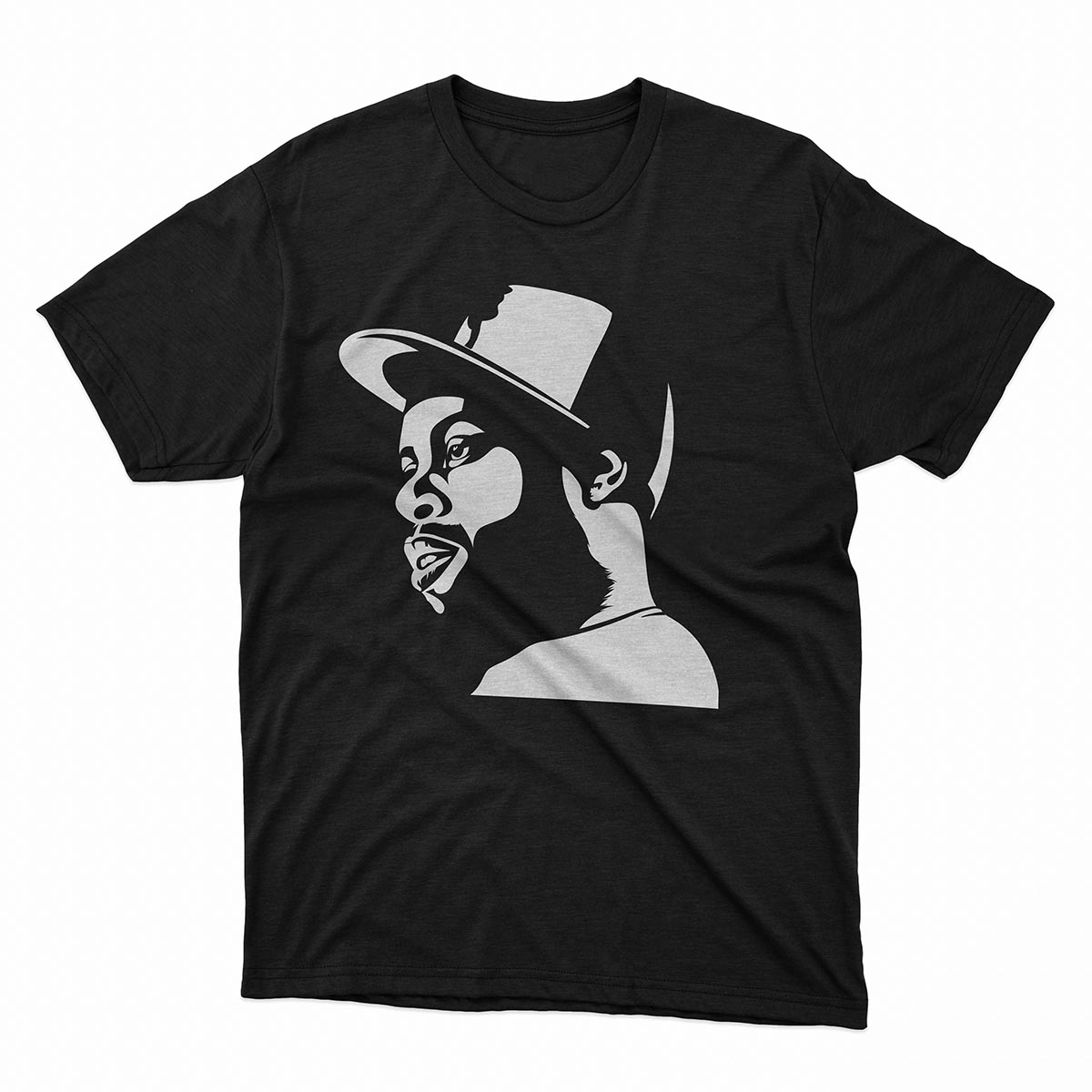
Rep the Producer’s Producer
From “Runnin'” to Dillagence II, his name was hidden in the credits for years. We made a J Dilla T-Shirt to put it up front, for the heads who read liner notes first.
How to Read Dilla’s Credits, and Where to Start Listening
Before you trust any single list, here’s a cheat sheet for the credit lines you’ll run into.
- “Jay Dee” (1993–2001): his name for the Pharcyde, early Slum Village, the Ummah remixes and the first Soulquarians records.
- “The Ummah” (1996–1999): the shared Tribe production credit. Check the songwriting credits to see which tracks are his.
- Co-production with Poyser, Questlove, D’Angelo or Pino Palladino (2000–2002): the Soulquarians sessions. These were collaborations, but his drums are usually the foundation.
- “J Dilla” (2001 onward): the solo-era and posthumous name.
- Beat tapes and bootlegs: years of unofficial circulation. If a “lost Dilla” release has no estate or label backing, be skeptical.
What Makes a Beat Sound Like Dilla
The main thing to listen for is time. He worked on an Akai MPC3000 with quantize turned off, so his drums don’t snap to the grid. Charnas describes it as setting straight and swung timing against each other to create “a new, pleasurable, disorienting rhythmic friction.” People call it “drunk” drumming, and it’s the reason jazz players like Robert Glasper and live drummers have spent careers trying to copy a machine. In 2014 Ma Dukes donated his MPC3000 and custom Minimoog Voyager to the Smithsonian’s National Museum of African American History and Culture, where they’re part of the “Musical Crossroads” exhibit.
A Five-Stop Listening Path
- The Pharcyde – “Runnin'” (1995): the debut, with the Stan Getz flip.
- A Tribe Called Quest – “Find a Way” (1998): the Ummah sound at its smoothest.
- Common – “The Light” (2000): his biggest chart hit.
- Jaylib – “The Red” (2003): rawer, sample-heavy, the start of the Stones Throw era.
- Donuts (2006), front to back: the final statement.
Once you’ve done those five, go back to Slum Village’s Fantastic, Vol. 2. Knowing where he ended up makes the early beats hit harder.
J Dilla Production Discography FAQ
How many songs did J Dilla produce?
Nobody has an exact count. The credited discography runs to several hundred productions and remixes, and that doesn’t include beat tapes, bootlegs and unreleased instrumentals. T3 put the unreleased beats at around 150 in 2015, and Busta Rhymes says Dilla gave him about 300. Any number you see is a floor.
What was J Dilla’s first production credit?
The earliest entry on his official production discography is T.H.I.Q.U.E.’s 1993 single “Sweet One.” His national breakthrough was the Pharcyde’s Labcabincalifornia in 1995.
What is J Dilla’s biggest hit as a producer?
Common’s “The Light” (2000), which reached No. 44 on the Billboard Hot 100 and earned a Grammy nomination. The Pharcyde’s “Runnin'” (No. 55) and Q-Tip’s “Breathe and Stop” (No. 71) are close behind.
Why do some Dilla songs say “The Ummah” instead?
From 1996 to about 1999, his productions for A Tribe Called Quest, Busta Rhymes, Janet Jackson and others were often credited to The Ummah, the shared crew with Q-Tip and Ali Shaheed Muhammad. He kept songwriting credit on the original productions.
Why did Jay Dee change his name to J Dilla?
Around 2001 he started using J Dilla so he wouldn’t be confused with Jermaine Dupri, who also went by J.D.
Which albums did J Dilla produce in full?
Slum Village’s Fan-Tas-Tic (Vol. 1) and Fantastic, Vol. 2; his own Welcome 2 Detroit, Ruff Draft, Donuts and The Shining; Illa J’s Yancey Boys; and Jay Love Japan. He also co-produced most of Q-Tip’s Amplified, and the Jaylib album Champion Sound is split with Madlib.
Is J Dilla still releasing music?
Yes. Busta Rhymes’ Dillagence II came out August 25, 2026, built on Dilla beats, and the J Dilla Foundation has a 10-year deal with Kano Computing to release stems.
Final Thoughts: A Discography That Keeps Growing
The J Dilla production discography doesn’t fit a normal timeline. It starts as a remix credit, spends years hidden inside crew names, explodes in the Soulquarians era, gets stuck at a major label, goes raw and independent, and then keeps going for two decades after the man behind it died at 32. The J Dilla Foundation, started by Ma Dukes in 2006, supports people with lupus. Dan Charnas’s Dilla Time debuted at No. 4 on the New York Times bestseller list in 2022, and Busta Rhymes was still finding new Dilla beats in 2026.
If you take one thing from this guide, make it this: don’t stop at the solo albums. Read the credits, dig through the Ummah years, and play “Runnin’,” “The Light” and “Verbal Clap” back to back. You’ll hear the same drums leaning the same way across ten years and three cities.
Stay creative — The Custom Creative Team
Liner Notes, Delivered Weekly
Producer deep dives, sample receipts, and new drops from the Custom Creative crew, straight to your inbox.

🎧 Never Miss a Drop
Exclusive product releases, hip-hop deep dives, and member-only discounts. Straight to your inbox.
Free forever. No spam. Unsubscribe anytime.
Get the Culture, Delivered
Deep dives into hip-hop history, exclusive product drops, and discounts sent straight to your inbox. No spam, just culture.
Join 2,000+ hip-hop heads already in the loop. Unsubscribe anytime.