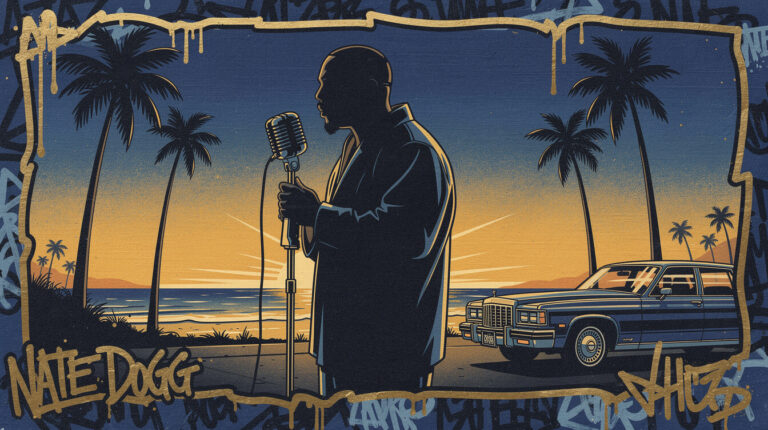
Jill Scott ‘A Long Walk’ Lyrics Meaning: Neo-Soul’s Radical Black Love Anthem, Line by Line
Twenty-five years later, the long walk lyrics Jill Scott wrote for her debut still hit different. “A Long Walk” isn’t background music for a Sunday morning. It’s a manifesto — a Philly-built, neo-soul-forged invitation into a kind of love that refuses to perform for anyone watching. The song came out in the summer of 2000, on an album that nobody was quite ready for, and it changed what R&B was allowed to say about Black love. This is the full breakdown, verse by verse, production credit by production credit, and legacy note by legacy note.
The Song and the Moment: Who Was Jill Scott in 2000
Before Jill Scott ever stepped into a recording studio, she was on stage in Philadelphia — not at a concert, but at spoken word nights and poetry slams in the city’s underground arts circuit. Born and raised in North Philly, she was already writing with a specificity that most songwriters spend careers chasing. The imagery she pulled from was hyperlocal: row houses, corner stores, Sunday family dinners, the particular quality of afternoon light on a summer block. It wasn’t metaphor for its own sake. It was the real thing.
The path to Hidden Beach Recordings — the independent label that signed her — ran directly through The Roots. Jill had been an opening act, a background vocalist, a presence in the same Illadelph creative ecosystem that was then producing some of the most musically adventurous hip-hop in the country. When she finally recorded Who Is Jill Scott? Words and Sounds Vol. 1, she brought that entire world into the studio with her.
The album dropped in July 2000. Mainstream R&B in that moment was dominated by Destiny’s Child’s choreographed precision, Timbaland’s staccato production walls, and the early rumblings of what would become the Neptunes’ minimalist takeover. Into that landscape, Jill Scott arrived with something quieter and more confident. No auto-tune. No eight-count choreography concept. Just a woman with an extraordinary voice and something urgent to say about what love actually feels like when nobody’s performing it for an audience.
“A Long Walk” became the album’s breakout single — the song that introduced Jill Scott to radio listeners who hadn’t been to a Philadelphia poetry slam. But the record heads, the people who’d watched her develop, already knew. This was the one.
‘A Long Walk’ Lyrics: Full Breakdown, Verse by Verse

The structure of “A Long Walk” is deceptively simple: verse, chorus, verse, bridge, chorus out. What Jill does inside that structure is what separates it from every other romantic R&B song from that era.
Verse 1 opens with an invitation. The narrator isn’t making a declaration of love — she’s making an offer. Come walk with me. Get some ice cream. Let’s talk, let’s look at the stars. The specificity here is the point: ice cream isn’t a metaphor for anything. It’s ice cream. The walk is a walk. The move is almost aggressively ordinary, and that ordinariness is the radical gesture. In 2000, when the biggest R&B love songs were about passion and heat and proving it, Jill Scott was describing a Tuesday evening in the neighborhood like it was the most profound thing two people could share. Because it is.
The chorus extends the invitation into duration — this isn’t one walk, it’s the possibility of many. The repetition of “walk with me” builds something cumulative. By the third time she sings it, it doesn’t just mean a physical walk anymore. It means: be here, stay here, meet me in the everyday.
Verse 2 deepens the scene. She adds more texture — describing the evening light, the neighborhood, the texture of a moment that most songwriters would skip over in favor of something more dramatic. Jill lingers in it. That lingering is the entire emotional argument of the song: that the quiet moments are where love actually lives.
The bridge is where the song expands beyond the personal into something almost universal. The imagery widens — stars, the sky, the city — and the tone shifts from invitation to declaration. This is where the song earns its reputation as more than a love song. It becomes a statement about what belonging feels like when you’ve found your person and your place.
What makes the lyrics land across twenty-five years is that specificity married to universality. You can place yourself on that Philly sidewalk whether you’ve ever been to North Philly or not. The song gives you just enough concrete detail to anchor yourself, then opens wide enough to let you bring your own memories into the space.
What the Lyrics Actually Mean: Radical Black Love in Post-Soul America

Here’s what nobody in the SERP results is saying: “A Long Walk” is a political song. Not overtly. It never raises its voice about it. But in the context of what Black women were being asked to represent in popular music in 2000 — their bodies, their performance of desire, their worth measured in a man’s attention — Jill Scott’s choice to sing about an ice cream walk was a refusal.
The dominant emotional register for Black women in R&B at that moment ran toward extremes: devastating heartbreak or ecstatic desire. Both modes, in their different ways, centered the relationship as something that happened to the woman — something she was caught up in, overwhelmed by, waiting on. Jill Scott inverts the frame. Her narrator is not caught up in anything. She’s not waiting. She’s making an offer — calm, specific, and entirely on her own terms.
“Come on take a walk with me” is an invitation, not a plea. That’s the grammatical and emotional structure of the whole song. The narrator knows who she is and where she lives and what she finds beautiful about an evening in Philadelphia. She’s inviting someone into her world, not losing herself in someone else’s.
The Philly geography isn’t incidental. The neighborhood — the row houses, the block, the familiar corner — functions as the narrator’s territory. This is her ground. The walk she’s proposing is through a world she already inhabits completely. The love she’s offering comes from fullness, not from lack. That’s the radical move: Black love as surplus, not compensation.
In the context of post-soul scholarship — writers like Michael Eric Dyson and Imani Perry had been making these arguments in academic circles — “A Long Walk” is doing that work in a three-minute pop song on a major indie label distribution deal. Jill Scott wasn’t reading those books. She was living that reality on the sidewalks of North Philadelphia. The theory and the art arrived at the same place from different directions.
Check our deeper dive into the meaning of Jill Scott’s “Golden” — another song that operates on a similar register of fullness and self-possession, just from a different emotional vantage point.
Dre & Vidal Production: The Roots-Adjacent Philly Sound That Made It Move

You can’t talk about “A Long Walk” without talking about how it was built. André “Dre” Harris and Vidal Davis — credited as Dre & Vidal — are the producers behind the track, and they are not incidental to what the song means. They’re load-bearing.
Dre & Vidal came up in the same Philadelphia creative world as The Roots. Both André Harris and Vidal Davis had worked in and around the Roots ecosystem — The Roots’ membership and extended family functioned as a kind of Illadelph creative collective in the late 1990s, where producers, vocalists, and musicians circulated freely across projects. Questlove and Black Thought were the anchors, but the energy was communal. Dre & Vidal absorbed that ethos.
Their production philosophy on “A Long Walk” is the opposite of spectacle. The arrangement is built on live instruments — real bass, real keys, actual drums with texture and breath in them. In 1999-2000, when The Roots were releasing Things Fall Apart and making the case for live instrumentation in hip-hop production, Dre & Vidal were applying the same principle to R&B. The result is a track that sounds warm in a way programmed beats simply don’t.
The tempo is deliberately slow. Not sluggish — intentional. The production refuses to rush Jill’s delivery or the listener’s experience. The arrangement breathes. There are spaces in the music where the melody hangs in the air for a moment before the next element comes in, and that space is emotional content. It’s the musical equivalent of the walk itself: you’re not getting anywhere in a hurry, and that’s the whole point.
The string accents that come in on the chorus are restrained and classical in their placement — not showboating, just there to underline. The overall palette is warm brown and gold, sonically: late afternoon, amber hour, the exact mood the lyrics are describing. When music production and lyrical content are this aligned, the result is a song that works on you at a level below conscious listening.
This is also why “A Long Walk” has had more staying power than technically superior songs from the same era. Perfection can date. What Dre & Vidal built was something organic — and organic things evolve with their listeners over time instead of showing their seams.
Neo-Soul’s Peak Year: 2000, D’Angelo’s Voodoo, Erykah’s Mama’s Gun, and Jill’s Space
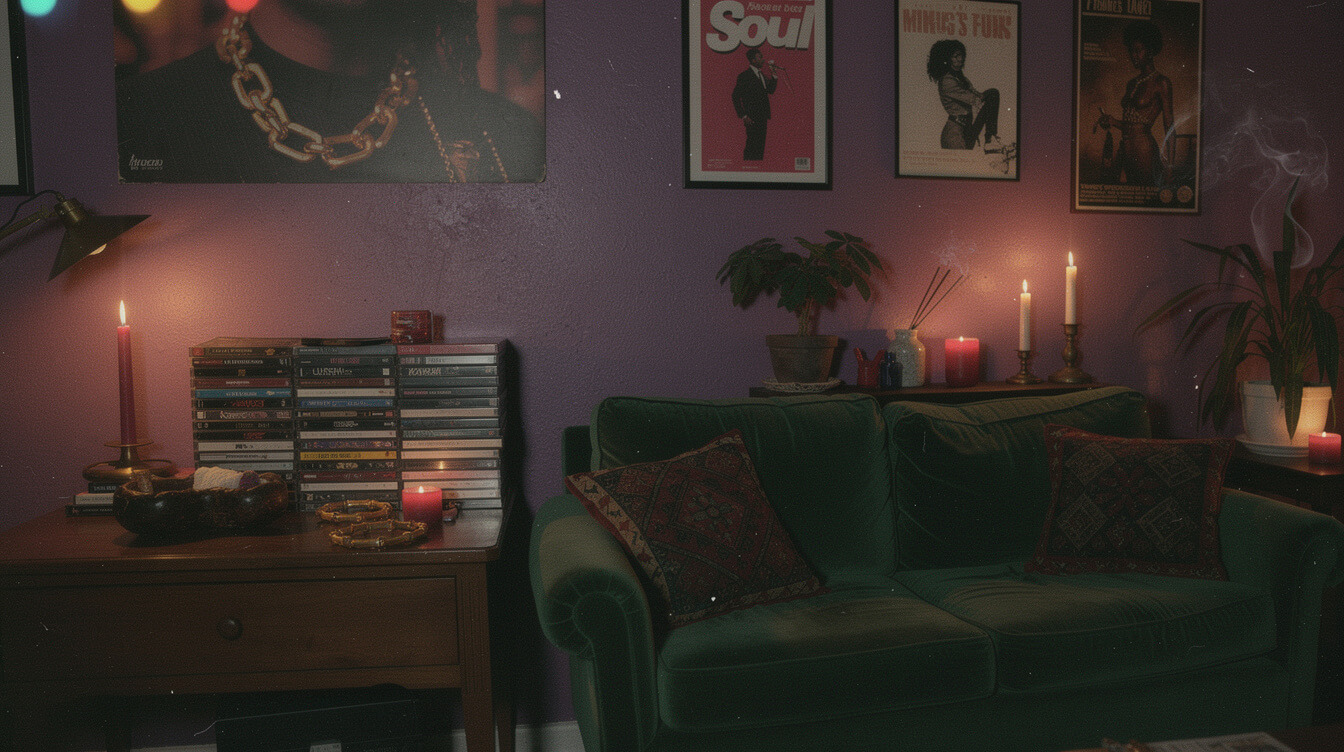
The calendar alignment of neo-soul’s greatest year is almost too perfect. January 2000: D’Angelo drops Voodoo. July 2000: Jill Scott drops Who Is Jill Scott? November 2000: Erykah Badu drops Mama’s Gun. Three albums, eleven months, one movement in full bloom.
Each of those records is doing something distinct, and understanding where “A Long Walk” sits in that constellation is essential to understanding what the song meant in the moment. D’Angelo’s Voodoo was sensual and dark and explicitly in conversation with Prince — it was about the body, about desire as a kind of spiritual crisis. Erykah Badu’s work — both Baduizm in 1997 and then Mama’s Gun — was political and cosmic and searching, grounding Black feminist consciousness in soul music forms.
Jill Scott’s register was different from both. Where D’Angelo leaned into heat and Erykah leaned into transcendence, Jill Scott leaned into the everyday. The mundane. The neighborhood. And “A Long Walk” is the purest expression of that angle: not heaven, not heat, but Tuesday evening on your block with someone you love.
The neo-soul movement broadly was a reaction to the increasing mechanization of mainstream R&B — the Timbaland and Neptunes productions that were brilliant but cold, the choreography-heavy visual presentation of Destiny’s Child and early 2000s girl groups, the premium on spectacle over interiority. Neo-soul pushed back by insisting that Black music had always been about the interior life, and it was going to stay that way.
“A Long Walk” makes that argument not through any kind of manifesto but by demonstrating: this is what interiority sounds like, set to music you can play on Sunday morning. The Philly sound running through the production — that live-instrument warmth, that breathing space — connected it to a continuous tradition from soul and jazz, running backward through the Roots and forward into a future that still hasn’t caught up to what Jill Scott was doing that summer.
If you’re building a Jill Scott playlist ranked by impact, “A Long Walk” sits at the top or very near it — not because of chart position but because of how completely it captures what the artist was doing at her arrival moment.
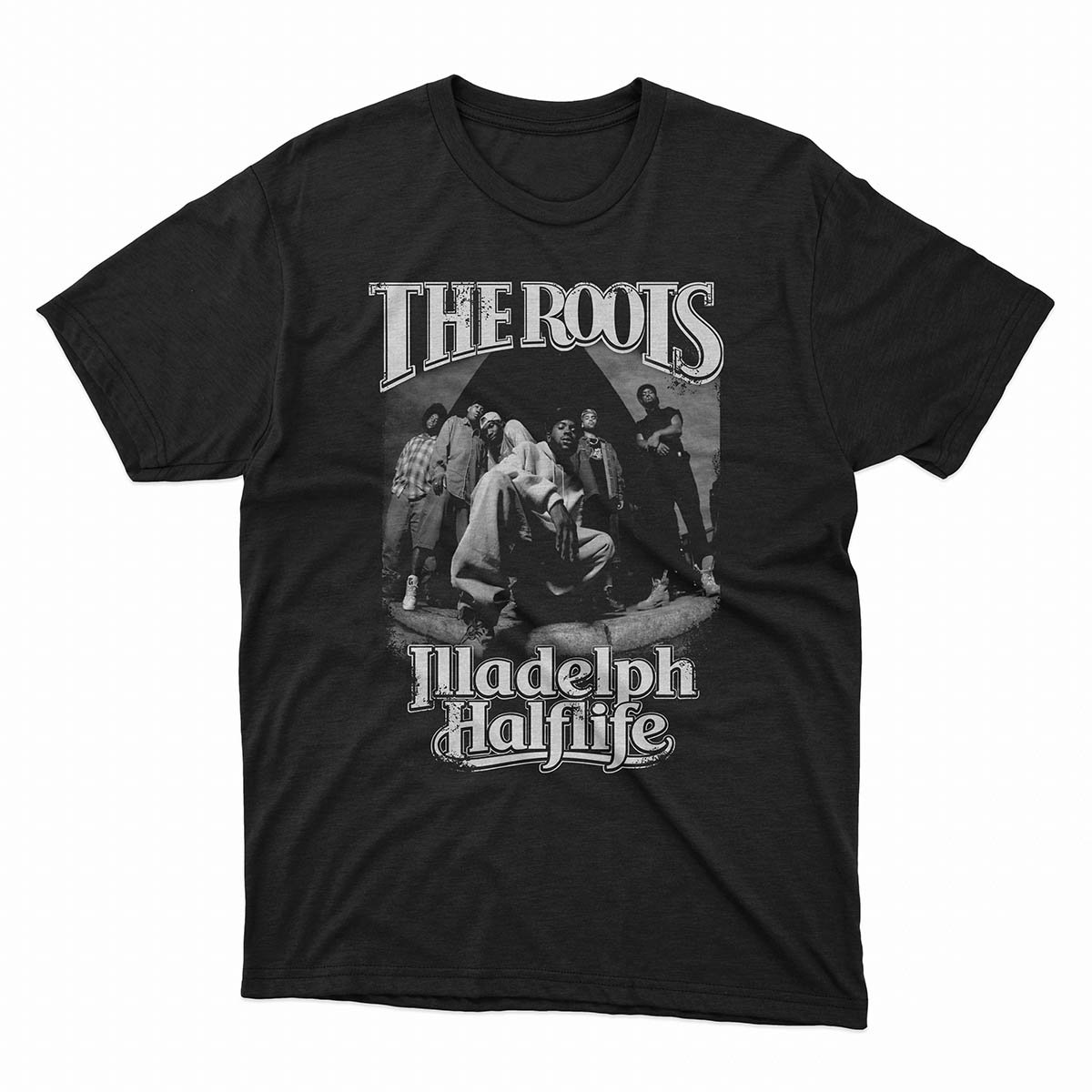
Represent the Illadelph Sound
Dre & Vidal built their sound in the same Philly ecosystem that made The Roots. This Illadelph Halflife tee carries that legacy — North Philly’s greatest band, on premium streetwear.
The Grammy Nomination + the 25-Year Legacy: Why ‘A Long Walk’ Still Charts on Every Neo-Soul Playlist
“A Long Walk” received Grammy recognition as part of the wave of acknowledgment that accompanied Who Is Jill Scott?‘s critical breakthrough — the album’s debut put Jill Scott on every serious music listener’s radar and brought Grammy attention to a voice and a sensibility that had been doing the work for years before the industry noticed. The nomination arrived as validation of what the underground had already confirmed: this was important music.
What’s more interesting than the award itself is what happened over the twenty-five years that followed. “A Long Walk” didn’t become a nostalgia artifact. It became a standard. It shows up in wedding playlists, dinner party Spotify queues, and every “neo-soul essentials” playlist that gets shared on social media. That staying power isn’t accidental — it’s architectural.
The song works across contexts because it was never topically specific. It wasn’t about a celebrity relationship or a trending emotion or a moment in culture. It was about something that doesn’t expire: the desire to share ordinary time with someone you love. That subject ages the same way a great poem ages — it gets more true as you have more life to compare it against.
The cover versions and interpolations matter too. Multiple artists across the neo-soul, R&B, and indie soul spaces have revisited the song — not because it was a smash hit by streaming metrics but because it’s a complete artistic statement that invites conversation. When a song generates that kind of engagement, twenty-five years in, it’s not nostalgia driving it. It’s ongoing relevance.
Jill Scott has never disowned the song or grown visibly tired of its prominence in her catalog. In interviews across the years, she’s described “A Long Walk” as something she lived before she wrote — a mode of experiencing the world, not just a song about one. That authorial relationship to the material shows in how she still performs it: not as a contractual obligation to the greatest hit, but as a touchstone she keeps returning to because it still says something true.
The new Jill Scott album To Whom This May Concern (2026) shows she hasn’t softened or drifted from that North Philly specificity that made “A Long Walk” what it is. Twenty-five years of credibility, earned one honest lyric at a time.
Where ‘A Long Walk’ Sits in Jill’s Discography: Companion Tracks and Deeper Cuts
If “A Long Walk” is the invitation, “He Loves Me (Lyzel in E Flat)” is the commitment. Where “A Long Walk” offers the beginning — the possibility, the approach — “He Loves Me” is the settled fullness of a love that’s already in place. Same album, different emotional geography. Together they map Jill Scott’s territory more completely than either does alone.
“Golden” — from the 2004 follow-up Beautifully Human: Words and Sounds Vol. 2 — is the spiritual cousin rather than the companion. Both songs are about fullness and self-possession, but where “A Long Walk” grounds that in relational love, “Golden” grounds it in individual spiritual expansion. Both modes come from the same place: a narrator who knows herself and is not performing for anyone.
“Gettin’ in the Way” is the shade-throwing cousin — witty, territorial, and hilarious in a way that shows Jill’s range extends well beyond the warm and philosophical. It’s useful for reminding listeners that the woman who wrote “A Long Walk” is also capable of reading someone cleanly and without apology.
For deeper cuts, the spoken word tracks on the debut — “Exclusively” and “Do You Remember” — give you the North Philly poetry slam context from which “A Long Walk” emerged. If you want to understand what Jill Scott was doing before the arrangements and the label deal, start there.
The Philly neo-soul ecosystem that produced all of this extended outward to include Musiq Soulchild, Jaguar Wright, and Jazzyfatnastees — artists who came from the same creative world and shared certain values about music-making even when their sounds diverged. Understanding that ecosystem is understanding why “A Long Walk” sounds the way it sounds. It’s not a genre exercise. It’s a neighborhood.
Frequently Asked Questions: ‘A Long Walk’ by Jill Scott
What is “A Long Walk” by Jill Scott about?
“A Long Walk” is about a simple but profound invitation to share ordinary time together — walking through the neighborhood, getting ice cream, watching the stars. The deeper meaning is in what that ordinariness represents: radical Black love grounded in the everyday rather than performance or spectacle. It’s Jill Scott’s argument that the quiet moments are where love actually lives.
Who produced “A Long Walk” by Jill Scott?
The song was produced by André “Dre” Harris and Vidal Davis, working together as Dre & Vidal. Both producers came up in Philadelphia’s Roots-adjacent creative ecosystem — Dre Harris in particular had worked extensively with The Roots — and brought a live-instrument, organic warmth to the production that matched the song’s lyrical philosophy.
What album is “A Long Walk” on?
“A Long Walk” appears on Jill Scott’s debut album, Who Is Jill Scott? Words and Sounds Vol. 1, released in July 2000 on Hidden Beach Recordings. The album was a critical and commercial breakthrough that established Jill Scott as one of neo-soul’s defining voices.
Did “A Long Walk” win a Grammy?
The song received Grammy recognition as part of the broader acclaim for Jill Scott’s debut album. Who Is Jill Scott? brought significant Grammy attention to the artist and helped establish her place in contemporary R&B and neo-soul.
Is Jill Scott from Philadelphia?
Yes. Jill Scott was born and raised in North Philadelphia, and the Philly geography is load-bearing in her work. Before recording, she performed in Philadelphia’s spoken word and poetry slam circuit, and the city’s creative ecosystem — specifically the Roots-adjacent Illadelph scene — shaped her musical sensibility in deep ways. The local specificity in “A Long Walk” is intentional: those row houses and neighborhood streets are real.
What songs are similar to “A Long Walk” by Jill Scott?
Start with other tracks from the same album: “He Loves Me (Lyzel in E Flat)” and “The Way.” In the broader neo-soul canon, Erykah Badu’s “Tyrone” (live version) and “Didn’t Cha Know,” Musiq Soulchild’s “Just Friends (Sunny),” and D’Angelo’s “Send It On” operate in overlapping emotional territory. For the Philly-specific angle, anything from The Roots’ Things Fall Apart era gives you the sonic world that produced “A Long Walk.”
Deep Dives. Culture First. No Fluff.
Get the best neo-soul and hip-hop culture breakdowns from Custom Creative — sent to your inbox, never corporate, always real.
Stay creative — The Custom Creative Team

🎧 Never Miss a Drop
Exclusive product releases, hip-hop deep dives, and member-only discounts. Straight to your inbox.
Free forever. No spam. Unsubscribe anytime.
Get the Culture, Delivered
Deep dives into hip-hop history, exclusive product drops, and discounts sent straight to your inbox. No spam, just culture.
Join 2,000+ hip-hop heads already in the loop. Unsubscribe anytime.