EPMD You Gots to Chill: The Sample Breakdown Behind the Golden Age Classic
Long Island, 1988: two rappers who barely raised their voices made every other MC on the radio sound like they were trying too hard. “EPMD You Gots to Chill” is the sound of that flex — a deadpan command wrapped in a Zapp bassline so thick it still rattles trunks decades later. Erick Sermon and Parrish “PMD” Smith didn’t need to shout over anybody. The whole point of the record is that they never had to — and that restraint is exactly why it’s still on “greatest hip-hop songs” lists nearly forty years on.
This is the deep dive nobody’s written yet. Run the actual keyword through Google and you get a Wikipedia stub, a Genius lyrics page, a WhoSampled credits list, and a stack of YouTube uploads — no long-form editorial has actually sat down and connected the samples, the chart run, the crew history, and the lineage this single left behind. So we’re doing it here: where the beat came from, how it landed commercially in 1988, and why rappers were still quoting it decades after Sermon and Smith laid it down.
The Strictly Business Origin Story
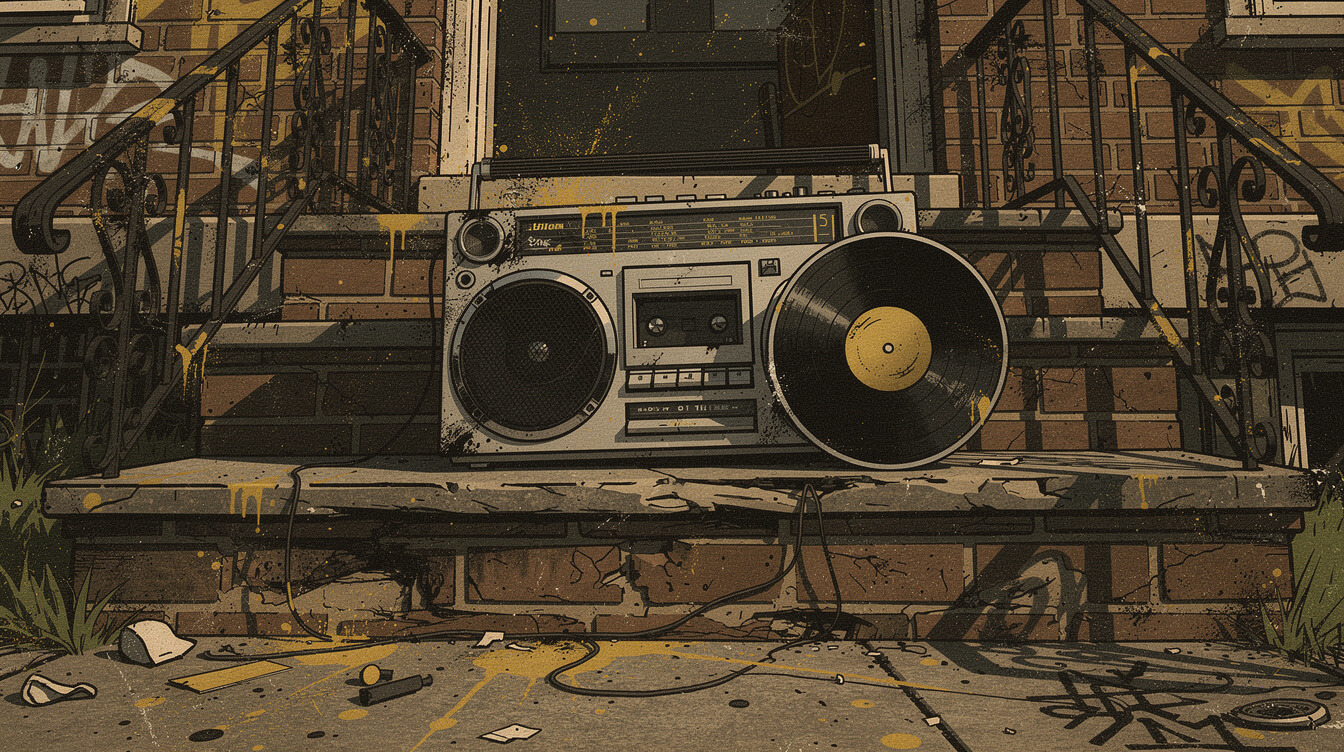
“You Gots to Chill” is the second single off EPMD’s 1988 debut album, Strictly Business, released on the independent Fresh/Sleeping Bag Records — the same Brooklyn-rooted label camp that gave the culture Mantronix and Just-Ice, and one of the few imprints of the era willing to let a rap group produce their own record start to finish. Written by Erick Sermon and Parrish Smith and produced entirely by the duo themselves — no outside hands on the boards, a rarity for a debut act in ’88 — the track peaked at #22 on the Billboard Hot R&B/Hip-Hop chart and later landed at #74 on VH1’s 100 Greatest Hip Hop Songs list.
The group’s name — EPMD, short for “Erick and Parrish Making Dollars” — telegraphed the whole persona before you even hit play. The Strictly Business title track and album rollout leaned hard into that unbothered, business-first attitude: rap as a job you clock into and dominate quietly, without the theatrics other crews were leaning on. “You Gots to Chill” is where that persona crystallized into an actual hook you could chant back. It isn’t a diss track aimed at a specific rival. It’s a general warning label, delivered flat, daring anybody listening to test it.
The official music video was directed by Adam Bernstein, who returned a year later to direct the video for “So Wat Cha Sayin'” — meaning the same visual eye shaped two of EPMD’s most enduring early singles back to back, building a consistent low-key, no-frills aesthetic that matched the group’s sound instead of fighting it.
Sermon and Smith weren’t industry plants dropped into a label showcase — they came up together out of Brentwood, Long Island, building a friendship and a rhyme partnership years before Strictly Business ever saw a pressing plant. That local, unglamorous origin matters for reading the record correctly: this wasn’t two artists performing a persona built by A&R committee. The flat delivery, the shared writing credits, the self-production — all of it reads as two guys who’d been perfecting this exact chemistry in a basement long before Fresh/Sleeping Bag ever heard a demo tape. By the time “You Gots to Chill” hit pressing plants, the sound wasn’t an experiment. It was already fully formed.
Breaking Down the Sample Sources

What actually makes “You Gots to Chill” hit is a stack of samples that shouldn’t logically sit together on one record — and does anyway, seamlessly, because Sermon and Smith understood groove better than most producers twice their age at the time.
The Zapp Bassline
The low end is Roger Troutman’s “More Bounce to the Ounce” (Zapp, 1980) — one of the most reused basslines in the history of sampled music, later chopped by everyone from 2 Live Crew to Dr. Dre and dozens of West Coast G-funk records that came a half-decade after EPMD got to it first. Sample-tracking databases credit EPMD with pulling “multiple elements” from it, not just the bass hit — the funk-band DNA of the whole record runs through this one loop, giving the track its rolling, low-riding pocket.
The Jungle Boogie Scratch
The vocal hook itself is built off Kool & the Gang’s “Jungle Boogie” (1973) — DJ K La Boss cuts the vocal in live on the turntables over the beat, which is why the “you gots to chill” refrain has that scratched, stuttering texture instead of sitting clean in the mix. That’s a turntablist credit baked directly into the chorus, not a producer loop dropped in after the fact — a distinction that mattered a lot in 1988, when scratch-DJ craftsmanship was still a core, visible part of a rap record’s identity rather than an afterthought.
The Deep Cuts Underneath
Layered further down in the mix: Juice’s “Catch a Groove” (1976) supplies the hook/riff element, and John Davis and the Monster Orchestra’s disco cut “I Can’t Stop” adds texture that most listeners never consciously register but would immediately miss if it were pulled. Then there’s the jewel most casual fans skip past entirely — EPMD interpolates Eric B. & Rakim’s “I Know You Got Soul,” which had dropped on Paid in Full just months earlier in 1987. That’s rap sampling rap in real time, within the same golden-age wave — EPMD paying tribute to the record that was actively rewriting the genre’s rulebook while they were still writing their own debut. It’s an early, underrated example of hip-hop citing itself as a genre with its own canon, barely a year into that canon existing.
And in true “Making Dollars” fashion, they even sample themselves — folding in a piece of the Strictly Business title track, branding the album before the album had even finished its single rollout. It’s a small move, but it previews the branding instinct that would carry EPMD through seven studio albums built around the word “Business.”
Chart Performance and Critical Reception
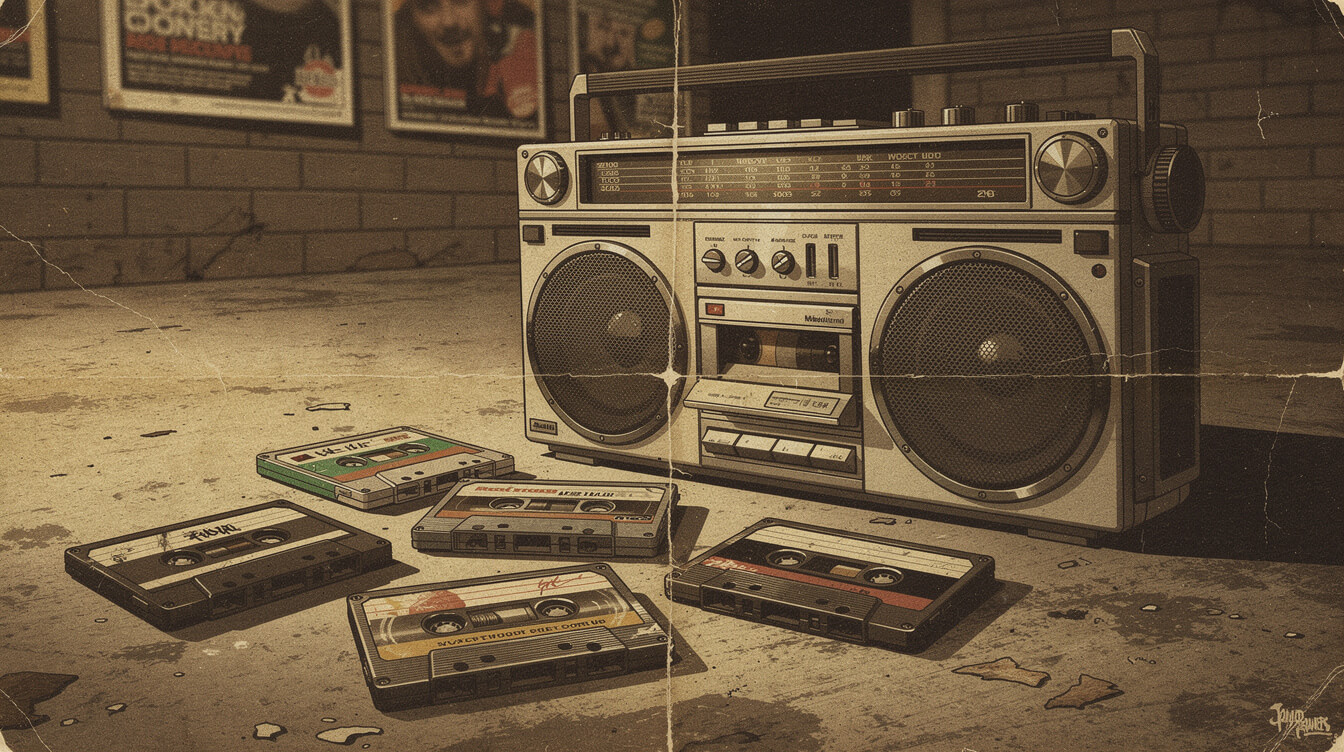
A #22 R&B chart peak doesn’t sound massive by today’s streaming-era numbers, but context matters here: in 1988, there was no SoundScan tracking real sales data, no algorithmic playlist push, no viral-clip economy accelerating a record overnight. A crossover-averse, independent-label rap single cracking the R&B chart’s top 25 off pure radio spins and mixtape-circuit circulation was a genuine underground-to-mainstream breakthrough — and it happened on Sermon and Smith’s own terms, with a sound that flatly refused to soften itself for radio programmers.
The song’s real staying power shows up better in retrospective lists than in contemporary chart math. VH1 ranking it #74 among the 100 greatest hip-hop songs of all time — decades after release, judged against everything that came after — is the more honest measure of its impact. So is the fact that Wikipedia’s own entry flags it as “widely considered a hip hop classic,” specifically name-checking Snoop Dogg and LL Cool J among the rappers who’ve quoted its lyrics in their own records in the years since. When two artists from entirely different regions and eras of the genre are still borrowing your phrasing, that’s not a one-hit chart blip — that’s a permanent fixture in the culture’s vocabulary.
The single also functions as the blueprint for EPMD’s entire catalog philosophy going forward. The group built “Business” into their branding across seven studio albums — Unfinished Business, Business as Usual, Business Never Personal, Back in Business, Out of Business, and We Mean Business — and this single, alongside the title track, is where that brand voice first landed on wax: flexing through composure instead of volume, treating rap like a trade you mastered rather than a spectacle you performed.
Why “You Gots to Chill” Still Matters

Rap in 1988 was getting louder, faster, and more maximalist by the month — Public Enemy was assembling the Bomb Squad’s dense wall-of-noise production, and the West Coast was mere months from Straight Outta Compton reshaping the genre’s center of gravity entirely. EPMD went the opposite direction. Sermon and Smith’s flows are almost conversational, laid back on the beat instead of chasing it, unhurried in a way that felt almost defiant next to their contemporaries. That restraint is exactly why the record aged so well — it never chased a passing trend, so it never sounded dated by one once that trend passed.
That’s also why the track kept getting sampled and referenced for decades after release, well past the point where most late-’80s rap singles had faded into crate-digger trivia. Jay-Z pulled from it twice in the same year — on “Get Your Mind Right Mami” (featuring Memphis Bleek, Snoop Dogg, and Rell) and “Change the Game” (featuring Memphis Bleek and Beanie Sigel), both from 2000 — a Brooklyn legend at the height of his commercial run reaching back to a Long Island classic to borrow its DNA. And Redman, the artist EPMD’s own Hit Squad crew helped put on in the first place, interpolated it on 1992’s “Tonight’s Da Night” — the sound passing directly from mentor to protégé, one generation of Long Island hip-hop handing the baton to the next in real time. Even Vanilla Ice recorded a cover version decades later in 2008, which — however you feel about the source — is its own confirmation that the hook had become genre-agnostic shorthand for hip-hop attitude itself.
If you’re building out a golden-age hip-hop wardrobe, this is exactly where the Long Island wing of that era starts. Our EPMD Strictly Business Hoodie puts the album that launched this exact single on your back — same energy Sermon and Smith brought to the booth: understated, but unmistakable once you know what you’re actually looking at.
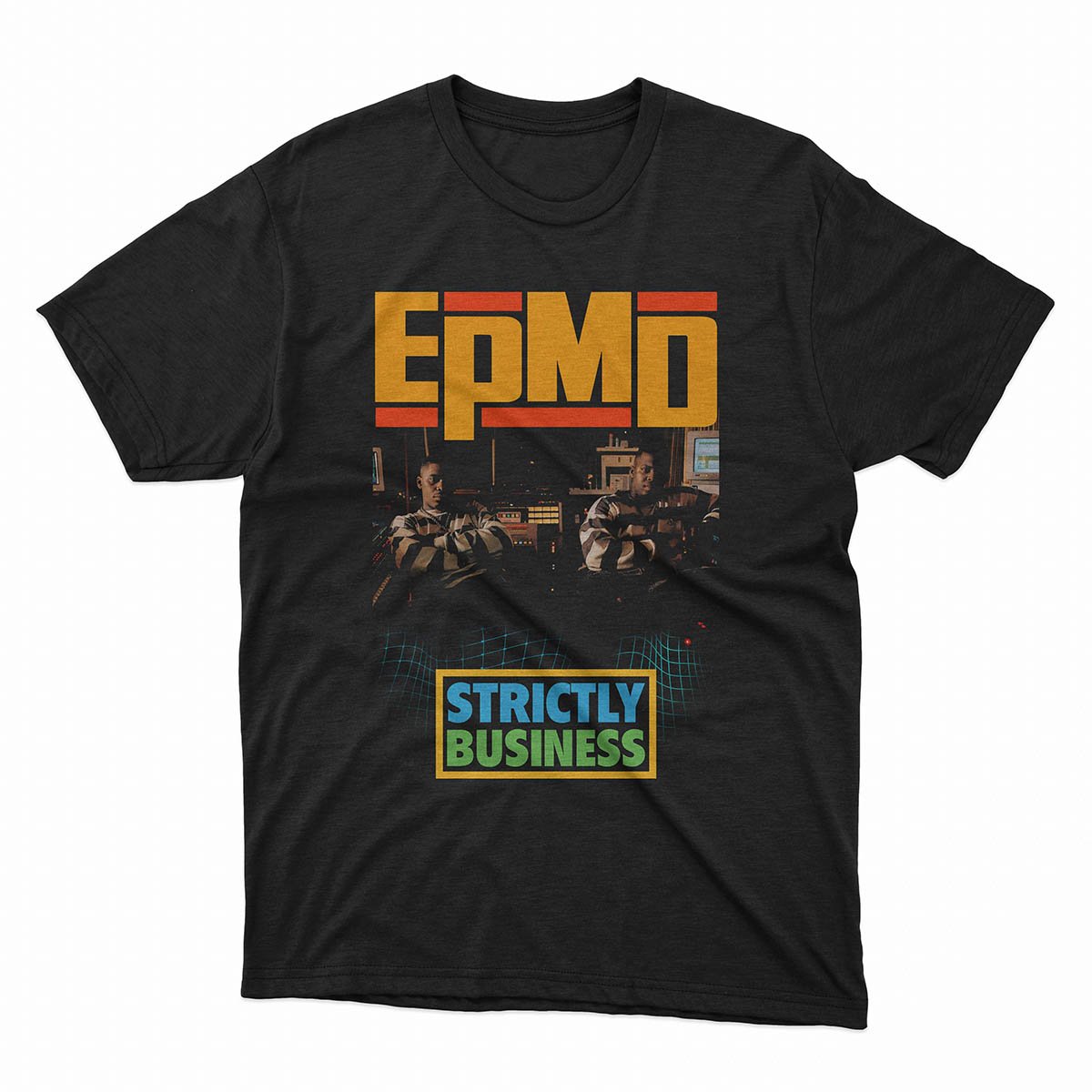
Rep the Album That Started It
The EPMD Strictly Business T-Shirt puts the 1988 debut that gave us “You Gots to Chill” front and center. Classic hip-hop cut, built for heads who know the difference between a trend and a foundation.
How It Compares to EPMD’s Other Golden-Age Peers

Drop “You Gots to Chill” next to its 1988 contemporaries and the contrast sharpens fast. Where Big Daddy Kane and the Juice Crew’s catalog leaned into technical, rapid-fire wordplay built to show off syllable density, EPMD leaned into groove and the space between words — letting a bar breathe instead of stacking rhymes for the sake of it. Where Public Enemy’s Bomb Squad stacked a dozen samples into dense, layered noise designed to overwhelm, EPMD kept theirs legible enough that a casual listener could pick out the Zapp bassline on a single pass. Both approaches are unmistakably golden-age hip-hop — they just prove the era had more than one winning formula running simultaneously, and that commercial success didn’t require picking a lane.
You can hear the same “let the sample breathe” DNA a few years later in Gang Starr’s boom-bap catalog, where DJ Premier’s loops sit in a similarly uncluttered pocket instead of competing with the vocal for attention. And the same forensic sample-breakdown approach we’re using in this piece works just as well applied to Nas’s Illmatic tracklist a few years later — different eras, different production teams, same underlying obsession with knowing exactly what’s baked into the loop and why it was chosen. That’s the throughline across all of golden-age hip-hop: the artists who lasted were the ones who understood their source material as deeply as their own pen game.
Long Island itself deserves more credit in this conversation than it usually gets. Public Enemy came out of Long Island too, and so did De La Soul a year later — but where those two acts pushed the genre toward political density and eclectic sample collage respectively, EPMD carved out the region’s third lane: stripped-down, funk-heavy, unbothered menace. “You Gots to Chill” is arguably the purest distillation of that specific Long Island sound on wax.
It’s also worth noting how the group’s later Hit Squad crew — the loose collective EPMD built around themselves that eventually included Redman, Das EFX, and K-Solo — inherited this exact sonic DNA before mutating it into their own directions. Redman’s early records especially carry the same laid-back menace over funk-forward loops that “You Gots to Chill” pioneered, which is part of why his 1992 interpolation of the track feels less like a tribute and more like a direct genetic continuation. You can trace an entire regional sound’s lineage backward from Redman’s catalog straight to this one 1988 single.
Frequently Asked Questions
What album is “You Gots to Chill” from?
Strictly Business, EPMD’s 1988 debut studio album, released on Fresh/Sleeping Bag Records. It was the second single pulled from the project, following the title track.
What songs does “You Gots to Chill” sample?
Zapp’s “More Bounce to the Ounce,” Kool & the Gang’s “Jungle Boogie,” Juice’s “Catch a Groove,” John Davis and the Monster Orchestra’s “I Can’t Stop,” Eric B. & Rakim’s “I Know You Got Soul,” and EPMD’s own “Strictly Business” title track.
Who produced “You Gots to Chill”?
EPMD produced it themselves — Erick Sermon and Parrish “PMD” Smith wrote and produced the entire track with no outside production credits, which was unusual for a debut single in 1988, when most new acts leaned on an established in-house producer.
How did “You Gots to Chill” chart, and how is it remembered today?
It reached #22 on the Billboard Hot R&B/Hip-Hop Songs chart on release and was later ranked #74 on VH1’s 100 Greatest Hip Hop Songs — a retrospective honor that speaks to its lasting cultural footprint more than the original chart number does.
Who has sampled or referenced “You Gots to Chill” since 1988?
Jay-Z sampled it twice in 2000 (on “Get Your Mind Right Mami” and “Change the Game”), Redman interpolated it on 1992’s “Tonight’s Da Night,” and both Snoop Dogg and LL Cool J have quoted its lyrics in their own records over the years. Vanilla Ice also recorded a cover version in 2008.
Final Thoughts
“EPMD You Gots to Chill” is proof that hip-hop’s loudest statements aren’t always the ones that get shouted. Sermon and Smith built a career — and an eventual seven-album “Business” franchise — on the idea that confidence doesn’t need volume to register. Three decades on, the Zapp bassline still bounces, the Jungle Boogie scratch still stutters right on cue, and the hook still gets quoted by rappers who weren’t alive when it first dropped. That’s not nostalgia keeping this record alive. That’s a foundation the genre kept building on, whether it fully realized it or not.
Golden-Age Breakdowns, Delivered Weekly
Sample lineage, sneaker drops, and new gear — straight from the crew that lives this culture. No spam, just heat.

🎧 Never Miss a Drop
Exclusive product releases, hip-hop deep dives, and member-only discounts. Straight to your inbox.
Free forever. No spam. Unsubscribe anytime.
Get the Culture, Delivered
Deep dives into hip-hop history, exclusive product drops, and discounts sent straight to your inbox. No spam, just culture.
Join 2,000+ hip-hop heads already in the loop. Unsubscribe anytime.