Gang Starr’s Moment of Truth: The Album That Defined an Era
March 31, 1998. The same era that gave us Jay-Z going platinum, Puff Daddy owning the charts, and the East Coast picking up its pieces after the losses of Biggie and Tupac — Gang Starr dropped their fifth album, Moment of Truth, and reminded every head who was paying attention what hip-hop was built on. Not hype. Not glamour. Accountability. Complexity. Truth spoken plainly over the most surgical production in the game. This wasn’t just an album. It was a reckoning — and 28 years later, it still hits like the first time.
The Four-Year Gap and What It Built

Between Hard to Earn (1994) and Moment of Truth (1998), Gang Starr went quiet for four years. That silence looked like stasis from the outside. It was anything but.
DJ Premier used the gap to become the most sought-after producer in New York. He laced Jay-Z’s In My Lifetime, Vol. 1 with the kind of soulful grit that made Jay sound like a philosopher. He produced “Nas Is Like” and contributed to It Was Written. He worked with Biggie. He worked with Nas’s Firm project. By the time 1997 rolled around, Premier had effectively co-produced the sound of New York’s post-Death-Row renaissance — that choppy, dusty, sample-heavy boom bap that made you feel the weight of the city in every bar.
Guru, meanwhile, was finding the intersection between hip-hop and jazz with his Jazzmatazz series. Vol. 2: The New Reality (1995) featured Donald Byrd, MC Solaar, and Chaka Khan. He was expanding the culture’s vocabulary while keeping both feet in the street.
When they came back together, they weren’t the same duo that made Daily Operation. They were sharper. More refined. And operating under a set of real-life pressures that made the music hit different.
Premier has spoken about tension during the sessions — Guru’s drinking habits created friction, and at one point Premier stepped away from the project entirely. They reconciled. They finished it. And that weight, that almost-breakup energy, is embedded in every groove on the record. You can hear it in the urgency. In the specificity of Guru’s verse construction. In the way Premier’s beats feel simultaneously lush and dangerous.
What Was at Stake: Guru’s Legal Troubles and the Album’s Soul

The album’s thematic core wasn’t manufactured for impact. Guru (Keith Elam) was facing a gun charge that carried the potential of a five-year prison sentence. That’s not a lyrical concept. That’s a man writing from the edge of losing everything.
You can hear it in the title track. “When you’re convinced you’ve got to have something, when your patience gets thin and you just gotta win” — Guru isn’t rapping about street archetypes. He’s rapping about himself. About the moment you decide who you actually are when the stakes are real. The title track doesn’t flex. It interrogates.
This is what separated Gang Starr from almost every peer of their era. Where other crews were building myths — the invincibility of Wu-Tang, the opulence of Puff’s world, the menace of the West Coast — Guru was dismantling myth. His verses on Moment of Truth are confessional without being weak, philosophical without being preachy. “Robbin Hood Theory” takes a political science lens to street economics. “Work” breaks down the psychology of the hustle without glorifying it. These are complex human documents dressed in the best production of 1998.
The album debuted at #1 on the Top R&B/Hip-Hop Albums chart and peaked at #6 on the Billboard 200. In its first week, it moved 97,000 copies — remarkable for a group that had never chased radio. The RIAA certified it Gold on May 7, 1998, just five weeks after release. The Source gave it four and a half mics. NME gave it 8/10. Pitchfork and Spin both ranked it among the top 20 albums of 1998. The critical consensus was unanimous: this was Gang Starr at their absolute peak.
DJ Premier’s Production on Moment of Truth — A Masterclass
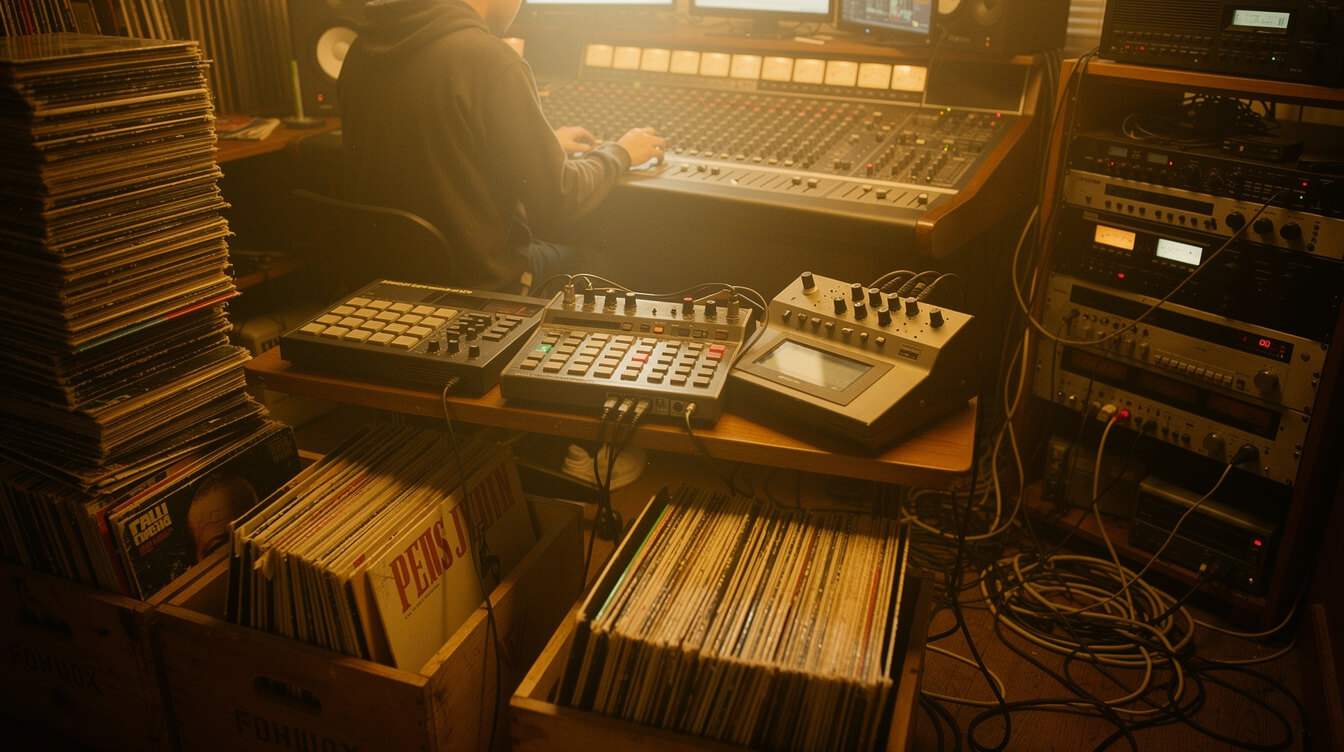
If you want to understand why DJ Premier is considered one of the greatest hip-hop producers in history, Moment of Truth is the case study. Every track demonstrates his signature techniques at maximum precision.
Premier’s approach starts with the sample. He doesn’t just chop a loop — he finds the one bar, the one moment buried in a jazz or soul record, that contains the emotional frequency he needs. Then he pitches it, loops it, and layers it with a kick and snare combination that feels physically heavy. There’s no polish in the conventional sense. The records sound dusty because Premo wants them to sound dusty. The grain is intentional. The crackle is part of the composition.
“You Know My Steez” opens the album with a sample flipped over a head-nodding groove — the kind of track that announces the vibe before Guru says a word. The track became their second Billboard Hot 100 appearance, peaking at #76, and reaching #5 on the Hot Rap Singles chart. But chart position wasn’t the point. The point was that first 16 bars, where Guru establishes the entire album’s persona: precise, uncompromising, already legendary in his own mind without needing your validation.
“Above the Clouds,” featuring Inspectah Deck of Wu-Tang Clan, is arguably the single greatest boom bap track ever recorded. Deck’s verse — “I bring forth the world of lights / absorbing knowledge from the scholar who was wiser” — arrives on top of a Premier beat that sounds like it was extracted directly from a Harlem jazz club in 1969 and transplanted into 1998 Brooklyn. The interplay between two of hip-hop’s most technically gifted MCs over one of Premier’s most introspective beats is one of those rare moments where the genre becomes literature.
Premier also used audio samples throughout the album — snippets of dialogue, movie clips, the kind of contextual texture that makes an album feel like a world rather than a collection of tracks. “The Militia” features Freddie Foxxx and Big Shug alongside Guru, and its production is pure menace — a track that sounds like it was born in the back of a black sedan moving through Brooklyn at 2 AM.
“Betrayal,” featuring Scarface, is the deepest cut on the record. Two of hip-hop’s most thoughtful MCs, one from Brooklyn and one from Houston, meditating on loyalty and the cost of getting it wrong. Scarface’s verse — arriving late in the album, well past the point where most casual listeners have dropped off — is the kind of scene-stealing performance that defines a supporting role. The production gives both rappers space. Premo’s touch here is subtle: the sample breathes, the drums land like conversation pauses. It’s one of the best-produced hip-hop tracks of the decade.
The Guest Features That Elevated the Album
Moment of Truth assembled a guest list that reads like a who’s-who of underground credibility circa 1998. Each feature was chosen with precision — no celebrity cameos, no chase-the-chart moves. Every collaborator added something to the album’s argument.
Inspectah Deck (Wu-Tang Clan) on “Above the Clouds”: The Wu-Tang connection was already in the culture’s DNA — Premier had produced for Wu affiliates, and Gang Starr occupied the same philosophical space in New York hip-hop. Deck, one of the most underrated MCs in Wu-Tang’s roster (his Daytona 500 verse, anyone?), arrives on “Above the Clouds” with his most iconic verse outside of Wu’s own catalog. The chemistry with Guru is seamless — different styles, same standards.
M.O.P. on “B.I. vs Friendship”: Lil Fame and Billy Danze brought everything M.O.P. brings — raw energy, vocal thunder, the kind of presence that makes speakers shake. Their style contrasts sharply with Guru’s controlled, measured delivery, and that contrast works. It’s a track that could have felt off-balance but instead creates a productive tension.
Scarface on “Betrayal”: Houston and Brooklyn don’t always make sense together, but Scarface’s philosophical depth matched Guru’s frequency better than most New York rappers could. Scarface had been building his own legacy through Geto Boys and solo albums, and his verse on “Betrayal” is proof that real lyricists transcend regional boundaries.
K-Ci & JoJo on “Royalty”: This was the one left-field choice on the album — an R&B vocal duo on a Gang Starr record? But it works. “Royalty” peaked at #2 on the Hot R&B/Hip-Hop Songs chart, becoming one of the album’s biggest commercial moments while staying true to the record’s emotional undertone.
Freddie Foxxx on “The Militia”: Bumpy Knuckles — one of the most physically imposing voices in New York hip-hop — comes in on “The Militia” alongside Big Shug and creates a posse cut that feels like a blockade. This is the album’s most aggressive track, and it serves as evidence that Guru could hold his own in any sonic context Premier created.
For hip-hop heads who appreciate Golden Era collaborations, our De La Soul deep dive covers another group that understood how to build a guest list with cultural intention rather than commercial calculation.
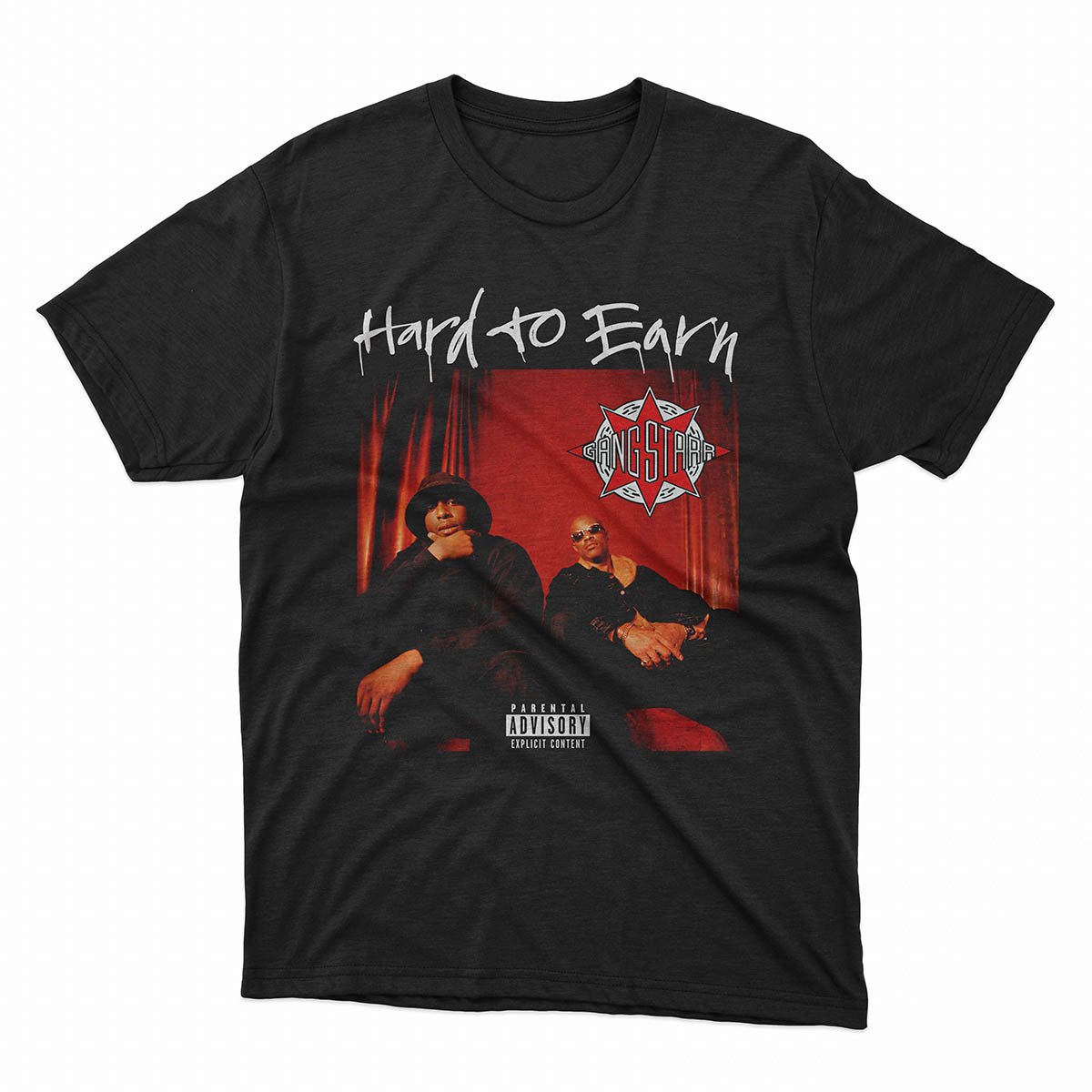
Hard to Earn. The Tee That Wears That
The 1994 album that set the stage for Moment of Truth — Guru’s baritone, Premo’s chopped soul, real hip-hop doctrine on a premium Bella Canvas tee. For heads who actually know the catalog.
The Legacy: Why Moment of Truth Still Matters in 2026

Guru (Keith Elam) passed away on April 19, 2010, from cancer. He was 48. In the years since, Moment of Truth has only grown in stature — the way great art tends to when time provides the distance to see it clearly.
Listen to “Moment of Truth” the title track today and it sounds like prophecy. “When you’re faced with the facts and the truth is revealed / you gotta make your moves when the time is real.” That’s not a rap lyric. That’s a life instruction — applicable to every moment of genuine difficulty, every choice point where the easy route and the right route diverge.
The album’s title track was featured in the 2011 Matthew McConaughey film The Lincoln Lawyer — a Hollywood recognition of the song’s emotional precision that felt entirely appropriate. The song works as a film score because it’s cinematic in the best sense: it tells a complete story in four minutes, and that story lands differently depending on where you are in your own life when you hear it.
For younger hip-hop heads discovering Gang Starr through YouTube rabbit holes or recommendations from older cousins, Moment of Truth is often the entry point that locks them in. It’s not the easiest Gang Starr album — it’s long, at 78 minutes and 20 tracks, and it demands attention in a streaming era that conditions passive listening. But that demand is the point. This album doesn’t work as background music. It works as engagement.
DJ Premier continues to be one of the most active and sought-after producers in hip-hop. His influence runs through three decades of production — you can hear his DNA in current boom bap artists, in the way producers approach sample manipulation, in the standard that any East Coast producer who came up watching his process has to meet. Moment of Truth is the document that contains his fully realized methodology.
For cultural context on the Jay-Z era that Gang Starr’s Moment of Truth was contemporaneous with, our Jay-Z Blueprint retrospective covers how different branches of New York hip-hop were defining themselves in 1997-2001.
If you want to rep Gang Starr’s legacy the right way, our Gang Starr Hard to Earn T-Shirt pays tribute to the 1994 album that set the stage for this masterpiece — Guru’s baritone, Premo’s production, on a premium Bella Canvas tee built for people who actually know.
Frequently Asked Questions About Gang Starr’s Moment of Truth
When was Gang Starr’s Moment of Truth released?
Moment of Truth was released on March 31, 1998. It was Gang Starr’s fifth studio album, arriving four years after Hard to Earn (1994).
What label was Moment of Truth on?
The album was released on Noo Trybe Records and Virgin Records. Gang Starr had previously been on Chrysalis/EMI for their earlier albums.
How did Moment of Truth perform on the charts?
The album debuted at #1 on the Top R&B/Hip-Hop Albums chart and peaked at #6 on the Billboard 200. It sold 97,000 copies in its first week. The RIAA certified it Gold on May 7, 1998. The lead single “You Know My Steez” peaked at #5 on the Hot Rap Singles chart and #76 on the Billboard Hot 100.
Who produced Moment of Truth?
All production on the album was handled by DJ Premier (Christopher Martin). He also contributed vocally on the closing track “In Memory Of…” alongside Guru. Premier recorded the album at D&D Studios in New York City.
What are the best tracks on Moment of Truth?
The most celebrated tracks include “You Know My Steez” (the lead single), “Above the Clouds” featuring Inspectah Deck, the title track “Moment of Truth,” “Betrayal” featuring Scarface, and “The Militia” featuring Freddie Foxxx and Big Shug. “Robbin Hood Theory” is also widely cited as one of Guru’s finest lyrical performances.
Why is Moment of Truth considered Gang Starr’s best album?
The album is widely regarded as their magnum opus because it represents the full realization of everything Gang Starr had been building toward — DJ Premier’s production at its most complex and soulful, Guru’s lyricism at its most personal and philosophically rigorous, and a guest list assembled for quality rather than commercial appeal. The Source gave it 4.5 mics. Pitchfork and Spin both ranked it among the best albums of 1998.
Is Moment of Truth on streaming platforms?
Yes, Moment of Truth is available on Spotify, Apple Music, and other major streaming platforms. Given its 20-track length (78 minutes total), it’s best experienced as a complete listen rather than individual tracks pulled from a playlist.
What happened to Guru?
Guru (Keith Elam) passed away on April 19, 2010, from cancer at age 48. His passing cemented Moment of Truth as an essential document in hip-hop history — a final, complete statement from one of the culture’s most thoughtful MCs, recorded at the peak of his powers.
The Verdict: 28 Years Later, Still No One Doing It Like This
There’s a specific feeling you get when you put on Moment of Truth in 2026 — something between time travel and recognition. The music is unmistakably 1998 in its sonics: those boom bap drum patterns, those dusty jazz samples, that particular way Premier chops a break that no one else could ever quite replicate. And simultaneously, the themes are as urgent as anything in contemporary hip-hop. Accountability. Loyalty. The cost of abandoning your principles. What you leave behind when you’re gone.
Hip-hop has always been a genre about the present — what’s happening right now, in this city, to these specific people, in this specific moment. Moment of Truth somehow transcended that limitation. It recorded a specific moment — Guru’s legal troubles, Premier’s four-year production evolution, New York hip-hop finding its footing after 1997 — and made that moment universal.
Play “Above the Clouds” for anyone who’s serious about hip-hop. Watch what happens to their face when Inspectah Deck’s verse arrives. That’s the test. That’s how you know you’re talking to someone who understands what this genre can actually do when it operates at its ceiling.
Twenty-eight years. RIAA Gold. The Source’s 4.5 mics. DJ Premier’s finest production work. Guru’s most personal album. One of hip-hop’s 50 greatest records, by any honest measure.
That’s the moment of truth.
Stay creative — The Custom Creative Team
Keep the Culture Coming
Album retrospectives, artist deep dives, and cultural drops — straight to your inbox. No filler. Just the culture.

🎧 Never Miss a Drop
Exclusive product releases, hip-hop deep dives, and member-only discounts. Straight to your inbox.
Free forever. No spam. Unsubscribe anytime.
Get the Culture, Delivered
Deep dives into hip-hop history, exclusive product drops, and discounts sent straight to your inbox. No spam, just culture.
Join 2,000+ hip-hop heads already in the loop. Unsubscribe anytime.