Big Daddy Kane Songs: The 25 Essential Cuts That Made the Juice Crew’s King Hip-Hop’s Original Wordsmith
Big Daddy Kane songs don’t just occupy hip-hop history — they built the blueprint every technical rapper has been chasing for the last 37 years. When Antonio Hardy dropped the “Raw” 12″ on Cold Chillin’ in 1987, hip-hop had never heard a Brooklyn MC combine that much lyrical velocity with that much stage-suave. Rolling Stone would eventually rank “Ain’t No Half-Steppin'” as the 25th greatest hip-hop song ever recorded. Jay-Z, before he was Jay-Z, was hyping up crowds as Kane’s understudy. And on September 10, 2026, the Juice Crew’s King turns 58 — the perfect moment to walk the full catalog top-to-bottom and rank the 25 essential Big Daddy Kane songs every serious hip-hop head needs to know cold.
This guide is exhaustive by design. We’re pulling from all seven Cold Chillin’, MCA, and Mercury studio albums — from 1988’s Long Live the Kane (RIAA Gold) through 1998’s Veteranz’ Day — plus the essential 12″ singles, soundtrack cuts, and posse-verses that shaped the golden age. Every entry comes with the producer, the sample source, the album, and the year, because half of what makes Kane’s catalog matter is understanding how Marley Marl and Mister Cee were welding it together in Queensbridge while Antonio was writing.

Why Big Daddy Kane Songs Still Set the Technical Rap Bar
Before we run the ranking, the frame: Kane wasn’t just a great rapper of the late ’80s. Alongside Rakim’s mystical, syllable-drenched precision and Kool G Rap’s grimy street-noir density, Kane occupied the third pillar of the Golden Age’s technical triumvirate — the one who fused unmatched rhyme-scheme complexity with actual showmanship. He wore custom double-breasted suits and gold four-finger rings on stage. He choreographed his shows with Mister Cee cutting behind him. He recorded the fastest, tightest breath-controlled bars in hip-hop while suffering from asthma — a physiological receipt that most modern MCs still can’t top on a good day.
The stage name itself came from stitching David Carradine’s Caine (from the 1972 Kung Fu TV series) with Vincent Price’s “Big Daddy” character from the 1963 film Beach Party. The backronym “King Asiatic Nobody’s Equal” got attached later. Kane co-wrote lyrics for Juice Crew brother Biz Markie starting in 1984, signed to Cold Chillin’ in 1987, and released two RIAA-Gold albums before he hit 22 years old. That’s the context. Now the songs.
Big Daddy Kane Songs #25–#21: The Deep-Catalog Cuts That Prove the Range
#25. “Lyrical Gymnastics” (1994, Daddy’s Home) — By his sixth album on MCA, Kane was fighting an industry that had moved on to Wu-Tang, Nas, and Biggie. “Lyrical Gymnastics” is the receipt that his pen never dulled. The rhyme schemes are still fractally dense and the flow still surgical — this is a 26-year-old veteran reminding the class of ’94 what “practice” actually looks like.
#24. “Word to the Mother (Land)” (1988, Long Live the Kane) — The deep-album conscious cut. Kane pivots away from braggadocio into Black empowerment and community reflection, proving on his debut LP that the range was always there. It’s the DNA thread that connects him back to KRS-One and forward to Talib Kweli.
#23. “Nuff Respect” (1992, Juice soundtrack) — Produced by Easy Mo Bee for the Ernest Dickerson film. Kane at his most confident post-Prince of Darkness, riding Mo Bee’s cinematic drum work with the kind of effortless offhand flexes that most rappers spend a career chasing. A remix later showed up on Looks Like a Job For…, but the Juice OST version is the definitive.
#22. “Groove with It” (1992, Prince of Darkness) — Kane’s most underrated crossover attempt. #24 on the R&B chart, #2 on the Rap chart. Peep the pocket he sits in — this is a boom-bap MC swinging over an R&B tempo without ever losing the aggression.
#21. “How U Get a Record Deal?” (1993, Looks Like a Job For…) — Kane sneering at the industry after seeing the label game grind him down. The bars carry a weariness that hits harder in 2026 than it did in ’93.
Big Daddy Kane Songs #20–#16: The Cold Chillin’ Foundation Years
This tier is where Kane went from Juice Crew utility player to the label’s flagship. Marley Marl produced most of it. Every drum sits inside Queensbridge’s signature SP-1200 crunch. If you want to hear the actual architecture of golden-age Brooklyn rap being assembled in real time, start here.
#20. “Something Funky” (1987, non-album 12″) — Marley Marl produces Kane’s second-ever 12″, released before Long Live the Kane even dropped. Crisp drums, catchy soul loop, and a young Antonio Hardy already showing pocket control most veterans would kill for. Historically indispensable.
#19. “Mortal Combat” (1989, It’s a Big Daddy Thing) — Kane produced this one himself. Bristling drums, cuts sharp as razors, and a battle-rap chassis that channels the same brutalist energy as “Raw” and “Set It Off.” No hook, no crossover concession — a lyrical workout for heads who value craft over radio play.
#18. “Wrath of Kane” (1989, It’s a Big Daddy Thing) — Marley Marl production. The battle-rap manifesto that Black Thought would later echo on The Roots’ “Boom!” when he channeled the vocal blueprints of both Kane and Kool G Rap. If you’ve ever wondered where golden-age hip-hop’s operatic villain-energy was engineered, it’s on this three-minute cut.
#17. “Another Victory” (1989, It’s a Big Daddy Thing) — Three verses of tightly-woven social commentary. Kane walks through the drug trade’s damage on Black communities in verse one, racial profiling in his Volvo in verse two, and hip-hop unity in verse three (name-checking LL, Public Enemy, and BDP). It’s the closest Kane came to a full-scale conscious statement on wax.
#16. “It’s Hard Being the Kane” (1990, Taste of Chocolate) — A sharp return-to-form after Taste of Chocolate‘s R&B detours. Grimy drums, sparse melodic accents, and Kane bar-for-bar reminding you he can still turn any track into a lyrical clinic when he wants to.
Big Daddy Kane Songs #15–#11: The Peak-Era Precision
These five sit in the tier where Kane wasn’t just a great MC — he was the template. Every rapper you love who prizes internal-rhyme complexity and stage-command owes something to this stretch.
#15. “Rap Summary (Lean on Me)” (1989, Lean on Me soundtrack + It’s a Big Daddy Thing) — Kane’s soundtrack breakthrough. Peaked at #9 on the Hot Rap Songs chart. The Bill Withers sample flip is the kind of thing you can only pull off when your delivery has the melodic authority to sit with a soul standard.
#14. “Cause I Can Do It Right” (1990, Taste of Chocolate) — #4 on the Rap chart, #22 R&B. Kane in playboy mode without losing the technical edge. This is the record where the “Smooth Operator” persona fully calcified into a brand.
#13. “I Get the Job Done” (1990, It’s a Big Daddy Thing) — Teddy Riley on production. Kane over new-jack-swing drums, and it works because his phrasing is elastic enough to bend around the tempo. #9 on the Rap chart. If you want to hear early-’90s hip-hop and R&B being welded together in real time, this cut is a case study.
#12. “Young, Gifted and Black” (1989, It’s a Big Daddy Thing) — Marley Marl flips the Nina Simone anthem into a jazz-tinged, mid-tempo meditation. Kane pivots between reflective wisdom and razor-sharp punchlines without dropping tension. The bar for balancing conscious content and technical bravado — set here.
#11. “Warm It Up, Kane” (1989, It’s a Big Daddy Thing B-side) — The B-side that became a career signature. Where “Smooth Operator” leans charisma, “Warm It Up, Kane” flips the coin into pure rapid-fire lyrical assault. This is the record that turned every Kane concert into a moment — the “warm it up, Kane, ’cause I’m about to perform” call has been sampled and interpolated by everyone from Sean “Puffy” Combs to Rick Ross.
Big Daddy Kane Songs #10–#6: The Absolute Peak-Era Immortals
Now we’re in the tier where every entry is a foundational text. Any modern MC who prizes lyrical craft has heard these — even if they don’t know they’ve heard these.
#10. “All of Me” with Barry White (1991, Taste of Chocolate) — #14 on the R&B chart. Kane trading verses with the deepest baritone in soul music. It’s the record that let mainstream Black radio understand what hip-hop could sound like when it wasn’t fighting the R&B lineage — it was continuing it. A lineage cut worth studying.
#9. “Very Special” featuring DJ Spinderella (1993, Looks Like a Job For…) — #9 on the Rap chart, #23 R&B, #31 pop. Kane’s biggest crossover hit. Yes, it leans radio-friendly. Yes, purists roll their eyes. But listen with 2026 ears and you’ll hear a masterclass in a technical MC voluntarily dialing down the density to serve a song — a discipline Rakim and Kool G Rap never really cultivated.
#8. “Long Live the Kane” (1988, title track, Long Live the Kane) — Marley Marl production. The Meters plus James Brown, welded together into a chaotic-but-calculated funk collage. Kane opens the album already in overdrive: no ease-in, no build. The mission statement. If your rap-lineage bookshelf is missing this album opener, your bookshelf is broken. To sit alongside it, cop the definitive Biz Markie – Goin’ Off T-Shirt — Kane co-wrote lyrics for that album while making his own, and repping the Juice Crew’s other 1988 landmark is the most on-brand golden-age move you can make.
#7. “The Symphony” (1988, Marley Marl’s In Control, Volume 1) — Technically a Marley Marl posse cut, but Kane’s opening verse is one of the ten most-quoted verses in golden-age hip-hop. Alongside Craig G, Masta Ace, and Kool G Rap, this is the posse-cut format at its historical apex. Kane’s verse alone is worth studying frame-by-frame for phrasing.
#6. “Raw” (original, 1987, Colors soundtrack / Long Live the Kane) — Kane’s debut 12″. Kool G Rap features. Marley Marl production. UK singles chart #88. This is the record that made Cold Chillin’ realize what they had signed. The James Brown sample chops, the drum programming, the way Kane phrases “I’m the R-A-W” like a threat — this is patient zero for the entire Brooklyn-Queens golden-age lyrical infection.
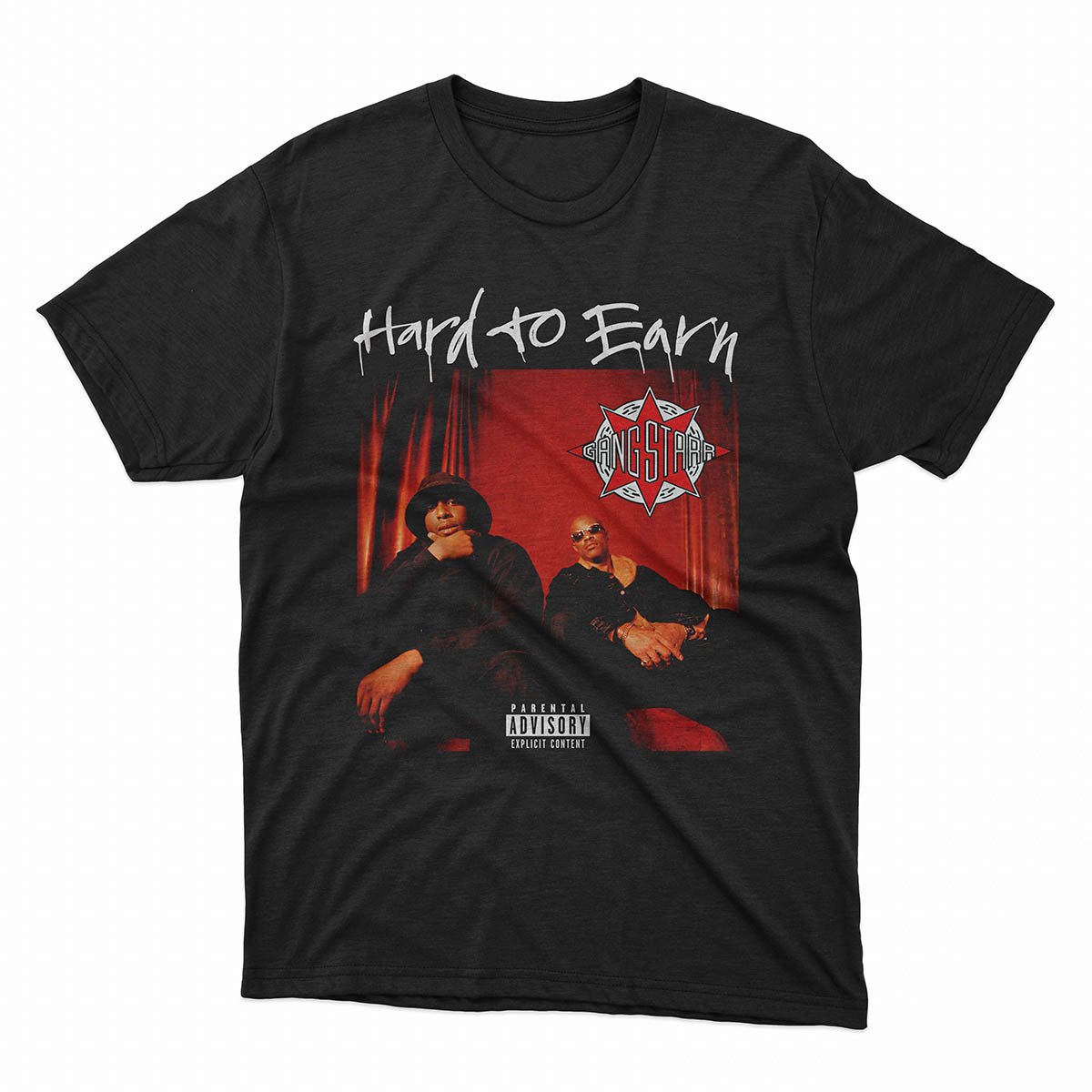
Rep the Brooklyn Golden-Age Lineage
Kane, Guru, Premo — same city, same 1988–94 era, same reverence for the bar. Our Gang Starr Hard to Earn tee is heavyweight cotton, screen-printed with the album cover art, made for heads who know exactly why this lineage matters.
Big Daddy Kane Songs #5–#1: The Untouchable Top Tier

The five best big daddy kane songs ever recorded. If you’re new to Kane, start here and work backwards.
#5. “Wrath of Kane (live at the Apollo)” (1989) — The studio version sits at #18 on this list. But the live Apollo capture is a document worth studying in its own right — hip-hop performance culture being invented on stage in real time. Kane’s ability to reproduce studio-caliber breath control in a 3,000-seat theater is why so many modern rappers still can’t tour without ProTools running. If you want to understand the physical mechanics of golden-age MCing, this recording is your textbook.
#4. “Raw (Remix)” (1988, Long Live the Kane) — The remix stripped Kool G Rap out of the original and put Kane fully solo. Marley Marl chopped the James Brown sample even leaner. The result is one of the earliest, purest statements of Kane’s lyrical dominance ever pressed to wax. This is the cut that pushed Kane from respected Juice Crew utility player to full-blown Cold Chillin’ headliner. Everything downstream — the tours, the Bo$$ signings on Def Jam, the Jay-Z mentorship — starts here.
#3. “Smooth Operator” (1989, It’s a Big Daddy Thing) — Lead single. Sampled the Mary Jane Girls’ “All Night Long” bassline. #1 on the Rap chart, #11 R&B, #65 UK. This is the Kane record most non-hip-hop-heads know, and it deserves its ubiquity: charismatic without being soft, technically dense without being show-offy, and threaded with a subtle vocal nod to Rakim that plays into the competitive tension between the two era-defining MCs. This is where “Big Daddy Kane” the persona and Antonio Hardy the writer fully fused into one thing.
#2. “Ain’t No Half-Steppin'” (1988, Long Live the Kane) — Rolling Stone‘s #25 greatest hip-hop song ever recorded. Lead single from the debut LP. Marley Marl produced, sampling The Emotions’ “Blind Alley,” ESG’s “UFO,” and Heatwave’s “Ain’t No Half-Steppin’.” The bassline alone rewrote what a hip-hop song could sound like when the low-end was allowed to breathe. Kane’s phrasing across the track is a case study — no wasted syllables, no crash-out flexes, just a mid-tempo strut with the confidence of an MC who already knows he has the upper hand. If you play one Big Daddy Kane song for a Kane-curious listener, play this.
#1. “Set It Off” (1988, Long Live the Kane) — Marley Marl and the 45 King co-produced. Grady Tate’s “Be Black Baby” plus a James Brown guitar lick. And the historical wrinkle that changes everything: Biz Markie was originally offered the beat and passed on it, thinking it was too slow. Kane took it, had the tempo pushed up, and delivered what Kane himself has called his “go button” — the record that resets the energy in any room, three decades in. Every internal-rhyme technician from Big L to Eminem to Kendrick has this in their bloodstream whether they know it or not. It’s the definitive Big Daddy Kane song and one of the ten most important technical rap records ever recorded. Full stop.
The Guest Verses: Big Daddy Kane Songs That Aren’t Actually His
Cataloging Kane without his guest verses is like cataloging Ghostface without the Wu-Tang cameos — you’d miss half the essential material. The must-hear features:
- “The Symphony” (1988, Marley Marl, In Control Vol. 1) — With Craig G, Masta Ace, and Kool G Rap. Kane’s opening verse is one of the most-quoted golden-age verses ever recorded.
- “The Symphony Pt. II” (1991, Marley Marl, In Control Vol. 2) — The sequel posse cut. Kane returned with Kool G Rap and Masta Ace, this time joined by Ice-T. A time capsule of the Juice Crew’s peak.
- “Show and Prove” (1994, Kane’s Daddy’s Home, but a Kane-hosted posse cut) — Kane hosts Sauce Money, Ol’ Dirty Bastard, Scoob Lover, and, in one of the most historically important cameos in hip-hop, a hungry, pre-Reasonable Doubt Jay-Z. If you want to hear the moment Kane’s Jay-Z mentorship physically manifests on record, this is it.
- “Wu-Tang: 7th Chamber Part II” (1993, Wu-Tang Clan, Enter the Wu-Tang) — Kane cameo, courtesy of RZA’s reverence for the Cold Chillin’ generation.
- “Nas Is Like” remix / Nas cameos — Kane appeared on multiple Nas-adjacent records in the late ’90s as Queensbridge closed ranks around its own lineage.
For a full producer-and-sample tour of the same era Kane occupied, our deep-dive on Guru and the Gang Starr Foundation covers the parallel Brooklyn boom-bap track that DJ Premier was building at the same moment.
Frequently Asked Questions About Big Daddy Kane Songs
What is Big Daddy Kane’s most popular song?
Commercially, “Smooth Operator” (1989) is his highest-charting solo hit — #1 on the Hot Rap Songs chart. Critically, “Ain’t No Half-Steppin'” (1988) is the consensus classic — Rolling Stone ranked it 25th on their 50 Greatest Hip-Hop Songs of All Time. Among heads, “Set It Off” tends to win the “best” argument because of its raw technical demolition. Take your pick.
Who produced most of Big Daddy Kane’s early songs?
Marley Marl produced the vast majority of Kane’s Cold Chillin’ catalog from 1987 through 1991 — including “Raw,” “Ain’t No Half-Steppin’,” “Set It Off,” “Long Live the Kane,” “Warm It Up, Kane,” “Wrath of Kane,” “Young, Gifted and Black,” and “Smooth Operator.” Kane self-produced tracks like “Mortal Combat.” Later work brought in Teddy Riley (“I Get the Job Done”), Easy Mo Bee (“Nuff Respect”), and others.
How many albums did Big Daddy Kane release?
Seven studio albums: Long Live the Kane (1988, Gold), It’s a Big Daddy Thing (1989, Gold), Taste of Chocolate (1990), Prince of Darkness (1991), Looks Like a Job For… (1993), Daddy’s Home (1994), and Veteranz’ Day (1998). The first two are both RIAA Gold and both essential.
Did Big Daddy Kane mentor Jay-Z?
Yes. Before Jay-Z was Jay-Z, he served as Kane’s hype-man and understudy on tour. Kane also gave Jay early guest slots — including on “Show and Prove” from Daddy’s Home (1994), one of the earliest widely-heard Jay-Z verses. The mentorship is one of the most consequential lineage connections in hip-hop history.
What was Big Daddy Kane’s role in the Juice Crew?
Kane was one of the Juice Crew’s frontline solo stars alongside Kool G Rap, Roxanne Shanté, MC Shan, Biz Markie, and Masta Ace. Marley Marl produced the collective from his Queensbridge apartment. Kane co-wrote lyrics for Biz Markie’s material (including the 1988 landmark Goin’ Off). “The Symphony” (1988) is the definitive Juice Crew posse cut and features Kane’s most-quoted guest verse.
What samples did Big Daddy Kane’s biggest songs use?
Highlights: “Ain’t No Half-Steppin'” flips The Emotions’ “Blind Alley,” ESG’s “UFO,” and Heatwave’s “Ain’t No Half Steppin’.” “Set It Off” pulls from Grady Tate’s “Be Black Baby” and a James Brown guitar lick. “Smooth Operator” samples the Mary Jane Girls’ “All Night Long.” “Long Live the Kane” combines The Meters and James Brown. Marley Marl’s crate work is a masterclass in James Brown and 1970s funk/soul flips.
Is Big Daddy Kane still performing?
Yes. Kane turns 58 on September 10, 2026, and continues to tour regularly — often headlining golden-age revue packages alongside peers like KRS-One, Kool Moe Dee, and Slick Rick. His stage-command remains unmatched in the classic-era touring circuit.
Final Thoughts: The Kane Blueprint Is Still the Ceiling
The 25 best Big Daddy Kane songs, taken together, form a document that most rappers spend their entire careers trying to approximate. The technical density, the phrasing control, the willingness to pivot between battle-rap ferocity and soul-inflected charm without breaking character — no other MC of the golden age executed all three at that level. Rakim had the mysticism. Kool G Rap had the noir density. Kane had the completeness.
The catalog rewards deep listening. Start with Long Live the Kane, run through It’s a Big Daddy Thing, and then decide for yourself where the peak sits — because you’ll get a different answer from every serious head you ask. That’s the mark of a discography that actually holds up: the ranking is contested precisely because the material is that dense. Long live the Kane, indeed.
Get the Golden Age in Your Inbox
One artist, one album, one deep-dive per week. Producer credits, sample sources, and cultural context — no filler. Join heads who take the culture seriously.

🎧 Never Miss a Drop
Exclusive product releases, hip-hop deep dives, and member-only discounts. Straight to your inbox.
Free forever. No spam. Unsubscribe anytime.
Get the Culture, Delivered
Deep dives into hip-hop history, exclusive product drops, and discounts sent straight to your inbox. No spam, just culture.
Join 2,000+ hip-hop heads already in the loop. Unsubscribe anytime.