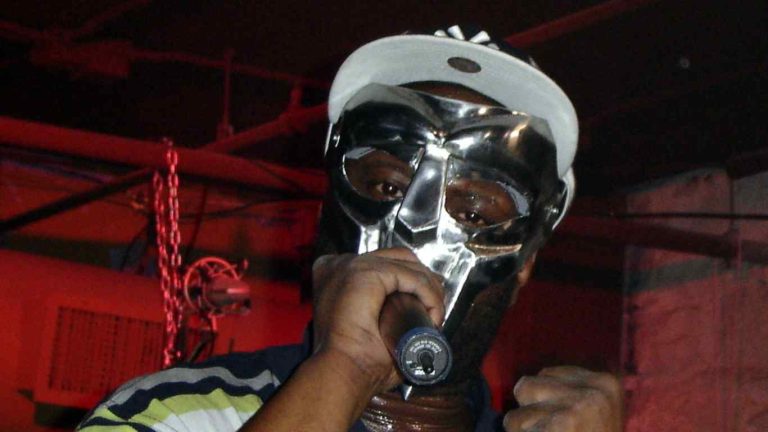
Busta Rhymes Fast Rap, Explained: Breath Control, Dancehall Cadence and the Verses That Proved It
Everybody has a Busta Rhymes moment. For some heads it was 1992, when Q-Tip handed off the mic at the end of “Scenario” and a 19-year-old from Long Island growled his way into hip-hop history. For others it was 2011, watching him steal “Look at Me Now” from two of the biggest stars on the planet. Either way, Busta Rhymes fast rap hits the same nerve: how is a human being saying that many words, that clearly, without passing out?
This is the craft breakdown nobody on page one of Google has bothered to write. We’re going past the YouTube clips and the “fastest rapper ever” hot takes to look at what Busta actually does. That means the breath control, the dancehall cadence he grew up around in a Jamaican household, the verses that built the reputation, and why three decades of speed never turned him into a novelty act.
Busta Rhymes Fast Rap by the Numbers (and Why the Numbers Mislead)
Google’s own “People also ask” box wants a number: how many words per minute can Busta Rhymes rap? Fair question. The problem is that the internet’s answers don’t agree with each other, and most of them don’t show their work.
The Figures Floating Around
Search the “Look at Me Now” verse and you’ll find claims ranging from roughly nine syllables per second to more than twenty, sometimes from the same kind of content-farm site, sometimes with a Guinness World Records name-drop attached and no link to any actual Guinness entry. We couldn’t find a verifiable Guinness record in Busta’s name, so we’re not going to print one. Any page that does should be able to show you the certificate.
Why the spread? Because “how fast” depends on choices nobody discloses:
- What counts as a syllable. Ad-libs, stutters, and the half-swallowed “uh” between phrases can add or subtract a lot from a count.
- Which bars you measure. A peak four-bar burst and an average across a whole verse are completely different numbers. Busta speeds up and slows down inside a single verse on purpose.
- Studio vs. live. The record has punch-ins and stacked vocals. The live version has breaths, crowd call-and-response, and a hype man filling gaps.
The One Benchmark That’s Actually Documented
If you want a hard reference point for chopper speed, it’s Twista, not Busta. Twista’s Wikipedia entry records that in 1992 Guinness World Records recognized him as the fastest English-speaking rapper, at 598 syllables in 55 seconds. That works out to just under 11 syllables per second, sustained for almost a minute. That’s the kind of measured, dated figure you can build an argument on. Most of the Busta numbers online aren’t.
Why Speed Isn’t the Stat That Matters
Here’s the thing the numbers-first crowd misses: Busta was never trying to win a stopwatch contest. Plenty of rappers can technically outpace him on paper. What almost nobody can match is how legible he stays at speed. Every consonant lands and every rhyme is audible. That’s why casual listeners can rap along to “Look at Me Now” (badly), while a lot of genuinely faster chopper verses blur into texture. So the real question isn’t “how fast.” It’s “how does he stay that clear at that speed?” The rest of this piece answers that.
Scenario to Woo-Hah: Where the Speed Started
Busta’s style didn’t come out of nowhere, and it didn’t start as speed. It started as energy, with a voice that commanded the room before it was ever fast.
East Flatbush, Uniondale, and a Name From Chuck D
Trevor Smith Jr. was born in East Flatbush, Brooklyn, on May 20, 1972, to parents who both immigrated from Jamaica. At 12 the family moved out to Uniondale on Long Island, and that’s where the story gets interesting. Long Island was Public Enemy territory. According to the group’s history, Leaders of the New School performed for Public Enemy at a talent show around 1989, and Chuck D handed out stage names on the spot: Charlie Brown got his, and Trevor became Busta Rhymes, after NFL and CFL wide receiver George “Buster” Rhymes. The Bomb Squad then took the group under their wing and spent real time teaching them how to produce.
The Elektra A&R who discovered them, Dante Ross, remembered the early shows this way: “They were performing with one mic, and it was three MCs, not four. Busta also did the beatbox… He was controlling the mic and certainly the star of the show.” The word that matters there is controlling. Before the speed, there was command of the microphone.
“Scenario”: The Posse Cut That Launched a Career
Leaders of the New School dropped A Future Without a Past… on Elektra in July 1991, but the moment that changed everything was a guest spot. A Tribe Called Quest released “Scenario” as the third single from The Low End Theory on March 13, 1992. The running order is part of the legend: Phife, Charlie Brown, Dinco D, then Q-Tip, who hands the mic to Busta to close it out. Wikipedia notes he was 19 when the single came out, and the verse is widely treated as his breakout. PopMatters later called the track hip-hop’s greatest posse cut. (We dug into the album around it in our piece on The Low End Theory turning 35.)
Listen back now and the “Scenario” verse isn’t really fast. It’s dense. The growls, the dragon roar, the way he leans on vowels and spits consonants, all of it is the raw material his speed would later be built from. Busta himself has described what came next with typical bluntness: “I was like the first artist to really start rhyming on everyone else’s record. And I was doing that because it was a quick way to feed my kid.” Guest verse after guest verse, he was getting his reps in public.
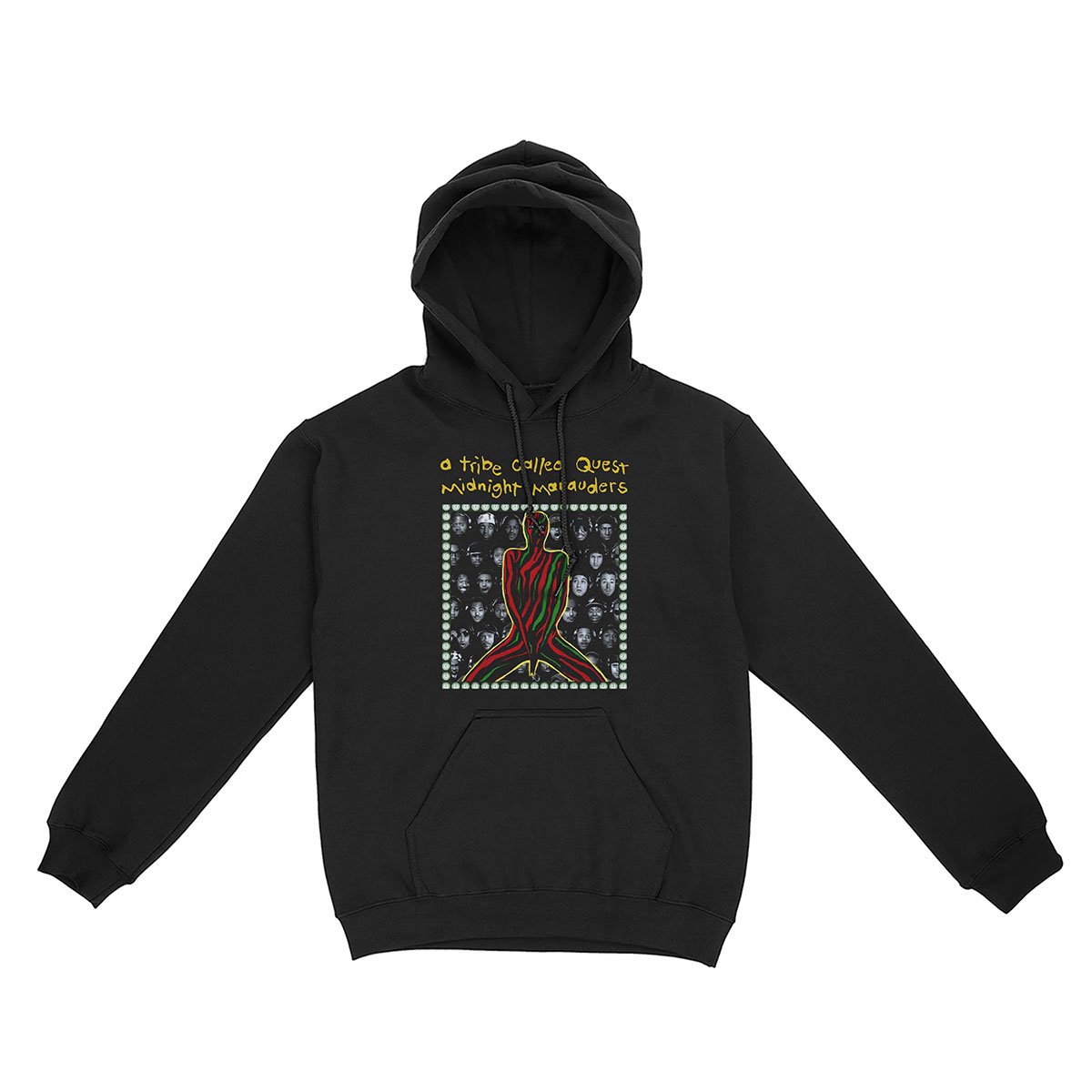
There’s a nice visual receipt of how fast his standing rose: when Tribe released Midnight Marauders in November 1993, Busta was one of the dozens of hip-hop figures pictured on its front and back covers, alongside Chuck D, De La Soul, Afrika Bambaataa and more. Barely two years after “Scenario,” he was already part of the culture’s family portrait.
“Woo-Hah!! Got You All in Check”: Finding the Bounce
The group broke up (famously, on the set of Yo! MTV Raps), and Busta’s solo debut The Coming arrived in 1996, led by “Woo-Hah!! Got You All in Check.” The backstory is all crate-digging. Producer Rashad Smith was going through his records with Busta and Rampage when he pulled out “Space,” a 1968 Galt MacDermot instrumental from the Woman Is Sweeter soundtrack. Busta told him to put it away and save it for him. They built the beat, but Busta couldn’t write to it. About seven months later he was listening to the Sugarhill Gang’s 1980 cut “8th Wonder,” heard the line “Woo-hah! Got them all in check,” and the hook clicked into place.
Two more details explain the flow. First, Busta recycled lyrics from a 1994 freestyle battle against Ol’ Dirty Bastard, who later appeared on the remix. If you’re a Dirty fan, our ODB Return to the 36 Chambers T-Shirt is the other half of that battle. Second, and more important for this story, he has said he was reimagining the cadences of the dancehall toasters he grew up hearing in a Jamaican household. The song sits at a relaxed 92 BPM, but the vocal rides it in bouncing, syncopated bursts. That’s where the patois-rooted rhythm enters the record for good. It reached No. 8 on the Billboard Hot 100 and earned a Grammy nomination for Best Rap Solo Performance (it lost to LL Cool J’s “Hey Lover”).
The Technique Behind Busta Rhymes Fast Rap: Breath, Patois and Diction
Busta has actually explained how he does it, which is more than most speed rappers have done. In September 2020 interviews (around his reveal on The Masked Singer), he broke it down to both Entertainment Tonight and TheWrap. Put those quotes next to the records and you get a three-part system.
1. Breath Control Is a Plan, Not a Lung Capacity
Asked for the secret, Busta told ET it came from “years of practice, understanding the science of breath control, and relaxing when you’re actually speed rapping.” To TheWrap he went further: “The breath control comes from just you understanding what the breathing patterns need to be in order to do it the right way,” and “that math and that timing, science-wise, and the breathing combined is the key.”
Translation: the breaths are written into the verse. A fast verse that sounds continuous is actually a sequence of bursts, with the inhales hidden where the beat gives cover. That might be a snare hit, a bar’s last beat, or a spot where an ad-lib or the hype man fills the air. Busta even said that at the top level, rappers like himself, Eminem and Jay-Z can “spit a few bars without even inhaling,” which only works if you know exactly where the next breath is coming from.
2. Stand Still and Let the Mouth Do the Moving
This is the most counterintuitive part, from the most physically animated rapper of his generation (watch any Hype Williams video he’s in). For the hardest verses, he stops moving. “When I do a Look at Me Now verse, I actually stand in one place,” he told ET. “Because the precision, and the focus on the precision of how I articulate, breath control has a lot to do with that… If I’m not breathing right, I can’t deliver it right.” To TheWrap: “Instead of being animated in your physical movement, you allow the animation through the way you deliver the lyrics from your mouth.”
Every jump and arm swing costs oxygen. Busta spends that energy on his voice instead. The excitement you hear on the record is all vocal performance, which is why it doesn’t fall apart live.
3. The Dancehall Root: Speed With a Swing
Fast rapping didn’t start in the Midwest, and it didn’t start only in America. Wikipedia’s history of chopper rap points out that rapid-fire delivery was already popular with Jamaican artists in the early 1980s, citing Daddy Freddy’s “Joker Lover,” Shinehead’s “Rough and Rugged” and Peter King’s “Me Neat, Me Sweet.” That’s the deejay and fast-chat tradition, and it’s the sonic world a kid with two Jamaica-born parents in Brooklyn would have heard at home.
You can hear the difference in Busta’s speed. A lot of Midwest chopping is rolling and legato, syllables poured in a smooth stream. Busta’s fast passages are percussive and syncopated. He hits off-beats and accents unexpected syllables, and he loves a staccato stutter-step before a sprint. He has said himself that he was reimagining toaster cadences on “Woo-Hah,” and once you hear that, it’s all over his catalog.
4. Diction: Consonants as Drums
The last piece is why the speed stays legible. Busta overpronounces. Hard consonants (k, t, p, the rolled and growled r’s) get punched like snare hits, and vowels get stretched at the end of a run like a cymbal decaying. That gives the listener’s ear landmarks inside a blur of syllables. It also explains his love of onomatopoeia and sound effects. Vibe’s list of his most difficult verses singles out the “expressive onomatopoeias” and his “keen awareness of when to take those minute pauses.” Those little pauses are the breath plan from point one, made audible.
Busta Rhymes Fast Rap: His Fastest Verses, Ranked and Broken Down

Here’s our ladder, from fast-for-its-time to full chopper. It’s ranked by technical difficulty, meaning speed, breath management and how hard it is to rap along to, not by chart success. Wikipedia’s chopper page dates his move into true speed rapping to Extinction Level Event (1998), so that’s where the ladder starts.
6. “Turn It Up (Remix) / Fire It Up” (1998)
Not his fastest, but it’s the blueprint for how Busta handles a beat with a hook built in. The album version on When Disaster Strikes… sampled Al Green’s “Love and Happiness.” The 1998 remix flipped it completely around the Knight Rider theme, and he wrote and produced it himself with Spliff Star co-producing. It became his third top-ten Hot 100 hit, peaking at No. 10 and reaching No. 2 in the UK. Panjabi MC later sampled it for “Mundian To Bach Ke.” It’s the clearest early example of him chopping rhythmically against a melody, not just riding it.
5. “Gimme Some More” (1998)
Released October 26, 1998, as the lead single from E.L.E. (Extinction Level Event): The Final World Front, produced by DJ Scratch. The beat is built on the shrieking strings from Bernard Herrmann’s score for Hitchcock’s Psycho (1960). The whole track runs just 2:41, and Busta treats it like a sprint, stacking fast runs across the stabbing strings with almost no room to breathe. It earned a Grammy nomination for Best Rap Solo Performance at the 42nd Grammy Awards. This is the moment the “Busta is fast” reputation goes mainstream.
4. “Break Ya Neck” (2001)
Busta signed with Clive Davis’s J Records in early 2001, and the second single from Genesis was built for one purpose: speed. Dr. Dre and Scott Storch produced it, the hook interpolates the Red Hot Chili Peppers’ “Give It Away,” and Truth Hurts adds vocals. The verses sit right in the pocket of a bouncing West Coast drum, with Busta switching between half-time taunts and full-tilt runs. Wikipedia’s chopper page cites it as one of the tracks that made people classify him as a chopper. Our favorite receipt: the official remix brought in Twista and Do or Die, two of Chicago’s chopper pillars. Busta wasn’t just borrowing the Midwest style, he was trading verses with its architects. The Hype Williams video adds cameos from Dr. Dre, Ludacris, Lil Jon, Swizz Beatz, CeeLo Green and more.
3. Tech N9ne, “Worldwide Choppers” (2011)
Proof of where Busta sits in the chopper world: Tech N9ne put him on “Worldwide Choppers,” his 2011 global posse cut of speed rappers that also includes Twista and Yelawolf. Vibe notes Busta comes in as the seventh rapper and represents New York, and his verse stands out for the stop-start stutters and the menace in his lower register. Speed is the entry fee on a track like that. Busta’s verse stands out because he plays with the rhythm instead of just maxing out the tempo.
2. Chris Brown, “Look at Me Now” (2011)
The verse that introduced Busta’s speed to a whole new generation. “Look at Me Now,” released February 1, 2011, from Chris Brown’s F.A.M.E., produced by Diplo, Afrojack and Free School. It hit No. 6 on the Hot 100, No. 1 on both the Hot R&B/Hip-Hop Songs and Hot Rap Songs charts, and has been certified Diamond by the RIAA. It also won three BET Awards in 2011, and covers poured in. Karmin’s version went viral, and Justin Bieber took on Busta’s verse onstage in Sydney.
What makes the verse legendary is its structure. Busta opens with a spoken setup (“Yo Breezy, let me show you how to keep the dice rollin’…”), eases in at a conversational pace, then shifts up through the gears into the run everybody tries to imitate. The acceleration is the hook. And it wasn’t a one-take accident. In a 2022 interview, Chris Brown recalled asking Busta to redo his verse after calling the first one “just cool.” The redo is the one that became a meme, a challenge and a karaoke nightmare. It’s also the verse Busta says he performs standing completely still.
1. “Calm Down” featuring Eminem (2014)
The most technically extreme thing in the catalog, and the best story. Busta told XXL in 2013 he had “a six-minute record with Eminem that sounds like we are respectfully trying to battle each other.” Producer Scoop DeVille built the beat. Busta cut two 16-bar verses and sent it to Eminem’s camp. Then it turned into an arms race: Eminem came back with 42 bars, Busta answered with 50, Em went to 60, Busta 62, Em 64. Busta said the back-and-forth took about seven months. The finished track runs 5:55.
Commercially it barely moved the needle (No. 94 on the Hot 100). As a document of two of the most breath-disciplined rappers alive pushing each other bar for bar, it’s untouchable. If “Look at Me Now” is Busta’s highlight-reel sprint, “Calm Down” is his marathon.
Busta’s On the Cover
Two years after “Scenario,” Busta was one of the faces on Tribe’s Midnight Marauders sleeve. We made a Midnight Marauders hoodie for the heads who know where the Native Tongues family tree branches off.
Busta vs. the Chopper Lineage: Twista, Bone Thugs, Tech N9ne, Eminem

Is Busta a “chopper”? Depends who you ask, and the answer says a lot about where he comes from.
Before Chopper Had a Name
Fast rapping on record goes back to 1980, when the Treacherous Three released “New Rap Language.” The lyrics literally crown Kool Moe Dee as the originator of the fast style (“Moe Dee’s the originator / So you might as well starve / Cause you can’t catch this fast beat”), and Moe Dee reportedly reused a verse from it to battle Busy Bee in 1981. Add the Jamaican fast-chat records of the early ’80s and you have the two streams Busta’s style draws from: New York battle rap and Caribbean sound-system culture.
The Midwest Makes It a Genre
Chopper became a distinct style in the early ’90s Midwest, with Twista and the Dayton Family. Then Cleveland’s Bone Thugs-n-Harmony took it to the top of the charts with harmonized, rolling flows. We’ve written about how “Tha Crossroads” turned grief into a No. 1, and about Bizzy Bone, Cleveland’s fastest mouth. If that era is your era, our E. 1999 Eternal Bone Thugs-n-Harmony T-Shirt is the flag to fly. Wikipedia describes chopper bars as carrying two or three times the syllables of a typical rap bar, often over tempos anywhere from 90 to 180 BPM. Tech N9ne later turned the word into a franchise with “Midwest Choppers,” “Worldwide Choppers” and “Speedom.”
Where Busta Fits
Busta is the East Coast outlier on the list. He didn’t come up chopping. He came up as a battle-tested New York MC who added speed as a weapon from the late ’90s on. That’s why his fast verses feel different from Bone’s or Twista’s. The Midwest school sounds like a river. Busta sounds like a drum solo, all accents and syncopation and sudden stops. When he finally shared tracks with the Midwest giants (“Break Ya Neck” remix with Twista and Do or Die, “Worldwide Choppers” with Tech and Twista), it was a meeting of two schools, not an imitation. Wikipedia’s chopper page lists him alongside Bone Thugs, Twista, Tech N9ne, Big L and Eminem, and notes that “many” consider him a chopper. It’s a label he earned, not one he started with.
The Heirs
The influence list is wild in its range. Wikipedia credits Busta’s work as an influence on Eminem, Talib Kweli, Ski Mask the Slump God, Kendrick Lamar, Tyler, the Creator and Doja Cat. You can hear the Busta DNA most clearly in Ski Mask’s cartoonish, voice-as-instrument speed and Kendrick’s character voices. It’s less about raw BPM and more about the idea that a rapper’s voice can be the most animated thing on the track.
Why Speed Never Became a Gimmick for Busta

Plenty of rappers have built a viral moment on speed and then struggled to build a career on it. Busta did it the other way around, and that order matters.
Speed Is a Gear, Not a Mode
Go back through the ladder above and notice how rarely Busta raps fast for an entire song. “Look at Me Now” starts conversational. “Break Ya Neck” alternates half-time taunts with full runs. “Woo-Hah” barely speeds up at all. Speed is the gear he shifts into for impact, and the contrast is what makes it hit. A verse that’s fast from bar one has nowhere to go. A verse that accelerates gives you a climax.
The Voice Came First
Before anyone timed his syllables, Busta was already a star because of the voice: the growl, the roar, the comic timing, the sheer volume of personality. He has credited George Clinton for “being over the top and outlandish and brave as far as his showmanship.” That showmanship is why people remember his verses even when they can’t keep up with them. Speed without a voice gets you a viral clip. Speed with a voice like that gets you 30-plus years.
Longevity as Proof
From “Scenario” in 1992 to “Look at Me Now” in 2011 to “Calm Down” in 2014 and beyond, Busta kept finding new rooms to walk into. The Big Bang became the first No. 1 album of his career in 2006, selling over 209,000 copies in its first week. We marked that anniversary in The Big Bang at 20, Dilla’s fingerprints included (more on that in our J Dilla production discography). He also holds 12 Grammy nominations without a win, which makes him one of the most-nominated artists never to take one home. That says something about how the industry measures greatness. It says nothing about the craft.
Busta Rhymes Fast Rap FAQ
How many words per minute can Busta Rhymes rap?
There’s no verified official figure. Online estimates for his “Look at Me Now” verse range from about nine to more than twenty syllables per second, and most don’t explain how they counted. The best-documented speed benchmark in hip-hop is Twista’s 1992 Guinness recognition: 598 syllables in 55 seconds, just under 11 per second. Busta’s peak runs live in that conversation, but his real advantage is clarity, not raw count.
What is Busta Rhymes’ fastest verse?
Most fans point to his guest verse on Chris Brown’s “Look at Me Now” (2011). For sheer endurance, though, nothing in his catalog beats “Calm Down” with Eminem (2014), where the two kept extending their verses to 62 and 64 bars respectively over about seven months.
How does Busta Rhymes breathe when he raps fast?
By his own account, it’s planned breathing patterns, precise syllable placement and staying relaxed. He told interviewers in 2020 that for verses like “Look at Me Now” he stands in one place, because “if I’m not breathing right, I can’t deliver it right.”
Is Busta Rhymes a chopper rapper?
He’s often grouped with choppers, and Wikipedia’s chopper rap article lists him among the style’s best-known names. But he came up as a New York MC in Leaders of the New School and added speed from about 1998 on. His style is more percussive and syncopated than the Midwest chopper school.
What kind of rap is Busta Rhymes?
East Coast hip-hop with deep golden-age roots (Native Tongues affiliation through Leaders of the New School and “Scenario”), plus dancehall-influenced cadence, theatrical showmanship and, from the late ’90s on, chopper-level speed.
What are Busta Rhymes’ biggest hits?
Among his best-known singles: “Woo-Hah!! Got You All in Check” (No. 8 on the Hot 100), “Turn It Up (Remix) / Fire It Up” (No. 10), “Gimme Some More,” “Break Ya Neck,” and his feature on “Look at Me Now” (No. 6, certified Diamond).
Why is he called Busta Rhymes?
Chuck D of Public Enemy gave him the name around 1989, after NFL and CFL wide receiver George “Buster” Rhymes.
Speed is the hook, but the craft is the story. The next time someone drops a syllables-per-second stat in the group chat, ask them how he breathes through it. Then put on “Scenario” and listen to a 19-year-old who already knew how to control the room.
Stay creative — The Custom Creative Team
Get the Culture in Your Inbox
Verse breakdowns, album anniversaries, sample receipts and first dibs on new drops. No spam, just hip-hop.

🎧 Never Miss a Drop
Exclusive product releases, hip-hop deep dives, and member-only discounts. Straight to your inbox.
Free forever. No spam. Unsubscribe anytime.
Get the Culture, Delivered
Deep dives into hip-hop history, exclusive product drops, and discounts sent straight to your inbox. No spam, just culture.
Join 2,000+ hip-hop heads already in the loop. Unsubscribe anytime.