The Soulquarians: Four Aquarians, Electric Lady’s A Room, and the Albums That Rewired Soul and Hip-Hop
The Soulquarians never put out a group album. There’s no “Soulquarians” record to stream, no tour poster with that name on it. Yet between the late ’90s and 2002, the crew that worked out of Electric Lady Studios in Greenwich Village made Things Fall Apart, Voodoo, Like Water for Chocolate and Mama’s Gun back to back. That run is the reason neo-soul and left-field rap still sound the way they do. The man who knew the collective best always said it was smaller than you think: four Aquarians, not a supergroup.
This is the full story, receipts included. We cover who the Soulquarians actually were by Questlove’s own definition, what happened inside Studio A, how J Dilla’s off-the-grid drums rewired a whole room of musicians, who really played on what according to the liner notes, why it all came apart, and where to start listening. Some of the most repeated Soulquarians lore doesn’t survive a check against the credits, and we flag those spots as we go.
What the Soulquarians Actually Were: Four Aquarians, Not a Supergroup
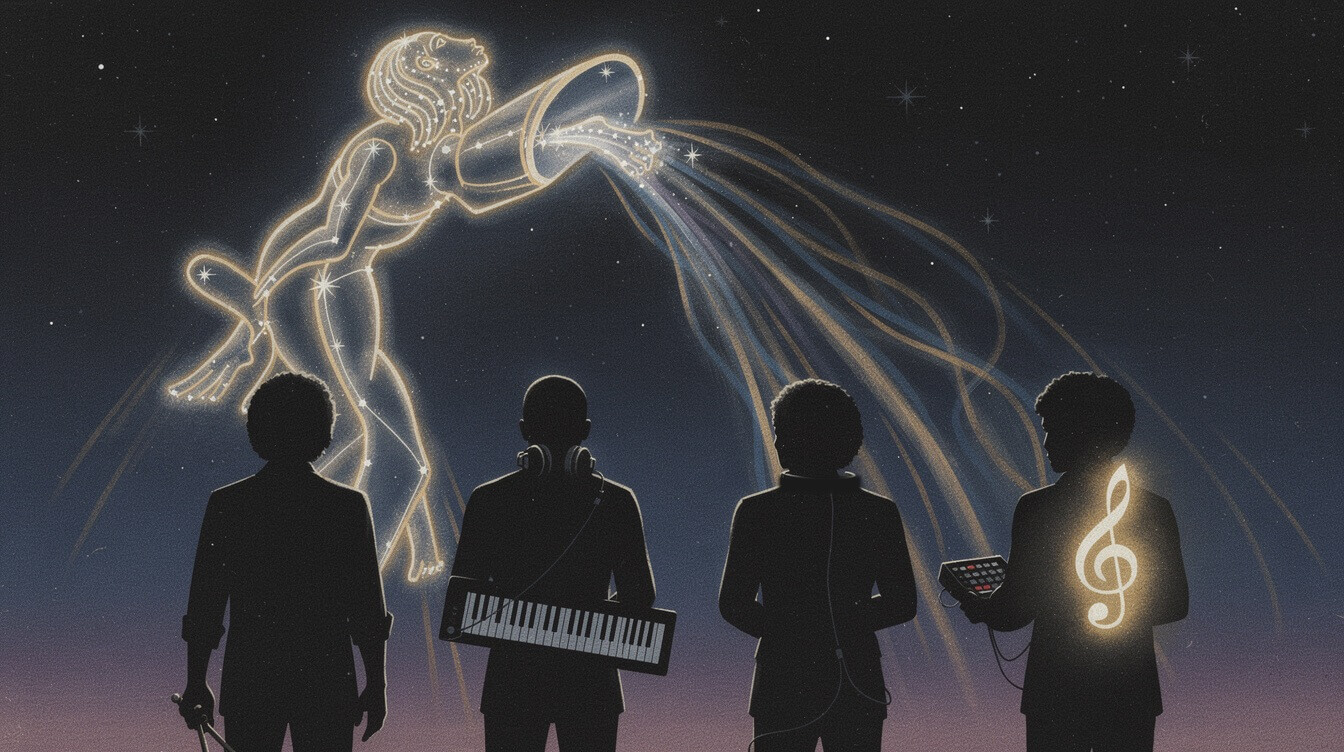
Ask most fans who the Soulquarians were and you’ll get a long list: Questlove, D’Angelo, J Dilla, Erykah Badu, Common, Q-Tip, Mos Def, Talib Kweli, Bilal, James Poyser, Pino Palladino, Roy Hargrove. Wikipedia’s members list runs to twelve names. Questlove’s answer is shorter. In a 2015 oral history for Red Bull Music Academy, he put it plainly: “I said that the Soulquarians were me, James, D’Angelo, and J. Dilla.”
So the core was four people: Ahmir “Questlove” Thompson on drums, D’Angelo on vocals and keys, James Poyser on keys, and Jay Dee (later J Dilla) on production, drum programming and, as you’ll see, a surprising amount of bass. Everyone else was family. They were collaborators who walked through the same doors, cut records in the same rooms and borrowed each other’s grooves, but they weren’t in the club.
The Birthday Conversation That Named Them
The name came out of studio small talk. In the RBMA piece, Questlove remembers that he and Poyser already knew they were both January babies. Then Dilla piped up: “Wait a minute. I was born on February 7th.” D’Angelo answered, “I was born on February 11th.” Questlove was born January 20, 1971, right on the Aquarius line. Jef Lee Johnson, the guitarist in D’Angelo’s touring band, chimed in that he was an Aquarian too. Badu laughed that she was “a week late” (she’s a Pisces, born February 26). Common, a March baby, didn’t want to be left out and called himself “sort of like an Aquarian.”
Nobody sat down and named a group. Questlove says “we never had a title.” It was a running joke that stuck, and it was on paper before it was on any magazine. The phrase “The Soulquarians” is credited as producer on 14 of the 16 tracks on Common’s Like Water for Chocolate (March 2000), per the Discogs liner transcription. It was in the liner notes before it was in any magazine.
The Soultronics Were a Different Band
The other mix-up worth clearing: the Soulquarians and the Soultronics are not the same thing. The Soultronics were D’Angelo’s touring band for the 2000 Voodoo tour. That band had Questlove, Pino Palladino, James Poyser, Roy Hargrove and Russell Gunn on trumpets, Frank Lacy on trombone, Jacques Schwarz-Bart on sax, Jef Lee Johnson and Spanky Alford on guitars, and Anthony Hamilton among the backing singers. Guitarist Charlie Hunter played on the Voodoo album but wasn’t in the road band. Hargrove was a Soultronic, not one of the four founding Soulquarians.
The Extended Family (and Their Actual Star Signs)
Here’s the jewel that most Soulquarians write-ups miss: most of the extended family weren’t Aquarians at all. Badu (Feb 26) and Common (March 13) are Pisces. Q-Tip (April 10) is an Aries. Mos Def (December 11) is a Sagittarius. The name described four people. The magazines stretched it to cover a dozen.
And the four didn’t come together in one magic night. By Questlove’s own telling in his 2025 Rolling Stone tribute, he first met D’Angelo in late 1993 at Battery Studios and brushed him off. At the 1995 Source Awards a street promoter handed him a Brown Sugar sampler cassette, and when he played it that night he realized the singer was the same kid from Battery. Their first real conversation came on April 1, 1996, at the House of Blues in Los Angeles during Soul Train Awards weekend. That timeline is backed by Dan Charnas’s reporting in Dilla Time. Within months, they were looking for a room.
Electric Lady Studio A: Where the Soulquarians Set Up Shop
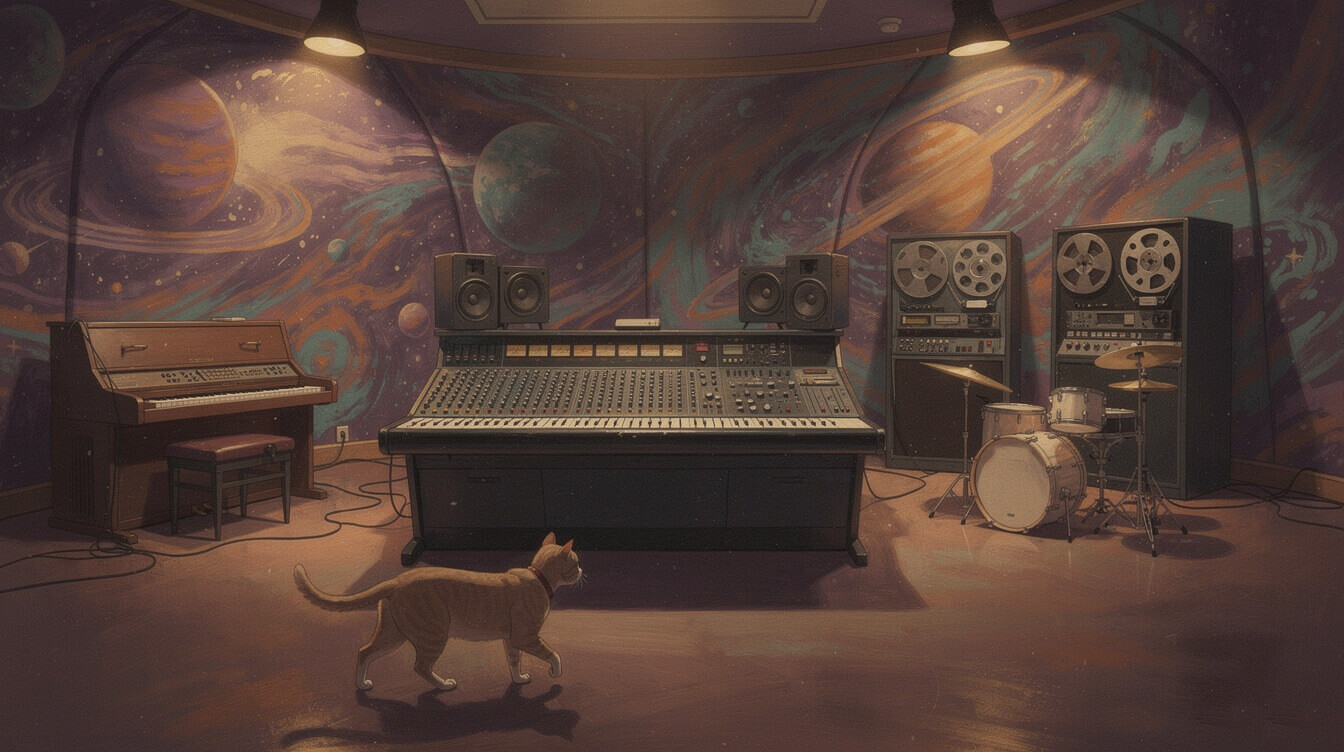
Electric Lady Studios at 52 West 8th Street was commissioned by Jimi Hendrix and designed by architect John Storyk with engineer Eddie Kramer. It threw its opening party on August 26, 1970, less than a month before Hendrix died. Stevie Wonder cut Music of My Mind and Talking Book there. By the mid-’90s the place had gone quiet. One more detail most histories skip: the building sits over an underground stream, a tributary of Minetta Creek, so the builders had to install sump pumps and then soundproof them. The Soulquarians made their records on top of running water.
Late 1996: Blowing Dust Off the Rhodes
Credit the move to D’Angelo and engineer Russell Elevado. Elevado says the two of them were pulling records during Voodoo pre-production when he showed D’Angelo that Stevie had made those albums at Electric Lady. D’Angelo hadn’t known it was still running. Questlove, who preferred Battery Studios (where A Tribe Called Quest had recorded), remembers D’Angelo telling him, “We’re going to go to the house that Jimi built… It has the blessings of the spirits. We have to go there. It’s only right.”
Elevado dates the first sessions to the end of 1996. “We were literally blowing dust off of the Fender Rhodes,” he said. Then they booked Studio A for basically all of 1997 and just jammed, with no mixing. By Elevado’s count, “We went through 200 reels of tape that year.” Questlove says the building went “full throttle in early 1998.” Wikipedia dates the start to 1997 and the Voodoo album page says “recorded 1998–1999,” so the honest version is: late 1996 to start, full speed by 1998.
The 1968 Ludwig and Learning to Play Light
Studio A changed how Questlove played. He went in hitting like a Roots drummer. On his first take of “Playa Playa,” he says, “I was putting my ass into that kick pedal. I was damn near standing up trying to put a hole through it.” Elevado told him the opposite: “The lighter you play, the better it sounds.” Questlove’s own gear list from RBMA: a vintage 1968 Ludwig kit, the same Fender Rhodes and clavinet Stevie used on Talking Book, Pino Palladino on 1950s Precision basses, and Elevado on old Royer ribbon mics. D’Angelo stayed loyal to his Ensoniq ASR-10 sampler, floppy disks and all.
Open Doors, Three Rooms, One Cat
The culture was the point. Elevado called Questlove “the original Twitter before Twitter.” He was the one who pulled Common, Badu and Poyser into the building. In a 2002 quote preserved on Wikipedia, Questlove described how it worked: you’d call and ask “Who’s down there?”, come through, order food, watch a movie, and then it was “Let’s play something.” When he asked who wanted a track, the answer was “I want it!” “No, I want it!” Poyser remembers stretches when “all three rooms were popping.” Bilal kept a sleeping bag there.
The house A&R man was a light brown studio cat everybody called Jimi. Bilal said the cat’s presence meant “he really dug your shit.” Poyser remembers an unnamed artist playing a song while the cat lay on top of the SSL console. The cat made a noise, jumped off and left the room. “You can’t talk about this period at Electric Lady without mentioning ‘Jimi the cat,'” Poyser said.
Dilla Time: The Drum Feel Behind the Soulquarians Sound
If the Soulquarians had a shared language, it was the swing that came out of Jay Dee’s MPC in Detroit. Questlove has told this one many times, including in his 2013 RBMA lecture. The first time he heard Dilla’s drums on the Pharcyde’s “Bullshit” (from Labcabincalifornia, the record behind our Pharcyde Labcabincalifornia T-Shirt), he said “it sounded like the kick drum was played by like a drunk three-year-old.” His next thought was, “Are you allowed to do that?”
“Drunker Than That”
Dilla programmed his drums without snapping them to the grid. Kicks landed a hair early or late, hi-hats dragged, and the groove leaned instead of marching. A live drummer copying that is fighting decades of training to stay in time. D’Angelo wanted that feel anyway. On the first song they tracked for Voodoo, an unreleased cut, Questlove remembers D’Angelo telling him: “No, no, man, I want you to do it drunker than that.” When asked whether Dilla’s drag shaped the Voodoo sessions, Questlove’s answer was one word: “Absolutely.” Dan Charnas spent a whole book, 2022’s Dilla Time, on how that feel moved from a Detroit basement into the whole culture. Electric Lady is the chapter where human players learned it.
Was J Dilla on Voodoo?
No, not on paper. This is one of the biggest pieces of Soulquarians lore, and the Discogs liner transcription for the original Virgin release settles it: there’s no Jay Dee or J Dilla credit anywhere on Voodoo. D’Angelo produced the album, with DJ Premier co-producing “Devil’s Pie” and Raphael Saadiq co-producing “Untitled (How Does It Feel).” Questlove isn’t credited as a producer either. He’s on drums for eight tracks and gets co-writing credits on “Playa Playa,” “Chicken Grease,” “Greatdayndamornin'” and “Africa.” Wikipedia calls him the project’s co-pilot, and nobody who was there disputes that, but the credits are D’Angelo’s.
So Dilla’s fingerprints on Voodoo are about influence, not credits. It’s the drunk pocket Questlove was chasing. There was also a planned Dilla-produced duet between D’Angelo and Lauryn Hill. It never happened, and “Feel Like Makin’ Love” filled that slot. If you want Dilla’s actual credits from the era, look at Like Water for Chocolate, Mama’s Gun and Fantastic, Vol. 2. Our J Dilla production discography goes through them era by era.
The Rick James Dare
The best Dilla story from the building is a beat battle. Questlove says he challenged Dilla by picking the hardest record he could think of to flip: Rick James’s 1981 Street Songs, specifically “Give It to Me Baby.” His reasoning was that it was too fast, too commercial and had no break, so it would sound like MC Hammer. Dilla took the intro, chopped the bass, slowed it down and made a beat on the spot. Common heard it from the next room and called it for his album. That beat became “Dooinit” on Like Water for Chocolate, and Discogs credits Jay Dee as its producer. “That is when I learned that I had all the records in the world, but I hadn’t listened to them,” Questlove said.
Soulquarians Receipts: Who Actually Played on What
Here’s the part no ranking page bothers with. These are the credits, pulled from the Discogs liner transcriptions and cross-checked against Wikipedia’s personnel lists. This is how the Soulquarians actually shared musicians from record to record.
| Album | Track(s) | Credit |
|---|---|---|
| Things Fall Apart (1999) | “Dynamite!” | Produced by Jay Dee |
| Things Fall Apart | “The Spark” | D’Angelo on bass keys |
| Things Fall Apart | “Act Too (The Love of My Life),” “Double Trouble,” “Don’t See Us” | James Poyser produced or co-produced alongside Questlove |
| Voodoo (2000) | “Playa Playa,” “Send It On,” “Chicken Grease,” “One Mo’Gin,” “Feel Like Makin’ Love” | Pino Palladino on bass |
| Voodoo | “Playa Playa,” “Send It On,” “Spanish Joint” | Roy Hargrove on horns (co-writer of “Spanish Joint”) |
| Voodoo | “Chicken Grease” | James Poyser on keys and co-writer |
| Voodoo | “Left & Right” | Q-Tip on human beatbox (writer credit, no production) |
| Voodoo | “The Root,” “Spanish Joint,” “Greatdayndamornin'” | Charlie Hunter on guitar and bass |
| Like Water for Chocolate (2000) | 11 of 16 tracks | Jay Dee produced or co-produced; Questlove executive producer |
| Like Water for Chocolate | “Geto Heaven Part Two” | D’Angelo on vocals and piano, Pino on bass, Poyser on harp, Rhodes and oboe; producer credited as “God” |
| Mama’s Gun (2000) | “Didn’t Cha Know” | Produced by Jay Dee |
| Mama’s Gun | “My Life,” “Kiss Me on My Neck” | Jay Dee co-produced (and plays bass on “Kiss Me on My Neck”) |
| Mama’s Gun | Seven tracks | Questlove on drums; Poyser on keys and associate producer; Hargrove on trumpet on “Booty” and “Green Eyes” |
| Fantastic, Vol. 2 (2000) | “Tell Me” | Features D’Angelo, who also produced it, with Jay Dee co-producing |
| 1st Born Second (2001) | “Sometimes” | Produced by “The Soulquarians” (Pino, Questlove, Poyser on Rhodes) |
| Electric Circus (2002) | “Star *69 (PS With Love)” | Prince on keys and guitar |
Notice what’s missing. Questlove doesn’t play on Mos Def’s Black on Both Sides. The keys there belong to jazz veteran Weldon Irvine, who plays Hammond on “Umi Says.” Q-Tip’s whole contribution to Voodoo is beatbox on one track. The Soulquarians were a shared room more than a fixed lineup. That’s why the credits move around so much.
The Great Track Trade: “Chicken Grease” for “Geto Heaven”
The best receipt is a swap. Questlove says “Chicken Grease” was originally cut for Common, and “Geto Heaven” was cut for Voodoo as the track for the planned Lauryn Hill duet. Once it was clear Hill wasn’t coming, Common asked for “Geto Heaven.” D’Angelo pulled Questlove aside and said he couldn’t give up the funk track they’d made: “That’s the funk I need.” Questlove brokered the peace: Common took “Geto Heaven,” and D’Angelo kept “Chicken Grease.” As Charnas points out, that meant MCA and Virgin each paid for a track that ended up on the other label’s album.
“Time Travelin'”: All Four in One Room
If you want one song that captures the four founding Soulquarians together, it’s “Time Travelin’ (A Tribute to Fela)” from Like Water for Chocolate. Questlove has described the setup: Dilla playing the bassline on a Rhodes, D’Angelo on marimba, Poyser on organ and Questlove on drums. Discogs credits all four as writers, Fela’s son Femi Kuti is featured, and Roy Hargrove’s trumpet floats over the top. It’s the closest thing to the group album that never came.
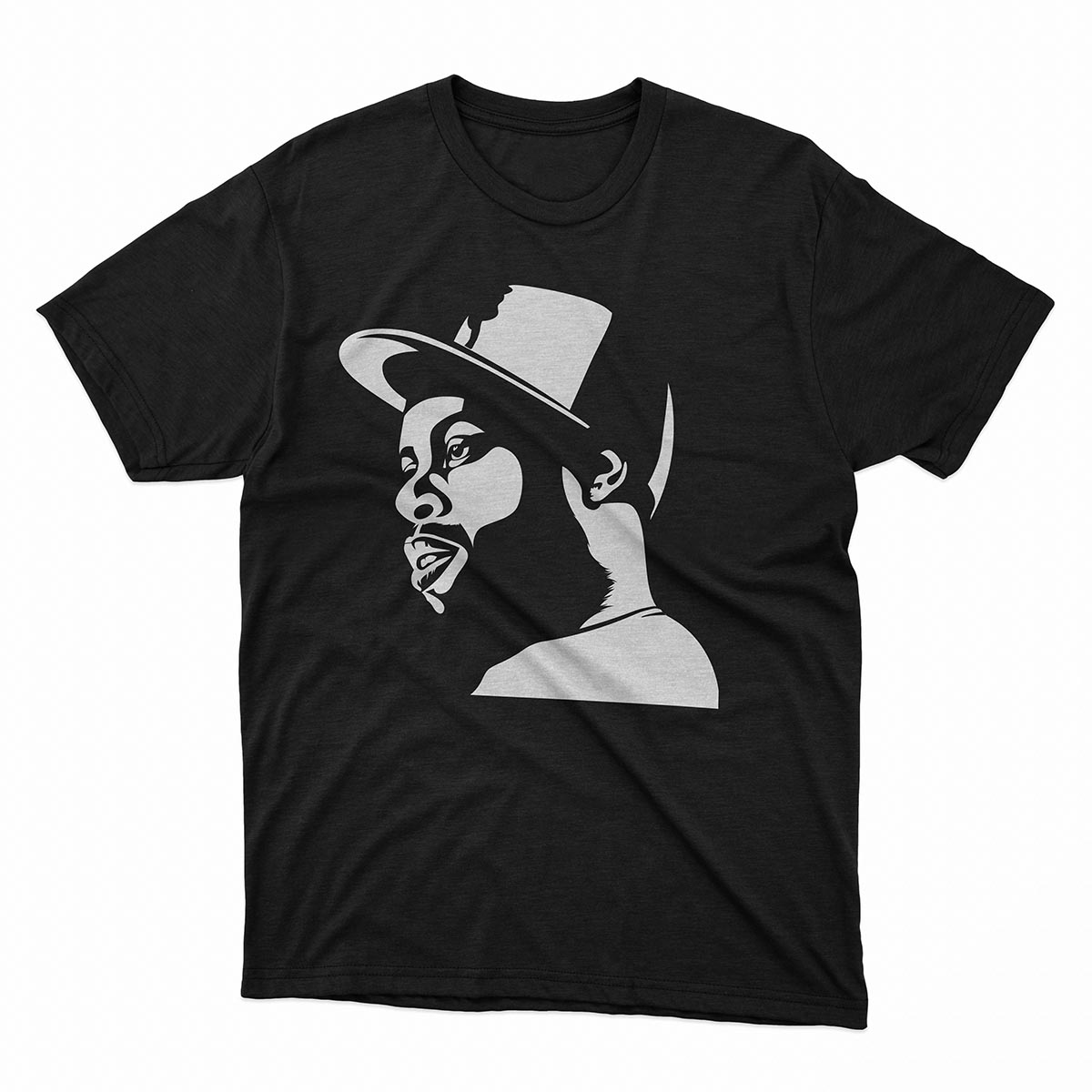
The Fourth Aquarian. Wear the Swing.
We made the J Dilla tee for the heads who hear the drag in the kick before they hear anything else. It’s a tribute to the producer whose drums taught a whole studio to play drunker.
The Soulquarians Albums in Order, 1998 to 2002
The Soulquarians never released a group album, so “their albums” means the records made in that orbit. Here’s the run in release order, with US dates, Billboard 200 peaks and RIAA certifications checked against the live RIAA database.
- Black Star, Mos Def & Talib Kweli Are Black Star (Sept. 29, 1998, Rawkus, No. 53). This is the prequel, not an Electric Lady record. It’s Native Tongues lineage with Hi-Tek and 88-Keys behind the boards, and it’s where Mos Def’s road toward the Soulquarians starts. We broke it down in our Mos Def Black Star deep dive, and the Black Star T-Shirt is the one for that record.
- The Roots, Things Fall Apart (Feb. 23, 1999, MCA, No. 4). Jill Scott co-wrote “You Got Me” and cut the original hook before MCA had Badu re-sing it. It won a Grammy for Best Rap Performance by a Duo or Group. Here’s a jewel: the album didn’t go Platinum until April 22, 2013, fourteen years after release. Our Things Fall Apart breakdown covers the five covers.
- Mos Def, Black on Both Sides (Oct. 12, 1999, Rawkus/Priority, No. 25, Gold). It’s adjacent to the Electric Lady sound rather than part of it, and it’s carried by Weldon Irvine’s keys.
- D’Angelo, Voodoo (Jan. 25, 2000, Virgin, No. 1 for two weeks). It went Platinum on March 1, 2000, just five weeks out. It won Best R&B Album and Best Male R&B Vocal Performance for “Untitled (How Does It Feel)” at the 2001 Grammys.
- Common, Like Water for Chocolate (March 28, 2000, MCA, No. 16, Gold). It’s the Dilla-heavy one. “The Light,” built on Bobby Caldwell’s “Open Your Eyes,” earned a Grammy nomination for Best Rap Solo Performance.
- Slum Village, Fantastic, Vol. 2 (June 13, 2000, US release, No. 180). It’s Dilla’s own group with D’Angelo and Q-Tip guest spots. It charted for exactly one week and has no RIAA certification, but it may be the most imitated record on this list.
- Reflection Eternal, Train of Thought (Oct. 17, 2000, Rawkus, No. 17). Hi-Tek’s production carries it. It’s another orbit record, and we covered its anniversary in Today in Hip-Hop for October 17.
- Erykah Badu, Mama’s Gun (Nov. 21, 2000, Motown, No. 11, Platinum). Some sources list Nov. 18, but the US CD and MusicBrainz both date it to Tuesday, Nov. 21. If you’re coming from Baduizm, this is where her sound gets looser and stranger.
- Bilal, 1st Born Second (July 2001, Interscope, No. 31). Sources split on the exact street date, July 27 or July 31. “Sometimes” carries the only song-level “Produced by The Soulquarians” credit outside Common’s record.
- The Roots, Phrenology (Nov. 26, 2002, MCA, No. 28, Gold).
- Common, Electric Circus (Dec. 10, 2002, MCA, No. 47). Dilla and Poyser are credited as associate executive producers. It’s the one record in the core run with no RIAA certification.
Q-Tip’s Kamaal the Abstract belongs on this list in spirit. It’s a jazz-leaning record with Kenny Garrett on sax and Kurt Rosenwinkel on guitar. Arista pressed an LP in 2001 and set release dates for late 2001 and spring 2002, then shelved it. It finally came out on September 15, 2009.
Why the Soulquarians Fell Apart
Three things ended the run: a magazine story, a label’s patience running out, and later the deaths of the people at its center.
The September 2000 Vibe Feature
Questlove pins the start of the end on one magazine. Vibe wanted a feature on him at a moment when, by his count, he was working on records with 17 different artists. Uncomfortable with being made the hero, he told the magazine the story had to be “about the family and not one person.” The writer had heard the crew say “Soulquarians” all the time and ran with it. When the September 2000 issue came out, everyone in the photo became a Soulquarian, and the piece read like they all worked for Questlove.
“The Vibe magazine photo was the beginning of the end,” Questlove told RBMA. The phone calls started: “Yo, man. It looks like I’m working for you. I’m not an Aquarian. I’m my own person.” His verdict: “Literally, that’s when it all fell apart.”
Labels Lost Patience
The other half was business. The Electric Lady approach meant open-ended sessions, two-inch tape and no deadlines. Questlove has said all that jamming is “why it took five years” to make Voodoo. That only works while labels stay patient, and patience ran out on the less commercial records. Electric Circus debuted at No. 47 and stalled, and per Wikipedia that discouraged MCA, the label home of both Common and the Roots, from letting the open-studio approach continue. Bilal recorded his second album, Love for Sale, through improvised jam sessions. Interscope shelved it, it leaked in 2006, and it has never had an official release. Q-Tip’s Kamaal sat on the shelf for eight years. In 2003 Questlove said there were no plans for a Soulquarians album, which most people read as a quiet breakup. In his 2013 RBMA lecture he put it more simply: “all of us got successful, and everyone just abandoned ship.”
The Losses: Dilla, Hargrove, D’Angelo
J Dilla died on February 10, 2006, from complications of TTP and lupus, three days after Donuts came out. That album’s story is in our Donuts track-by-track. Roy Hargrove died on November 2, 2018, at 49. D’Angelo died on October 14, 2025, at 51, after a private battle with pancreatic cancer. That’s two of the four founding Aquarians gone, plus the trumpet that ran through so many of these records. The last time much of the core shared a credit list was D’Angelo’s Black Messiah (December 2014): Questlove on drums and co-writing “The Charade” and “Another Life,” Pino on bass, Hargrove on horns and Elevado at the board.
Start Here: A Soulquarians Listening Order
Don’t go chronologically. Go by how the sound developed. Here’s the order we’d hand a friend, with one thing to listen for on each record.
- Things Fall Apart. Start with “Dynamite!” so you hear a Jay Dee beat played by a live band, then “You Got Me” for the crossover.
- Like Water for Chocolate. “Time Travelin'” is the four founders in one take. Then play “Dooinit” and imagine a Rick James record nobody thought could be flipped.
- Voodoo. Listen to the drums on “Playa Playa” and remember Questlove trying to put a hole in that kick pedal before Elevado talked him down.
- Mama’s Gun. On “Kiss Me on My Neck,” Dilla is credited on bass as well as the beat.
- Fantastic, Vol. 2. On “Tell Me,” D’Angelo produced it with Jay Dee co-producing, so the Detroit-to-Electric-Lady exchange runs both ways.
- 1st Born Second. “Sometimes” opens with a riff on “Bills, Bills, Bills.” Questlove says it started as the crew roasting Common for losing a Carmen: A Hip Hopera role to Mos Def. Then Bilal walked in and started singing.
- Electric Circus. Save it for last. “Star *69” has Prince on keys and guitar. It’s the record that went too far for its label and right on time for everyone who came after.
Where the Soulquarians Sound Went Next
The line runs straight into the 2010s. Keyboardist Robert Glasper, Bilal’s classmate at the New School, played on the shelved Love for Sale sessions at Electric Lady. More than a decade later, Discogs credits him on keys for five songs on Kendrick Lamar’s To Pimp a Butterfly. Bilal is on that album too, featured on “Institutionalized” and “These Walls.” Writer Michael Gonzales put it best in 2015: Bilal had become “an arty Nate Dogg for the post-Soulquarian generation.” Common went on to Be with Dilla and Kanye, which we covered in Today in Hip-Hop: Common’s Be at 21. And the Roots ended up as a late-night TV house band without ever losing the A Room swing. Our Roots members guide follows the lineup from Philly to late-night TV.
If you rep this lineage, the catalog has you covered from a few directions. There’s the Common One Day It’ll All Make Sense T-Shirt, the Roots Illadelph Halflife T-Shirt from the album right before the Electric Lady years, and the Mos Def Ecstatic T-Shirt. These are pieces from each artist’s wider catalog, not Soulquarians-era merch, and that’s how we’d wear them.
Soulquarians FAQ
Who were the original Soulquarians?
By Questlove’s own definition, four people: Questlove, D’Angelo, James Poyser and J Dilla, all Aquarians. Erykah Badu, Common, Q-Tip, Mos Def, Talib Kweli, Bilal, Pino Palladino and Roy Hargrove were the extended family who worked in the same rooms.
Why are they called the Soulquarians?
The founding four realized in the studio that they were all born under Aquarius: Questlove January 20, Poyser in January, Dilla February 7, and D’Angelo February 11. “Soul” plus “Aquarians” stuck as an inside joke. The name appeared as a producer credit on Like Water for Chocolate before Vibe made it famous.
Was J Dilla on Voodoo?
Not in the credits. The Voodoo liner notes have no Jay Dee or J Dilla credit. His influence was in the drum feel Questlove and D’Angelo were chasing, and a planned Dilla-produced D’Angelo and Lauryn Hill duet never happened.
Why did the Soulquarians break up?
There was no formal breakup. The September 2000 Vibe feature made the collaborators feel like Questlove’s employees, MCA lost patience after Electric Circus stalled, records like Bilal’s Love for Sale got shelved, and everyone’s solo careers took off. J Dilla’s death in 2006 ended any hope of a reunion of the founding four.
What group was Erykah Badu in?
Badu was part of the Soulquarians’ extended family, and Mama’s Gun is one of the collective’s core records. She’s a Pisces, though, so by Questlove’s definition she was never one of the four Aquarians.
Did the Soulquarians ever release an album?
No. There’s no Soulquarians group album, and Questlove said in 2003 that none was planned. The closest thing is “Time Travelin’ (A Tribute to Fela)” on Common’s Like Water for Chocolate, where all four founders play together.
Final Word: The Room Was the Band
The Soulquarians weren’t a group the way Wu-Tang or Tribe were groups. They were four Aquarians with an open door, and that door let in an era. A Hendrix studio with dust on the Rhodes, a drummer learning to play softer, a Detroit producer who didn’t snap anything to the grid, and a cat who left the room when the music was weak. That’s the whole story. The albums are what came out of the room. Go listen to them in order, and pay attention to the drums.
Want the producer’s side of the story? Start with our Stones Throw Records history, where Dilla’s last chapter played out.
Stay creative — The Custom Creative Team
Get the Culture in Your Inbox
Liner-note receipts, studio stories, anniversaries and first dibs on new drops. No spam, just hip-hop.

🎧 Never Miss a Drop
Exclusive product releases, hip-hop deep dives, and member-only discounts. Straight to your inbox.
Free forever. No spam. Unsubscribe anytime.
Get the Culture, Delivered
Deep dives into hip-hop history, exclusive product drops, and discounts sent straight to your inbox. No spam, just culture.
Join 2,000+ hip-hop heads already in the loop. Unsubscribe anytime.