Aftermath Records at 30: Dr. Dre’s Label, the Hits, the Graveyard and Who Owns It Now
Two years ago today, on November 22, 2024, Kendrick Lamar dropped GNX with no warning, and the label credits told a story of their own: pgLang and Interscope, nothing else. For the first time since 2012, Aftermath Records wasn’t on a Kendrick album. That quiet line in the credits closed the second great chapter of the label Dr. Dre started in 1996. This year Aftermath turns 30. That’s long enough to look at the whole thing at once: the hits, the joint ventures, the platinum record that felt like a failure, and a vault full of artists who signed with the best producer alive and never put out a single album.
Most write-ups treat Aftermath as a Dr. Dre discography with a logo on it. This one treats it as a label, which means looking at the A&R scorecard. Of the 37 former acts on Wikipedia’s documented roster, only 8 ever released anything through Aftermath. The other 29 never got a release out. The story runs from the 1996 Death Row exit through Eminem’s rescue, the 50 Cent joint-venture machine, the graveyard, the Kendrick run, and who actually owns the thing now.
Aftermath Records Begins: Walking Away From Death Row in 1996
By March 1996, Dre had already built two empires. He co-founded Ruthless Records with Eazy-E and produced N.W.A’s Straight Outta Compton there. Then he co-founded Death Row, where his own 1992 solo debut became the West Coast’s sound for half a decade (our Dr. Dre The Chronic T-Shirt is a nod to that era). That month he walked out of Death Row too, giving up his ownership stake in what the Los Angeles Times called a “comfortable” settlement. Three labels, one producer.
He told the Times‘ Chuck Philips in October 1996 exactly why he left: “It stopped being fun. I got very frustrated with the whole environment. All of a sudden the studio was packed with strangers, and me, I don’t like working in a room full of people I don’t know.” Then the kicker: “And if I’m not comfortable, I’m not happy. And if I’m not happy, I’m not staying. That’s all there is to it.”
Same distributor, new door
The detail that makes the business story work is that Dre didn’t change distributors. Interscope Records, run by Jimmy Iovine, kept distributing both Death Row and the new label. Aftermath was set up as a boutique imprint inside the same Interscope system. In practice the best producer in rap moved out of the house and into the guest house on the same lot. Iovine was quoted in the same 1996 piece: “He’s starting over again, but the thing that will drive his new company forward is the man’s amazing creativity.”
The original Aftermath blueprint
That 1996 Times profile is a time capsule, and it shows how different the early plan looked from the label we know. Aftermath ran out of a 3,000-square-foot office in Sherman Oaks, about a mile from Dre’s studio, with a staff of eight, four of them women. He had a new in-house production team (Bud’da, Stu-B-Doo, Chris “The Glove” Taylor and Flossy P) and had signed 18 new acts, including R&B groups like Whoz Who, RC and Hands On. He was developing a TV pilot called Half-Way and writing a hip-hop film called Please Listen to My Demo. He even talked about putting out “ghetto metal” rock. The closing promise was pure Dre: “Dr. Dre and Aftermath will be a force to contend with in the 21st century.” He was right, just not with that roster.
The Platinum Album That Felt Like a Flop: The Aftermath (1996) and The Firm
The label’s first single, “East Coast/West Coast Killas,” went to radio in the fall of 1996, credited to Group Therapy: B-Real, RBX, Nas and KRS-One on one record. It hit radio in September 1996, the same month Tupac was killed in Las Vegas. Discogs’ credits list Dre as producer with Stu-B-Doo as co-producer and DJ T on scratches. It was a peace treaty in rap form, and it set the tone Dre wanted for the new house.
The second single was Dre’s own statement: “Been There, Done That,” a farewell to the gangsta image, shot in a tailored suit in a corporate high-rise. Then came the album itself. Dr. Dre Presents… The Aftermath landed November 26, 1996, peaked at No. 6 on the Billboard 200 and was certified Platinum by the RIAA on September 12, 1997.
Why a platinum record counts as a miss
In most label histories, a platinum debut compilation is a win. At Aftermath it’s remembered as the low point, and the reason is the whole philosophy of the label in one record. Fans wanted a Dr. Dre album and got a showcase of mostly unknown acts. Producer Chris “The Glove” Taylor put it plainly to The Ringer: “People were upset because they wanted a ‘Dr. Dre’ album… not a compilation.” Robert Hilburn summed it up in the Los Angeles Times in 2007: certified platinum, “but it had little lasting effect.”
Dre himself named the real problem in that same 2007 interview: “When we started Aftermath, we had something like 20 artists and it was driving me crazy. I couldn’t sit down and focus on any of it, plus it was doubly hard because you ended up crushing these people’s dreams when you had to let them go.” That quote explains the next 30 years of the label.
The Firm: a No. 1 album that still got dropped
The second big swing went East. The Firm: The Album, with Nas, AZ, Foxy Brown and Nature, came out October 21, 1997 on Aftermath/Interscope. It debuted at No. 1 with about 147,000 copies in its first week and ended up selling roughly 925,000 in the U.S. You’ll see it called “platinum” in some label histories, including Wikipedia’s Aftermath page. It isn’t. The RIAA database has no entry for it, and the album’s own page lists only a Canadian Gold. Reviews were lukewarm, the group was dropped, and it had broken up by 1999. AZ later described the end with real bitterness: “These people are in control of certain things. And that’s why there’s no Firm 2.”
A No. 1 debut and almost a million copies, and the group was still out. That’s the Aftermath standard in one sentence. (For the backstory on the crew assembling, see our It Was Written at 30 piece.)
The Tape: How Eminem Saved Aftermath Records (1998–2001)
By 1998 the 18-act roster was being cut down, and the label needed one real star. It came in through the back door. Dre told the Los Angeles Times in 2007 that an Interscope intern heard a young Detroit rapper on a Los Angeles radio show and passed a tape to Jimmy Iovine, who played it for Dre. Other accounts tie the tape to the 1997 Rap Olympics in L.A., where Eminem placed second. Either way, it went intern, then Iovine, then Dre. Eminem signed to Aftermath on March 9, 1998.
Dre admitted he was surprised when he first saw that Eminem was white, but said it didn’t matter once he’d heard the writing: “His writing is like no other, the way he puts together certain words and the way he makes certain words rhyme that to me most of the time don’t even seem like they are supposed to rhyme. I also loved the fact that Eminem, I think, was setting out to be shocking. I love it as dark as it can get, and I thought the public would feel the same way.”
Two albums in nine months
The Slim Shady LP dropped February 23, 1999. Nine months later, on November 16, 1999, Dre released 2001, his first solo album since leaving Death Row, with Eminem all over it. The RIAA certified 2001 6x Platinum in November 2000 and never updated it. Then The Marshall Mathers LP arrived in May 2000 and is now certified 11x Platinum. In about 15 months, the label that had been written off after the compilation became the hottest house in music.
Certification check: The Slim Shady LP is 5x, not 4x or 6x
This is a small receipt, but it shows how loose the internet is with numbers. Wikipedia’s Aftermath article says The Slim Shady LP is 4x Platinum, which is out of date, and the album’s own page says 6x. The RIAA’s live database says 5x Platinum, certified March 8, 2022. When a number matters, go to the database.
We cover the actual music track by track in Eminem Albums in Order and the beats in Dr. Dre Songs, Era by Era. For the label story, what matters is the structure: Eminem’s releases came out as Shady/Aftermath/Interscope, a label within a label within a label. That stack became the template for everything that came next.

The Record That Made Aftermath Untouchable
Eleven times Platinum and the peak of the Shady/Aftermath stack. We put the Marshall Mathers LP art on a heavyweight tee for the heads who were there in 2000.
The Joint-Venture Machine: 50 Cent and the Shady/Aftermath Years (2002–2006)
Eminem returned the favor. Dre said in 2007 that it was Eminem who brought 50 Cent to him: “I loved his delivery more than anything. He had so much authority and strength in his voice.” In 2002, 50 signed a joint Shady/Aftermath/Interscope deal, widely reported as a million-dollar contract.
Get Rich or Die Tryin’ came out February 6, 2003. It was pushed up because bootlegs were already circulating, and it sold about 872,000 copies in its first week. The RIAA certified it 9x Platinum in 2020, and “In da Club” went Diamond in 2023. The Massacre (March 2005) is 6x Platinum. Aftermath was now the biggest machine in rap, and its engine wasn’t Aftermath alone. It was Aftermath plus whichever imprint plugged in.
Hub and spoke: how the model worked
Here’s the structural point most histories skip. After the 1996 reset, Aftermath stopped trying to build a big roster under one roof. It worked more like a hub. Shady plugged in for Eminem’s signings. G-Unit plugged in for 50’s camp. Later, TDE plugged in for Kendrick. In broad strokes, the partner brought the artist and the camp, and Aftermath supplied Dre’s production, the Interscope pipeline and the stamp of approval. In January 2005 the model peaked: The Documentary, a G-Unit/Aftermath/Interscope co-release, debuted at No. 1 with about 586,000 copies and went 2x Platinum within two months. After a public falling-out inside the G-Unit camp, that album’s artist was moved to Interscope’s sister label Geffen in 2006 to get out of his Aftermath/G-Unit obligations.
The gold standard of first weeks
In the CD era, first-week numbers were the scoreboard, and Aftermath’s run from 1999 to 2005 had no real rival: 2001, two Eminem blockbusters, 872K for 50, 586K for The Documentary. If you want to wear that era, the 50 Cent Get Rich or Die Tryin’ Hoodie carries the album art that ruled 2003. And when 50 left Interscope in February 2014, the Shady/Aftermath deal that started the machine ended with him.
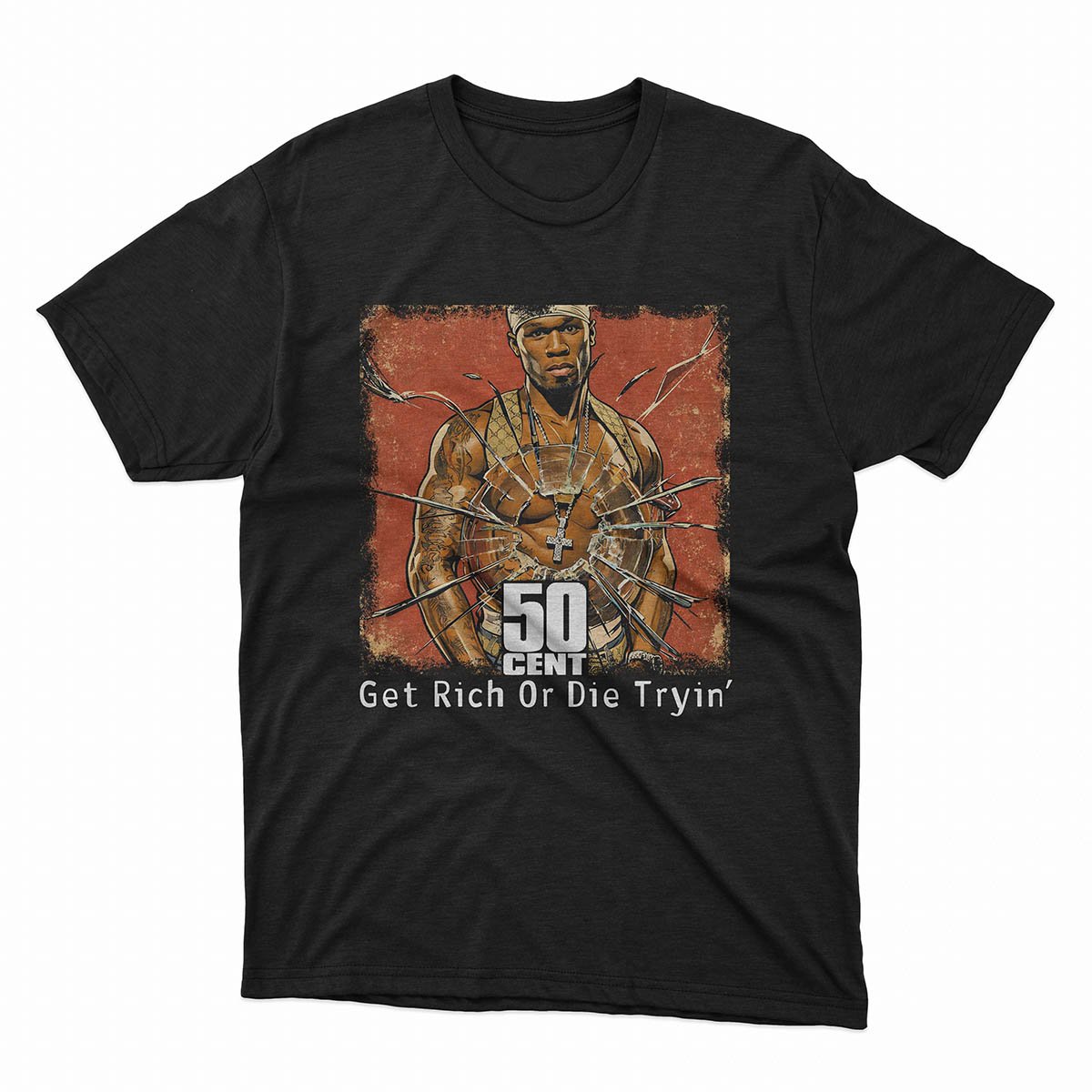
872K Week One. Wear the Receipt.
Get Rich or Die Tryin’ was the joint-venture machine at full speed. Our tee carries the cover art that owned 2003.
The Aftermath Records Graveyard: 29 Acts, Zero Releases
This is the other side of the ledger, and it’s the part no competitor puts on the same page as the hits. Wikipedia’s documented list of former Aftermath acts has 37 names. Eight of them released something through the label. Twenty-nine never released anything. Of the 30 acts signed between 1996 and 2008, only five got a release out. In 2015, XXL counted just 22 Aftermath albums in 19 years. Here’s the ledger.
| Released through Aftermath (8 former acts) | Signed, never released there (29) |
|---|---|
| The Firm, The Album (1997) Truth Hurts, Truthfully Speaking (2002) 50 Cent (5 releases) The Documentary (2005) The Big Bang (2006) Kendrick Lamar (5 releases) Silk Sonic, An Evening with Silk Sonic (2021) Snoop Dogg, Missionary (2024) |
RBX, Serenade, King T, Nowl, Sharief, R.C., Hands-On, Dawn Robinson, The Last Emperor, Eve, Hittman, Rakim, Shaunta, Joe Beast, Brooklyn, Ice Cube, Stat Quo, Suga Suga, Dion, G.A.G.E., Bishop Lamont, Joell Ortiz, YV, Bohagon, Jibbs, Hayes, Slim the Mobster, Jon Connor, Justus |
Note: counts come from the current Wikipedia “Former artists” table, which only lists acts with a reliable source. Current acts (Eminem, Dre, Marsha Ambrosius, Anderson .Paak, Ez Mil) aren’t in it.
Rakim and the album that never came
The most painful entry is the God MC. Rakim signed in 2000 and spent about three years working on Oh My God. Weeks before the split he was telling reporters at the BET Awards, “Me and Dre, we about to do full-steam on it.” In 2003 his manager told MTV they had “mutually decided to go their separate ways.” Rakim has since said the problem was direction: Dre wanted harder street narratives, and Rakim wanted to keep his conscious lane. We dig into what survived in Rakim Songs: the Lost Dr. Dre Record, and the Rakim “God Emcee” Tribute Tee is our salute to the MC who didn’t need Aftermath to be immortal.
Eve, twice
Eve is on the list for two separate stints. She first signed in 1998 (she shows up on the Bulworth soundtrack as “Eve of Destruction”) and was dropped soon after. You’ll often read that she was “traded” for Eminem. There’s no source for that. Her own account, in BET’s Ruff Ryders Chronicles in 2020, gives only the timing: “It wasn’t too long after Eminem was signed that I got dropped from Aftermath, and I was devastated.” She went to Ruff Ryders and became a star, came back to Aftermath in 2004, and left again in 2007 without an Aftermath album.
King T, Ice Cube, Raekwon: legends who passed through
King T’s The Kingdom Come was slated for June 30, 1998. The Source gave it 3.5 mics, but it wasn’t good enough for Dre, and it finally came out in 2002 on another label as Thy Kingdom Come. Ice Cube, Dre’s old N.W.A partner, was announced as an Aftermath signing in the early 2000s, and nothing came out. Raekwon’s Only Built 4 Cuban Linx… Pt. II was planned as an Aftermath project in 2007 and came out on EMI in 2009 instead.
The 2000s bench: Stat Quo, Bishop Lamont, Joell Ortiz, Jon Connor
The mid-2000s class shows how long the wait could get. Atlanta’s Stat Quo joined in late 2003 and left in October 2008. His Statlanta came out in July 2010 through Sha Money XL’s Dream Big Ventures. Bishop Lamont signed in 2005 and left in January 2010, by his own count with about 700 songs recorded. “Dre is still my big bro,” he said on the way out, “but after five years of just sitting there…” Brooklyn’s Joell Ortiz signed in 2006 and left in April 2008, and Dre let him release The Brick on Koch. Flint’s Jon Connor announced his deal in a cypher at the 2013 BET Hip Hop Awards and left in May 2019. His Vehicle City was never released.
Truth Hurts and the $500 million sample
One of the eight releases came with a lawsuit attached. Truth Hurts’ “Addictive” (2002, produced by DJ Quik) went to No. 9 on the Hot 100 on the back of a sample of “Thoda Resham Lagta Hai,” sung by Lata Mangeshkar and composed by Bappi Lahiri. Many write-ups, including Wikipedia’s Aftermath page, say Mangeshkar sued. She didn’t. Rights-holder Saregama filed a $500 million suit in Texas in September 2002. Separately, in February 2003 Lahiri won an L.A. injunction forcing the album to be pulled or stickered with his credit. Lahiri’s case later collapsed, and in 2010 the Ninth Circuit upheld a $258,206 sanction against his attorney. Accounts of how Saregama’s claim ended still disagree.
Detox: the biggest headstone
The graveyard’s centerpiece is the boss’s own record. Detox was announced, teased and rumored for over a decade. Hilburn’s 2007 profile already called it nearly eight years in the making. On August 1, 2015, on his Beats 1 show The Pharmacy, Dre ended it: “I didn’t like it. It wasn’t good. The record, it just wasn’t good… I worked my ass off on it, and I don’t think I did a good enough job.” In November 2026, on Ice Cube and Mike Epps’s Listen & Laugh podcast, he put a number on the vault: “maybe 80 percent of the music I’ve done, nobody has heard.”
Kendrick, .Paak and the Second Run (2012–2022)

The same broadcast that buried Detox launched Compton, a Dre album inspired by the Straight Outta Compton film. It came out August 7, 2015 on Apple Music and iTunes and debuted at No. 2 with 295,000 units, behind Luke Bryan. By then, though, the label’s future already belonged to a kid from the same city.
The TDE deal
On March 8, 2012, Top Dawg Entertainment’s Anthony “Top Dawg” Tiffith announced the deal through The Fader. It was split: Kendrick Lamar signed to Aftermath/Interscope through TDE, while ScHoolboy Q, Ab-Soul and Jay Rock went to Interscope without Aftermath. It’s the hub-and-spoke model again, with TDE as the spoke.
good kid, m.A.A.d city came out October 22, 2012 and debuted at No. 2 with about 242,000 copies. It’s officially 3x Platinum (2018), but by January 2026 it had passed 10 million U.S. units, which makes it eligible for Diamond. It just isn’t certified yet. To Pimp a Butterfly debuted at No. 1 in March 2015 with 324,000. DAMN. did 603,000 in its first week in 2017, the biggest week of that year and his third No. 1 (untitled unmastered. was the second). The full run is in Kendrick Lamar Albums in Order, and our Kendrick Lamar Fan Art Vintage Tee is an original fan-art piece for anyone who rode with him from Section.80.
The exit, written in the credits
Mr. Morale & the Big Steppers (May 13, 2022) was credited to pgLang, TDE, Aftermath and Interscope, his last album with both TDE and Aftermath. Then came today’s anniversary record: GNX, released two years ago today, is pgLang and Interscope only. There was no public split and no beef. Kendrick simply moved to a direct deal with Interscope, and Aftermath dropped out of the credits. Aftermath’s decade with Kendrick produced five releases, the strongest run on the label after the Eminem/50 years.
Anderson .Paak and the 12Tone footnote
Dre announced Anderson .Paak’s signing on January 30, 2016, fresh off Paak’s star turn on Compton. The structure was odd for this label: Oxnard (November 16, 2018), his first Aftermath album, came out through 12Tone Music and Aftermath rather than the usual Interscope stack, and Ventura followed in 2019 with Dre as executive producer. Then Paak and Bruno Mars formed Silk Sonic. An Evening with Silk Sonic (2021) carries a ℗ line reading “Aftermath Entertainment and Atlantic Recording Corporation,” and “Leave the Door Open” won Record and Song of the Year among four Grammys in 2022.
Who’s on Aftermath Records Now, and Who Owns It?

The current roster is short, which is on brand. Wikipedia lists Dr. Dre, Eminem, Marsha Ambrosius, Anderson .Paak and the Filipino-American rapper Ez Mil. Ez Mil signed a Shady/Aftermath/Interscope deal in July 2023. Wikipedia counts him as only the third rapper with that triple deal, after 50 Cent and Stat Quo, and he appears on “Head Honcho” from Eminem’s The Death of Slim Shady (Coup de Grâce) (July 12, 2024).
The 2024 circle
Two 2024 releases closed old loops. Marsha Ambrosius, who left Aftermath for J Records in 2010 and later came back, released Casablanco with Dre on June 28, 2024. Then on December 13, 2024, Snoop Dogg’s Missionary, produced by Dre, came out credited to Death Row/Aftermath/Interscope. The two labels Dre split in 1996 ended up on the same spine 28 years later.
So does Dre own Aftermath?
This is the PAA question nobody answers well, so here’s the honest version. Aftermath is a Dre/Universal joint venture distributed by Interscope. In the 2010 Ninth Circuit case F.B.T. Productions v. Aftermath Records, the label appears as “Aftermath Records, d/b/a Aftermath Entertainment,” listed separately from Interscope, UMG Recordings and Ary, Inc. That’s the case Eminem’s early producers won over download royalties. The equity split has never been made public, so anyone who quotes you a percentage is guessing.
Most of Dre’s money came from Beats, not the label. Apple bought Beats in a deal announced May 28, 2014 for $3 billion ($2.6 billion upfront plus about $400 million that vested over time), and Iovine stepped down at Interscope that same month, with John Janick taking over. In March 2026, Forbes put Dre on its billionaires list. A month later he gave Forbes the best explanation of the whole graveyard: “Perfectionist is sometimes just a word I use to buy time. If I have a release date and the song isn’t right, am I supposed to turn it in? No, I’ll take the proper time until it’s right.”
Aftermath Records FAQ
Who founded Aftermath Records and when?
Dr. Dre (Andre Young) founded Aftermath Entertainment in 1996, after leaving Death Row Records in March of that year. It was set up as a boutique label distributed by Interscope, with Jimmy Iovine as his partner on the Interscope side. Its first album, Dr. Dre Presents… The Aftermath, came out November 26, 1996.
What artists are signed to Aftermath Records?
The current roster is Dr. Dre, Eminem (through Shady/Aftermath), Marsha Ambrosius, Anderson .Paak and Ez Mil. Snoop Dogg’s 2024 album Missionary was a Death Row/Aftermath/Interscope release. Past Aftermath acts include 50 Cent, Kendrick Lamar, Rakim, Eve, Stat Quo, Bishop Lamont, Joell Ortiz and Jon Connor.
Is Kendrick Lamar still on Aftermath?
No. Kendrick signed to Aftermath/Interscope through a 2012 joint venture with TDE. Mr. Morale & the Big Steppers (2022) was his last album with Aftermath. GNX (November 22, 2024) was released through pgLang and Interscope only.
When did Dr. Dre leave Death Row?
March 1996. He gave up his stake in the label and started Aftermath through Interscope later that year. He told the Los Angeles Times in October 1996 that “it stopped being fun.”
What was the first album released on Aftermath Records?
Dr. Dre Presents… The Aftermath (November 26, 1996), a compilation that peaked at No. 6 and went Platinum in 1997. Fans wanted a full Dre solo album, so it’s remembered as a misstep despite the sales.
Why do so many Aftermath artists never release albums?
Dre’s own explanation is perfectionism plus a hard lesson from 1996. He started with roughly 20 acts and later said that spreading himself thin “was driving me crazy.” Since then the label has mostly released only what Dre signs off on personally. Of 37 documented former acts, 29 left without an Aftermath release.
Final Word: Thirty Years of Saying No
Every label has a hit list. What makes Aftermath Records different is how short it is on purpose. Dre started in 1996 with 18 acts and a plan to do film, TV and rock. He learned fast that he couldn’t run that, and from then on he said no far more often than yes. The result is a catalog with almost no filler and a vault with more unreleased music than most labels’ whole discographies. The Firm went No. 1 and got cut, Rakim walked, and Dre shelved his own album after a decade. Meanwhile one intern’s tape became 11x Platinum.
Thirty years in, with Kendrick gone two years as of today, Aftermath runs the way it always has: small roster, long waits, and nothing out until Dre says it’s right. Whether the next chapter is Ez Mil, a surprise Dre album or another decade of vault rumors, it’ll come out when the boss hears it right. That has always been the point. Catch the rest of our label series in Def Jam Records and Stones Throw Records.
Stay creative — The Custom Creative Team
Get the Label Stories First
One email a week: the liner-note receipts, label histories and new drops from the Custom Creative crew. No spam, just culture.

🎧 Never Miss a Drop
Exclusive product releases, hip-hop deep dives, and member-only discounts. Straight to your inbox.
Free forever. No spam. Unsubscribe anytime.

Get the Culture, Delivered
Deep dives into hip-hop history, exclusive product drops, and discounts sent straight to your inbox. No spam, just culture.
Join 2,000+ hip-hop heads already in the loop. Unsubscribe anytime.