Ruthless Records: How Eazy-E’s Compton Label Built N.W.A, Lost Dre and Found Bone Thugs
Ruthless Records is the label that put Compton on the map. Then it watched its two best creative minds walk out the door and build the label that replaced it. Eazy-E and Jerry Heller launched it in 1987 with a street hit nobody else wanted. Within four years it had the first gangsta rap album to top the Billboard 200. Within a decade it had lost Ice Cube, Dr. Dre and its founder, and still won a Grammy. Most write-ups give you the roster. This one follows the money, the contracts and the exits, the parts of the story that page one of Google only covers in video.
Here’s the map. The history of Ruthless Records runs in four acts: the swap-meet independent (1987–1988), the N.W.A boom and the Priority deal (1988–1991), the post-Dre rebuild around Bone Thugs-n-Harmony (1992–1995), and the long afterlife under Tomica Woods-Wright. If you want the songs themselves, our track-by-track breakdown of N.W.A’s Straight Outta Compton goes sample by sample. This piece is about the label that made them.
How Eazy-E and Jerry Heller Started Ruthless Records
Eric “Eazy-E” Wright was 22 and from Compton when he co-founded Ruthless with Jerry Heller in early 1987. Wikipedia pins the launch to March 3, 1987, while the label’s own website says 1986. Either way, the order of events is the same: the record came first and the company was built around it.
The Seed Money Story (Two Versions)
The legend says Eazy bankrolled Ruthless with drug money. Wikipedia calls it an allegation, saying he “allegedly” made as much as $250,000 dealing before a cousin’s killing pushed him toward music. Heller tells it differently. In his 2006 memoir Ruthless, he says he put up the first $250,000 and eventually close to $1 million. He told the AP that same year he had “no proof” Eazy ever dealt, and that the persona was simply good for the Ruthless image. Billboard’s 2008 label history gives a third, humbler number: $7,000 of Eazy’s own money and a pressing of 5,000 twelve-inch singles. Treat all three as accounts, not receipts.
The Swap Meet and the Manager
Before he was a rapper, Eazy was a voice on tapes. Former DJ Violet Brown told Billboard she first met him at the Roadium swap meet in Gardena, where he hosted mixtape cassettes sold by DJ Steve Yano, dropping lines between songs. That’s how the neighborhood learned his name.
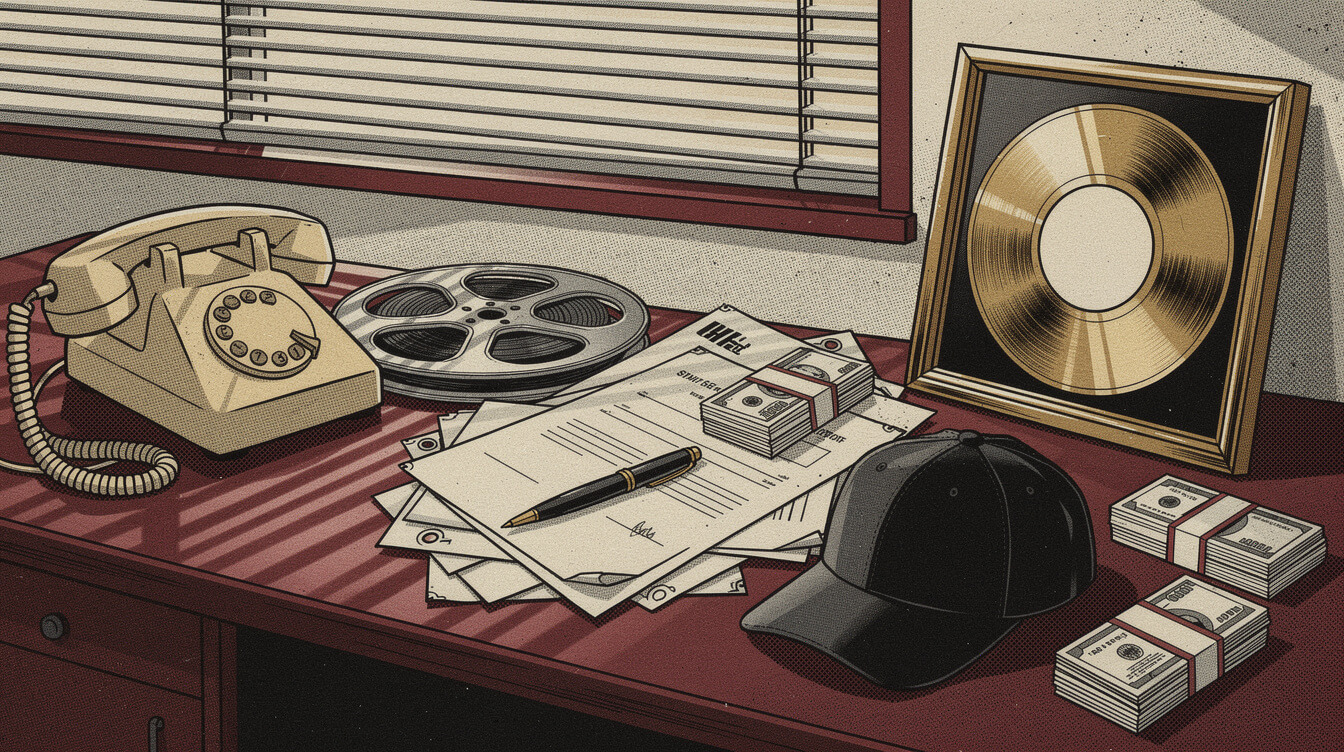
Heller was the opposite kind of street credential. He was a veteran booker who had promoted the first U.S. tours by Elton John and Pink Floyd. Their deal is often misreported, so here is how Heller himself described it: Eazy owned the company, and Heller took 20 cents of every dollar as his manager’s commission. “You own the company. I work for you,” he wrote. That 80/20 split would matter a lot later, when the people making the records started asking where the other 80 went.
“Boyz-n-the-Hood”: The Song Nobody Wanted
The record that launched Ruthless was written for someone else. Ice Cube wrote “Boyz-n-the-Hood,” and Dr. Dre produced it with Arabian Prince. It was pitched to H.B.O. (Home Boys Only), a New York group, who passed. So Eazy rapped it himself, in a high, flat, unbothered voice that turned out to be the hook. The 1987 single was distributed by Macola, the L.A. indie that also put out N.W.A. and the Posse that November, a compilation Macola assembled without the group’s sign-off. Priority reissued it in 1989 and it eventually went gold.
Before N.W.A Blew Up: J.J. Fad, The D.O.C. and the Pre-Fame Hits
Here’s the part most N.W.A fans skip: Ruthless’s first gold record wasn’t gangsta rap at all. It was a roller-rink party record by a trio of young women.
J.J. Fad’s “Supersonic”
J.J. Fad first cut “Supersonic” in 1987 for a small label called Dream Team. Ruthless re-recorded it and released it in April 1988 through Atco/Atlantic. Dr. Dre and DJ Yella produced, with Arabian Prince co-producing. The single and the album both went gold in 1988. At the first-ever rap Grammys in February 1989, “Supersonic” was nominated for Best Rap Performance, making J.J. Fad the first all-female rap group nominated for a Grammy. They lost to DJ Jazzy Jeff & the Fresh Prince. The song has had a long afterlife: Fergie interpolated it on “Fergalicious,” and MF DOOM sampled the beatbox intro from the “Supersonic” video.
Why does this matter for the label story? Because it proves the model before N.W.A existed nationally. Dre and Yella’s production could sell to radio and rinks, and a major (Atlantic) would distribute Ruthless product. That deal structure, with Ruthless making the records and majors moving them, defined everything after.
The D.O.C.: A Classic Debut and a Voice Lost
The D.O.C.’s No One Can Do It Better arrived in July 1989 on Ruthless/Atlantic, produced entirely by Dr. Dre. It’s still one of the sharpest rap debuts of the decade. Then, in late 1989, a car crash damaged his larynx and permanently changed his voice. He didn’t leave the room, though. He kept writing, and his pen ended up all over N.W.A and later Dre’s solo work. We made The DOC No One Can Do It Better T-Shirt for the heads who know that album is the hinge between N.W.A and G-funk.
Michel’le, Above the Law and the R&B Side of Ruthless
Ruthless was never just a rap label in Eazy’s head. Michel’le’s 1989 debut on Ruthless/Atco gave the label a top-ten pop hit in “No More Lies.” In February 1990, Pomona’s Above the Law dropped Livin’ Like Hustlers on Ruthless/Epic, co-produced by Dr. Dre and the group’s own Cold 187um. It was darker and funkier than N.W.A, and it pointed straight at where West Coast production was heading. Our Above The Law Livin’ Like Hustlers Hoodie is for the ones who caught that before everyone else did.
There was even a sub-label. In 1989 Eazy signed Tairrie B to a Ruthless imprint called Comptown, and her The Power of a Woman (1990, via MCA) was the only album it ever released. The name Comptown lives on, though, more on that later.
Straight Outta Compton and the Ruthless Records–Priority Deal
Eazy’s solo debut Eazy-Duz-It landed in fall 1988, and N.W.A’s Straight Outta Compton arrived around the turn of 1988–89. Even the release date is disputed: MusicBrainz says August 1988, while DJ Yella’s own book and a Priority press kit point to January 1989. Both albums went multi-platinum with almost no radio support. We already went through every track on the album in our Straight Outta Compton songs breakdown, so here we’ll stick to the business.
Why Priority, of All Labels
Priority Records was founded in 1985 by former K-tel executives Bryan Turner and Mark Cerami. As Billboard tells it, its biggest claim to fame before N.W.A was the California Raisins’ cover of “I Heard It Through the Grapevine.” Clay raisins, then “Fuck tha Police.” Turner later told Billboard that he and Cerami were “incredibly naïve and young” and had nothing to lose. That naivety is the reason Ruthless got real national distribution while other L.A. crews were still selling out of car trunks.
The FBI Letter
On August 1, 1989, FBI Assistant Director Milt Ahlerich wrote to Priority, citing 78 law enforcement officers “feloniously slain” and warning about music aimed at police. The letter never named the song. Ahlerich later confirmed he meant “Fuck tha Police.” It’s the most famous piece of mail in rap history, and it was free marketing.
Eazy the Marketer
Here’s a receipt that rarely makes the documentaries. Turner told Billboard that Eazy was the brains behind Ruthless’s marketing: “All the artwork, T-shirts, logos… all that was him. He would be in my office every day talking about marketing.” If you’ve ever worn an N.W.A shirt, you were wearing his idea. That’s exactly why the NWA Straight Outta Compton T-Shirt and the Straight Outta Compton Hoodie are still in our catalog: the album art was the brand. For the full history of that cover on cotton, see our Straight Outta Compton shirt guide.
The Boss’s Own Debut
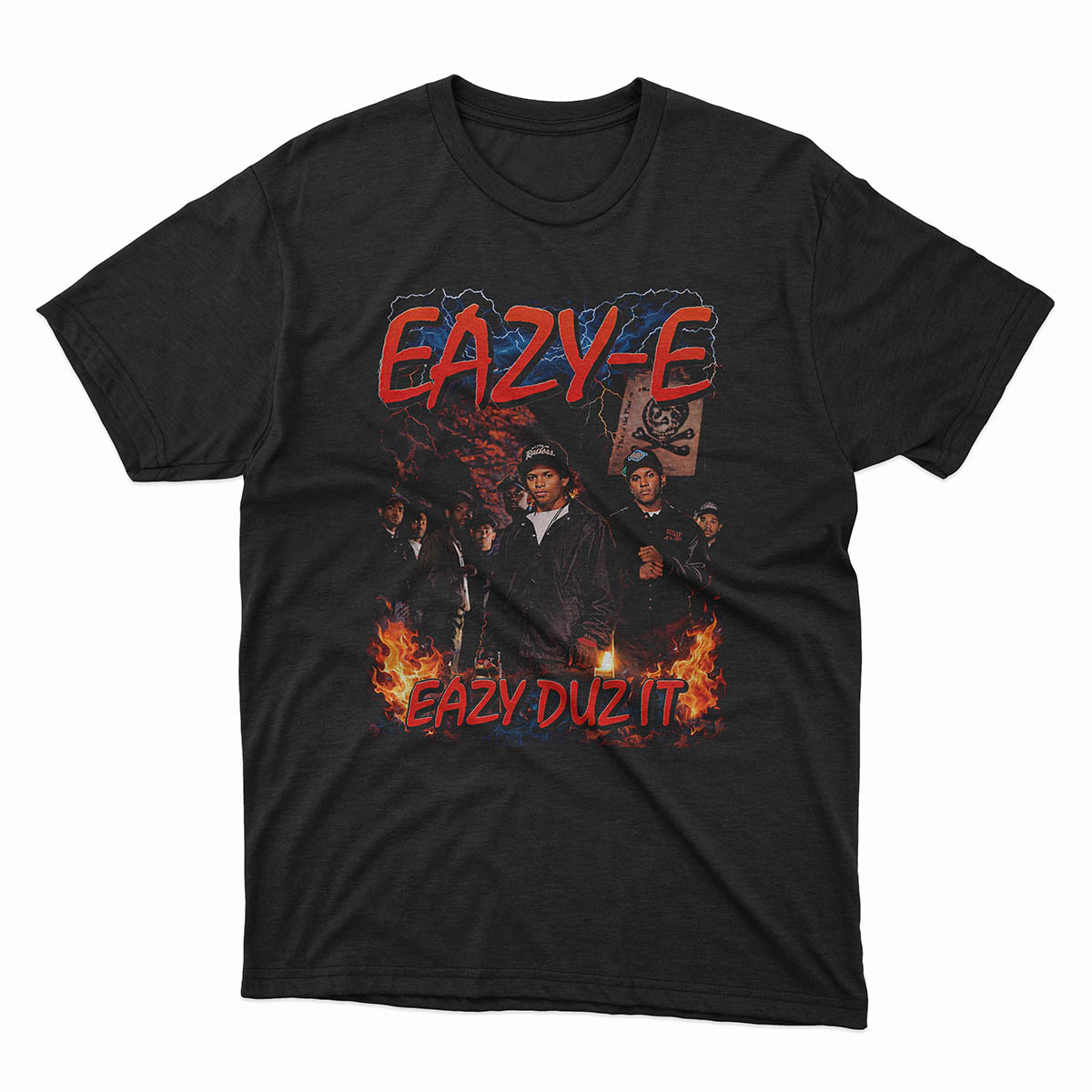
Eazy ran the label, wrote the marketing plan and still found time to drop a multi-platinum solo record in 1988. We made the Eazy-E Eazy-Duz-It T-Shirt for the founder, not just the rapper.
Niggaz4Life and the SoundScan Wake-Up Call
N.W.A’s final album, Niggaz4Life, came out on May 28, 1991, and hit No. 1 on the Billboard 200 within weeks. Be careful with the claim you’ll see online: it wasn’t the first rap No. 1 (the Beastie Boys, Tone Lōc and Hammer all got there first). It was the first gangsta rap No. 1, and it landed right as Nielsen SoundScan started counting real sales. “When the SoundScan chart arrived with real numbers and N.W.A was No. 1, a gangsta rap group from Compton?” Violet Brown told Billboard. “That was the wake-up call.” Two months earlier, in a twist nobody could script, Eazy had attended a Republican Senatorial Inner Circle luncheon in Washington where President George H.W. Bush spoke. He paid $1,230 for the seat.
Why Ice Cube and Dr. Dre Left Ruthless Records
This is the question the search results keep asking and almost nobody answers in text. Short version: the people making the music thought the money math was wrong, and Ruthless’s two most important creatives left for very different reasons, in very different ways.
The First Exit Nobody Remembers: Arabian Prince
Before Cube, there was Arabian Prince. The co-producer on “Boyz-n-the-Hood” and “Supersonic” left N.W.A in January 1989, over royalties. He has said he was the original royalty challenger, the role the 2015 biopic gave to Cube. It’s his account, but the timing backs up the point: the money complaints started early.
Ice Cube: $32,000 and a Contract He Wouldn’t Sign
Coming off the 1989 tour, Cube had reportedly been paid around $32,000 for writing much of N.W.A’s breakthrough. When he pushed for a meeting, Heller presented the group with a largely unchanged contract plus a $75,000 signing bonus. Four members signed. Cube didn’t. He left around the turn of 1990, without signing as a solo artist to Ruthless. MC Ren later described the mood bluntly: the group was driving around in vans while the manager lived in a mansion with “gold leaf trimmings” in the bathroom. Heller disputed any financial misconduct in his memoir.
The fallout was loud. N.W.A’s 100 Miles and Runnin’ EP (August 1990) took shots at him: “It started with five, but yo, one couldn’t take it.” Cube answered on Death Certificate (1991) with “No Vaseline,” one of the most brutal diss records ever made, aimed at the group and Heller alike. For what Cube built next, see our piece on Ice Cube and Boyz n the Hood.
Dr. Dre: The Exit That Ended Up in Federal Court
Dre’s own explanation was that Heller “played the divide and conquer game”: take care of one guy (Eazy), and let everyone else wait. By 1991, Dre, The D.O.C. and Michel’le all wanted out. Eazy refused at first, then signed their releases. How that happened is the most disputed chapter in the label’s history.
What’s on the record: in a federal racketeering suit filed in late 1992, Eazy alleged he had been intimidated into signing at an April 1991 meeting by people working with the camp that went on to launch Death Row. He named Sony, SOLAR Records, Death Row and 11 individuals, and sought $13.5 million. Heller’s memoir and a 2006 Dre biography add darker details, including threats and a note with the address of Eazy’s mother. Those are allegations, and the other side denied them. We’re reporting them as claims, not facts.
What’s also on the record: Eazy didn’t walk away empty-handed. Ruthless kept a financial interest in Dre’s next work, and Rolling Stone reports that Interscope had to settle with Eazy to clear Dre’s contract. So when The Chronic sold millions, Ruthless got paid on a record built partly to diss it. Our Dr. Dre songs, era by era piece picks up the production story from there.
Eazy’s Second Act: Bone Thugs-n-Harmony and the Mid-’90s Roster
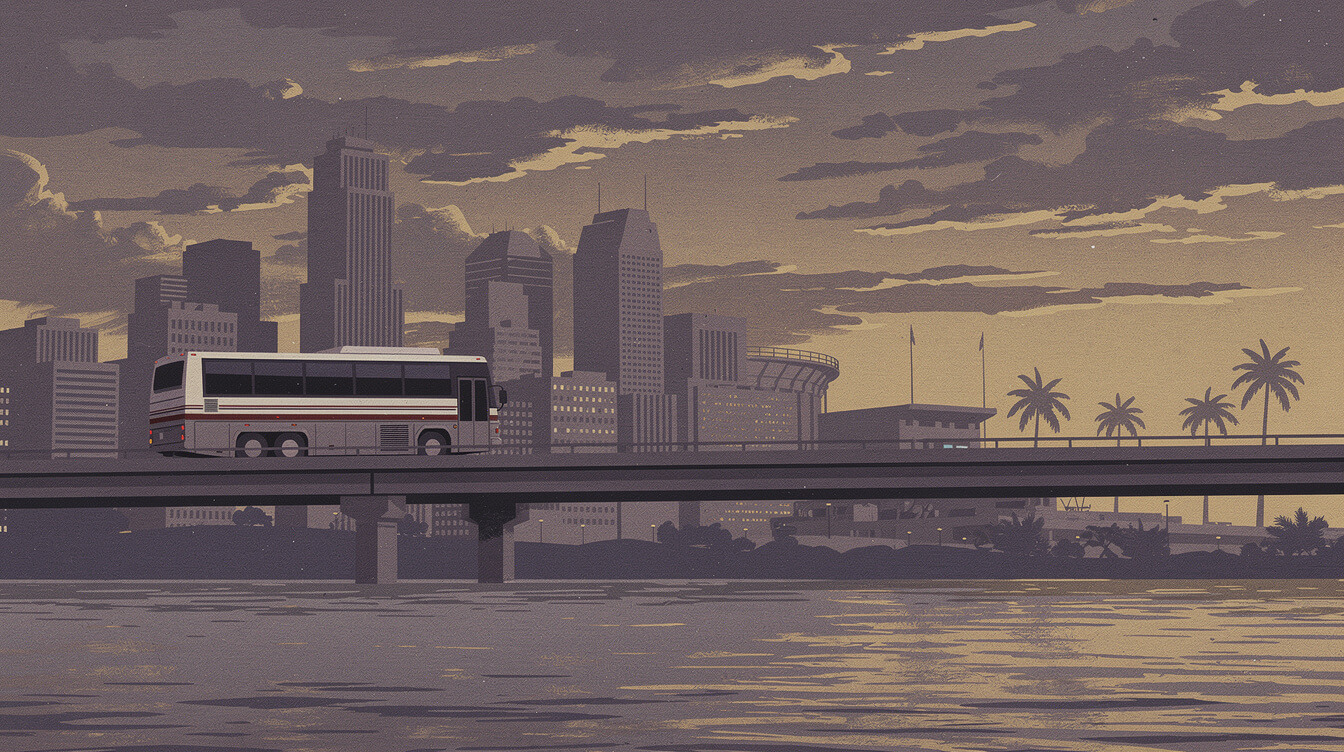
Industry consensus in 1992 was that Ruthless was finished: no Dre, no Cube, no D.O.C. Eazy had other plans. “Everyone was counting him out,” Bizzy Bone told Billboard. “Then he found us.”
The Rebuild: Distribution, a Diss EP and New Producers
Ruthless split with Priority around June 1993, and in August Relativity announced it would market and distribute the label. Heller was still general manager, and Variety reported the deal at about $35 million in its first year. Eazy’s next record was a direct shot at his old partner: It’s On (Dr. Dre) 187um Killa (October 19, 1993), with Cold 187um, B.G. Knocc Out and Gangsta Dresta filling the space Dre left. (Knocc Out and Dresta were never actually signed to Ruthless.) The RIAA certified it double platinum in February 1994. It remains the best-selling project of Eazy’s career. MC Ren held it down too: his Kizz My Black Azz EP (1992) went platinum on Ruthless, and Shock of the Hour followed in November 1993.
How Bone Thugs Got Signed
Bone Thugs-n-Harmony came from Cleveland with harmonies and double-time flows nobody on the West Coast was doing. The story, as the group tells it: a phone audition with Eazy that went nowhere, a bus ride to Los Angeles, months scraping by, then a backstage audition when Eazy played Cleveland, where they finally got in the room. Eazy reportedly suggested “Thugs-N-Harmony,” and the group kept “Bone.” The deal was struck in late 1993; Billboard later reported the contract date as May 1, 1994. Revisit our Bone Thugs-n-Harmony greatest hits guide for the full catalog.
Creepin on ah Come Up dropped on June 21, 1994, and went 4x platinum. “Thuggish Ruggish Bone” went gold. Within three years of losing his producer, Eazy had signed the most original group of the mid-’90s.
The Roster You Didn’t Know About
- Atban Klann: a young group featuring Will 1X (later will.i.am) and apl.de.ap. Signed to Ruthless, and their album Grass Roots was shelved and never released. They became the Black Eyed Peas.
- Blood of Abraham: Future Profits (November 1993). One of its tracks carries an Eazy verse and Will 1X’s first recorded appearance.
- Menajahtwa: Cha-Licious (1994).
- Kokane: signed in 1989 and released Funk Upon a Rhyme in 1994. He left after Eazy’s death and became a go-to West Coast feature voice.
- Yomo & Maulkie: a politically charged duo. The beat and Jewell’s backing vocals from their 1991 Ruthless cut “For the Love of Money” were recycled into Bone’s “Foe tha Love of $.”
After Eazy: Tomica Woods-Wright and Ruthless Records Today
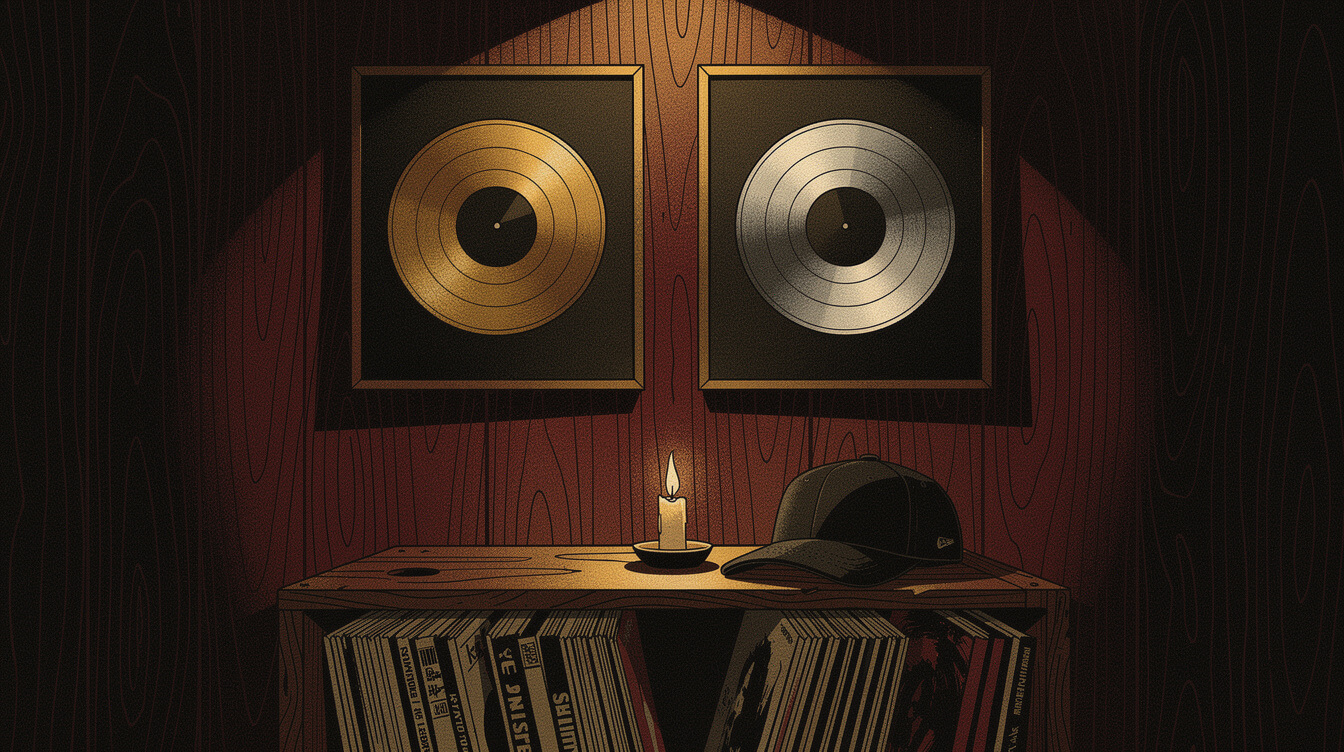
In late February 1995, Eazy-E was admitted to Cedars-Sinai with a violent cough and diagnosed with AIDS. His statement went public in mid-March, read by his attorney Ron Sweeney. On March 14 he married Tomica Woods. On March 26, 1995, he died. He was 30 by most current sources; reports at the time said 31.
The Funeral and the Fight
More than 3,000 people came to the funeral at First AME Church in Los Angeles on April 7, 1995. DJ Yella was the only N.W.A member to serve as a pallbearer. Compton’s mayor, who had criticized Eazy’s portrayal of the city two years earlier, declared “Eazy-E Day.” Eazy is buried at Rose Hills Memorial Park in Whittier. Before he died he had already fired Heller, though why is still disputed. Heller said he didn’t believe Eazy was in his right mind when he did it.
The business fight started almost before the funeral. The Los Angeles Times reported that a former Ruthless business-affairs director was claiming half the company, that Woods said she was sole owner, and that insiders valued Ruthless at around $10 million. Tomica Woods-Wright came out of it in control, as president and CEO.
The Best Years Came After Eazy
The cruel irony is that Ruthless’s commercial peak came after its founder was gone. Bone’s E. 1999 Eternal came out July 25, 1995, debuted at No. 1, and went 4x platinum. Eazy was the album’s executive producer. “Tha Crossroads,” reworked from a song originally written for a friend of the group into a tribute that included Eazy, spent eight weeks at No. 1 on the Hot 100 in 1996. At the 39th Grammys in February 1997 it won Best Rap Performance by a Duo or Group: Ruthless’s first Grammy, eight years after J.J. Fad’s nomination. Billboard later noted that it named Ruthless the No. 1 independent label in both 1996 and 1997. Our deep dive on how Bone turned grief into “Tha Crossroads” has the full story. We made the E. 1999 Eternal T-Shirt for the album that finished what Eazy started.
Eazy’s posthumous album Str8 off tha Streetz of Muthaphukkin Compton followed in January 1996 and went gold. Bone’s The Art of War (1997) went 4x platinum on Ruthless.
Bone Leaves, and What’s Left Today
In June 2001, Bone told Ruthless it wouldn’t deliver any more albums, invoking California’s seven-year rule on personal-service contracts. Ruthless sued, saying only three of six contracted albums had been delivered. Thug World Order (2002) was the group’s last Ruthless release, and the split played out through 2003.
So, is Ruthless Records still a company? Sort of. Wikipedia lists it as defunct, but the trademarks belong to Comptown Records, Inc., the same Comptown name from the Tairrie B days. The official site, ruthlessrecords.com, is live and describes itself as a curator of a hip-hop legacy, offering music, publishing, licensing and distribution. Its artist page mixes the classic roster with later signings like Hopsin and Stevie Stone, whom Woods-Wright announced around the label’s 20th anniversary. In practice it runs today as a catalog and legacy operation, not a hit-making label.
The legacy has stayed busy. Woods-Wright was a producer on the 2015 Straight Outta Compton film. Heller sued over his portrayal in it, and the case was dismissed by 2018; he died in September 2016. In 2017 Woods-Wright sued Eazy’s son, Eric “Lil Eazy-E” Wright, over a rival company using the Ruthless name. In April 2016, Kendrick Lamar inducted N.W.A into the Rock & Roll Hall of Fame, and Eazy’s mother and widow accepted on his behalf.
Ruthless vs Death Row: Which Label Really Built West Coast Rap?
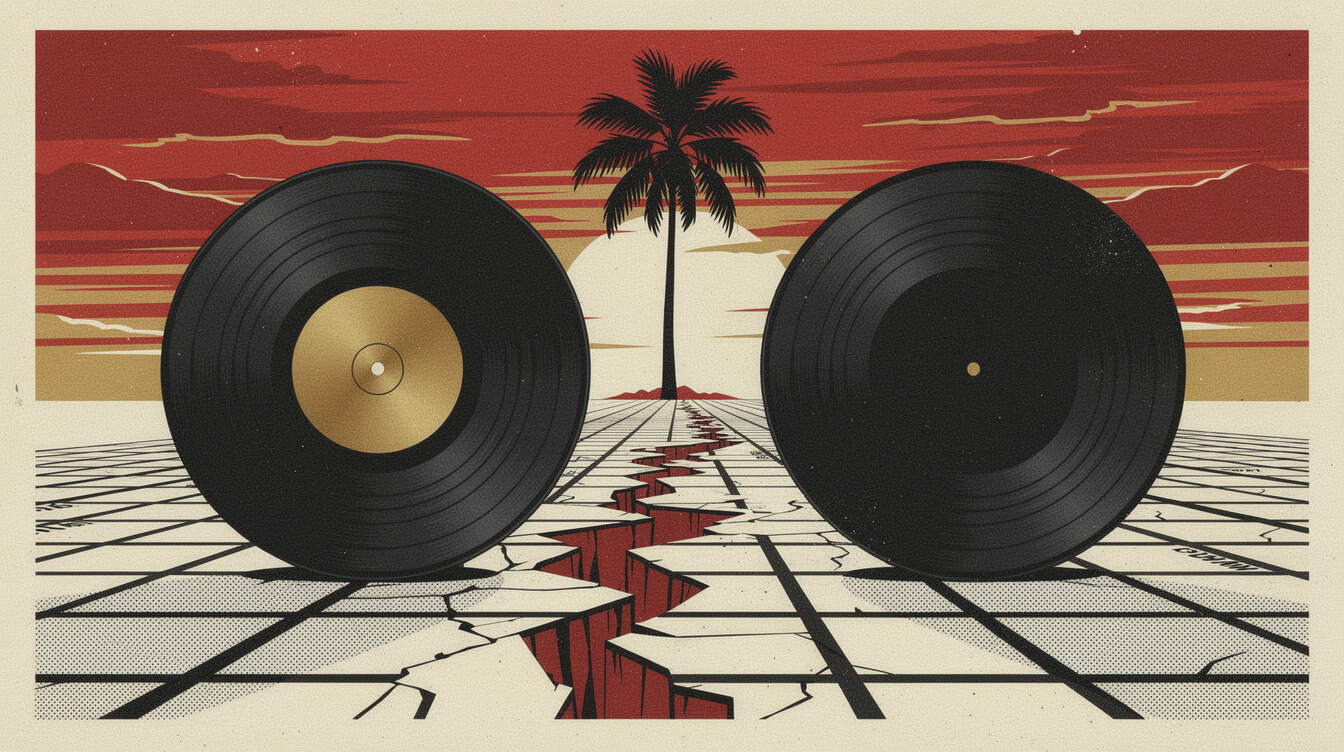
It’s the argument you’ll find on every fan forum: did Ruthless or Death Row build West Coast rap? The honest answer is that one built the road and the other drove the fastest car down it.
The Case for Ruthless
- It came first. Ruthless was selling records in 1987. Death Row came together in 1991–92 and released The Chronic on December 15, 1992.
- It proved the business. Gangsta rap could sell millions with no radio and with the FBI writing letters about it. Bryan Turner put it this way: Ruthless was the first label to show that a rap group “could control a lot of their own destiny.”
- It trained Death Row’s talent. Dre, The D.O.C. and Michel’le all developed at Ruthless. So did the West Coast sound itself: Dre’s production on J.J. Fad, N.W.A, The D.O.C. and Above the Law is the blueprint G-funk refined.
- It outlasted its rival’s peak. In 1996 and 1997, when Death Row was coming apart, Billboard ranked Ruthless the No. 1 indie on the strength of Bone Thugs.
The Case for Death Row
- The sound. The Chronic and Doggystyle defined how West Coast rap sounded to the world for a decade.
- Scale. Death Row’s peak was more concentrated and more culturally dominant. N.W.A shocked America; Death Row took over pop radio.
Our take: Ruthless is the reason Death Row was possible, and Eazy was smart enough to keep a piece of it on the way out. If you want to hear the bridge between the two, play No One Can Do It Better and then The Chronic back to back. The connection is obvious. Our Straight Outta Compton soundtrack piece covers how the film retold this rivalry. For another label built from the street up, there’s our history of Def Jam Records, Ruthless’s East Coast mirror image.
Ruthless Records FAQ
Who founded Ruthless Records?
Eric “Eazy-E” Wright and Jerry Heller, in Compton in early 1987. Eazy owned the company; Heller, in his own telling, took a 20% manager’s commission.
Is Ruthless Records still a company?
Kind of. The trademarks are held by Comptown Records, Inc., and ruthlessrecords.com operates as a legacy, catalog and licensing outfit. It isn’t releasing major new albums, and Wikipedia lists the label as defunct.
Who owns Ruthless Records now?
Tomica Woods-Wright, Eazy-E’s widow, took control after his death in 1995 and has run the label and its legacy since.
How did Dr. Dre get out of Ruthless Records?
Eazy signed releases for Dre, The D.O.C. and Michel’le in 1991. He later alleged in a federal lawsuit that he was intimidated into signing by people tied to the camp that launched Death Row. Ruthless kept a financial interest in Dre’s next work, so it profited from The Chronic.
Who was signed to Ruthless Records?
N.W.A, Eazy-E, MC Ren, The D.O.C., J.J. Fad, Michel’le, Above the Law, Kokane, Tairrie B (via Comptown), Blood of Abraham, Menajahtwa, Atban Klann (the future Black Eyed Peas), Bone Thugs-n-Harmony and, later, Hopsin and Stevie Stone.
What was Ruthless Records’ first big hit?
Eazy-E’s “Boyz-n-the-Hood” (1987) launched the label, but its first gold album was J.J. Fad’s Supersonic in 1988, before N.W.A went national.
Final Thoughts: The Label That Paid for the Future
Ruthless Records lost almost everyone. Cube walked over $75,000 and a contract. Dre walked to Death Row. Heller got fired, and Eazy died at 30. Yet the label still produced the first gangsta rap No. 1, a Grammy, a run of multi-platinum Bone albums and the template for every artist-owned rap label since. Eazy wanted Ruthless to be a Motown, Violet Brown told Billboard. He didn’t get the decades, but he got the blueprint right.
If you want one piece of the founder’s era, go straight to the source: the Eazy-E Eazy-Duz-It Hoodie, or the Vintage Fan Art Eazy-E T-Shirt if you want the man himself on your chest. Then put on Eazy-Duz-It and listen to the man who built it all.
Stay creative.
Get the Culture in Your Inbox
Label histories, catalog receipts, anniversaries and first dibs on new drops. No spam, just hip-hop.

🎧 Never Miss a Drop
Exclusive product releases, hip-hop deep dives, and member-only discounts. Straight to your inbox.
Free forever. No spam. Unsubscribe anytime.
Get the Culture, Delivered
Deep dives into hip-hop history, exclusive product drops, and discounts sent straight to your inbox. No spam, just culture.
Join 2,000+ hip-hop heads already in the loop. Unsubscribe anytime.