Wu-Tang Shirt Buyer’s Guide: The W Logo History, Official vs. Bootleg, and What Every Design Means
Every Wu-Tang shirt you’ve ever seen — the yellow W on black, the Chamber Script, the Forever logo — traces back to one hand and one pencil. Not a design firm. Not a corporate branding agency. DJ Mathematics drew the Wu-Tang W in the mid-1990s and handed hip-hop its most copied logo. If you’re shopping for a wu tang shirt in 2026 and you don’t know that backstory, you’re buying blind. This guide fixes that: the logo’s origin, how RZA controls the licensing, what the classic designs actually reference, and how to tell official pieces from the bootleg flood.
The W: How DJ Mathematics Drew Hip-Hop’s Most Recognized Logo
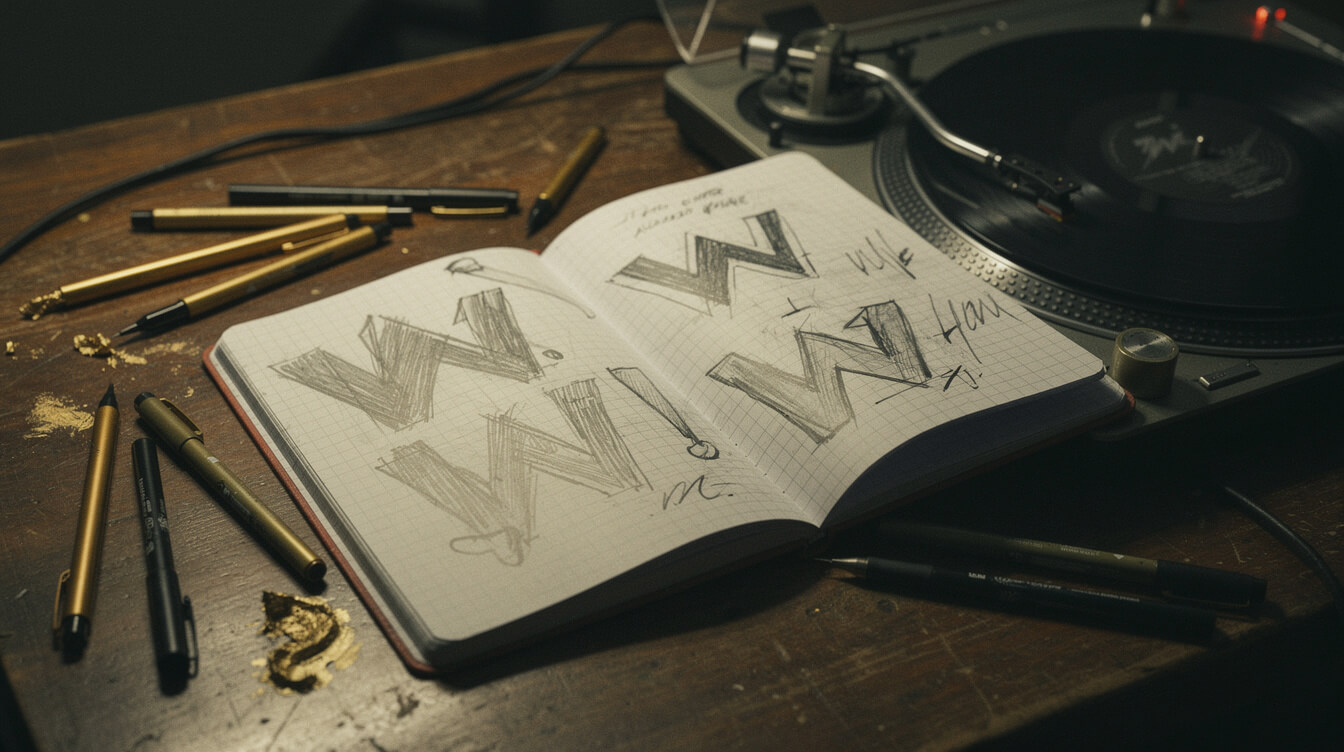
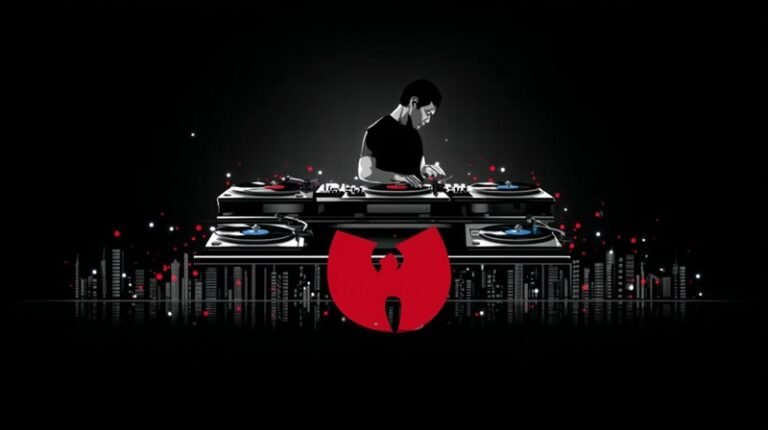
DJ Mathematics — born Jason Hunter — was Wu-Tang’s in-house DJ and the man behind the boards for dozens of their production sessions. When the group needed a visual identity to match the sonic one RZA was building in Stapleton and Park Hill, they turned to one of their own. No outside agencies. No focus groups. Mathematics sat down and drew the W by hand.
The design pulls from multiple places at once. There’s the obvious shape of the letter — the double-V that reads W at a distance but opens into something more angular and aggressive up close. Then there’s the kung fu mythology that runs through everything Wu-Tang touches. The shape echoes the wings of a bat — a potent symbol in Chinese folklore representing fortune and protection. RZA had the whole crew deep in Five-Percent Nation theology, kung fu films, and Staten Island borough pride simultaneously. The W absorbed all of it.
What makes the logo durable is its simplicity. You can spray it on a wall, screen-print it on black fabric at any size, tattoo it on a forearm, and it stays legible. It doesn’t need color to work — the solid yellow W on black is the archetype, but it holds in any colorway. That’s not an accident. Mathematics understood graphic design instinctively: when you need something to identify a movement, it has to work at scale and at scale-down.
For the full visual history of the logo itself — how the bat wings became the W and what the design references in Wu-Tang iconography — read our breakdown of the Wu-Tang Clan symbol and its origins. That piece goes deeper on the mythology. Here we’re focused on what that symbol means when it’s printed on a shirt.
Who Owns the Wu-Tang Brand? The RZA Licensing Reality
Before you buy any Wu-Tang shirt, you need to understand one thing about who controls the brand: RZA. The Abbot has maintained strict control over Wu-Tang intellectual property since the group’s earliest days. Through Wu Music Group — the entity that controls the brand’s commercial applications — RZA approves or blocks every licensing deal. This is not standard procedure in hip-hop. Most artists sign away significant brand rights to labels, managers, or entertainment companies. RZA structured Wu-Tang differently from day one.
The original deal with Loud Records (1993) was itself unprecedented: each member retained the right to sign individual solo deals with other labels. That sovereignty extended to the brand. As the group’s commercial footprint grew through Wu-Tang Forever (1997) and the Wu-Wear clothing line, RZA built the institutional infrastructure to protect and monetize the IP on his terms.
What this means for shirt buyers: there is a defined hierarchy of authenticity. The official Wu-Tang store (thewutangclan.com) sits at the top — these are pieces that RZA has personally greenlighted. Below that are licensed partnerships, where third-party brands or retailers produce Wu-Tang apparel under a formal licensing agreement. Below that is the unofficial market: fan designs, tribute pieces, and outright bootlegs. The hierarchy matters for quality, for cultural honesty, and for where your money actually goes.
RZA has also been clear that the brand’s licensing strategy is selective by design. Wu-Tang doesn’t put the W on everything. The once-upon-a-time-in-Shaolin single album — one physical copy sold for $2 million to Martin Shkreli in 2015 — is an extreme example of the scarcity principle at work. The same philosophy applies to merch: controlled drops, limited editions, deliberate scarcity. If something is everywhere, it isn’t Wu-Tang.
Official Wu-Tang Store vs. Third-Party Pieces: Know the Difference
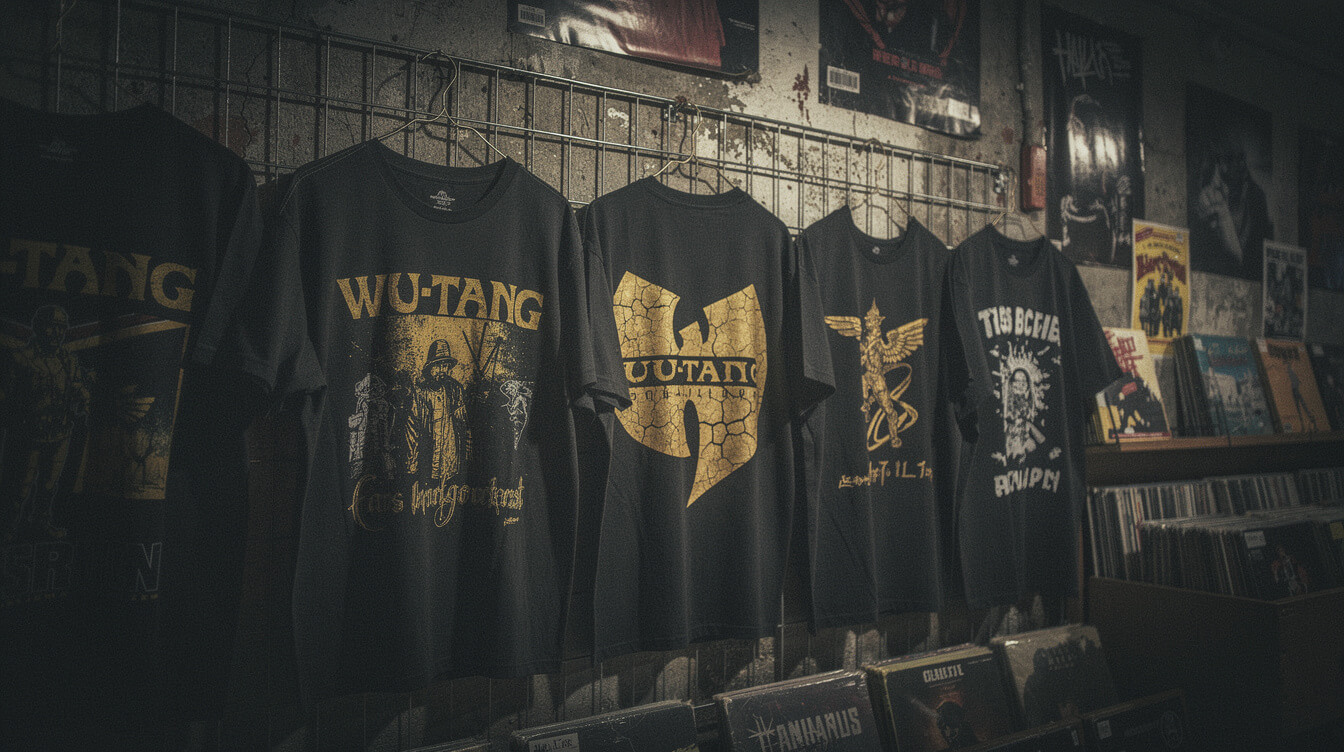
The official Wu-Tang store carries two types of product: Wu-Tang Clan merchandise and Wu-Wear revival pieces. Wu-Tang Clan tees run $40-$60, hoodies $80-$120. The Classic Wu Tee — yellow W on black, minimal text — is their perennial bestseller and costs $40. These prices reflect the licensed product overhead: royalties, union printing where applicable, and the brand premium.
Third-party licensed pieces come from retailers like Rockabilia (which sells officially licensed band merch across multiple artists), Def Jam Shop, and occasionally major retailers like Old Navy who acquire limited licensing windows. Old Navy’s LL Cool J collab from 2024 is the model — Gap-owned retailers negotiating licensed retro music tees as a commercial product, not a cultural statement. The designs are approved, the quality is serviceable, and the price point is lower. But you’re getting a licensed product, not a culture-native piece.
Then there’s the grey market. Sites like TeePublic and Redbubble carry Wu-Tang designs at $20-$30 that exist in a licensing grey zone — fan artists uploading designs that incorporate the W or Wu-Tang imagery under varying interpretations of copyright. Some of these are removed on DMCA notice; others persist. The designs are often excellent because the artists are actual fans who understand the aesthetic. But they’re not officially licensed, and if you care about that, you should know it going in.
The simplest rule: if the seller can’t tell you who holds the license, it isn’t officially licensed. The W is distinctive enough that bootlegs are obvious — same shape, same yellow, but the print quality often betrays it on first wash. Licensed pieces from the official store or major retailers use discharge printing or plastisol on heavyweight blanks. Bootlegs typically use cheaper heat transfer or thin plastisol that cracks after a few washes.
The Classic Designs: Yellow W, Forever, CREAM — What They Reference
Wu-Tang has produced dozens of shirt designs since 1993, but a handful are canonical. Understanding what they reference tells you which one belongs in your rotation.
The Yellow W on Black. This is the entry point. The Classic Wu Tee in yellow on black is the 36 Chambers-era design — raw, minimal, no-explanation-needed. If you know, you know. If you don’t, the W reads as abstract. That ambiguity is part of the design’s genius: it self-selects for the audience. The color combination (yellow / gold on black) appears throughout Wu-Tang’s visual language because it maps to Staten Island’s street aesthetic and to kung fu poster art from the Shaw Brothers era.
Wu-Tang Forever designs. The 1997 double album brought bigger production budgets and more elaborate visual treatments. Forever-era shirts often use the full Wu-Tang Clan wordmark with the W as the anchor element, plus double-album artwork references. The Forever campaign was the moment Wu-Tang crossed into mainstream commercial territory while maintaining underground credibility — the designs from that era reflect that tension, more elaborate than 36 Chambers but still rooted in the same visual language.
CREAM. Cash Rules Everything Around Me. The hook from the fifth track on 36 Chambers became one of hip-hop’s most quoted lines and spawned its own shirt category. CREAM tees typically render the acronym in the same bold, condensed typeface as the Wu-Tang wordmark. Wearing one signals specific album literacy — you know it’s not just a slogan, it’s Raekwon and Ghostface over a Thelonious Monk sample, one of the densest narrative verses of the golden era.
Chamber Script. A more recent official design that uses the text “36 Chambers” in block script, with the W integrated. The official store currently sells it at $45. It’s a cleaner design for buyers who want the reference without the iconography — more wearable in non-hip-hop contexts, though that may or may not matter to you.
Wu-Tang Shirts by Album Era: 36 Chambers vs. Forever vs. 8 Diagrams
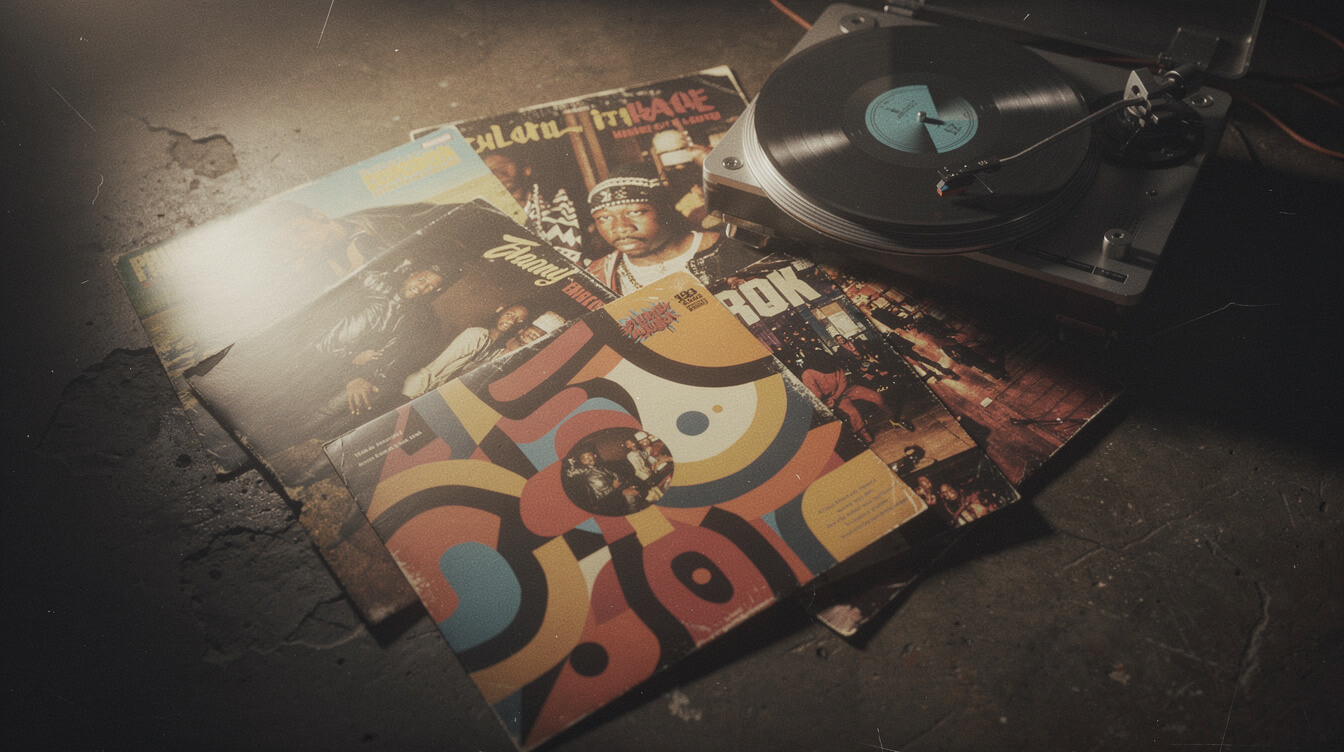
If you want to wear Wu-Tang with actual discographic precision, here’s the era guide.
Enter the Wu-Tang: 36 Chambers (1993) — Loud Records, produced by RZA. Nine solo artists, one voice. The debut is the most sampled-from and referenced era. Shirts from this period (or designed to reference it) tend to be stripped-down: black fabric, yellow W or group name, nothing else. The 36 is not a random number — 36 is the number of chambers in the classic Shaw Brothers film “The 36th Chamber of Shaolin,” which RZA built the group’s mythology around. Raekwon’s verse on C.R.E.A.M. alone is worth its own retrospective. If your shirt game needs a foundation, this is it.
Wu-Tang Forever (1997) — The commercial peak. Double album. Debuted at #1 on the Billboard 200. Every member contributed solo verses and the production pushed deeper into orchestral RZA territory. Shirts from this era often use the full Forever wordmark and tend toward more elaborate graphic treatments. The album’s success created the licensing infrastructure that still governs Wu-Tang merch — this is when Wu-Wear became a serious business and the brand became something RZA had to manage, not just wear.
The W (2000) and Iron Flag (2001) — The post-millennium albums came in a period of solo projects multiplying. GZA’s Liquid Swords (1995), Raekwon’s Only Built 4 Cuban Linx (1995), Ghostface’s Supreme Clientele (2000), Method Man’s output on Def Jam — the solo catalog was expanding in every direction. Shirts that reference this era tend to be solo-member designs rather than collective Wu-Tang branding.
8 Diagrams (2007) — The controversial album. RZA brought in more rock-influenced production; Raekwon and Ghostface publicly clashed with him over the direction. The internal tension was documented and became part of Wu-Tang lore. 8 Diagrams merch is rarer because the album didn’t generate the same fan energy as the first two. It’s a niche collector’s item for the heads who appreciate the full arc.
For deeper discographic context, our piece on the GZA’s Liquid Swords album breaks down one of the Wu solo catalog’s crown jewels — essential reading if you’re coming at this from the album perspective.
CC’s Wu-Tang Shirt Collection: Culture-Authentic Pieces
Custom Creative stocks the Wu-Tang catalog with a focus on album-specific references and solo-member designs — pieces that go beyond the generic W logo into the actual music.
The Wu-Tang Clan From the Slums of Shaolin T-Shirt references the group’s self-designation of Staten Island as Shaolin — the geographical mythology that runs through everything from the 36 Chambers liner notes to Wu-Tang: An American Saga. It’s one of the more literacy-required designs in the catalog: if you know Staten Island as Shaolin and why, this shirt is for you.
The ODB Return to the 36 Chambers piece, Ghostface Killah solo tees, and Raekwon’s Only Built for Cuban Linx design round out the collection with solo-member precision. These are designed for fans who can argue the merits of Cuban Linx vs. Liquid Swords as the better solo Wu album (it’s Cuban Linx, though Liquid Swords defenders make a valid point on replay value).
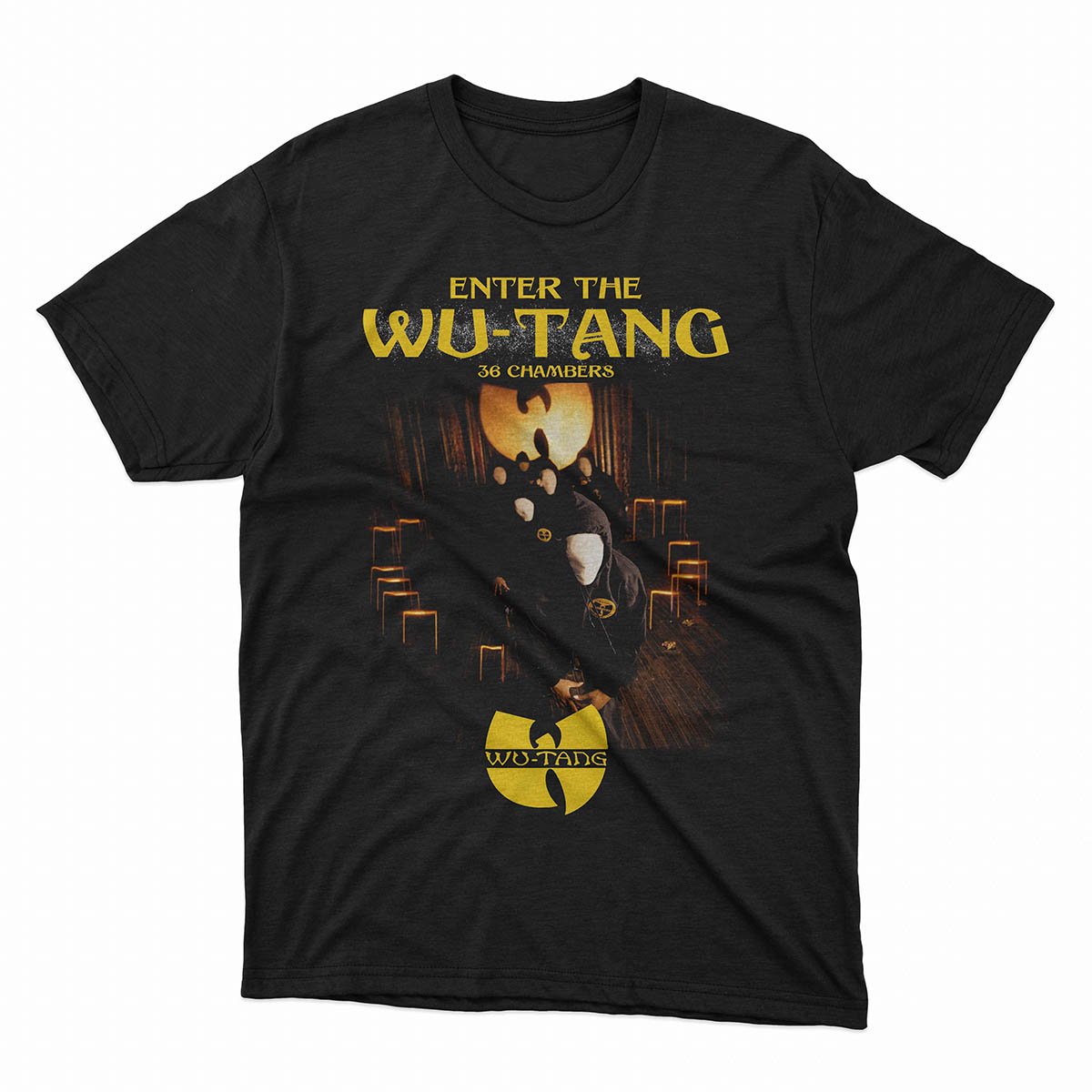
Enter the Wu-Tang: 36 Chambers T-Shirt
The debut album that started everything. Album-specific design, heavyweight black tee, culture-authentic and built to last. Worn by people who actually know what happened in 1993.
The Bootleg Economy: Why Fan-Made Wu Pieces Are Part of the Culture
Wu-Tang has a complicated relationship with bootlegs. On one hand, RZA has cracked down on counterfeit merchandise at shows and through online takedowns. On the other hand, the bootleg Wu tee — sold from blankets outside shows in 1994, from Harlem’s 125th Street tables in 1997 — is deeply embedded in the culture’s history. RZA himself has acknowledged that the bootleg economy was part of how the brand spread before licensed merch was widely available.
The fan-made ecosystem in 2026 is more sophisticated than the 1990s bootleg game. Artists on TeePublic and independent platforms are often producing designs that the official store doesn’t carry — specific lyric references, deep-cut album moments, solo member collabs that weren’t licensed. The grey market fills gaps. Buying a fan-made shirt for a Ghostface verse is different from buying a counterfeit Classic Wu Tee that mimics the official product. The intent matters, and the culture has always known the difference.
The rule that applies here is the same one that applies to Wu-Tang’s music: know what you’re listening to, know what you’re wearing. A bootleg Classic Wu Tee sold as official is a scam. A fan-made shirt that references a specific verse from Cuban Linx with original artwork is something else — tribute with craft. Wu-Tang was built on that tradition. The Clan sampled their way into existence by taking existing music and transforming it into something new. The fan design ecosystem does the same thing with the visual language.
For the full picture on how to rep the Wu across the catalog — not just shirts but hoodies, neon signs, and collectibles — the Wu-Tang merchandise buyer’s guide covers the complete landscape. And if you’re thinking about hoodies specifically, our Wu-Tang hoodie guide breaks down every official and culture-native option worth owning in 2026.
Frequently Asked Questions: Wu Tang Shirt
What does the Wu-Tang W represent?
DJ Mathematics (Jason Hunter) hand-drew the W logo. The shape references both the letter W and bat wings — a kung fu symbol of fortune and protection. It was designed to be bold and readable at any size.
Who owns the Wu-Tang brand?
RZA controls Wu-Tang IP through Wu Music Group. All official licensing — shirts, hoodies, accessories — flows through his approval. There is no Wu-Tang merch without RZA’s sign-off on what carries the official brand.
Where can I buy official Wu-Tang shirts?
The official Wu-Tang store at thewutangclan.com is the primary source. Def Jam Shop carries some pieces; Rockabilia sells officially licensed Wu-Tang merch. Custom Creative carries album-specific and solo-member designs that reference the Wu-Tang catalog.
How do I spot a bootleg Wu-Tang shirt?
Check the print quality. Official pieces use discharge printing or premium plastisol on heavyweight cotton. Bootlegs typically use thinner blanks with cheaper plastisol that cracks quickly. If the seller has no licensing information, it isn’t officially licensed.
What’s the most iconic Wu-Tang shirt design?
The Classic Wu Tee — yellow W on black cotton — is the definitive design. It’s been in continuous production since the mid-1990s and currently sells for $40 at the official store. Everything else in the Wu-Tang shirt catalog exists in its shadow.
Final Thoughts: Wearing the W
A wu tang shirt is a statement that requires context to wear honestly. DJ Mathematics drew the W by hand. RZA built a licensing structure around it that’s held for thirty-plus years. The 36 Chambers was recorded in a house in Park Hill with a four-track. The classic designs — yellow W on black, CREAM, Forever — reference all of that history every time they go on.
Buy the official if the provenance matters to you. Buy the fan-made tribute if the specific lyric or album moment isn’t available elsewhere. Know the difference between a counterfeit and a tribute. And if you’re building a rotation that goes deeper than the W logo, start with the album eras — 36 Chambers, Forever, and the solo catalog that extended the universe. That’s where the real content lives.
Stay creative — The Custom Creative Team
Hip-Hop Culture, Delivered Weekly
Album retrospectives, design breakdowns, and drops from the CC catalog — for people who actually live the culture.

🎧 Never Miss a Drop
Exclusive product releases, hip-hop deep dives, and member-only discounts. Straight to your inbox.
Free forever. No spam. Unsubscribe anytime.
Get the Culture, Delivered
Deep dives into hip-hop history, exclusive product drops, and discounts sent straight to your inbox. No spam, just culture.
Join 2,000+ hip-hop heads already in the loop. Unsubscribe anytime.