Stones Throw Records at 30: Peanut Butter Wolf, Madlib, Dilla, DOOM and the Label That Made Weird Rap Canon
Stones Throw Records turned 30 this year, and the story of the label starts with a funeral, not a business plan. Peanut Butter Wolf founded Stones Throw Records in San Jose in 1996 for one reason above all: the songs he’d made with his late partner Charizma deserved to be heard. Three decades later, that grief-born imprint has put out Madvillainy, Donuts, Champion Sound and The Unseen, launched Aloe Blacc, Mayer Hawthorne, Knxwledge and Sudan Archives, and helped turn NxWorries into Grammy winners. It also made “weird rap” a canon instead of a niche.
The label celebrated with a three-day Stones Throw 30 festival in Highland Park, Los Angeles, on October 16–18, 2026, and NPR marked the moment with a full oral history the same week. What nobody has done is tell the whole story in one place for the heads who grew up on these records. That’s what this is: the origin, the house, the bomb shelter, the leak, the hospital, the soul pivot and the ten records that define the label, with every date checked against at least two sources.
Why Peanut Butter Wolf Started Stones Throw Records: Charizma and “My World Premiere” (1996)
A San Jose crate kid with a label dream
Chris Manak grew up in San Jose buying 45s with his allowance. In the history he wrote for the label’s own website, he says he could tell even as a kid that whatever came out on Sugar Hill, Tommy Boy or early Def Jam would be consistent, and that the logo on the record meant something. By 1986 he had written a high school essay about starting a label one day. That essay is the seed of everything that followed.
His first record came out in 1990: “You Can’t Swing This” by Lyrical Prophecy, pressed in a run of 500 with $500 his dad put in. By his own telling they never mastered it, cut and pasted the artwork by hand, and didn’t even know you could sell records to a distributor. Half the pressing was still sitting there when they were done. Didn’t matter. A group from San Jose had put out its own rap record.
Charizma and the Disney deal that went nowhere
That same year Wolf met Charles Edward Hicks Jr., a Milpitas teenager who rapped as Charizma. Charizma was 16 and Wolf was 20, and they became a duo in the mold of Gang Starr or Pete Rock & C.L. Smooth: one producer, one MC. They shopped a tape and landed at Hollywood Basic, the hip-hop imprint of Disney-owned Hollywood Records. Wolf has written that the label dangled soundtracks, cash and even a part in Sister Act 2, and that the promised creative freedom never came. Only a promo cassette of “Red Light, Green Light” ever surfaced from that deal.
The duo got out of the contract. About two months later, on December 16, 1993, Charizma was shot and killed in a robbery at a stoplight in East Palo Alto, on his way to pick up his mother. He was 20. Wolf told NPR he quit music completely for a while: “I quit everything.”
The first Stones Throw release and where the name came from
Making beats and DJing became the way back. Wolf put out breakbeat records and compilations and produced for other labels, but the Charizma tapes stayed on his mind. Once he convinced a distributor, Nu Gruv Alliance, that he could run a label, he pressed “My World Premiere” by Charizma & Peanut Butter Wolf as a 12-inch in 1996. Catalog number STH 2001. Stones Throw Records’ very first release was a eulogy you could dance to.
The name came from a saying Wolf’s mom used, which he and Charizma used to tease her about. (“We were big on mom jokes,” he wrote.) By Wolf’s account, a year after the single dropped he was on the set of KRS-One’s “Step Into a World” video when Kenny Parker played it, and KRS asked who it was. For a kid who grew up on BDP, that was the co-sign. The full Charizma & Peanut Butter Wolf album finally came out on Stones Throw as Big Shots in 2003, a decade after Charizma died.
The founding principle was set in that same essay on the label’s site: “I don’t put out what I think the people will like, I put out what I like.” Thirty years of releases have held to that line.
Madlib Moves In: Lootpack, Quasimoto and The Unseen (1999–2000)

A 12-inch from Oxnard
The early Stones Throw catalog was Bay Area rap and DJ tools: battle records like the cult Super Duck Breaks, plus local MCs like Rasco. Then Wolf heard a record from Oxnard, a coastal town about an hour outside Los Angeles that nobody in the industry was paying attention to. It was the Psyche Move EP (1996) by Lootpack: Madlib, Wildchild and DJ Romes. Madlib had already produced for Tha Alkaholiks, but Lootpack had no distribution. As Wolf told NPR, Madlib’s dad had pressed the record himself and was sitting on copies, so Wolf called the number on the label and offered to sell whatever they had.
That phone call is the moment the label’s real trajectory was set. Lootpack signed, and Soundpieces: Da Antidote! came out on Stones Throw in 1999. Wolf says he played their tapes more than anything else he had. At the Stones Throw 30 festival this October, Wildchild and DJ Romes performed Soundpieces on the same Highland Park weekend the label threw itself a birthday.
The house, the van and the move to LA
In 2000 Wolf moved the label from the Bay to Los Angeles. Eothen “Egon” Alapatt, who would serve as general manager from 2000 to 2011, told NPR the two of them pooled gig money, rented a van and drove across the country. The first base, in his telling, was a three-bedroom mid-century house in Playa del Rey near the airport: Wolf on A&R, Egon on business, and Wolf’s high school friend Jeff Jank on art direction. “Very quickly after that,” Egon said, “Madlib moved into the living room.” Later the crew worked out of a label house where Madlib’s studio was a converted bomb shelter with concrete walls, a room that would matter a great deal a few years later.
Quasimoto and the voice nobody could place
The record that announced the new Stones Throw was Quasimoto’s The Unseen, released June 13, 2000. Madlib made it during a month on mushrooms and rapped as Lord Quas, a high-pitched alter ego who was meant to stay unseen until Jeff Jank drew him into the yellow cartoon heads know now. The voice is not helium. Madlib slowed the beat down, rapped slowly in his normal voice, then sped the tape back up, so Quas sits a pitch above the world while the drums stay heavy.
The Bay’s hip-hop purists didn’t get it. Egon told NPR the reaction there was basically, what is this weird stuff? His answer was that this was exactly where he needed to be. That instinct, betting on the record the room doesn’t understand yet, is the whole Stones Throw business model.
Madlib kept multiplying. He invented a whole jazz band, Yesterdays New Quintet, and played every member himself. In 2003 he even got the keys to the Blue Note vault for Shades of Blue (a Blue Note release, not Stones Throw). We broke that one down in our Madlib Blue Note anniversary piece. Wolf told NPR he is still sitting on more than 500 unreleased Madlib songs.
Madvillainy (2004): The Album That Made Stones Throw Records Canon
Two names on a wish list
Wolf and Madlib both carried DOOM’s Operation: Doomsday in their crates when they DJed (we covered its 1999 drop in our October 19 Today in Hip-Hop). In the early 2000s Wolf asked Madlib who he would work with beyond his Oxnard crew. Madlib named two people: MF DOOM and Jay Dee, who nobody was calling Dilla yet. Stones Throw ended up releasing albums with both.
A beat CD through Kennesaw, Georgia
Nobody at the label knew DOOM. Egon’s old record-digging friend from college lived in Kennesaw, Georgia, the Atlanta suburb where DOOM was living, and had lent him some gear. Egon asked him to be an emissary and bring DOOM a Madlib beat CD. DOOM had never heard of Madlib. He was in, but he wanted to be paid properly: a plane ticket and $1,500, which Egon remembers as a hard sum to scrape together on the fly for a label that sometimes had more checks out than money in the bank.
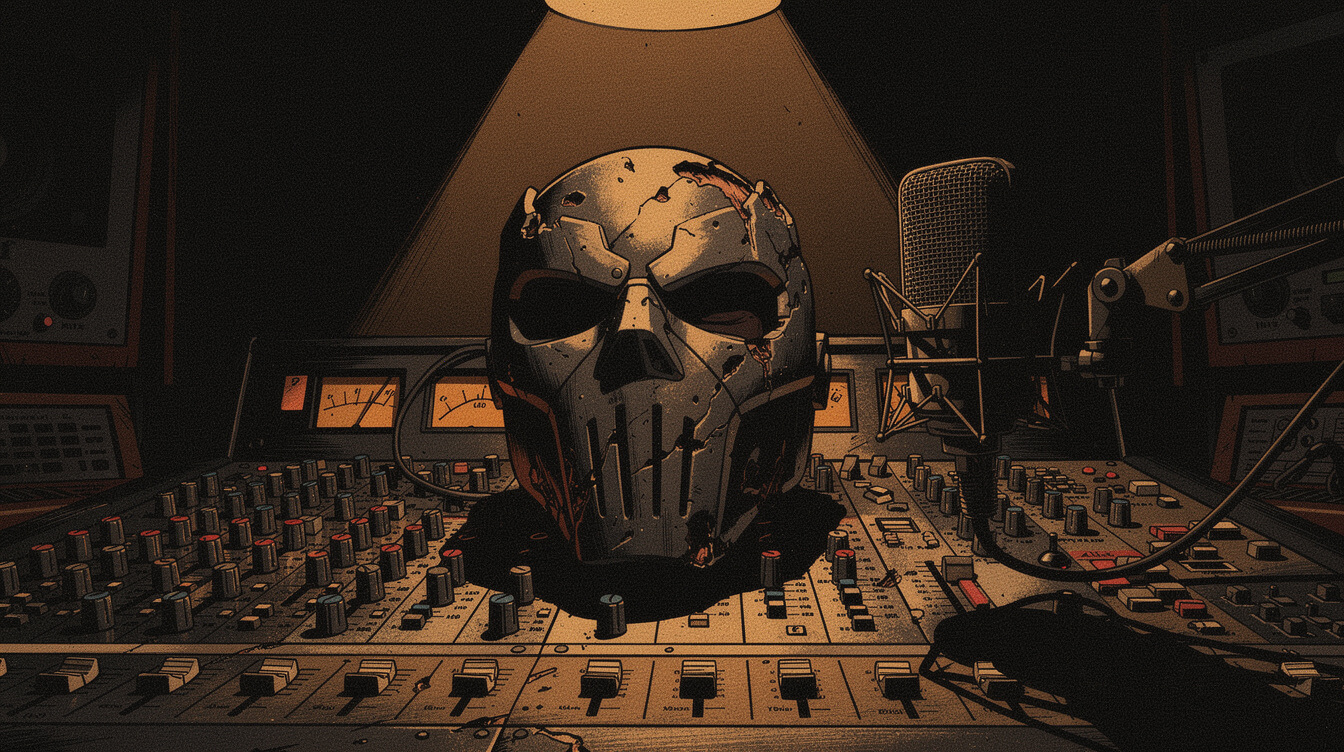
Then the recording. Wolf told NPR he never actually saw the two of them in the same room: DOOM cut vocals in Wolf’s bedroom while Madlib made beats in the bomb-shelter basement. The most celebrated underground rap album of the 2000s was, quite literally, made underground. Madlib mixed to CD, so DOOM had to edit tracks as much as anybody. Egon’s point: if DOOM weren’t a producer himself, the record wouldn’t exist.
The leak, the re-cut and the release
Then disaster. An unfinished version of the album was stolen while Madlib was in Brazil and leaked online more than a year before release. DOOM went back and re-recorded much of his vocals with a calmer, more relaxed delivery, and he wrote the leak into the record itself. On “Rhinestone Cowboy” he raps that it “leaked into cyberspace.”
Madvillainy finally came out on Stones Throw on March 23, 2004. It runs 22 tracks, with hooks that barely exist and beats that end before you’re ready. In The New Yorker that April, Sasha Frere-Jones held it up as proof of why independent hip-hop isn’t such a bad idea. Twenty-two years later it’s the album most people mean when they say “Stones Throw.” The label is still mining it: its store carries a Madvillainy Demos vinyl, and a remix album, Madvillainy 2: The Madlib Remix, followed in 2008.
If Madvillainy is the one in your rotation, our MF DOOM Madvillain Hoodie is built for the people who know every “All Caps” bar by heart.
Was MF DOOM signed to Stones Throw?
Not in the sense most people mean. The Madvillain project was Stones Throw, but DOOM’s solo catalog of the same era was spread across other independents: Operation: Doomsday on Fondle ‘Em (1999), Take Me to Your Leader as King Geedorah on Big Dada (2003), Vaudeville Villain as Viktor Vaughn on Sound-Ink (2003), and MM..Food on Rhymesayers (November 2004). DOOM was a free agent who made one perfect album with Stones Throw. For the full run, see our MF DOOM albums guide and the deep cut on King Geedorah.

Recorded in a Bomb Shelter, Worn Everywhere
One beat CD through Georgia, one leak and one re-cut later, Madvillainy became Stones Throw’s defining record. We made the MF Doom Madvillain T-Shirt for the heads who still run it front to back.
J Dilla, Jaylib and Donuts (2003–2006)
Champion Sound: an album made by mail
The other name on Madlib’s wish list came through first. Madlib had been rapping over Jay Dee beats for his own amusement and wrote “Jaylib” on the homemade CD. When Dilla heard it, he wanted to do it properly. The two recorded in separate cities in 2002 and 2003, trading CDs back and forth without ever being in the same studio, each rapping over the other’s beats. Jaylib’s Champion Sound came out on Stones Throw on October 7, 2003.
It hit people who weren’t even underground heads yet. Anderson .Paak told NPR a friend burned him a copy of Champion Sound when he first moved to LA, and that it sent him chasing everything Madlib and Dilla touched, then MF DOOM, until he noticed all of those records had the same logo on the spine. More than a decade later he’d be on that label himself.
Wolf has been honest about how lopsided the economics were. “He was getting more money for one track from some of these major label artists than we could afford to give him for a whole album,” he told NPR. Dilla did it anyway. By the time Champion Sound came out, he was already dealing with the health problems that would take his life.
Donuts: a CD in the car
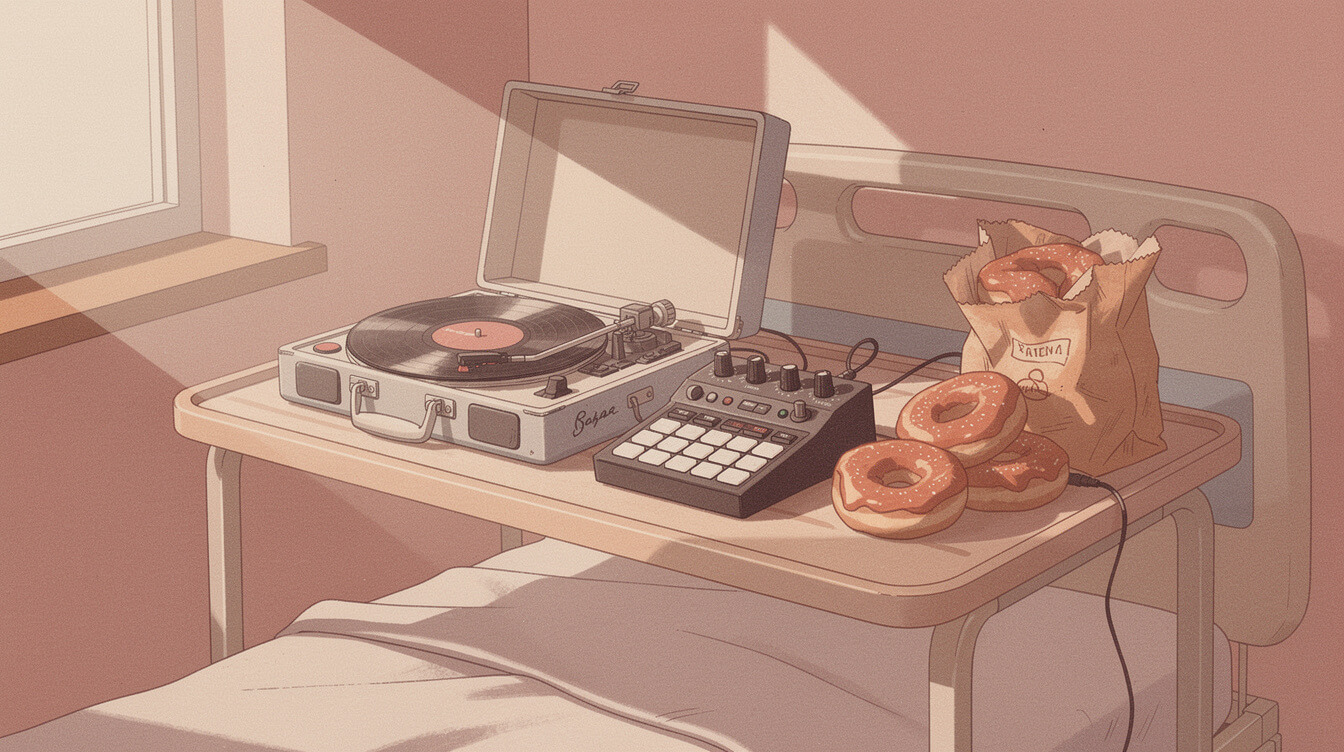
The way Wolf tells it, he and Dilla were driving to a record store when Dilla handed him a CD and said to throw it on. It was the beginning of what became Donuts. Wolf knew rappers paid good money for those beats, but he asked Dilla if Stones Throw could put it out as instrumentals. Dilla agreed, then went back and made it longer. Wolf says Dilla kept making music while he was hospitalized, and that Madlib brought him records and a small portable turntable to sample from. How much of the final sequence was assembled in the hospital is debated; Dan Charnas’s book Dilla Time credits Jeff Jank with significant work finishing the album.
Donuts came out on Stones Throw on February 7, 2006, Dilla’s 32nd birthday. He died three days later, on February 10, 2006, after years with the blood disease TTP and lupus. A-Trak told NPR it was “such a trip to get the album in the same week that you find out about his passing.” Thirty-one tracks, most of them under two minutes, built from bare loops instead of the dense, knocking drums people expected from him. It became one of the most studied beat tapes ever made. We went sample by sample in J Dilla’s Donuts track-by-track, and his full career is mapped in our J Dilla production discography.
What’s Stones Throw in the Dilla catalog, and what isn’t
Not every posthumous Dilla record is a Stones Throw record, and the internet mixes them up constantly. Donuts (2006) is Stones Throw, as are the expanded Ruff Draft reissue (2007) and the Champion Sound deluxe edition (2007). The Shining (2006) came out on BBE and was finished by Karriem Riggins, who later recorded for Stones Throw himself. Jay Stay Paid (2009) was Nature Sounds, and The Diary (2016) was Mass Appeal. If you rep Dilla daily, our J Dilla T Shirt is a fan-art tribute to the man behind the drums.
Egon summed up the label’s internal mythology like a jazz fan: Madlib compared DOOM to Charlie Parker and Dilla to Coltrane, and cast himself as some mix of Miles Davis and Sun Ra. Inside the house, they believed Madlib was the greatest hip-hop producer besides Dilla.
Beyond Rap: Aloe Blacc, Mayer Hawthorne, Dâm-Funk and the Soul/Funk Pivot

Egon’s reissues and Gary Wilson
Stones Throw was never only a rap label, and that bothered some fans. Egon brought in soul and funk reissues and started his own label, Now-Again Records, distributed through Stones Throw. Wolf signed the cult experimental songwriter Gary Wilson. Egon told NPR that people saw moves like that as novelties rather than the core of the label. In hindsight, they were the core.
Aloe Blacc and “I Need a Dollar”
Aloe Blacc came up as an underground rapper and grew up hearing Stones Throw records on LA college and mixshow radio. “If you saw the logo, you’d pick it up, and probably buy the record without even listening,” he told NPR, “because you just trusted the curation.” His debut, Shine Through, came out on Stones Throw in 2006. For the follow-up, Egon had the idea of sending him to New York to cut with the Truth & Soul production crew. The result was Good Things (September 28, 2010), and its single “I Need a Dollar” became the opening theme of HBO’s How to Make It in America. It went on to become an international hit and the biggest crossover moment the label had seen. Blacc’s own verdict: “it changed the game” for what an indie artist could expect.
Mayer Hawthorne’s heart-shaped 7-inch
Wolf heard just two songs by Mayer Hawthorne and signed him. Stones Throw issued his debut single, “Just Ain’t Gonna Work Out” backed with “When I Said Goodbye,” in November 2008 on a red, heart-shaped 7-inch record, about as on-brand as a vinyl-obsessed label can get. The album A Strange Arrangement followed on September 8, 2009. Hawthorne later formed the funk duo Tuxedo with producer Jake One, and Tuxedo spun a DJ set at the label’s 30th-anniversary festival.
Dâm-Funk and 7 Days of Funk with Snoop
Dâm-Funk found Stones Throw the old-fashioned way. While digging at Aron’s Records in LA, he spotted Yesterdays New Quintet and Dudley Perkins records displayed together and decided he had to check the label out. He signed in 2007, and his debut album Toeachizown landed on October 27, 2009. He told NPR he saw himself as “the funk artist on Stones Throw,” pulling from Prince, Junie Morrison, Slave and Steve Arrington, and from DJ Quik’s G-funk too.
That lane led to one of the strangest, best collaborations in the catalog. Snoop Dogg, recording as Snoopzilla, linked with Dâm-Funk as 7 Days of Funk, and their self-titled album came out on Stones Throw on December 10, 2013. It was Snoop’s first album with a single producer since Doggystyle in 1993. A Long Beach legend made a boogie-funk record on the label that put out Madvillainy, and it made sense.
The same year, the label’s story got its own film. Our Vinyl Weighs a Ton: This Is Stones Throw Records, directed by Jeff Broadway, premiered at the LA Film Festival on June 21, 2013, with testimonials from Kanye West, Questlove and Tyler, the Creator. If this post leaves you wanting more, start there.
Stones Throw Records Today: 30 Years, the Roster and the Vinyl-First Ethos

The intern pipeline: Knxwledge, Mndsgn and NxWorries
The modern Stones Throw roster came together in a way only this label could manage. Wolf told NPR that Sofie Royer, hired to do digital marketing, kept telling him about her two roommates who made beats: Mndsgn and Knxwledge. He signed both. Knxwledge’s Stones Throw debut, Hud Dreems, arrived in 2015, the same year he produced “Momma” on Kendrick Lamar’s To Pimp a Butterfly. Then Knxwledge played Wolf something he was making with a singer-drummer from Oxnard, Madlib’s hometown, named Anderson .Paak. Wolf: “I don’t know what it is, but I like it.”
That was NxWorries. The single “Suede” went viral, and Yes Lawd! came out on Stones Throw on October 14, 2016, a week ahead of schedule. The sequel, Why Lawd?, followed in June 2024 and won Best Progressive R&B Album at the 67th Grammy Awards in February 2025, sharing the award with Avery*Sunshine in the category’s first-ever tie. A label that started with a 500-copy 12-inch now had a Grammy.
Sudan Archives, Mild High Club and the “what is Stones Throw?” question
Wolf says he knew from one song, “Come Meh Way,” that he wanted to work with Sudan Archives. The violinist and singer debuted on Stones Throw with a 2017 EP and released Athena (2019), Natural Brown Prom Queen (2022) and The BPM (2025), which she recorded in Detroit. When she worried The BPM wasn’t “really Stones Throw,” Wolf’s answer to NPR was the label’s whole philosophy in five words: “Yeah, but what is Stones Throw?”
Mild High Club’s psych-pop (Timeline in 2015, Skiptracing in 2016) pushed the catalog further from rap. Wolf told Bandcamp Daily he’d have loved to sign them in the late ’90s too: “It wasn’t so much that my music taste changed.” Benny Sings, John Carroll Kirby and Pearl & the Oysters fill out the current era. A-Trak, a turntablist the label embraced early, made the point to NPR that even when Stones Throw records aren’t rap, “a lot of times it still sounds like a beat tape.”
Vinyl first, always
Wolf’s own manifesto on the label’s site explains the vinyl obsession in DJ terms. Stones Throw put out instrumental versions of albums because the artists should be able to rock a show from vinyl, and because the DJs asked for them. He kept pressing 45s even when that meant selling about 1,000 copies a title. In August 2018 the label opened Gold Line, a hi-fi bar beneath its Highland Park headquarters stocked with 7,500 records from Wolf’s own collection and running all-vinyl DJ sets.
Stones Throw 30
The anniversary came home to Highland Park on October 16–18, 2026: a three-day all-ages festival presented with Lodge Room and KCRW, steps from the label’s longtime headquarters. The bill read like a family reunion: Dâm-Funk, Egyptian Lover, J Rocc, Karriem Riggins, Mndsgn, Gary Wilson, Vex Ruffin, The Koreatown Oddity, Rasco & Planet Asia, Mild High Club’s first LA show in more than five years, and Peanut Butter Wolf himself, with Sudan Archives and Aloe Blacc as special guests. One dollar from every ticket went to local charities. Thirty years after a 12-inch for a friend who couldn’t hear it, the founder is still behind the decks.
If you follow independent label history, Stones Throw’s story makes a sharp contrast with the street-business empire in our Rap-A-Lot Records history: both built independent blueprints, but from opposite ends of the culture.
10 Essential Stones Throw Records Releases

Thirty years, hundreds of releases, one starter crate. Every pick below came out on Stones Throw itself, not a sister imprint, in chronological order.
- Charizma & Peanut Butter Wolf, “My World Premiere” (1996). STH 2001, the first release. The reason the label exists.
- Lootpack, Soundpieces: Da Antidote! (1999). Oxnard’s finest and Madlib’s proper introduction. Wildchild and DJ Romes still perform it front to back.
- Quasimoto, The Unseen (2000). The sped-up voice, the skits, the drug-PSA samples. The weirdest important rap record of its year.
- Jaylib, Champion Sound (2003). Madlib and Dilla trading beats and verses by CD. The record that sent a young Anderson .Paak down the rabbit hole.
- Madvillain, Madvillainy (2004). The canon. Bomb shelter, bedroom booth, leaked and re-cut, and better for it.
- J Dilla, Donuts (2006). Released on his 32nd birthday, three days before he died. Beatmakers still study it like scripture.
- Dâm-Funk, Toeachizown (2009). The modern-funk statement that pushed the label past rap for good.
- Aloe Blacc, Good Things (2010). “I Need a Dollar” took a Stones Throw single to HBO and around the world.
- NxWorries, Yes Lawd! (2016). Knxwledge loops plus .Paak’s half-sung, half-rapped charm. The bridge from the beat-tape era to the Grammy era.
- Sudan Archives, Natural Brown Prom Queen (2022). Proof that “what is Stones Throw?” is a question, not a genre.
Honorable mentions: Mayer Hawthorne’s A Strange Arrangement (2009), 7 Days of Funk (2013), Knxwledge’s Hud Dreems (2015) and NxWorries’ Grammy-winning Why Lawd? (2024).
Stones Throw Records FAQ
Who founded Stones Throw Records, and who runs it?
Chris Manak, the DJ and producer known as Peanut Butter Wolf, founded Stones Throw Records in San Jose in 1996 to release the music he’d recorded with his late partner Charizma. Wolf still runs the label 30 years later. Eothen “Egon” Alapatt was general manager from 2000 to 2011, and Jeff Jank shaped the label’s visual identity as art director.
Where is Stones Throw Records located?
Stones Throw is based in Los Angeles, with its longtime headquarters in the Highland Park neighborhood of Northeast LA. Its Gold Line vinyl bar sits beneath the headquarters. The label moved from the Bay Area to LA in 2000.
Was MF DOOM signed to Stones Throw?
Only for Madvillain. Madvillainy (2004) and Madvillainy 2: The Madlib Remix (2008) came out on Stones Throw, but DOOM’s solo albums of that era were on other independents. MM..Food, for example, was a Rhymesayers release. If that’s your DOOM record, our MF DOOM Mm.. Food T-Shirt covers the solo side, and our MF DOOM merch guide explains how to tell real gear from bootlegs.
Why is it called Stones Throw?
According to Peanut Butter Wolf, the name came from a saying his mom used, which he and Charizma used to tease her about.
Did J Dilla make Donuts in the hospital?
Partly. Peanut Butter Wolf has said Dilla first played him an early version in the car, then extended it, and that he kept making music while hospitalized, with Madlib bringing him records and a portable turntable. Dan Charnas’s book Dilla Time credits Jeff Jank with significant work finishing the album, so the full story is more collaborative than the legend.
Is Madlib’s Medicine Show or Freddie Gibbs’ Piñata a Stones Throw release?
No. The 13-volume Madlib Medicine Show series (2010–2012) and Freddie Gibbs and Madlib’s Piñata (2014) both came out on Madlib Invazion, Madlib’s own imprint. They’re family, not catalog.
How old is Stones Throw Records?
Stones Throw turned 30 in 2026. Its first release, “My World Premiere,” came out in 1996, and the label celebrated with the Stones Throw 30 festival in Highland Park on October 16–18, 2026.
Final Thoughts: A Label Built on a Friend’s Unheard Songs
Most labels start with a business plan. Stones Throw started with grief and a box of tapes. Everything since, from Lord Quas’s sped-up voice to the bomb-shelter Madvillainy sessions to a heart-shaped 7-inch to a Grammy tie, follows from one stubborn rule Peanut Butter Wolf wrote down decades ago: put out what you like, not what you think people will like. Thirty years later, the kid who bought Sugar Hill and Tommy Boy 45s because he trusted the logo has built a logo a whole generation trusts the same way.
Pull a Stones Throw record tonight. Start with Madvillainy if you somehow haven’t, then Donuts, then let the label take you somewhere you didn’t expect. That’s the point.
Get the Culture in Your Inbox
Label histories, sample receipts, anniversaries and first dibs on new drops. No spam, just hip-hop.

🎧 Never Miss a Drop
Exclusive product releases, hip-hop deep dives, and member-only discounts. Straight to your inbox.
Free forever. No spam. Unsubscribe anytime.
Get the Culture, Delivered
Deep dives into hip-hop history, exclusive product drops, and discounts sent straight to your inbox. No spam, just culture.
Join 2,000+ hip-hop heads already in the loop. Unsubscribe anytime.