Eminem Albums in Order: All 12 Studio Albums, the Producers Behind Each One and the Receipts
Tomorrow, November 12, a cassette that almost nobody bought turns 30. Infinite came out of a basement in Ferndale, Michigan in 1996. By its maker’s own count it sold “maybe 70 copies,” and it was moved out of a car trunk in Detroit. Every one of the Eminem albums that followed, from the Diamond-certified run to the 2024 record where he finally killed off Slim Shady, grows out of that failure. Below are all 12 studio albums in order, with the people behind the boards for each one and the receipts: chart peak, RIAA certification and first-week numbers.
This isn’t another hot-take ranking. Plenty of those exist already. This is the discography the way a crate-digger reads it: through the production credits. The Detroit crew he started with never fully left. Dr. Dre went from co-pilot to executive producer to elder statesman. And from 2010 on, the outside producers kept changing, which helps explain why the fanbase splits over the late run.
How Many Albums Does Eminem Have? (12, and Here’s the Fine Print)
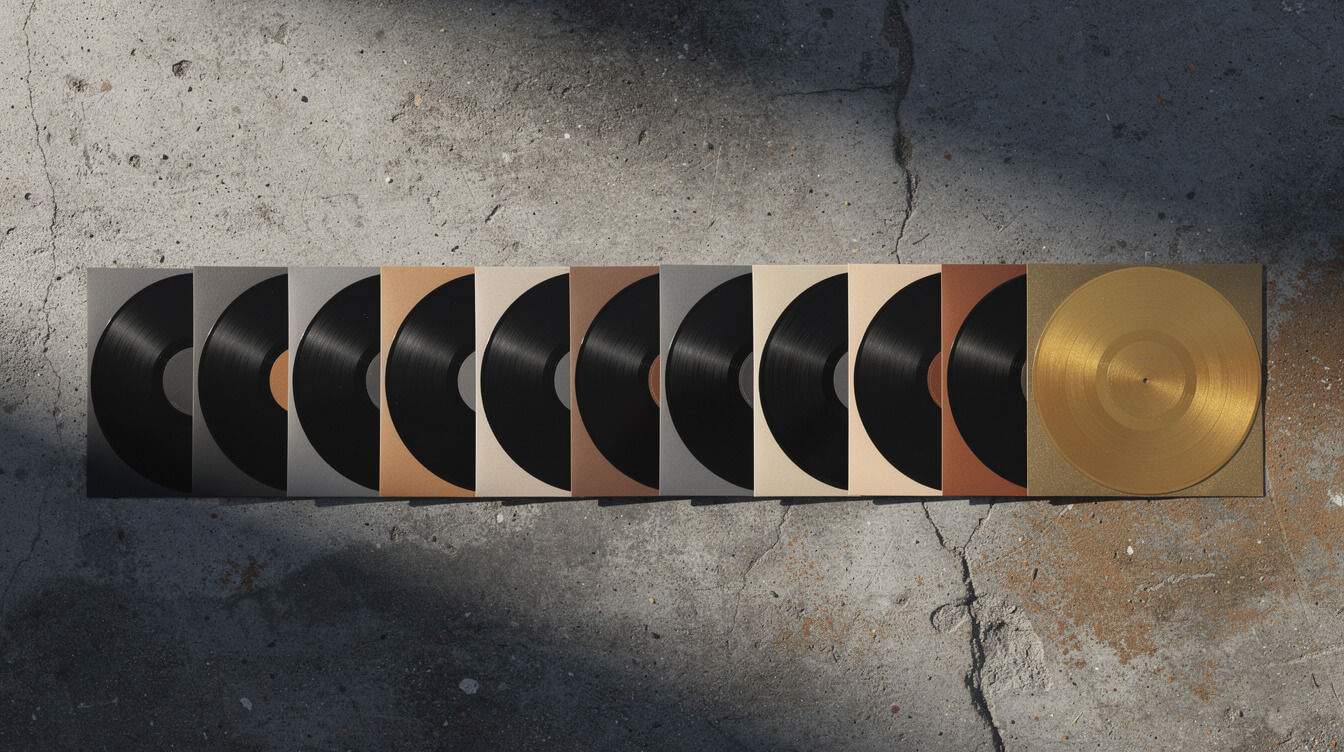
Eminem has released 12 studio albums. That count includes his 1996 indie debut Infinite, and it should. If you’ve seen a ranking video that says “all 11,” it was either made before July 2024 or it quietly drops Infinite. Here are the Eminem albums in order, with US release dates:
- Infinite (November 12, 1996, Web Entertainment)
- The Slim Shady LP (February 23, 1999)
- The Marshall Mathers LP (May 23, 2000)
- The Eminem Show (late May 2002, rushed out a week early to beat bootleggers)
- Encore (November 12, 2004)
- Relapse (May 2009)
- Recovery (June 2010)
- The Marshall Mathers LP 2 (November 5, 2013)
- Revival (December 15, 2017)
- Kamikaze (August 31, 2018)
- Music to Be Murdered By (January 17, 2020)
- The Death of Slim Shady (Coup de Grâce) (July 12, 2024)
Notice the dates on the bookends: Infinite and Encore both came out on November 12, eight years apart. Encore got there by accident. It was moved up from November 16 to get ahead of leaks.
What doesn’t count as a studio album
The discography gets muddy because Em’s name sits on a lot of releases that aren’t solo studio LPs. None of these count toward the 12:
- Slim Shady EP (December 1997). Eight songs. He made 500 copies and sold about half. This is the tape that reached Dr. Dre.
- D12’s Devil’s Night (2001). The group album with his Detroit crew, and the reason Shady Records exists.
- 8 Mile soundtrack (2002). Home of “Lose Yourself.” It’s a soundtrack, not an Eminem album, even though it’s now 6x Platinum.
- Curtain Call: The Hits (2005) and Curtain Call 2 (2022). Compilations.
- Eminem Presents: The Re-Up (2006) and Shady XV (2014). Label showcases.
- Relapse: Refill (2009). A reissue of Relapse with bonus songs.
- Bad Meets Evil’s Hell: The Sequel (2011). The EP with Royce da 5’9″. We covered it on its 15th anniversary.
Does Infinite really count?
Yes. It’s a full-length album, recorded and pressed for sale, and Wikipedia’s discography counts it as studio album number one. The confusion comes from the fact that you mostly couldn’t hear it. It has never been sold in online music stores. Only the title track reached Spotify, twenty years later. Five days after the 20th anniversary in 2016, Eminem’s official YouTube channel posted a Bass Brothers remix of “Infinite,” the first time any of it was released digitally. Em has called the album “the demo that just got pressed up.” Fair enough, but a pressed demo with a release date is still an album.
Detroit Before Dre: Infinite (1996) and The Slim Shady LP (1999)
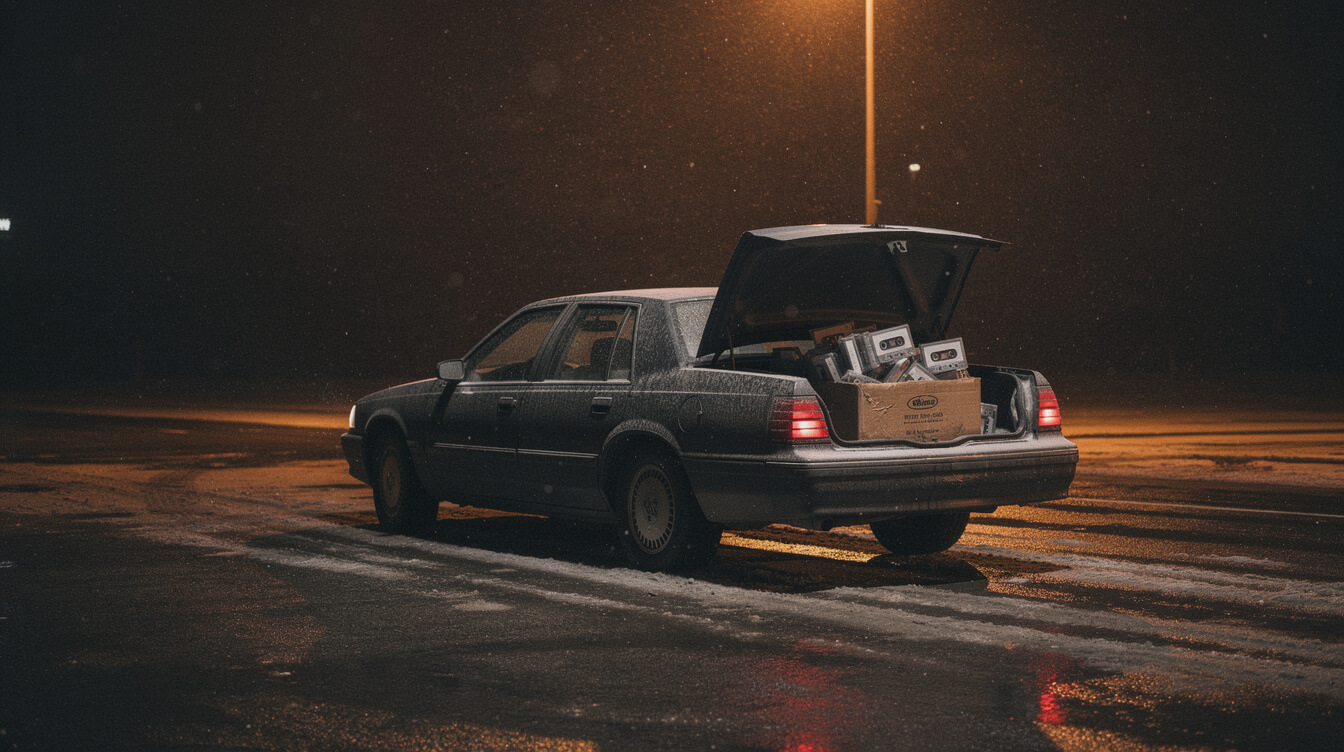
The first two Eminem albums tell you everything about how the rest of the catalog got made. One was built by the Detroit crew alone. The other is where Dr. Dre walks in without pushing anybody out.
Infinite: the Bassmint tape
Em signed with Jeff and Mark Bass, the Bass Brothers, back in 1992, while he was cooking and washing dishes at Gilbert’s Lodge in St. Clair Shores. Infinite was recorded in their basement studio in Ferndale and released on their label, Web Entertainment, on November 12, 1996. Here’s the credit most fans get wrong: the Bass Brothers didn’t produce Infinite. They were executive producers. The beats came mostly from Mr. Porter (Denaun Porter), with Em producing too. Proof, his best friend, is credited with programming drums.
The influences show. Em was writing under the spell of Nas’s Illmatic and 2Pac’s Me Against the World, and people told him he sounded like AZ. Looking back, he called Infinite “me trying to figure out how I wanted my rap style to be.” (Flow-influence debates have followed him ever since, and Masta Ace has his own take on them.) Nobody knows exactly how many copies sold. Em’s book says “maybe 70” out of roughly 1,000 pressed, and other accounts say a few hundred. Detroit radio mostly ignored it.
The Slim Shady pivot
The flop is the origin story. Em said every rhyme he wrote after Infinite “got angrier and angrier,” fueled by people asking why a white kid was rapping at all, and the Slim Shady alter ego came out of that. The Slim Shady EP (1997) was the result. He pressed 500 copies. He then took second place at the Rap Olympics battle in Los Angeles, Interscope staff in the room sent the EP to Jimmy Iovine, and Iovine played it for Dr. Dre. Dre’s response, as he tells it: “Find him. Now.”
The Slim Shady LP: recorded on 8 Mile Road
The jewel nobody mentions: The Slim Shady LP was cut at Studio 8, at 430 8 Mile Road in Ferndale. The road that later named his movie was the studio’s actual street address. On the first day with Dre, they finished “My Name Is” in about an hour and recorded three more songs that day, “Role Model” among them. The production split shows where things stood: Dre, the Bass Brothers, Mel-Man and Em himself. Detroit was still at the table.
“My Name Is” has its own receipt. The riff is a replayed interpolation of Labi Siffre’s 1975 “I Got The…,” not a straight sample. Siffre refused clearance until lines he found homophobic and sexist were rewritten, and he’s a credited writer on the song. The LP debuted at No. 2 behind TLC’s FanMail with 283,000 first-week copies. It’s now 5x Platinum and won Best Rap Album at the 2000 Grammys. If you want Dre’s side of the partnership, our Dr. Dre songs breakdown covers it era by era, and the Dr. Dre The Chronic T-Shirt is a nod to the record that made the boss.
The Aftermath Peak: MMLP, The Eminem Show and Encore (2000–2004)
Three Eminem albums in four and a half years, all three No. 1, and two of them Diamond. This stretch is where the receipts get absurd, and where you can watch Em take over his own production from Dre.
The Marshall Mathers LP (2000)
The first week is the stat everybody quotes, and it holds up: 1.76 million copies in the US. The previous hip-hop record was Snoop’s Doggystyle at about 806,000, so MMLP more than doubled it. The production was still a team effort: Dre and Mel-Man, the Bass Brothers (credited as F.B.T.), Em himself, and one outside legend. The 45 King built the “Stan” loop out of Dido’s “Thank You” after hearing the song in the film Sliding Doors. MMLP won Best Rap Album, lost Album of the Year to Steely Dan, and is now 11x Platinum. Measured in actual US sales, it’s still his best seller: about 12.5 million per Luminate. We made the Eminem The Marshall Mathers LP T-Shirt for the heads who still know where they were when that porch cover dropped.

1.76 Million in a Week. Wear the Receipt.
We made the Marshall Mathers LP tee for the Diamond-era heads. It’s a tribute to the album that doubled the rap first-week record and never looked back.
The Eminem Show (2002)
This is the album where Em mostly produced himself. Dre is credited on just three tracks: “Business,” “Say What You Say” and “My Dad’s Gone Crazy.” Em made the rest, often with Jeff Bass co-producing (“White America,” “Without Me,” “Sing for the Moment,” “Superman”) and Mr. Porter co-producing “When the Music Stops.” The rollout was chaos. Bootleggers forced Interscope to pull the release up from June 4, so stores started selling it in late May. It debuted at No. 1 on barely a day or two of counted sales, then sold 1.32 million in its first full week.
The samples are classic-rock and old-school receipts: “Sing for the Moment” is built on Aerosmith’s “Dream On,” and the opening line of “Without Me” interpolates Malcolm McLaren’s “Buffalo Gals.” It’s 12x Platinum, the highest RIAA certification of any Eminem album. It went Diamond on March 7, 2011, and won Best Rap Album at the 2003 Grammys.
Encore (2004)
Encore is where the cracks start to show. Leaks pushed the release up four days, to November 12, 2004, and it still moved 710,000 copies in a three-day first week. By the liner credits, Em produced 11 tracks and Dre 8, with Mike Elizondo and Mark Batson filling in. It’s 5x Platinum. One detail aged well: a track cut from Encore was reworked 20 years later as “Brand New Dance” on The Death of Slim Shady. The Detroit Free Press confirmed it was recorded in 2004.
Building the Empire: Shady Records, D12 and 50 Cent
The albums don’t make sense without the label, because the label is why the Detroit crew never left the credits.
Em and his manager Paul Rosenberg founded Shady Records in 1999, and the first act they signed was D12, his crew from the battle days. Proof, Bizarre, Kuniva, Swift, and Mr. Porter under his Kon Artis name were all in it. Devil’s Night (2001) went to No. 1. That’s why Mr. Porter’s name keeps showing up on Eminem albums decades later: he was in the group, not hired help.
The big outside signing came in 2002. 50 Cent became the first solo artist signed jointly to Shady and Aftermath, and Em and Dre executive-produced Get Rich or Die Tryin’. It landed on February 6, 2003 and sold 872,000 copies in its first week. It’s 9x Platinum. We dug into that week when 50 turned 51, and the 50 Cent Get Rich or Die Tryin’ T-Shirt keeps the Shady/Aftermath peak in the rotation. For another label-dynasty story, see how Def Jam built its run.
Relapse to MMLP2: The Comeback Years (2009–2013)

Four and a half years passed between Encore and Relapse, and the gap wasn’t a vacation. Em has talked openly about it. He nearly died of a methadone overdose in December 2007, went into recovery in 2008, and dates his sobriety to April 20, 2008. The three albums that follow are what came out of it.
Relapse (2009)
This is Dre’s most hands-on late-era project. He executive-produced and made the vast majority of the beats, with Mark Batson, Dawaun Parker, Doc Ish and others contributing. The album is a horror-movie concept built on the strange, accent-heavy flows people still argue about, and “Déjà Vu” is the song where he addresses the overdose directly. It came out May 19 in the US and sold 608,000 in its first week. It’s 3x Platinum and won Best Rap Album. Relapse: Refill followed that December as a reissue with bonus tracks, not a new album.
Recovery (2010)
This is the pop pivot, and the commercial peak of his second act. Dre was still in the credits, but the outside producers took over: Just Blaze, Alex da Kid, Boi-1da, DJ Khalil and Jim Jonsin, with Mr. Porter still in the credits. “Not Afraid” debuted at No. 1 on the Hot 100, only the 16th song ever to do it, and “Love the Way You Lie” with Rihanna spent seven weeks on top. Recovery sold 741,000 in its first week, was the best-selling album in the world in 2010 per the IFPI, and is now 8x Platinum.
The Marshall Mathers LP 2 (2013)
Dre and Rick Rubin executive-produced the sequel. It sold 792,000 in its first week, is 4x Platinum, and won Best Rap Album at the 2015 Grammys. That made it his sixth win in the category, which is still the record.
Why the Post-2010 Run Splits Fans: Revival, Kamikaze, MTBMB and Coup de Grâce
Ask ten Em fans to rank the late Eminem albums and you’ll get ten fights. The production credits help explain why: each record after 2013 sounds like a reaction to the one before it.
Revival (2017): the backlash
Rubin and Dre were executive producers again, and the album leaned hard on pop hooks and guest singers. Critics weren’t having it: its Metacritic score sits at 50 across 24 reviews. It still debuted at No. 1 with 267,000 units and went Platinum.
Kamikaze (2018): the clapback
Eight and a half months later, with no announcement, Kamikaze dropped. The opener, “The Ringer,” goes straight at the Revival critics. He later said he couldn’t have made Kamikaze without Revival. The production went full trap-era: Tay Keith, Mike Will Made It, Ronny J, S1, Boi-1da, Illa da Producer, Jahaan Sweet, and Luis Resto, the keyboardist and “Lose Yourself” co-writer. It did 434,000 units and went Platinum.
Now the beef receipt. “Not Alike,” with Royce da 5’9″, is a two-part beat. Tay Keith did part one and Ronny J did part two, and “Not Alike” is the track that lit the fuse with Machine Gun Kelly. MGK answered on September 3 with “Rap Devil,” which was also produced by Ronny J. So the same producer had beats on both sides of the beef within days. Em came back with “Killshot” on September 14 (produced by Illa da Producer), a standalone single that isn’t on the album.
Music to Be Murdered By (2020): the rapper’s rapper record
This was another surprise drop. The title, cover and concept all come from the 1958 album Alfred Hitchcock Presents Music to Be Murdered By. The credits read like a crate-digger’s wish list: The Alchemist, Royce da 5’9″, Dr. Dre, D.A. Got That Dope, Mr. Porter and Luis Resto. It opened with 279,000 units and made Em the first artist with ten consecutive No. 1 albums. That count includes the Curtain Call compilation, so phrase it as “ten straight No. 1 albums,” not “ten straight studio albums.” Side B followed on December 18, 2020.
The Death of Slim Shady (Coup de Grâce) (2024): the ending
It’s a concept album about Marshall Mathers killing off his alter ego, and it closes the loop on that Slim Shady EP from 1997. Look at the credits: Mr. Porter, who produced most of Infinite in 1996, is still here 28 years later, alongside Luis Resto, Dr. Dre, Benny Blanco, Cubeatz, Fredwreck and Skylar Grey. The lead single “Houdini” flips the Steve Miller Band’s “Abracadabra” and nods back to “Without Me.” It debuted at No. 1 with 281,000 units, his 11th No. 1 album. (Curtain Call 2 had peaked at No. 6 in 2022 and broken the consecutive streak.) It was nominated for Best Rap Album at the 2025 Grammys, where Doechii’s Alligator Bites Never Heal won. Unlike every other Eminem studio album since 1999, it carries no RIAA certification yet.
The Receipts: All 12 Eminem Albums at a Glance
Here’s the table none of the ranking videos give you. US Billboard 200 peak, current RIAA certification and US first-week numbers. Since 2014, first-week figures are album-equivalent units, which include streaming.
| # | Album | Year | Key producers | US peak | RIAA | US first week |
|---|---|---|---|---|---|---|
| 1 | Infinite | 1996 | Mr. Porter, Eminem (Bass Brothers exec.) | Did not chart | None | Unknown (“maybe 70” per Em) |
| 2 | The Slim Shady LP | 1999 | Dr. Dre, Bass Brothers, Mel-Man, Eminem | 2 | 5x Platinum | 283K |
| 3 | The Marshall Mathers LP | 2000 | Dr. Dre, Mel-Man, F.B.T., Eminem, The 45 King | 1 | 11x Platinum (Diamond) | 1.76M |
| 4 | The Eminem Show | 2002 | Eminem, Jeff Bass, Dr. Dre (3 tracks) | 1 | 12x Platinum (Diamond) | 1.32M (first full week) |
| 5 | Encore | 2004 | Eminem, Dr. Dre, Mike Elizondo, Mark Batson | 1 | 5x Platinum | 710K (3 days) |
| 6 | Relapse | 2009 | Dr. Dre (exec. + most beats), Mark Batson | 1 | 3x Platinum | 608K |
| 7 | Recovery | 2010 | Just Blaze, Alex da Kid, Boi-1da, DJ Khalil, Jim Jonsin | 1 | 8x Platinum | 741K |
| 8 | The Marshall Mathers LP 2 | 2013 | Dr. Dre & Rick Rubin (exec.) | 1 | 4x Platinum | 792K |
| 9 | Revival | 2017 | Dr. Dre & Rick Rubin (exec.) | 1 | Platinum | 267K units |
| 10 | Kamikaze | 2018 | Tay Keith, Mike Will Made It, Ronny J, Illa da Producer | 1 | Platinum | 434K units |
| 11 | Music to Be Murdered By | 2020 | The Alchemist, Royce da 5’9″, Dr. Dre, Mr. Porter | 1 | Platinum | 279K units |
| 12 | The Death of Slim Shady | 2024 | Mr. Porter, Luis Resto, Dr. Dre, Benny Blanco | 1 | Not certified | 281K units |
Three things jump out. First, every studio album from MMLP on, ten in a row, debuted at No. 1. The Slim Shady LP stalled at No. 2, and Infinite never charted. Second, Em has three Diamond albums, not the “two” you’ll see repeated everywhere: MMLP, The Eminem Show, and the Curtain Call compilation. Third, the “Detroit core” isn’t a figure of speech. Mr. Porter’s name is on the first album and the last one.
Eminem Albums FAQ
How many studio albums does Eminem have?
Twelve, from Infinite (1996) to The Death of Slim Shady (Coup de Grâce) (2024). Counts of 10 or 11 either leave out Infinite or are older than the 2024 album. As of November 2026 he hasn’t announced a 13th.
What is Eminem’s best-selling album?
It depends on what you measure. By US sales, it’s The Marshall Mathers LP, at about 12.5 million per Luminate. By RIAA certification, it’s The Eminem Show at 12x Platinum, against MMLP’s 11x. Globally, The Eminem Show and Recovery were each the world’s best-selling album of their year.
Which Eminem albums did Dr. Dre produce?
Dre has production credits across most of the catalog, but his role changed a lot. He was a core producer on The Slim Shady LP and MMLP and made just three beats on The Eminem Show. He split the board with Em on Encore, executive-produced and made most of Relapse, then executive-produced MMLP2 and Revival with Rick Rubin. He’s back in the production credits on Music to Be Murdered By and The Death of Slim Shady. Infinite predates him entirely.
What order should I listen to Eminem’s albums in?
Release order works, because each album reacts to the one before it. If you’re short on time, start with the three-album Aftermath run (MMLP, The Eminem Show, Encore), then go back to The Slim Shady LP, then jump to Kamikaze and The Death of Slim Shady to hear how the story ends. Save Infinite for last. It makes much more sense once you know what it turned into.
Is The Marshall Mathers LP 2 a sequel?
Yes. The title is deliberate, and so is the album: it revisits the world of the 2000 album, including a follow-up to “Stan” called “Bad Guy.” It’s a full studio album, not a reissue.
Final Thoughts on the Eminem Albums in Order
Read the Eminem albums in order through the credits and you get a different story from the usual “golden era, then decline” take. It’s a Detroit kid and his crew, a Compton legend who signed him off a tape, a decade of outside producers brought in to keep him current, and then a slow return home. Mr. Porter and Luis Resto ended up with Dre in the booth on the album that killed Slim Shady. Tomorrow Infinite turns 30, and the guy who sold “maybe 70 copies” out of his trunk has eleven No. 1 albums. That’s the arc. Run the catalog front to back this week. And if you’re on a discography kick, our DMX albums in order covers the other rapper who owned 1999. Or go deeper on Detroit with the J Dilla production discography.
Stay creative — The Custom Creative Team
Get the Culture in Your Inbox
Discography deep dives, liner-note receipts, anniversaries and first dibs on new drops. No spam, just hip-hop.

🎧 Never Miss a Drop
Exclusive product releases, hip-hop deep dives, and member-only discounts. Straight to your inbox.
Free forever. No spam. Unsubscribe anytime.
Get the Culture, Delivered
Deep dives into hip-hop history, exclusive product drops, and discounts sent straight to your inbox. No spam, just culture.
Join 2,000+ hip-hop heads already in the loop. Unsubscribe anytime.