Wu-Tang Album Covers, Decoded: The Story Behind Every Cover From 36 Chambers to The Saga Continues
Pull up any of the top results for Wu-Tang album covers and you get the same thing: a gallery. Thumbnails in a grid, release years, label credits, the word “iconic” doing the heavy lifting. Nobody tells you that the most reproduced image in hip-hop nearly didn’t exist — that it survived on a fifteen-second decision in a New York studio in 1993, made by a man staring at a photographer who’d just talked him off a ledge. That’s the thing about Wu-Tang’s covers: they were never packaging. They were chess moves. This is the story behind every one, from the masked crew that opened the gate to the single engraved object almost no living person has seen with their own eyes.
The Wu-Tang Album Cover That Almost Didn’t Happen
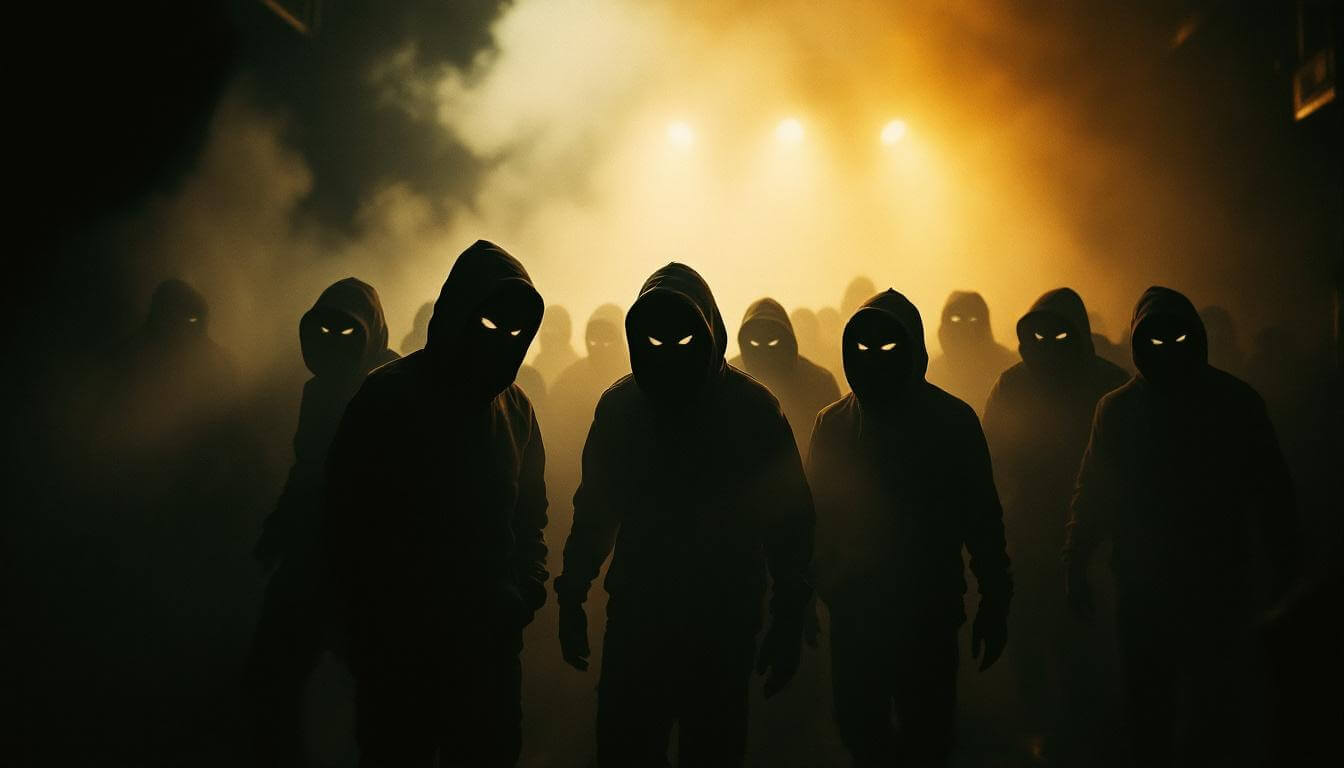
Enter The Wu-Tang (36 Chambers) dropped November 9, 1993, on Loud Records. By the numbers it’s a debut from a nine-man Staten Island collective who recorded most of it for next to nothing. By the cover, it’s a hooded silhouette of faceless figures fading into grain — and according to the man who shot it, it almost got scrapped on the day.
The primary source here isn’t a fan wiki. It’s photographer Daniel Hastings himself, writing first-person in MUSE by Clios’ “Art of the Album” series in December 2024 — a man with over 150 hip-hop covers to his name. His account is blunt: “This cover almost didn’t happen, because all of Wu didn’t show up. RZA was like, ‘If all of my brothers aren’t here, we’re not making the cover.'” Nine MCs as one unit was the whole identity. Half a Clan was no Clan.
What unlocked it was a memory. Hastings had caught Wu before the deal, before the noise, at the Jack the Rapper convention in Atlanta — and he’d seen them in their rawest configuration: stocking masks, hoodies, bum-rushing the stage as a single faceless mass. “The place went bananas,” he wrote. So he pitched it back to RZA: you don’t need everyone’s face. You don’t need any face. You are the Wu-Tang Clan. Hastings’ words: “RZA took a step back, looked at me for about 15 seconds and said, ‘Alright, let’s do it.'”
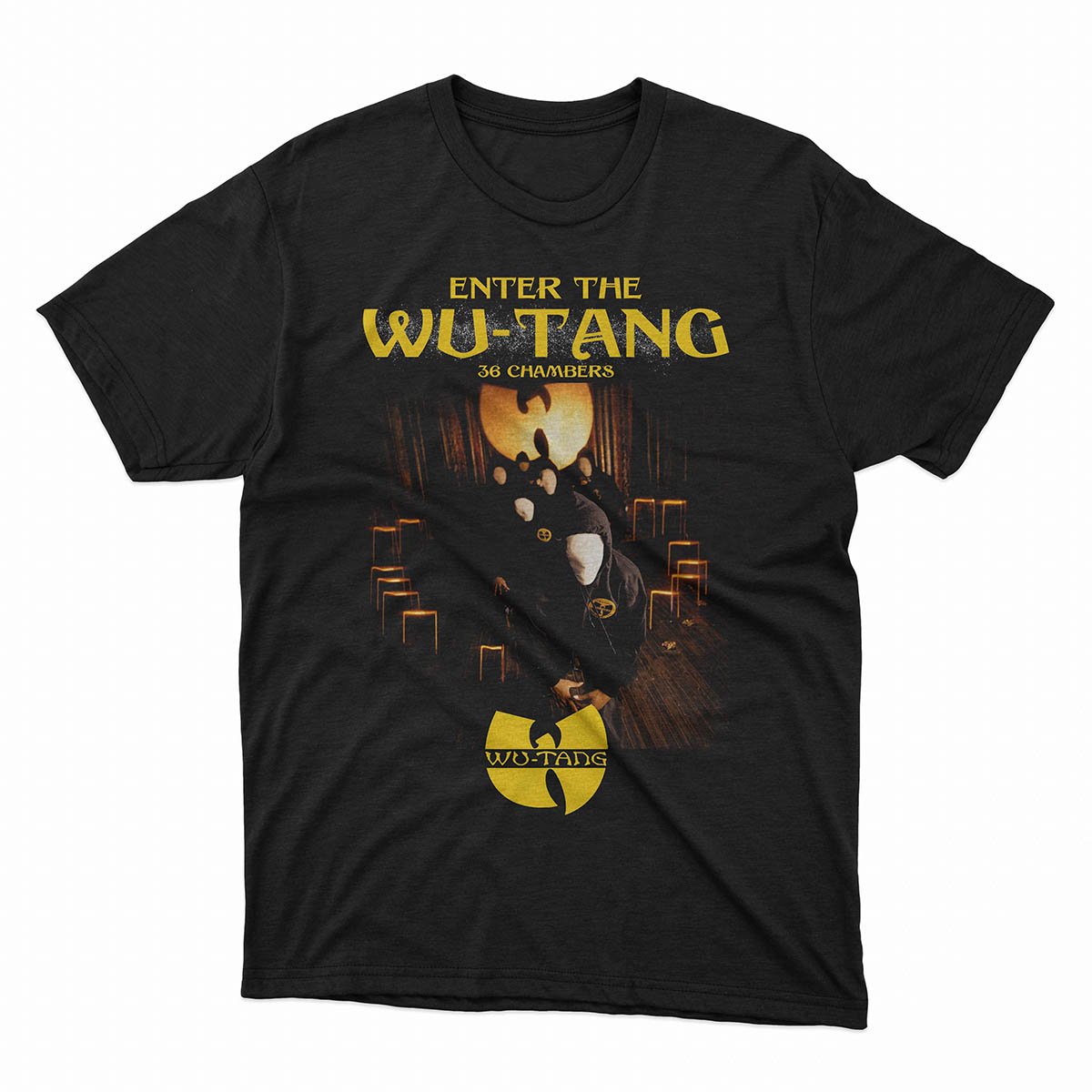
Sit with that. The most-bootlegged, most-tattooed, most-screen-printed image in the genre’s history exists because a photographer remembered a club show and a producer did fifteen seconds of math. No SERP cover gallery tells you that. We made the tee that reinterprets that exact image — our Enter The Wu-Tang 36 Chambers tribute t-shirt — because the cover is the most-reproduced visual in hip-hop and the story behind it deserves to ride on a chest, not just hang on a wall.
There’s a second thing happening on that 1993 sleeve, easy to miss because it’s now everywhere: the W. The 36 Chambers cover is the W’s commercial debut — its first ride on a piece of product that millions of people would hold. It was already a visual decision then, and it has stayed one for over thirty years. The Clout Cancún 36 Chambers documentary breakdown sets the 1993 context that makes this legible — Bill Clinton sworn in, Jordan’s first retirement, West Coast G-funk gloss dominating the charts — and into that polished landscape Wu dropped a cover that looked like a stick-up. The contrast was the point.
The W: Hip-Hop’s Most Reproduced Sigil
You cannot talk about Wu-Tang album covers without talking about the bat. The W — the winged calligraphic mark that reads as both a “W” and a sword in flight — was designed in 1992 by Mathematics, born Ronald Maurice Bean, a DJ and producer inside the Wu camp who handed RZA a logo before the world had a record to attach it to. That sequence matters. The sigil predates the catalog. The brand identity was built first, and the music was hung on it.
What makes the W remarkable across the cover run isn’t that it appears — it’s that it never gets redesigned. Look at the lineage: it anchors 36 Chambers, it scales up in gold on Wu-Tang Forever, it goes militaristic on Iron Flag, it hardens into Shaolin calligraphy by 8 Diagrams. The treatment shifts; the mark doesn’t. Most label-driven acts rebrand every album cycle to signal reinvention. Wu did the opposite — they treated the W like a national flag, and every cover was that flag flown in different weather.
That consistency is why the symbol jumps mediums without losing a thing. The W on a cover is the W on a chest is the W on a snapback is the W sprayed on a Staten Island wall. It was engineered to survive translation. Fan documentaries that dig into Wu iconography routinely land on the same conclusion — that the W is arguably the single most recognizable symbol hip-hop ever produced — and the covers are where that symbol got its reps. When you understand the W as a deliberate, never-touched constant, the entire cover catalog reads less like a series of art directions and more like one long brand campaign run by people who happened to be making classic albums in the background.
Wu-Tang Forever (1997): The Cinematic Pivot
If 36 Chambers was a stick-up, Wu-Tang Forever — June 3, 1997, a double LP on Loud/RCA — was a coronation. The visual language flips completely. Gone is the grimy stocking-mask fog. In comes gold on black, formal and symbolic, scaled to the ambition of a record that moved more than four million copies in its first week and entered as a cultural event rather than an underground rumor. This is the cinematic pivot, and it’s the single most important transition in the whole cover run.
Here’s what the SERP galleries never connect: the 1997 shift only reads as a pivot because 1993 was so deliberately raw. Wu didn’t drift toward polish — they earned the right to it and then deployed it as a statement. The raw cover said “we’re the faceless threat from Shaolin.” The gold double-LP said “we run this now.” Same crew, same W, opposite register, and the distance between the two sleeves is the distance the group traveled in four years. A documentary-grade reading of the 36 Chambers era — the cousins-of-Staten-Island lineage, RZA as the Abbot who held the vision, the projects-to-product origin — makes the Forever cover land like the end of an arc, not just the next release.
The Forever aesthetic has had a long second life off the record entirely. The gold-and-black, monolithic-W treatment is exactly the visual register that translates to a wall — it’s why we also make a Wu-Tang Forever neon for the room that needs one. The cover was always cinematic; some images just want to glow.
The W, Iron Flag & 8 Diagrams: Roots, Militarism, and the Shaolin Code Hardens
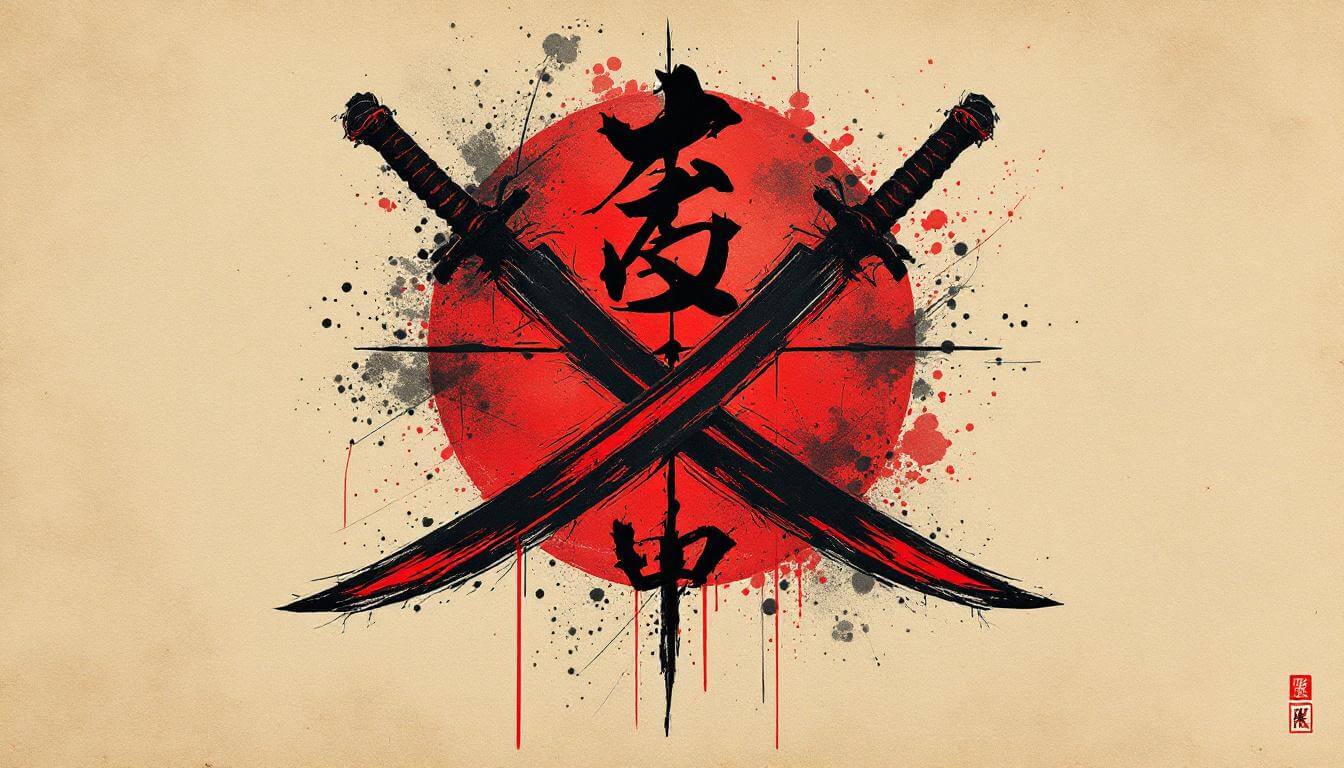
The middle of the catalog is where most cover write-ups go quiet. They shouldn’t. The W (November 21, 2000, Loud/Columbia) is a deliberate return to roots after the Forever spectacle — pared back, dark, the emblem doing the work again. Iron Flag (December 18, 2001, Loud/Columbia) leans militaristic: the title alone tells you the register, and the cover carries the flag-and-formation language of a unit that had been through label turbulence and internal friction and wanted to project hardness.
Then 8 Diagrams (December 11, 2007, SRC/Universal Motown) does something the early covers only gestured at: it makes the Asian iconography explicit and structural. The Shaolin framework — the kung-fu film loops RZA was sampling back in 1993, the chambers, the swords, the eight-trigram bagua diagram the title itself references — had been an undercurrent in the music and a whisper on the early sleeves. By 2007 it had hardened into the visual rule. This is the payoff the gallery sites miss entirely: the Asian aesthetic Wu adopted sonically in 1993 became the cover language by 2007. The samples wrote the art direction. You can trace a straight line from a dusted kung-fu VHS in a Staten Island apartment to the calligraphic identity of a major-label album fourteen years later.
A Better Tomorrow (December 2, 2014, Warner Bros.) and The Saga Continues (October 13, 2017, eOne) close the commercial run. By then the cover system was mature enough to run on autopilot — the W, the Shaolin cues, the collective framing — which is itself the proof of concept. A visual identity you can hand to a new label every few years and have it still read instantly as Wu is a rare thing in any genre.
The Solo Covers: Every Side Project Spoke the Same Visual Language
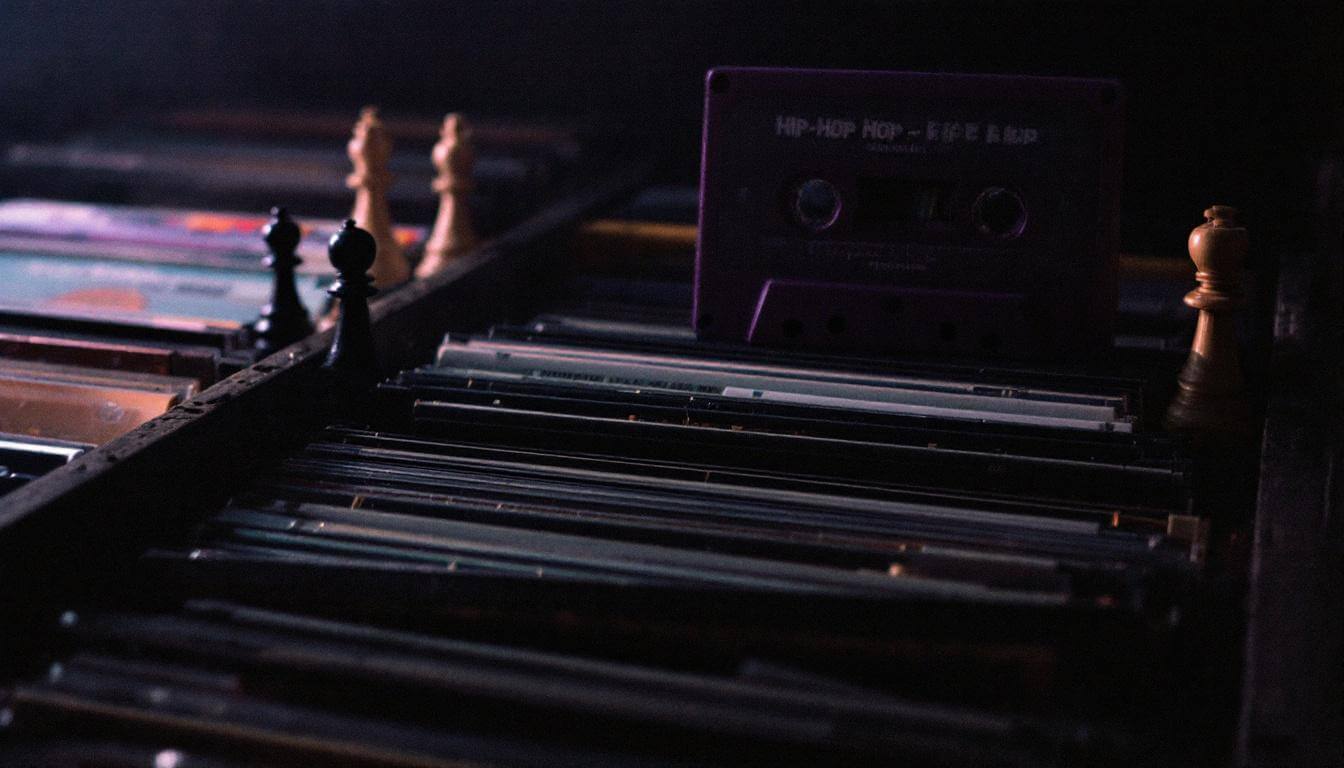
Here’s the move no top result makes: unifying the solo covers under the group’s visual umbrella. They aren’t a scattered set of individual art directions. They’re dialects of one language. Ask any head and the recall cues come back instantly — “the purple tape,” “the chess piece,” “the gold suit.” That instant recognition is the whole point, and beginner guides to Wu lean on exactly those cues to orient newcomers, because the solo sleeves were built to be remembered the same way the group ones were.
Run the receipts. Raekwon’s Only Built 4 Cuban Linx… (1995) — the legendary purple-tape pressing, an art object before the term was fashionable — was shot by Daniel Hastings too, the same eye behind 36 Chambers. Hastings has said the Cuban Linx shoot carried real tension, members not seeing eye to eye, and he photographed those “micro-energies of friction” rather than hiding them. The cover is honest about the room it was made in. GZA’s Liquid Swords turned a chessboard into a thesis statement about strategy and lyricism. Ghostface Killah’s Ironman put him in the gold-and-cream and made luxury part of the Wu vocabulary — read the full breakdown in our piece on Ghostface’s Ironman. Method Man’s Tical went the opposite way — smoke, mug, murk — and we went deep on exactly that mood in our Tical deep-dive. ODB’s Return to the 36 Chambers went cartoon-grit, food-stamp parody and all, because the alias demanded it. Later-era solo work kept the thread alive too, as our look at Inspectah Deck’s Uncontrolled Substance shows.
Different photographers, different tones, different decades — but every one of them inherits a cue from the group sleeve: the collective framing, the W’s gravity, the refusal to look like a label-polished pop record. Curated solo-album rankings from outlets like Soul In Stereo and beginner-guide creators keep circling the same covers precisely because the visual DNA is consistent enough to be a genre unto itself. Beyond the marquee solo LPs there’s a whole affiliate universe — Gravediggaz with RZA as the Rzarector, the Killa Beez compilations, Iron Flag-era group offshoots — that extends the same grammar into the deep cuts. The umbrella is bigger than most galleries admit.
Once Upon a Time in Shaolin: The Wu-Tang Album Cover Nobody’s Allowed to See
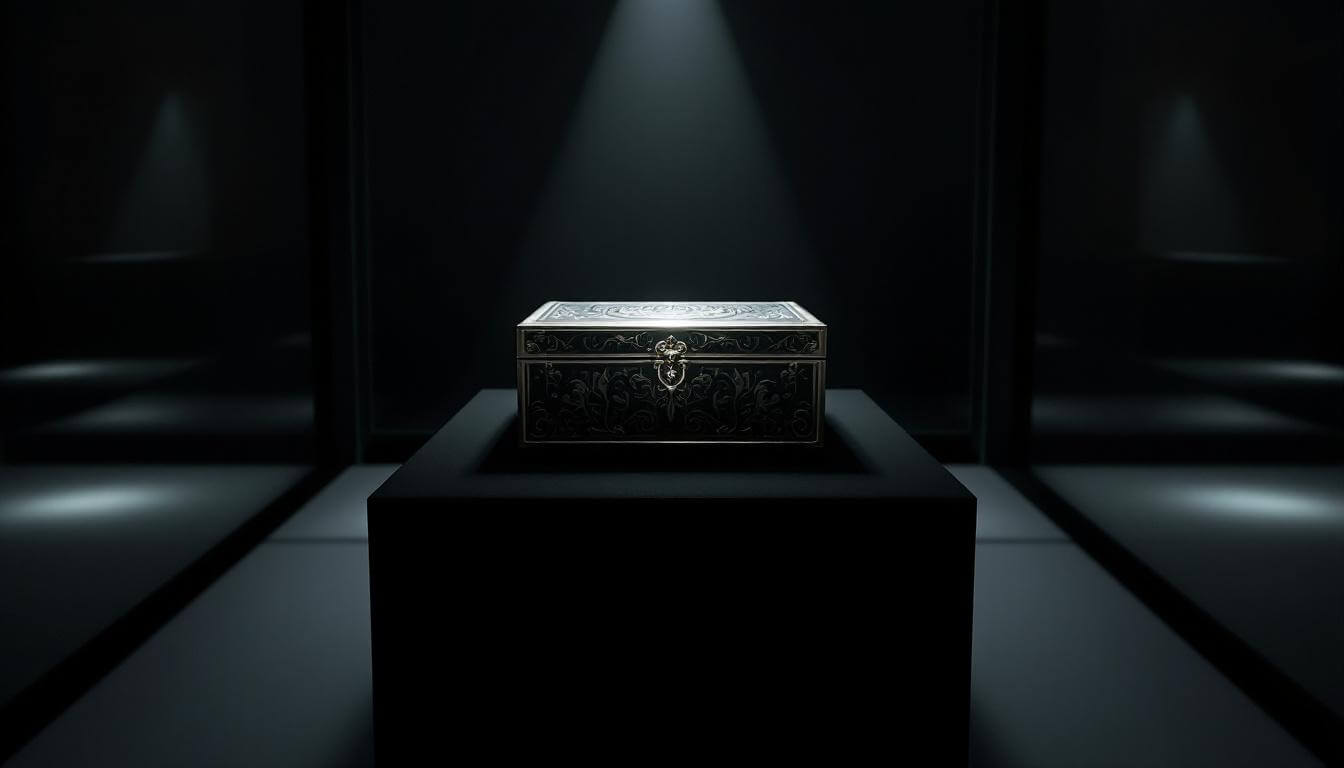
Every Wu cover so far was made to be seen by millions. This one was made so it almost never would be. Once Upon a Time in Shaolin (2015) exists as a single physical copy — one. The “cover” is a hand-engraved nickel-silver case crafted by British-Moroccan artist Yahya, housed in a vault, the polar opposite of a screen-printed sleeve in a record-store bin. It is the only Wu-Tang album cover most fans will ever encounter exclusively through curated press photos. That framing — not just “the rare one” but “the unviewable one” — is the part the SERP leaves on the table.
The ownership saga reads like a script. Pharmaceutical executive turned convicted felon Martin Shkreli bought the single copy for a reported sum around two million dollars in 2015. When Shkreli was sentenced in his 2018 securities-fraud case, the U.S. government seized the album as part of the forfeiture. In 2021, the digital-collective PleasrDAO acquired it from the government for a reported $4.75 million. In 2024, it traveled again — loaned to the Museum of Old and New Art (MONA) in Tasmania for a limited public listening event, the closest the general public has come to the object itself. National press has tracked every leg of that journey, and yet the standard cover gallery files it under “rare” and moves on.
Frame it correctly and it’s the perfect closing chess move of the entire run. Wu-Tang spent 1993 making a cover designed to reach everyone with no faces on it. They spent 2015 making a cover designed to reach almost no one, locked inside a metal artifact. Same instinct — control the image, control the myth — pushed to its absolute extreme. The first cover hid the men so the collective could be everywhere. The last one hid the entire object so the music could be a relic. That’s not packaging. That’s a thirty-year argument about scarcity and ubiquity, told in sleeves.
Ranking the Wu-Tang Album Covers: A Sourced Fan Tier List
Page two of the SERP is wall-to-wall unsourced “best Wu album covers” listicles. So here’s a tier list that actually points at where the consensus comes from. Across fan-ranked video breakdowns — short-form rankings, beginner guides, solo-album countdowns — the same three covers surface at the top every time:
- Tier 1 (near-universal consensus): Enter The Wu-Tang (36 Chambers), Raekwon’s Only Built 4 Cuban Linx… (the purple tape), and GZA’s Liquid Swords (the chessboard). These three are the covers fan rankings reach for first, every time.
- Tier 2 (heavy rotation): Wu-Tang Forever for the gold-on-black cinematic scale, Ghostface’s Ironman for the luxury pivot, Method Man’s Tical for the smoke-and-murk mood.
- Tier 3 (respected, less cited): 8 Diagrams for the hardened Shaolin iconography, ODB’s Return to the 36 Chambers for the cartoon-grit nerve, The W for the back-to-roots restraint.
- The asterisk: Once Upon a Time in Shaolin — uncategorizable, because it’s not a cover you rank, it’s a cover you theorize about.
The honest read: the tier-1 covers win because they fused a visual hook to a stone-classic record, and the hook still works decontextualized. You can put the purple tape or the chessboard in front of someone who’s never heard a bar and it still communicates. That’s the bar Wu set, and it’s why these images outlived their pressings.
Where to Find Authentic Wu-Tang Album Cover Apparel
Once you understand the covers as deliberate design, you stop wanting a blurry bootleg of them. The original 1993 Loud Records LP pressings command collector money; mint sleeves are an investment-tier item, and Discogs documents pressing-specific variants in exhausting, useful detail if you go that route. Wall reproductions are more available than they were a decade ago, but quality is all over the map — the cover language was built to read at scale, which is exactly why a bad reproduction looks so wrong.
For wearable Wu artifacts done right, start with the complete Wu-Tang gifts roundup, and if you want the broader logic for telling real hip-hop merch from landfill, our rap merchandise authentication framework lays out how to spot authentic hip-hop merch before you spend. The principle is simple: the covers earned their status through deliberate design, so the apparel that honors them should be deliberate too — not a JPEG stretched onto blank stock.
Frequently Asked Questions
How many Wu-Tang Clan studio albums are there?
Seven commercially released group studio albums: Enter The Wu-Tang (36 Chambers) (1993), Wu-Tang Forever (1997), The W (2000), Iron Flag (2001), 8 Diagrams (2007), A Better Tomorrow (2014), and The Saga Continues (2017). An eighth — Once Upon a Time in Shaolin (2015) — exists as a single physical copy. Discogs lists 23 “albums” broadly defined (counting compilations, live records and reissues); the strict group-LP count is seven.
Who designed the Enter the Wu-Tang (36 Chambers) album cover?
Photographer Daniel Hastings, who recounted the shoot in a 2024 MUSE by Clios “Art of the Album” essay. According to Hastings, RZA was on the verge of canceling the shoot when not all nine members showed up. Hastings invoked a Wu performance he’d seen at Atlanta’s Jack the Rapper convention — masks, hoodies, no faces — and pitched it as the cover concept. RZA stared at him for “about 15 seconds” and said “alright, let’s do it.”
Why are the members masked on the 36 Chambers cover?
Two stacked reasons. Practically: not every member made it to the shoot, so individual faces couldn’t be the focal point. Conceptually, per Hastings: Wu had performed at the Jack the Rapper convention in Atlanta wearing stocking masks and hoodies, bum-rushing the stage as a single faceless collective. RZA respected that aesthetic enough to revive it for the cover. The masks also reinforced the “nine MCs as one” identity that defined Wu from day one.
What is the rarest Wu-Tang album?
Once Upon a Time in Shaolin (2015). One physical copy was ever produced. Martin Shkreli bought it for roughly $2M in 2015; the U.S. government seized it as part of his 2018 securities-fraud forfeiture; PleasrDAO acquired it from the government in 2021 for $4.75M; in 2024 it was loaned to the Museum of Old and New Art in Tasmania for a public listening event. The case itself was hand-engraved nickel-silver by artist Yahya. Most fans will only ever see it through curated press photos.
What order should I view the Wu-Tang album covers in?
Chronological: 1) Enter The Wu-Tang (36 Chambers) — November 9, 1993 (Loud); 2) Wu-Tang Forever — June 3, 1997 (Loud/RCA); 3) The W — November 21, 2000 (Loud/Columbia); 4) Iron Flag — December 18, 2001 (Loud/Columbia); 5) 8 Diagrams — December 11, 2007 (SRC/Universal Motown); 6) A Better Tomorrow — December 2, 2014 (Warner Bros.); 7) The Saga Continues — October 13, 2017 (eOne); 8) Once Upon a Time in Shaolin — 2015, single-copy art object.
What does the W logo on the 36 Chambers cover mean?
The W is Wu-Tang’s collective sigil, designed by Mathematics (Allah Mathematics / Ronald Maurice Bean) in 1992. It functions as both a visual logo and an auditory shorthand (“Wu-Tang!”). The 36 Chambers cover is the W’s commercial debut. More than thirty years later it’s frequently credited as the most significant and recognizable symbol in hip-hop.
Where can I buy authentic Wu-Tang album cover apparel?
We make a Wu-Tang 36 Chambers tribute t-shirt at customcreative.store that pulls directly from the iconic stocking-mask cover. For collectors chasing original sleeve art, the 1993 Loud Records LP pressings carry the real provenance and the real price tag. For deep-cut cover apparel beyond 36 Chambers, expect to look across multiple independent retailers — there’s no single canonical source.
Are Wu-Tang album cover posters and prints worth collecting?
For the iconic covers — 36 Chambers, Wu-Tang Forever — yes. Original 1993 Loud Records LP pressings command collector premiums, and Discogs documents the pressing-specific variants. Wall reproductions are far more available than a decade ago, but quality varies widely. The cover-as-poster format works because the visual language was engineered to read at scale.
Final Thoughts
The lesson in the Wu-Tang album covers isn’t art history — it’s strategy. A logo built before the catalog. A debut cover saved by a fifteen-second decision and a memory of a club show. A gold double-LP that only reads as a coronation because the first cover was a stick-up. A Shaolin code that started as sampled VHS and hardened into calligraphy. And a final object so scarce its cover is a rumor. Thirty-plus years, one W, zero wasted moves. The galleries show you the pictures. Now you know why they look the way they do — and that’s the difference between owning the image and understanding it.
Wear The Cover
You can’t own the original. There’s exactly one copy of Once Upon a Time in Shaolin, the Daniel Hastings 35mm negative lives where it lives, and a mint 1993 Loud Records sleeve is collector money. But you can wear the cover that started everything. Our Enter The Wu-Tang – 36 Chambers tee is the stocking-mask shot Hastings pitched to RZA in 15 seconds — on cotton.
Never Miss a Drop
Album deep dives, artist spotlights, exclusive merch drops, and the stories behind the culture. Straight to your inbox. No filler — just the real.

🎧 Never Miss a Drop
Exclusive product releases, hip-hop deep dives, and member-only discounts. Straight to your inbox.
Free forever. No spam. Unsubscribe anytime.
Get the Culture, Delivered
Deep dives into hip-hop history, exclusive product drops, and discounts sent straight to your inbox. No spam, just culture.
Join 2,000+ hip-hop heads already in the loop. Unsubscribe anytime.