
The Blueprint 3, Fully Decoded: How Jay-Z Turned Middle-Age Hip-Hop Into a Stadium Anthem Machine
The Jay-Z Blueprint 3 conversation always splits into two camps: the heads who think it’s the moment Hov sold hip-hop out to a stadium tour, and the ones who quietly admit they still turn “Empire State of Mind” all the way up when a Manhattan cab crosses the Brooklyn Bridge. Both camps are half right. Released September 8, 2009 on Roc Nation — the album Jay-Z used to end his Def Jam era, blow past Elvis on the all-time #1 chart tally, and hand Kanye West full production keys to a Jay project for the first time.
Blueprint 3 is what happens when a 39-year-old rapper decides middle age is not a retirement notice — it’s a business plan. This is a full-catalog decode of the album: what actually got made in that Honolulu studio, why Kanye’s fingerprints are everywhere, what D.O.A. really killed, and why this record still functions in 2026 whether or not the discourse wants to admit it.
What The Blueprint 3 Actually Is (And Why It Ended the Trilogy)
The Blueprint trilogy is not what casual fans think it is. Book one — The Blueprint — dropped September 11, 2001, and it functions as a mission statement: a rapper who had spent five albums proving he could rap now proving he could conjure a mood. Book two — The Blueprint 2: The Gift & The Curse (2002) — sprawled to a bloated double disc and got trimmed post-release into Blueprint 2.1. It has moments (the Bilal-hooked “Meet the Parents,” the Beyoncé duet on “’03 Bonnie & Clyde”), but it plays like a rapper who ran out of runway.
Book three — the record you know as Blueprint 3 — is neither a return to book one nor an expansion of book two. It’s a third thing entirely. Fifteen tracks. Sixty minutes and forty-four seconds. Guest list stacked with post-Blueprint-1 rap royalty who owe Jay in some way: Kanye West, Drake, J. Cole, Kid Cudi, Alicia Keys, Rihanna, Young Jeezy, Swizz Beatz, Pharrell Williams, Beyoncé. This is Jay-Z hosting the room after already owning it. If you want the receipts on how the first book actually happened, our complete decode of The Blueprint at 25 walks the soul-sample recording sessions Just Blaze, Kanye, and Bink! ran in Baseline Studios.
The trilogy officially closes with this record. Amazon’s own release-day copy called it “the final installment in the BLUEPRINT trilogy,” and Jay let that framing stand. Reasonable Doubt is his most quoted, The Black Album his most emotionally settled, American Gangster his most conceptual — but Blueprint 3 is the record where he moves from artist to franchise. That distinction matters. Every reissue rap conversation since 2009 has been shaped by the template this album set: fewer verses per song, more crossover features, streaming-era hook architecture five years before streaming actually took over.
The bare facts, in one paragraph
Eleventh studio album. Released September 8, 2009 on Roc Nation via Atlantic (a physical distribution deal Jay cut after buying out the rest of his Def Jam contract for a reported $5 million). Recording ran from July 2008 through August 2009, primarily at Avex Recording Studio in Honolulu with additional sessions at Roc the Mic in New York, Kingdom Studios in Perth, and the Record Plant in Los Angeles. Metacritic aggregate: 68/100 — “generally favorable” but Pitchfork gave it 4.5. Debuted #1 on Billboard 200 with 476,000 first-week units. Nominated for Best Rap Album at the 52nd Grammys. Four singles combined for six Grammy wins across the 52nd and 53rd Grammy ceremonies. The most decorated Blueprint album of the three, by trophy count alone.
Kanye West’s Fingerprints Are Everywhere: The Production Breakdown
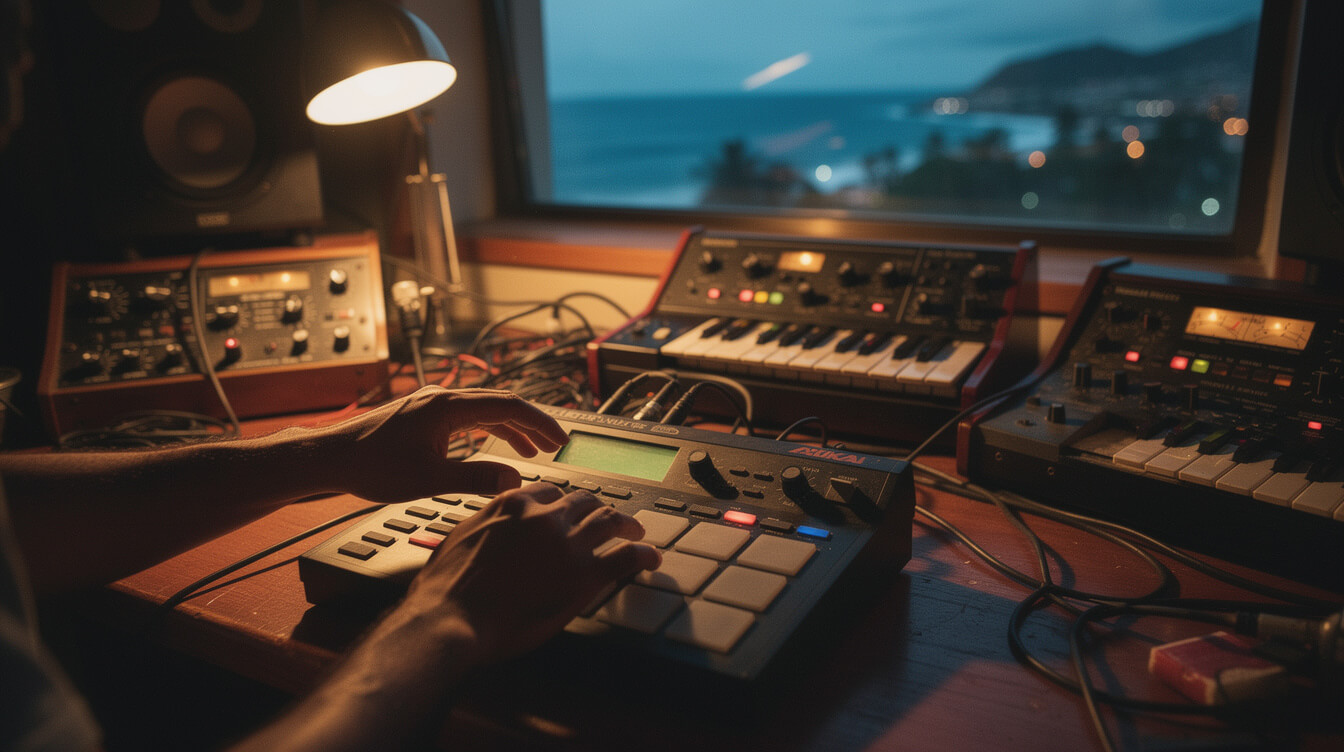
Here’s the fact that gets buried in every Blueprint 3 conversation: Kanye West is co-credited as producer on seven of the album’s fifteen tracks. That’s not a guest spot count — that’s Kanye running the album. No I.D. co-produces six of those seven Kanye tracks, giving the “Kanye West and No I.D.” unit executive-producer-in-all-but-title status. Timbaland, Jay’s ride-or-die producer since Vol. 2, gets three tracks. The Neptunes get one. Al Shux (Alexander Shuckburgh, a UK producer nobody had heard of before this album) gets one — and it’s “Empire State of Mind.”
The production DNA matters because it explains what Blueprint 3 sounds like versus what people expected. The first Blueprint was chopped-soul church-organ boom-bap. Blueprint 3 is stadium-pop-rap with maximalist keyboards, live drum breaks, wide-open EDM-adjacent bridges. It’s what Kanye had spent the previous three years cooking on Late Registration, Graduation, and 808s & Heartbreak — Jay just handed him the studio keys and let him bring that palette over. If you want to hear Kanye and No I.D. in their soul-flip mode from the Roc-A-Fella early years, run “Thank You” and “What We Talkin’ About” back-to-back. “Thank You” flips Marcos Valle’s “Estrelar” (1983) — the same crate-digging spirit that had No I.D. flipping Whodini for Common’s “Resurrection” fifteen years earlier.
Recording in Honolulu was not a vacation. Kanye’s protégé Mr Hudson explained the Hawaii choice to The Times: “won’t get bothered there” compared to New York or LA. Translation — nobody in Honolulu was going to leak a Jay-Z hard drive. This is the same logic that would produce My Beautiful Dark Twisted Fantasy in that same Avex Honolulu studio one year later. Blueprint 3 is, in a real sense, the dress rehearsal for MBDTF: Kanye workshopping the maximalist-stadium sound on Jay’s dime, then keeping the studio warm and going right into his own masterpiece.
Producer credits at a glance
- Kanye West (with No I.D.): “What We Talkin’ About,” “Thank You,” “Run This Town,” “A Star Is Born,” “Hate,” “Reminder,” “Young Forever”
- No I.D. (solo): “D.O.A. (Death of Auto-Tune)”
- Timbaland & J-Roc: “Off That,” “Venus vs. Mars,” “Already Home”
- Al Shux (with Janet Sewell-Ulepic & Angela Hunte): “Empire State of Mind”
- Swizz Beatz: “On to the Next One”
- The Inkredibles: “Real as It Gets”
- The Neptunes: “So Ambitious”
- Kanye West & No I.D. (with Bhasker): co-arrangement duties across the album
The Tracklist, Fully Decoded: Songs Ranked by Cultural Weight

Ranked not by chart position or Grammy count, but by how much cultural real estate each song actually took up.
- Empire State of Mind (feat. Alicia Keys) — Track 5. Reached #1 on the Billboard Hot 100. Won Best Rap/Sung Collaboration at the 52nd Grammys. Sylvia Robinson credit in the songwriting means Sugar Hill legacy is quite literally embedded in the DNA of the biggest Jay-Z single ever. This is the definitional New York rap song of the streaming era — the wedding-DJ, sports-arena, Times-Square-New-Year’s-Eve monster that non-hip-hop audiences also learned every line to.
- D.O.A. (Death of Auto-Tune) — Track 3. Not a hit by radio numbers but a doctrine-setting statement. Peaked at #24. Sampled Janko Nilović’s “In the Space.” Deserves its own section below.
- Run This Town (feat. Rihanna & Kanye West) — Track 4. Won Best Rap Song and Best Rap/Sung Collaboration at the 52nd Grammys. Kanye’s verse (“It’s crazy how you can go from being Joe Blow / to everybody on your dick — no homo”) is the loudest reminder that this album lives on the Jay-Kanye axis, not the Jay-solo axis.
- On to the Next One (feat. Swizz Beatz) — Track 7. Sampled Justice’s “D.A.N.C.E.” — the Ed Banger French electro-house record that would have been unthinkable on a Jay album five years earlier. This is the sound of hip-hop annexing dance music. Won Best Rap Performance by a Duo or Group at the 53rd Grammys.
- Young Forever (feat. Mr Hudson) — Track 15. Flips Alphaville’s 1984 synth-pop classic “Forever Young.” Reached #10 on the Hot 100. This is Jay’s meditation-on-legacy record and it’s the softest album-closer in his catalog. When Jay-Z said in the 2011 Decoded book that this was the song he most hoped would outlast him, believe him.
- A Star Is Born (feat. J. Cole) — Track 9. Jay’s roll call of every rapper who mattered from Nas to Snoop to 50 Cent, capped by a J. Cole verse that functioned as Cole’s official Roc Nation coming-out party. Cole would spend the next fifteen years benefiting from those forty-five seconds.
- So Ambitious (feat. Pharrell) — Track 13. The only Neptunes production. Pharrell reportedly emailed the beat to Jay the day the album was mastering; Jay loved it so much he stopped mastering to add it. The most “Reasonable Doubt spiritual sequel” record on the album — small-scale, biographical, hungry.
- Thank You — Track 2. Kanye/No I.D. flip of Marcos Valle. Contains the “if you was havin’ my day / you woulda took your daddy’s Rolls-Royce and drove it off the wall” moment that hip-hop podcasts still cite as a top-10 Jay opening bar.
- Off That (feat. Drake) — Track 8. Drake’s first-ever guest on a Jay-Z album, months before Thank Me Later dropped. Timbaland production. The song aged badly (the “we off that” premise did not weather Drake’s own decade), but the co-sign built a career.
- Already Home (feat. Kid Cudi) — Track 11. Timbaland production, Cudi hook. Jay-Z addressing every underground rapper who took shots at him for the “old rapper” narrative — a genre of Jay verse that would fully bloom later on Magna Carta Holy Grail.
- What We Talkin’ About (feat. Luke Steele) — Track 1. The album opener nobody expected: Kanye and Empire of the Sun’s frontman on the same record. Signals immediately that this Jay album is not going to sound like a Jay album.
- Real as It Gets (feat. Young Jeezy) — Track 6. Trap-lite from The Inkredibles — Jay reaching south for street credibility at a moment when Atlanta was already eating New York’s lunch.
- Reminder — Track 12. Kanye/No I.D. produced. Jay explicitly rebutting critics who called him past his prime. “Twenty-three’s outsold everybody in the room / I got Marley on the wall, oh, wait.” A stat-flex record.
- Venus vs. Mars — Track 10. Timbaland production. The most skippable track on the album by consensus. Jay’s writing on gender dynamics has aged the worst of anything on the record.
- Hate (feat. Kanye West) — Track 13 depending on edition. Full Kanye production and vocal cameo. A shrug-flex record about being hated at the top. Not essential, but essential in confirming the Jay-Kanye axis.
D.O.A. and the Great Auto-Tune Beef of 2009
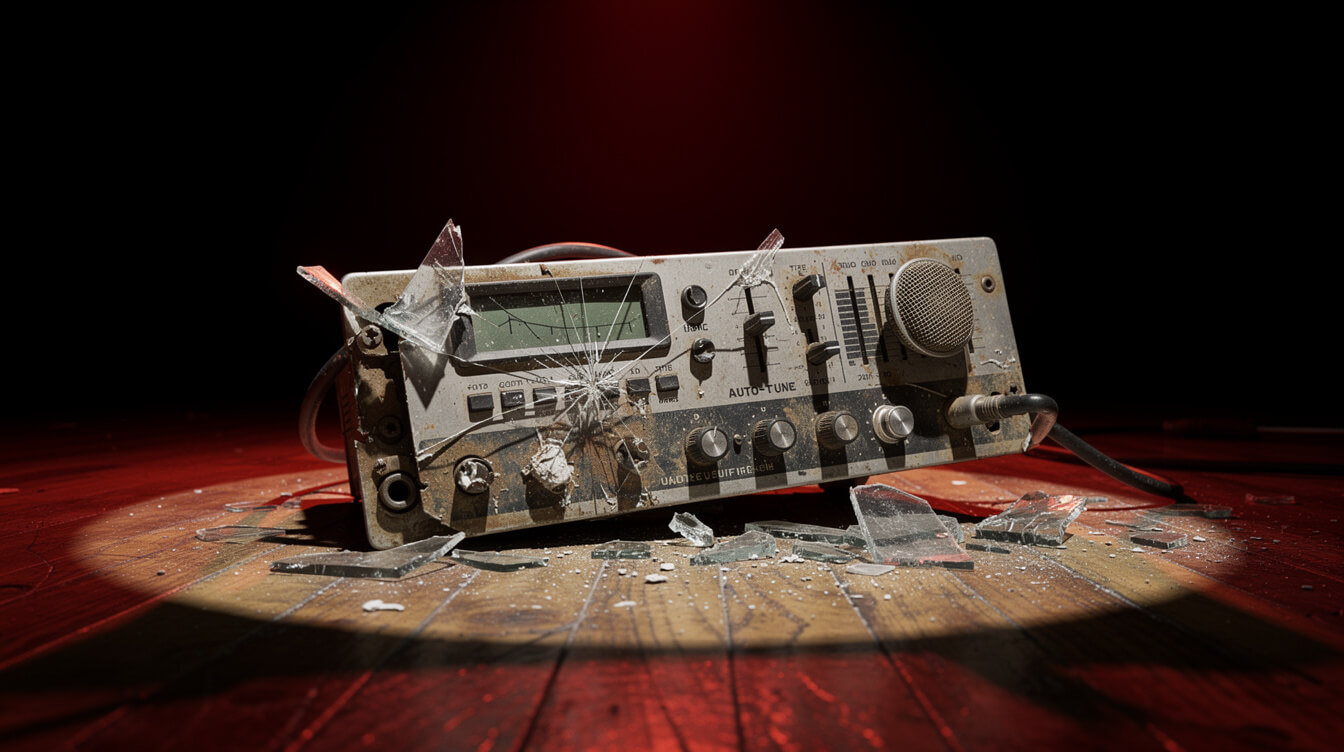
“D.O.A. (Death of Auto-Tune)” is the loudest cultural moment on Jay-Z Blueprint 3 and it did exactly what its title said. Released as the album’s first single on June 5, 2009 through Hot 97, produced solo by No I.D., it argued in five minutes that the vocoder wave — T-Pain, early Kanye of “Heartless” and “Love Lockdown,” Ron Browz, Lil Wayne on “Lollipop” — needed to stop. Immediately.
The record worked because Jay came at it from a specific angle. Not “I hate this sound,” which would have been a losing take (a lot of the biggest rap records of 2007-2009 were auto-tune records). The angle was that hip-hop had become a monoculture and one voice-effect had swallowed every rapper’s identity. “This ain’t a #1 record / this is practically assault with a deadly weapon / I made this just for Flex and Mister Cee to bang.” Rap radio DJs, not pop crossovers. That framing was the beef.
Consequences: T-Pain, who had spent 2007 and 2008 as the most in-demand feature in the game (52 Hot 100 charting features in a two-year span), watched his booking rate collapse. By late 2009 rappers were quietly not calling him. He would spend the next decade rebuilding as an actual vocalist on shows like The Masked Singer — a comeback arc that only reads as poignant if you remember Jay killed his career with one song. Kanye immediately pivoted: My Beautiful Dark Twisted Fantasy (2010) still used auto-tune but as a texture, not a lead instrument. The rap monoculture broke apart into the wave that would produce Drake, J. Cole, Kendrick, and eventually Migos-era Atlanta by 2013.
Whether Jay had the right to kill an entire vocal aesthetic is a fair question. He was a 39-year-old CEO calling for a generational reset from the top of the industry. It reads differently now than it did in 2009. But the record itself is a masterclass in doctrine-setting hip-hop: a hit single that was a manifesto, not a party. Jay hadn’t made one of those since “H to the Izzo” in 2001, arguably not since “Money, Cash, Hoes.” The lineage of hip-hop as culture-doctrine — Public Enemy’s “Fight the Power,” BDP’s “Stop the Violence,” Run-DMC’s “It’s Like That” — is what D.O.A. belongs to. If that lineage matters to you, our track-by-track breakdown of Biggie’s Ready to Die catalogs what pre-doctrine, pre-corporate hip-hop actually sounded like — the stuff Jay was rebuilding on top of.
The Business Move — Roc Nation, Live Nation, and Breaking the Elvis Record
What Blueprint 3 accomplished commercially is the single most under-discussed part of the album. The 476,000 first-week units made it Jay’s eleventh #1 on the Billboard 200 — the number that broke his tie with Elvis Presley for most #1 albums by a solo artist. Only The Beatles were ahead of him among any artist in Billboard 200 history at that moment. A Brooklyn kid who started rapping in the Marcy Projects had just passed Elvis. The cultural weight of that number is bigger than any first-week sales stat rap has ever produced before or since.
The label context matters equally. Jay had spent 2007-2009 in a public-facing tug-of-war with Def Jam over the rest of his artist contract. In May 2009, he bought himself out for a reported $5 million, then immediately signed a ten-year, $150 million “360 deal” with Live Nation Entertainment, launching Roc Nation as an imprint under that deal. Blueprint 3 was the first Roc Nation full-length. Atlantic Records handled physical distribution — a hedge, in case Live Nation’s music business didn’t work out — but the ownership was Jay’s from track one.
The 360 deal was a bet on hip-hop’s next decade being about touring, publishing, management, and merchandise revenue instead of album sales. Jay was correct. Roc Nation would go on to sign Rihanna’s management (later her whole label), broker deals for J. Cole, and eventually run the NFL halftime show partnership. The dominoes of the current hip-hop industrial complex — J. Cole’s Dreamville tour scale, the Rihanna Super Bowl performance, DJ Khaled’s We The Best imprint architecture — all descend from the model Blueprint 3 proved on its release date.
If you want the origin story of the label empire this album was built on top of, our deep decode of The Blueprint at 25 covers the Roc-A-Fella soul-sample era Jay had to leave behind to get to Blueprint 3. And if you’re building your own tribute room to the NYC hip-hop empire, the Gang Starr Hard to Earn tee puts the Premo/Guru template — the same 1994 doctrine that made Jay’s early records possible — on premium Bella Canvas cotton.

Light Up Your Empire
Every empire needs a signal. Hand-made limited-edition Wu-Tang Forever LED neon — the NYC hip-hop tribute piece that turns any wall into a headquarters. Ships worldwide.
Blueprint 3 in 2026 — What Ages Well and What Hasn’t
Seventeen years out, the reappraisal has two tracks running in parallel.
What ages well: “Empire State of Mind” is not going anywhere. It has permanently colonized the cultural function that Frank Sinatra’s “New York, New York” held for the previous fifty years — the definitional NYC song for tourists, transplants, sports arenas, and returning-home moments. “D.O.A.” reads even sharper in retrospect: the moment auto-tune-as-monoculture actually broke, called out on record before the industry could pretend it hadn’t happened. “On to the Next One” was a genre-crossing beat that predicted a full decade of hip-hop/electronic hybrid records (from A$AP Rocky’s Live.Love.A$AP to Travis Scott’s ASTROWORLD). “Young Forever” is a hip-hop legacy record in a decade that didn’t produce many hip-hop legacy records.
What hasn’t: The corporate self-mythologizing on tracks like “Reminder” and “Hate” reads worse now than it did in 2009 because Jay’s actual position — 550-million-dollar-plus billionaire, NFL halftime partner, cultural gatekeeper — makes “y’all hate me because I’m at the top” feel less like defiance and more like a shrug from behind a private-jet window. “Venus vs. Mars” is the album’s clearest artifact of pre-#MeToo pop songwriting. “Off That” (with a young Drake) is a tempo experiment that didn’t stick.
What the discourse got wrong: The knee-jerk 2009 take was “Jay-Z is not a rap album anymore, this is a Kanye album with Jay features.” Seventeen years later, that reads as a compliment. Late-2000s Kanye is now consensus canon (Late Registration, Graduation, 808s & Heartbreak, MBDTF). Getting seven Kanye/No I.D. productions handed to you on a single album was, in retrospect, the biggest producer coup of the decade. Blueprint 3 is Jay’s most Kanye-influenced record and it’s also his most-streamed catalog title outside of Reasonable Doubt and The Black Album, per every 2020s Spotify recap.
The album also sits in an interesting NYC hip-hop legacy conversation with two records adjacent to it in our catalog. Our Wu-Tang Forever at 29 retrospective handles the previous “double-disc statement from a NYC hip-hop dynasty” moment. And our Fugees The Score at 30 breakdown traces how Lauryn’s crew set the template for the crossover-but-not-corporate hip-hop lane Jay would later corporate his way out of.
Frequently Asked Questions About The Blueprint 3
When did The Blueprint 3 come out?
September 8, 2009 in the United States on Roc Nation (distributed by Atlantic). Digital release followed on September 11, 2009. The UK/international release was September 14, 2009. The album leaked in full on August 31, 2009 — a week before the physical drop — and Jay’s public response was essentially “enjoy it.”
Who produced most of The Blueprint 3?
Kanye West is credited as producer or co-producer on seven of the fifteen tracks, most often paired with No I.D. Timbaland (with J-Roc) got three tracks. Al Shux produced “Empire State of Mind.” Swizz Beatz produced “On to the Next One.” The Neptunes produced “So Ambitious.” The Inkredibles produced “Real as It Gets.”
Is The Blueprint 3 considered a classic?
Consensus 2009 reviews were mixed-to-positive: Metacritic 68/100, Pitchfork 4.5, MSN Music (Robert Christgau) A−, Rolling Stone 3/5, AllMusic 4/5. As of 2026, the album has been reappraised upward, particularly for “Empire State of Mind,” “D.O.A.,” and its role in launching Roc Nation. It is not universally called a classic the way the first Blueprint is, but it is treated as a canonical Jay-Z record in most retrospectives.
What samples are on The Blueprint 3?
Notable samples include Marcos Valle’s “Estrelar” (on “Thank You”), Janko Nilović’s “In the Space” (on “D.O.A.”), Alphaville’s “Forever Young” (on “Young Forever”), and Justice’s “D.A.N.C.E.” (interpolated on “On to the Next One”). “Empire State of Mind” contains a co-writing credit to Sugar Hill Records founder Sylvia Robinson via the interpolation of “Love on a Two-Way Street.”
How many albums has Jay-Z released after The Blueprint 3?
Four solo studio albums after Blueprint 3: Watch the Throne with Kanye West (2011, collaborative), Magna Carta Holy Grail (2013), 4:44 (2017), and Everything Is Love with Beyoncé (2018, collaborative). 4:44 is generally considered his best post-Blueprint 3 release.
Did The Blueprint 3 win a Grammy?
The album itself was nominated for Best Rap Album at the 52nd Annual Grammys but lost. However, four of its singles — “D.O.A. (Death of Auto-Tune),” “Run This Town,” “On to the Next One,” and “Empire State of Mind” — combined to win six Grammy awards across the 52nd and 53rd Grammy ceremonies. By trophy count, it is the most-awarded album in the Blueprint trilogy.
Why is The Blueprint 3 sometimes considered controversial?
Three main reasons. First, “D.O.A. (Death of Auto-Tune)” was read as Jay-Z using his platform to end other rappers’ careers. Second, the pop-crossover production and heavy guest list ran against the feature-light, boom-bap purism many longtime Jay fans expected from a Blueprint album. Third, the Live Nation deal and Roc Nation launch framed Jay as a corporate figure rather than a peer rapper. Time has softened most of these critiques.
Final Thoughts: The Album That Made Jay-Z Untouchable
You can argue Blueprint 3 down. Most heads have. Not enough Jay verses per song. Too much Kanye. The wrong Blueprint to close the trilogy on. Venus vs. Mars. The Drake feature that didn’t age. All fair.
What you cannot argue away is what the album did: it pushed Jay-Z past Elvis on the Billboard 200 chart, it launched Roc Nation, it started the Live Nation 360-deal era, it killed auto-tune, it produced the definitional NYC anthem of the streaming era, and it handed Kanye West the studio keys that would produce My Beautiful Dark Twisted Fantasy one year later. Every hip-hop industrial-complex conversation from 2010 to today runs through decisions this album made. That’s not “controversial.” That’s foundational.
The Jay-Z Blueprint 3 is the album where an artist becomes an institution. Some records get more spins. This one built the empire the spins pay into.
Stay creative — The Custom Creative Team
Get the Culture Delivered Weekly
Album breakdowns, anniversary receipts, and the culture-first hip-hop takes you won’t find on the SEO farm. One email a week. Real heads only.

🎧 Never Miss a Drop
Exclusive product releases, hip-hop deep dives, and member-only discounts. Straight to your inbox.
Free forever. No spam. Unsubscribe anytime.
Get the Culture, Delivered
Deep dives into hip-hop history, exclusive product drops, and discounts sent straight to your inbox. No spam, just culture.
Join 2,000+ hip-hop heads already in the loop. Unsubscribe anytime.