Tupac Albums Covers: The Story Behind Every 2Pac LP From 2Pacalypse Now to Makaveli
Search tupac albums covers and Google throws Pinterest boards, Etsy prints, and a Wikipedia discography table at you. Nothing tells you why Danny Clinch cropped Pac’s head out of the frame on Me Against the World, why David LaChapelle stacked dice and gold on All Eyez on Me, or why the Don Killuminati crucifix cover almost never shipped. This is that piece — every studio cover, in order, decoded like the art history it actually is. If you came here to understand what the images mean, you’re in the right room.
We’ll walk it chronologically: the 1991 debut, the red-bandana pivot, the incarcerated masterpiece, the Death Row double, the posthumous Makaveli, and the sprawling seven-LP afterlife his estate has spent the last thirty years releasing. Along the way — the photographers, the art directors, the symbolic vocabulary, and why Pac’s covers still get reprinted on more apparel and wall art than any other rapper in history. Grab a coffee. This one goes deep.
Why Tupac’s album covers matter more than the average discography scroll
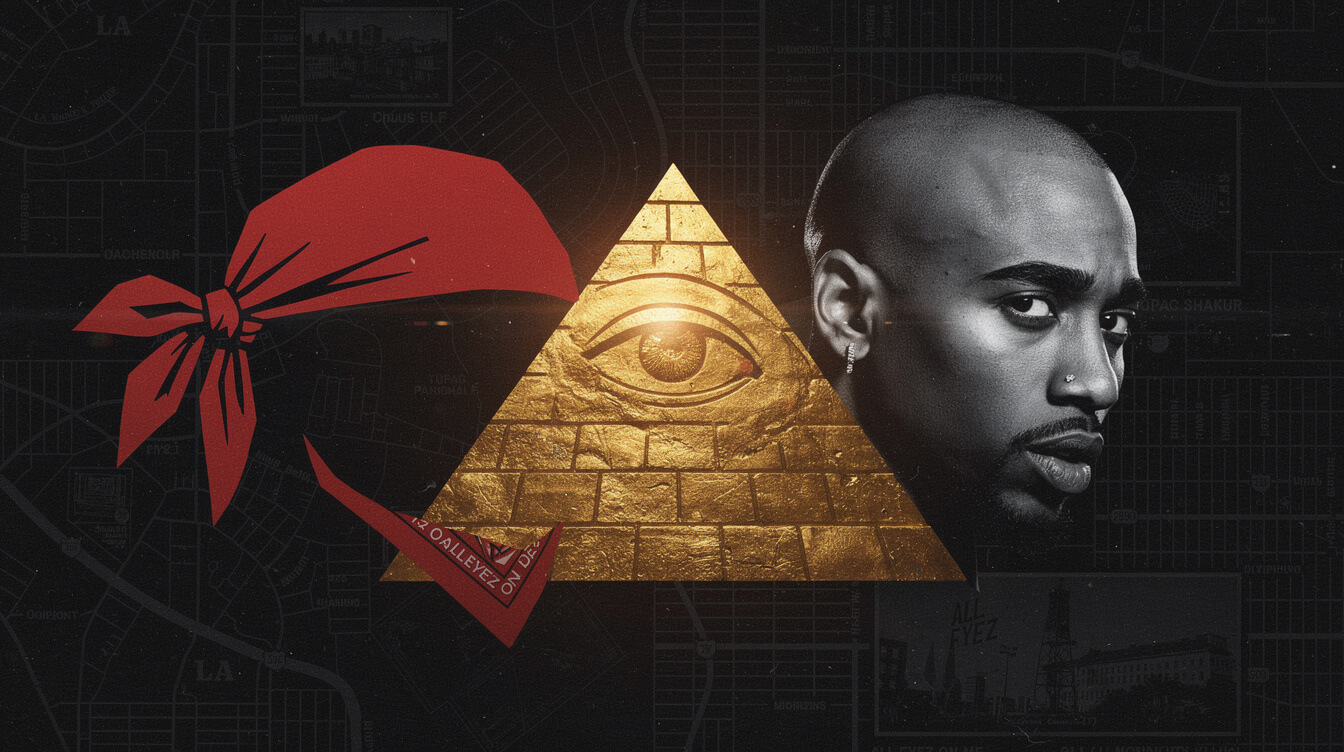
Most 1990s rappers treated the album cover as a business card — a mugshot in front of a logo, maybe a chain and a scowl. Pac treated it like a manifesto. Between 1991 and 1996 he shipped four studio LPs and one posthumously-released alter-ego record, and each cover was a deliberate reframe of who he was in that specific twelve-month window. Debut prophet. Red-bandana provocateur. Incarcerated introspective. Death Row emperor. Crucified Makaveli. You could line up all five side by side and read them like a self-portrait sequence — no other mainstream rapper of that era pulled that off.
The visual craftsmanship also punches above the rap-cover average. All Eyez on Me was directed by David LaChapelle at the peak of his early-90s pop art phase — the same LaChapelle who was shooting Andy Warhol and would later do Michael Jackson. Me Against the World was photographed by Danny Clinch, one of the great music-portrait photographers of the last forty years (Bruce Springsteen, Johnny Cash, Tom Waits). Makaveli‘s crucifix illustration was drawn by Ronald “Riskie” Brent, a Death Row in-house artist who spent weeks negotiating the concept with Pac in the last month of his life. These aren’t slap-a-photo-on-it covers. They’re commissioned art.
That’s the frame for everything below. When we say a cover matters, we mean somebody thought hard about it, chose specific symbols, and picked a photographer whose work already carried weight. Same as you’d read a Warhol screen print or a Basquiat crown — with intent. If you want the discography’s musical arc first, we did the complete rundown of every Tupac LP as a companion piece; today’s read is strictly about the images.
2Pacalypse Now (November 1991) — the debut cover nobody looked at twice
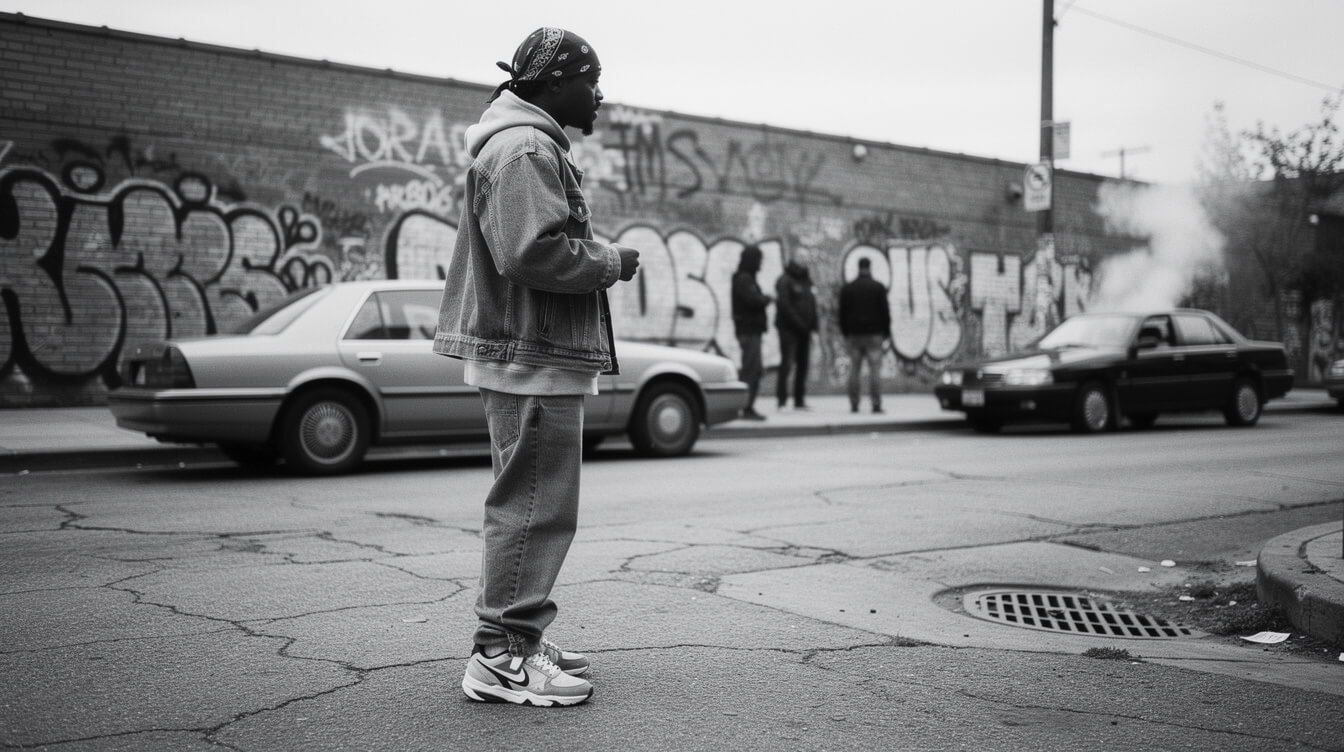
Pac’s Interscope debut is the sleeper of the five studio covers, and that’s kind of the point. The 2Pacalypse Now jacket shows him from the waist up in a white sleeveless undershirt, arms folded, staring straight at the lens. Grayscale. Minimal type. No logo bombast. The title is a play on Coppola’s Apocalypse Now, and the record was engineered to feel like a war report from an American ghetto — songs like “Brenda’s Got a Baby” and “Trapped” reading as dispatches, not entertainment.
The visual language matches. There’s no Death Row iconography yet — no crown, no chain, no bandana, no logo empire because the empire didn’t exist. This is a rookie signed to a startup label (Interscope was in year one), photographed like a journalist would photograph a source. The starkness is the statement. That grayscale minimalism is why the cover doesn’t get reprinted on merch nearly as often as the later three — it’s not visually loud enough to work on a hoodie chest. But as a first record it’s exactly right: listen to me, don’t look at me.
Design detail collectors will note: the original Interscope pressing has a small “Parental Advisory” sticker in the upper right that got Vice President Dan Quayle to publicly denounce the record in 1992 after a Texas state trooper was killed by a shooter who had a copy in his car. That sticker, in context, is one of the most politically-loaded design elements ever printed on a rap cover. It’s why some early pressings without it now go for $200+ on Discogs — collectors want the pre-controversy artifact.
Strictly 4 My N.I.G.G.A.Z… (February 1993) — the red-bandana pivot
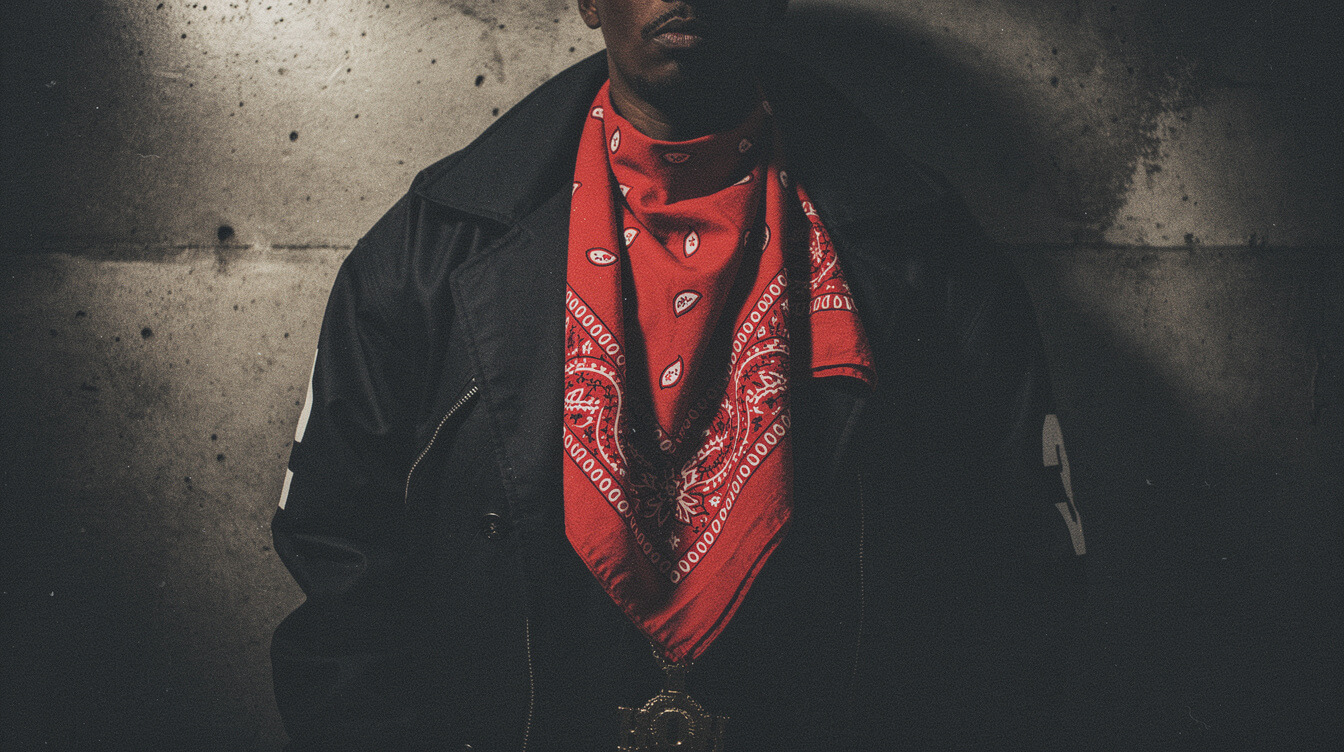
Fifteen months after the debut, the visual approach flipped. Strictly 4 My N.I.G.G.A.Z… arrived in February 1993 with a cover built around a single dominant symbol: a red bandana. Pac’s face is there — the album version most people remember shows him in profile, chin up, bandana knotted around his forehead — but the bandana is doing the heavy lifting. Red. Not blue. Not neutral. Aligned, visually, with a specific coast and a specific set of associations.
That was the pivot the record made musically too. Where 2Pacalypse Now was journalistic, Strictly was militant — Holler If Ya Hear Me, Souljah’s Story, Point the Finga. Ice Cube and Ice-T show up as guests, which was the visual grammar of 1993 gangsta rap on a features list alone. The album peaked at #24 on the Billboard 200, went Platinum, and became the first Tupac record that mainstream white America knew the sound of. The cover’s red-bandana silhouette became one of the most-reprinted rap-cover elements of the mid-90s — you still see it on vintage tees and DTG prints because it’s instantly readable at any size.
Art direction credit is fuzzy here (Interscope’s early liner notes are notoriously incomplete), but the styling and palette line up with the Death Row/Ruthless-adjacent visual language other Los Angeles rappers were adopting the same year — red-and-black, high contrast, hard flash photography, minimal graphic overlay. It’s the least “Pac-authored” of his covers in that it looks like it belongs to a scene more than to him personally. The next one would fix that.
Me Against the World (March 1995) — Danny Clinch, the incarceration cover
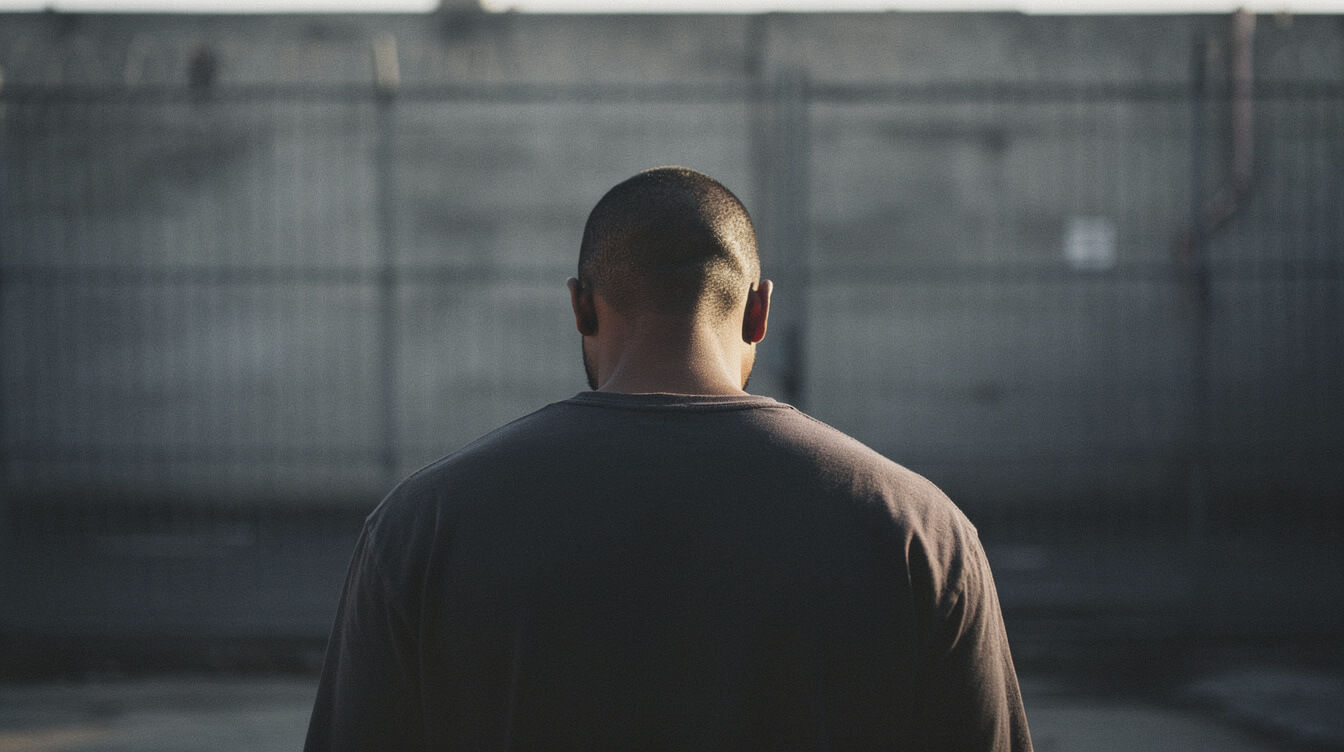
This is the one where the myth started. Me Against the World came out March 14, 1995, and Pac was in Clinton Correctional Facility serving 1.5 to 4.5 years on a sexual abuse conviction he maintained he didn’t commit. It became the first album by any artist in history to debut at #1 on the Billboard 200 while the artist was incarcerated. That context is the cover.
Danny Clinch shot the sleeve before the sentencing. The now-canonical composition — Pac from behind, head down, dreads visible, a tight vertical crop that hides his face entirely — was a deliberate choice to strip out the persona and leave only the posture. Clinch has said in later interviews that Pac wanted the record to feel confessional, and putting his face on the cover would have undercut that. Removing the face turned the sleeve into a mood diagram: solitary, contemplative, cornered.
The typography reinforces it. The title is set in a hand-scrawled cursive that looks written in pencil, not designed — deliberate diaristic feel. There’s no photograph of a chain, a car, a piece, a bandana, a crew. Just a lone figure. Compare it to what was happening on covers the same year — Method Man’s Tical (November 1994) had a foreground portrait; Nas’s Illmatic (April 1994) put a childhood photo over an urban backdrop; Biggie’s Ready to Die (September 1994) used a baby-photo mixed with typography. Me Against the World refuses all of those grammar choices. It’s the most artistically confident of Pac’s covers and, not coincidentally, the record most critics rank as his best.
All Eyez on Me (February 1996) — David LaChapelle and the double-album spectacle
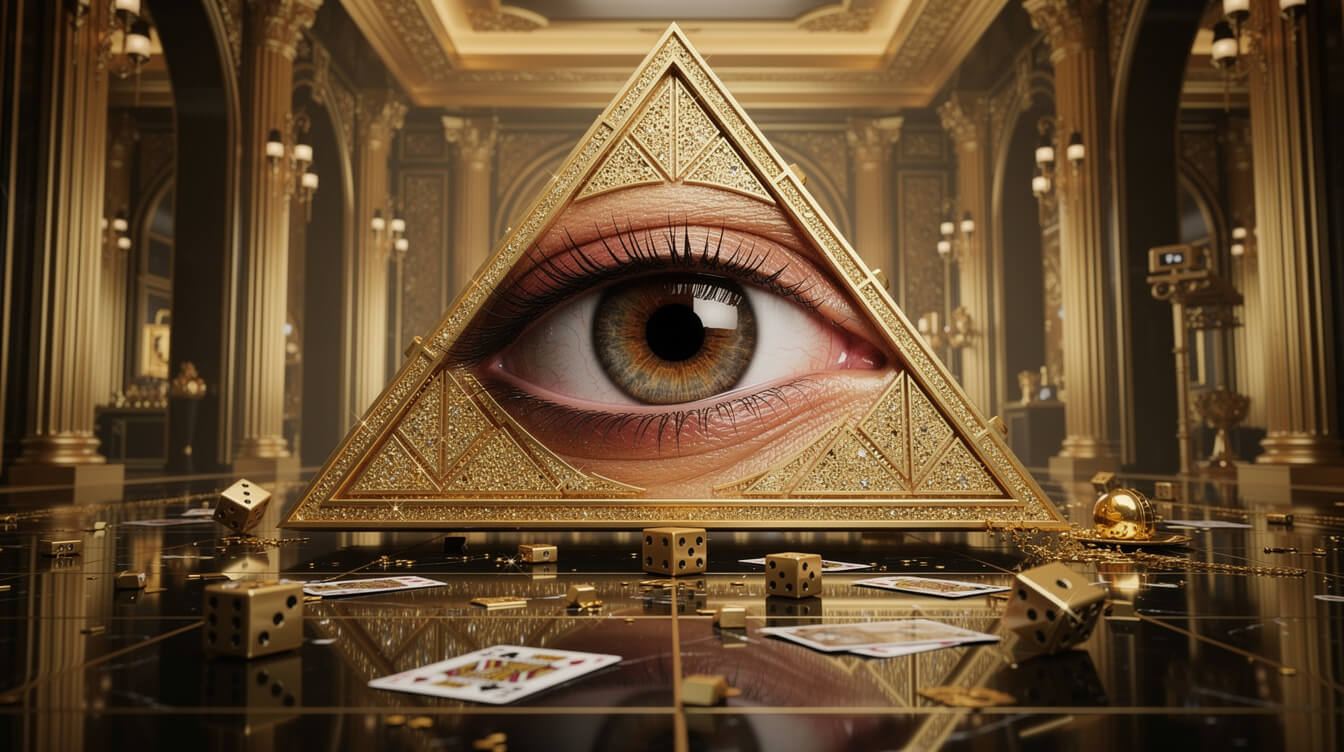
Between Me Against the World and All Eyez on Me, everything changed. Marion “Suge” Knight bailed Pac out of Clinton on a $1.4M appeal bond in October 1995, Pac signed a three-album deal with Death Row Records in the parking lot, and the label immediately started prepping the most expensive rap album ever recorded. When it dropped February 13, 1996 — a full 27 songs across two discs, the first double-CD studio album in hip-hop history — the artwork had to match the maximalism.
Death Row hired David LaChapelle. That was the move that made the cover famous. LaChapelle in 1996 was one of the most in-demand editorial photographers on the planet — his work for Rolling Stone, Interview, and Andy Warhol’s Interview magazine had defined a hyper-saturated, symbol-heavy, quasi-Baroque style that felt like Pop Art on steroids. His job on the cover: make Pac look like an emperor.
The composition delivers. Pac stands center-frame, arms open, chain visible, against a jet-black background with a huge stylized eye motif behind him — the “all eyez” of the title made literal. The gold-and-black palette is straight LaChapelle. The disc-2 alternate jacket has him at a low angle looking upward, isolated in dramatic key light. Reprints of both jackets have become the single most-licensed Tupac imagery of the last thirty years — every Tupac tee, hoodie, and framed print you’ve ever seen owes something to this shoot.
All Eyez on Me sold 566,000 copies its first week, debuted at #1, and spent 61 weeks on the Billboard 200. It’s the record that made Pac a global superstar, and its cover is the single most-recognized image of him in the culture. If you’re new to Pac’s visual catalog and you can only remember one cover, it’s this one. That’s not an accident — it was engineered to be exactly that.

Wear the Cover That Started the Myth
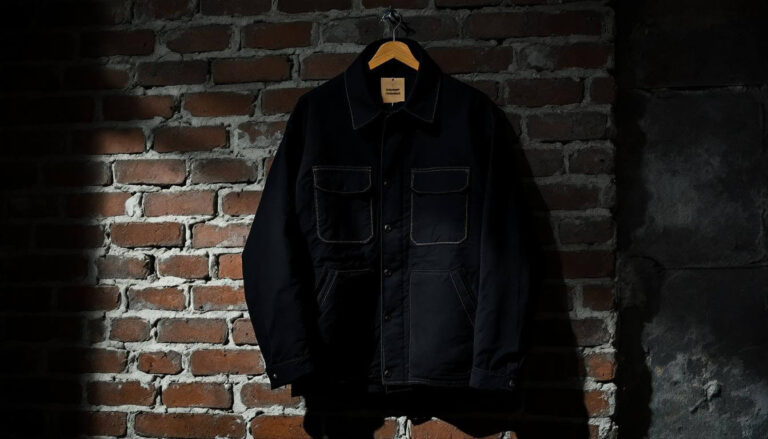
The Riskie-drawn Don Killuminati crucifix — the last cover Pac approved — printed on heavyweight cotton. A wardrobe piece with actual weight to it.
The Don Killuminati: The 7 Day Theory (November 1996) — the Makaveli crucifix
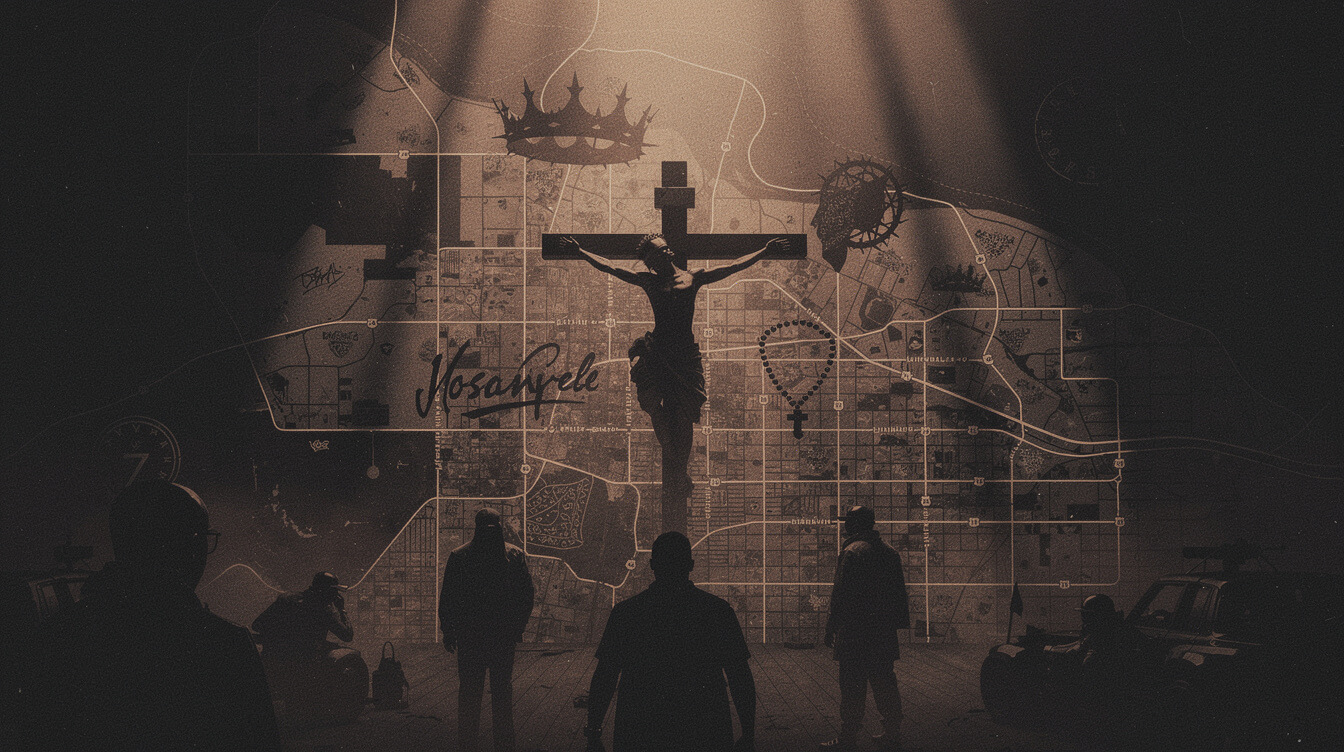
Pac was murdered September 13, 1996, in Las Vegas. Two months later, on November 5, 1996, Death Row released The Don Killuminati: The 7 Day Theory under a new alias — Makaveli. He’d recorded the record in seven days in August; the title referred both to the recording sprint and to Niccolò Machiavelli’s The Prince, which Pac had been reading in prison. The cover is the most polarizing visual Pac ever approved, and the story of how it got made is one of the great hip-hop art footnotes.
The art was drawn — not photographed — by Death Row’s staff artist Ronald “Riskie” Brent, working from a rough concept Pac sketched himself in the studio. It shows Pac crucified on a wooden cross, bloody and slumped, with a stylized street map of Los Angeles filling the background. Above the figure, a crown of thorns. Below, the album title in blood-red lettering.
Pac approved the illustration in August 1996, weeks before his death. According to Riskie’s later interviews, Pac was insistent that the cover NOT depict him as literally dying — the crucifixion was meant to be metaphorical, a comment on how the industry had treated him and how the media had crucified his character. When the album shipped in November after his actual death, that intent got read differently, obviously. The cover became prophecy in the eyes of every conspiracy theorist who read the seven-day recording sprint as a coded seven-day resurrection countdown.
Design-wise it’s the outlier in the catalog: illustration over photography, biblical iconography over street iconography, and a color palette (sepia, rust, blood) that belongs to religious painting more than to 90s rap. It’s also the only Pac cover that reads as a piece of authored art rather than a commissioned photograph. If you want the philosophical anchor of the discography, it’s here — and it’s why the Makaveli imagery gets tattooed, framed, printed, and remixed more than any other Pac cover except All Eyez on Me. That’s the same crucifix we put on our own Tupac Don Killuminati tee — Riskie’s original composition, printed heavy so the ink holds through the wash.
The posthumous catalog (1997–2006) — seven LPs, seven design languages
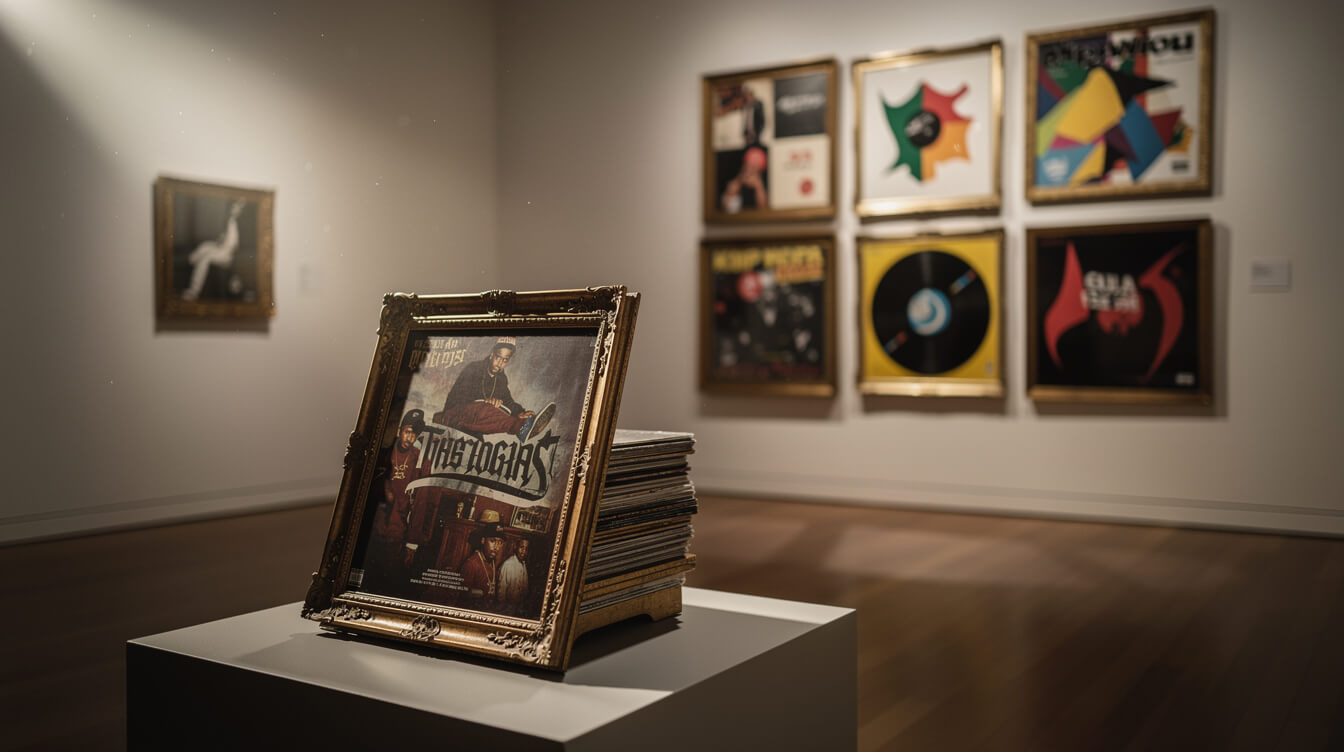
After the Makaveli record, Pac’s estate — first through Afeni Shakur, later through her successors — released seven more studio albums built from the enormous vault of unreleased material he left behind. The visual language across these covers gets uneven, mostly because different labels handled different releases and each art director was solving a different problem. Here’s the running order and what each cover is doing:
- R U Still Down? (Remember Me) — Nov 1997. Amaru/Jive. Cover: Pac at a piano, looking down. Introspective throwback framing. The first “estate era” release — Afeni Shakur set the tone that posthumous covers would treat him reverently, not sensationally.
- Still I Rise (with Outlawz) — Dec 1999. Amaru/Interscope. Cover: Pac reaching upward, sky above. Direct visual reference to Maya Angelou’s “Still I Rise” — Angelou and Pac had a well-documented on-set friendship during Poetic Justice. The most explicitly literary of the estate covers.
- Until the End of Time — Mar 2001. Amaru/Interscope. Cover: Pac in profile with the “Thug Life” tattoo visible. Rougher, more period-photograph feel — pulling from the mid-90s archive. Cover reads as “here’s who he actually was” rather than as beatified.
- Better Dayz — Nov 2002. Amaru/Interscope. Cover: Pac in prayer pose, hands clasped, head down. Explicitly spiritual — meant to counter-balance the martial iconography of the Death Row era. This is the estate leaning into the memoir-of-the-soul angle.
- Loyal to the Game (produced by Eminem) — Dec 2004. Amaru/Interscope. Cover: Pac profile, tattoos prominent. This one has a clean editorial polish — Eminem’s involvement pulled Shady/Aftermath’s design sensibility into the estate for one record.
- Pac’s Life — Nov 2006. Amaru/Interscope. Cover: multiple mini-portraits arranged as a mosaic. Meta-cover — the whole design is an argument that “one image can’t hold him.” Ten years after his death, the estate was pivoting toward retrospective framing.
Across all seven you can trace a clear design arc: 1997–1999 is reverent introduction, 2001–2004 is spiritual/biographical, 2006 is retrospective mosaic. No single art director owns the run, which is why the posthumous catalog reads more like a curated series of tribute editions than like a continuation of Pac’s own visual authorship. That’s a legit critique — but it’s also the honest artifact of an artist whose visual choices died with him in Vegas.
For the sequencing nerds among you: if you want the equivalent artist-cover deep-dive on a different discography, we did the Wu-Tang album covers decoded the same way — cover by cover, symbol by symbol.
Why these covers get reprinted more than any other rapper’s catalog
Walk into any streetwear boutique in Brooklyn, Oakland, or Berlin in 2026 and count the Tupac graphics. You’ll hit the All Eyez on Me pyramid-eye first. Then the Makaveli crucifix. Then somewhere on a back rack, the red bandana from Strictly. Then, if the shop knows what it’s doing, a Me Against the World back-of-head silhouette on a heavyweight tee. Three of those four are among the most-licensed pieces of rap-cover imagery in the RIAA’s history.
Why? Three reasons, in order:
- The covers are graphically distinct. An album cover only makes it onto a t-shirt if you can read it at chest-size. All Eyez‘ pyramid eye, Makaveli‘s crucifix, and the Strictly red bandana all pass that test. A photograph of a rapper in a room does not.
- The estate has been consistent about licensing. Afeni Shakur, before her death in 2016, structured the licensing rights so that authorized reprints have a clear path — which is why authentic Tupac apparel has actually existed as a legit category for thirty years, unlike some rap catalogs where the rights are still tangled.
- The symbols carry weight beyond the music. The crucifix, the eye, the bandana — those aren’t just album marks. They’re shorthand for a specific political and spiritual position Pac articulated across four studio LPs. Wearing the cover is wearing the manifesto.
That’s the reason our Tupac apparel is cover-driven, era-specific, and printed on weight that lasts — not fast-fashion trash. If the point is to wear the visual thesis, the shirt should hold up as long as the cover does. The Riskie crucifix on a $12 blank made in Bangladesh isn’t paying respect. A heavyweight preshrunk cotton hoodie printed to hold ink through two hundred wash cycles is.
Frequently asked questions about Tupac album covers
How many Tupac studio albums are there?
Four studio albums released during his lifetime: 2Pacalypse Now (1991), Strictly 4 My N.I.G.G.A.Z… (1993), Me Against the World (1995), and All Eyez on Me (1996). One studio album released posthumously under the alias Makaveli: The Don Killuminati: The 7 Day Theory (1996). Then seven more posthumous estate-released studio LPs between 1997 and 2006. If you count everything — studio, posthumous, compilations, live records, remix albums — you’re closer to sixty-plus releases across three decades.
Who photographed the All Eyez on Me cover?
David LaChapelle, one of the defining editorial photographers of the 1990s, whose earlier work had appeared in Interview, Rolling Stone, and Vanity Fair. He was hired directly by Death Row Records to shoot the double-album’s twin jackets in late 1995. His hyper-saturated Pop Art style — think Andy Warhol filtered through Vegas neon — is what gives the cover its unmistakable emperor-portrait aesthetic.
Who drew the Makaveli crucifix cover?
Ronald “Riskie” Brent, an in-house artist at Death Row Records. He drew the illustration from a concept Pac sketched himself and approved in August 1996, roughly three weeks before Pac’s murder in Las Vegas. Riskie has said in later interviews that Pac was clear the crucifixion was metaphorical — a comment on the industry and the media, not a literal prediction of his death.
What’s the difference between the Tupac and Makaveli covers?
Under his own name, Pac released four studio LPs from 1991 to 1996 with photograph-based cover art. The Makaveli alias applied only to The Don Killuminati: The 7 Day Theory (1996) — the record he recorded in seven days as a philosophical statement rooted in Machiavelli’s The Prince. That cover is the only one in his catalog that uses illustration instead of photography, and the only one that shows him in explicitly biblical framing.
Why is the Me Against the World cover Pac from behind?
Photographer Danny Clinch shot it that way at Pac’s specific request — Pac wanted the record to feel confessional and diaristic, and putting his face on the front would have undercut that. It also visually communicated the incarceration context: the album debuted at #1 while Pac was in Clinton Correctional Facility, and a cropped-out figure reads as a person cornered, not a person performing.
Which Tupac album cover is the most valuable to collectors?
First-pressing sealed copies of the 2Pacalypse Now vinyl LP without the Parental Advisory sticker — which was added only after the 1992 Dan Quayle controversy — regularly sell for $200 to $400+ on Discogs. First-press All Eyez on Me Death Row vinyl in shrink also holds strong value ($100–$250 depending on condition). The Makaveli original 1996 CD in longbox packaging is a sleeper piece — some sealed copies clear $150.
Final thoughts — Pac’s covers as a self-portrait sequence
Line the five studio covers up. 1991 debut prophet. 1993 red-bandana militant. 1995 cornered confessional. 1996 double-album emperor. 1996 Makaveli martyr. That’s a five-frame arc, and no other mainstream rapper of the 1990s pulled off that kind of sequential visual authorship. Biggie’s two studio covers are both baby-photo variants. Nas built Illmatic‘s cover as a childhood-photo statement and then coasted for a decade. Jay-Z’s early Roc-A-Fella covers — worth reading in the Roc-A-Fella Records story and Jay-Z’s Reasonable Doubt at 30 for compare-and-contrast — are strong but visually inconsistent, mostly because his art direction rotated between projects.
Pac’s cover run is a single argument delivered in five installments. That’s rare in rap and rare in pop music broadly. It’s why the imagery still moves — thirty years after the last one shipped — and why the estate can keep licensing it without diminishing returns. Real self-portraiture doesn’t age. And on the birthdays and anniversaries — like Tupac at 55 — the day the myth was born — the covers are what get shared, not the tracklists.
If you’re building a wall around this catalog or a wardrobe around it, treat the covers like the fine art they’ve become. Frame the ones that speak to the era you connect with. Print the symbols on cotton heavy enough to hold up. And if you’re new to Pac, start with Me Against the World and let the sleeve teach you how to look at the sound.
Deep hip-hop reads. Once a week. No filler.
Cover-art breakdowns, artist retrospectives, and first look at new drops. If you liked this decode, you’ll like what we send next.
Stay creative — The Custom Creative Team

🎧 Never Miss a Drop
Exclusive product releases, hip-hop deep dives, and member-only discounts. Straight to your inbox.
Free forever. No spam. Unsubscribe anytime.
Get the Culture, Delivered
Deep dives into hip-hop history, exclusive product drops, and discounts sent straight to your inbox. No spam, just culture.
Join 2,000+ hip-hop heads already in the loop. Unsubscribe anytime.