The Roots Things Fall Apart: The Five Covers, the Jill Scott Hook, and the Album That Finally Broke Them
February 23, 1999. The Roots Things Fall Apart lands on MCA, and the best live band in hip-hop finally stops being hip-hop’s best-kept secret. Most people know the hits — “You Got Me,” the Grammy, the Erykah Badu hook. Fewer know the hook was written and first sung by a Philly poet named Jill Scott. Fewer still know the album shipped with five different covers, or that the one everybody remembers was shot by a photographer nobody can name. This is the full story of The Roots Things Fall Apart: the cover, the swap, the band, and the guest list that launched careers.
We’re going deep on the receipts here — liner-note credits, the art director’s own account of the covers, chart and certification dates, and the 27-year-late Grammy that finally closed the book on “You Got Me.” If you came up on this record, you’ll find jewels you missed. If you’re new to it, you’ll understand why heads still call it the peak.
Why The Roots Things Fall Apart Was a Make-or-Break Album
By 1999, the Roots had three critically loved albums — Organix, Do You Want More?!!!??!, and Illadelph Halflife — and nothing close to a mainstream hit. Pitchfork’s retrospective review put it bluntly: the Philly band was “in limbo,” still treated like a novelty act in the age of Puff Daddy and the million-dollar sample clearance. OutKast and the Fugees were selling millions. The Roots were struggling to go gold.
Inside the camp, things were literally falling apart. Questlove was spending his creative energy at Electric Lady on other people’s records — D’Angelo’s Voodoo, Common’s Like Water for Chocolate — and the rest of the band noticed. “In my head at that time, the notion of a Roots album was a distant third,” he later wrote in his 2013 memoir Mo’ Meta Blues. That tension is baked into the record.
145 Songs Down to 14
Recording ran from 1997 into early 1998 at Electric Lady and the Cutting Room in New York, with engineer David Ivory, overlapping with the sessions that would define the Soulquarians collective. According to Questlove’s own liner notes, the group recorded somewhere around 145 songs before whittling the album down to 14 full tracks plus intros and interludes. That’s not a band scraping for material. That’s a band editing itself into a statement.
The Mo’ Better Blues Opening Was a Mission Statement
The album opens with “Act Won (Things Fall Apart),” a lifted scene from Spike Lee’s 1990 film Mo’ Better Blues. Denzel Washington’s Bleek Gilliam and Wesley Snipes’ Shadow Henderson argue about why Black audiences don’t come out to jazz gigs — Bleek says they should support the art, Shadow fires back that the musicians are too grandiose to play anything people actually like. It’s the Roots putting their own reputation on trial in the first 54 seconds: too smart, too self-aware, maybe getting in their own way. Then they spend the next hour proving they could be both.
From Yeats to Achebe to Philly
The title comes from Chinua Achebe’s 1958 novel Things Fall Apart, which itself borrowed the phrase from W.B. Yeats’ poem “The Second Coming” — “Things fall apart; the centre cannot hold.” A Nigerian novel about a culture collapsing under outside pressure, filtered through an Irish poem about chaos, applied to a hip-hop scene the Roots felt was being hollowed out by shiny-suit excess. That’s the Roots in one title: literary, political, and a little bit petty.
Track 54: The Numbering Easter Egg
Here’s one for the liner-note heads. On many pressings, the first track of The Roots Things Fall Apart is listed as track 54, not track 1. The numbering continues from the band’s previous three albums — Organix (17 tracks), Do You Want More?!!!??! (16), and Illadelph Halflife (20), for 53 total — so “Act Fore… The End?” closes the album as track 71. The Roots were treating their catalog as one continuous body of work before “cinematic universe” was a marketing term.
The Five Covers: The Story Behind The Roots Things Fall Apart Album Art
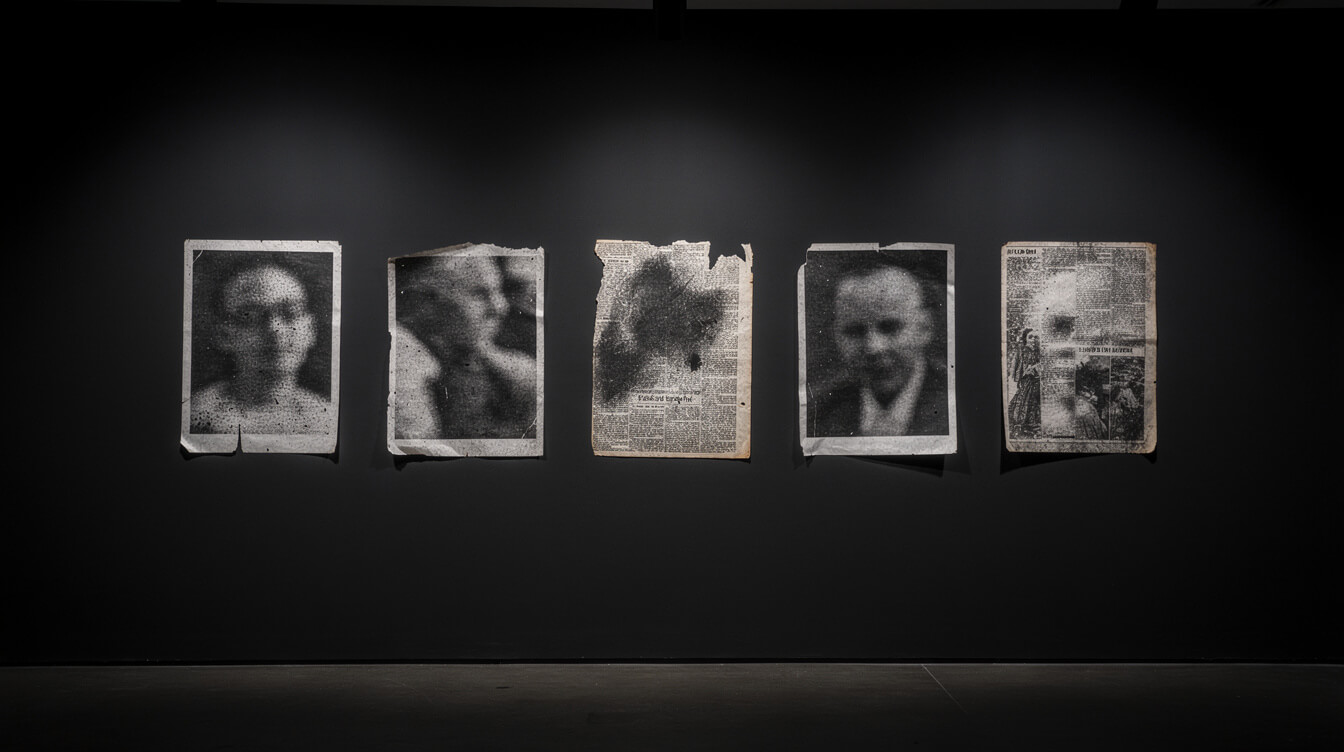
For a limited window, The Roots Things Fall Apart was available with a choice of five different front covers. The art director was Kenny Gravillis, then creative director of the Black Music Division at MCA after five years at Def Jam’s design department, The Drawing Board. In a 2014 interview with Complex for the album’s 15th anniversary, Gravillis explained the concept: five images of “visual failure in society,” each one matching the album’s title to a moment when humanity hit bottom.
The Main Cover: Bed-Stuy, Photographer Unknown
The cover everybody knows is a stark black-and-white photo of riot police chasing two Black teenagers through the streets of Bedford-Stuyvesant, Brooklyn, during the civil rights era. The young woman in the foreground is mid-stride, her face twisted in fear. Here’s the jewel: Complex’s breakdown lists the photographer as unknown and dates the photo only to “the 1960s” (Pitchfork places it in 1965). One of the most famous hip-hop album covers ever made is an uncredited news photograph.
“I remember going to Tower Records and seeing it huge; it was just so impactful. I’m not sure that it would work today. I give MCA respect for pushing it out at the time.” — Kenny Gravillis, to Complex (2014)
Quick correction to a myth that floats around fan forums: this wasn’t a staged recreation of a famous photo. It’s the actual archival image, licensed and printed as-is. That’s exactly why it hits so hard.
The Other Four Covers
- “Ace in the Hand” — the hand of mob boss Giuseppe “Joe the Boss” Masseria, photographed after his murder in a Coney Island restaurant on April 15, 1931, an ace of spades still in his grip.
- The church — the burned-out interior of a church after a fire, a lone firefighter in the rubble beneath the surviving arches. Date, location, and photographer all unknown.
- “Baby in the Rubble” — H.S. “Newsreel” Wong’s photo of an infant crying in Shanghai’s South Railway Station after a Japanese bombing on August 28, 1937.
- “Crying Child” — Peter Turnley’s photograph from Baidoa, Somalia, August 1, 1992, during the famine. Gravillis said it was the last one picked.
The Cover They Didn’t Use
The original concept, per Gravillis, was completely different: an illustration of the Roots and Sean “Puffy” Combs sunk at the bottom of the ocean. Think about that for a second — the band that spent 1996 mocking shiny-suit rap video clichés in “What They Do” almost put the man who defined that era on their cover as a punchline. They went with history instead of a sub, and the record is better for it.
Where the Cover Ranks Now
The Bed-Stuy image has aged into canon. It appeared in the 2005 book The Greatest Album Covers of All Time, landed at No. 46 on Billboard‘s 100 best album covers of all time (2023) and No. 43 on its best hip-hop covers list, and No. 45 on Rolling Stone‘s 100 best album covers (2024). If you want the bigger picture of how rap covers became art, our 50-year history of the hip-hop album cover and our complete visual history of hip-hop artwork put this one in context.
“You Got Me”: Jill Scott Wrote It, Erykah Badu Sang It, Eve Waited 27 Years
“You Got Me” is the song that broke the Roots, and the backstory is one of the quietest “almost” stories of ’90s hip-hop. The song was co-written by Jill Scott, who recorded the chorus and bridge. Then MCA stepped in. The label wanted a higher-profile name on the album’s official lead single, and Scott was relatively unknown outside Philadelphia at the time. So Erykah Badu re-recorded her parts.
The Swap That Made Two Careers
The label got what it wanted. Released to radio in January 1999, “You Got Me” became the Roots’ first Top 40 hit, peaking at No. 39 on the Billboard Hot 100, and it won the 2000 Grammy for Best Rap Performance by a Duo or Group. Scott Storch, still a Roots associate before his run as a hitmaker, co-produced it.
But Jill Scott didn’t disappear. When the Roots hit the road, Scott joined them on stage to sing the hook she wrote — her performance is documented on the live album The Roots Come Alive, released that November. Within a couple of years she had her own platinum debut. If you want to hear where that pen went next, our deep dive on Jill Scott’s “A Long Walk” and our ranking of the 15 best Jill Scott songs pick up the story. Badu, meanwhile, was two years removed from the record that started it all — read our breakdown of Baduizm at 29.
Eve of Destruction’s Debut
The second verse belongs to a young Philly MC credited as Eve of Destruction — at the time signed to Dr. Dre’s Aftermath, months before the Ruff Ryders run made her a star. It’s her recording debut, and it’s the verse a lot of people quote first.
The Grammy Fix in 2026
Here’s the receipt most retrospectives don’t have yet. When “You Got Me” won its Grammy in 2000, Eve wasn’t recognized as a winner. On January 29, 2026, at the Recording Academy Honors presented by the Black Music Collective, the Academy finally corrected it — Eve received Grammy recognition for her verse more than a quarter-century after the fact. “I’m still processing this situation,” she told the room. Twenty-seven years after The Roots Things Fall Apart dropped, the album was still settling debts.
Black Thought, Two Beatboxers, and a Band That Played Like a Sampler
The Roots lineup in 1999 still looked strange next to everybody else’s: a big man with a big Afro on drums, a sharp but unshowy MC in Black Thought, and — as Pitchfork pointed out — two beatboxers, Rahzel and Scratch. In an era where producers built records from samples, the Roots had human beings playing the role of the sampler, the drum machine, and the turntables.
Rahzel and Scratch on the Record
Both get their moments on wax. Rahzel shares a production credit with keyboardist Kamal Gray on “100% Dundee.” Scratch trades with Questlove on the interlude “3rd Acts: ? vs. Scratch 2… Electric Boogaloo.” Neither track is the single, but both are the sound of a band that could reproduce hip-hop’s machinery with mouths and hands. It didn’t last forever — Pitchfork notes that Rahzel and Malik B. left for good in the era after Phrenology — which makes The Roots Things Fall Apart the high-water mark for that original configuration.
Questlove Learns to Play “Dirty”
The sonic leap on this album starts with Questlove reinventing himself as a producer. Per Mo’ Meta Blues, he played an early version of “Double Trouble” for DJ Premier, J Dilla, and D’Angelo and got polite, disinterested head-nods. Stung, he recorded drums to two-inch tape, looped it back through the board, and tweaked the EQ until it sounded distant and worn. He started dragging his playing slightly behind the beat, taking a cue from Dilla, so the band stopped sounding clean and started sounding like a dusty record. “It was a turning point in my understanding of my own career,” he wrote. You can hear it on “Table of Contents,” where the mix is deliberately pinched and lopsided.
Who Actually Produced It
Most of the album is credited to The Grand Wizzards, the band’s in-house production name, with outside hands on specific cuts: Jay Dee (J Dilla) produced “Dynamite!,” Kamal Gray handled “The Next Movement,” Chaos produced “Without a Doubt,” James Poyser co-produced “Double Trouble,” and Scott Storch co-produced “Ain’t Sayin’ Nothin’ New,” “Adrenaline!,” and “You Got Me.” D’Angelo plays keys, Bob Power mixed, and string players Larry Gold and Igor Szwec add the chamber-room ache. Not everybody loved it — Robert Christgau knocked Kamal Gray’s “omnipresent ostinato beds” — but that hypnotic keyboard repetition is exactly what makes the record feel like one continuous mood.
If this album is the moment the band figured itself out, Illadelph Halflife is the hungrier, Wu-influenced album right before it. Our The Roots Illadelph Halflife T-Shirt is built for the heads who rode with them before the breakthrough. And for where the sound went next, see our piece on “The Seed (2.0)” and how a live band out-grooved the sampler era.
The Guest List That Launched Careers on The Roots Things Fall Apart
For a band album, The Roots Things Fall Apart is stacked with features — and several of them were first appearances that turned into whole careers. Spin later said the album “swelled the Roots clique into a movement-style posse.” Here’s the roster.
Beanie Sigel on “Adrenaline!” — The Big Pun Detour
“Adrenaline!” was supposed to have Big Pun on it. Black Thought had appeared on Pun’s debut, and Pun agreed to return the favor — then he got locked up while the Roots were up against a deadline. Enter a then-unknown Philly MC who’d been tagging along to the band’s weekly jam sessions: Beanie Sigel, making his recording debut alongside Dice Raw before Roc-A-Fella ever came calling. He steals the song.
Mos Def on “Double Trouble” — Originally a Black Star Track
“Double Trouble” was the last song added to the album, and it was originally supposed to feature both halves of Black Star. Talib Kweli was in the plan, but the format of the beat pushed the Roots toward a throwback: a two-MC tag-team in the Run-DMC and EPMD tradition. So it became Black Thought and Mos Def trading bars, and it’s arguably the album’s centerpiece. For the Black Star side of that story, read our breakdown of Mos Def and Black Star’s blueprint album.
Common on “Act Too (The Love of My Life)”
“Act Too” started as an interlude and grew into a full song. Common‘s verse picks up the thread of “I Used to Love H.E.R.” from 1994’s Resurrection — hip-hop as a woman — though Questlove has said it isn’t about H.E.R.’s daughter so much as a “reflection on the evolution of hip hop, through our eyes.” Writing for The Root in 2018, Panama Jackson called it “one of the best beats in hip-hop history.” Common was deep in his own Soulquarians run at the time; our Common One Day It’ll All Make Sense Hoodie honors the album he made right before this verse.
The Philly Bench
The rest of the guest list is a who’s-who of the Roots’ Philadelphia orbit. DJ Jazzy Jeff and the Jazzyfatnastees appear on “The Next Movement,” the album’s second single. Dice Raw shows up across four tracks. Radio legend Lady B appears on “Without a Doubt.” And poet Ursula Rucker closes the album with “The Return to Innocence Lost,” a devastating spoken-word piece about a young man seemingly doomed from birth. It’s the last thing you hear before the hidden track — and it lands the title’s theme harder than any hook could.
The Roots’ Visual Legacy Didn’t Stop Here
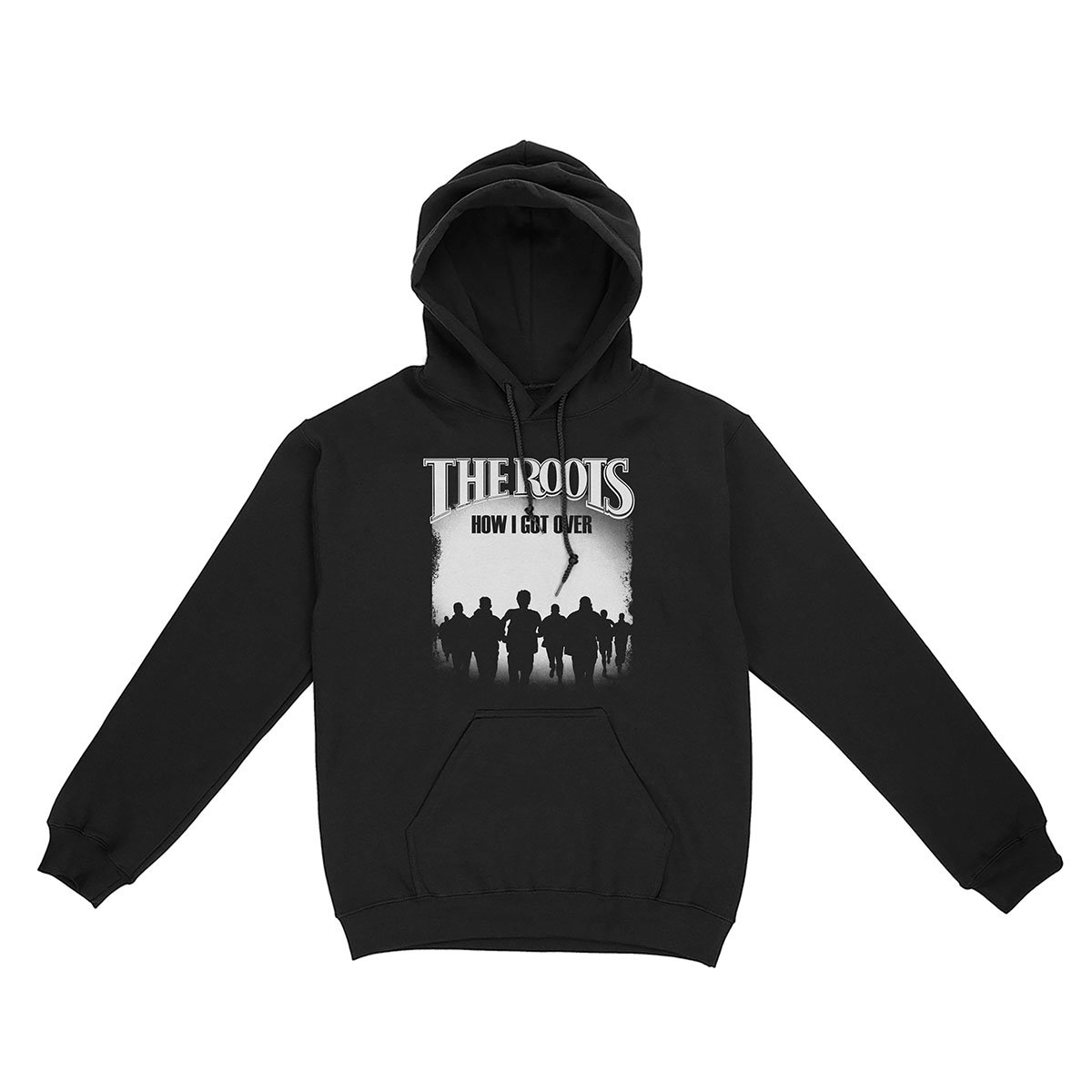
One more connection worth knowing: Kenny Gravillis didn’t just design these five covers. He went on to art direct the Roots’ covers for Game Theory, Rising Down, How I Got Over, and Undun. The Roots’ visual language — stark, documentary, uncomfortable — runs straight from this album through the next decade of their catalog.
Rep the Roots Run
Same art director, same unflinching visual language, a decade later. The Roots How I Got Over Hoodie is for heads who followed the band from Bed-Stuy riot photos to the Fallon stage.
Why The Roots Things Fall Apart Still Sounds Like the Peak
The numbers tell the commercial story. The Roots Things Fall Apart debuted at No. 4 on the Billboard 200 and No. 2 on the Top R&B/Hip-Hop Albums chart. The RIAA certified it Gold on April 5, 1999 — about six weeks after release, and the group’s first record to move 500,000 units. It went Platinum on April 22, 2013, fourteen years later. It also earned a Grammy nomination for Best Rap Album, losing to Eminem’s The Slim Shady LP.
What the Critics Said Then
Reviews in 1999 were glowing. Spin‘s Neil Kulkarni gave it 9/10 and suggested the Roots had made “perhaps rap’s first melancholy masterpiece.” Touré in Rolling Stone called it “a top-flight record” and described Black Thought as “a lyricist’s lyricist.” Mojo called it “the first candidate for hip hop album of 1999.” Black Thought himself later told Complex that while some people consider Do You Want More?!!!??! their first major release, “Things Fall Apart was the real arrival of The Roots.”
What the Lists Say Now
The canon caught up. AllMusic called it “one of the cornerstone albums of alternative rap.” It made The Guardian‘s “1000 Albums to Hear Before You Die” in 2007. Pitchfork gave it a 9.4 in its 2016 retrospective. Rolling Stone ranked it No. 416 on its 500 Greatest Albums of All Time (2020) and No. 51 on its 200 Greatest Hip-Hop Albums (2022). Billboard put it at No. 81 among the greatest rap albums in 2024.
The Line to To Pimp a Butterfly
The real legacy is in who came after. Pitchfork drew a straight line from this album to Kendrick Lamar’s To Pimp a Butterfly — dense, allegorical, live-jazz-backed Black art with dozens of collaborators — and to the Robert Glasper, Thundercat, Terrace Martin, and Kamasi Washington wave. The “next movement” the Roots rapped about in 1999 eventually showed up. They just got there first.
Why Heads Still Call It the Peak
After this, the Roots went harder and weirder on Phrenology, lost Rahzel and Malik B., and eventually became Jimmy Fallon’s house band. Great records followed. But The Roots Things Fall Apart is the one where every piece of the original vision — the live band, the beatboxers, the Soulquarians network, Black Thought at full power, and a cover that refused to look away — lined up at the same time. For the full roster of who was in the band when, check our complete guide to The Roots members.
The Roots Things Fall Apart: Frequently Asked Questions
When did The Roots release Things Fall Apart?
February 23, 1999, on MCA Records. It was the group’s fourth studio album, following Illadelph Halflife (1996).
Who sings the hook on “You Got Me”?
Erykah Badu sings the hook on the released version. Jill Scott co-wrote the song and recorded the original chorus and bridge, but MCA wanted a bigger name for the lead single. Scott performed it with the band on tour, including on The Roots Come Alive.
What is the photo on the Things Fall Apart cover?
The best-known cover shows riot police chasing two Black teenagers in Bedford-Stuyvesant, Brooklyn, in the 1960s civil rights era. The photographer is unknown. It was one of five limited-edition covers chosen by art director Kenny Gravillis.
Did Things Fall Apart win a Grammy?
“You Got Me” won the 2000 Grammy for Best Rap Performance by a Duo or Group. The album was nominated for Best Rap Album and lost to Eminem’s The Slim Shady LP. In January 2026, Eve was finally recognized for her verse at the Recording Academy Honors.
Is Things Fall Apart platinum?
Yes. It went Gold on April 5, 1999, and was certified Platinum by the RIAA on April 22, 2013.
Where does the title come from?
From Chinua Achebe’s 1958 novel Things Fall Apart, which took the phrase from W.B. Yeats’ poem “The Second Coming.”
Why does the tracklist start at 54?
On many pressings, the numbering continues from the Roots’ first three albums (53 tracks combined), so the album runs from track 54 to track 71.
Final Thoughts: Things Fell Into Place
The Roots Things Fall Apart is an album named after collapse that ended up being the moment everything came together. A band that couldn’t go gold got gold in six weeks. A Philly poet got cut from the single and built a career anyway. A young MC from Aftermath got her Grammy 27 years late. And a riot photo nobody can credit became one of the most important images in rap. Put the record on, start at track 54, and let it run all the way to Ursula Rucker. Then tell us it isn’t the peak.
Stay creative — The Custom Creative Team
Culture Delivered Weekly
Liner-note deep dives, album-cover history, and new drops from the Custom Creative crew — straight to your inbox.

🎧 Never Miss a Drop
Exclusive product releases, hip-hop deep dives, and member-only discounts. Straight to your inbox.
Free forever. No spam. Unsubscribe anytime.
Get the Culture, Delivered
Deep dives into hip-hop history, exclusive product drops, and discounts sent straight to your inbox. No spam, just culture.
Join 2,000+ hip-hop heads already in the loop. Unsubscribe anytime.