Rap Posters That Actually Mean Something: A Head’s Guide to Hip-Hop Wall Art
Walk into any mall poster bin, scroll any print-on-demand grid, and the rap posters all start to blur together: the same cropped Tupac, the same Biggie in the crown, the same Tyler and Travis drops in four different fonts. Most of it is filler with no meaning behind it. A wall that actually says something about you works differently. It’s curated like a crate: every piece has a reason, a credit and a story you can tell when someone asks.
This is the guide the shop pages never write. We cover which album covers earn wall space and who actually made them, the photographers who documented the culture before anybody thought to frame it, the Bronx flyer art that came before both, and the gear that takes hip-hop wall art past paper. Then we get practical: how to frame, hang and light it, and where to buy rap posters without ending up with generic junk.
Why Most Rap Posters Look the Same (and What Heads Actually Hang)
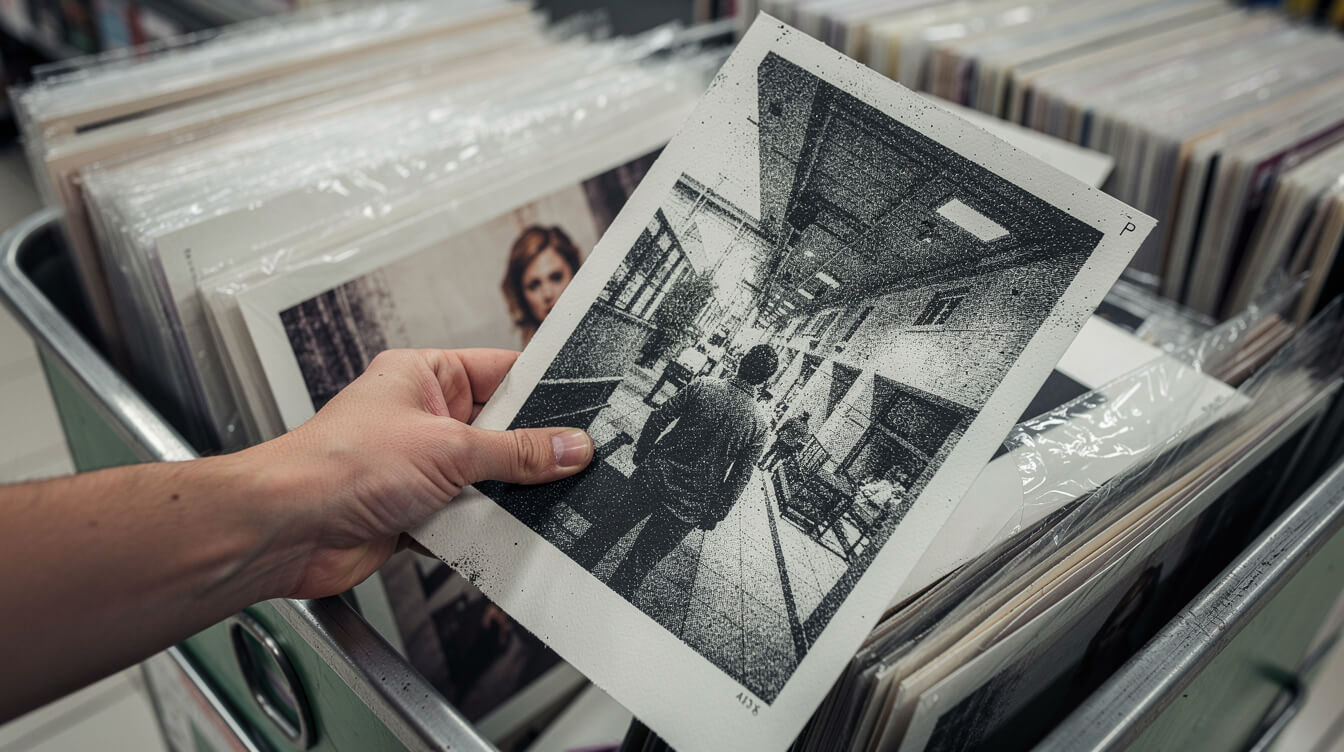
Search “rap posters” and page one is wall-to-wall shopping: Pinterest boards, Walmart, Displate metal prints, AllPosters category grids, an Etsy marketplace, and digital-download shops selling printables. Every one of them is a product grid, and none of them tells you which poster matters or why. That’s why so many walls end up looking the same. When the algorithm curates for you, you get whatever’s trending this week, usually the same handful of modern stars plus a stock Tupac photo.
The Three Things a Good Rap Poster Has
Ask a real head what’s on their wall and the answer comes with a story attached. The best rap posters tend to share three qualities:
- Provenance. You know who made the image: the photographer, the designer, the art director. “Daniel Hastings shot the 36 Chambers cover in an abandoned synagogue” is a conversation starter. “I got it off a random site” isn’t.
- A moment. The image captures something that happened, like an album dropping, a photo shoot that turned into history, or a party that started a genre.
- Personal connection. It’s an album that soundtracked your life, a crew from your city, an era you lived or wish you had.
Modern Grid vs. Golden-Age Lane
The big poster catalogs lean hard toward the current era and the most famous dead legends. Golden-age and underground work, like Wu-Tang, DOOM, Gang Starr, Big L and the Native Tongues crews, is thin on those sites, and when it does show up it’s usually a low-res cover scan. That’s the lane we live in, and it’s where a wall goes from “I like rap” to “I know rap.”
Album-Cover Rap Posters: The Covers That Earn Wall Space
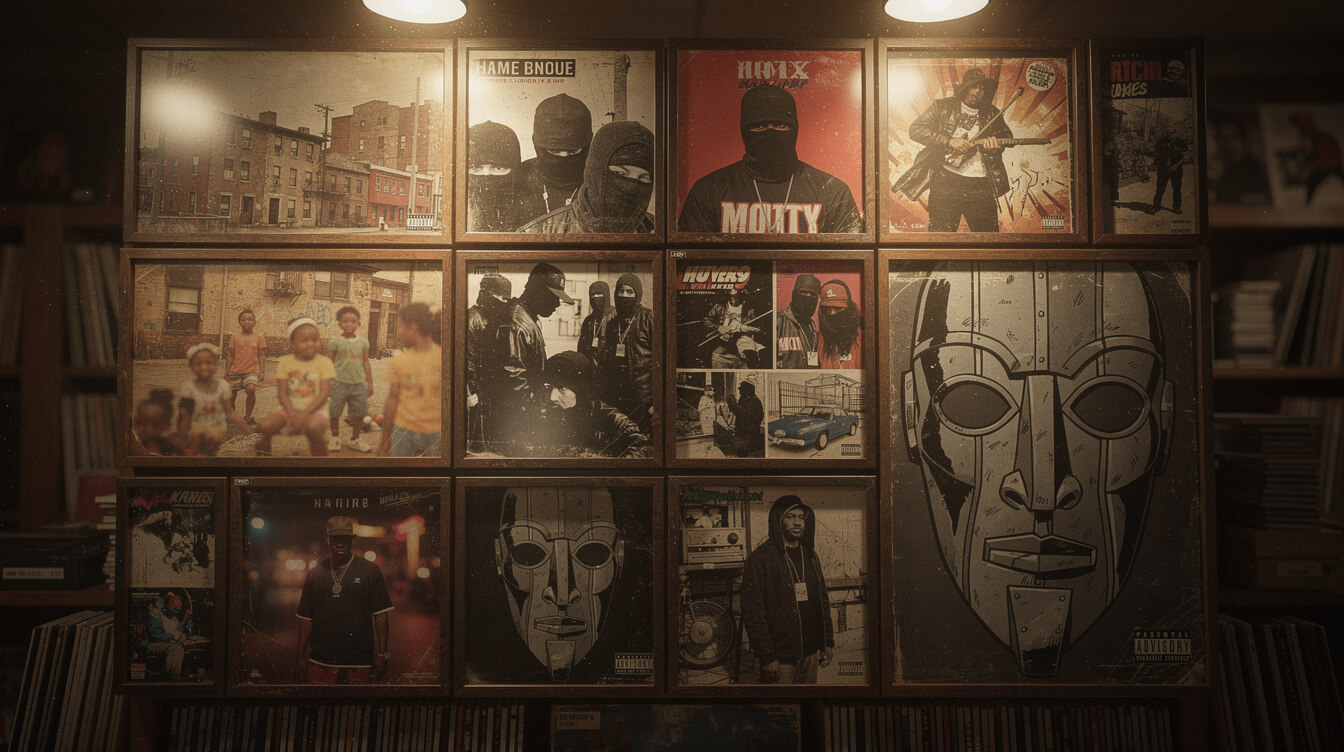
Album covers are the backbone of most hip-hop walls, and for good reason. For a lot of fans they were the first hip-hop art they ever owned, and they come pre-loaded with memory. We’ve already written the full 50-year history of the hip hop album cover, so here’s the short list of covers whose backstories make them worth framing, with the receipts.
Nas, Illmatic (1994)
Seven-year-old Nas over a city block. The cover, designed by Aimee Macauley, was not the first idea. The original concept had Nas holding Jesus Christ in a headlock, a callback to his “Live at the Barbeque” bar. Flip the vinyl and the jewel continues: the sides aren’t labeled A and B but “40th Side North” and “41st Side South,” the streets that bound the Queensbridge Houses. Nas explained the age-seven photo himself: that was the year he started noticing everything around him. If you want the wearable version, we made a Nas Illmatic T-Shirt for exactly that crate.
The Notorious B.I.G., Ready to Die (1994)
The baby with the afro is one of the most recognized covers in rap, and the kid’s identity is still officially unconfirmed. In 2011 the New York Daily News suggested he was Keithroy Yearwood, then a Bronx high-schooler, but Bad Boy never confirmed it. The concept is literally birth on the front and death in the title, which makes it one of the darkest jokes in hip-hop art.
Wu-Tang Clan, Enter the Wu-Tang (36 Chambers) (1993)
Photographer Daniel Hastings shot it inside the Angel Orensanz Center, an abandoned and ruined synagogue on the Lower East Side. Only six members made the shoot. U-God was locked up on a parole violation and Method Man had been arrested earlier that day, so the six who showed pulled stocking masks over their faces, which made it impossible to tell who was missing. The accident became the aesthetic. Our Wu-Tang album covers decoded piece goes cover by cover from there.
GZA, Liquid Swords (1995)
This is the comic-book cover, and it’s real comic-book pedigree. Denys Cowan, founder and creative director of Milestone Media, drew it. Prentis Rollins inked it, and Milestone’s color editor Jason Scott Jones colored it digitally at a time when digital coloring was still new in comics. GZA’s manager Geoffrey L. Garfield, a comic fan, commissioned it. That’s why it reads like a splash page and not a record sleeve. We made a Liquid Swords T-Shirt for the heads who’d frame it if they could.
Madvillain, Madvillainy (2004)
Stones Throw art director Jeff Jank built it from a grayscale photo of DOOM in the mask, shot by Eric Coleman at the Stones Throw house in LA. Jank wanted a picture of a man who happened to wear a mask, not “a picture of a mask.” The small orange square went on at the end because he felt it needed something distinctive. Marvel paid tribute in 2015 with a Mighty Thor variant cover built on the same layout. Few covers have a cleaner design for a minimalist wall.
Eric B. & Rakim, Paid in Full (1987)
Two men in custom Gucci “knock-ups” from Harlem tailor Dapper Dan, with art direction by Ruth Kaplan and photography by Ron Contarsy. This is where hip-hop fashion and hip-hop art become the same thing. It works on a wall even for people who don’t know the record, because it reads as a fashion photograph.
One Rule for Album Art on Your Wall
Buy covers from licensed sources (official artist and label stores, reissue vinyl you can frame) rather than random bootleg scans. The colors are right, the resolution holds up at size, and the people who made it get paid. A framed LP jacket is often the best “poster” you can buy, at the original 12-inch size the designer intended.
Photography Prints: The Shots That Documented the Culture
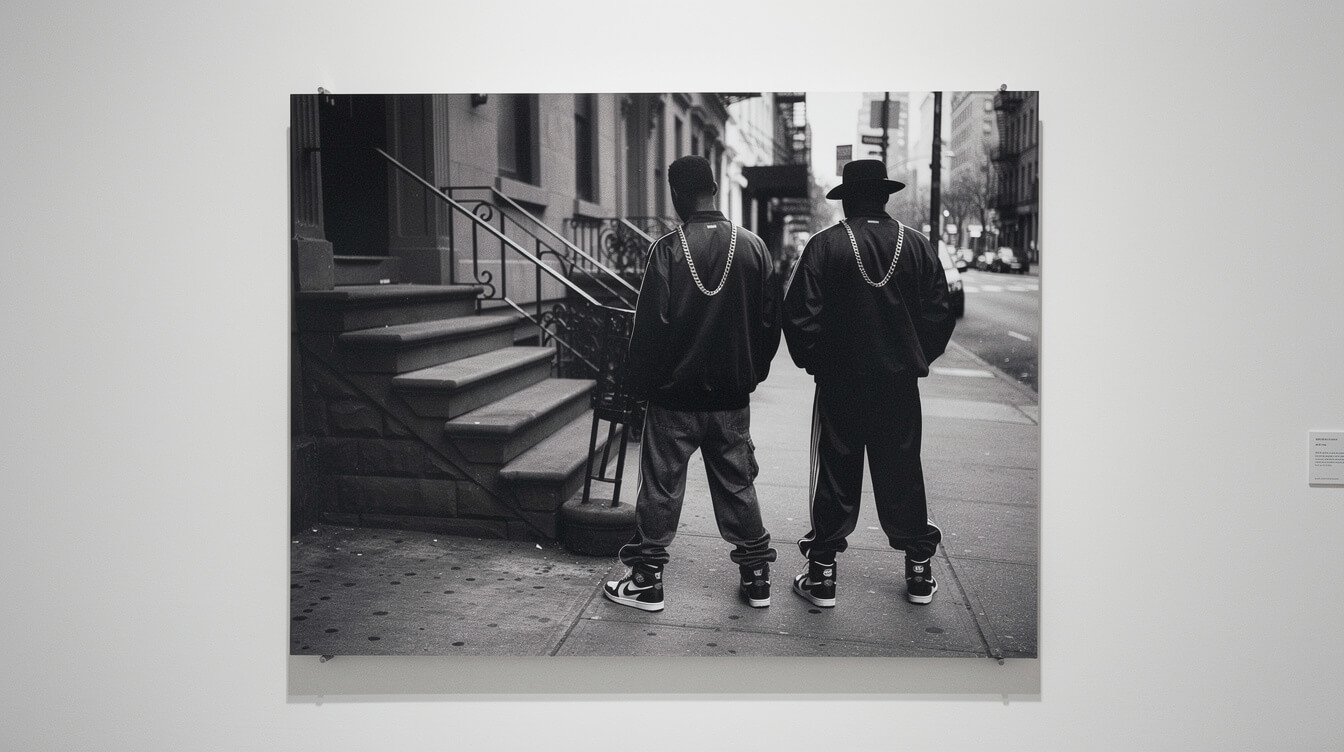
If album covers are the headline, photography is the archive. These are the images that show what the culture looked like before anyone sold it back to us. A great photograph print also ages better than almost any graphic poster, because black-and-white fits every room.
Gordon Parks, A Great Day in Hip Hop (1998)
On September 29, 1998, Gordon Parks photographed a crowd of rappers, producers and DJs, with XXL staff identifying 177 of them, on the stoop of 17 East 126th Street in Harlem. XXL commissioned it as a homage to Art Kane’s 1958 Esquire photo “A Great Day in Harlem,” which put 57 jazz musicians on the same block. (It’s commonly mixed up, but Kane shot the 1958 jazz original and Parks shot the 1998 hip-hop version.) Here’s the jewel: the shoot date matched the release date of albums from Jay-Z, A Tribe Called Quest, OutKast, Brand Nubian and Black Star. Not everyone invited showed up, either. The Beastie Boys, Big Pun, Public Enemy, KRS-One and most of Wu-Tang weren’t there. The image sparked copycat city shoots for years, including “A Day in the West” in LA the following year.
Barron Claiborne, “K.O.N.Y.” (1997)
Biggie in the crown, against deep red. Rap Pages hired Claiborne to shoot the cover, and his session took place in his New York studio on March 6, 1997, three days before Biggie was killed in Los Angeles. The crown was a plastic novelty from a Broadway shop that reportedly cost six dollars. At Sotheby’s first dedicated hip-hop auction in 2020, that same crown sold for $600,000. One more link worth knowing: Claiborne’s photographic mentor was Gordon Parks.
Jamel Shabazz, Back in the Days
The Brooklyn-born photographer spent the 1980s shooting the people of New York’s emerging hip-hop era: the fits, the poses, the crews on the corner. His book Back in the Days collects that decade of street style, and his work was the cover of The Roots’ Undun (2011). The Bronx Museum gave him his first museum survey, “Eyes on the Street,” in 2022. If you want a print that feels like the culture instead of a celebrity, start here.
Chi Modu, Martha Cooper and the Rest of the Canon
- Chi Modu shot for The Source through the ’90s, covering Tupac, Mobb Deep, Eazy-E and Biggie, and his images helped set the visual template for an era. Sotheby’s auctioned eight of his photos in 2020.
- Martha Cooper and Henry Chalfant published Subway Art in 1984. It’s called the graffiti bible and had sold half a million copies by 2009.
- Ernie Paniccioli was chief photographer for Word Up! magazine from 1987 and donated his archive to Cornell’s Hip Hop Collection in 2012.
- Glen E. Friedman shot covers and publicity for early Def Jam artists, Public Enemy and Run-DMC among them. His work is in the Metropolitan Museum of Art’s collection.
- Ricky Powell toured with the Beastie Boys and photographed downtown New York, Basquiat and Warhol included.
- Janette Beckman moved from London’s punk scene to New York in 1982 and turned her portrait lens on the city’s early hip-hop scene.
Many of these photographers or their estates sell licensed prints, and a signed print from the person who pressed the shutter beats any reprint you’ll find in a poster grid.
Flyers, Typography and Graffiti: The Golden-Age Art Forms
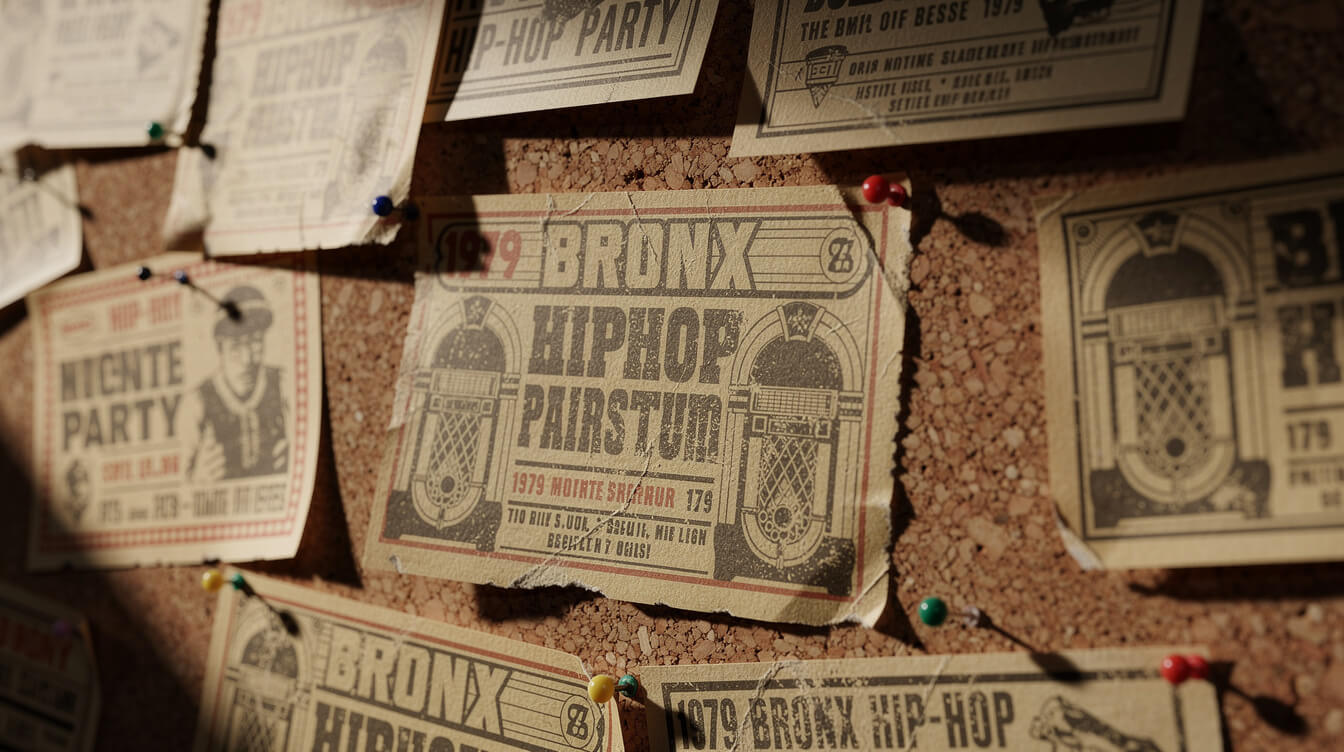
Before rap posters existed, there were party flyers, and they’re the most underrated wall art in the culture. We covered the flyer economy in our visual history of hip-hop artwork. Here’s why they belong on your wall specifically.
Buddy Esquire, the Flyer King
Lemoin Thompson, known as Buddy Esquire, was the best-known show flyer artist in the Bronx from 1978 to 1982, advertising early gigs by Grandmaster Flash, Afrika Bambaataa, Kool Herc, the Funky 4 Plus 1 and the Cold Crush Brothers. He was self-taught from library books, started out writing graffiti as “ESQ,” and called his style “Neo-deco”: Art Deco borders, Letraset dry-transfer type, jukebox and theater-marquee motifs. His goal was to make a community-center jam look classy and professional. He never made a living from it and worked for UPS most of his life. He died in 2014. His flyers are among the only primary documents from hip-hop’s first years.
Where to See the Originals
Cornell University’s Hip Hop Collection holds the Buddy Esquire Archive, with hundreds of flyers, his cut-and-paste originals and the lettering sources he worked from. Cornell has also digitized a large hip-hop flyer collection you can browse online. It’s the best mood board on earth if you’re designing your own wall. A 2015 book, Buddy Esquire: King of the Hip Hop Flyer, collects his handbills.
Typography and Graffiti Pieces
Flyers are the gateway to a whole typographic lane: minimalist tracklist prints, lyric typography, logo pieces and graffiti canvases. Cey Adams, founding creative director of Def Jam, came up doing graffiti lettering for the Beastie Boys and later co-founded The Drawing Board, Def Jam’s in-house design firm. Hip-hop graphic design and graffiti were never separate disciplines. If your wall is mostly photos, one bold type or graffiti piece breaks it up. For the film side of that same scene, see our piece on Wild Style.
Beyond Paper: Glass Prints, Neon and Album-Art Apparel as Wall Pieces
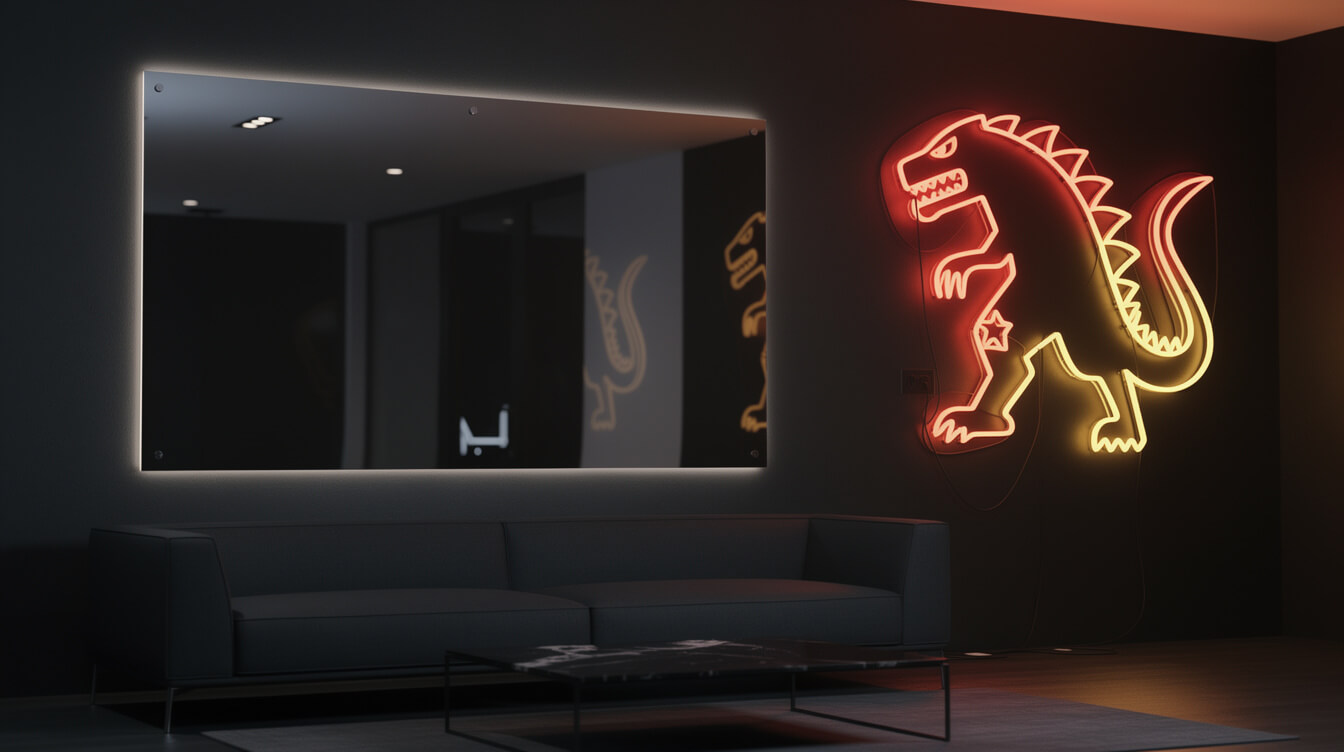
Paper is where most walls start, not where they end. Once you’re past the dorm-room phase, a few upgrades change the whole room.
The Grown-Up Rap Poster: Glass Prints
A frameless glass print does what a paper poster can’t. Colors glow, blacks go deep, and there’s no frame glare or curling corners. Our SpectraGlass HD Print Panel prints your image on 4 mm tempered glass and ships with a damage-free wall kit and a desk stand. Use it for the shots that are actually yours: a photo from a show you went to, your crew on a stoop, a flyer from your own collection.
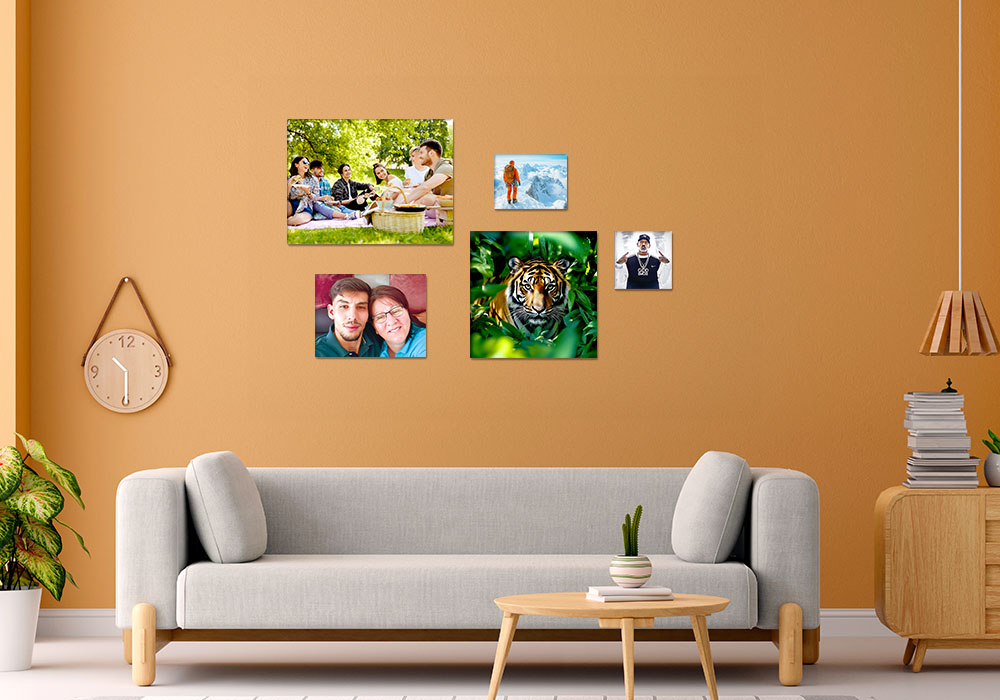
The Rap Poster, Grown Up
We made a frameless glass print for the shots that are actually yours: the show you were at, the crew on the stoop, the flyer you kept. HD color on 4 mm tempered glass, five sizes, damage-free wall kit included.
Neon: The Piece That Lights the Room
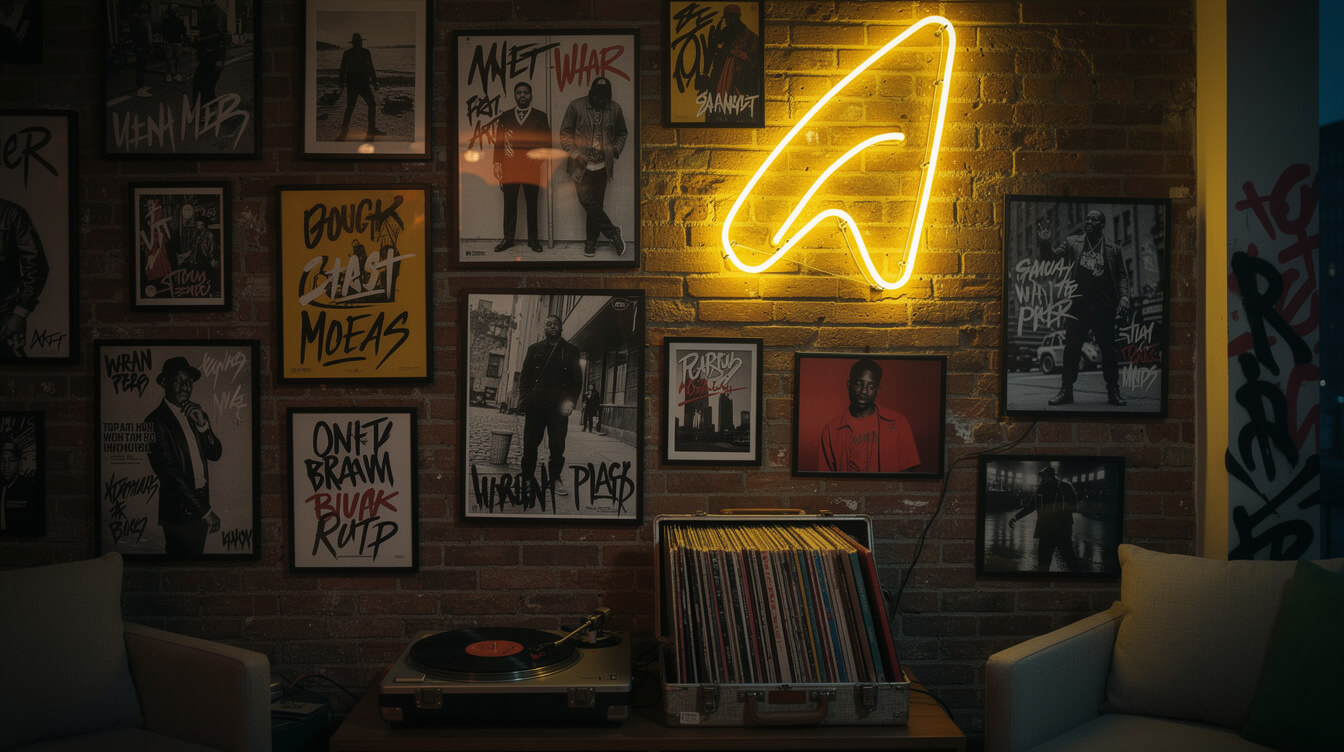
Nothing announces a hip-hop wall like neon. A Wu-Tang Forever Neon LED Sign is the W you can see from the street, the same move we break down in our Wu-Tang neon post. Put it at the center of a gallery wall and every print around it gets lit. For the monster-movie heads, there’s the Classic Godzilla Atomic Neon LED Sign, kaiju energy with a hip-hop footnote: DOOM recorded as King Geedorah, after Godzilla’s three-headed nemesis.
Album-Art Apparel as Wall Art
Graphic tees are wall art too. Shadow-box frames for t-shirts are a real thing, and a graphic tee folded and framed behind glass looks like a gallery piece. An album-cover tee like the Only Built 4 Cuban Linx T-Shirt works on the wall or on your back, so it’s the most versatile piece of art you’ll buy this year.
How to Hang a Hip-Hop Gallery Wall: Framing, Spacing, Lighting
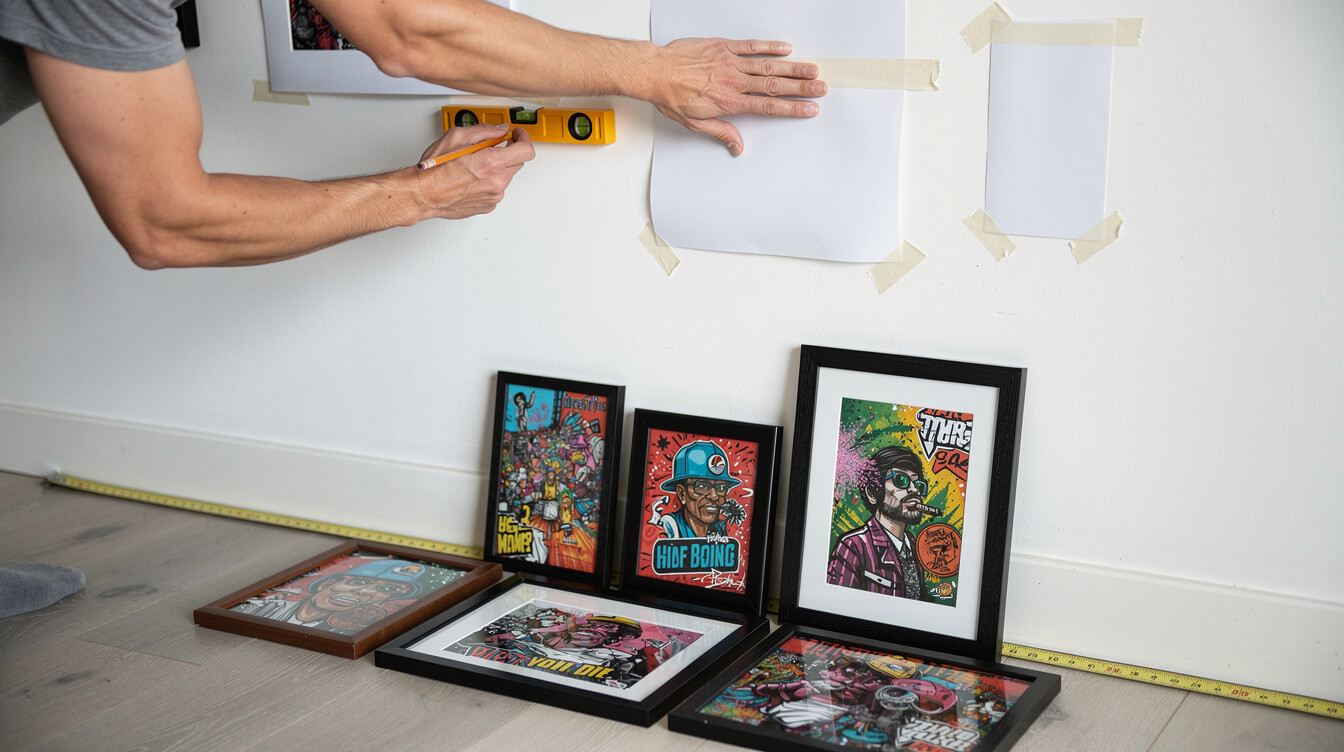
Good art hung badly still looks bad. Here’s the practical side most poster shops skip.
Framing
- Frame it, don’t tape it. Even a cheap frame doubles how expensive a print looks.
- Go UV-protective if there’s daylight. Album art and photo prints fade, and UV-filtering glazing slows that down a lot.
- Use acid-free mats and backing for anything you care about, like signed prints or original flyers. Regular cardboard yellows paper over time.
- Black frames for color work, thin wood or white for black-and-white photography. Keep frame styles consistent across a wall even if the art isn’t.
Layout and Spacing
- Center the group at eye level. The gallery standard is about 57 inches from the floor to the center of the arrangement.
- Keep 2-3 inches between frames. Consistent gaps are what make a messy mix look intentional.
- Template first. Trace each frame on kraft paper, tape the paper to the wall and live with it for a day before you drill anything.
- Anchor with one hero piece, like a neon sign or your biggest print, and build outward. Mix sizes, but repeat colors.
Lighting
Avoid direct sun on prints. A picture light or an adjustable track head angled at roughly 30 degrees removes glare. Neon or LED signs double as mood lighting, so keep them dimmable or on a smart plug. Don’t let them blow out the photographs next to them.
Curate by Theme, Not by Shopping Cart
The best walls tell one story. Try an era (golden age 1986-1996), a city (Queensbridge, Staten Island, Atlanta), a crew (Wu-Tang, Native Tongues, Dungeon Family) or a medium (all photography, all flyers). A wall of Queensbridge, with Illmatic, a Mobb Deep photo and a Marley Marl-era flyer, beats a random mix every time.
Where to Buy Rap Posters Without Getting Generic Junk
Now the question the SERP actually asks: where do you buy rap posters that aren’t junk? Here’s a quick sorting system.
Best Sources, in Order
- Photographers and estates directly. Signed or licensed prints from the person who took the shot. These hold value, and they’re the only “posters” that do.
- Official artist and label stores. Reissue campaigns often come with lithographs or poster inserts. Deluxe vinyl reissues are an underrated way to get framable art.
- Vinyl itself. A record-shop LP jacket in a 12-inch frame gives you the cover at its intended size and print quality.
- Independent artists. Original fan art, screenprints and typographic pieces from illustrators you can name. Look for numbered editions.
- Big poster marketplaces, last. They’re fine for a dorm, but check licensing and resolution, and expect to see the same print in every apartment.
Red Flags
- Blurry previews or “screenshot-looking” cover scans, which will print soft at poster size
- No artist, photographer or license info anywhere on the listing
- Real famous photographs sold with no credit to the photographer
- Prices that seem impossibly low for a large print, which usually means thin paper and a cheap printer
Our Lane
We don’t sell paper posters. We make the things that come after them: glass prints for your own photos, neon pieces, and album-art apparel from the golden-age and underground catalog the big grids skip. For more framing ideas by artist, see our Tupac album covers and MF DOOM merch guide.
Rap Posters FAQ
Where can I buy rap posters?
Start with licensed sources: photographers’ own print shops, official artist and label stores, and vinyl you can frame. Big marketplaces like AllPosters, Displate and Etsy carry huge selections, but check every listing for licensing and resolution before you buy.
What are the most iconic rap posters to hang?
For album art: Illmatic, Ready to Die, 36 Chambers, Liquid Swords, Madvillainy and Paid in Full. For photography: Gordon Parks’ “A Great Day in Hip Hop,” Barron Claiborne’s Biggie crown portrait and Jamel Shabazz’s 1980s street portraits. For pure history: Buddy Esquire’s Bronx party flyers.
Who took the “A Great Day in Hip Hop” photo?
Gordon Parks, on September 29, 1998, in Harlem, commissioned by XXL. It pays homage to Art Kane’s 1958 jazz photo “A Great Day in Harlem,” shot on the same block. People often credit Parks with both, but Kane shot the original.
How do I hang rap posters without damaging the wall?
Use adhesive strips rated for the frame’s weight for light frames, or a single small nail per frame. Lay the arrangement out with paper templates first so you only make the holes you need. Glass panels like SpectraGlass ship with a damage-free wall kit.
Should I frame rap posters?
Yes. A frame protects the print from curling and fading and makes even an inexpensive poster look deliberate. Use UV-protective glazing in sunny rooms and acid-free mats for anything signed or vintage.
What’s a good alternative to paper rap posters?
Glass prints, neon signs, framed vinyl jackets and shadow-boxed graphic tees. Mixing at least one non-paper piece into a gallery wall gives it depth and makes the room feel finished.
Final Thoughts: Hang the Story, Not Just the Picture
The difference between a wall of rap posters and a hip-hop wall is the backstory. Every piece in this guide carries one: the synagogue where Wu-Tang hid their faces, the six-dollar crown, the stoop that held 177 people on the day five classic albums dropped, the UPS worker who designed the Bronx’s first visual identity. When you know those stories, you stop buying whatever the algorithm shows you and start curating like a crate-digger.
Start small: one frame, one story you can tell. Build out from there with a photograph, a flyer, something that glows. Before long, people will walk into your space and know exactly what you’re about, without you saying a word.
Stay creative — The Custom Creative Team
Get the Culture in Your Inbox
Verse breakdowns, album anniversaries, sample receipts and first dibs on new drops. No spam, just hip-hop.

🎧 Never Miss a Drop
Exclusive product releases, hip-hop deep dives, and member-only discounts. Straight to your inbox.
Free forever. No spam. Unsubscribe anytime.
Get the Culture, Delivered
Deep dives into hip-hop history, exclusive product drops, and discounts sent straight to your inbox. No spam, just culture.
Join 2,000+ hip-hop heads already in the loop. Unsubscribe anytime.