Rap Tees: The Real History, From Run-DMC’s Garden Moment to the Bootleg Grail Hunt
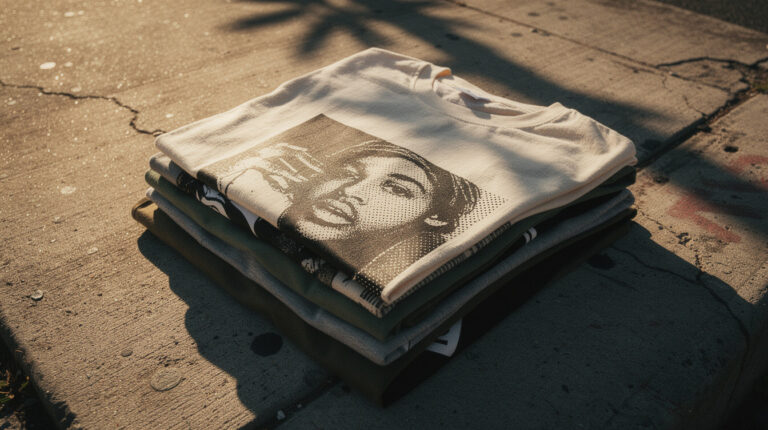
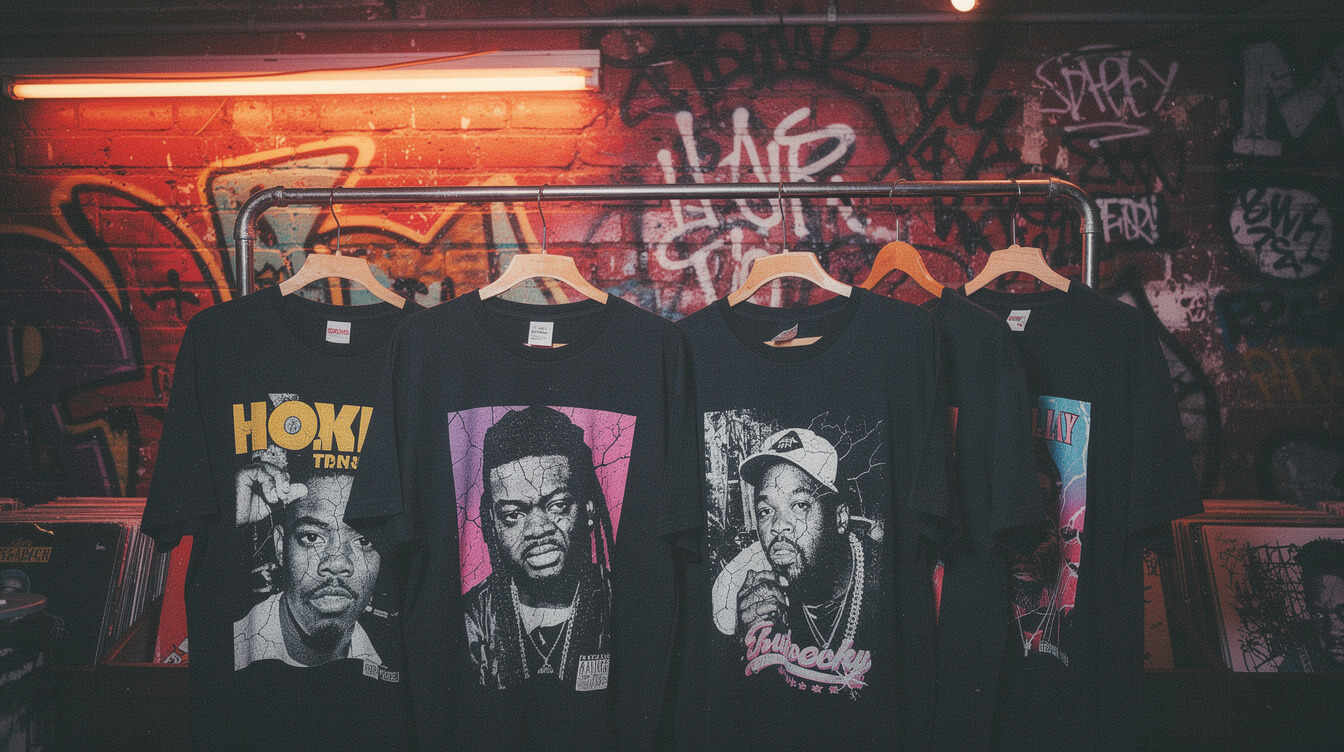
Every real head has one. The shirt that’s been washed so many times the black has gone charcoal and the print has cracked into a road map. Maybe it’s a Tribe tour tee from a thrift bin, maybe it’s a Wu bootleg somebody’s uncle copped off a folding table in ’97. Rap tees aren’t just band shirts with a different genre on the front. They’re how hip-hop has always talked about itself: through logos that read like manifestos, airbrushed memorials, bootlegs that outsold the official stuff, and album art worn like a flag.
This is the full story. We cover where rap tees came from, why the culture treats them differently from rock merch, how to tell a real vintage piece from a 2016 reprint, and how to build a rotation that actually means something. No fluff, just receipts.
What Makes Rap Tees Different From Every Other Band Shirt
Rock had merch first. By the time hip-hop got its first national tours in the mid-’80s, the rock world already had a whole licensing industry built around arena tour shirts. So why do rap tees feel like their own thing instead of a genre swap?
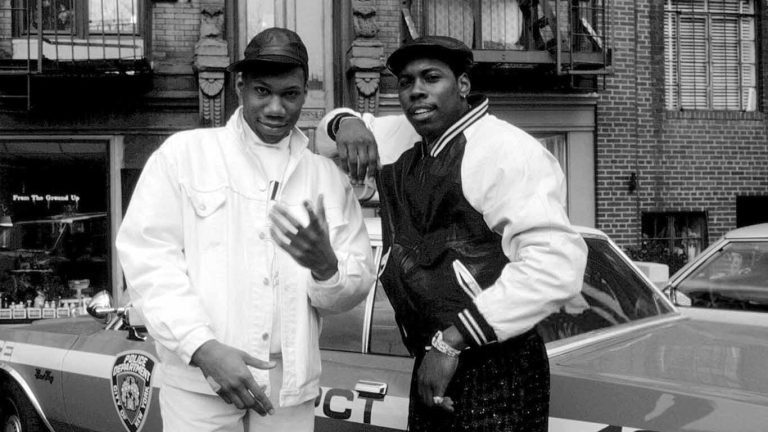
Because hip-hop never treated clothing as an afterthought. From day one, the culture was about presentation. How you dressed told people where you were from, what crew you ran with, and whether you knew what time it was. The shirt wasn’t a souvenir from the show. It was part of the uniform.
The shirt as a statement, not a souvenir
A rock tour tee usually says “I was there.” The best rap tees say “this is who I am.” Think about the Public Enemy crosshairs logo. Fans didn’t wear it to prove they’d seen a show. They wore it because it was a political position you could put on in the morning. That’s a different relationship between artist, fan and fabric.
Unofficial was always part of the game
Here’s the part most retail roundups skip. A big chunk of the most iconic early rap tees were never sold by the artist at all. When the New York Times‘ Jon Caramanica wrote about DJ Ross One’s collection, he pointed out that many of the best shirts “weren’t official or for sale.” They were label promo items, crew shirts, local bootlegs and custom one-offs. Hip-hop’s merch history is as much a street-economy story as it is an industry one, and that’s exactly why collectors chase it.
The book that made it canon
If you want proof rap tees are a serious subject, look at Rap Tees: A Collection of Hip-Hop T-Shirts 1980–1999. DJ Ross One published it through powerHouse Books in November 2015, with photos of more than 500 shirts from hip-hop’s first two decades. Chuck D later wrote the foreword to the second volume. Once a culture has a coffee-table book of its T-shirts, you know the shirts have become history in their own right.
The 1980s: How Run-DMC Turned Rap Tees Into a Uniform
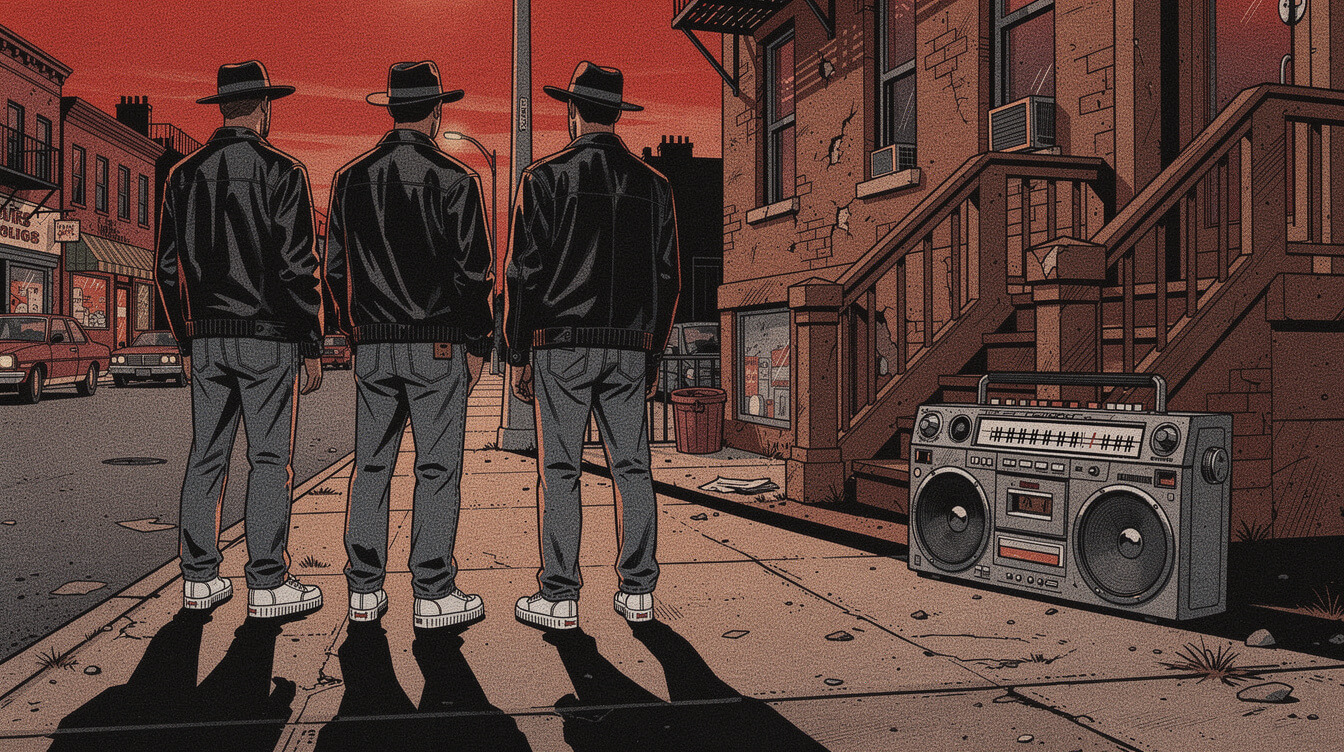
Rap tees as a mass phenomenon really start with the moment hip-hop proved it could move product. And that moment has a date.
July 19, 1986: Madison Square Garden
Run-DMC’s “My Adidas,” the first single from Raising Hell, dropped in May 1986. That summer, co-manager Lyor Cohen invited Adidas executive Angelo Anastasio to the group’s show at Madison Square Garden on July 19. During the song, the group told the crowd to hold up their Adidas, and the Garden turned into a sea of shell-toes. The result was the first endorsement deal between a musical act and an athletic brand. It was a seven-figure deal: Wikipedia cites $1 million, while Guinness and MR PORTER put it at $1.6 million. We broke the whole saga down in our deep dive on how Run-DMC’s Adidas song became hip-hop’s first million-dollar deal.
Why does a sneaker deal matter for T-shirts? Because it proved to every brand, label and manager that hip-hop fans would buy what their heroes wore and repped. From that point on, merch wasn’t a side hustle. It was a business line.
The look that became the template
Run-DMC’s black-hat, black-leather, untied-shell-toe uniform was a deliberate counterpoint to the costumes of the earlier disco-rap era. It made the plain tee and the logo the center of the outfit. A clean black shirt with a bold graphic became the default canvas for everything that came after. If you want the album that started it, our Raising Hell Run-DMC T-Shirt puts that 1986 moment right on your chest.
Shirt Kings and the airbrush economy
While the majors were figuring out merch, Queens was already ahead. In 1986, Edwin “Phade” Sacasa, Kasheme and Nike opened Shirt Kings in the Colosseum Mall in Jamaica, Queens. They airbrushed custom shirts and denim, and their clients included LL Cool J, Big Daddy Kane and Mike Tyson. That’s a key point: some of the first truly iconic hip-hop shirts were custom, hand-painted pieces made in a mall, not licensed tour merch. The DIY lane was there from the start.
Logos as Manifestos: Public Enemy and the Protest Rap Tee
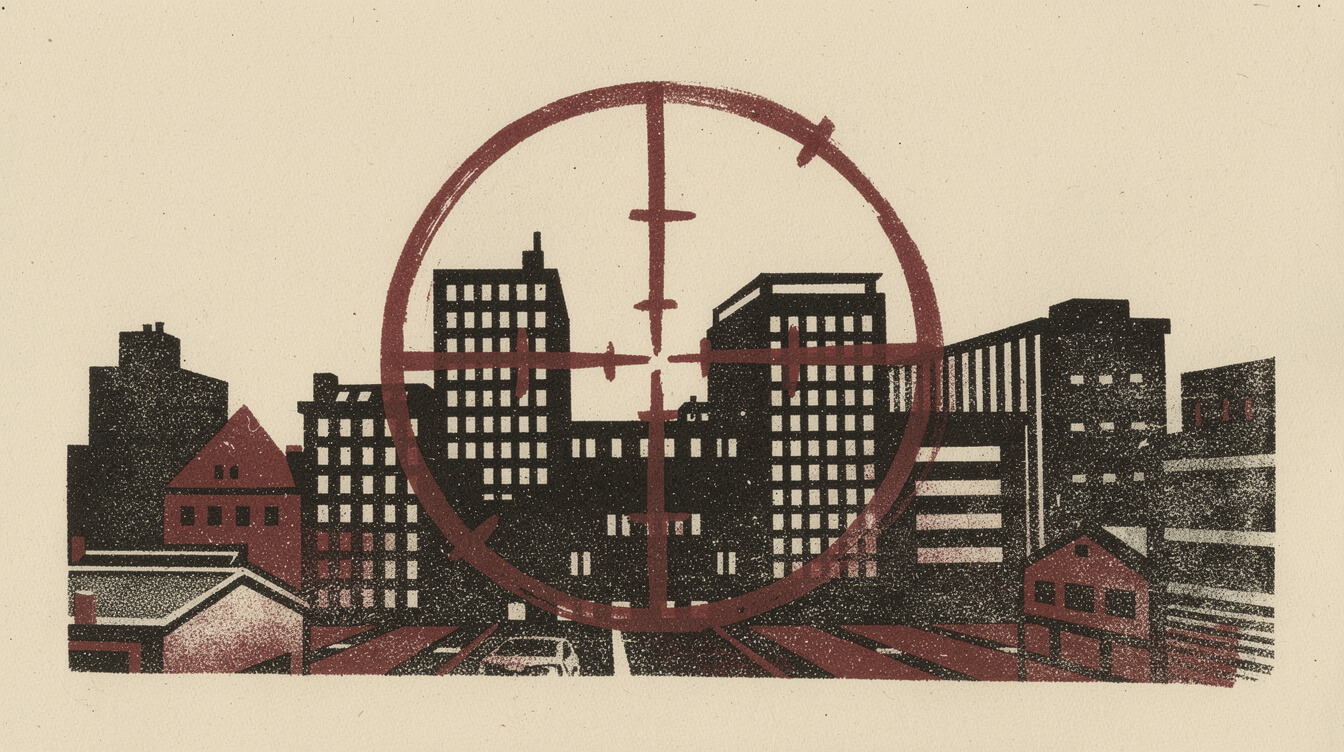
If Run-DMC made the rap tee commercial, Public Enemy made it political. And the most important graphic in the history of rap tees was drawn by a rapper.
Chuck D, the graphic designer
Before he was Chuck D, Carlton Ridenhour was a graphic design student at Adelphi University on Long Island, where he earned a BFA in 1984. He met Flavor Flav there, and in the mid-’80s Chuck drew the group’s logo by hand. A b-boy silhouette caught in a rifle scope’s crosshairs.
Here’s the jewel most people don’t know. The silhouette isn’t a generic figure. According to Complex and the Smithsonian’s National Museum of African American History and Culture, it’s Damien “ELove” Matthias, traced from a photo of him standing next to LL Cool J. Chuck D said the image symbolized the Black man in America: always in the crosshairs. That’s why the PE logo works on a shirt in a way most band logos don’t. It isn’t branding. It’s a thesis statement. Meet the whole crew in our breakdown of every Public Enemy member.
Message tees go mainstream
Public Enemy’s success opened the door for clothing that carried a message. In 1989, Carl Jones and T.J. Walker launched Cross Colours in Los Angeles with the slogan “Clothing Without Prejudice” on every garment. Their brightly colored T-shirts carried lines like “Stop D Violence” and “Educate 2 Elevate,” and they showed up on rappers and sitcom stars alike. Cross Colours also gave an early platform to a young designer named Karl Kani. The protest tee had become a whole fashion category, and hip-hop had built it.
If you want that crosshairs energy in your rotation, the Public Enemy Fear of a Black Planet T-Shirt carries the album that pushed PE’s message the furthest, a 1990 record that still sounds like a fire alarm.
The 1990s Golden Era: Licensed Merch, Bootlegs and Airbrushed Memorials
The ’90s are the decade that serious rap tees collectors obsess over. Three separate economies were running at the same time, and each produced its own kind of grail.
Lane one: official tour and label merch
As hip-hop turned into the biggest music business in America, the big licensing companies that had grown up around rock tours started printing rap shirts too. These are the tees with the copyright line under the print, the licensing tag in the collar and the tour dates on the back. They’re the easiest to authenticate and often the cleanest designs.
Lane two: the bootleg
Bootlegs weren’t a side note in ’90s rap merch. They were a huge part of it. Unlicensed shirts sold outside venues, at flea markets and on folding tables in every major city, often with wild collage layouts, mismatched photos and fonts that no art director would have signed off on. That loud, chaotic energy is exactly what made the “bootleg rap tee” aesthetic a full-blown fashion trend decades later.
The bootleg problem also pushed artists to build their own brands. Wu-Tang is the classic example. In 1995, Oliver “Power” Grant launched Wu Wear, partly to fight the flood of bootleg Wu shirts by giving fans an official option. According to Complex, it grew into stores in New York, Philadelphia, Virginia and Atlanta. Artist-owned merch as a business model started there, long before the streaming era made it essential. Our Wu-Tang Clan T-shirt guide goes deep on how to tell the Wu Wear era from the knockoffs.
Lane three: the RIP tee
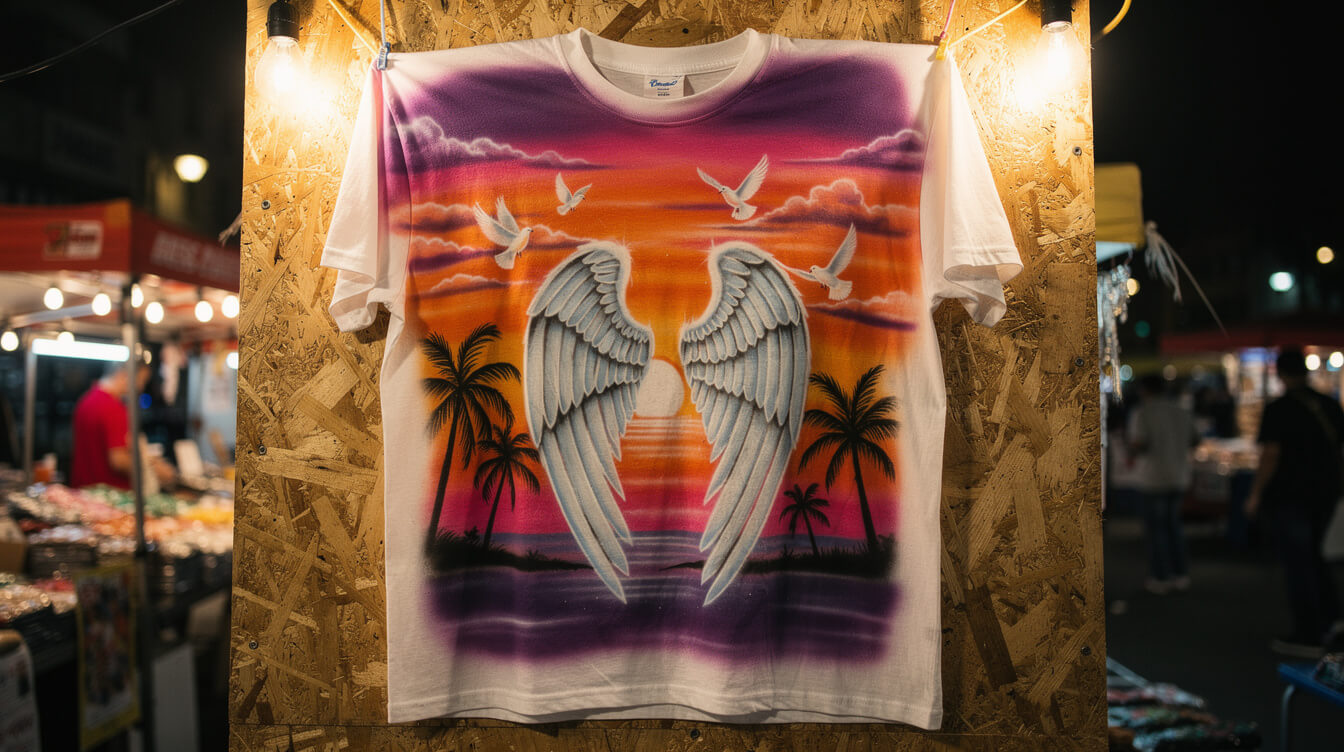
The airbrushed memorial shirt came out of late-’80s and ’90s hip-hop and graffiti culture in neighborhoods where too many young people died too soon. A portrait, a sunset, clouds, doves, birth and death dates. When Tupac was killed in September 1996 and Biggie in March 1997, these RIP shirts became visible in mainstream culture for the first time. PBS and the Seattle Times both documented the moment. Those shirts weren’t merch in any industry sense. They were grief made wearable, and they remain some of the most emotionally loaded objects in the culture.
The crossover moment
By 1997 the culture had so much pull that it slipped into a Gap commercial. LL Cool J wore a FUBU hat in the spot and worked “For us, by us, on the low” into his rap. FUBU, founded in 1992, got national TV exposure inside a competitor’s ad, and Gap didn’t catch it until it had aired. Hip-hop wasn’t asking fashion for permission anymore.
How to Spot Real Vintage Rap Tees
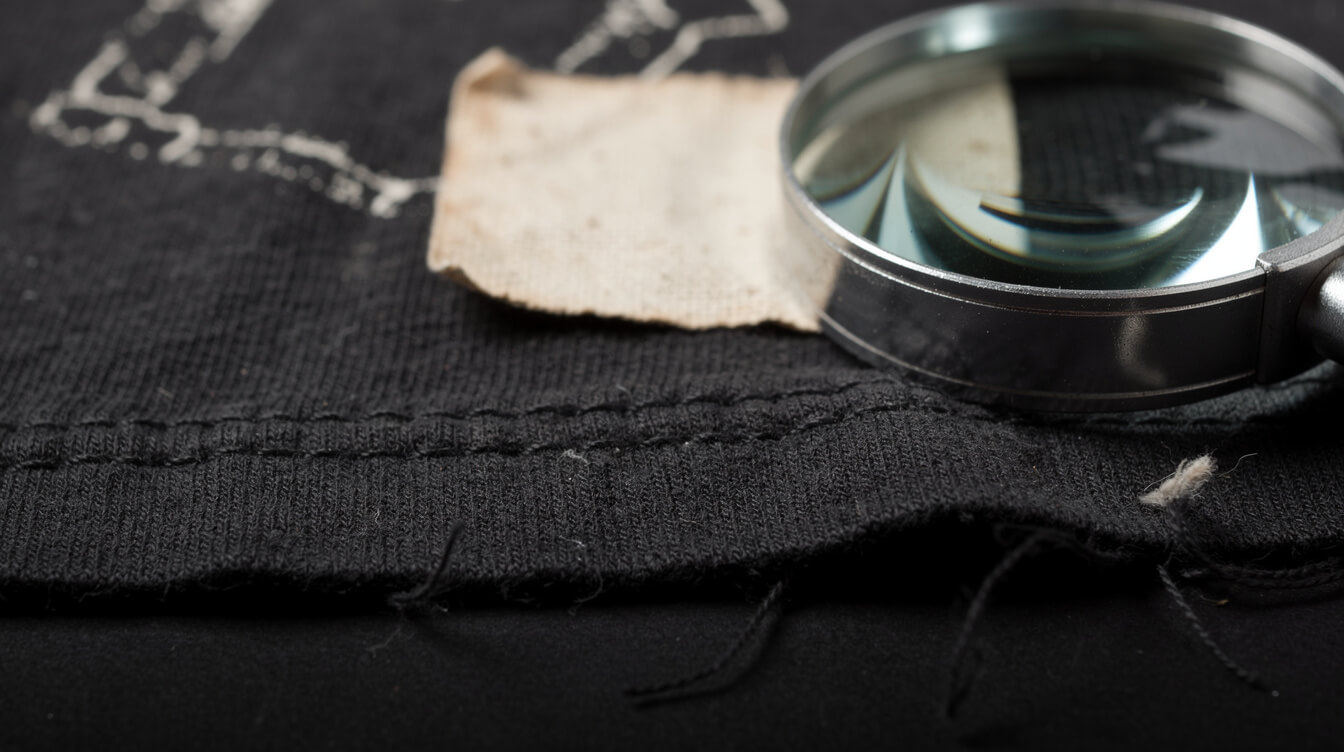
Vintage rap tees are some of the most faked items in secondhand fashion. Reprints from the 2016 vintage boom are everywhere, and plenty of sellers list them as originals, whether they know it or not. Here’s how to read a shirt before you pay grail money.
Check the stitching
Flip the sleeve and look at the hem. Older American blank tees usually have a single line of stitching on the sleeves and bottom hem. Collectors generally treat single-stitch as pre-1995/96, with a transition period through the mid-to-late ’90s, after which double-stitching became standard. Single-stitch alone doesn’t prove a shirt is old, since some modern brands copy the look, but a double-stitched “1991 tour tee” should make you ask questions.
Read the tag
The neck tag is the shirt’s birth certificate. Collectors date shirts by tag designs from blank makers and licensing companies. The big merch houses each had their own tags: Winterland (founded 1974, with tags from 1982 on), Brockum (silver tags from 1988, after Labatt bought it) and Giant (founded in 1990, with tags from 1991). Online tag databases let you match a tag to its era. A tag that’s too new for the print is the fastest way to catch a reprint.
Look for the copyright line and the print
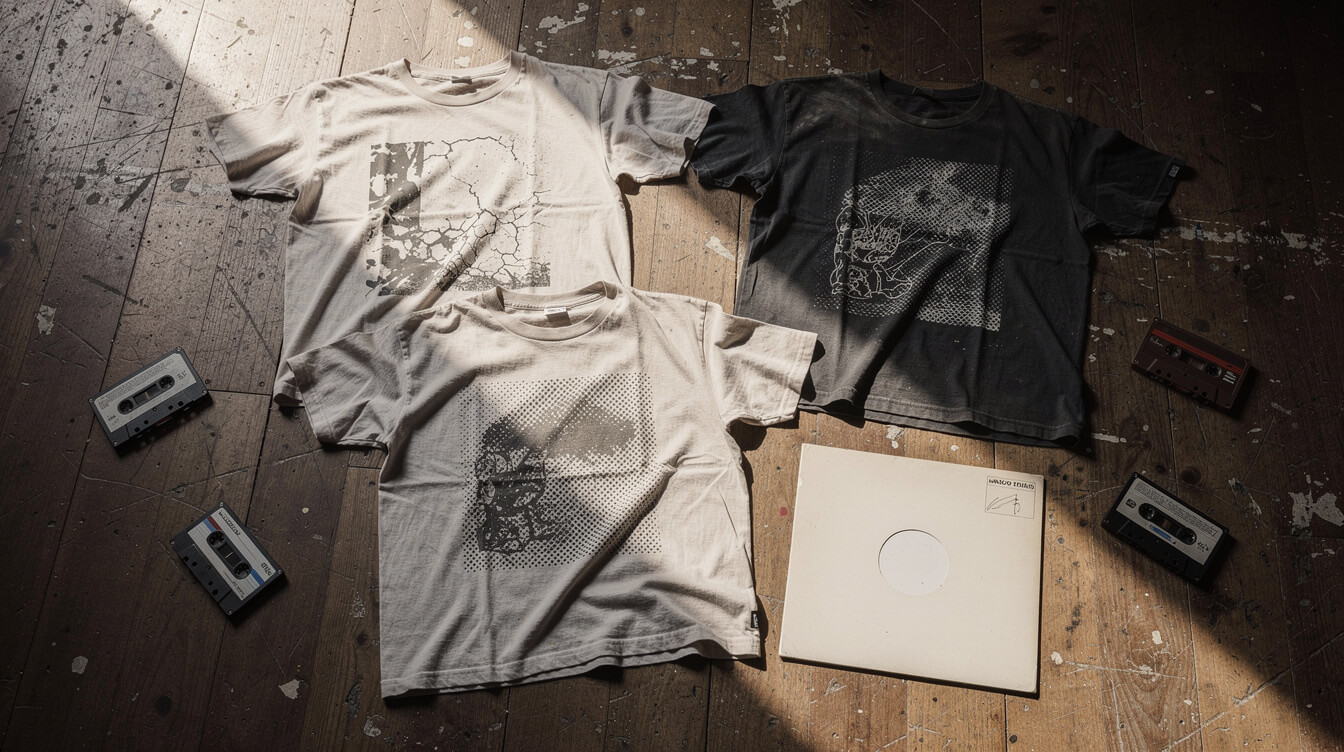
Licensed shirts usually carry a small copyright line with a year under or beside the graphic. Then check the ink. A real ’90s screen print on a heavily worn shirt cracks and fades evenly with the fabric. Modern direct-to-garment prints on “distressed” blanks often look faded but feel flat, and the “cracks” sit in suspiciously perfect patterns.
Know when not to trust the price
You’ll see big numbers thrown around for vintage Tupac, Biggie and Wu shirts. Be skeptical. We couldn’t find a single documented, verifiable record sale for a vintage rap tee, only seller asking prices and secondhand estimates. Pay for condition, provenance and a real tag, not a hype number on a listing.
The Rap Tees Revival: Pablo, Photo Tees and the Resale Boom
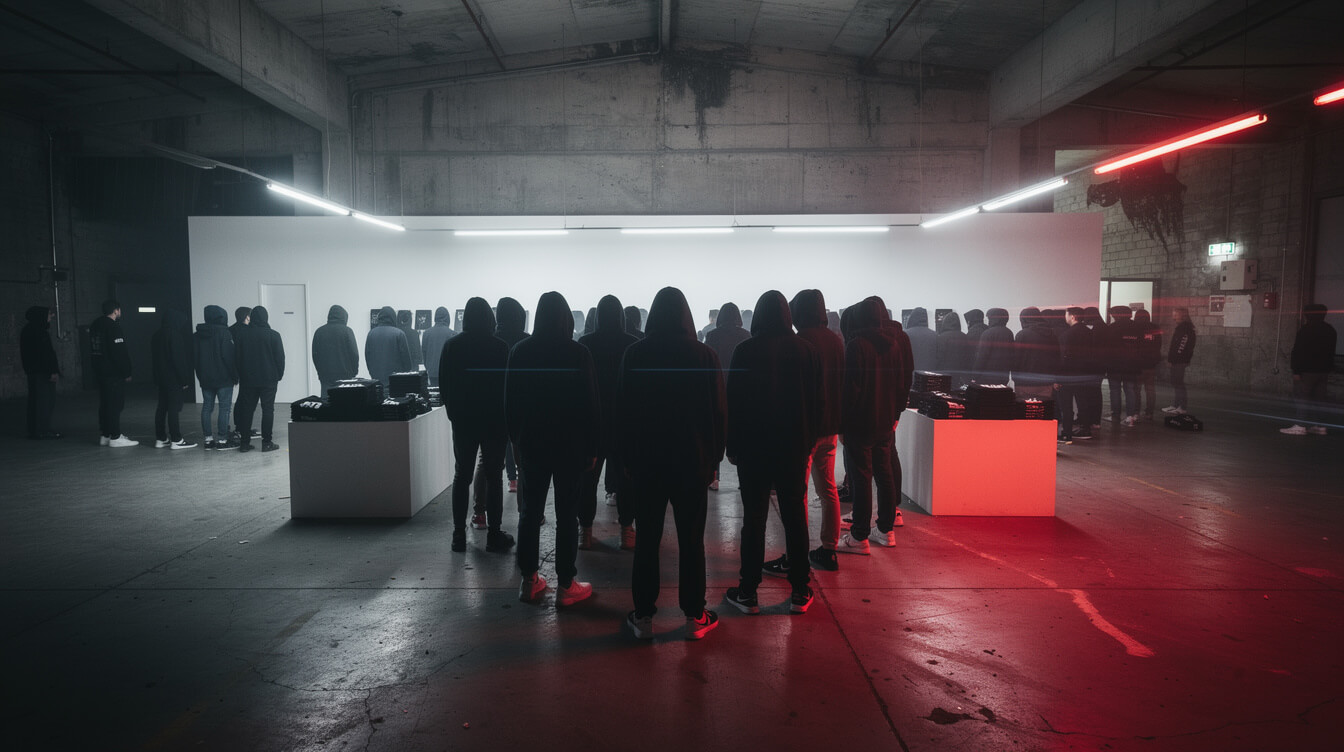
Somewhere in the 2010s, rap tees went from thrift-store find to the center of streetwear. Three moments explain how.
Supreme’s photo tee series
In 2005, Supreme dropped a photo tee of Raekwon posing with an Elmo doll, the first in what became one of streetwear’s longest-running series. Dipset followed in 2006. Three 6 Mafia became the first non-New York act to get one in 2012, followed by Gucci Mane in 2016 and Nas in 2017. A simple photo of a rapper on a white tee became a status object, and it taught a new generation that a rap tee could be collectible from the day it dropped.
Yeezus, Pablo and the tour-merch reset
Kanye West turned tour merch into art-world territory. For the 2013 Yeezus tour, the artist Wes Lang supplied imagery like skulls, a Grim Reaper and a praying skeleton, working with DONDA’s design team. Then in 2016, Cali Thornhill DeWitt designed The Life of Pablo merch, commissioned just five days before the album’s Madison Square Garden launch. Those gothic-lettered shirts sold through pop-up shops in 21 cities over one weekend in August 2016, with lines around the block. Rap merch was now a drop, not a souvenir.
The bootleg aesthetic goes legit
At the same moment, the 2016 vintage-rap-tee wave was in full swing. XXL ran two separate roundups that year on the trend, noting that replica vintage shirts were selling as well as the originals. The loud collage look of ’90s bootlegs became the house style of official merch, from fast fashion to rappers’ own stores. Today, with streaming paying artists so little, merch has become more important than ever as an income stream. The rap tee is one of hip-hop’s most reliable business models. For a look at how album-cover design feeds into all of this, read our visual history of hip-hop artwork.
How to Build a Rap Tees Rotation That Actually Means Something
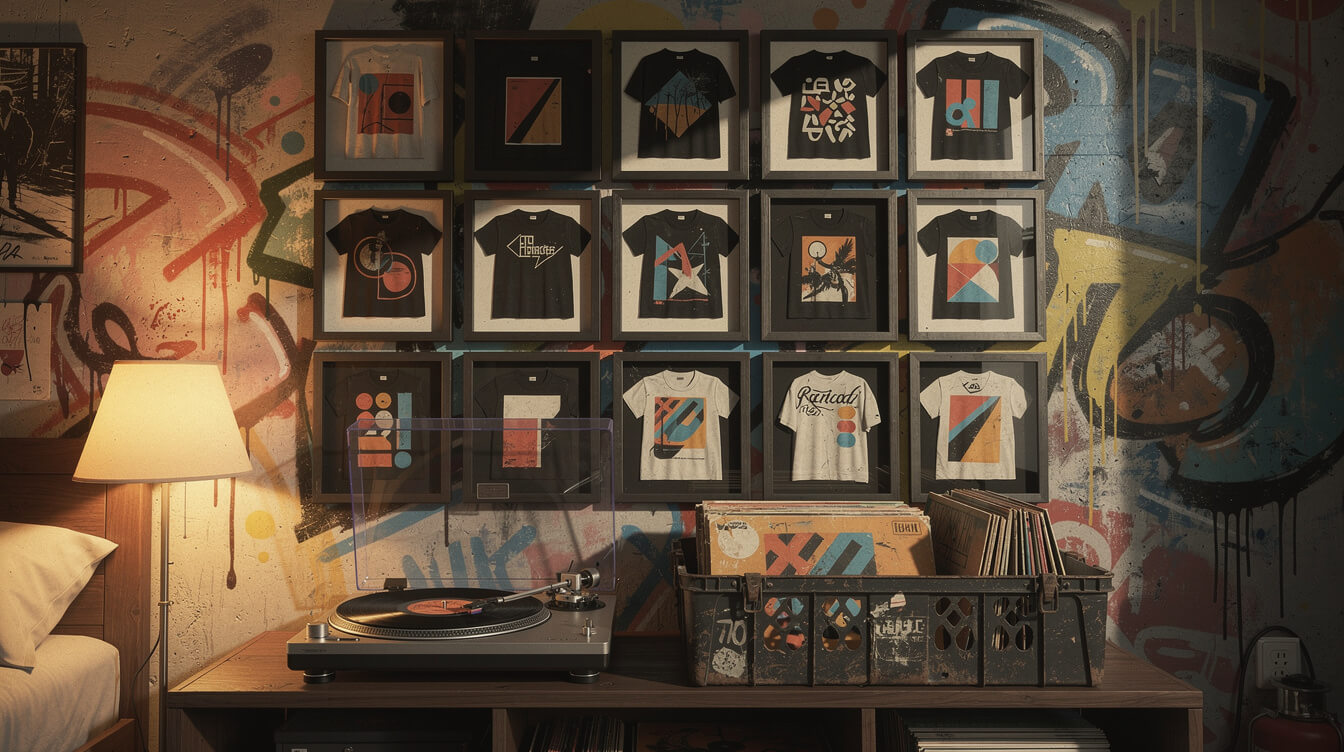
You don’t need a $500 bootleg to rep the culture right. The best rotations are personal, not expensive.
Start with the records that raised you
Album-art tees are the most honest rap tees there are. They’re not about clout. They say “this record mattered to me.” Start with the five albums you’d save in a fire, then branch out. A deep-cut record on a shirt starts better conversations than the obvious pick. It’s the same logic behind our ODB shirt guide and our MF DOOM merch guide: know the story behind what you wear.
Mix eras on purpose
A strong rotation spans the timeline: a golden-age classic like Paid in Full or Criminal Minded, a ’90s cornerstone like Illmatic or Enter the Wu-Tang, and something from the underground or the current era. Treat your drawer like a crate. Range shows you actually listen.
Care like a collector
Wash inside out, in cold water, and hang dry. Heat is what kills prints and shrinks cotton. Fold your printed tees instead of hanging them for long stretches so the collar keeps its shape. For true vintage, wash as rarely as you can get away with, and store it away from sunlight so the black doesn’t fade.
Pair it right
A graphic tee is the loudest piece in the outfit, so let it lead. Keep everything else simple: a clean pair of sneakers, a fitted cap or a heavyweight hoodie layered open. In colder months, our guide to the history of the rapper sweatshirt picks up where this one stops.

Start Where Rap Tees Started
The album that held up the Garden in 1986. Our Raising Hell Run-DMC T-Shirt puts the record that made hip-hop merch a business right on a heavyweight black tee.
Rap Tees FAQ
What are rap tees?
Rap tees are T-shirts tied to hip-hop artists, albums, labels or culture, including official tour merch, album-art shirts, bootlegs, airbrushed memorial shirts and modern fan-art designs. The term also describes a style: bold photo or collage graphics, usually on a black or white tee.
Why are vintage rap tees so expensive?
Supply is tiny. Many of the most wanted shirts were bootlegs or promo items made in small runs, and most of them were worn until they fell apart. Add the 2010s streetwear boom and rising nostalgia for ’90s hip-hop, and demand far outstrips what survived. Asking prices can be high, but be wary of claims about “record” sales, since few are documented.
How can I tell if a rap tee is really vintage?
Check three things: single-stitched sleeve and bottom hems (common before the mid-to-late ’90s), a neck tag that matches the shirt’s supposed era, and a copyright line with a year near the print. Crackled ink that wears evenly with the fabric is a good sign. Perfect “distressing” is a red flag.
Who designed the Public Enemy logo?
Chuck D drew it himself. He studied graphic design at Adelphi University before forming Public Enemy. The silhouette in the crosshairs is Damien “ELove” Matthias, traced from a photo of him standing next to LL Cool J.
Is there a book about rap tees?
Yes. Rap Tees: A Collection of Hip-Hop T-Shirts 1980–1999 by DJ Ross One (powerHouse Books, 2015) photographs more than 500 shirts. A second volume covering 1980–2005 followed, with a foreword by Chuck D.
Are bootleg rap tees bad?
It depends. Vintage ’90s bootlegs are a celebrated part of hip-hop history, and collectors prize them. Buying modern knockoffs of current artists’ official merch takes money from the artist. If you want new designs, look for official stores or independent fan-art makers who create original artwork rather than copying someone else’s.
How should I wash rap tees so they last?
Turn them inside out, wash cold on a gentle cycle and hang dry. Skip the dryer and never iron directly over the print. For vintage pieces, hand wash or wash as rarely as possible.
Final Thoughts: Wear the History
Rap tees have always been more than merch. They started with Run-DMC holding the Garden in the palm of their hand, got political in Chuck D’s crosshairs, went underground with bootlegs and airbrushed memorials, and came back around as some of the most collected objects in streetwear. Every era added a layer, and every shirt in your drawer carries some of that weight.
So wear yours like you know the story. Pick the records that made you, mix the eras, take care of the cotton, and when someone asks about the shirt, have the receipts ready. That’s the whole point. If you’re building out the rest of the wardrobe, our rap merchandise guide covers hoodies, prints and everything beyond the tee, and our Wu-Tang merchandise guide goes all the way into the 36 Chambers.
Stay creative — The Custom Creative Team
Get the Culture in Your Inbox
Album-art stories, anniversaries, liner-note receipts and first dibs on new drops. No spam, just hip-hop.

🎧 Never Miss a Drop
Exclusive product releases, hip-hop deep dives, and member-only discounts. Straight to your inbox.
Free forever. No spam. Unsubscribe anytime.
Get the Culture, Delivered
Deep dives into hip-hop history, exclusive product drops, and discounts sent straight to your inbox. No spam, just culture.
Join 2,000+ hip-hop heads already in the loop. Unsubscribe anytime.