Wu-Tang Hoodie: The 2026 Buyer’s Guide to Official Drops, Vintage Grails and How to Spot a Bootleg
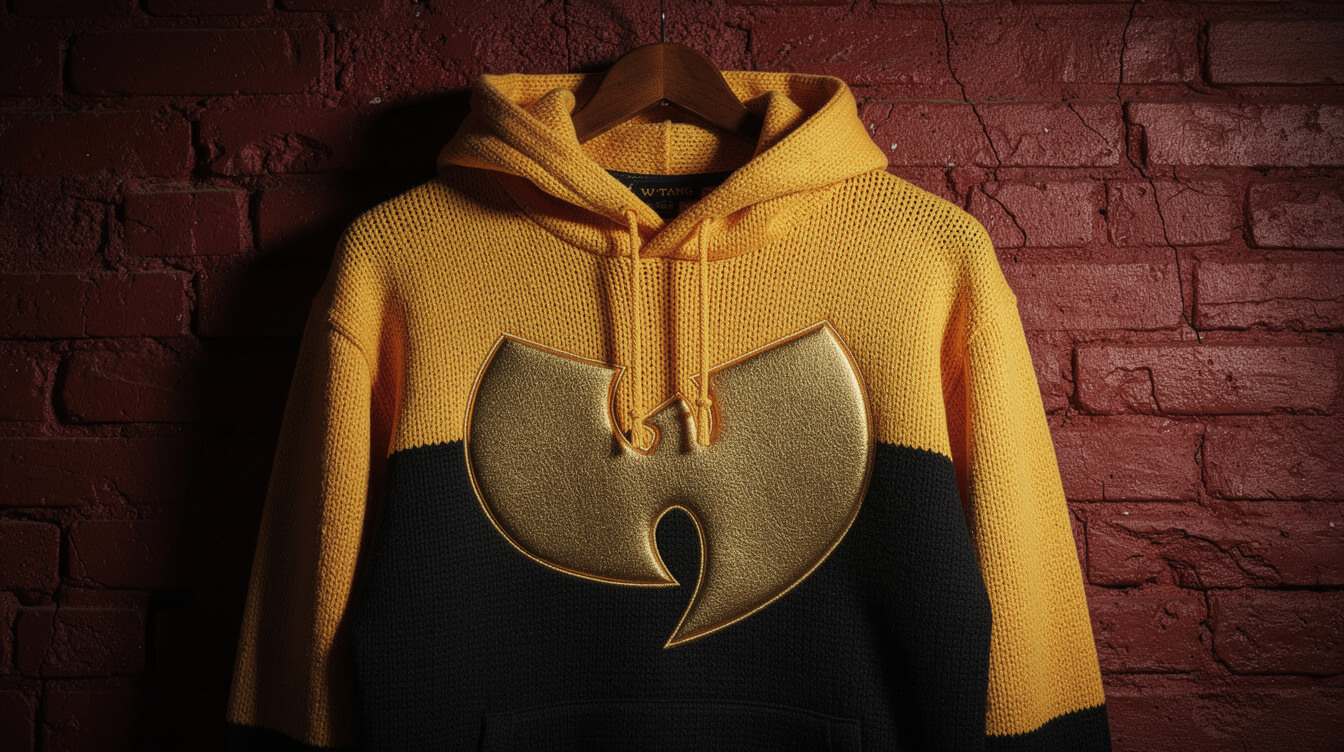
Ask a hip-hop head what the single most-copied piece of clothing in the culture is and you’ll get one answer over and over — the Wu-Tang hoodie. Not the tee, not the Yankees fitted, not the Air Force 1. The hoodie. That fleece-lined uniform with the Mathematics W stamped on the chest has been on every fire escape from Stapleton to Sunset Park since Enter the Wu-Tang (36 Chambers) hit shelves in November ’93, and it’s still the fastest way to signal “I speak the language” in 2026.
The Wu-Tang hoodie exists in a strange market layer that most streetwear guides get wrong. There’s the official line from thewutangclan.com. There’s the original Wu Wear catalog Oli “Power” Grant built out of a Staten Island brownstone in 1995. There’s the six-drop Supreme collab arc that reset vintage pricing. There’s the endless bootleg tide from Alibaba and mall kiosks. And there’s the honest secondary market of designers like us who build one-off tributes to Wu-adjacent records — Twelve Reasons to Die, Elizabeth, From the Slums of Shaolin.
This guide covers all five layers. What the iconography actually means, what the official pieces cost right now, what the vintage grail hunt looks like, how to spot a fake in the wild, and where a real Wu-Tang hoodie ships from in 2026 without a $400 markup. If you’re new to the culture, you’ll leave knowing why the W matters. If you’re a lifer, you’ll finally have the receipts to argue with the guy at the flea market who’s trying to pass off a 2019 reprint as a ’97 original.
Why the Wu-Tang Hoodie Became Hip-Hop’s Most Copied Silhouette
The Wu-Tang hoodie didn’t earn its status by design brilliance. It earned it by cultural gravity. RZA’s blueprint for the Clan — nine solo careers wrapped inside one collective — was the first hip-hop group structured like a franchise, and the merch was built as franchise gear from day one. Loud Records shipped the first hoodies to indie shops in early 1994 alongside the album, and by the end of that year, the yellow-and-black colorway was the unofficial uniform of every East Coast rap fan under 25.
What made the hoodie stick past the album cycle was the icon. The Mathematics W — designed by Ronald Bean, better known as DJ Mathematics — is a piece of vernacular graphic design that operates like a religious symbol. It reads as a bat wing, a stylized eagle, a set of throwing stars, and the letter W all at once. Any hoodie carrying it participates in a 30-year visual conversation whether the buyer knows it or not. That’s the reason the silhouette outlives every fashion cycle it’s dropped into.
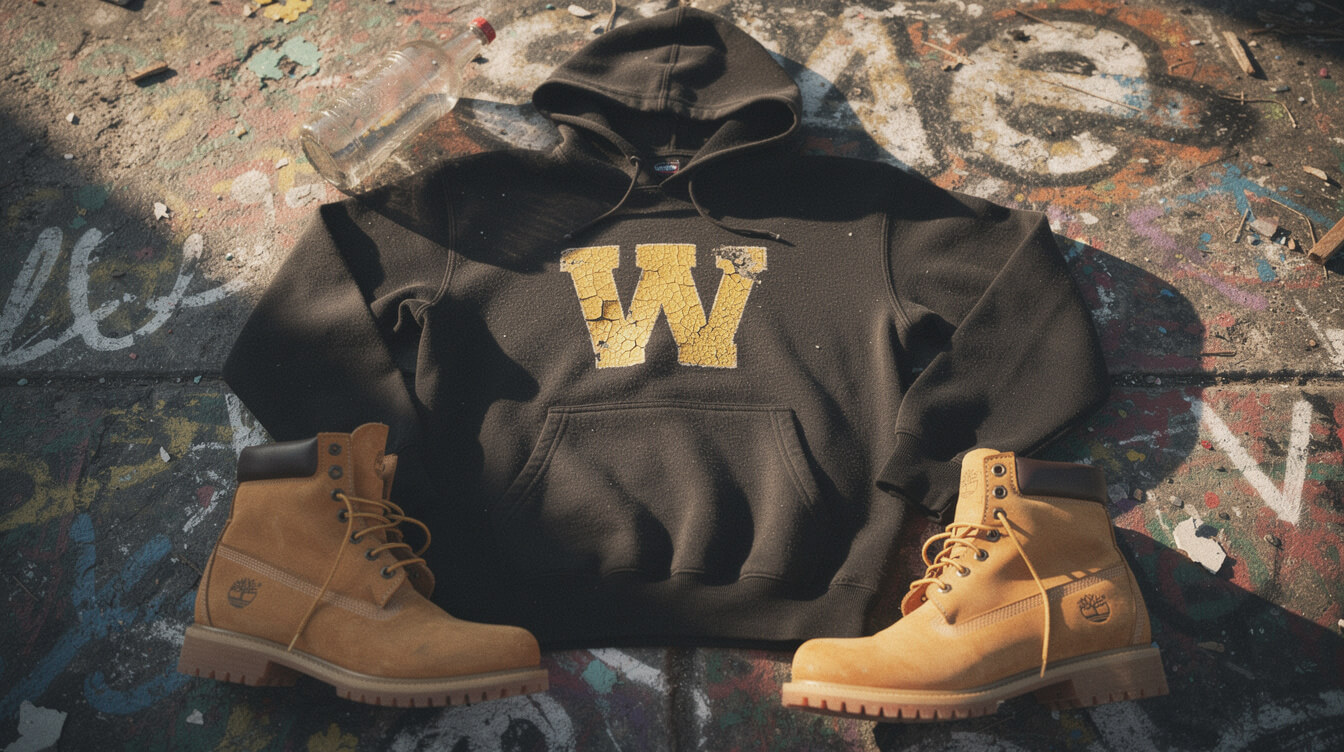
The hoodie also happens to be the correct format for the message. A t-shirt gets replaced. A varsity jacket reads as costume. A hoodie is worn every winter for a decade, framed by a puffer or a leather bomber, styled with everything from Timbs to Nikes. If you were going to pick one garment to carry the most-copied logo in rap for the rest of your life, you’d pick the mid-weight cotton pullover with the drawstring hood. Wu-Tang picked correctly.
For deeper cultural background on the group’s design language, our breakdown of every Wu-Tang album cover from 36 Chambers to The Saga Continues maps how the visual vocabulary evolved across the catalog — the hoodie iconography is downstream of that same 30-year design system.
Anatomy of a Wu Hoodie: The Iconography Every Buyer Should Know
A Wu-Tang hoodie is not one design. It’s a design system with about a dozen recurring elements, and knowing which one you’re buying tells you a lot about the era, the collab, and the resale potential. Here are the six most common motifs, in the order they matter to a buyer.
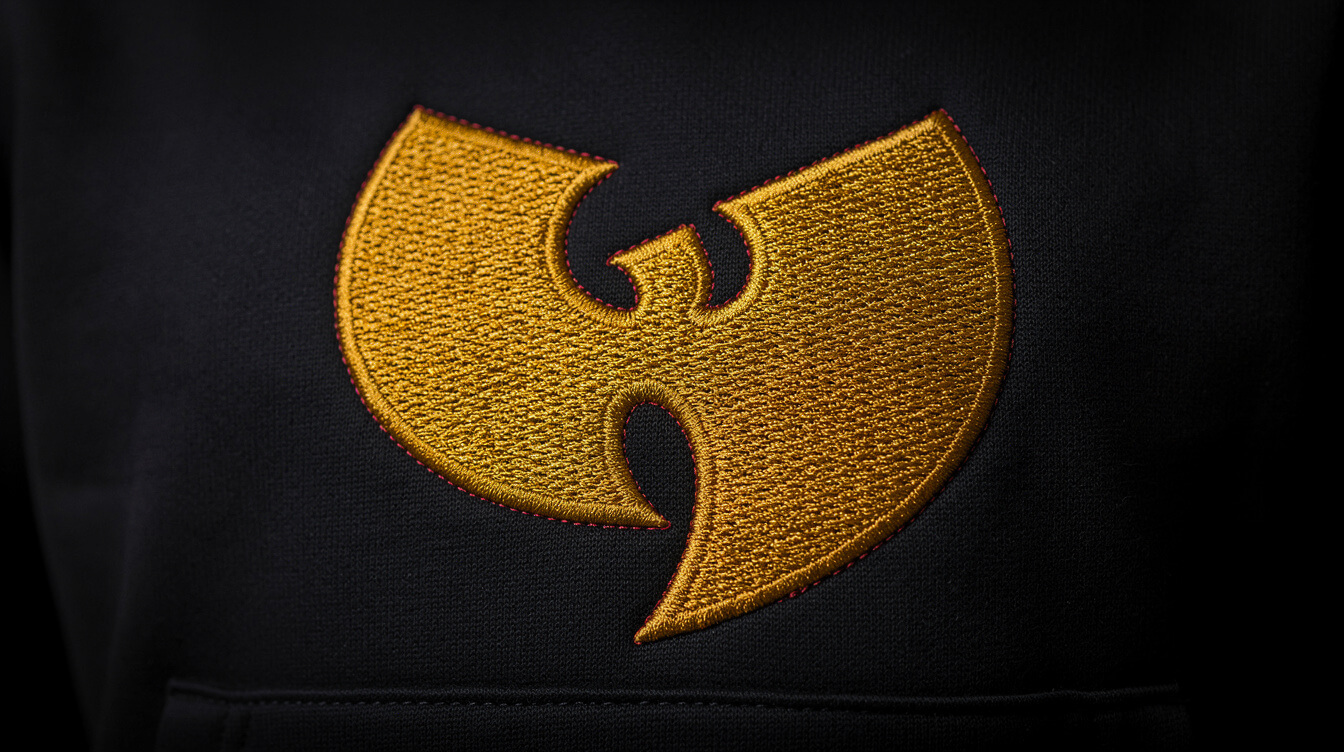
The Mathematics W. The one everyone knows. Two upright wings meeting a downward-pointing peak, usually rendered in yellow on a black ground. Original 1993 versions from Loud Records are slightly narrower with rounded corners; the 2006 Nike Dunk-era redraw squared the corners and thickened the strokes. The proportion difference is subtle but reliable for dating a piece.
The full logotype “WU-TANG CLAN” in Killer Bees font. That angular block font sitting beneath or wrapping around the W is called Killer Bees by the licensing team, and it was custom-drawn for the group by an unnamed Loud Records designer in 1993. It’s never a system font — a hoodie that spells “WU-TANG” in Impact or Arial is a bootleg, full stop.
C.R.E.A.M. text. The four-letter acronym for “Cash Rules Everything Around Me” appears on more Wu hoodies than any single-word graphic in hip-hop except maybe Death Row’s logo. It’s always in a chunky serif with a dollar-sign flourish. The 2019 reissue of the C.R.E.A.M. hoodie uses a slightly bolder serif than the ’95 original.
The 36 Chambers pagoda. RZA lifted the composition from the poster for the 1978 Shaw Brothers film The 36th Chamber of Shaolin. On hoodies, it appears as a black silhouette over yellow, or a full-color print across the back panel. The pagoda always sits above a red circle representing the sun. Our long-form on the Wu-Tang Clan 36 Chambers album covers how deep that Shaw Brothers influence runs through the whole aesthetic.
The Killa Beez swarm. Introduced on the 1998 Wu-Tang Killa Beez: The Swarm compilation, this motif shows a cluster of stylized bees around a central W. It’s usually reserved for extended-family releases (Sunz of Man, Killarmy, Gravediggaz) rather than core group merch. If a hoodie carries the swarm, expect a lower resale ceiling than a straight W piece.
Individual member sigils. RZA has a Bobby Digital lightning bolt. Method Man uses a diagonal M or the Tical brand. Ghostface uses the golden eagle. GZA uses the checkerboard. ODB uses the “Free” prisoner-number graphic that took over after his 2004 death. Solo hoodies carrying these sigils are technically Wu-Tang hoodies but trade in a different market layer than group-branded pieces.
The Official Line: thewutangclan.com and Final Chamber Era Pricing
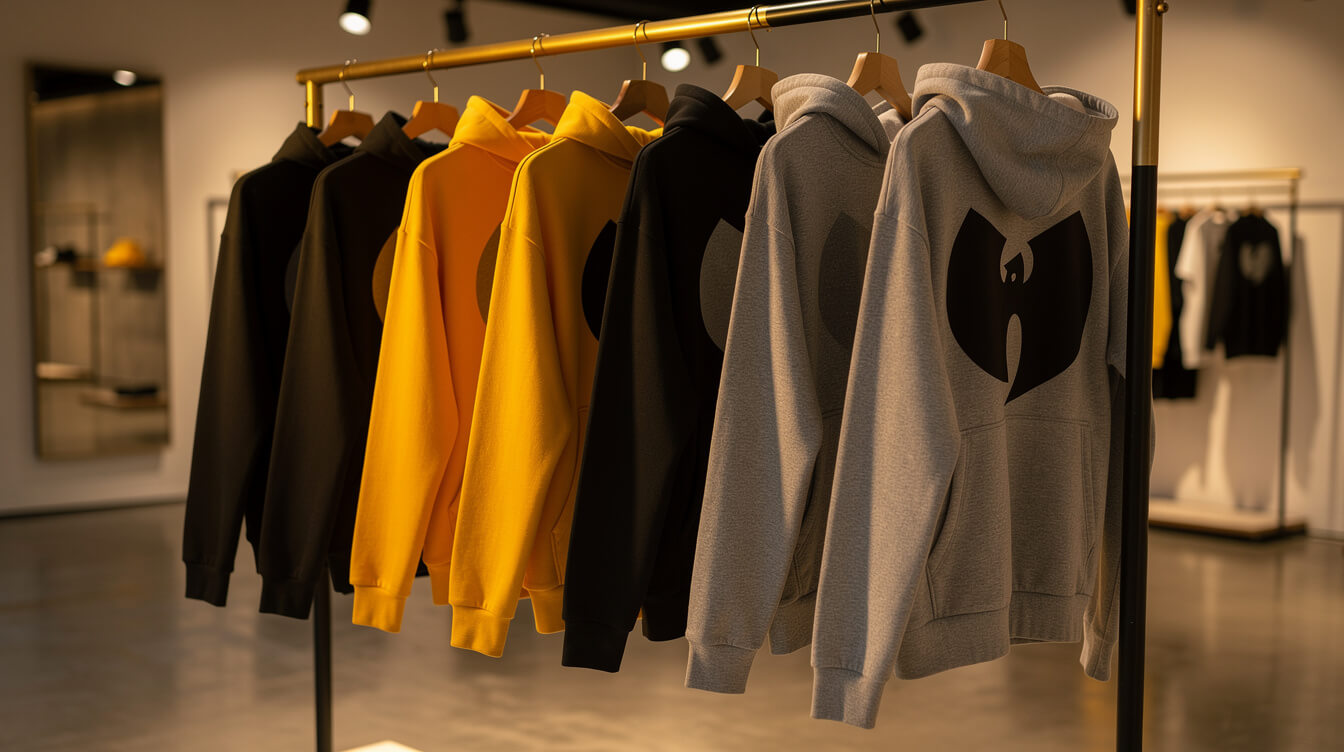
The official Wu-Tang online store lives at thewutangclan.com. It’s operated under license by the group’s current merch partner, and as of August 2026 it carries roughly 20 active hoodie SKUs spanning the Final Chamber Tour collection, the year-round Bring Da Ruckus line, and the New York Knicks x Wu-Tang collab.
Pricing sits in a tight band: pullover hoodies are $85 to $100, quarter-zips are $65, and heavier crewnecks are $80. The Liberty Chamber and Globe Logo hoodies from the current Final Chamber Tour cycle are $85 and $100 respectively. The Clan In Da Front and Shaolin City pieces sit at $100. The Bobby Digital in Stereo hoodie is currently discounted from $50 to $40 while stock lasts. Those numbers matter because they set the anchor for everything downstream — vintage, boutique, and bootleg pricing all reference this ceiling.
Two things to know about the official line before you buy. First, sizing runs true to standard US menswear — a large is a large, no vanity sizing, no oversized “streetwear fit” adjustments. Second, the current run uses a mid-weight 8oz cotton-poly blend rather than the heavier 12oz all-cotton fleece the 1990s pieces used. That’s a manufacturing decision to keep landed cost under $30, and it’s the single biggest reason a modern $100 official hoodie feels lighter in the hand than a vintage $60 Wu Wear piece from 1996.
For deeper coverage of the full Wu-Tang commerce ecosystem — merchandise categories, artist splits, and licensing structure — our Wu-Tang Clan Merch Authenticity, Iconography & Vintage Investment Guide maps who owns what and how the money flows. It’s the companion piece to this hoodie-specific guide.
Wu Wear: The Original 1995 Streetwear Line That Rewrote Hip-Hop Merch
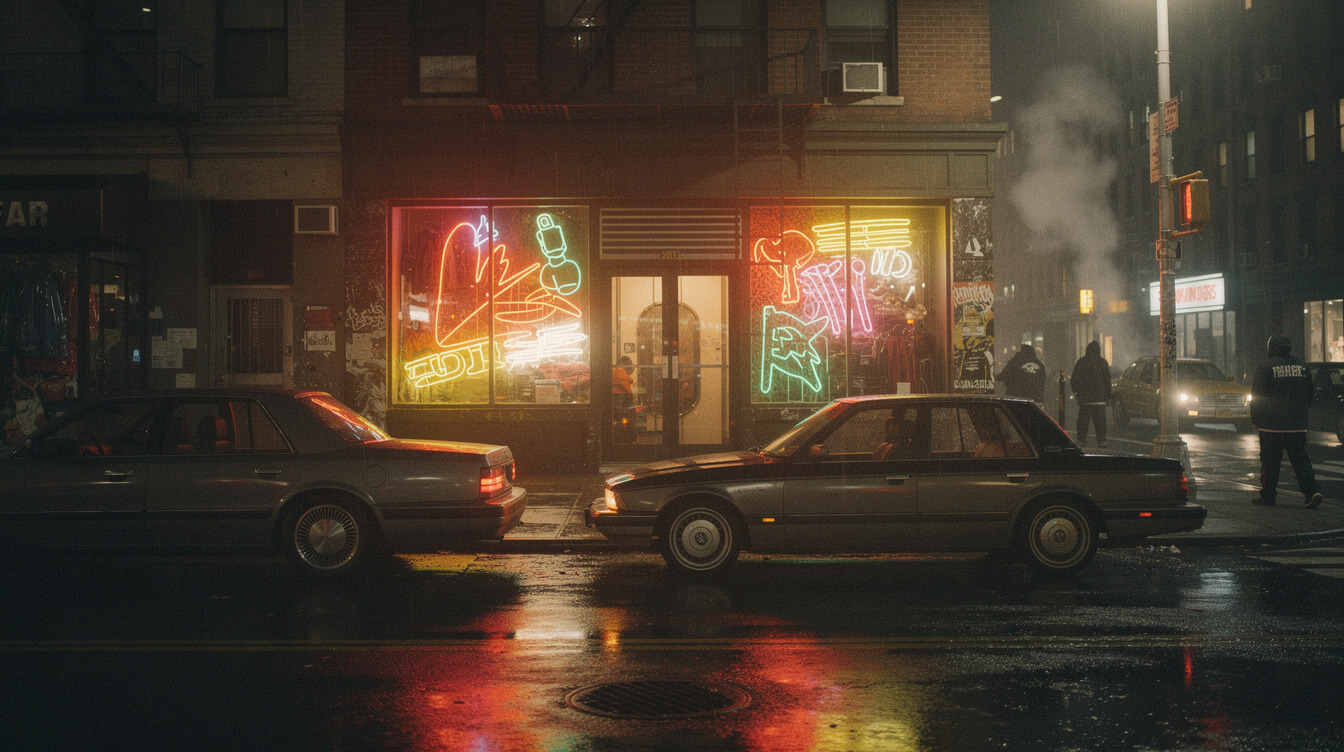
Before there was a thewutangclan.com, there was Wu Wear. In 1995, two years after 36 Chambers dropped, Oli “Power” Grant — the Wu-Tang business affiliate who ran Wu-Tang Management — launched Wu Wear as a standalone streetwear label out of a Stapleton, Staten Island brownstone. It was the first hip-hop-artist-owned apparel brand to break out of the mixtape-table economy and into department stores. By 1998 Wu Wear was in Macy’s, and Grant had opened flagship stores in Norfolk, Virginia, and on lower Broadway in Manhattan.
The reason Wu Wear matters to a hoodie buyer in 2026 is that it operated for roughly a decade as a real fashion label with real production runs, real seasonal drops, and real dead stock. That dead stock is what fuels the current vintage market. A late-’90s Wu Wear pullover from the Manhattan flagship, in a decent condition with the original tags, trades for $250 to $600 depending on colorway and graphic. A rare piece — the 1997 Killarmy Silent Weapons hoodie, the ’99 Wu Killa Beez varsity pullover — clears $800 on Grailed most weeks.
Wu Wear went dormant around 2008, revived briefly for a nostalgia relaunch in 2017, and now exists mostly as an archive brand referenced by newer collaborators. Grant himself has been quietly involved in the current thewutangclan.com merch strategy, which is why some of the 2025-2026 Final Chamber pieces echo Wu Wear-era graphic layouts — the puff-print W on a raglan sleeve, the varsity-cut side stripes, the block chest-print colorways.
If you want to live in the Wu iconography without paying vintage-grail prices, we designed the Enter The Wu-Tang 36 Chambers Hoodie as a $39.99 modern tribute to the debut album’s design language. It’s a black mid-weight pullover with the pagoda graphic and 36 Chambers wordmark rendered in the original Killer Bees font — the exact colorway most Wu Wear pieces used through the late ’90s.
Supreme x Wu-Tang: The Six-Drop Collab Arc That Reset Vintage Pricing
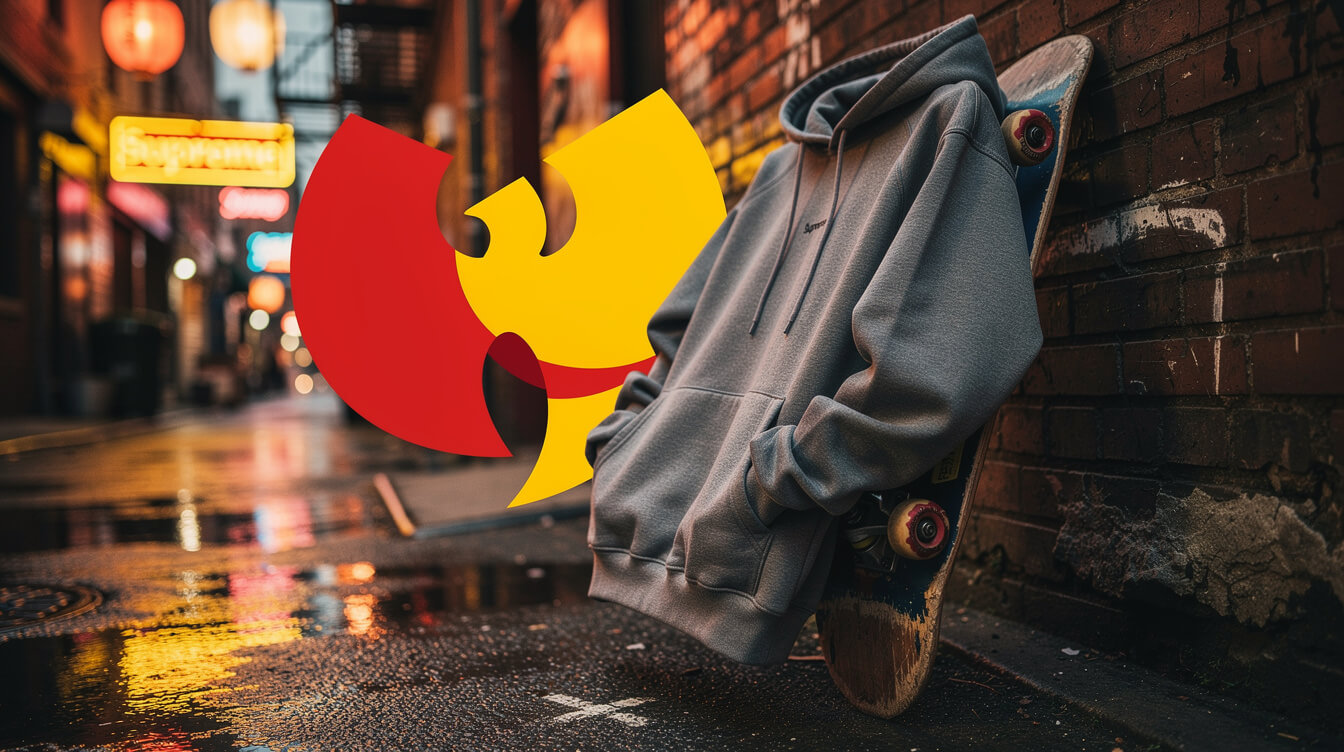
The most important development in the Wu-Tang hoodie market since Wu Wear closed is the Supreme collaboration series. Between Fall/Winter 2004 and Fall/Winter 2025, Supreme and Wu-Tang have released six official collab pieces — three hoodies, two crewnecks, one M-65 field jacket — and each drop has permanently reset the price ceiling for both current-season and vintage Wu pieces.
The 2004 collab was the first. It was a black pullover hoodie with a red Wu-Tang W embroidered inside a Supreme box logo on the chest. It retailed for $148. It currently trades for $2,400 to $3,800 in size Large on Grailed depending on condition. The 2011 hoodie (yellow with red W, no box logo) trades for $900 to $1,400. The 2020 collab crewneck sits at $600 to $800.
The FW ’25 hoodie, released in November 2025, is the current market obsession. Supreme priced it at $198 retail. It sold out in under 90 seconds through the online drop, and resale hit $1,200 within 48 hours. The graphic is a full-back Killa Beez swarm print with a small W chest embroidery — the first Supreme x Wu piece to use the swarm motif, which is the reason collectors flipped for it. Whether it holds that $1,200 floor or slides to $600-$700 like the earlier drops is the current market debate.
Two practical notes if you’re hunting the collab market. First, all Supreme x Wu pieces use Supreme’s standard sizing, which runs about half a size small for the pullover fit — a Wu-Tang Large is a Supreme Medium in most cases. Second, the fake market for these collabs is aggressive. See the next section for how to spot a repro before you send $2,000 to a stranger on Grailed.
Wear Shaolin Without the $600 Grailed Tax
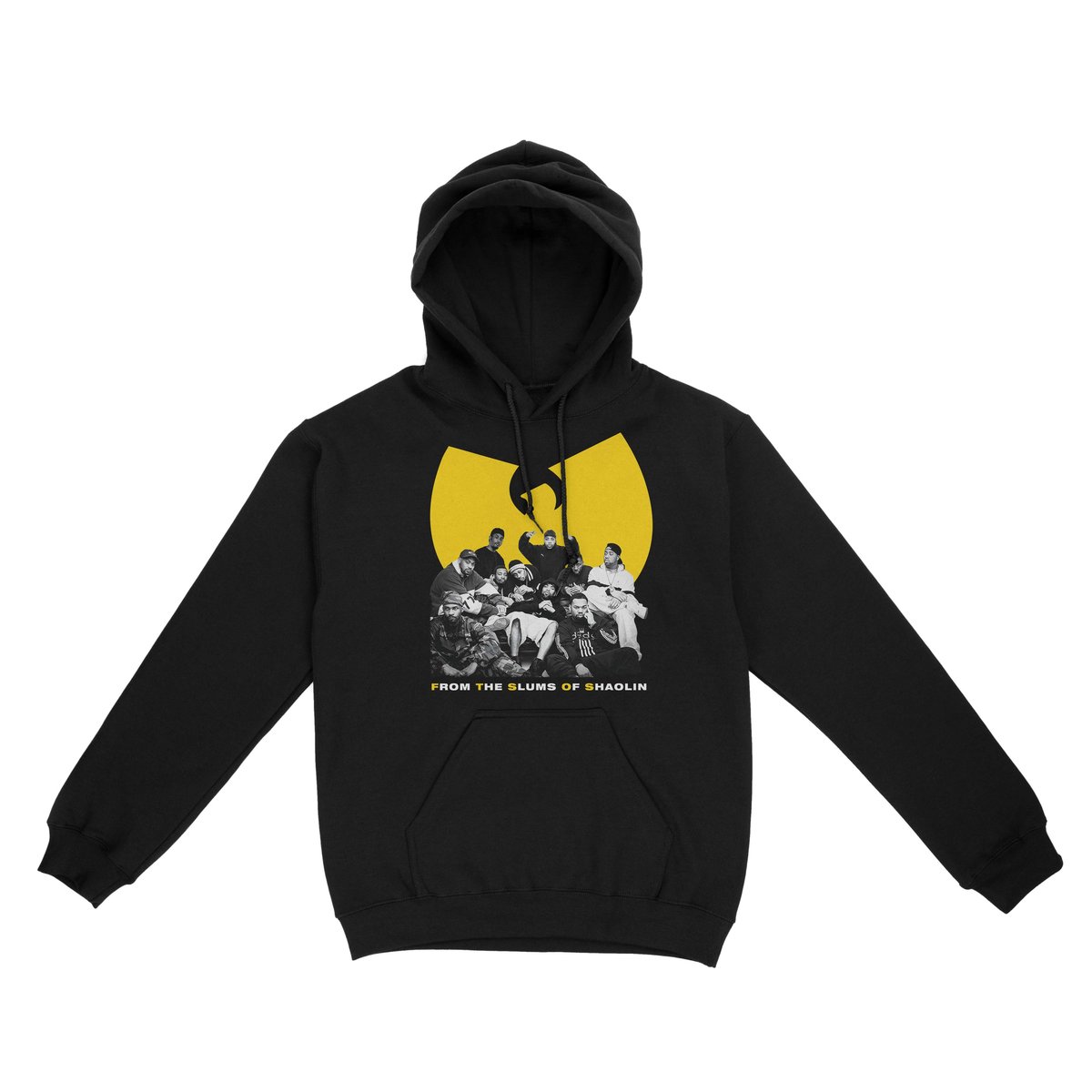
Our Wu-Tang From the Slums of Shaolin Hoodie is a $49.99 mid-weight tribute to the Clan’s origin story — black pullover, gold Killer Bees typography, boot-cut hood. Made in the same 8oz cotton-poly blend the current official line uses, without the licensing markup.
Spotting Bootlegs, Reprints and Repros: A Buyer’s Field Guide
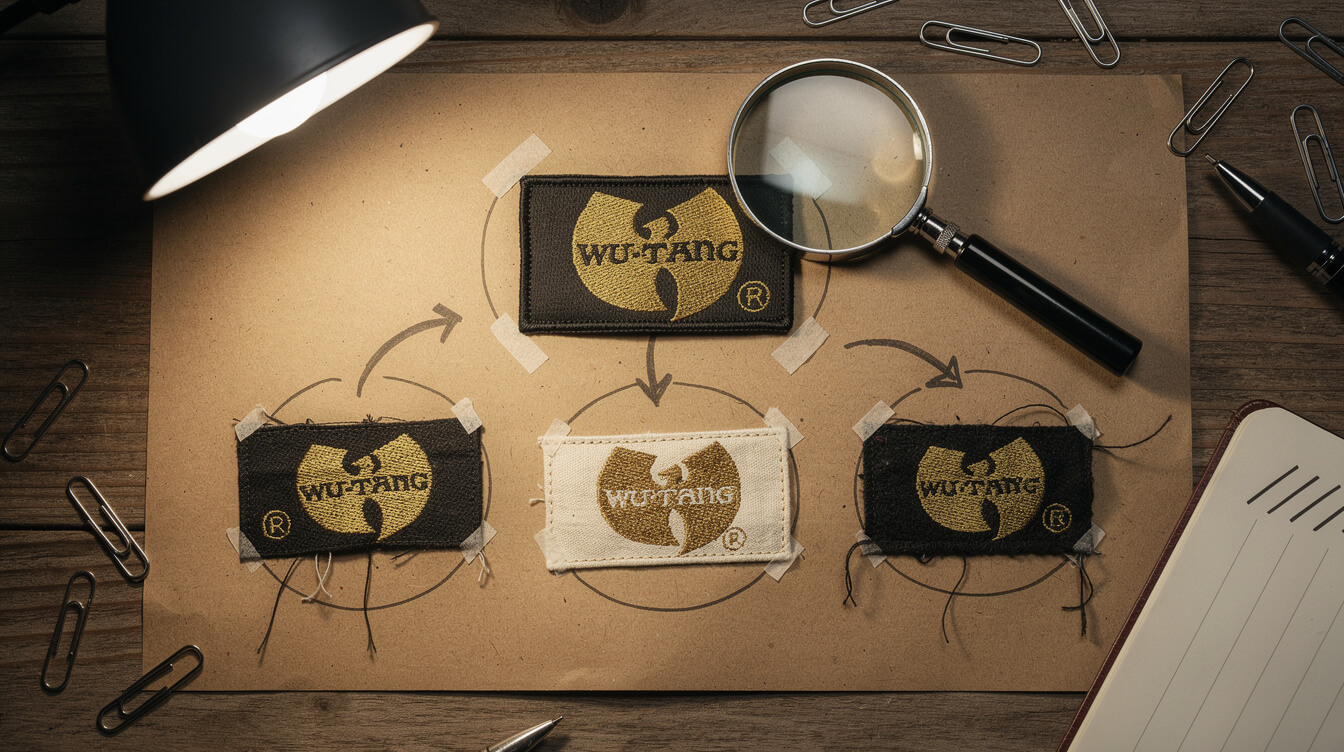
The Wu-Tang hoodie is one of the most bootlegged garments in hip-hop, tied with maybe the Nirvana smiley tee and the Death Row Records varsity jacket. Alibaba turns out millions of units a year with the W stamped on generic Gildan blanks. Some are competent enough to fool casual buyers on eBay. Some are laughable. Here’s how to tell what you’re looking at before you spend.
Check the neck tag first. A genuine 1990s Wu Wear piece has a woven black tag with “WU WEAR” in yellow, made in USA marking, and a size-specific care label sewn beneath. A genuine thewutangclan.com 2023-2026 piece uses an AS Colour or Independent Trading Co. base blank with a Wu-Tang licensing hangtag and a size sticker. A bootleg almost always uses a Gildan, Hanes, or Fruit of the Loom neck tag with no additional licensing label — which is a dead giveaway.
Check the print method. Genuine Wu Wear from 1995 to 2000 used discharge printing, which sits inside the fabric weave with almost no hand-feel and doesn’t crack after 20 wash cycles. Modern official pieces use puff print, embroidery, or high-density plastisol depending on the drop. Bootlegs almost universally use cheap plastisol that cracks within a month. If the graphic feels rubbery and shiny when new, it’s a bootleg.
Check the stitch density on embroidery. Modern Supreme x Wu pieces and the current Final Chamber embroidered hoodies use 12,000+ stitches per logo. Bootleg embroidery runs 4,000-6,000 stitches — the logo will look “sparse” with visible fabric between stitch rows. A magnifying glass or your phone camera zoom will show the difference immediately.
Check the source. The Grailed authenticity team catches most repros before they hit the front page. eBay catches maybe half. Depop catches almost none. Mercari catches almost none. Instagram DM sales through the “vintage hip-hop” account tags catch essentially none. Buy from Grailed with the authenticator badge, from established boutiques with return policies, or from thewutangclan.com directly. The $30 you save buying from a stranger on Depop is not worth the $600 loss when you find out the piece is fake.
The same authentication logic applies to Wu-Tang t-shirts and Wu-Tang hats — same iconography, same bootleg tide, same tell-tales in the tag and print. If you’re building a full Wu closet, treat all three garments as one authentication problem.
Where to Buy a Wu-Tang Hoodie in 2026: The Comparison Table
Five paths, five different buyers, five different price points. Here’s the honest breakdown of where a Wu-Tang hoodie actually comes from in 2026 and which one fits your goal.
1. thewutangclan.com (official, current)
Best for: buyers who want a licensed piece with proceeds routed back to the group and Loud Records estate. Price band: $65-$100. Fabric: 8oz cotton-poly. Sizing: standard US. Shipping: ships from Los Angeles, 3-5 business days domestic. Returns: 30-day. This is the safest path if you don’t care about vintage bragging rights.
2. Supreme x Wu-Tang drops (rare, secondary market)
Best for: collectors and streetwear resellers who want the highest-ceiling investment piece. Price band: $600 (2011 hoodie) to $3,800 (2004 collab). Fabric: heavyweight cotton, Supreme-standard. Sizing: runs half a size small. Shipping: whatever your Grailed seller ships. Returns: usually none. Only buy from Grailed authenticated listings.
3. Vintage Wu Wear (1995-2007)
Best for: heads who want the actual ’90s piece, dead-stock or gently worn. Price band: $250-$800, occasional $1,500+ grails. Fabric: heavyweight all-cotton fleece, discharge-printed. Sizing: 1990s-era generous fit, roughly one size larger than modern equivalents. Shipping: eBay, Grailed, Etsy vintage sellers. Returns: seller-dependent. Verify with the tag and print-method tests above.
4. Boutique tribute pieces (Custom Creative, other independents)
Best for: buyers who love the culture but don’t want to fund the licensing chain and want a distinct design angle. Price band: $39.99-$65. Fabric: mid-weight cotton-poly, embroidery or high-density plastisol depending on drop. Sizing: standard US. Shipping: our tribute pieces ship from print-on-demand facilities in the US in 5-7 days. Returns: 14-day. This is where independent designers reinterpret the Wu aesthetic through solo-album references and lesser-known Clan mythology — pieces like our Enter The Wu-Tang 36 Chambers Hoodie, the From the Slums of Shaolin Hoodie, or the Ghostface Killah Twelve Reasons to Die Hoodie that pull from adjacent Wu solo catalogs the official line rarely touches.
5. Bootleg / Alibaba / mall kiosks
Best for: no one. Skip.
Frequently Asked Questions
What size Wu-Tang hoodie should I buy? If you’re buying from thewutangclan.com or a boutique tribute piece, order your standard US size — no size adjustment needed. Supreme collab pieces run about half a size small; size up if you’re between sizes. Vintage Wu Wear pieces run 1990s-era generous; size down or expect an oversized fit.
Are Wu-Tang hoodies worth the investment? Official thewutangclan.com pieces hold value at retail — they don’t appreciate meaningfully. Vintage Wu Wear appreciates 3-5% per year in the current market. Supreme x Wu collabs appreciate 15-30% per year on the first drop and stabilize after 24 months. Boutique tribute pieces are wear items, not investment pieces — buy them to wear, not to flip.
What’s the difference between a Wu-Tang hoodie and a Wu Wear hoodie? “Wu-Tang” is a merchandise category — any hoodie carrying licensed Wu-Tang graphics. “Wu Wear” is a specific 1995-2007 apparel label owned by Oli “Power” Grant. All Wu Wear pieces are Wu-Tang hoodies. Not all Wu-Tang hoodies are Wu Wear.
Can I get a custom Wu-Tang hoodie made? Not legally with unauthorized graphics — Wu-Tang Productions Inc. actively enforces trademarks on the W, the Killer Bees typography, and the C.R.E.A.M. wordmark. What’s legal is custom hoodies referencing solo albums, lyric fragments, and adjacent Clan mythology through licensed design channels. That’s where the independent designer market lives.
What color Wu-Tang hoodie should I buy first? Black with yellow graphics. It’s the original 1993 colorway, it works with everything in a modern rotation, and it’s the piece that reads immediately as “Wu-Tang” without any additional context. Grey and yellow-on-yellow are the second-most iconic combinations. Skip the fashion colorways (pink, sky blue, olive) for your first piece.
Final Thoughts: The Hoodie as Cultural Passport
The Wu-Tang hoodie is the closest thing hip-hop has to a passport. Wear it on any block in any city and someone will nod. Wear it to a record store and the clerk will start a conversation about Iron Flag or the second Cuban Linx. Wear it to a Supreme drop and the guys ahead of you in line will trade authentication tips. Wear it to your kid’s soccer game and the dad who spent 1996 in his basement burning Wu-Tang beat CDs will find you within five minutes.
That’s what the W has done for 33 years. It builds instant community out of thin air. The piece you buy — official, Supreme, Wu Wear, boutique tribute — matters less than the fact that you bought one and you know what it means. Learn the iconography. Learn the tags. Learn the fabric weights. And then wear the hoodie the way it was designed to be worn: every winter, for a decade, until the elbows go and you buy the next one.
Bringin’ da ruckus is still the assignment.
Hip-Hop Culture, Straight to Your Inbox
One drop a week — album retrospectives, vintage gear guides, and first look at new Custom Creative pieces. No spam, no algorithm chasing, just the culture.

🎧 Never Miss a Drop
Exclusive product releases, hip-hop deep dives, and member-only discounts. Straight to your inbox.
Free forever. No spam. Unsubscribe anytime.
Get the Culture, Delivered
Deep dives into hip-hop history, exclusive product drops, and discounts sent straight to your inbox. No spam, just culture.
Join 2,000+ hip-hop heads already in the loop. Unsubscribe anytime.