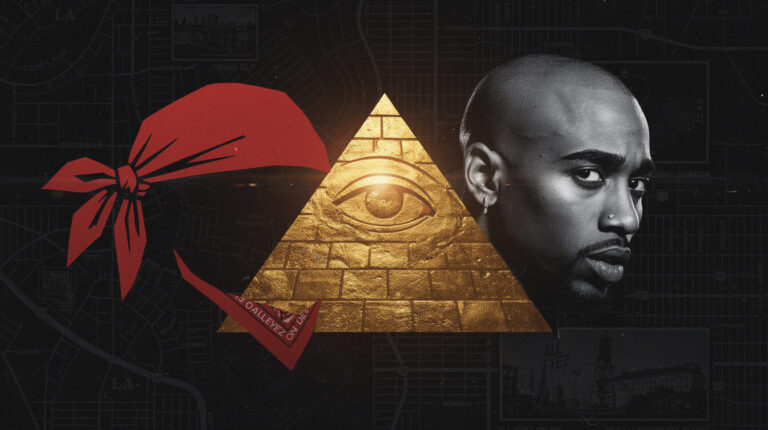

The Everlast Erik Schrody Story: From Ice-T’s Rhyme Syndicate to Jump Around, Whitey Ford and the Heart That Almost Quit
Everlast (Erik Schrody) has lived four careers. He was an Ice-T protégé whose debut sank, then the voice of the most-played party record rap ever made, then a blues troubadour who carried Wu-Tang and Gang Starr samples onto modern-rock radio, and finally an underground lifer who never stopped making records. The Everlast Erik Schrody story also holds a beat Cypress Hill passed on, a heart that tore open on the last day of a recording session, and a feud with Eminem that got uglier than either man likes to remember.
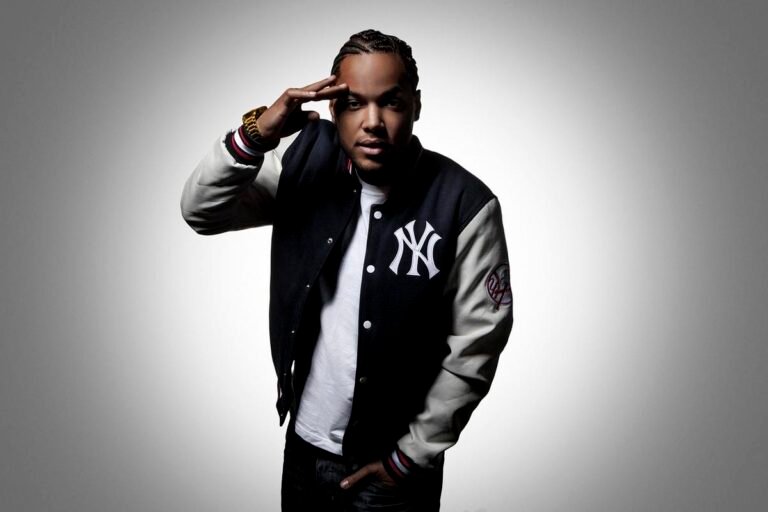
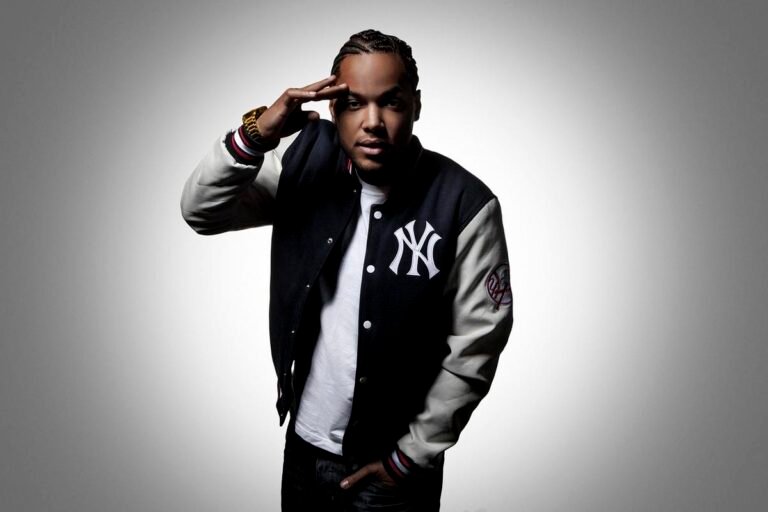
First, the question Google keeps getting: Everlast is not a band. Everlast is one man, Erik Francis Schrody, born August 18, 1969, in Valley Stream, Long Island, and raised in Los Angeles. “Whitey Ford” is his alias, borrowed from the Yankees pitcher. He fronted House of Pain, and everything else on his résumé is solo. Here’s the whole run, built from liner notes, RIAA records and what the man himself told reporters at the time.
Syndicate Soldier: Erik Schrody’s Ice-T Years and Forever Everlasting (1990)
Before the shamrocks there was the Syndicate. Schrody came up at William Howard Taft High in Woodland Hills, the same San Fernando Valley school Ice Cube attended, and the same halls where he met a kid named Danny Boy O’Connor. His way into the industry was Ice-T’s Rhyme Syndicate, the crew-slash-imprint Ice was running out of LA while Rhyme Pays and Power made him a West Coast star. If you want the backstory on that empire, we broke down how Ice-T’s Rhyme Pays built the blueprint.
The record nobody bought
Forever Everlasting came out in spring 1990 on Warner Bros. through Rhyme $yndicate. (Wikipedia dates it March 27 and MusicBrainz April 20, so we’ll just say spring.) Ice-T and Benny Medina are credited as executive producers. The Discogs liner credits show Bilal Bashir producing almost the whole thing. Quincy Jones III, Quincy’s son, produced exactly one track: “I Got the Knack.”
The opener is literally called “Syndicate Soldier,” which tells you how Schrody saw himself at 20. “The Rhythm” puts Ice-T, Donald D and a singer credited only as “Diva” on the mic. The album flopped. The Virgin Encyclopedia and SPIN’s 2012 House of Pain oral history both call it a commercial bust. A young white rapper on a major label in 1990, with a sound that leaned on his mentor’s, never had much of a lane.
The jewel: House of Pain was already on this record
Look at the credits for “I Got the Knack,” the track that flips The Knack’s “My Sharona.” The turntables are credited to Leor Dimant, the kid who would soon be known as DJ Lethal. Two years before “Jump Around,” two-thirds of House of Pain were already cutting records together. The failed solo album was the rehearsal.
Hold onto that Lethal credit, because the next chapter runs through another LA DJ. If you’re repping the man who opened that door, the Ice-T Rhyme Pays Tribute Tee is the Syndicate origin story in cotton. And for the full catalog, here’s our run through Ice-T’s greatest tracks.
House of Pain and the Beat Cypress Hill Didn’t Want

After Forever Everlasting tanked, Schrody regrouped with two Taft High classmates: Danny Boy O’Connor and Leor Dimant, the Latvian-born DJ Lethal. The concept was loud, rowdy Irish-American pride, shamrocks and all, and Tommy Boy signed them. Their name, according to Wikipedia, came off the label of a cassette of Danny Boy’s punk demo.
How “Jump Around” got away from Cypress Hill
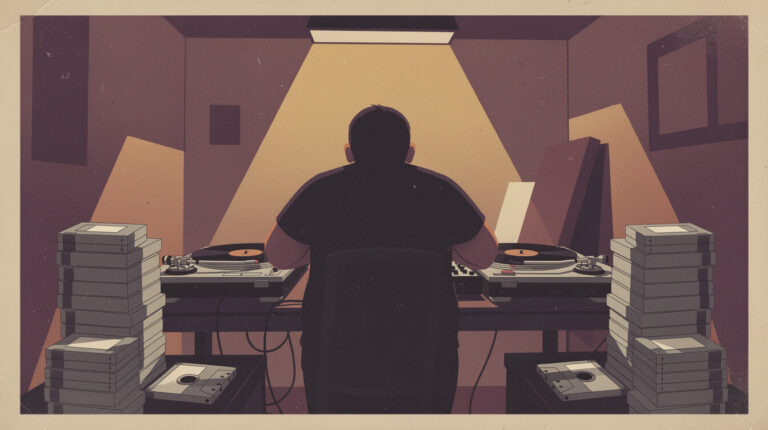
This is the part most write-ups get slightly wrong. “Jump Around” was produced by DJ Muggs. The original Tommy Boy 12-inch credits “Grandmixer Muggs” for production, arrangement and mixing. Muggs made the beat for Cypress Hill, and he has told the story more than once. He told the Guardian in 2019 that after the first Cypress Hill album, B-Real “didn’t want to go back into the studio so quickly,” and then: “I offered it to Ice Cube but he passed.” SPIN’s 2012 oral history has Muggs saving it for the second Cypress Hill record and playing it for Ice Cube, and the Financial Times tells it the same way.
So it wasn’t that B-Real couldn’t write to it. The timing just didn’t work, and Ice Cube didn’t bite. Everlast did. Per SPIN and the FT, he wrote it in the driveway of Muggs’ aunt’s house in Bell Gardens. That’s how the biggest House of Pain record ever ended up a Muggs production. If you’re new to that family tree, start with our guide to every Cypress Hill member. Then see B-Real’s own story, the man who let the beat walk.
The horn, the squeal and the argument that won’t die
The horn fanfare at the top is lifted from Bob & Earl’s 1963 “Harlem Shuffle,” which the liner notes and the FT both confirm. The squeal is another matter. It’s the high-pitched shriek that hits on nearly every bar, and people have argued about its source for 30 years:
- Questlove has insisted it’s Prince’s “Gett Off.”
- A Newsweek reader’s spectrogram (2016) matched it closer to Junior Walker & the All Stars’ “Shoot Your Shot,” and Everlast told Questlove flatly there was no Prince sample in the record.
- DJ Muggs has said it’s neither one.
- Everlast later pointed at Divine Styler’s “Ain’t Sayin’ Nothin’,” a record that itself samples “Shoot Your Shot.”
We’re not going to pretend it’s settled. The man who made the beat and the man who rapped on it don’t even give the same answer.
Platinum in four months
“Jump Around” dropped May 5, 1992. The RIAA database shows it certified Platinum on September 8, 1992, about four months later, and it climbed to No. 3 on the Hot 100. The debut album, House of Pain (the cover says Fine Malt Lyrics), went Platinum on December 10, 1992. That’s one Platinum plaque, not “multi-platinum” as some bios claim. The video was shot at the 1992 New York St. Patrick’s Day parade. Danny Boy told SPIN the label kept them in New York for a week to get it.
Here’s a jewel for the Grammy nerds. At the 35th Grammy Awards, “Jump Around” was nominated for Best Rap Performance by a Duo or Group, in the same category as Kris Kross’s “Jump.” Two jump records went head to head, and Arrested Development’s “Tennessee” beat them both. The group put out Same as It Ever Was in 1994 (RIAA Gold) and Truth Crushed to Earth Shall Rise Again in October 1996, then split. They also cut a track with Helmet for the 1993 Judgment Night soundtrack, and Everlast played a villain in the film.
Why did he walk away at the peak? In a 1999 interview with The Independent, he said he’d quit drinking, which put distance between him and his bandmates. “When I realised I was doing certain things just to make money, I had to quit.”

The Soul Assassins Side of the Story
No House of Pain shirt on the rack yet. The closest thing is the crew whose beat became “Jump Around.” We made the Cypress Hill Tee for heads who know Muggs built that record before Everlast ever touched it.
Whitey Ford Sings the Blues (1998): The Golden-Age Receipts Inside a Rock Record
Whitey Ford Sings the Blues landed September 8, 1998, on Tommy Boy, eight years after his first solo record. It peaked at No. 9 on the Billboard 200 and was certified 2x Platinum on March 29, 1999, roughly six and a half months after release. (You’ll see “three million copies” quoted around the web. That figure carries a citation-needed tag on Wikipedia, so the RIAA’s 2x Platinum is what we’ll stand on.) The album sold as a rock crossover, with acoustic guitars, a rasp and a troubadour pose. Read the liner notes, though, and it’s one of the most hip-hop-literate records of 1998.
Who actually made it
Dante Ross and John Gamble produced most of the album. The Discogs liner credits them on 15 of the 18 tracks and note they also worked as “The Stimulated Dummies.” The three outside beats tell their own story:
- “Hot to Death”: produced by Divine Styler.
- “Painkillers”: produced by Siba-Giba.
- “Praise the Lord”: produced by E-Swift of Tha Alkaholiks.
The sample sheet heads should know
Every one of these is from the liner notes, cross-checked against the album’s writer credits:
- “Ends” samples Wu-Tang Clan’s “C.R.E.A.M.” That’s a Top 10 Alternative Songs hit built on the most famous loop in Staten Island history. Our 36 Chambers deep dive has the whole story of where that loop came from, and the Enter the Wu-Tang 36 Chambers Tee is the source material on a shirt.
- “Praise the Lord” contains excerpts of Gang Starr’s “Dwyck.” That’s the posse cut with Nice & Smooth that lives on Hard to Earn, which is why the Gang Starr Hard to Earn Tee belongs in this conversation. More in our Gang Starr songs breakdown.
- “Money (Dollar Bill)” features Sadat X of Brand Nubian, interpolates Jimmy Spicer’s “Money (Dollar Bill Y’All)” and samples Olympic Runners’ “Drag It Over Here.”
- “Funky Beat” features Casual of Hieroglyphics and Sadat X again, and it contains a replay of “Beat Bop.” That’s the 1983 Rammellzee and K-Rob record produced and released by Jean-Michel Basquiat. A “rock” album interpolating the most famous street-art rap record ever made is our kind of receipt.
- “The White Boy Is Back” is a cover of the Fat Boys’ “The Fat Boys Are Back,” with Kia Jeffries singing.
- The skits feature voice pieces from Sen Dog of Cypress Hill, Prince Paul and Guru.
Sadat X on two tracks is why the Brand Nubian One For All Tee fits here too. Sen Dog gets his own spotlight in our piece on Cypress Hill’s Cuban-born co-founder, and Guru’s in ours on the Gang Starr voice.
“What It’s Like” and the Premier connection
The single that broke it all open was “What It’s Like,” produced with Ross and Gamble. It’s three empathy vignettes: a homeless man, a woman at a clinic facing protesters, a dealer’s widow. It hit No. 13 on the Hot 100 and sat at No. 1 on Billboard’s Modern Rock chart for nine weeks. It got him a nomination for Best Male Rock Vocal Performance at the 42nd Grammys, which Lenny Kravitz won.
Ask Schrody where the sound came from and he didn’t name a rock act. He told The Independent in 1999 that the real innovators were people like DJ Premier, “a true genius with drum machines and sampling.” He also said Wyclef was the one who first got him thinking people might be ready for a rapper holding a guitar. Read that way, Whitey Ford Sings the Blues is a golden-age record wearing a flannel.
The Heart That Almost Quit (1998)
The album almost didn’t get a promo cycle, because its maker almost didn’t survive finishing it. You’ll find this one misdated a lot (“1999-2000” floats around), so here’s what the contemporary press actually says.
The last day of recording
Rolling Stone’s March 1999 profile, “Built to Last,” says Schrody had lived with a heart condition since birth. On the last day of recording Whitey Ford Sings the Blues, he felt a tightness in his chest that wouldn’t let go for more than five hours. He didn’t want a hospital. Co-producer John Gamble called an ambulance anyway. His aorta had torn, and in Rolling Stone’s words his heart was “drowning in blood.” He woke up days later with an artificial valve. The Independent, interviewing him in February 1999, placed it “last February,” meaning February 1998, months before the album came out that September. The Broward-Palm Beach New Times told the same story the same month under the headline “Heart-Attack Man.”
A human beat box
The jewel comes from that Independent piece. The writer noticed a soft, metronomic ticking in the silences between Schrody’s answers. It was the mechanical valve. “Thanks to a plastic heart-valve,” the paper wrote, “Everlast has become a human beat-box.” Schrody described the scar down his chest as a reminder “to be grateful that God gave men the technology to save my life.”
That near-death backstory is part of why the record landed so hard. A guy best known for yelling at a frat party was now singing about mortality, grace and the people the world walks past. He was 28 and had a new valve.
Santana and the only Grammy
He went straight back to work. Schrody wrote “Put Your Lights On” by himself and sang it on Santana’s Supernatural (1999). At the 42nd Grammys it won Best Rock Performance by a Duo or Group with Vocal. Per the Recording Academy, it’s still his only Grammy win. The follow-up, Eat at Whitey’s, arrived October 17, 2000. It peaked at No. 20 and went Gold on December 18, 2000. The credits show where his head was. Carlos Santana is on “Babylon Feeling.” The Alchemist produced “Deadly Assassins” with B-Real, and Rahzel joins him on a cover of Slick Rick’s “Children’s Story.” Kurupt and Cee-Lo appear too. And Merry Clayton, the voice on the Rolling Stones’ “Gimme Shelter,” sings on “Black Jesus,” “Black Coffee” and “Mercy on My Soul.”
The Eminem Feud, in Order
This is the top question searchers ask about Everlast, and most answers scramble the order. Here it is straight, with no verdict on who “won.” Neither man is proud of every bar.
1. The encounter (accounts differ)
The two crossed paths early in Eminem’s run. Wikipedia places it before a concert in early 1999, while Everlast’s own later retelling puts it in a hotel lobby. Everlast says he went to congratulate Eminem and got brushed off. Eminem says he didn’t recognize Everlast and that Everlast didn’t greet him either. Both versions are on the record, and neither can be checked.
2. “Ear Drums Pop (Remix)” (2000)
On the Dilated Peoples posse cut from The Platform, Everlast, credited as “White E. Ford,” dropped a veiled shot about spitting “a comet like Haley” at “ones that act shady.” Eminem heard it as a line about his daughter Hailie. Years later Everlast said he hadn’t known her name.
3. “I Remember (Dedication to Whitey Ford)”
Eminem answered on “I Remember,” the B-side to D12’s “Shit on You” 12-inch. ABC News reported at the time that it went as far as wishing Everlast’s heart attack had killed him.
4. “Whitey’s Revenge”
Everlast fired back with “Whitey’s Revenge,” released only online. It took shots at Eminem’s family, including a line questioning the paternity of his daughter. That’s the line that turned a rap beef personal, and Everlast has since said he regrets going there.
5. “Quitter” and “Girls”
Eminem and D12 replied with “Quitter,” whose second half reworks 2Pac’s “Hit ‘Em Up.” Then on D12’s Devil’s Night (June 2001) came the hidden track “Girls.” It was aimed at Limp Bizkit, at DJ Lethal (by then in Limp Bizkit), at Dilated Peoples and at Everlast. Evidence of Dilated Peoples answered with “Search 4 Bobby Fisher.” Everlast, by his own account in an October 2000 ABC News interview, had no plans to make any reply commercial, and he largely went quiet.
6. The truce
Time did the rest. On “Baby,” a deluxe-edition bonus track on The Marshall Mathers LP 2 (2013), Eminem name-checks “Whitey Ford” and “Everlast” in a line about the pen being mightier than the sword. Everlast called it “almost complimentary.” In 2014, after Eminem appeared on Busta Rhymes’ “Calm Down,” Everlast showed up on a separate version, “Calm Down 3.0.” For where all this sits in Em’s catalog, see our Eminem albums in order. The Eminem Marshall Mathers LP Tee is the feud-era album, if you want a souvenir from the other side of the line.
La Coka Nostra, Saving Grace and the Martyr Inc. Years

Once the major-label era closed, Schrody stopped trying to be anyone’s crossover story and went back to the crew.
The House of Pain family reconvenes
La Coka Nostra started in the mid-2000s as Danny Boy’s collective with Boston rapper Slaine and Big Left, with DJ Lethal on the cut. Ill Bill, ex-Non Phixion, joined, then Everlast. Their first song, a profane shot at Scarface‘s Tony Montana, spread online in the MySpace era and built the group a following before they had an album. A Brand You Can Trust came out July 14, 2009, with guests including Snoop Dogg, Bun B, B-Real, Sen Dog and Immortal Technique. It was grimy, East Coast-leaning and a world away from modern-rock radio. Everlast left in March 2012 to focus on his family’s health.
The solo catalog nobody talks about
- White Trash Beautiful (May 2004, Island): produced with Dante Ross, No. 56.
- Love, War and the Ghost of Whitey Ford (September 23, 2008): No. 78. It includes his theme for the TNT drama Saving Grace, which earned a 2008 Emmy nomination for Outstanding Original Main Title Theme Music, plus a cover of Johnny Cash’s “Folsom Prison Blues.”
- Songs of the Ungrateful Living (October 2011): No. 48.
- The Life Acoustic (August 27, 2013): stripped-down versions from across the catalog.
- Whitey Ford’s House of Pain (September 7, 2018).
House of Pain, back on stage
The trio reunited in 2010, announced that August, with a first show at the Epicenter festival on September 25, 2010. In 2017 they toured again for the 25th anniversary of “Jump Around,” opening in Washington, D.C., on March 11. By then the song had long since outgrown the group. It’s a stadium staple and a jock-jam fixture, the record played when 80,000 people need to lose their minds at once.
Embers to Ashes and Why the Everlast Erik Schrody Story Still Matters

If you searched “Everlast new album,” here’s the answer: Embers to Ashes, released August 28, 2026, on his own Martyr Inc. label through a new deal with Thirty Tigers and Regime Music Group. It’s his first album in eight years. It runs 17 tracks with no features, and every beat is by Yelawolf, the first full album Yelawolf has produced on his own. The first single, “Stones,” arrived March 13, 2026. Picture an Alabama rapper-turned-roots-rocker producing a Long Island-born, LA-raised rapper-turned-bluesman. That’s a lineage that makes sense once you’ve read this far.
What he actually changed
Strip away the shamrocks and the frat-party reputation, and this is the ledger:
- He came up under Ice-T, in the Syndicate, when LA rap was still proving itself.
- He wrote the vocal for a DJ Muggs beat that became one of the most recognizable rap records ever pressed.
- He smuggled C.R.E.A.M., Dwyck, Beat Bop, Sadat X, Casual, Guru and Prince Paul onto a 2x Platinum album that rock radio played all day.
- He survived a torn aorta at 28 and came back to win a Grammy within two years.
- He spent the next quarter-century making records on his own terms, including a 2026 album with no guest list.
The lane he opened
“Rapper with an acoustic guitar” sounds normal now. It didn’t in 1998, and Schrody said he only tried it because a Fugee showed him it could work. A lot of what followed in genre-blurring, guitar-carrying hip-hop owes something to that record, even when the artists don’t know it. Whether you came in through “Jump Around” at a wedding or “What It’s Like” on the car radio, the throughline is the same. This is a hip-hop head who never stopped being one, whatever the record store filed him under.
The Everlast Erik Schrody FAQ
Is Everlast a band? Who is the lead singer of Everlast?
No. Everlast is the stage name of one person, Erik Francis Schrody, a solo artist born August 18, 1969. He was the frontman of House of Pain, and he also records as “Whitey Ford.”
Why is he called Whitey Ford?
The alias borrows the name of Whitey Ford, the Hall of Fame New York Yankees pitcher. For a white rapper, the pun writes itself.
Did DJ Muggs produce “Jump Around”?
Yes. The original Tommy Boy 12-inch credits “Grandmixer Muggs” with production, arrangement and mixing. Muggs originally made the beat for Cypress Hill. B-Real wasn’t ready to go back into the studio, and Ice Cube passed.
Was Everlast ever in Cypress Hill?
No. He’s family through DJ Muggs and the Soul Assassins orbit. Sen Dog does a skit on Whitey Ford Sings the Blues, and B-Real appears on Eat at Whitey’s. He was never a member, though. Our Cypress Hill discography guide has the actual lineup history.
Why were Eminem and Everlast beefing?
It started with an awkward early meeting, and the two men tell it differently. It escalated through Everlast’s “Ear Drums Pop (Remix)” verse, Eminem’s “I Remember,” Everlast’s “Whitey’s Revenge,” and D12’s “Quitter” and “Girls.” It cooled with Eminem’s friendly name-check on the MMLP2 bonus track “Baby” in 2013.
What are Everlast’s most popular songs?
“Jump Around” (House of Pain, No. 3 Hot 100), “What It’s Like” (No. 13 Hot 100, nine weeks at No. 1 Modern Rock), “Ends” (Top 10 Alternative), “Put Your Lights On” with Santana (Grammy winner) and “Black Jesus” (No. 15 Alternative Airplay).
What is Everlast’s new album?
Embers to Ashes, released August 28, 2026. It’s produced entirely by Yelawolf and has no features.
What happened to Everlast’s heart?
On the last day of recording Whitey Ford Sings the Blues in early 1998, a lifelong heart condition caught up with him. His aorta tore, and he had emergency surgery that left him with an artificial valve. Interviewers in 1999 said you could hear it ticking.
For more on the Brand Nubian side of those liner notes, revisit our Sadat X birthday piece.
Stay creative — The Custom Creative Team
Get the Culture in Your Inbox
Liner-note receipts, producer stories, anniversaries and first dibs on new drops. No spam, just hip-hop.

🎧 Never Miss a Drop
Exclusive product releases, hip-hop deep dives, and member-only discounts. Straight to your inbox.
Free forever. No spam. Unsubscribe anytime.
Get the Culture, Delivered
Deep dives into hip-hop history, exclusive product drops, and discounts sent straight to your inbox. No spam, just culture.
Join 2,000+ hip-hop heads already in the loop. Unsubscribe anytime.