Jay-Z The Black Album: The “Last” Record, Every Producer and the Afterlife Nobody Planned
Twenty-three years ago this month, the man who had been calling himself the best rapper alive told everyone he was done. Jay-Z The Black Album landed on November 14, 2003, sold as his final record, and it came with a farewell show at Madison Square Garden, a concert film and a dozen of the best producers on the planet lined up to send him off. He was back on a Grammy-winning record within a year and back with a new solo album in three. The retirement didn’t hold, but the album did. It’s still the most complete argument Jay ever made for himself, and the stories behind its 14 tracks are better than most of the songs other rappers were putting out that year.
This is the full breakdown: who produced what, which samples are actually in the liner notes, the beat that was made after the CD cases were printed, the MTV intern who supplied Biggie’s voice, and how a promotional acapella turned into The Grey Album and a court fight. Every date and credit here was checked against at least two sources. Where the record is single-sourced or the sources disagree, we say so.
Jay-Z The Black Album: The Farewell That Wasn’t
The Black Album was Jay-Z’s eighth studio album in eight years, released through Roc-A-Fella and The Island Def Jam Music Group. Count them: Reasonable Doubt in 1996, the three Vol. records, The Dynasty, The Blueprint and The Blueprint 2. That was a pace nobody at his sales level was keeping. The pitch this time was simple. It was the last one.
The release date that moved up two weeks
The album was meant to land around Black Friday. It didn’t. In The FADER’s 2013 oral history of the record, the release is described as moved up from Black Friday to Friday, November 14 to get ahead of an internet leak. Producer Joe “3H” Weinberger remembered the album hitting file-sharing networks the Sunday night before release, the full songs, not crappy rips. G-Unit’s Beg for Mercy got pulled forward to the same week, and the chart that followed tells you who won.
Release-week numbers
The Black Album debuted at No. 1 on the Billboard 200 with 463,000 copies in its first week, according to Nielsen SoundScan figures. It was his sixth US No. 1 album. Sitting under it were the Tupac: Resurrection soundtrack at No. 2 and Beg for Mercy at No. 3. That’s a farewell week with Pac’s ghost and 50 Cent’s crew both chasing you and neither one catching up. Billboard later named it Jay-Z’s best-selling album of the 2000s. The RIAA certified it 4x Platinum in July 2023, almost twenty years after release.
Why “last” mattered
Calling it the final album changed how every track was written. The retirement isn’t one song, it runs through the whole record. “December 4th” is an origin story. “Encore” is a curtain call. “My 1st Song” closes the loop by pointing back at the hungry kid who made his first records. Kyambo “Hip Hop” Joshua, the A&R who had worked with Jay since his high school days, told The FADER the goal was “this great album to walk off on.” Whether you believed the retirement or not, the framing gave the album something most rap records don’t have, an ending.
The Producer Casting Call: Who Made the Cut, Who Didn’t
The plan, as Wikipedia and the album’s own promo both frame it, was a different producer for every song. Magazine ads at the time listed a dozen of the biggest names in the game as if it were a fight card. 3H told The FADER the ad “listed off 12 of the greatest producers on Earth.” The released album didn’t quite follow the plan. Just Blaze ended up with three tracks, and Kanye West and The Neptunes got two apiece. The spirit of it held, though. The credits read like a who’s who of 2003.
The wish list that didn’t happen
Hip Hop Joshua described the concept as “the ultimate wish list — Jay’s list and my list,” a mix of longtime collaborators and producers Jay had never worked with. Two names on that list never made it onto the record: Dr. Dre and DJ Premier. Premier had already given Jay “D’Evils” and “Friend or Foe” on Reasonable Doubt, and a Dre beat would have closed a West-meets-East loop. Neither one came through. Instead, the team traveled to the producers: Timbaland in Miami, Pharrell in Virginia, Rick Rubin in Los Angeles.
The home team: Just Blaze and Kanye
By 2003, Just Blaze and Kanye West were the sound of Roc-A-Fella. Both had built their reputations on the soul-sample blueprint that redefined Jay’s sound two years earlier. Roberson told The FADER that Just was so competitive he’d walk from Baseline Studios’ B room into the A room to hear what everyone else was cooking, then go the other way. Kanye was still waiting on his own debut. Roberson remembers him performing “Encore” for Jay to sell it, acting out how the crowd would react.
The big-name visitors
The Neptunes gave Jay “Change Clothes” and “Allure.” Timbaland delivered “Dirt off Your Shoulder.” DJ Quik was brought in, per Joshua, because Jay “wanted to fill that West Coast void.” Eminem produced and mixed “Moment of Clarity” with keyboardist Luis Resto. Rick Rubin, the man who co-founded Def Jam in a dorm room, produced “99 Problems.”
The new kids
The best stories on this album belong to the unknowns. 9th Wonder was a North Carolina producer whose group Little Brother had one album out. The Buchanans were a young crew who’d never placed a beat anywhere. Aqua and 3H were about 20 years old. All three ended up on what was supposed to be Jay-Z’s final album. If you came up on 9th’s sound through Little Brother, our Little Brother – The Minstrel Show T-Shirt is a nod to where his catalog went after this record.
Jay-Z The Black Album Track by Track: Producers, Samples and Liner-Note Jewels
Here’s the full tracklist with the producer credits and the samples the album booklet actually credits. We cross-checked Wikipedia’s credits table against the Discogs transcription of the US CD liner notes. A few samples you’ll see listed online appear on Wikipedia but not in the booklet transcription, and we’ve marked those.
| # | Track | Producer(s) | Credited samples |
|---|---|---|---|
| 1 | Interlude | Just Blaze | None |
| 2 | December 4th | Just Blaze | The Chi-Lites, “That’s How Long” |
| 3 | What More Can I Say | The Buchanans | MFSB, “Something for Nothing”; dialogue from Gladiator |
| 4 | Encore | Kanye West | John Holt’s cover of “I Will” (Lennon–McCartney) |
| 5 | Change Clothes | The Neptunes | None |
| 6 | Dirt off Your Shoulder | Timbaland | None |
| 7 | Threat | 9th Wonder | A 2003 R&B record |
| 8 | Moment of Clarity | Eminem (add. prod. Luis Resto) | None |
| 9 | 99 Problems | Rick Rubin | Mountain, “Long Red”; Billy Squier, “The Big Beat”; elements of Ice-T, “99 Problems” |
| 10 | Public Service Announcement (Interlude) | Just Blaze | Little Boy Blues, “Seed of Love” |
| 11 | Justify My Thug | DJ Quik | Run-DMC, “Rock Box”; interpolates Madonna, “Justify My Love” |
| 12 | Lucifer | Kanye West | Max Romeo, “Chase the Devil” |
| 13 | Allure | The Neptunes | None |
| 14 | My 1st Song | Aqua & Joe “3H” Weinberger | Los Angeles Negros, “Tu y Tu Mirar…Yo y Mi Canción”; Biggie interview audio |
“December 4th”: the birthday, the Chi-Lites and Gloria Carter
The album’s real opener is titled after Jay’s birthday, December 4, 1969. Just Blaze flipped the Chi-Lites’ “That’s How Long” into a sweeping origin story, and Jay’s mother, Gloria Carter, narrates his childhood between the verses. Jay later said in a 2010 NPR Fresh Air interview that he more or less tricked her into recording it. It’s the only time on any of his albums where somebody else tells his story for him, and it hits harder because of it.
“What More Can I Say”: one beat, first placement
Wiz Buchanan told The FADER his crew sent exactly one beat, already arranged with the hook and intro, while they were working with Lupe Fiasco’s camp. Jay called back saying he’d “bodied” it. It was the Buchanans’ first placement ever. The sample clearance on the Russell Crowe Gladiator dialogue still wasn’t settled when Angie Martinez first played the song on the radio, and Wiz hadn’t been paid yet. He heard it in his kitchen making a sandwich and thought his own equipment had started playing by itself.
“Encore”: the Beatles were here first
Here’s a jewel most people miss. Kanye’s “Encore” is built on John Holt’s reggae cover of “I Will,” a song written by Lennon and McCartney for the Beatles’ self-titled 1968 double album, the one everyone calls the White Album. That means Beatles DNA was already inside The Black Album months before Danger Mouse ever thought to mash the two together. The credited backing vocalists on “Encore” include John Legend, a year before his own debut came out, plus GLC and Don Crawley.
“Change Clothes” and “Allure”: the Neptunes’ two sides
“Change Clothes” was the lead single, released November 4, 2003. It peaked at No. 10 on the Hot 100. Pharrell sings on it, but he isn’t credited as a featured artist. “Allure” is the opposite energy, a slow, reflective cut about the pull of the street life Jay claims he’s walking away from. Chad Hugo, credited as co-producer on both, told The FADER that working those sessions felt “like we were a part of a security team.” Neither track has a credited sample.
“Dirt off Your Shoulder”: Timbaland’s sparse knock
Timbaland’s beat is all space and low end, and it became the album’s biggest Hot 100 single, peaking at No. 5. The brush-your-shoulder-off gesture from the hook outlived the song itself. You still see it on basketball courts and in boardrooms that have never heard a Timbaland beat. It’s now certified 2x Platinum.
“Threat”: 25 minutes on a laptop
9th Wonder’s route onto the album is a great story. A Brooklyn filmmaker named Theron Smith, who was working on the Fade to Black documentary, put him on the phone with engineer Young Guru in September 2003. 9th traveled up from North Carolina, played beat CDs for Jay at Baseline, and was asked to stay through Monday. Jay handed him a sample, left the room, and 9th built “Threat” in about 25 minutes on a ThinkPad laptop (per Wikipedia and a 2016 DJBooth interview). Cedric the Entertainer is credited with additional vocals. In The FADER piece, 9th said Jay later called him personally to produce for Destiny’s Child.
“Moment of Clarity”: Eminem on the boards
Eminem produced and mixed “Moment of Clarity” with Luis Resto, his longtime keyboard player, at 54 Sound in Michigan. Resto told The FADER the track was deliberately sparse, with a classical piano feel, to “leave room for Jay to do his thing.” It’s one of the most personal songs Jay ever recorded. Jay reconciled with his estranged father, Adnis Reeves, not long before Reeves died in 2003, and the song deals with that loss directly.
“Public Service Announcement”: the beat that stopped the presses
This one should be legend. Just Blaze told The FADER the album was finished and “cases were already made” when he made the “PSA” beat at the last minute. Jay was doing press listening sessions at a studio around the corner. Between each session he’d run back to Just’s room, write four bars, go do another round of press, then come back and do four more. Just also said that a Black Moon record had used the same Little Boy Blues sample just weeks earlier, which he only found out about when a studio assistant played it in the next room. If you rep that crew, our Black Moon – Enta Da Stage T-Shirt belongs to the other side of that coincidence.
“Justify My Thug” and “Lucifer”
DJ Quik’s “Justify My Thug” flips Run-DMC’s “Rock Box” and interpolates Madonna’s “Justify My Love,” which makes it the strangest production on the album and one of its most underrated. Kanye’s “Lucifer” samples Max Romeo’s roots-reggae classic “Chase the Devil,” co-written by Lee “Scratch” Perry. Hip Hop Joshua told The FADER that the second verse of “Lucifer” is about his brother, who had just died.
“My 1st Song”: the MTV intern and the Biggie tape
The closing track opens with a clip of The Notorious B.I.G. from an old interview. That clip came from producer Aqua. He told The FADER he’d been an intern at MTV News, used the archive on weekends, and dubbed unreleased Biggie interview tapes to VHS to bring home to friends. After making the beat in his parents’ basement, he laid a piece of that interview over the intro. It’s a fitting way to end a “final” album, the late Biggie reminding everyone why they started. 3H told the same oral history that he once heard the song played in a Paris nightclub, a decade later, with kids going crazy.
“99 Problems”: Rick Rubin, Ice-T and the Rock Record Underneath
If one song from The Black Album crossed over to people who never bought a rap record, it’s “99 Problems.” Released as a single on April 27, 2004, it only peaked at No. 30 on the Hot 100. On paper it was the weakest of the three singles. Twenty years later it’s the one with the biggest footprint.
The hook was Ice-T’s first
The chorus comes from Ice-T’s own “99 Problems,” from his 1993 album Home Invasion. The liner notes credit it as “elements” of that song. Ice-T was a West Coast pioneer, the man who helped invent gangsta rap with records like “6 in the Mornin'”, and Jay borrowed his hook a decade later and turned it into his own.
Rubin’s rock bones
Rick Rubin built the beat out of rock records, as he did on his ’80s Def Jam productions. The credited samples are Mountain’s “Long Red” and Billy Squier’s “The Big Beat,” a drum break that was already a hip-hop staple. Wikipedia also lists a Wilson Pickett sample and lyrical borrowings from UGK’s “Touched” and Slick Rick’s “Children’s Story,” but those don’t appear in the liner-note transcription we checked. If you love that era of Rubin, when Def Jam was turning rap into arena music, our Beastie Boys Licensed to Ill T-Shirt covers the record that started it.
The video, the Grammy and the Moonmen
Mark Romanek’s black-and-white video led the 2004 MTV Video Music Awards with six nominations. It won four: Best Rap Video, Best Direction, Best Editing and Best Cinematography. It didn’t win Video of the Year, despite what you’ll sometimes read. At the 47th Grammy Awards in February 2005, “99 Problems” won Best Rap Solo Performance. The single is now certified 3x Platinum.
The Garden, the Film and the Farewell Lap
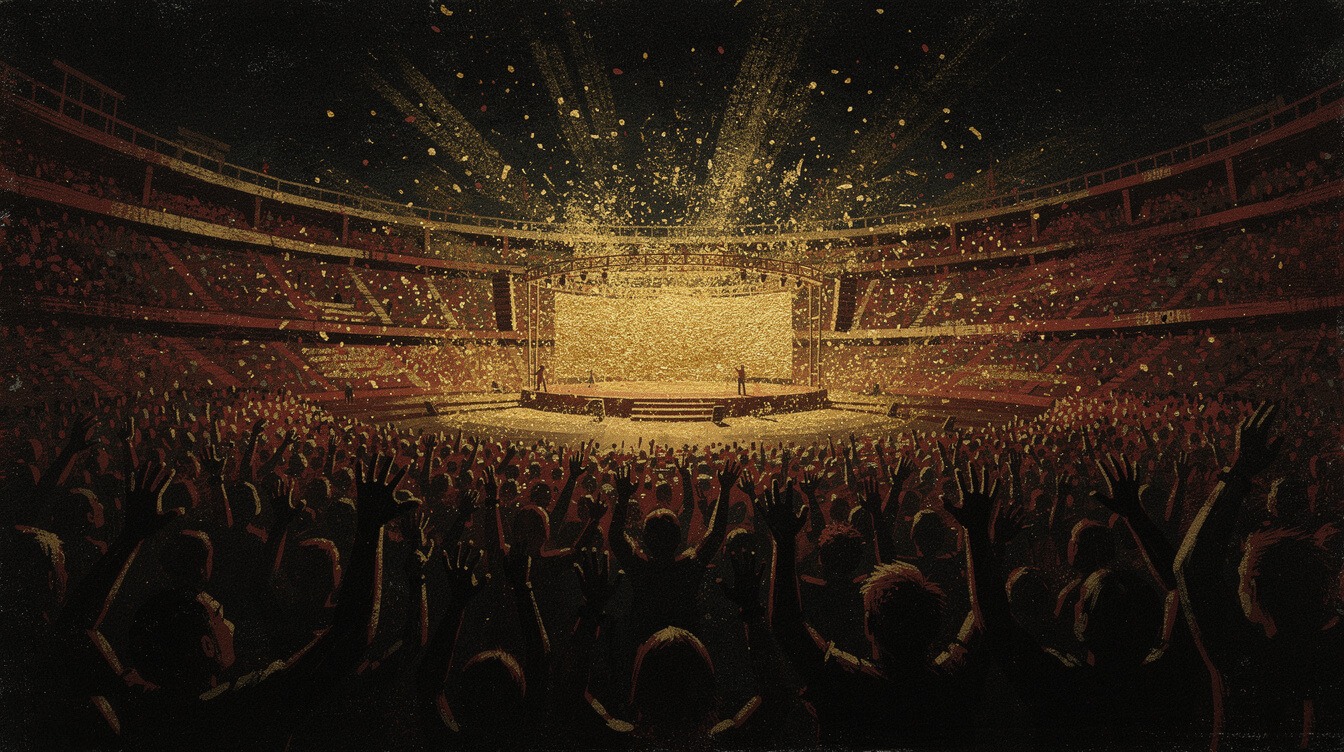
A real retirement needs a real last show. On November 25, 2003, eleven days after the album came out, Jay-Z played a farewell concert at Madison Square Garden. XXL’s retrospective lists guests including Mary J. Blige, Missy Elliott, Ghostface Killah, Memphis Bleek and Beyoncé. For a kid from the Marcy Houses, filling the Garden as a retirement party was the whole point.
Fade to Black
The concert, plus studio footage from the album sessions, became Fade to Black, directed by Patrick Paulson and Michael John Warren and released November 5, 2004. The studio footage from the album sessions is the reason to watch it. It’s as close as anyone got to filming how Jay writes without a pen.
Writing without paper
Everybody who worked on the album says the same thing about that. Gee Roberson told The FADER that watching Jay mumble over a track and then recite full verses as if he had them written down was “like watching magic.” Joshua said “this album was done real fast,” because Jay finished every song in the room and didn’t stockpile 50 songs to choose from. The FADER also got a jewel from photographer Jonathan Mannion: the album cover was a test shot from a mock-up session. Jay liked it so much he decided he didn’t need the real shoot.
Before the Farewell, the Blueprint
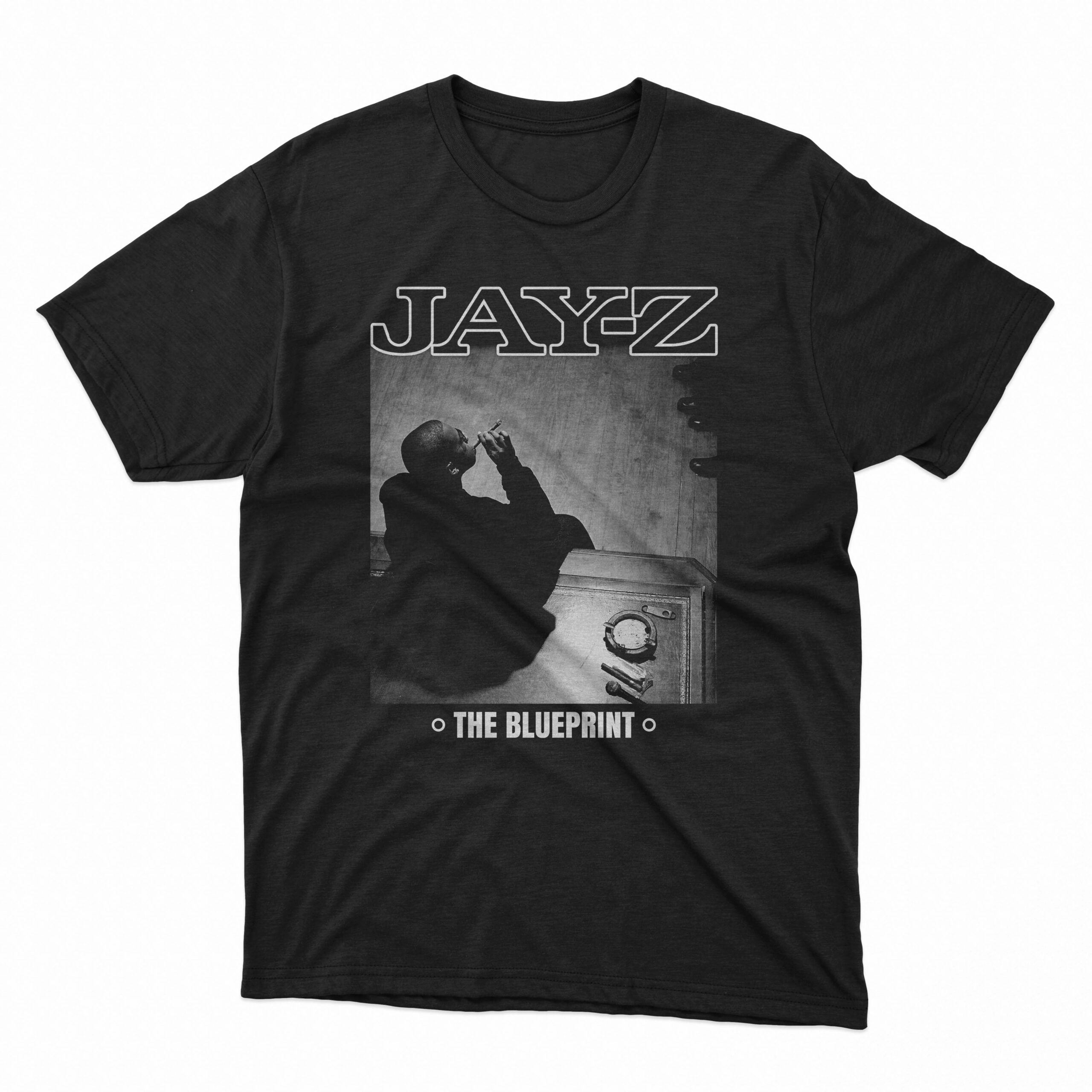
The Black Album’s producer bench was built on the 2001 record where Just Blaze and Kanye first took over Jay’s sound. We made the Jay-Z The Blueprint T-Shirt for heads who know where the run really started.
The Afterlife: Acapellas, The Grey Album, Collision Course and the Comeback
Most farewell albums fade. This one multiplied. The reason was a decision almost nobody outside the business noticed at the time.
The acapella that broke a Roc-A-Fella rule
Roc-A-Fella put out an official acapella version of The Black Album on vinyl, with no beats under Jay’s vocals. Young Guru told MTV News in January 2004 that Jay deliberately broke the label’s tradition of not releasing acapella 12-inches so producers could “remix the hell out of it.” One correction: Wikipedia dates the acapella release to December 2004, which can’t be right, since the most famous remix came out in February 2004. MTV’s January 2004 report says it came out the month before, and Discogs lists it as a 2003 release. So it came out in late 2003.
Danger Mouse and Grey Tuesday
Producers took the invitation. Kev Brown made The Brown Album, and 9th Wonder made his own remix, Black Is Back! The one that blew up was Danger Mouse’s The Grey Album, which put Jay’s vocals over samples from the Beatles’ White Album. It was meant as a limited run of about 3,000 copies in February 2004. EMI, which controlled the Beatles recordings, sent cease-and-desist letters to Danger Mouse and the stores carrying it. The activist group Downhill Battle answered with “Grey Tuesday” on February 24, 2004: about 170 websites hosted the album for free download for 24 hours in protest, and Wikipedia reports more than 100,000 downloads that day. Jay, Paul McCartney and Ringo Starr reportedly approved of the project. EMI’s lawyers didn’t. Remember the “Encore” sample from earlier, though. The Beatles were already on Jay’s record before anyone mashed anything.
Collision Course
The mashup idea went official on November 30, 2004, when Jay and Linkin Park released Collision Course. Three of its songs are built on Black Album tracks: “Encore,” “Dirt off Your Shoulder” and “99 Problems.” It debuted at No. 1, and “Numb/Encore” won Best Rap/Sung Collaboration at the 48th Grammys in 2006. A “retired” rapper won a Grammy for a remix of his retirement record.
The president’s office, then Kingdom Come
In December 2004, Def Jam named Jay its president, and he started in January 2005. That’s the job he stepped into in our Def Jam label history, and it’s arguably the real “retirement,” from rapper to executive. It didn’t last as a full stop either. Kingdom Come arrived on November 21, 2006, three years and a week after The Black Album. The two albums after that, American Gangster and The Blueprint 3, are a different story.
Why Jay-Z The Black Album Still Hits
The critical record is strong, but not unanimous, which is part of what makes it interesting. Metacritic averages it at 84. Touré’s Rolling Stone review in 2003 rated it a notch below Reasonable Doubt and The Blueprint. Robert Christgau sneered that Jay “raps like a legend in his own time — namely, Elvis in Vegas,” and then in 2011 admitted the self-celebration had come to sound “prophetic.” The Guardian put it at No. 8 on its albums-of-the-decade list in 2009, calling it “the more rounded, polished beast” compared with The Blueprint. Rolling Stone had it at No. 349 in its 2012 500 Greatest Albums and moved it up to No. 155 in 2020. Pitchfork ranked it No. 90 on its top 200 albums of the 2000s.
The Grammy irony
In 2005, The Black Album was nominated for Best Rap Album and lost to Kanye West’s The College Dropout. The same Kanye who produced “Encore” and “Lucifer,” and who had been waiting on his own debut while he made beats for Jay’s farewell, beat his boss for the award. If you want to rep the student who beat the teacher at the Grammys, the Kanye West College Dropout T-Shirt is that moment on cotton.
From throwback jerseys to button-downs, and back
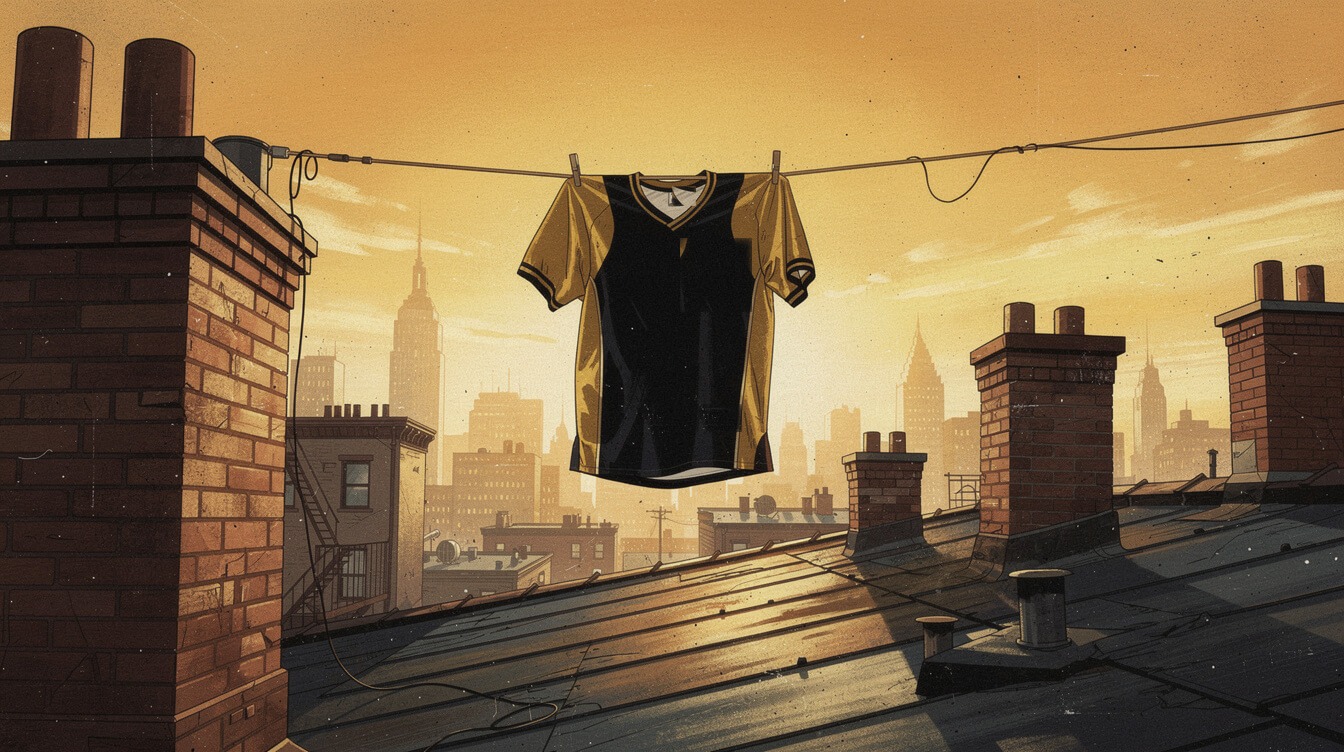
Here’s a streetwear angle nobody in the review pile covers. The FADER’s oral history argues that Jay’s switch to button-down dress shirts around this era pushed a generation of young fans off the oversized throwback sports jerseys Jay himself had championed only a year earlier. The title of “Change Clothes” fits that moment a little too well. Then, two decades later, the jersey came back. In December 2023, for the album’s 20th anniversary, Mitchell & Ness and Roc-A-Fella re-released a Shawn Carter jersey, limited to 2,003 pieces per style (reported by HotNewHipHop and Black Enterprise). The farewell album that killed the jersey ended up selling one. For more on how rap and fashion trade places, read our history of rap tees and our Jay-Z merch guide.
The template for every “last album”
Big-name rappers have been announcing final albums ever since, and almost none of them stick. The Black Album is why the move still gets taken seriously. It proved that a retirement framing could focus a record, give it a story arc and turn a release into an event. It also proved the retirement doesn’t have to be real for the album to work. The Roc-A-Fella empire was splitting apart within a couple of years, but this record stayed the high point.
Jay-Z The Black Album FAQ
When did Jay-Z’s The Black Album come out?
November 14, 2003, on Roc-A-Fella and The Island Def Jam Music Group. It was moved up from a later Black Friday date to get ahead of an internet leak.
Was The Black Album really supposed to be Jay-Z’s last album?
Yes, it was promoted as his final album, with a farewell concert at Madison Square Garden on November 25, 2003. He became president of Def Jam in January 2005 and returned with Kingdom Come on November 21, 2006.
Who produced The Black Album?
Just Blaze (3 tracks), Kanye West (2), The Neptunes (2), Timbaland, Eminem with Luis Resto, Rick Rubin, 9th Wonder, DJ Quik, The Buchanans, and Aqua with Joe “3H” Weinberger. Dr. Dre and DJ Premier were on the wish list but didn’t end up on the album.
How many copies did The Black Album sell?
It debuted at No. 1 on the Billboard 200 with 463,000 copies in its first week. The RIAA certified it 4x Platinum in July 2023.
Did The Black Album win a Grammy?
The album was nominated for Best Rap Album at the 47th Grammys and lost to Kanye West’s The College Dropout. “99 Problems” won Best Rap Solo Performance that night, and “Numb/Encore” with Linkin Park won Best Rap/Sung Collaboration the next year.
What’s the connection between The Black Album and The Grey Album?
Roc-A-Fella released an official acapella version of the album, and Danger Mouse combined those vocals with samples from the Beatles’ White Album to make The Grey Album in early 2004. EMI’s cease-and-desist letters led to the Grey Tuesday protest on February 24, 2004.
Why is it called The Black Album?
Jay-Z never gave an on-record explanation that we could find. The popular theory that he was answering the Beatles’ White Album has no source behind it. The White Album link people know comes from Danger Mouse’s remix and, quietly, from the John Holt “I Will” sample on “Encore.”
Whose voice is at the start of “My 1st Song”?
The Notorious B.I.G.’s. Co-producer Aqua pulled it from an MTV interview tape he’d dubbed while interning at MTV News.
Final Thoughts: The Ending He Wrote Before He Came Back
Jay-Z’s retirement lasted three years. It doesn’t matter. The Black Album still works as an ending because it was built as one: a birthday story narrated by his mother, a curtain call on a Beatles sample, a beat finished between press sessions, a 20-year-old’s dubbed Biggie tape closing the show. It brought in the old guard and the new kids, gave first placements to producers nobody knew, and then handed the vocals to the world to remix.
Twenty-three years on, put it on in order, start to finish, the way it was meant to be heard as a goodbye. Then go back to The Blueprint and Reasonable Doubt and hear the first two chapters again. Stay creative.
Get the Culture in Your Inbox
Album deep dives, liner-note receipts, anniversaries and first dibs on new drops. No spam, just hip-hop.

🎧 Never Miss a Drop
Exclusive product releases, hip-hop deep dives, and member-only discounts. Straight to your inbox.
Free forever. No spam. Unsubscribe anytime.
Get the Culture, Delivered
Deep dives into hip-hop history, exclusive product drops, and discounts sent straight to your inbox. No spam, just culture.
Join 2,000+ hip-hop heads already in the loop. Unsubscribe anytime.