Pimp C: Chad Butler, the Port Arthur Producer Behind Ridin’ Dirty and the UGK Blueprint
On December 4, it’ll be 19 years since Pimp C died in a West Hollywood hotel room at 33. Most of the internet still files him under one thing: the guy who stole “Big Pimpin'” from Jay-Z with a verse he didn’t even want to record. That’s the smallest version of the story. Chad Butler was a choir kid from Port Arthur, Texas, who took a top rating for a tenor solo at a state choir competition, grew up around horn players, and then built the sound of Southern rap with a drum machine, a keyboard and live players. He produced most of Ridin’ Dirty, the UGK album that just turned 30. He sang, he rapped, he talked more trash than anyone in the game, and he left a blueprint that runs straight through Houston, Memphis and Atlanta.
This is the full Pimp C story, told as a musician’s story first: the training, the production credits from the liner notes, the guest verses that went national, the prison years, the comeback, and December 4, 2007, told straight. Along the way we fix some of the “facts” that keep getting repeated about him, including a few in his own obituaries.
Who Was Pimp C? Chad Butler, the Choirboy From Port Arthur
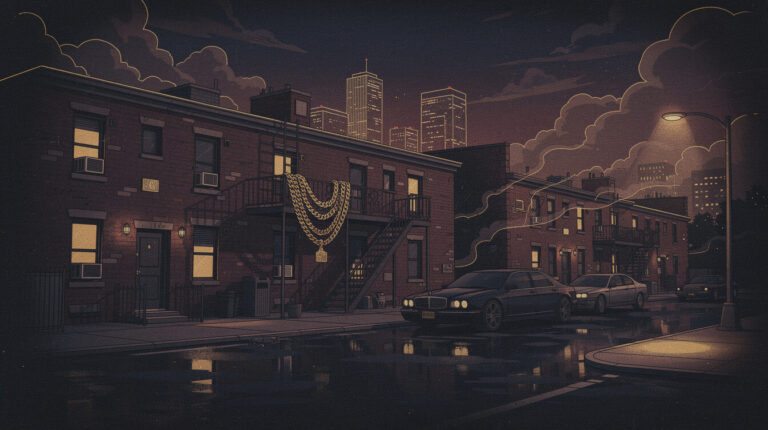
Pimp C was born Chad Lamont Butler on December 29, 1973. He was Louisiana-born and Port Arthur-raised, and the “born where” part is genuinely messy: Wikipedia names Crowley, Louisiana, off a funeral obituary that’s no longer online, and you’ll see other towns floating around. What nobody disputes is that Port Arthur, an oil-refinery town on the Texas Gulf Coast about 90 miles east of Houston, made him. It’s the same small city that produced Janis Joplin and the painter Robert Rauschenberg, and it had no rap scene to speak of until UGK built one.
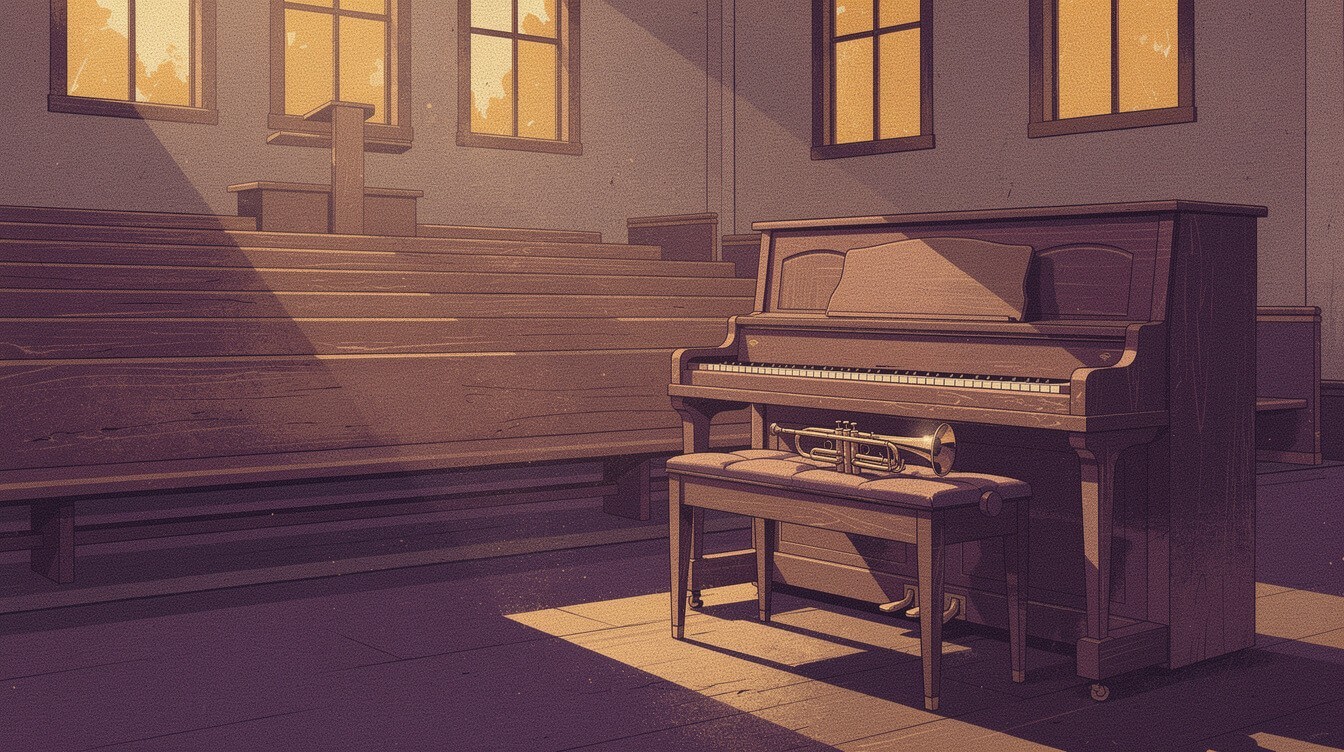
Music was in the house from the start. “My dad was a trumpet player,” he told The FADER in an interview published weeks after his death, and he name-checked the soul and blues acts his father played behind, Solomon Burke among them. In the same conversation he said his stepfather was his band teacher. Accounts differ on which of the two men played in Burke’s band, but either way, Chad grew up surrounded by working horn players. “I came up singing Italian sonnets, Negro spirituals,” goes the line Ben Westhoff quotes in his book Dirty South.
The Choir Kid
That training was real. He studied classical music in high school, and the Associated Press obituary noted that he earned a Division I rating, the top mark, on a tenor solo at a University Interscholastic League choir competition, Texas’s statewide school contest. According to his biographer Julia Beverly, he even sang at Carnegie Hall with his choir. Picture that next time you hear him sing a hook on a UGK record. Those weren’t accidents. That was a trained tenor slumming it on purpose.
The Stepfather’s Advice
The early tapes, by Beverly’s account to the Houston Chronicle, sounded like everybody else’s in the late ’80s: fast, up-tempo, Run-DMC imitations. Then his stepfather, the band director, gave him the note that changed Southern rap. The beats were too noisy, he told him. “Put some music in it,” and it might actually work. Pimp C repeated that advice in his own words to The FADER, and it’s in John Nova Lomax’s Dallas Observer obituary too.
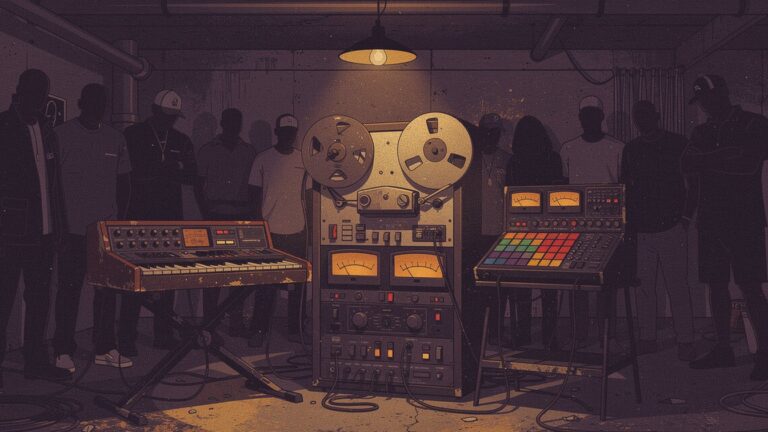
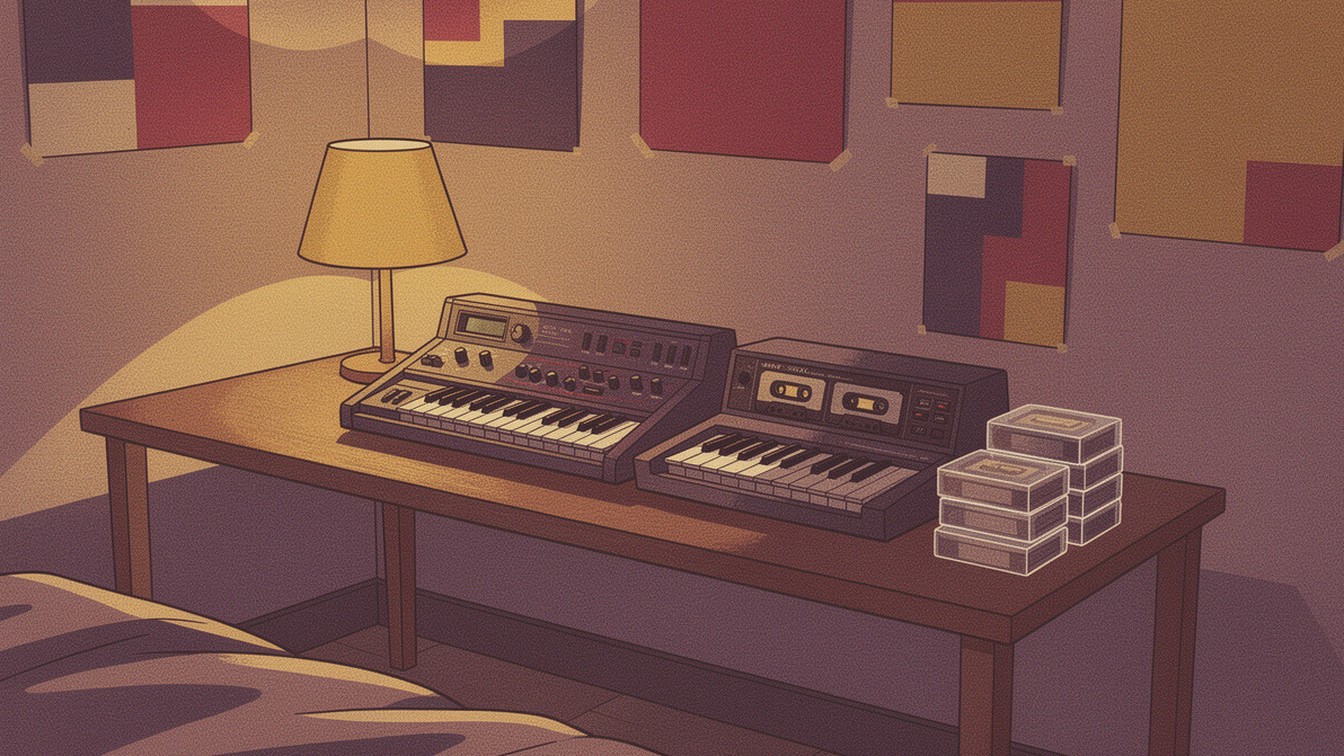
Chad took it to heart. The first rig, as Bun B later described it in a Red Bull Music Academy talk, was a little keyboard, a little sampler and a little drum machine. Then came an Ensoniq keyboard that was too big for the bedroom, so it moved into his mother’s den. He dug through soul and blues records. His mother, Weslyn “Mama Wes” Monroe, who went on to manage UGK, and his friends told Beverly he’d have been a blues singer if that had paid. Instead he became the producer who put soul, blues and live musicians under country rap, and that one note from his stepfather runs through every UGK album.
The Name and the Alter Egos
“Pimp C” is a teenage stage name that stuck, and he wore it with a wink and a pinky ring. He later added two alter egos that matter for reading his records, Sweet James Jones and Tony Snow. Both turn up in album titles and in the artists who came after him, and we’ll get to that in the legacy section.
He dropped out of high school in his senior year to focus on music with a schoolmate, Bernard Freeman. You know him as Bun B.
UGK: How Pimp C and Bun B Built the Underground Kingz
UGK formed in Port Arthur in 1987. The founding story depends on who’s telling it. Mitchell “Big Mitch” Queen, Pimp’s high-school chorus mate, says he was in the group first and even named it, then left. Other tellings start with Pimp and Bun. And Pimp and Bun didn’t hit it off at first, either. As Texas Monthly tells it, Pimp called Bun a liar for claiming he’d met Eazy-E. Bun pulled out the photo, and Pimp ended up offering him his recording gear. The duo history remembers, Pimp C on the beats and hooks and Bun B with the “speeding-train” delivery, was set by the early ’90s.
Underground Kingz and Trill
The name has two origin stories. One, from Westhoff’s reporting, is that they figured their country rap, full of “slang and twang,” was too regional for outsiders. Big Mitch’s version is simpler: the only scene they had was underground, so he added “kings.” Either way, they turned regional into the point.
They also carried a word to the world: trill. It’s usually explained as “true” plus “real,” but Bun B has said that’s not how he learned it. Trill was a Port Arthur street word, and the people who taught it to him never defined it. “Port Arthur was the home of trill,” he told the Texas Observer. UGK didn’t invent it. They exported it, starting with a track on their very first tape.
From Big Tyme Tapes to Jive
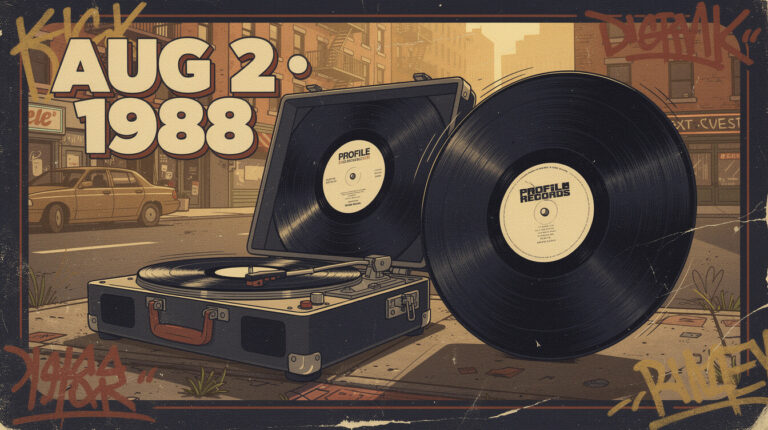
The first UGK music came out on Big Tyme Recordz. The Southern Way arrived on cassette in the spring of 1992, and the duo assembled and pushed tapes themselves. Jive signed them that same year, and the major-label debut, Too Hard to Swallow, came out on November 10, 1992. A handful of songs were pulled from it for being too explicit, and Big Tyme released them that summer as the appropriately named Banned EP.
Too Hard to Swallow peaked at No. 37 on Billboard’s R&B/Hip-Hop albums chart, credited to “Underground Kingz.” It also carried “Pocket Full of Stones.” A Pimp C-produced “Port Arthur Remix” of that song landed on the Menace II Society soundtrack in 1993 and put UGK in front of a national audience. Listen to it: a slow, heavy groove made for car speakers, with Pimp’s high, nasal voice riding on top. You can hear why DJ Screw would later chop and screw UGK tapes into the Houston canon.
Super Tight: Pimp C, Producer
Super Tight came out on August 30, 1994, and it’s the first UGK record where Pimp C’s sound is fully in place. It peaked at No. 95 on the Billboard 200 and No. 9 on the R&B/Hip-Hop albums chart. The liner notes credit him as producer and programmer. As Beverly tells it, he became a producer out of necessity: every time UGK tried to buy beats from outside producers, somebody took their money. So he did it himself, with a musician’s ear. A Houston Chronicle profile described the result as electric blues, soul-jazz and 1970s R&B mixed with California G-funk and Miami bass. Nobody else sounded like that in 1994.
If you want to hear what “Southern rap blueprint” means, cue up Super Tight‘s “Front, Back & Side to Side.” That’s slab music before slab music had a name.
Ride With the Underground Kingz
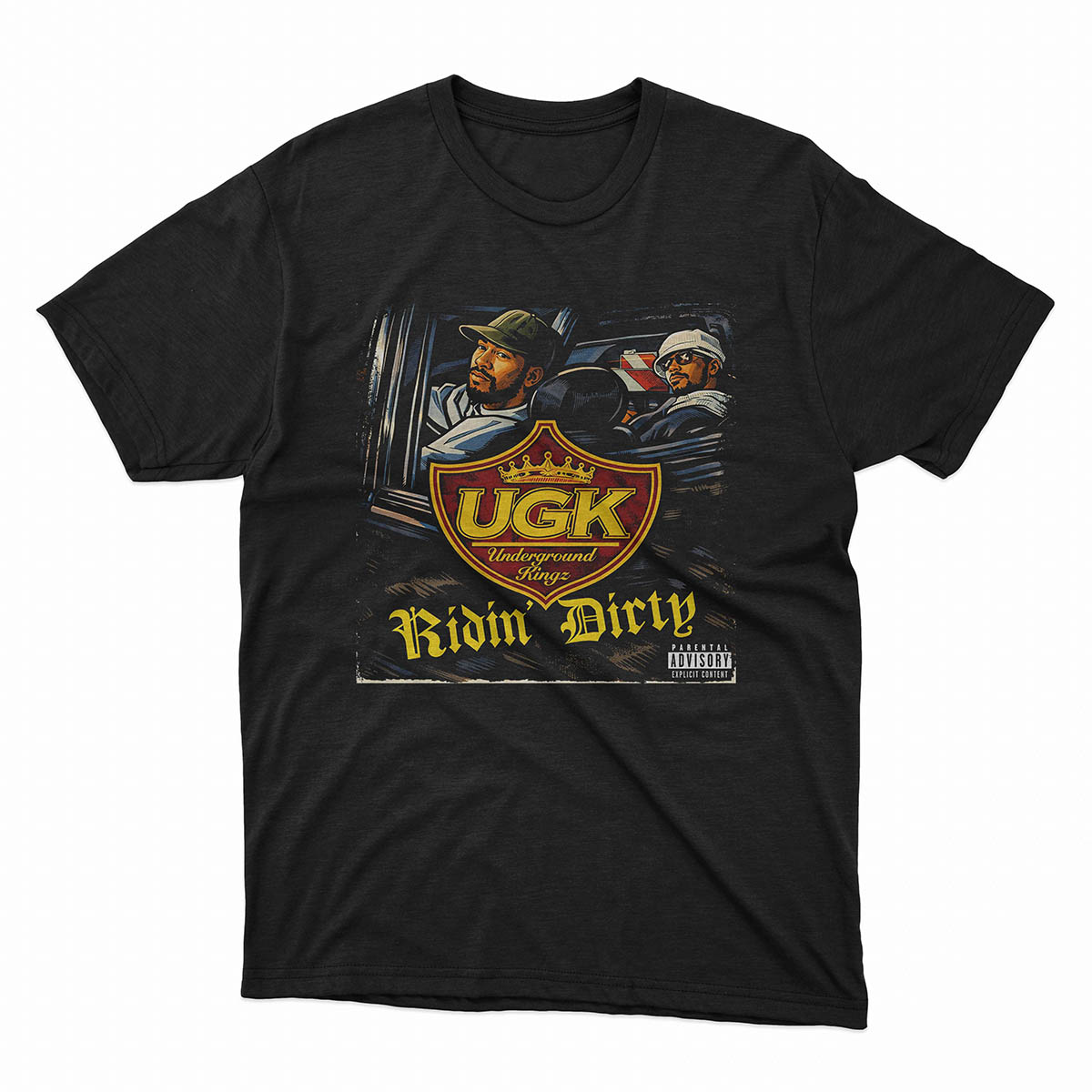
Pimp C produced most of it, Bun B tore through it, and the whole South learned from it. The Ridin’ Dirty cover, front seat of the Suburban, looking over their shoulders, on a heavyweight tee and a hoodie.
Ridin’ Dirty at 30: The Pimp C Album That Defined Southern Rap

Jive released Ridin’ Dirty on July 30, 1996. It debuted at No. 15 on the Billboard 200 and No. 2 on the R&B/Hip-Hop albums chart, with no US single and no music videos. People found it the old way: tapes in cars, word of mouth, a slab idling at a red light. It kept moving with no push at all, and the RIAA certified it Gold on November 6, 1998, more than two years after release. Thirty years later it’s on every serious list of the best Southern rap albums ever made, and most of those lists don’t say clearly enough that Pimp C produced most of it.
The cover tells you how to listen. Bun and Pimp look back over their shoulders from the front seat of a Suburban, and the camera sits where a would-be carjacker would. As critic Paul Thompson put it in his 30th-anniversary essay, danger runs in both directions on this record.
The Producer Map, From the Liner Notes
The credits spell it out. Pimp C produced the intro, “One Day,” “Murder,” “Pinky Ring,” “Diamonds & Wood,” the title track and the outro, and he co-produced “Hi-Life.” Mr. 3-2 co-produced “One Day,” with Ronnie Spencer singing the hook. New Orleans producer N.O. Joe took the middle stretch, including “Touched” and “That’s Why I Carry,” and Sergio produced “3 in the Mornin'” and “Good Stuff.”
Stereogum’s Tom Breihan nailed what Pimp C was doing: he “absorbed lessons from West Coast producers like Dr. Dre and DJ Quik, putting their cinematic musicality to work. But he was also deeply in love with the sound of ’70s Southern soul.” That’s the whole formula in two sentences.
The Band Behind the Beats
Then there are the players. The liner notes credit Leo Nocentelli, the guitarist from The Meters, alongside Wayne Bonton on guitar, Dave Torkanowsky on keys and Chris Severin on bass for “Diamonds & Wood.” That’s New Orleans funk royalty on a Port Arthur rap record, which is exactly what “put some music in it” meant. Bun B described the method to Complex for the album’s 30th: “Part of the genius of Pimp C was what he did with the jam sessions. He would have the band play a song and then he’d conduct.” The outro comes out of that same session.
Skip Holman, who played piano on “3 in the Mornin’,” mastered the album at his studio in Katy, Texas. Bun B has said he believes Ridin’ Dirty was the first full hip-hop album recorded in Pro Tools, at Holman’s place. That’s his belief, not a documented record, but it tells you how far ahead of the curve the session felt.
The Songs That Hold It Together
“One Day” is the emotional center, a song about loss, including a house fire, over a slow, aching groove. Putting grief at the front of a street album was a bold call in 1996. “Murder” is the opposite, a bouncing, almost playful Pimp C beat that Bun B tears through with one of the most quoted verses in Southern rap. “Diamonds & Wood” and “Pinky Ring” are the car-culture anthems, all candy paint and wood-grain wheels.
The spoken intro and outro have a story of their own. The voice belongs to Smoke D, a Mississippi rapper who’d already appeared on Super Tight, and his narration was recorded inside a Mississippi prison on a portable DAT recorder. How the recorder got in depends on who you ask: Bun B says UGK sent it, and Smoke D told Beverly he smuggled it in himself.
Here’s one receipt most fans miss. When Jay-Z opened the third verse of “99 Problems” in 2003, he quoted the opening lines of Bun B’s verse from “Touched.” One of hip-hop’s biggest songs quotes Ridin’ Dirty almost word for word. And by Bun B’s account, Scarface handed the album to 2Pac while they were recording “Smile,” and Pac played it constantly. The New York-centered industry was ignoring UGK in 1996, but the biggest artists in the game were listening closely.
If Ridin’ Dirty is your UGK album, we put the cover on something you can wear. The UGK – Ridin’ Dirty T-Shirt carries that over-the-shoulder Suburban shot on a heavyweight tee, and the UGK Ridin’ Dirty Hoodie is the same tribute for cold mornings. Thirty years in, the album still sounds like a car at a red light.
Big Pimpin’, Sippin’ on Some Syrup and the Verses That Went National

After Ridin’ Dirty, UGK went quiet as a group. Then 2000 put them on every radio in America through two guest features that couldn’t be more different.
“Big Pimpin'”: The Verse He Didn’t Want to Do
“Big Pimpin'” is Jay-Z featuring UGK, produced by Timbaland, from Vol. 3… Life and Times of S. Carter (1999), a Roc-A-Fella release. It came out as a single in 2000 and went top 20 on the Billboard Hot 100. (Pimp C’s own Wikipedia page puts that peak on the “Billboard 200,” which is an album chart, so that’s wrong.) The beat flips “Khosara Khosara,” a song the Egyptian composer Baligh Hamdi wrote in 1957, and that sample led to a copyright suit from Hamdi’s heir, Osama Fahmy. It ran for years. On May 31, 2018, the Ninth Circuit ruled for Jay-Z, and not on the music: Fahmy had sold his rights back in 2002, so he had no standing to sue.
The famous part is that Pimp C didn’t want to do it. “It sounded like a pop record to me,” he said in a 2005 MTV interview, as quoted by DJBooth. “I didn’t want to do it. It scared me, because I didn’t know how people was going to take us going in that direction.” He delivered anyway, in that slow, sing-song Port Arthur drawl, and plenty of heads will tell you the song’s best verse belongs to the guy who didn’t want to be there. He also refused to fly to Trinidad for the video, so his scenes were shot stateside, at a beach and a mansion. It’s the most famous video either of them ever appeared in, and Pimp C made it on his own terms.
“Sippin’ on Some Syrup”: The Memphis Connection
The other 2000 hit is Three 6 Mafia‘s “Sippin’ on Some Syrup,” featuring UGK and Project Pat. Get the credits right: it’s a Three 6 Mafia record, produced by DJ Paul and Juicy J, from When the Smoke Clears: Sixty 6, Sixty 1 (2000). It’s not a UGK song and not a Pimp C production, and it’s not from 1999 either, whatever some playlists say. It became an anthem across the South. The song also marks the start of a Memphis-Port Arthur partnership that would pay off again seven years later.
Dirty Money and the Jive Problem
All that heat should have set up UGK’s fourth album. Dirty Money came out in November 2001 and went top 20 on the Billboard 200 and No. 2 on the R&B/Hip-Hop albums chart. Some bios call it a critical and commercial failure, and the numbers say otherwise. The real problem was that Jive barely promoted it, so the album never got the run its features had earned. By then the South had the hits, and the duo that built the sound was getting more attention for guest verses than for its own albums.
Free Pimp C: Prison, Rap-A-Lot and the Sweet James Jones Era
Here are the facts, without the glamor. On December 16, 2000, Pimp C was arrested at Houston’s Sharpstown Mall after a confrontation with a woman in a shoe store and charged with aggravated assault with a deadly weapon. He pleaded no contest in early 2001 and got probation. He then violated that probation: missed meetings with his probation officer, unfinished community service, unpaid fees and failed drug tests. On August 5, 2002, he was sentenced to eight years.
Two common errors need fixing. Variety’s 2007 obituary said he was “jailed for three years in 2002 on gun charges.” The sentence was eight years, for a probation violation on the 2000 assault charge. He was released on parole on December 30, 2005, after roughly four years in custody, much of it at the Terrell Unit in Brazoria County, Texas. While inside he earned his GED, and in 2003 he married his wife, Chinara.
The Campaign
Bun B never let anyone forget him. He kept the UGK name alive with guest verses all over the South, and nearly every one of them mentioned his partner or carried a “Free Pimp C” chant. Other rappers picked it up in their own songs. Then, as the Houston Chronicle put it, by the time he got out in 2005 the South had become the new center of rap, thanks in part to the groundwork UGK had laid a decade earlier. He walked out of prison a legend.
The Sweet James Jones Stories
Meanwhile, the music kept coming. Rap-A-Lot Records, J. Prince’s Houston label, released Pimp C’s first solo album, The Sweet James Jones Stories, on March 1, 2005, while he was still locked up. It was built from material he recorded before his sentence. Per Beverly, he took the “Sweet Jones” name from an Iceberg Slim book. You can hear the side of him that wanted to be a soul singer all over the record.
That Rap-A-Lot connection runs deep in Houston. Scarface, the label’s flagship voice, was a UGK ally for years. Bun B has said that same Scarface connection is how 2Pac first heard Ridin’ Dirty. Houston’s two biggest rap institutions looked out for each other, and you can hear it on the records they made together.
Pimpalation, Underground Kingz and the Int’l Players Anthem

Pimp C came home at the end of 2005 to a different industry. Houston had just had its national moment, and the city’s new stars came straight out of the lane UGK opened. Vice’s review of the Beverly biography names Slim Thug, Z-Ro and Paul Wall among the Texas rappers UGK inspired to chase the mainstream. Pimp C came out talking, producing and recording, as loud as ever.
Pimpalation (2006)
Pimpalation, his second solo album, came out on July 11, 2006, through his own Wood Wheel imprint with Rap-A-Lot and Asylum. The RIAA certified it Gold on March 8, 2007, proof that the “Free Pimp C” years had built him a national audience, not just a regional one.
Underground Kingz (2007)
Then the reunion. UGK’s self-titled double album, Underground Kingz, came out on August 7, 2007, and debuted at No. 1 on the Billboard 200. Twenty years after two kids from Port Arthur started making tapes, they had the No. 1 album in the country, with about 160,000 copies sold in the first week. The production credits on the double album read like a map of everything UGK touched: Pimp C himself, N.O. Joe, DJ Paul and Juicy J, Scarface, Lil Jon, Jazze Pha, Swizz Beatz and Marley Marl, who produced “Next Up” with Big Daddy Kane and Kool G Rap on the mic. Scarface produced and appears on “Still Ridin’ Dirty,” which is a good excuse to revisit his The Fix era.
“Int’l Players Anthem (I Choose You)”
The album’s big single is the one people still play at every Southern wedding and cookout. “Int’l Players Anthem (I Choose You)” features OutKast and was produced by DJ Paul and Juicy J. It’s built on Willie Hutch’s “I Choose You,” on a beat the Three 6 producers had first used for Project Pat’s “Choose U” on his 2002 album Layin’ da Smack Down. Here’s the jewel: Pimp C wanted that beat badly enough to call DJ Paul about it from prison. André 3000’s opening verse is one of the great intros in rap history, and then Pimp C comes in.
It was UGK’s only Hot 100 entry as lead artist (“Big Pimpin'” charted with them as featured artists). It was nominated for Best Rap Performance by a Duo or Group at the 50th Grammy Awards. Bryan Barber directed the wedding-themed video, and in June 2008, six months after Pimp C died, it won Video of the Year at the BET Awards. If you love the OutKast side of this story, the OutKast Aquemini T-Shirt pairs perfectly with our Aquemini track-by-track breakdown and our OutKast albums ranked guide.
December 4, 2007, and the Pimp C Legacy
In early December 2007, Pimp C was in Los Angeles for a House of Blues show on Sunset, staying at the Mondrian Hotel in West Hollywood. On December 4, 2007, he was found dead in his room. He was 33, a few weeks short of his 34th birthday. (Variety’s obituary says he was found on December 3. Every other source we checked says December 4.)
In February 2008, the Los Angeles County coroner ruled the death accidental, from the effects of promethazine-codeine cough syrup combined with his pre-existing sleep apnea. A coroner’s official told LA Weekly plainly that it wasn’t an overdose, despite what some headlines said. That’s all that needs saying about it. He went home to Port Arthur, where the city filled the Bob Bowers Civic Center for his funeral on December 13, 2007.
What He Left
The music didn’t stop. UGK’s final album, UGK 4 Life, came out in 2009. Three posthumous Pimp C solo albums followed: The Naked Soul of Sweet Jones (2010), Still Pimping (2011) and Long Live the Pimp, which Mass Appeal released on December 4, 2015, eight years to the day after he died. The first one leans hard into his singing, which, as his biographer pointed out, was the direction he was heading all along. Bun B carried the name on every record, starting with tributes on II Trill in 2008.
Then there’s the line to the next generation. A$AP Rocky has named Pimp C as one of his biggest influences, and you can hear it in the purple-tinted, slowed-down Harlem sound Rocky came up with. Megan Thee Stallion, a Houston artist through and through, titled her 2018 project Tina Snow after Pimp C’s Tony Snow alter ego. That’s a direct inheritance: the swagger, the Texas pride, and the refusal to sand down the accent for anyone.
The deepest legacy is the one Julia Beverly almost used as her book title: The Six Degrees of Pimp C. As she told the Houston Chronicle, you could take almost anybody who came out of that Southern era and draw a chart back to him: he produced for them, helped get their label started, or inspired them to rap in the first place. Next to Goodie Mob and the Dungeon Family in Atlanta and the Three 6 camp in Memphis, Port Arthur is one of the places the Southern sound comes from.
Start Here: Five Pimp C Essentials
- “Pocket Full of Stones” (Too Hard to Swallow, 1992): the song that got UGK out of Texas.
- “Front, Back & Side to Side” (Super Tight, 1994): the slab-culture anthem.
- “One Day” (Ridin’ Dirty, 1996): Pimp C the producer at his most soulful.
- “Ridin’ Dirty” (Ridin’ Dirty, 1996): the title track, smooth and tense at once.
- “Int’l Players Anthem (I Choose You)” (Underground Kingz, 2007): the victory lap.
Pimp C FAQ
Where is Pimp C from?
Port Arthur, Texas, a Gulf Coast refinery town about 90 miles east of Houston. He was born in Louisiana (sources disagree on the exact town) and raised in Port Arthur, where he formed UGK. He’s often called a Houston rapper because UGK’s label, studio and scene connections were in Houston.
What is UGK?
UGK stands for Underground Kingz, the duo of Pimp C (Chad Butler) and Bun B (Bernard Freeman), formed in Port Arthur in 1987. Their albums include Too Hard to Swallow (1992), Super Tight (1994), Ridin’ Dirty (1996), Dirty Money (2001), Underground Kingz (2007) and UGK 4 Life (2009).
What albums did Pimp C produce?
He was UGK’s main in-house producer. The liner notes credit him as producer and programmer on Super Tight and with most of Ridin’ Dirty, including “One Day,” “Murder,” “Pinky Ring,” “Diamonds & Wood” and the title track. He produced on UGK’s later albums and his own solo records too.
Was Pimp C on “Big Pimpin'”?
Yes. “Big Pimpin'” is Jay-Z featuring UGK, so both Pimp C and Bun B have verses. Timbaland produced it, not Pimp C. It reached No. 18 on the Billboard Hot 100 in 2000.
What was Pimp C’s real name?
Chad Lamont Butler. Some sites print “Chad Lemon Butler.” That’s a typo that keeps getting copied.
How did Pimp C die?
He was found dead in his room at the Mondrian Hotel in West Hollywood on December 4, 2007, at 33. The Los Angeles County coroner ruled the death accidental, caused by the effects of promethazine-codeine syrup combined with sleep apnea.
Who are Sweet James Jones and Tony Snow?
They’re Pimp C’s alter egos. Sweet James Jones gave his 2005 solo debut and his 2010 posthumous album their titles, and his biographer says he took the “Sweet Jones” name from an Iceberg Slim book. Megan Thee Stallion named her 2018 project Tina Snow after the Tony Snow alias.
Final Thoughts: Trill Forever
Pimp C wasn’t just a great feature verse or a loud interview. He was a trained musician who looked at the beats of the late ’80s, heard something missing, and put the church, the blues and the soul records back into rap. He made Port Arthur matter, produced one of the best albums the South has ever made, and spent his last two years making sure everybody knew where the sound came from. Nineteen years after December 4, 2007, the blueprint is everywhere. Play Ridin’ Dirty front to back this week, slowly, the way it was meant to be played.
Stay creative — The Custom Creative Team
Get the Liner-Note Receipts First
One email a week: artist histories, producer credits and new drops from the Custom Creative team. No spam, just culture.

🎧 Never Miss a Drop
Exclusive product releases, hip-hop deep dives, and member-only discounts. Straight to your inbox.
Free forever. No spam. Unsubscribe anytime.
Get the Culture, Delivered
Deep dives into hip-hop history, exclusive product drops, and discounts sent straight to your inbox. No spam, just culture.
Join 2,000+ hip-hop heads already in the loop. Unsubscribe anytime.